Cimarron National Grassland Deer Hunting
Hunting the vast, often intimidating expanse of the Cimarron National Grassland for deer can feel like staring at a blank canvas with no idea where to even begin. It's a landscape unlike much of Kansas, presenting unique challenges for hunters used to farm fields and timber blocks. This guide aims to demystify hunting this incredible piece of public ground, offering insights into its deer, terrain, and the strategies needed to succeed.
The Unique Landscape of the Cimarron National Grassland for Deer Hunters
The Cimarron National Grassland, located in the southwestern corner of Kansas, isn't your typical whitetail country. Forget dense timber and endless rows of corn; here, the land stretches out under massive skies, defined by rolling shortgrass prairie, yucca plants, and dramatic breaks in the terrain. This unique environment shapes how deer live, move, and ultimately, how you need to hunt them.
Vastness and Vegetation: Beyond Just Grass
When people hear "grassland," they often picture monotonous, flat plains. The Cimarron is anything but. While grass is undeniably dominant, it's interspersed with pockets of brush, plum thickets, and crucially, deep draws and canyons carved by millennia of water flow. These features provide vital cover and travel corridors for deer. The sheer scale is daunting; we're talking about over 100,000 acres of public access, which can make a person feel like a tiny speck, especially if you're not used to hunting such open country. It’s easy to get overwhelmed by the sheer size, but learning to pick out those subtle changes in elevation, the brushy drainages, or the scattered trees becomes paramount.
The vegetation here, while seemingly uniform from a distance, offers diverse food sources and bedding areas. The shortgrass prairie itself provides forage, but deer often seek out the more succulent forbs found in the bottoms of draws or the tender shoots within plum thickets. These thickets, though small, are goldmines for bedding cover, offering protection from the relentless Kansas wind and excellent concealment. Understanding these micro-habitats within the larger grassland is the first step to narrowing down where deer might be.
One of the biggest lessons I learned hunting out here is that "open" doesn't mean "exposed." Deer are masters of using every ripple in the landscape, every clump of yucca, and every sparse cedar to their advantage. A buck can disappear in seemingly nothing, simply by laying down on the backside of a small rise. Learning to appreciate and interpret these subtle features is key to unlocking the Cimarron's secrets. It's not about finding the biggest timber; it's about finding the best available cover, however minimal it might seem.
Whitetail and Mule Deer: Understanding the Local Herds
The Cimarron is a fantastic place because it offers the unique opportunity to hunt both whitetail and mule deer, often in the same general area. While whitetails tend to stick closer to the more defined creek and river bottoms, or the thicker brush in the deeper canyons, mule deer are more at home in the truly wide-open, undulating prairie. You'll often find them browsing on the slopes, making their famous bounding leaps across the landscape when startled.
Understanding the behavior differences between these two species is crucial. Whitetails are often more secretive, using available cover more aggressively, and are prone to sneaking away undetected. Mule deer, by contrast, might stand and stare, or trot off a distance before stopping to assess the threat. Their larger ears and keen eyesight are legendary, making them incredibly difficult to approach in open country. Successfully hunting both requires adapting your approach.
You might even see hybrids in areas where their ranges overlap, but generally, you'll find distinct populations favoring their preferred habitats. When you’re out scouting, pay close attention to the tracks and droppings; mule deer typically have larger, more rounded tracks than whitetails. Look at the terrain you're in – if it's broad, open prairie with sparse cover, you're likely in mule deer territory. If you find a deep, brushy draw with more substantial timber, whitetails are probably calling that home.
The Water Challenge in Arid Country
Water is a precious commodity in the Cimarron National Grassland, especially during dry years. This scarcity makes reliable water sources absolute magnets for all wildlife, including deer. Unlike the eastern parts of Kansas where ponds and creeks are abundant, the Cimarron can be incredibly dry, with only intermittent streams or man-made cattle tanks offering hydration. Identifying these spots is paramount for any hunting strategy.
Deer, like all animals, need water daily, or at least every few days, depending on forage moisture. In a dry spell, a single cattle tank or a spring-fed seep can concentrate deer activity from miles around. This makes these locations prime spots for scouting and setting up an ambush, particularly during the warmer early seasons. You might find tracks converging on these water sources, indicating regular use. Finding Water in Dry Western Kansas is often the first step in locating deer out here.
It's not just about finding the water; it's about understanding how deer access it. They'll typically approach from areas of cover or during low-light conditions. When you're glassing, look for trails leading into and out of these watering holes, and consider wind direction carefully when setting up. A well-placed ground blind or a patient spot-and-stalk approach near a water source can be incredibly effective when other food sources are dry and unappealing.
Essential Scouting and Navigation for Cimarron Deer
The sheer scale of the Cimarron National Grassland makes proper scouting and navigation not just helpful, but absolutely vital. You can't just drive around and hope to stumble upon deer here. A strategic approach, combining modern technology with boots-on-the-ground effort, is your best bet for success.
E-Scouting and Mapping Before You Go
Before you ever set foot on the Cimarron, your initial scouting should begin at home. This is where digital mapping tools like onX Hunt become indispensable. You can spend hours poring over satellite imagery, identifying key features that might hold deer. Look for changes in elevation, even subtle ones, that could offer bedding cover or funnel deer movement. Identify those deep, brushy draws that run through the prairie, as these are often prime travel corridors and bedding areas. E-Scouting Kansas Farm Country From Home provides a great foundation, but apply that same intensity to finding the nuances of grassland terrain.
Focus on finding isolated pockets of cover, no matter how small. These could be clumps of cedar, plum thickets, or even just a dense patch of taller grass on a south-facing slope that gets good sun in the colder months. Don't forget to mark potential water sources, like cattle tanks or stock ponds, as well as any limited timber that might exist along the Cimarron River itself. Using mapping layers to verify public land boundaries is critical; there's nothing worse than mistakenly trespassing on private ground in such a vast area.
Pin potential bedding areas, feeding areas, and travel routes. When you eventually get on the ground, these digital waypoints will serve as your starting points for physical investigation, saving you countless hours of aimless wandering. It allows you to enter the field with a plan, rather than just reacting to what you see. Take screenshots or download offline maps, because cell service can be spotty to non-existent in remote parts of the Cimarron.
On-the-Ground Reconnaissance: Reading the Signs
Once you've done your digital homework, it's time for boots on the ground. This physical scouting is where you confirm your e-scouting theories and discover the nuances that satellite imagery can't show. Walk those draws you marked, investigate those plum thickets, and check those water sources for fresh sign. Look for tracks, droppings, rubs, and scrapes, paying attention to how old the sign appears. Fresh sign means deer are actively using the area.
Pay close attention to bedding areas. In open country, these will often be on the leeward side of hills or in dense clumps of brush where deer can feel secure and hide from the wind. Look for impressions in the grass where deer have laid down. Notice their preferred escape routes from these beds; they'll typically use terrain features to stay out of sight as long as possible. Scouting Kansas Walk-In Tracts Before the Opener outlines methods that are perfectly applicable here.
Don't be afraid to put miles on your boots, but do so strategically. Utilize high vantage points to glass vast areas, much like you would for Prairie Chicken Hunting in the Flint Hills. Mule deer in particular are known for being spotted from long distances. Use good optics to pick apart the distant terrain, looking for subtle movement or the tell-tale shape of an antler or a deer's body. Early morning and late evening are the best times for this, as deer are often more active.
Understanding Public Access and Boundaries
The Cimarron National Grassland is primarily public land managed by the U.S. Forest Service, and it's a huge asset for Kansas hunters. However, it's often interspersed with private land, and navigating these boundaries is critical to stay legal and ethical. This is another area where digital mapping tools like onX Hunt are invaluable, showing property lines and land ownership directly on your phone or GPS device.
Always be aware of whether you're on Cimarron National Grassland property or a Kansas Walk-In Hunting Access (WIHA) tract. While both are public, WIHA tracts often have specific dates they are open for hunting, whereas the Cimarron generally follows statewide season dates. The rules for each can sometimes differ, so always double-check the current regulations. Kansas Walk-In Hunting Access Explained offers more detail on WIHA, which sometimes borders the grassland.
Respecting private property boundaries is paramount. Even if you don't see fences, digital maps will clearly show where one property ends and another begins. If you accidentally retrieve game that crosses onto private land, make sure you understand the rules for doing so and seek permission if required. Being a responsible public land hunter helps ensure that access remains available for everyone.
| Feature | Cimarron National Grassland | Typical Eastern Kansas Farm Ground |
|---|---|---|
| Dominant Cover | Shortgrass prairie, yucca, draws, plum thickets | Hardwood timber, creek bottoms, crop fields |
| Deer Species | Whitetail, Mule Deer | Primarily Whitetail |
| Water Sources | Sparse; cattle tanks, intermittent streams, springs | Abundant ponds, creeks, rivers |
| Terrain | Rolling, open plains, dramatic draws/canyons | Varied; flat fields, rolling hills, dense river breaks |
| Hunting Style | Spot and stalk, glassing, ambushing water | Stand hunting (treestands, ground blinds), drives |
| Navigation Aids | Digital mapping crucial for boundaries/features | Digital mapping for property lines, food sources |
| Hunting Pressure | Can be low in remote areas, increases near access | Varies greatly; can be very high on public land |
Proven Hunting Strategies for Cimarron Deer
Hunting deer in the vast, open country of the Cimarron National Grassland requires a different mindset and different tactics than hunting in more timbered or agricultural areas. Patience, stealth, and a keen eye are your most valuable assets here.
Spot and Stalk in Open Terrain
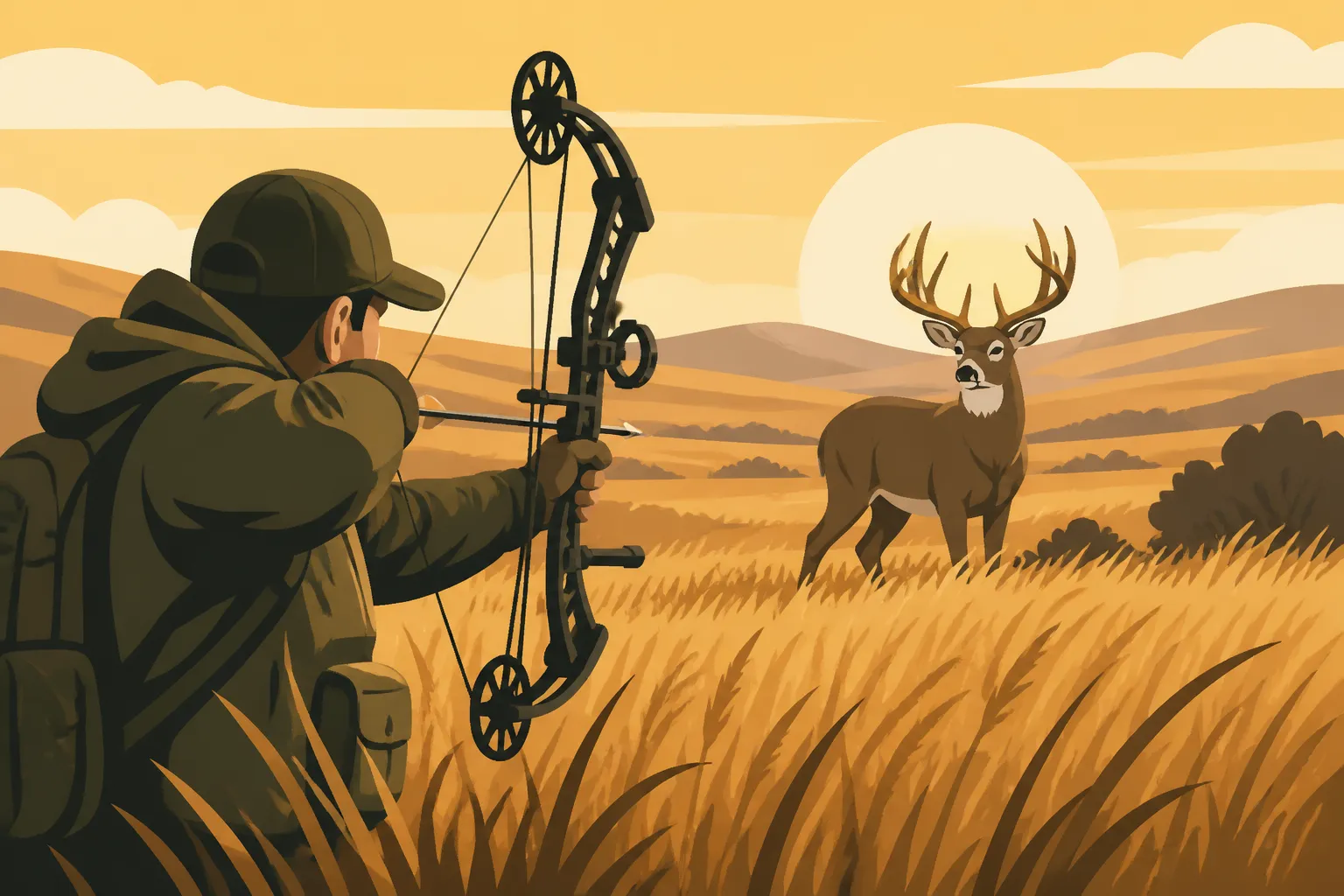
The quintessential Cimarron deer hunting method is the spot and stalk. This is where your good optics, like binoculars and a spotting scope, really shine. Find a high vantage point at first light or last light, set up comfortably, and systematically glass the landscape. Look for deer moving, feeding, or even just the tell-tale glint of an antler in the sun. This takes immense patience; sometimes you'll glass for hours without seeing anything, then suddenly, a deer materializes out of nowhere.
Once you spot a deer, the real challenge begins: planning your approach. The key to a successful stalk in open country is using every bit of terrain to your advantage. Identify draws, swales, or even just shallow depressions that can conceal your movement. Pay close attention to the wind, as it's often a constant factor here. A good stalk might involve crawling on your hands and knees for hundreds of yards, making excruciatingly slow progress to stay out of sight. You need to become part of the landscape, moving with deliberation and pausing frequently to re-evaluate your approach and the deer's behavior. Hunting Terrain Funnels in Flat Country can give you an edge, even with minimal elevation changes.
This method requires a lot of discipline and physical endurance. You'll be walking many miles, often across uneven ground, and sometimes in unpredictable weather. But there's a unique satisfaction in successfully executing a spot and stalk on a wary Cimarron buck that makes all the effort worthwhile. It's a true test of your hunting skills and your ability to adapt to what the land gives you.
Ambush Points: Draws, Treelines, and Water Sources
While spot and stalk is iconic, setting up an ambush can also be highly effective, especially for whitetails that prefer more cover. The key is identifying those critical pinch points or resources that concentrate deer movement. Deep draws, for instance, act as natural highways for deer moving between bedding and feeding areas. These often contain denser brush or even scattered trees, providing both cover for the deer and concealment for you. Setting up a ground blind along such a draw, especially where multiple draws converge, can be a deadly tactic. Ground Blinds in Open Country discusses the setup needed.
Limited treelines, particularly those along the Cimarron River or its larger tributaries, are also prime ambush locations. These serve as significant travel corridors in an otherwise open landscape. Deer will often follow the edges of these timber strips, using the trees for cover as they move. If you can find a good pinch point or a well-used trail within or along these treelines, consider hanging a portable treestand or setting up a natural blind. Remember to practice Access Routes That Do Not Bump Deer when approaching these spots.
As mentioned earlier, water sources are absolute magnets in this arid environment. A hidden spring, a cattle tank, or a reliable seep can be an incredible ambush spot, especially during warm weather or dry spells. Set up downwind of the water, well before first light, and be prepared to sit patiently. Deer will often approach water cautiously, so minimize movement and be ready when they finally commit. Remember, the Cimarron is vast, and finding these specific, high-value locations is the result of thorough scouting.
Dealing with Hunting Pressure and Weather
The Cimarron National Grassland is a popular public hunting destination, and like any public land, it can experience hunting pressure, especially on weekends and during peak seasons. Deer respond to pressure by becoming more nocturnal, moving into thicker cover, or simply leaving areas with high human activity. Understanding Hunting Pressure Patterns on Kansas Public Land is vital. To counter this, try to hunt weekdays if possible, or hike deeper into less accessible areas where fewer hunters venture.
Weather in the Cimarron can be extreme and unpredictable. Blazing hot days in the early season can quickly turn into freezing, windy conditions in late fall. Strong winds are a constant factor and can make spotting and stalking incredibly challenging, both for you and the deer. They make it hard to hear, and deer use the wind to detect predators. Plan your stalks and stand locations to use the wind to your advantage, or at least minimize its negative impact on your scent.
Be prepared for sudden changes. A warm front can make deer less active during the day, while a sharp cold front can spur movement, especially in the late season. Dress in layers, carry plenty of water, and have a reliable communication device (even if it's just for emergencies) when venturing deep into the grassland. The Cimarron offers an incredible hunting experience, but it demands respect, preparation, and an understanding of its unique challenges.
Disclaimer
This article is for general informational purposes only and does not constitute professional advice. Laws, prices and regulations vary by location and change over time. Consult a qualified professional for guidance on your specific situation.