Why Kansas Limits iWIHA Hunter Numbers
Ah, the Interactive Walk-in Hunting Access (iWIHA) program in Kansas. If you've ever tried to hop onto the app or website bright and early on a crisp fall morning, only to find your favorite tract already "full," you know the particular sting of frustration. It feels like everyone else is already out there, or worse, that the system is somehow conspiring against you. The question inevitably arises: why does Kansas limit the number of hunters on these iWIHA tracts? This guide will dive deep into the reasoning behind these capacity limits, explaining how they benefit both the wildlife and your hunting experience, and offering practical strategies to maximize your chances of securing a spot.
Understanding the "I" in iWIHA: The Interactive Element
The Kansas Department of Wildlife, Parks and Tourism (KDWP) introduced the iWIHA program to add a layer of real-time management to its incredibly popular Walk-in Hunting Access (WIHA) program. Traditional WIHA tracts are essentially open access, first-come, first-served, and while they offer vast opportunities, they can sometimes suffer from overcrowding, especially on prime weekends or during peak seasons like the whitetail rut. iWIHA was designed to address this by making access interactive and, crucially, limited.
The Technology Behind the Limits
At its heart, iWIHA is all about technology and controlled access. Unlike regular WIHA, where you simply check the atlas and go, iWIHA requires you to "check in" electronically before you can hunt a specific parcel. This is typically done through a mobile app or the KDWP website. The system is set up with predefined capacity limits for each individual iWIHA tract. These limits aren't arbitrary; they're based on factors like the acreage of the tract, the type of cover it provides, and the species it's likely to hold.
When a hunter checks in, that spot is accounted for in real-time. Once the predetermined capacity for that tract is reached, no other hunters can check in until someone checks out. It's like a digital bouncer at a popular club—once it's full, you have to wait for someone to leave before you can get in. This real-time monitoring is critical because it ensures that the physical number of hunters on any given tract stays below a certain threshold. It’s the invisible hand guiding hunter distribution. This is precisely How iWIHA Differs From Regular WIHA and why it causes both excitement and sometimes, a little heartburn for eager hunters.
Distributing Pressure, Preserving Quality
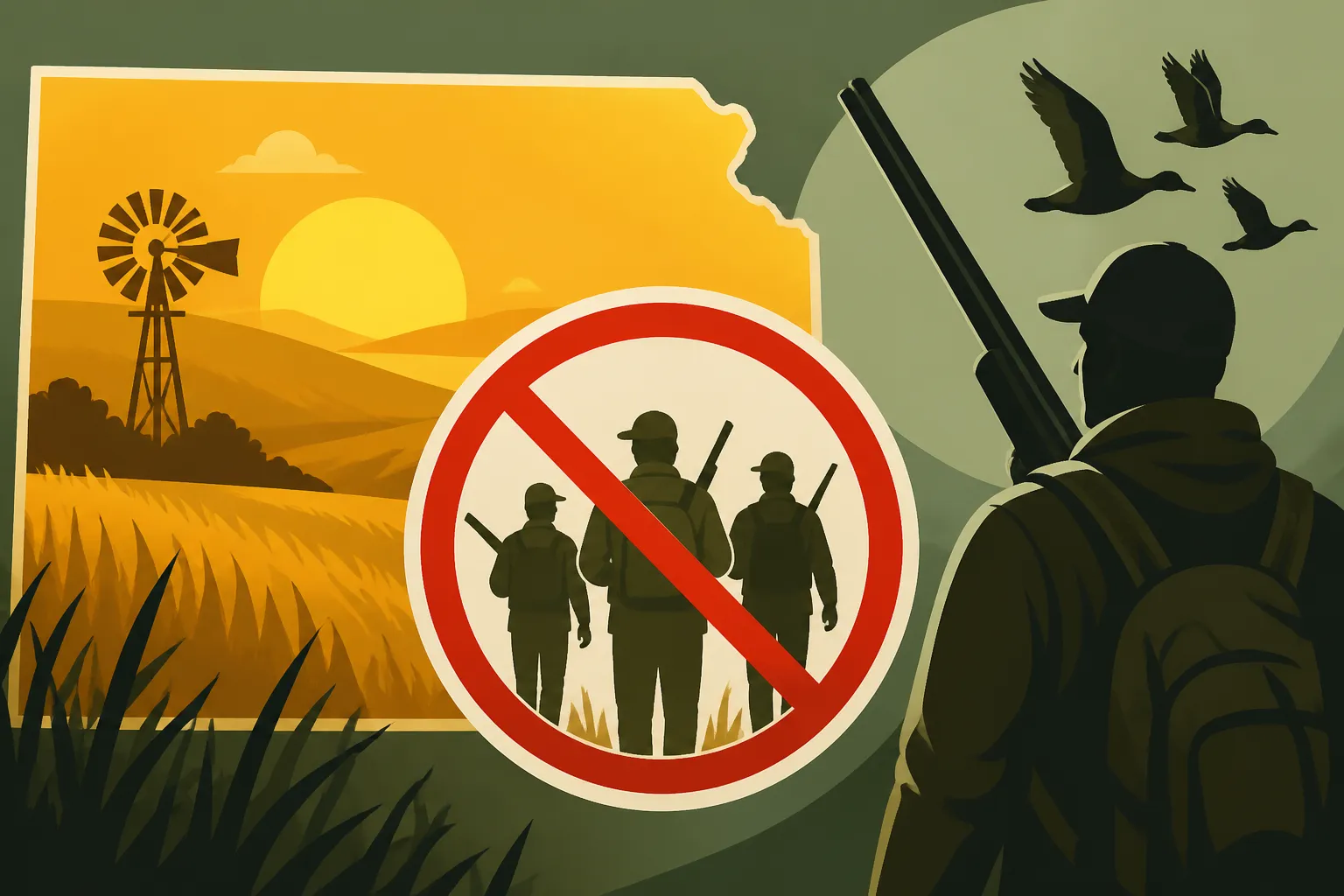
The primary, overarching reason for these limits is simple: to distribute hunting pressure and preserve a high-quality hunting experience. Imagine showing up to a prime river bottom on opening day of deer season, only to find ten other trucks already parked, hunters fanning out in every direction. That's a frustrating scenario many of us have faced on traditional public lands. Too many boots on the ground can quickly make deer go nocturnal, push pheasants into unhuntable cover, or make turkeys shut down completely.
By limiting hunter numbers, KDWP aims to prevent this kind of overcrowding. For those who successfully check in, the expectation is a more solitary experience, a better chance of encountering unpressured game, and ultimately, a more rewarding hunt. It’s about managing expectations and ensuring that when you do get a spot, you actually have a decent chance to enjoy it without feeling like you're competing with a small army. While it can be a pain when you see that "full" message, consider the alternative: a free-for-all that quickly degrades the hunting for everyone. The limits are a proactive measure to keep things from getting burned out too fast.
Why Kansas Invests in Hunter Distribution
Kansas has some fantastic hunting opportunities, but like any state, its resources aren't limitless. The KDWP has a dual responsibility: managing healthy wildlife populations and providing opportunities for hunters. The iWIHA program, with its hunter limits, is a direct reflection of this commitment, helping to strike a delicate balance between access and sustainability.
Protecting the Resource
Excessive, unregulated hunting pressure can have detrimental effects on wildlife. Deer, for example, can become incredibly skittish and change their patterns dramatically when constantly harassed. Upland birds can be pushed off prime cover or become so wary they're almost impossible to approach. Over time, consistent heavy pressure on small, isolated tracts could even lead to local displacement of game or impact their overall health due to constant stress.
The iWIHA limits act as a buffer. By ensuring that only a manageable number of hunters are on a particular tract at any given time, the wildlife there experiences less disturbance. This means deer are more likely to move naturally, pheasants might hold tighter, and turkeys might be more responsive to calls. It's about giving the animals a bit of a reprieve, allowing them to remain on the tract and behave more predictably. This thoughtful management helps keep these areas productive for years to come, aligning with the broader goal of Kansas Antlerless Hunts and Filling the Freezer by maintaining healthy herds.
Enhancing the Hunter Experience
Let's be honest, part of the joy of hunting is the solitude, the challenge, and the feeling of being truly out in nature. When you're constantly running into other hunters, it detracts from that experience. No one wants to walk a field only to have another group jump the birds you were approaching, or to sit in a treestand and watch another hunter walk through your setup.
The limited spots on iWIHA tracts are specifically designed to minimize these negative encounters. When you're one of the few hunters on a designated parcel, your chances of a quality, unhurried hunt increase dramatically. You can move more freely, feel more confident in your setups, and simply enjoy the peace and quiet. This enhanced experience is a huge draw for many, even if it means occasionally missing out on a specific spot. It's a calculated trade-off: fewer opportunities to get onto a particular tract, but a significantly better experience when you do. These limits also help to prevent Hunting Pressure Patterns on Kansas Public Land from becoming overwhelming too quickly.
Strategies for Navigating iWIHA Limits
So, you understand why the limits are there, but how do you actually get a spot? It's not always easy, but with a bit of strategy and persistence, you can definitely improve your odds of hunting an iWIHA tract.
Timing Your Check-In
The early bird often gets the worm, or in this case, the iWIHA spot. Many hunters will be trying to check in right at legal shooting light, or even earlier, especially on weekends and for highly sought-after species like deer. If you're serious about a particular tract, you need to be ready to check in as soon as it's legal.
Consider the time of day and week. Mid-week hunts, particularly during the middle of the day, often see less pressure. If you have the flexibility, try hunting on a Tuesday afternoon instead of a Saturday morning. You'd be surprised how much easier it is to get into those popular spots. Also, keep an eye on the KDWP information regarding When Kansas WIHA Tracts Open in Fall, as this can dictate the initial rush. Flexibility is your friend when dealing with capacity limits.
Leveraging Technology and Information
Modern hunting is intertwined with technology, and iWIHA is a prime example. Your smartphone isn't just for checking in; it's a powerful tool for planning and adapting. Mapping apps like onX Hunt are invaluable here. You can identify multiple iWIHA tracts, traditional WIHA, and even other public lands like State Wildlife Areas (SWAs) in your target hunting zone. This way, if your first choice iWIHA is full, you have several backup options pre-scouted.
Before you even leave the house, use your mapping app to E-Scouting Kansas Farm Country From Home. Look for alternative iWIHA tracts that might be less popular, perhaps smaller or with less obvious cover, but still hold game. Many hunters flock to the biggest, timbered tracts, leaving smaller, more open areas with lower hunter counts. You can also use platforms like GoHunt for research into general hunting trends or to discover less-known areas. Continuously check the iWIHA system throughout the day; spots can open up if hunters check out early. This proactive approach dramatically increases your chances. You can also dive into Reading Aerial Imagery for Bedding Cover on different tracts to identify hidden gems.
Having a Backup Plan
The hard truth is that sometimes, even with perfect timing and strategy, your desired iWIHA tract will be full. That's why a solid backup plan is absolutely non-negotiable. Don't put all your eggs in one basket. Before you head out, have at least two or three alternative spots in mind. These could be other iWIHA tracts, traditional WIHA lands, or even State Fishing Lakes that allow hunting.
This means doing your homework before the season begins. Spend time reviewing the Kansas Hunting Atlas, looking at both iWIHA and general WIHA maps. Scouting Kansas Walk-In Tracts Before the Opener is crucial, even if it's just digitally. If you know that your primary iWIHA spot is likely to be busy, identify a less-pressured WIHA tract nearby or a State Wildlife Area where general access might be easier, even if the hunting pressure is a bit higher. Knowing your alternatives reduces frustration and saves precious hunting time when you're already in the field. Remember, the goal is to hunt, not just to hunt one specific parcel.
| Public Access Type | Check-In Required? | Hunter Density Goal | Stand/Blind Rules | Key Benefit |
|---|---|---|---|---|
| iWIHA (Interactive WIHA) | Yes (electronic) | Very Low/Controlled | Portable only, must remove daily | Low hunter density, quality experience |
| WIHA (Walk-in Hunting Access) | No | Varies (can be high) | Portable only, must remove daily | Widespread access, vast acreage |
| State Wildlife Areas (SWA) | Sometimes (for special draws/areas) | Moderate/Managed | Varies by SWA, some allow temporary stands/blinds | Diverse habitats, managed for specific game |
| Corps of Engineers Land | No | Varies | Generally portable, check specific lake rules | Often associated with large water bodies |
The Broader Impact on Public Land Hunting
The iWIHA program isn't just an isolated experiment; it's part of a larger, evolving strategy by the KDWP to manage public hunting access across the state. Understanding how it fits into this bigger picture helps appreciate its value and limitations.
Comparing iWIHA to Traditional WIHA and State Wildlife Areas
Kansas offers a fantastic array of public hunting opportunities, each with its own quirks and benefits. Traditional WIHA land, often marked by those iconic yellow signs, typically covers hundreds of thousands of acres annually. It's a lifeline for many hunters, offering broad access without the need for pre-registration or capacity limits. However, as mentioned, it can lead to high pressure in popular spots. Kansas Walk-In Hunting Access Explained provides a great overview of this extensive program.
State Wildlife Areas (SWAs) are another critical component. These are lands owned and managed by the KDWP specifically for wildlife habitat and public recreation, including hunting. They often have more diverse habitat types, from wetlands to dense timber, and can have specific regulations or even draw-only hunts for certain species to further manage pressure. Kansas State Wildlife Areas often offer excellent hunting, but might require more research into specific unit rules.
iWIHA slots right into this mix, offering a hybrid approach. It gives the KDWP a tool to precisely manage pressure on specific, often smaller or more sensitive, tracts of leased private land that might otherwise be quickly "loved to death" by too many hunters. It’s not meant to replace traditional WIHA or SWAs but to complement them, adding another option for hunters seeking a more controlled experience. This varied approach ensures that different hunting styles and preferences can be accommodated across the state.
The Future of Public Access in Kansas
As hunting participation fluctuates and land use changes, the KDWP is constantly evaluating and adapting its public access programs. iWIHA is a relatively newer addition, and its success is continually measured by both hunter satisfaction and its impact on wildlife. Programs like this might expand, contract, or evolve based on feedback from hunters, new wildlife management data, and technological advancements.
Hunter feedback is crucial in this process. If you have experiences with iWIHA, good or bad, sharing them with KDWP through surveys or public meetings can help shape the future of these programs. The reality is that managing public land for hunting is a balancing act, and every decision involves trade-offs. The limitations on iWIHA are a necessary part of that balance, designed to sustain healthy wildlife populations and preserve the quality of the hunting experience for those who participate. It’s important for us as hunters to understand the intent behind these rules and to hunt responsibly, whether we're on a crowded traditional WIHA tract or a secluded iWIHA gem. Keep an eye on Kansas Commission Meetings on Hunting Rules to stay informed about potential changes.
Disclaimer
This article is for general informational purposes only and does not constitute professional advice. Laws, prices and regulations vary by location and change over time. Consult a qualified professional for guidance on your specific situation.