Kansas Walk-In Hunting Access Explained
If you've ever dreamt of experiencing the incredible hunting opportunities Kansas has to offer, but feel overwhelmed by the thought of securing private land access, you're not alone. Many hunters, especially non-residents, worry about where they'll actually be able to hunt in a state known for its vast private agricultural lands. This comprehensive guide is here to demystify the Kansas Walk-In Hunting Access (WIHA) program, helping you understand how it works, how to find these precious acres, and how to make the most of your time afield.
What is Walk-In Hunting Access (WIHA) in Kansas?
Kansas is renowned for its world-class hunting, from monster whitetails to abundant pheasants and quail. But let's be honest, much of that reputation is built on private land. For years, hunters without family connections or deep pockets for leases felt like outsiders looking in. That's where the Kansas Walk-In Hunting Access (WIHA) program swooped in like a hero, opening up millions of acres of private land for public hunting. It’s a game-changer, plain and simple, and it has leveled the playing field for countless hunters.
The Philosophy Behind the Program
The core idea behind WIHA is elegantly simple: provide public hunting and fishing opportunities on private land by incentivizing landowners. Farmers and ranchers, who are the stewards of vast tracts of prime wildlife habitat, voluntarily enroll their land with the Kansas Department of Wildlife and Parks (KDWP). In return for allowing public access, they receive a payment. It's a win-win situation, really. Hunters get access to ground they might never otherwise touch, and landowners receive a financial benefit, often seeing it as a way to support wildlife conservation and rural economies. This program acknowledges that Kansas's wildlife is a shared resource, and it creates a bridge between private ownership and public opportunity, ensuring that everyone can experience the thrill of a Kansas hunt.
This isn't some fleeting initiative; WIHA has been a cornerstone of Kansas public hunting for decades, continually evolving and expanding to meet hunter demand. It recognizes the challenge many face in a state where over 95% of the land is privately owned. Imagine driving through miles of seemingly perfect habitat, only to see "No Trespassing" signs everywhere. WIHA offers a powerful counterpoint, turning those private acres into accessible hunting grounds, even if just for a season. The commitment from landowners speaks volumes about the conservation ethic in Kansas, showcasing a willingness to share their resources for the greater good of the hunting community.
How Landowners Participate and Why
Landowners who participate in WIHA aren't just altruistic; they're making a calculated decision that benefits them, their land, and hunters. They apply to KDWP to enroll specific parcels of their property, which are then evaluated for habitat quality and accessibility. Once approved, a contract is signed, and the land is opened for specific hunting seasons. The reasons landowners participate are varied: some genuinely want to support public hunting, some appreciate the supplemental income, and for others, it helps manage wildlife populations on their property. It's a testament to the program's flexibility that it appeals to such a diverse group of rural Kansans.
The enrollment process is straightforward, allowing landowners to designate exactly which hunting activities are permitted (e.g., deer, upland birds, archery-only) and for what timeframes. This flexibility is key to its success, as it allows landowners to maintain control over their operations while still contributing to public access. Many landowners take pride in knowing their property is providing recreation for others, fostering a sense of community and shared responsibility for Kansas's natural heritage. This voluntary nature ensures that the land is offered willingly, often by individuals who themselves have a deep connection to hunting and conservation.
Diversity of Habitat Available Through WIHA
One of the most remarkable aspects of the WIHA program is the sheer diversity of habitats it encompasses. You're not just getting a few fields; you're gaining access to everything from sprawling grasslands and dense CRP (Conservation Reserve Program) fields to timbered creek bottoms, hedgerows, and harvested crop fields. This means that whether you're chasing ringneck pheasants in the milo stubble, calling in a spring gobbler from a river bottom, or stalking a whitetail buck through a cedar thicket, there's likely a WIHA tract that fits your pursuit. The program truly reflects the varied landscape of Kansas, offering a microcosm of its hunting opportunities.
This ecological variety means that hunters can tailor their scouting and hunting strategies to specific types of terrain found on WIHA. A tract enrolled for deer might feature dense timber and thickets, while an upland bird tract could be dominated by tall grass and plum thickets. Imagine finding a gem of a timbered draw cutting through otherwise open farmland – that's a classic WIHA deer spot. Or stumbling upon a hundred-acre block of untouched CRP that’s a pheasant haven. These lands, often strategically located, fill critical gaps in public access, providing essential habitat links and opportunities across the state.
Deciphering the WIHA Atlas and Digital Mapping Tools
Alright, you're convinced WIHA is the real deal. But how do you actually find these spots? This is where the KDWP's Walk-In Hunting Access Atlas and modern digital mapping tools become your best friends. These resources are indispensable for locating and navigating WIHA lands, saving you countless hours of driving and knocking on doors. Forget the days of pure guesswork; now, knowledge is literally at your fingertips.
The Traditional Paper Atlas: Your First Stop
For many years, the iconic spiral-bound WIHA Atlas was the bible for Kansas public land hunters. And honestly, it still holds a lot of charm and utility. This large-format book, typically updated annually, contains maps of all the WIHA tracts across the state, broken down by county. Each map shows the boundaries of the enrolled land, identifies the types of hunting allowed, and specifies the dates of access. It's a tangible, reliable resource that doesn't need a battery, making it perfect for those moments when your phone signal inevitably drops out in rural Kansas. Getting the Kansas WIHA Atlas is often the first step for new hunters.
Flipping through the pages, you'll see green shading indicating WIHA ground, often surrounded by white for private land. Pay close attention to the legends, as they'll tell you if it's open for archery deer, firearms, upland birds, or a combination. The dates listed are crucial, as WIHA tracts aren't open indefinitely; they have specific start and end dates for different seasons. It's also worth noting any special restrictions, like "archery-only" or "no vehicles." Even in the digital age, having a physical copy for planning and as a backup can be a lifesaver, allowing you to mark potential spots with a pen and easily share ideas with hunting buddies around a campfire.
Harnessing Digital Resources
While the paper atlas is great, digital mapping has revolutionized how hunters find and utilize WIHA land. Platforms like onX Hunt have integrated the KDWP WIHA layer directly into their apps, allowing you to see WIHA boundaries, public land, and private property lines all on your smartphone or GPS device. This is a game-changer for in-field navigation and pre-season scouting. You can zoom in, drop pins, measure distances, and understand the surrounding landscape with incredible detail. It takes the guesswork out of "am I on public or private?" and helps you plan your approach with precision. Using the Kansas Hunting Atlas Online is a must for modern hunters.
Beyond onX Hunt, the KDWP's own online hunting atlas is an excellent, free resource. You can access it from your computer or mobile device to view all WIHA tracts, filter by county or species, and even check the most up-to-date information. Many hunters also use services like GoHunt for detailed western big game draw odds and strategy, but for navigating WIHA directly, specialized mapping apps excel. The ability to see your real-time location relative to WIHA boundaries prevents accidental trespassing and helps you identify crucial access points and bottlenecks that might hold game. The convenience and accuracy of these digital tools are unparalleled, making them essential for anyone seriously pursuing hunting opportunities in Kansas.
Interpreting WIHA Tract Markers and Signage
Once you're actually out in the field, knowing how to interpret the physical markers of WIHA land is just as important as reading your maps. KDWP clearly marks all Walk-In Hunting Access tracts with distinctive signs. These signs are typically yellow or orange, often displaying the WIHA logo and program details. You'll find them at primary access points, along property lines, and at corners of the enrolled land. Always look for these signs before entering a property; they are your official confirmation that you are on legal public hunting ground.
Beyond the main WIHA signs, pay attention to any additional postings or colored paint on fence posts or trees. Sometimes, landowners will have specific requests or areas that are off-limits, even within a WIHA tract. Always respect these additional markers. Purple paint on fence posts, for example, is a legal designation for "No Trespassing" in Kansas, even if it's adjacent to a WIHA tract. Understanding these visual cues on the ground helps ensure you're hunting ethically and legally. If a boundary isn't clearly marked, or you have any doubt, it's always best to err on the side of caution and find another spot, as trespassing can lead to serious consequences and jeopardizes the entire WIHA program.
Diving Deeper into iWIHA: Interactive Walk-In Hunting Access
Kansas is always innovating to improve hunter access, and a significant evolution of the WIHA program is Interactive Walk-In Hunting Access, or iWIHA. This program takes the existing WIHA model and adds a layer of real-time management, aiming to provide an even higher quality, less crowded hunting experience for certain high-demand tracts. If you've ever felt frustrated by overcrowded public land, iWIHA might just be the answer you're looking for.
The Evolution to iWIHA: What Changed and Why
Traditional WIHA land is first-come, first-served. You show up, you hunt. While this works well for many areas, some prime tracts, especially those close to population centers or known for exceptional hunting, could become very crowded, leading to a diminished experience and increased safety concerns. KDWP recognized this challenge and developed iWIHA to address it. The key difference is an online check-in system that limits the number of hunters on a specific tract at any given time. It's about distributing hunting pressure more effectively and enhancing the overall quality of the hunt.
The introduction of iWIHA was a direct response to hunter feedback and a proactive approach to managing increasingly popular public access. Instead of just opening the gates, KDWP created a system that allows for a more controlled environment. Think of it as reserving a spot at a popular gym during peak hours – you're guaranteed space and a better experience. This measured approach helps maintain the integrity of the habitat and reduces the likelihood of hunters encountering each other around every corner, which is especially important on smaller, more secluded parcels of ground.
The Check-In Process and Daily Capacity Limits
To hunt an iWIHA tract, you absolutely must check in online before you step foot on the property. This is non-negotiable. The check-in system is typically managed through the Go Outdoors Kansas online portal or a dedicated mobile app. You select the specific iWIHA tract you intend to hunt, and if there's available capacity, you check in. Once you're done hunting for the day, or if you decide to leave early, you must check out. This allows another hunter to potentially use that slot. Checking In and Out on iWIHA Ground is a simple but critical step.
Each iWIHA tract has a predetermined daily capacity limit. This is the maximum number of hunters allowed on that particular piece of land at any one time. These limits are set to ensure a quality experience, preventing overcrowding and maintaining game undisturbed. If you try to check in and the tract is at capacity, you'll simply have to choose another iWIHA tract or find a regular WIHA or other public land option. It might seem like an extra step, but knowing you're going to a tract with a controlled number of hunters can greatly increase your chances of success and enjoyment. It's all about planning ahead, especially during peak hunting days like opening weekend or during the rut.
Strategic Considerations for iWIHA Hunters
Hunting iWIHA requires a bit more strategic planning than traditional WIHA. First and foremost, you need reliable internet access to check in and out. This means planning your hunt around areas where you know you'll have service, or checking in before you leave cell range. Secondly, because of the daily limits, being an early bird often pays off. If you have a target iWIHA tract, try to check in first thing in the morning, especially on weekends or during popular seasons. Having a backup plan – another iWIHA tract or a nearby traditional WIHA area – is always a smart move.
Consider using a tool like GoHunt for general draw intel, but for the actual iWIHA check-in, you'll rely directly on the KDWP system. Think about the species you're pursuing and the specific iWIHA rules. Some tracts might be archery-only for deer, or only open for certain bird seasons. By understanding the nuances of each tract and being flexible with your plans, you can leverage iWIHA to your advantage, finding those quieter, less pressured spots that offer truly exceptional hunting. The system is designed to provide better opportunities, but it does require a bit more active participation from the hunter.
| Feature | Traditional WIHA (Walk-In Hunting Access) | iWIHA (Interactive Walk-In Hunting Access) |
|---|---|---|
| Access Method | First-come, first-served; no check-in required | Mandatory online check-in/check-out for daily access |
| Hunter Capacity | Unlimited (within safe/legal limits); can get crowded | Daily hunter capacity limits for a controlled experience |
| Visibility | Shown on paper atlas and digital maps (e.g., onX Hunt) | Shown on paper atlas and digital maps; check status via KDWP app/website |
| Purpose | Broad public access on private land | Enhanced, less crowded experience on specific high-demand tracts |
| Flexibility | High; less planning needed for entry | Requires internet access and prior check-in; more planning |
| Best For | Exploring vast acreage, less pressured regions | Seeking quieter hunts, specific high-quality parcels, managing pressure |
Essential Rules and Regulations for WIHA Hunters
Hunting on WIHA land is a privilege, not an inherent right, and it comes with a distinct set of rules and responsibilities. While much of what applies to general public land hunting in Kansas also applies to WIHA, there are specific nuances you absolutely must understand. Ignorance of these rules can not only ruin your hunt but also jeopardize the entire program's future. Always remember you're on private property, even if it's temporarily open to the public.
General Regulations Applicable to All WIHA Land
First and foremost, all statewide hunting and trapping regulations apply to WIHA land. This includes seasons, bag limits, license requirements, and legal hunting hours. Your Kansas hunting license and any necessary permits (like a deer permit or turkey permit) must be valid and in your possession. You can't just walk onto a WIHA tract during archery season with a firearm, even if that tract eventually opens for firearms later in the year. Always consult the current Kansas hunting regulations summary for specific dates and rules for your target species.
Beyond the standard hunting laws, general WIHA rules typically prohibit the use of motorized vehicles off established public roads, unless specifically noted otherwise. This means no driving across fields to your stand or recovering a deer. It’s all walk-in, hence the name! Camping is generally not allowed on WIHA tracts, nor is the construction of permanent blinds or stands. Portable Stand Rules on Kansas Public Land are usually applicable here. The idea is to leave no trace, ensuring the land remains productive for the landowner and appealing for the next hunter. Always assume "walk-in, walk-out" when it comes to vehicles and equipment.
Specific Restrictions and What to Watch For
Many WIHA tracts come with additional, very specific restrictions that are important to note. These can vary widely from one tract to another and are usually clearly marked on the WIHA signs, in the atlas, or on digital maps. For instance, some tracts might be "Archery Only" for deer, even if they're open to all weapon types for upland birds. Others might prohibit hunting within a certain distance of buildings or livestock. Always scrutinize the details for each specific tract you plan to hunt.
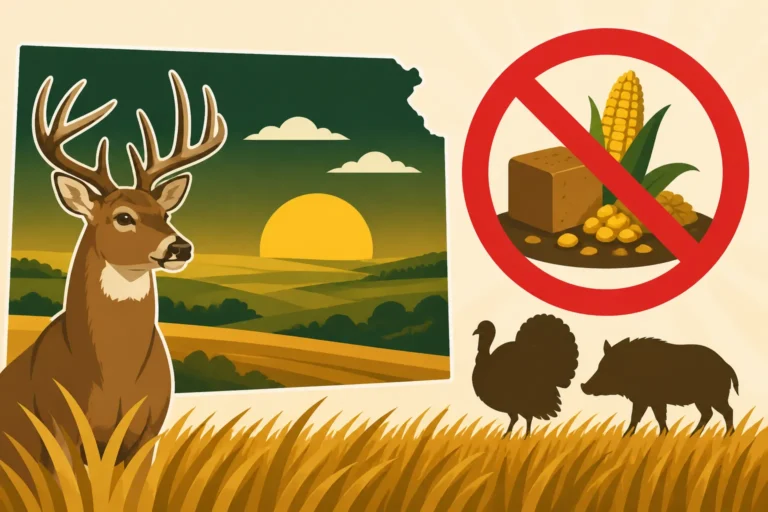
Common restrictions also include rules against baiting, placing mineral licks, or setting out feeders. Since it's private land managed by the KDWP, they want to maintain natural hunting conditions. It’s also common to find restrictions on dogs for certain periods, especially during deer season, to avoid disturbing other hunters or deer. Understanding Dogs on Kansas WIHA Land is important for bird hunters. Pay close attention to these nuances, as they are put in place for a reason, often to respect the landowner's farming operations, ensure safety, or protect other wildlife interests. A quick glance at the legend on your onX Hunt app or in the paper atlas can save you a potential citation.
Respecting Boundaries and Neighboring Private Property
This is perhaps the most critical rule for WIHA hunters: always know your boundaries. WIHA land is interspersed with private property that is not open to public hunting. Trespassing, even accidentally, can lead to serious legal consequences and gives the entire hunting community a bad name. Use your digital mapping tools like onX Hunt religiously, and cross-reference with physical markers on the ground. Never assume that just because one field is WIHA, the adjacent one is too. Finding Property Lines in Kansas is a skill every WIHA hunter must master.
Furthermore, when hunting near boundaries, always be mindful of where your shot will travel. Ensure you have a safe backdrop and are not shooting toward neighboring houses, farm buildings, or livestock. While retrieving downed game, if an animal crosses onto private land not enrolled in WIHA, you must gain permission from the landowner before crossing the fence. Just because you shot it on public ground doesn't give you automatic rights to enter private property to retrieve it. This demonstrates respect for private property rights and helps maintain positive relationships between hunters and landowners, which is vital for the continued success of the WIHA program.
Strategies for Success on Kansas Walk-In Hunting Ground
Okay, you know the rules and how to find the land. Now, how do you actually find success on these incredible Kansas Walk-In Hunting Access tracts? Hunting WIHA isn't always easy – it often sees more pressure than leased ground – but with the right strategies, you can absolutely fill tags and make incredible memories. It’s about being smart, persistent, and adaptable.
Pre-Season E-Scouting and On-the-Ground Reconnaissance
Your preparation for hunting WIHA should start long before you ever set foot in Kansas. E-scouting from home is your most powerful tool. Using aerial imagery on onX Hunt or the KDWP online atlas, you can identify potential bedding areas, food sources, water, and most importantly, access points that might go unnoticed by other hunters. Look for pinch points, unpressured corners of fields, thick cover, and funnels that deer or birds might use. E-Scouting Kansas Farm Country From Home is where you begin to unlock the secrets of a WIHA tract.
Once you’ve narrowed down some promising spots, if possible, conduct on-the-ground reconnaissance before the season opens. This isn't always feasible for non-residents, but even a quick drive-by can reveal crucial details that satellite images miss – a fence that's harder to cross than it looks, a newly harvested field, or an unexpected patch of cover. Pay attention to neighboring private land too, as deer and other game will often use WIHA as a daytime bedding area or travel corridor, retreating to private land at night. This gives you valuable insight into where game might be coming from or going to.
Adapting Tactics to Hunted Public Land
Hunting WIHA often means dealing with hunting pressure. Unlike private leases, you're sharing the land, and game animals on these tracts are usually more wary. This means you need to adapt your tactics. For deer, consider hunting mid-day when other hunters have left, or focusing on hard-to-reach areas that require a longer walk or a stealthier approach. Deer often learn to use thick cover within WIHA during hunting hours. Hunting Pressure Patterns on Kansas Public Land is a concept you'll become intimately familiar with.
For upland birds, working less obvious edges or thicker cover that other hunters might bypass can be productive. Don't be afraid to hunt the wind; birds will often hold tight in dense cover against a stiff breeze. If you encounter other hunters, be courteous and communicate. Maybe you can coordinate to work a field from opposite ends, or avoid crossing paths. Early season pressure can make later season hunts tougher, but also more rewarding if you can pattern the pressured animals. Being patient, quiet, and willing to go the extra mile will often pay off handsomely on WIHA.
Species-Specific Approaches to WIHA
The general principles of WIHA hunting apply across species, but tailoring your approach to your target game is key. For whitetail deer, focus on transition areas between food and bedding, or secluded timbered creek bottoms that offer security cover. The rut, especially in mid-November, can be a fantastic time to be on WIHA, as bucks are more prone to cruising. Kansas Whitetail Hunting Tactics Through the Rut can provide specific insights. Look for water sources, especially during early season, as deer will frequent them. Early-Season Bowhunting Over Water might be a viable strategy.
For upland birds like pheasant and quail, target heavy cover such as CRP fields, plum thickets, and tall grass waterways. Walking the edges of milo and corn fields, particularly where they meet dense cover, can flush birds. Upland Bird Hunting Kansas Grass and Milo Edges outlines excellent tactics. Turkeys on WIHA often require a run-and-gun approach, especially during the spring season. Locate roosting areas, listen for gobblers, and be prepared to move and call. Run-and-Gun Turkey Tactics on Kansas Walk-In Ground is a skill worth developing. Understanding the specific habitat requirements and behavior of your target species will always lead to greater success on WIHA.
Beyond WIHA: Integrating Public Access Options in Kansas
While WIHA is a phenomenal program, it's just one piece of the public land puzzle in Kansas. A truly well-rounded Kansas hunting strategy will consider all available public access options. By understanding the different types of public land, you can diversify your hunting opportunities and increase your chances of success, especially when a WIHA tract might not be ideal or is at capacity.
Contrasting WIHA with State Wildlife Areas and Corps Land
Kansas offers more public hunting land than just WIHA. State Wildlife Areas (SWAs), managed directly by KDWP, are another fantastic resource. These areas are specifically acquired and managed for wildlife habitat and public recreation. Unlike WIHA, they are typically open year-round for specific hunting activities, and they often have more robust infrastructure, such as parking lots and designated trails. Kansas State Wildlife Areas often hold significant wildlife populations and can be excellent options, though they too can experience pressure.
Another significant source of public access comes from federal lands, primarily managed by the U.S. Army Corps of Engineers around Kansas's many reservoirs. These "Corps Land" areas are typically found around the perimeter of large lakes and can offer diverse hunting opportunities, from timbered draws for deer to shorelines for waterfowl. Kansas Reservoirs and Corps of Engineers Land provide a different type of hunting environment, often with varying terrain compared to the agricultural lands typical of WIHA. The key is to understand the specific rules and regulations for each type of land, as they can differ significantly.
The Economic and Conservation Benefits of Walk-In Programs
The WIHA program is more than just access; it's a powerful engine for conservation and rural economic development. The payments landowners receive provide an incentive to maintain and enhance wildlife habitat on their property, rather than converting it to less wildlife-friendly uses. This helps preserve critical nesting cover for birds, secure bedding areas for deer, and maintain biodiversity across the state. Hunters, through their license and permit purchases, directly fund these programs, creating a circular system where hunter dollars support habitat, which in turn supports more hunting.
Beyond conservation, WIHA injects significant revenue into rural Kansas communities. Hunters traveling to these areas buy gas, stay in motels, eat at local diners, and purchase supplies from small-town businesses. This economic activity is crucial for many rural areas that might otherwise struggle. It showcases how hunting, when managed thoughtfully, can be a powerful force for both ecological health and economic vitality, demonstrating the true value of accessible wild spaces. It's a testament to the collaborative spirit between KDWP, landowners, and hunters.
Building a Comprehensive Public Land Strategy
To truly maximize your Kansas hunting experience, you need a flexible and comprehensive public land strategy. Don't put all your eggs in one WIHA basket. Instead, identify several WIHA tracts, a few State Wildlife Areas, and maybe some Corps Land within your target hunting units. This diversification ensures that if one area is too crowded, closed for a specific reason, or simply not holding game, you have viable alternatives. Public Land Deer Hunting in Kansas is a big undertaking, but having multiple spots ready greatly increases your chances.
Consider creating a tiered list of hunting spots: your "A" spots (top WIHA tracts or SWAs), "B" spots (good backups), and "C" spots (lesser-known areas for when everything else is busy). Always have a plan B, and even a plan C. Flexibility is your friend, especially when dealing with variables like weather, hunting pressure, and ever-changing game patterns. By combining the vast potential of WIHA with the established opportunities on state and federal lands, you can truly unlock the full public hunting potential that Kansas has to offer.
Overcoming Common Challenges on Kansas Walk-In Lands
Hunting WIHA land can be incredibly rewarding, but it's not without its hurdles. From navigating tricky access to dealing with the elements, being prepared for common challenges will make your experience far more enjoyable and increase your chances of success. A realistic mindset, combined with solid preparation, is your best defense against these potential frustrations.
Navigating Access Issues and Landlocked Parcels
One of the most common frustrations on WIHA is access. While maps clearly show WIHA tracts, the actual entry points might not always be obvious or conveniently located. Sometimes, a WIHA parcel might appear "landlocked" on your map, surrounded by private land with no obvious public road frontage. This doesn't necessarily mean it's inaccessible, but it means you'll need to study your maps carefully to find a legal access route, perhaps a small sliver of public road right-of-way, or a less obvious corner that touches public ground. Access Routes That Do Not Bump Deer are not always easy to find, but they are crucial.
Additionally, don't assume every fence line has a convenient stile or gate. You might need to climb fences, cross ditches, or navigate dense brush to reach the hunting ground. Always scout your access route ahead of time if possible, and be prepared for a longer walk than you initially anticipated. Remember, the "walk-in" part is literal. Park your vehicle responsibly and legally, ensuring you're not blocking a private drive or road. A good physical conditioning program will serve you well, as some of the best WIHA spots are often the ones furthest from the road.
Dealing with Environmental Variables
Kansas weather can be notoriously unpredictable, and it will undoubtedly throw some curveballs during your WIHA hunts. From sweltering early-season heat that demands careful hydration and game care, to bone-chilling December winds that test your resolve, you need to be prepared for anything. Plan your clothing in layers, always pack rain gear, and bring extra water, even if it's cold. Cold Weather Stand Clothing can make or break a late-season sit.
High winds, common in Kansas, can make calling difficult for turkeys and reduce deer movement in open areas. Heavy rains can turn dirt roads into impassable mud, blocking access to certain tracts. Drought conditions can dry up crucial water sources, forcing game to consolidate around the few remaining wet spots. Stay informed about local weather forecasts and be willing to adjust your plans. Sometimes, a miserable weather day can mean fewer hunters in the field, opening up opportunities if you're tough enough to brave it.
Ethical Considerations and Hunter Etiquette
Hunting WIHA is a shared experience, and good ethics and etiquette are paramount to ensuring the program's longevity and positive public perception. Always be respectful of other hunters you encounter. If you see someone already set up in a spot you intended to hunt, move on and find another area. Avoid sky-busting at upland birds or taking risky shots at deer just because you think someone else might get them. Remember Leaving No Trace on Walk-In Ground is essential; pack out everything you pack in, and perhaps even a little extra trash left by others.
Furthermore, remember you're on a landowner's property. Treat it with the same respect you would your own or a friend's. Close gates, don't damage fences, and absolutely do not leave trash. Ethical behavior builds goodwill with landowners and ensures they continue to participate in the program. Conversely, a few bad apples can lead to a landowner withdrawing their property, reducing public access for everyone. By being a responsible, respectful, and ethical hunter, you contribute directly to the future of public hunting in Kansas.
Disclaimer
This article is for general informational purposes only and does not constitute professional advice. Laws, prices and regulations vary by location and change over time. Consult a qualified professional for guidance on your specific situation.