Pre-Rut Antlerless Hunt Tactics
Stepping into the woods for an antlerless deer hunt during the pre-rut can sometimes feel like a puzzle. You know the deer are there, but their behavior isn't quite the same as during the frantic peak of the rut, and getting a good shot opportunity can be surprisingly challenging. This guide is all about cutting through that confusion, giving you the practical, on-the-ground tactics you need to consistently fill your freezer with Kansas venison during those crucial weeks before the big bucks truly get serious.
Understanding the Pre-Rut Antlerless Season in Kansas
The pre-rut in Kansas is a fantastic, often overlooked, window for hunters looking to tag out an antlerless deer. It's a time when deer are still heavily focused on food and security, but you might start to see the earliest hints of the breeding season as bucks begin to disperse and lay down some sign.
When and Why to Target Antlerless Deer
Kansas offers specific seasons and permits, like the readily available Kansas Antlerless Hunts and Filling the Freezer, that allow hunters to pursue antlerless deer. Typically, these seasons align with the early archery season, and later into the muzzleloader and early firearm opportunities, often preceding the peak of the whitetail rut. This timing is incredibly strategic. From a wildlife management perspective, harvesting does is vital for maintaining a healthy deer population, balancing herd numbers with available habitat, and ensuring a robust fawn crop year after year.
For us hunters, it's about putting meat in the freezer without the pressure of chasing a trophy buck, though a good-sized doe is a trophy in its own right. These permits are usually less expensive and easier to acquire than an either-sex tag, making them an excellent option, especially for new hunters or those focused on providing food for their families. Hunting does in the pre-rut also provides valuable intelligence. You can observe deer movement patterns, identify key feeding and bedding areas, and understand how weather fronts impact activity, all without disturbing the core areas you might save for a big buck later in the season.
Doe Behavior Before the Main Rut Kicks In
Before the whitetail rut peaks in Kansas, does are primarily concerned with two things: eating and security. They're still in their summer/early fall patterns, often traveling in family groups of a mature doe, her fawns, and yearling does. These groups are highly predictable, moving between food sources and bedding cover with remarkable consistency.
During the early and mid-pre-rut, does are primarily nocturnal or crepuscular, meaning their most active periods are dawn and dusk. They'll spend their days bedded down in thick cover, such as dense CRP Grass and Where Bucks Bed, timber points, or creek draws, venturing out to feed in crop fields, food plots, or acorn flats as the sun begins to rise and set. Their vulnerability comes from this predictability. Unlike rutting bucks that might wander miles, pre-rut does stick to a much smaller home range. Knowing where they're feeding, where they're bedding, and the routes they take in between is your golden ticket. Think of it like a commuter train – they're on a schedule, and they're using specific tracks. Your job is to find those tracks and be waiting.
Identifying Productive Areas for Doe Concentration
Finding where does concentrate is the first step to successful pre-rut antlerless hunting. Does, being social animals, will often be found in groups, especially around abundant food sources. In Kansas, this means focusing on agriculture and natural forage.
Crop fields are huge magnets. Standing corn, soybean fields, alfalfa plots, and especially early-ripening acorns in timbered areas are prime locations. Does will hit these spots hard. Look for trails leading into and out of these fields, especially Hunting Inside Corners of Crop Fields or edges that offer quick access to dense cover. Water sources are also critical, particularly in western Kansas where dry conditions can make them scarce. A secluded farm pond or a bend in a creek can be an absolute hot spot, as deer need to drink regularly, especially during warmer early season temperatures. You can learn a lot about their travel patterns by Reading a Kansas Creek Bottom for Deer Sign.
Beyond food and water, consider thermal and security cover. Does will bed in the thickest stuff they can find: cedar thickets, plum thickets, dense willow bottoms, or tall native grass. These areas provide protection from predators, harsh weather, and, crucially, from human disturbance. By identifying these three elements – food, water, and cover – and understanding how does move between them, you can pinpoint the most productive areas for your pre-rut antlerless hunt. Tools like GoHunt's mapping features can be incredibly helpful for e-scouting these transition zones from home, highlighting subtle elevation changes or cover types that might otherwise be missed.
Key Tactics for Pre-Rut Doe Hunting
Once you understand doe behavior, it's time to translate that knowledge into actionable hunting tactics. Success in the pre-rut is all about precision, patience, and minimizing your impact.
Scouting for Consistent Doe Patterns
Effective pre-rut doe hunting starts long before you ever step into a stand. It begins with diligent scouting, focusing on patterns rather than random sightings. Start by glassing fields during the evenings from a distance, using binoculars or a spotting scope to identify where does are entering and exiting. This low-impact approach ensures you don't spook deer from their routines. Look for clear, well-worn trails leading into food sources, especially those that offer cover right up to the field edge.
Trail cameras are an invaluable tool for patterning doe groups. Set them up on active trails, funnel points, or near preferred food sources. Pay close attention to the time of day the does are moving. Are they hitting a specific soybean field right at last light, or are they feeding heavily on acorns mid-morning? These details are critical for determining the best time to hunt. Don't just look for "a" deer, look for "the" deer – the specific family groups and their consistent habits. Remember, does are creatures of habit, so finding their routine is key. When you're Scouting Kansas Walk-In Tracts Before the Opener, focus on areas with diverse habitat that offer both excellent food and dense cover.
Effective Stand Placement for Antlerless Opportunities
Your stand placement for pre-rut does needs to prioritize concealment, wind direction, and a low-impact Access Routes That Do Not Bump Deer. Does are notoriously wary and will bust you for the slightest inconsistency.
- Elevated Stands: A treestand is often the preferred choice. It gets your scent above the deer's nose and offers a better vantage point. Place your stand along a primary travel corridor between bedding and feeding, or within bow range of a known feeding hotspot. Always position yourself based on the prevailing wind, ensuring your scent is blowing away from where the deer will approach. Focus on pinch points, terrain funnels, or areas where cover funnels deer into a predictable path.
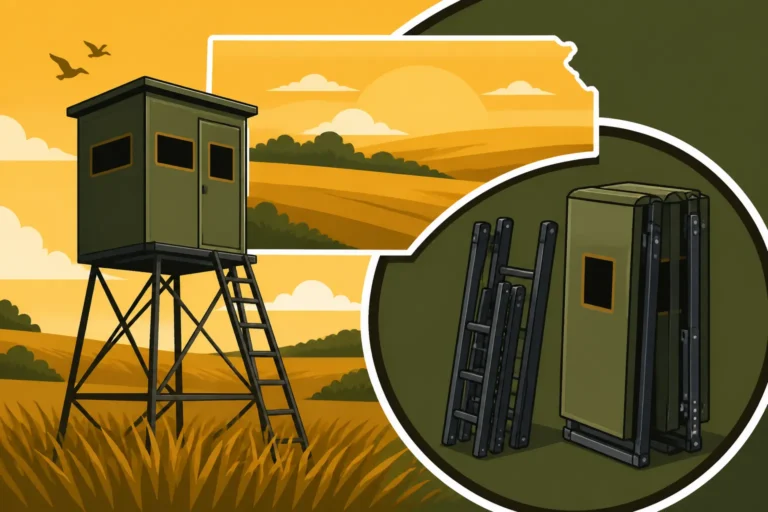
- Ground Blinds: In areas with limited trees, or for hunters who prefer a more stable setup, a well-brushed-in ground blind can be incredibly effective. Concealment is paramount here; the blind needs to blend seamlessly into the environment. Position it where you have a clear shooting lane into a primary travel route or feeding area, again paying close attention to the wind. Ground blinds are excellent for hunting Shelterbelts and Timber Points in Kansas Farm Country.
- Saddle Hunting: For the mobile hunter, a saddle offers incredible flexibility. You can quickly adapt to changing deer patterns or wind conditions. This method is particularly useful on public land where permanent stands aren't allowed or if you're exploring new areas. Being able to set up quietly and efficiently, often within minutes, allows you to capitalize on fresh sign.
No matter your chosen method, your entry and exit routes are just as important as the stand itself. You must be able to get in and out of your hunting location without alerting deer. Use natural terrain, thick cover, or even walk along a ditch or creek bed to mask your approach.
Calling and Scent Strategies That Attract Does
While the pre-rut isn't the chaotic calling frenzy of the peak rut, there are still effective calling and scent strategies for does. The goal here isn't to provoke a dominant buck, but to simply make deer feel comfortable or pique their curiosity.
- Doe Bleats and Fawn Bleats: These are your best friends. A soft doe bleat can often stop a cruising doe for a shot, or it can draw in a curious family group. A fawn bleat can be particularly effective. Does are maternal, and a distress bleat from a "fawn" will often bring a doe in to investigate, especially if she has fawns herself. Use these sparingly and subtly.
- Subtle Grunts: In the very late stages of the pre-rut, when you start to see some buck activity, a very light, social grunt might get the attention of a doe, making her curious about another deer in the area. Avoid aggressive grunts or snort-wheezes, as these are more buck-focused and can spook does.
- Scent Control: This is non-negotiable. Does have an incredible sense of smell. Use scent-eliminating sprays, wash your hunting clothes in scent-free detergent, and store them in airtight containers. Play the wind as your primary scent control method, but also consider using natural cover scents like pine or cedar to help blend in with the environment.
- Estrous Scents (with caution): While generally reserved for rutting bucks, a very small amount of fresh doe estrous scent might, in the late pre-rut, subtly attract a doe by making her curious about another doe in heat. However, use this with extreme caution as it can also attract non-target bucks or even spook wary does if overdone. For antlerless, stick to more natural, less aggressive scents.
The key with all calling and scent strategies during the pre-rut is subtlety. You're trying to mimic the natural sounds and smells of a calm deer herd, not create a panic.
Optimizing Your Setup for Antlerless Success
Beyond just finding the deer, your personal setup and approach can make or break a pre-rut antlerless hunt. This involves being prepared for the conditions and managing your impact on the hunting grounds.
Gear Considerations for Early Season Conditions
Kansas pre-rut weather can be famously unpredictable, often swinging from warm, humid mornings to cool, crisp evenings within the same hunt. Being prepared for these variations is crucial.
- Layered Clothing: Forget bulky winter gear. Early season calls for layers that can be added or removed as the temperature changes. Think moisture-wicking base layers, a light fleece, and a quiet, wind-resistant outer shell. This allows you to stay comfortable and avoid overheating on long walks or during midday sits. Brands like Sitka Gear or First Lite offer excellent layering systems designed for active hunting.
- Bug Control: Early fall often means mosquitoes and ticks are still active. Invest in good insect repellent, preferably one containing permethrin for your clothing and gear, and DEET for exposed skin. Tick checks are mandatory after every hunt, especially after walking through tall grass. Be mindful of Tick and Chigger Season in September.
- Hydration: Always carry plenty of water, even on cooler days. Dehydration can quickly sap your focus and energy. A good hydration pack integrated into your hunting pack is ideal.
- Optics: High-quality binoculars are essential for glassing fields and identifying deer at a distance without disturbing them. Rangefinders are also critical for ethical shot placement, especially with archery equipment.
- Scent Control Regiment: As mentioned, strict scent control is paramount. This includes laundry detergent, body wash, sprays, and storing clothes properly. Consider portable ozone generators or scent-absorbing bags for your gear to truly minimize human odor.
Choosing the Right Weapon for the Hunt
The weapon you choose will often depend on the specific Kansas deer season dates and your personal preference. Pre-rut antlerless opportunities typically span across multiple weapon types.
- Archery Season: The early archery season often falls squarely within the pre-rut. This offers a challenging but highly rewarding hunt, requiring close-range accuracy and extreme stealth. Compound bows, recurves, and crossbows are all viable. Practice consistently from various positions and ranges.
- Muzzleloader Season: Kansas's muzzleloader season usually takes place in September, which is a key part of the pre-rut. This provides a longer-range option than archery but still demands good shot placement. Muzzleloader Deer Tactics in Warm September Weather will require careful planning around cooling the deer quickly.
- Firearm Season (Limited): While the main firearm season is later in December, some special antlerless-only opportunities or youth/disability firearm seasons may occur during the pre-rut timeframe. Always check the specific Kansas Deer Season Dates by Weapon for your unit. If using a firearm, ensure it's sighted in perfectly and you're comfortable with ethical shot placement at your anticipated ranges.
Regardless of your weapon, ethical shot placement is non-negotiable. Practice frequently, know your limitations, and always strive for a quick, clean kill.
Minimizing Pressure on Your Hunt Area
One of the biggest mistakes hunters make, especially when hunting does, is over-pressuring a good spot. Does are extremely sensitive to human intrusion, and if you bust them repeatedly, they will change their patterns or even abandon the area entirely.
- Rotate Stands: Don't hunt the same stand day after day, especially if you're not seeing deer. Have multiple stand locations and rotate them based on wind direction, time of day, and recent deer activity.
- Low-Impact Entry and Exit: Always use Access Routes That Do Not Bump Deer. If possible, enter and exit under the cover of darkness. Avoid walking through bedding areas or directly across major food sources. Think like a predator – silent, unseen, and strategic.
- Limit Your Time in an Area: If a spot isn't producing, don't force it. Pull out quietly and try another location. Sometimes, a single, bad entry or exit can ruin a spot for a week or more.
- Observe from a Distance: Before committing to a hunt, spend time glassing from afar to confirm deer patterns. This allows you to gather intel without leaving your scent or presence in the actual hunting area.
- Consider Public Land Pressure: On public lands, deer are even more sensitive to pressure. Understanding Hunting Pressure Patterns on Kansas Public Land is vital. Weekdays often see less pressure than weekends, and hunting deeper, harder-to-reach areas can pay dividends. If you're using walk-in access, be mindful of how your actions impact other hunters and the deer herd.
By minimizing your pressure, you keep the does comfortable and predictable, increasing your chances of success throughout the pre-rut season.
Field Care and Logistics for Early Season Harvests
Successfully harvesting an antlerless deer is just the first step. Proper field care and logistics are critical, especially during the often-warm pre-rut conditions, to ensure your venison is high quality.
Quick Recovery and Field Dressing
When you make a good shot on an antlerless deer during the pre-rut, your priority should be a quick recovery. Unlike some rutting bucks that might run a long way, does often don't travel as far if they're hit well, largely due to their less-agitated state. However, the warmer temperatures of early fall mean every minute counts.
- Wait, But Not Too Long: Give the deer time to expire, usually 15-30 minutes for a good shot. But don't wait hours, especially if temperatures are above 50-60 degrees Fahrenheit. If your shot was marginal, extend the wait time to 1-2 hours, but weigh this against the temperature.
- Begin Trailing Swiftly: Once you've given it sufficient time, start your blood trail. Mark the last spot you saw the deer and where you shot it. Look for blood, broken branches, or disturbed leaves. If the trail is sparse, expand your search.
- Field Dressing is Key: As soon as you recover the deer, begin Field Dressing in Warm Kansas Weather immediately. The goal is to remove the entrails as quickly as possible to allow the carcass to cool down internally. This prevents bacterial growth and spoilage. Position the deer on a slight incline if possible, to aid drainage. If you're alone and it's a large doe, getting the deer cooled and processed might require quartering the animal in the field.
Getting Your Harvest Cooled and Processed
Once field dressed, the next critical step is getting the deer cooled down rapidly and properly processed. This is where many hunts go wrong in warmer weather.
- Cooling the Carcass: If you're far from a locker plant or your home, bring plenty of ice. Pack the body cavity with ice, especially if you have a long drive. Portable coolers and game bags are your friends here. If you're quartering the deer in the field, get the quarters into separate coolers with ice as soon as possible.
- Transport: Have a plan for getting the deer out of the field. A deer cart can be invaluable, especially on walk-in access or uneven terrain. If you're hunting alone, consider quartering the animal to make it more manageable to pack out.
- Locker Plants: Many Kansas towns have local locker plants that can process your deer for a fee. Call ahead to confirm their operating hours and capacity, especially during peak season. This is often the best option for quick, professional processing.
- Home Processing: If you process your own deer, ensure you have a clean, cool space. Get the deer skinned and broken down into primal cuts as quickly as possible, then refrigerate immediately.
Reporting Your Harvest in Kansas
Kansas requires all deer harvests to be reported. This is not just a formality; it's vital data that helps the Kansas Department of Wildlife, Parks and Tourism (KDWP) manage deer populations effectively.
- Electronic Check-In: Kansas utilizes an electronic check-in system, making reporting convenient. You can typically report your harvest online via the KDWP website or through the "Go Outdoors Kansas" mobile app. You'll need your permit number and information about the harvest (date, unit, sex, antler points if applicable).
- Tagging Requirements: After harvesting your deer, you must immediately attach your deer permit/tag to the animal. This tag needs to stay with the carcass until it reaches your home, a locker plant, or a taxidermist.
- Harvest Deadline: Pay attention to the reporting deadline, which is usually within 48 hours of the harvest. Failure to report a harvest can result in fines or penalties. Ensure you understand all the rules for Kansas Electronic Deer Check-In.
Properly caring for your harvest, from field dressing to reporting, is a crucial part of being a responsible hunter and ensures that the delicious venison you worked hard for is preserved and enjoyed.
Disclaimer
Please be aware that hunting regulations, seasons, and permit requirements in Kansas can change. Always consult the official Kansas Department of Wildlife, Parks and Tourism (KDWP) regulations and brochures for the most current and accurate information before planning any hunt. This guide is for informational purposes only and should not be considered a substitute for official KDWP publications.