Pass Shooting Prairie Chickens
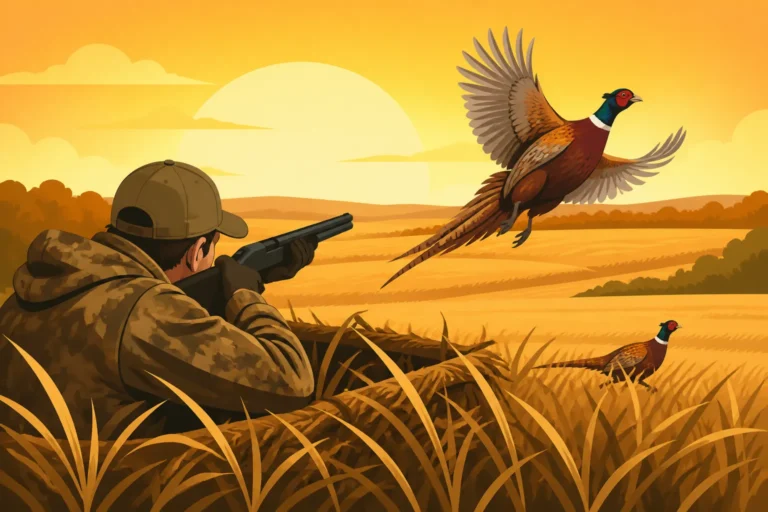
The vast, open spaces of Kansas are incredible, but chasing prairie chickens can feel like trying to catch smoke, especially when they're flushed wildly out of range. It’s frustrating to hike for miles only to have birds bust 100 yards away, leaving you with nothing but a longing glance. This guide is all about mastering the art of pass shooting prairie chickens, a tactic that leverages their predictable flight patterns to put you in the right place at the right time for a much more successful and less exhausting hunt.
Understanding Prairie Chicken Behavior for Pass Shooting
Successfully pass shooting prairie chickens isn't about luck; it's about understanding their daily rhythm and habits. These birds are creatures of habit, and once you key into what makes them tick, you can anticipate their movements and set yourself up for success.
Daily Routine and Flight Paths
Prairie chickens, particularly the Greater Prairie Chickens found across the Flint Hills, have a pretty consistent daily schedule. Their days are largely dictated by two things: food and safety. In the early morning, often right around legal shooting light, these birds will typically fly from their overnight roosting cover to primary feeding areas. These feeding areas might be nearby agricultural fields, like milo or wheat stubble, or even shortgrass prairies rich with forbs and insects, depending on the time of year. As the sun gets higher and the temperature rises, especially in warmer periods, they’ll often move back to denser cover for loafing and protection from predators.
In the late afternoon, they reverse the pattern, heading back to feed before returning to their roosts as dusk settles. What’s crucial for pass shooting is that these flights often follow the same general pathways day after day. They'll use natural travel corridors, like the edges of draws, subtle ridges, or even shelterbelts. By observing these consistent flight lines, you can position yourself strategically. Think about how deer use specific trails; prairie chickens do something similar in the air. For more on how they move, you might find insight in articles discussing Prairie Chicken Tactics in Flint Hills Grass.
Impact of Weather and Time of Day
Weather plays a huge role in how prairie chickens fly. A strong wind, for example, can make them fly lower to the ground, trying to stay out of the direct blast, and also significantly faster. This means your lead on a flying bird will need to be adjusted drastically. They might also alter their flight paths to use terrain features for wind breaks. On a calm day, their flights might be higher and more leisurely.
Temperature also dictates when they’re most active. On hot September days, for instance, their peak activity will be condensed into the first hour or two of daylight and the last hour before sunset. Midday flights will be almost non-existent as they seek shade and rest. Conversely, on cooler, overcast days, their flight patterns might be a bit more spread out throughout the morning and afternoon. Understanding these nuances helps you decide when and where to commit your time for optimal pass shooting opportunities. For instance, knowing the Early Season Prairie Chicken Timing can really help you plan.
Identifying Prime Pass Shooting Locations
Finding the "X" on the map for pass shooting prairie chickens isn't as simple as driving around. It requires a bit of detective work and an understanding of the landscape.
Locating Leks and Feeding Areas
The first step in pinpointing excellent pass shooting spots is to locate their booming grounds, also known as leks. These are communal display areas where the males gather in the spring to perform their elaborate courtship rituals. While you won't be hunting them during the spring, active leks in the spring often indicate core prairie chicken habitat, and birds will often roost and feed in areas surrounding these leks during the fall. You can often find information on known lek locations through the Kansas Department of Wildlife, Parks and Tourism (KDWP) or by talking to local landowners.
Once you’ve identified potential lek areas, the next puzzle piece is connecting those to feeding grounds. Prairie chickens are grazers, but they also love agricultural crops. Look for fields of standing milo, cut corn, or even alfalfa fields within a mile or two of known prairie chicken habitat. These are prime feeding destinations. Digital scouting tools like GoHunt are invaluable here, allowing you to examine aerial imagery for habitat types, field boundaries, and potential travel corridors between roosting cover (often tall grass or CRP fields) and feeding areas. By identifying these critical links, you can predict flight paths. You'll find more detail on their habitat and where they gather in Prairie Chicken Range and Leks.
Utilizing Topography and Cover
Kansas might seem flat to the untrained eye, but it’s full of subtle topographical features that prairie chickens utilize for travel. Small draws, creek beds, gradual ridges, and even linear features like fence rows or shelterbelts can act as funnels, concentrating bird movement. Imagine a wide-open prairie; a slight depression in the land, even just a few feet lower, can become a preferred flight path for birds trying to conserve energy or avoid strong winds.
When you're pass shooting, concealment is paramount. Prairie chickens have excellent eyesight. You’ll need to position yourself downwind of their anticipated flight path and make sure you’re completely hidden. This might mean digging a shallow pit, tucking into a natural depression, or setting up a layout blind that’s perfectly brushed in. Avoid standing on skyline ridges where your silhouette will be easily visible. The goal is to blend seamlessly into the environment so the birds fly within range without detecting you. Understanding how to use natural features is key; even learning about Hunting Terrain Funnels in Flat Country for deer can provide applicable insight into how animals use the landscape. And remember, concealing yourself well is crucial, much like when working with Ground Blind Brushing In.
Essential Gear and Setup for Pass Shooting
Having the right gear and setting up effectively are critical for pass shooting success. It's not just about the shotgun; everything from your ammo to your camouflage plays a role.
Shotgun and Ammunition Choices
When it comes to shotguns for prairie chickens, a 12-gauge or 20-gauge are your most versatile options. The 12-gauge offers a bit more punch and shot payload, which can be advantageous for those longer passing shots, but a 20-gauge is lighter to carry and still plenty effective at reasonable ranges. Choose a shotgun that you can swing smoothly and instinctively. Semi-automatics or pump-actions are popular choices, allowing for quick follow-up shots if needed.
For chokes, modified or improved cylinder are generally excellent starting points. They offer a good balance of pattern density and spread, capable of reaching out to 35-40 yards effectively. If you find birds are consistently flying further, a full or improved modified might be necessary, but remember that tighter chokes are harder to hit with.
Ammunition-wise, shot sizes 4, 5, or 6 are standard for prairie chickens. Many hunters prefer lead shot where legal, as it carries more energy. However, if you're hunting on federal lands or in areas with specific non-toxic shot regulations, steel shot is a must. If using steel, consider going up one shot size (e.g., use steel 3s instead of lead 4s) to compensate for the lighter density of steel. Pattern your chosen load and choke combination before the hunt. This lets you see exactly how your shotgun performs at various distances, revealing its effective range and pattern density.
| Shotgun Gauge | Recommended Choke | Shot Size (Lead) | Shot Size (Steel) | Effective Range (yards) |
|---|---|---|---|---|
| 12-Gauge | Modified, IC | 4, 5 | 3, 4 | 30-45 |
| 20-Gauge | Modified, IC | 5, 6 | 4, 5 | 25-40 |
Camouflage and Concealment
Prairie chickens are incredibly wary, and their eyesight is phenomenal. Your camouflage needs to blend perfectly with the open prairie environment. Earth tones, tans, browns, and muted greens, often with some broken-up patterns that mimic grassland, will be your best bet. A full head net and gloves are non-negotiable to conceal any exposed skin, which can shine and alert birds.
Beyond your clothing, your physical setup is paramount. A low-profile layout blind is often the most effective tool, especially in expansive grasslands. Make sure you brush it in heavily with local vegetation – grass, weeds, stubble – until it looks like a natural bump in the landscape. If a blind isn't an option, you can dig a shallow pit or position yourself against a bank or in a natural depression. The key is to eliminate any unnatural outlines or movement. Good concealment ensures birds don't flare prematurely, giving you the best chance at a clean shot. This attention to detail with concealment ties into best practices for Ground Blind Brushing In. Don't forget binoculars to scan the horizon and a rangefinder to gauge distances.
Decoys and Calling
For traditional upland hunting, decoys and calling are often central, but for pass shooting prairie chickens, they play a much smaller, almost negligible role. The whole premise of pass shooting is to intercept birds that are already in flight, traveling from one point to another. They aren’t typically looking to decoy into a spread like ducks or geese, nor are they as responsive to calls as turkeys.
That said, in some specific scenarios, a few strategically placed prairie chicken decoys might offer a slight visual attraction to birds flying very high or on the fringes of your setup. They might pique curiosity enough for a slight deviation in flight, but don't count on them to "pull" birds in from a distance. Similarly, while you can attempt a cluck or cackle with an open-reed call, it’s rare for flying prairie chickens to alter their course significantly based on calling. Focus your energy on concealment and positioning rather than relying on these tools.
Pass Shooting Techniques and Safety
Once you’re set up, the real fun (and challenge) begins. Hitting fast-flying prairie chickens requires precise technique and, above all, a commitment to safety.
Reading Flight Paths and Lead
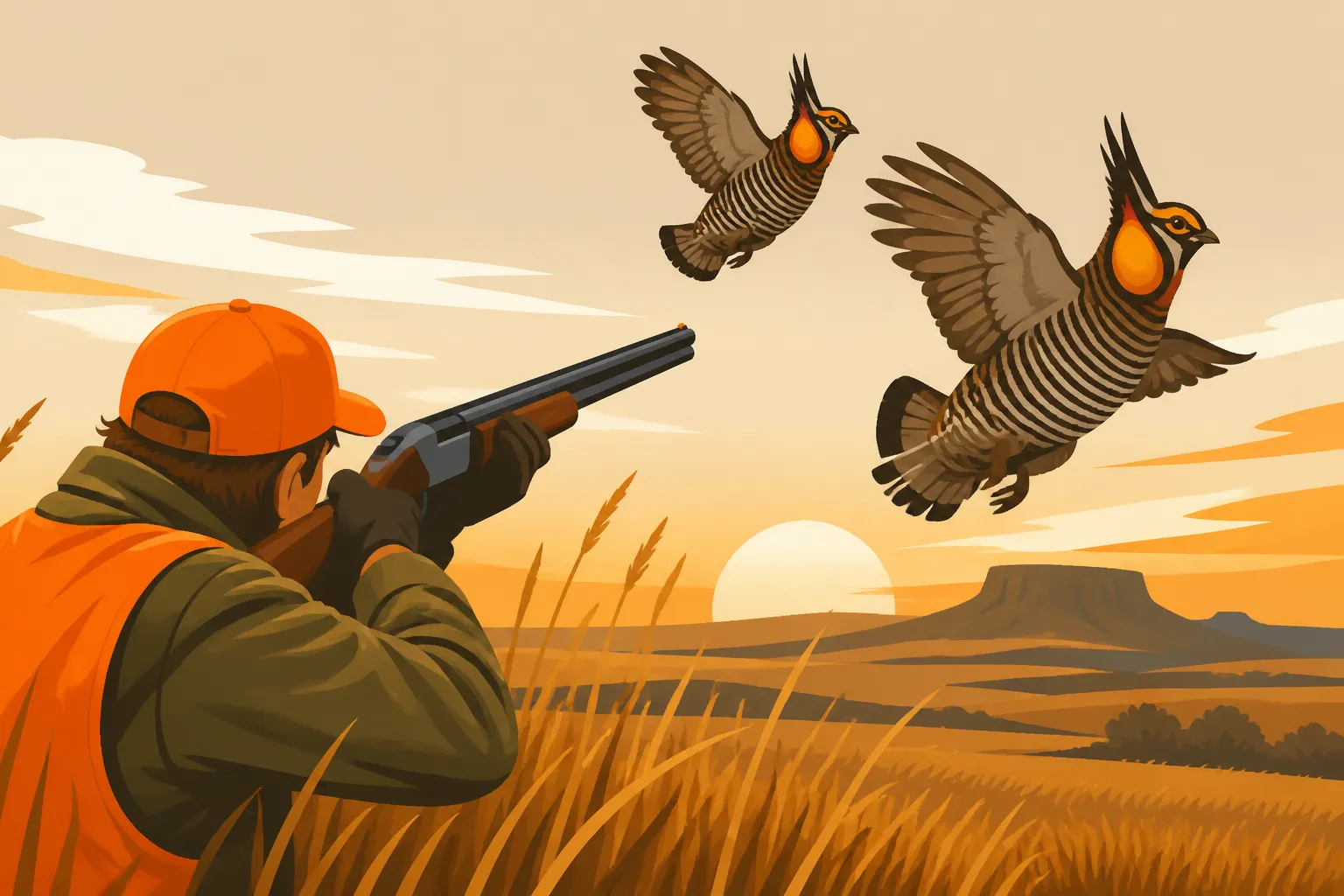
Successfully hitting a prairie chicken on the wing is all about reading its flight path and applying the correct lead. These birds can be incredibly fast and often fly erratically, especially if spooked. When you see birds approaching, try to identify a primary flight line. Are they cutting across a ridge, following a draw, or hugging a fence line? Anticipating their general direction helps you prepare your swing.
For the shot itself, a smooth, continuous swing is vital. Pick up the bird as early as possible, bring your gun up to your shoulder, and swing through the bird. The exact lead will depend on the bird's speed, distance, and angle of flight. A bird flying directly across will require more lead than one quartering away. Practice swinging with an empty gun, imagining different flight patterns. Most hunters find a sustained lead or swing-through method most effective. Remember, your eyes should be on the bird, not the end of your barrel. Focusing on the bird and letting your body make the natural swing is what leads to consistently breaking clays and bagging birds.
Ethical Shooting and Shot Selection
As with any hunting, ethical shooting is paramount. This means only taking shots within your effective range – typically 30-45 yards with a shotgun. "Sky-busting," or taking extremely long shots, often results in wounded birds that are difficult to recover. It's frustrating to watch birds fly by, but it’s far better to pass on a marginal shot than to risk wounding an animal. Patience is a virtue in pass shooting; wait for the birds to commit and get within your comfortable killing range.
When a bird is hit, mark its fall immediately and precisely. Prairie chickens can be tough and often glide a long way after being hit. Having a good dog is an immense advantage for recovery, but if you're hunting without one, pay extra attention to landmarks where the bird went down. If you need to track a wounded bird, doing so carefully and methodically is key, just as it would be if you were tracking a deer, ensuring every effort is made for a clean recovery. The core principle of making a clean kill applies whether it's a small bird or large game, similar to the focus on Shot Placement on a Whitetail at Twenty Yards.
Safety Considerations
Safety should always be your top priority. When pass shooting, you're often in open country, possibly with other hunters around. Always be aware of your muzzle direction and know where your hunting partners are. Have clear shooting lanes and ensure you have a safe backdrop for every shot. Never shoot at low-flying birds if there's any chance of a pellet ricochet toward another person or structure.
In Kansas, while prairie chicken season often falls outside the core firearm deer season, if you're hunting during an overlap, or if regulations require it for upland birds, remember that Hunter Orange Rules During Firearm Season should be followed strictly. Even if not mandated, wearing some hunter orange on your person or blind is a smart safety measure, making you visible to other hunters. Always let someone know where you're hunting and when you expect to return, especially if you're alone in remote areas. A detailed plan can be a lifesaver, as discussed in Leaving a Trip Plan for a Public Hunt.
Disclaimer
Hunting is an inherently dangerous activity. Always prioritize safety, follow all local, state, and federal hunting regulations, and be familiar with your equipment. The information provided in this guide is for informational purposes only and should not be taken as legal or professional advice. Always consult official regulations and consider professional guidance when necessary.