Turkey Poult Survival and Rainfall
Kansas wild turkey poult survival rates, heavily impacted by spring rainfall and temperature, dictate local population trends.
Know what you’re after.
Big game, small game, upland birds, and waterfowl — identification, behavior, rut and migration timing, and how each species moves through the season.
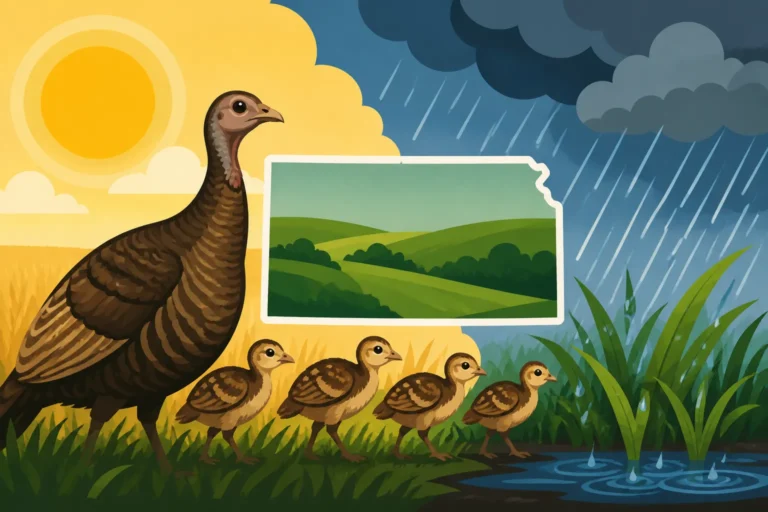
Kansas wild turkey poult survival rates, heavily impacted by spring rainfall and temperature, dictate local population trends.
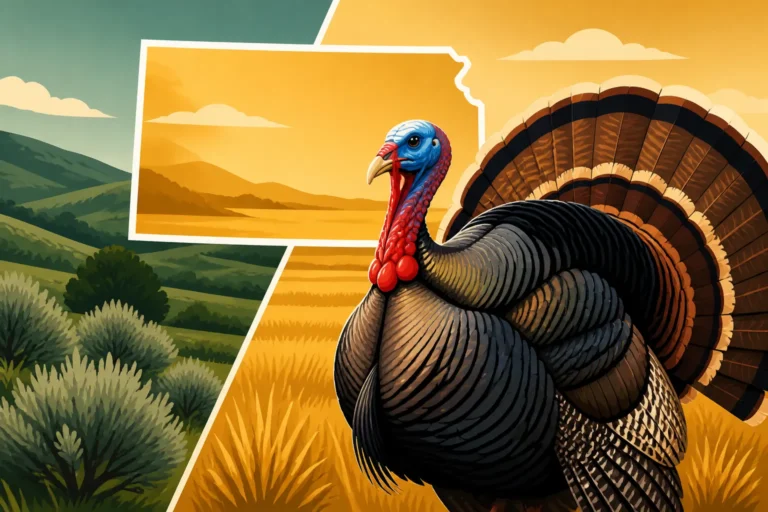
Kansas hybrid turkeys occur where Rio Grande and Eastern subspecies overlap, creating birds with blended physical characteristics.
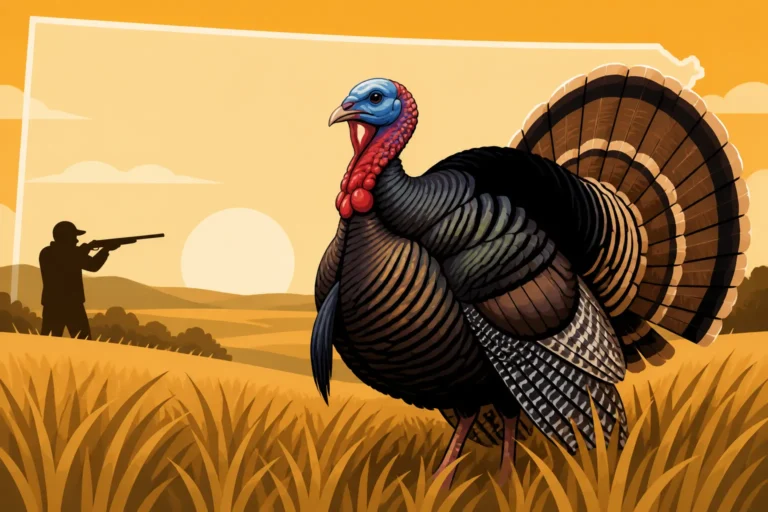
Eastern turkeys in Kansas inhabit dense river bottoms and require specialized hunting strategies tailored for wooded terrain.
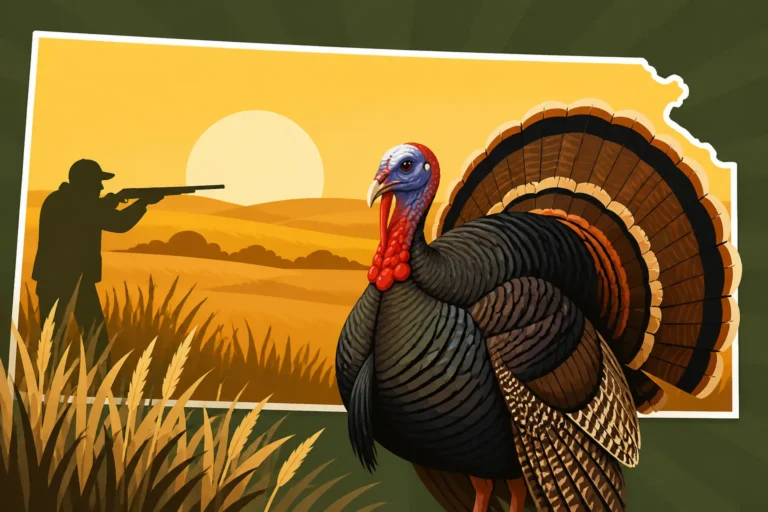
Rio Grande wild turkey populations primarily inhabit western and central Kansas, stretching from Wichita and Manhattan to the Colorado border.
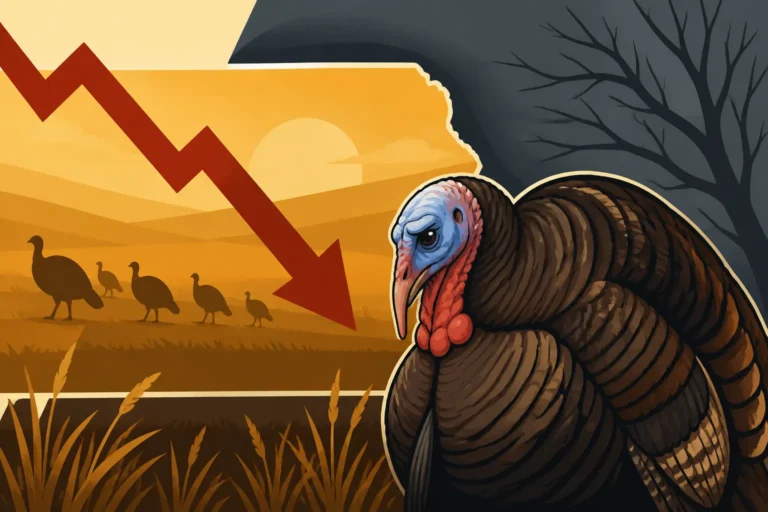
Kansas wild turkey populations and hunter harvest numbers fell due to habitat loss, agricultural changes, and poor poult survival.
Current Kansas turkey population estimates, regional trends, historical data, and wildlife department survey numbers explained clearly.
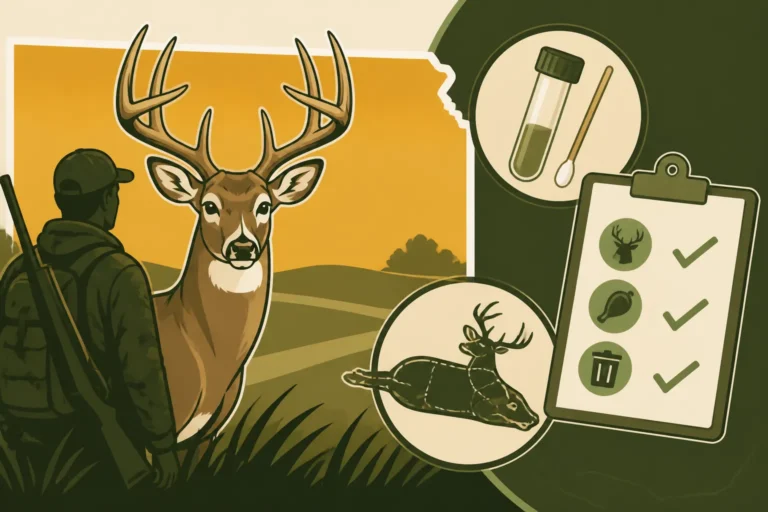
Kansas deer hunting regulations and testing protocols for chronic wasting disease help hunters manage carcasses and protect herd health.
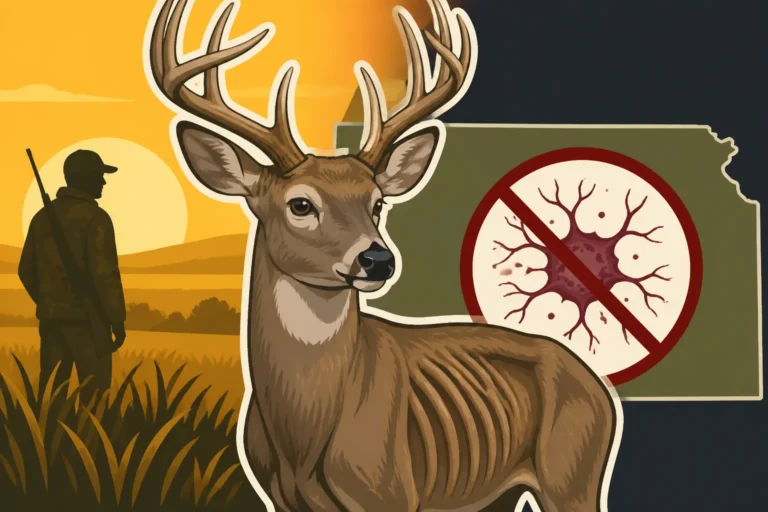
Chronic Wasting Disease affects deer herds in Kansas, spreading prions that cause fatal neurological symptoms since 2001.
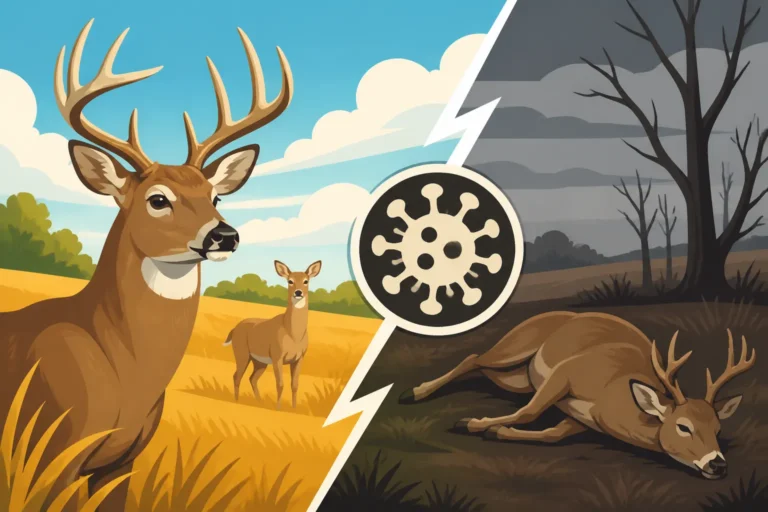
Epizootic Hemorrhagic Disease causes internal hemorrhaging in Kansas deer populations through biting midge transmission during late summer.
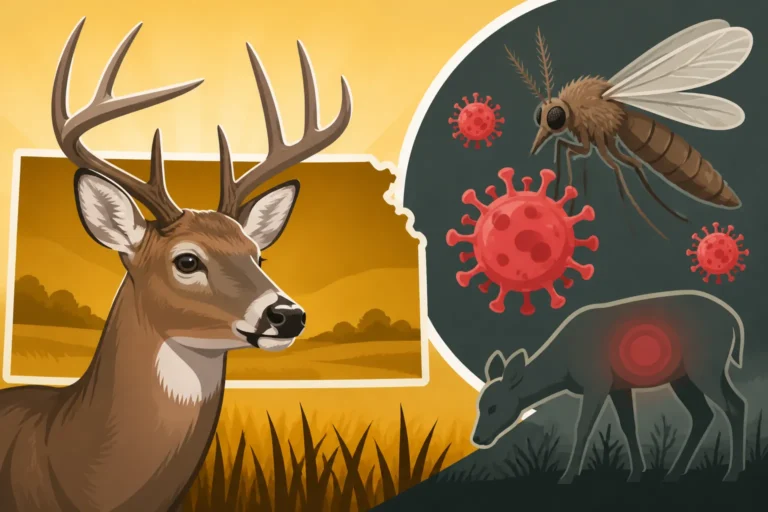
Epizootic Hemorrhagic Disease causes severe localized deer die-offs in Kansas, transmitted by biting midges during late summer.