Soil Fertility and Antler Growth
Kansas soil fertility and plant nutrition dictate whitetail deer antler growth through calcium, phosphorus, nitrogen, and magnesium.
Know what you’re after.
Big game, small game, upland birds, and waterfowl — identification, behavior, rut and migration timing, and how each species moves through the season.
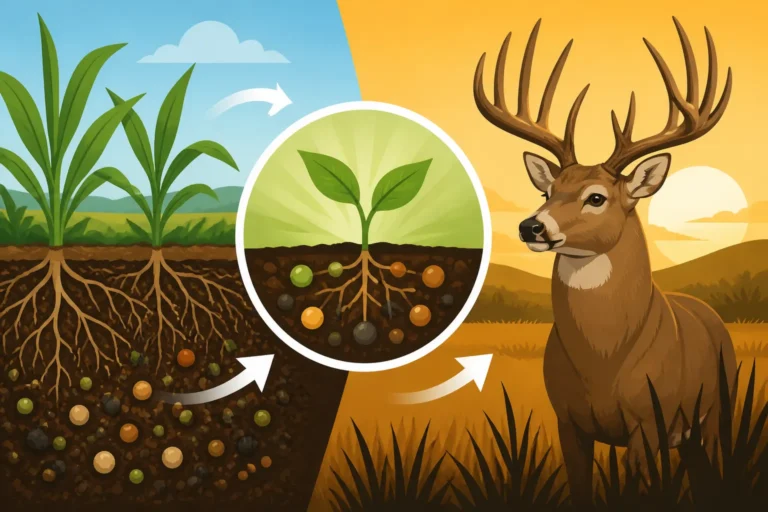
Kansas soil fertility and plant nutrition dictate whitetail deer antler growth through calcium, phosphorus, nitrogen, and magnesium.

Rich Kansas topsoil, crop rotation, and CRP acres provide nutrition and habitat allowing whitetail bucks to reach maturity.

Kansas whitetail deer age classes, longevity factors, and visual cues for estimating animal maturity in the field.

Kansas whitetail rut timing, driven by photoperiod and genetics, creates peak deer movement from late October through mid-November.
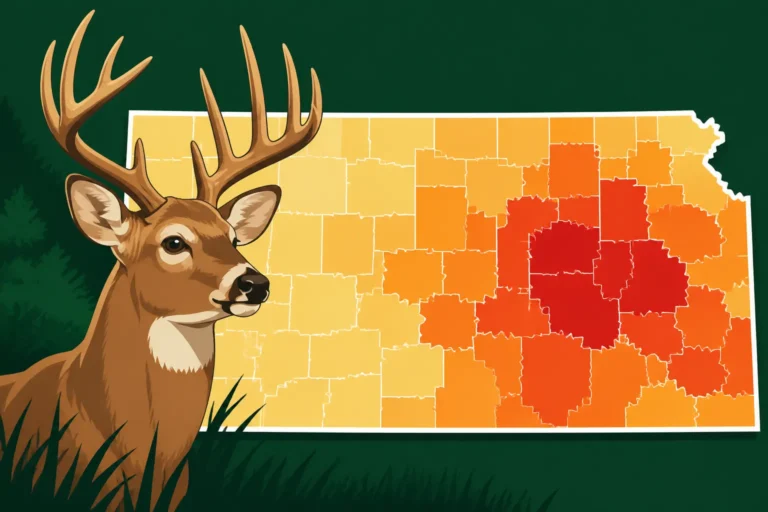
Kansas deer density numbers, population surveys by wildlife officials, and environmental factors help hunters pick the best management units.

Kansas Department of Wildlife and Parks uses harvest data and surveys to estimate deer population trends and manage herds.
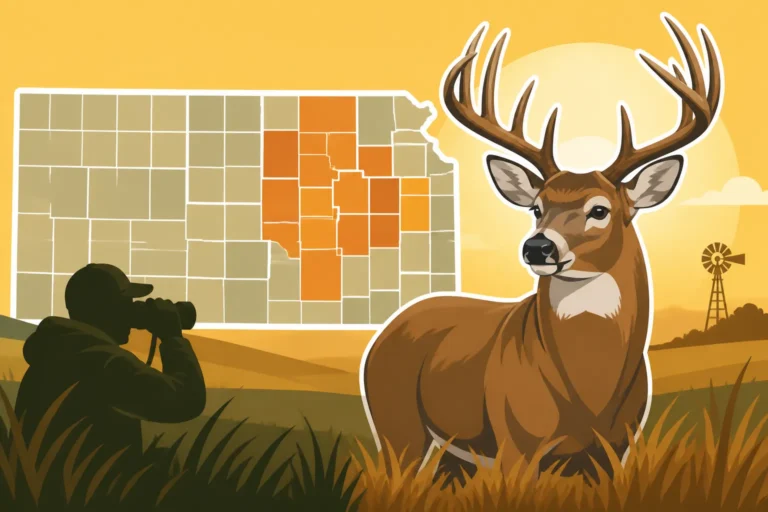
Kansas counties producing mature trophy whitetail deer rely on age, genetics, nutrition, and diverse agricultural habitat.

Kansas Boone and Crockett buck counts explain minimum net entry scores of 170 for typical and 195 for non-typical whitetail deer antlers.

Kansas whitetail deer nutrition, age, and genetics influence antler scores, helping hunters set realistic harvest expectations for mature bucks.

Rich Kansas soils, high-protein crops, and sound herd management help whitetail deer grow massive antlers and heavy racks.