Eastern and Hybrid Turkeys in Kansas
It's frustrating when you're trying to figure out the wild turkey situation in Kansas, especially with all the talk about Rio Grandes. Many hunters get confused, wondering if there are really Eastern turkeys here, or if they're just legends. This guide is going to clear up that confusion, diving deep into the world of Eastern and hybrid turkeys in Kansas so you can understand their unique characteristics, where to find them, and how to successfully hunt these elusive birds.
Understanding Kansas Turkey Subspecies
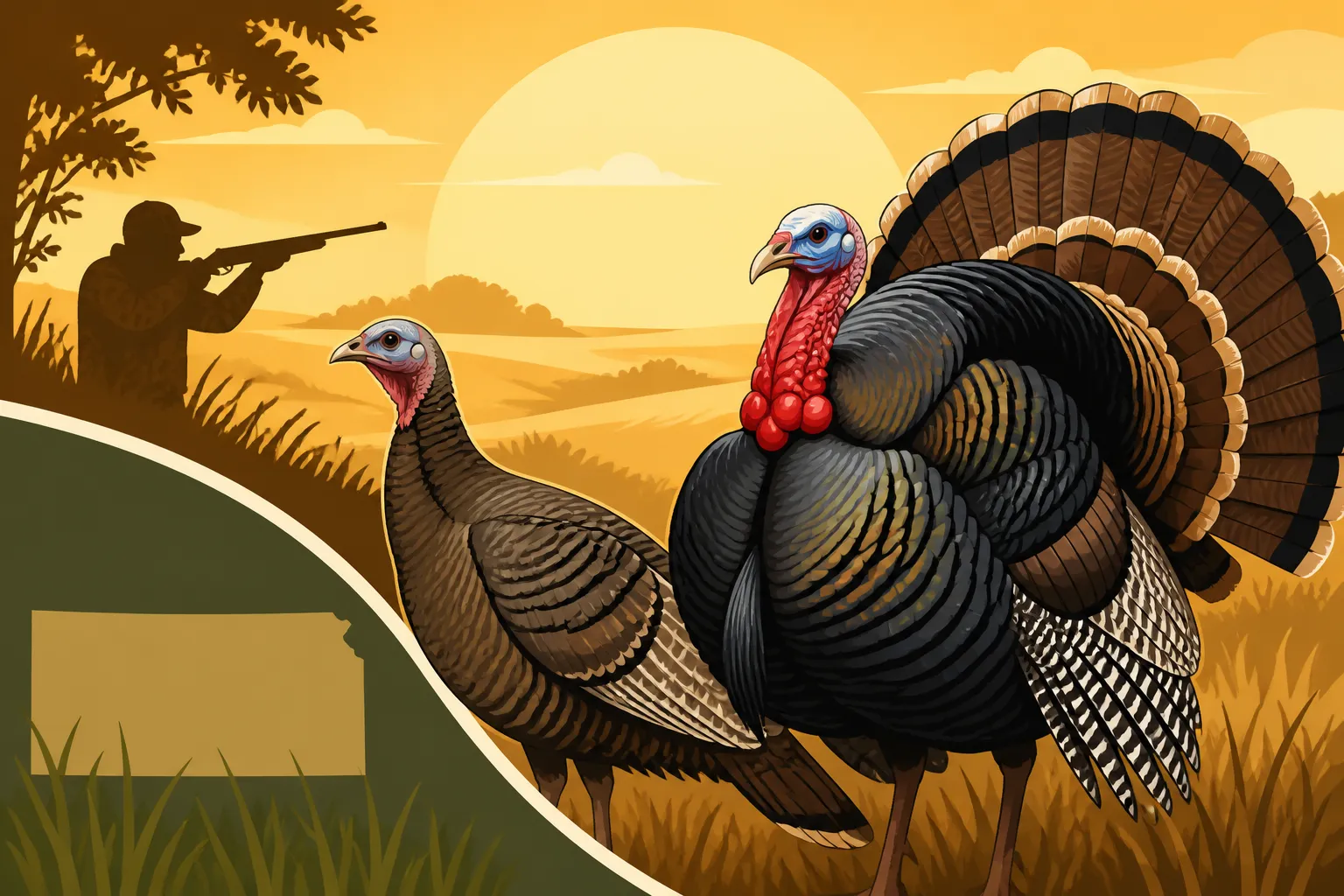
When most people think of Kansas turkeys, their minds immediately go to the classic Rio Grande. And while Rios certainly dominate much of the state, especially the western and central regions, the story isn't quite that simple. Kansas is a fascinating intersection of turkey genetics, where pure Easterns still hold out in some corners, and a vibrant, often confusing, population of hybrids thrive where the ranges of these two subspecies overlap. Understanding these distinctions is crucial for any hunter hoping to fill a tag.
The Pure Eastern Turkey in Kansas
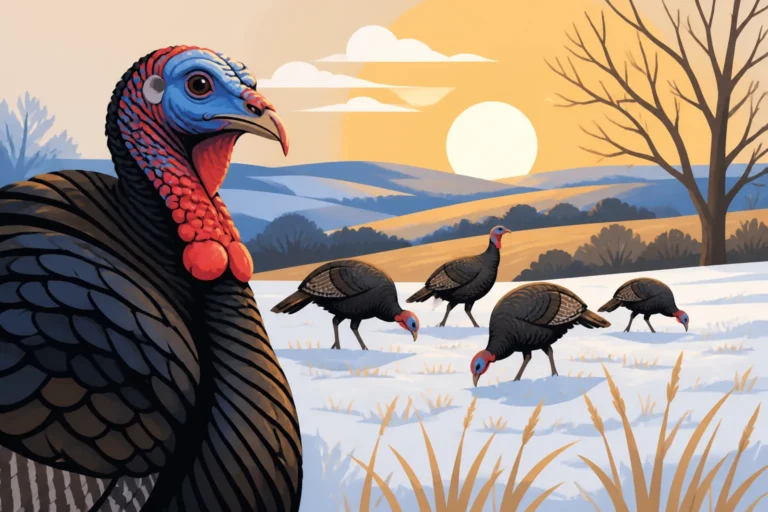
The pure Eastern wild turkey (Meleagris gallopavo silvestris) is the most widespread subspecies across North America, famous for its deep, resonant gobble and preference for extensive timber. In Kansas, you're primarily going to find these birds in the far eastern and southeastern parts of the state, particularly in counties bordering Missouri and Oklahoma. Think of areas with larger, contiguous blocks of mature timber, deep river bottoms, and more consistent rainfall that supports a denser forest understory. These aren't the open-country birds you might encounter further west. Easterns typically have a darker body plumage with rich copper and bronze iridescence, and their tail feathers are tipped with dark chestnut or chocolate brown, lacking the buffy-yellow tips common on Rios. Their vocalizations are often described as louder and more guttural than Rios, a characteristic that makes them a thrilling challenge for callers. For those interested in the broader picture of these birds, understanding Kansas Wild Turkeys and the Population Decline can provide valuable context on their historical presence and challenges.
Hunting Easterns here feels much like hunting them in, say, Missouri or Arkansas. You're often working hilly, wooded terrain, focusing on ridges, creek bottoms, and the dense cover that these birds favor for roosting and feeding. They're typically less tolerant of open fields and tend to stick closer to heavy timber, though they will venture out into agricultural fields adjacent to woods, especially for insects or waste grain. Their movements can be more predictable within their timbered home ranges, but their wariness is legendary.
The Rio Grande Dominance and Western Expansion
The Rio Grande wild turkey (Meleagris gallopavo intermedia) is undeniably the most prevalent subspecies in Kansas, especially as you move west of the Flint Hills. These birds are perfectly adapted to the more open, agricultural landscapes interspersed with riparian corridors, shelterbelts, and small woodlots. They're often seen strutting in open wheat fields or picking through corn stubble, a common sight for anyone Hunting Inside Corners of Crop Fields. Rios are generally lighter in plumage than Easterns, with iridescent green and red highlights, and their tail fan feathers are tipped with a distinctive light tan or buff color. Their gobble is usually higher-pitched and less booming than an Eastern's, though still undeniably impressive.
Over the years, Rio Grande turkeys have expanded their range significantly, pushing eastward, often into areas that historically were Eastern strongholds. This expansion is partly due to their adaptability to a mosaic of agricultural and woodland habitats, thriving where Easterns might struggle with habitat fragmentation. While their numbers have fluctuated, you can learn more about Kansas Turkey Population Trends to get a clearer picture of their health. This eastward march is precisely what sets the stage for the fascinating phenomenon of hybrid turkeys in Kansas, creating a broad transition zone where genetic mixing occurs.
The Fascinating World of Hybrid Turkeys
Where the ranges of Eastern and Rio Grande turkeys meet, especially along major river systems and timbered creek draws that stretch into central Kansas, you find hybrid turkeys. These birds are a genetic mix, displaying characteristics of both subspecies, which can make identification a real puzzle for even seasoned hunters. You might see a bird with the dark body plumage of an Eastern but the buffy tail tips of a Rio, or vice versa. Their vocalizations can also be a blend, sometimes starting with a deep Eastern gobble but ending with a higher-pitched Rio cadence. This genetic blending is a natural occurrence, creating birds that are often incredibly adaptable to diverse habitats.
These hybrid zones are often dynamic, shifting as populations ebb and flow. They tend to be concentrated in central Kansas, along the Kansas River, Smoky Hill River, Republican River, and their tributaries, forming a broad, roughly north-south band across the state. This makes hunting in these areas particularly intriguing, as you never quite know what kind of gobbler will respond to your calls. It’s an exciting challenge, and for hunters using tools like GoHunt, understanding these genetic boundaries can help pinpoint specific units where these mixed populations are most common.
Where Eastern and Hybrid Turkeys Roam in Kansas
Identifying exactly where pure Easterns give way to hybrids, and where hybrids transition into dominant Rio Grande territory, isn't always a hard line on a map. Instead, think of it as a gradient, influenced heavily by habitat availability and historical stocking efforts. However, there are certainly areas where you're more likely to encounter one type over another, and understanding these regions is key to planning a successful hunt.
Eastern Strongholds in the Southeast
If you're truly after a turkey with strong Eastern lineage in Kansas, your best bet is to focus on the far southeastern counties. Counties like Cherokee, Crawford, Labette, Montgomery, and Neosho, particularly the eastern halves of these counties, harbor the most significant populations of birds that exhibit classic Eastern characteristics. This region is part of the Ozark border and Cherokee Lowlands, offering more extensive timber tracts compared to the rest of the state. Here, you'll find larger oak-hickory forests, deeper creek drainages, and less intensive agriculture, creating an environment that closely mirrors the preferred habitat of pure Easterns.
These areas, with their undulating terrain and dense canopy, provide ample roosting sites, diverse food sources like acorns and insects, and the seclusion that Easterns seem to prefer. While some Rio Grande influence may still be present due to range expansion, the predominant turkey population in these specific pockets will lean heavily towards Eastern genetics. Hunters in these regions often describe the turkeys as being more timber-oriented and less inclined to spend extended periods in vast open fields. They require a more traditional, stealthy approach, often involving careful setups within the woods.
The Blended Zone: River Corridors and Transition Areas
The vast central corridor of Kansas, particularly along the major river systems like the Kansas River, Smoky Hill, Republican, Marais des Cygnes, and Neosho, forms the heart of the "blended zone." This is where you'll find the most prominent populations of hybrid turkeys. These river systems act as natural travel corridors and provide ribbons of mature timber and dense riparian habitat that stretch through more agricultural landscapes. This habitat mosaic creates perfect conditions for both Eastern and Rio Grande genetics to meet and mix.
Counties such as Riley, Geary, Pottawatomie, Wabaunsee, Dickinson, Saline, and McPherson, especially those bisected by these significant waterways, are prime examples of hybrid territory. Here, a gobbler might have a deeper, richer gobble reminiscent of an Eastern, but sport the light, buffy tail tips of a Rio. The adaptability of these hybrid birds allows them to thrive in these mixed environments, utilizing both the river bottom timber for roosting and security, and the adjacent crop fields for feeding. This makes hunting them a dynamic experience, as their behavior can be a mix of both subspecies. Knowing how to read a Kansas Creek Bottom for Deer Sign can also prove invaluable for turkey scouting, as deer and turkey often utilize similar travel corridors and food sources within these river systems.
Habitat Preferences and Food Sources
Regardless of their specific genetic makeup, all wild turkeys in Kansas share some fundamental habitat needs. Primarily, they require a diverse landscape that provides:
- Roosting cover: Tall, mature trees, often cottonwoods or oaks along river bottoms and creek draws, or dense stands of conifers like cedar shelterbelts. They need secure, elevated spots to escape nocturnal predators.
- Foraging areas: A mix of open fields (agricultural crops like corn, wheat, milo, soybeans) for waste grain, insects, and greens, along with timbered areas for acorns, berries, and grubs.
- Security cover: Dense understory, brush, and timbered areas for escape, loafing during the day, and nesting. CRP (Conservation Reserve Program) fields and plum thickets can be critical for this.
- Water: Readily available water sources, which are usually abundant along the river and creek systems.
In the eastern timbered strongholds, Easterns will gravitate more towards the hard mast crops of the forest floor, spending more time foraging under the canopy. As you move into the central hybrid zones, turkeys will leverage both the timbered river bottoms and the vast agricultural fields. They might roost in a towering cottonwood along a creek, then fly down and spend the morning in an adjacent corn stubble field before retreating to a woodlot midday. Understanding Where Turkeys Roost in Farm Country is crucial for effective morning setups. The influence of agricultural practices means that food sources can change seasonally, with standing corn, cut wheat fields, and milo stubble all becoming key attractants at different times of the year.
Challenges and Opportunities for Hunting Hybrid Birds
Hunting hybrid turkeys presents a unique set of challenges and, often, surprising opportunities. Unlike hunting a purely Rio Grande or Eastern population, you're dealing with birds that might exhibit a blend of behaviors, making them less predictable. This requires a hunter to be adaptable, patient, and keen on observation.
Deciphering Hybrid Behavior and Vocalizations
One of the biggest puzzles with hybrid turkeys is their behavior and vocalizations. You might encounter a gobbler that sounds off with a booming, deep Eastern-like gobble from the roost, only to come off the limb and act incredibly wary, refusing to cross an open field, much like a typical Eastern. Conversely, you might hear a higher-pitched, more rapid gobble typical of a Rio, but the bird remains glued to the thick timber like an Eastern. Their social dynamics within a flock can also be a mix, making it tough to predict how a dominant tom will respond to various calls.
Observing how individual birds and flocks react to your presence and calls is paramount. Pay close attention to subtle cues:
- Gobble cadence and tone: Is it deep and drawn out, or sharp and quick?
- Approach patterns: Do they favor open fields, or stick to cover?
- Responsiveness to different calls: Do they react better to aggressive gobbler yelps or soft hen clucks?
This unpredictability is both the challenge and the fun. You're constantly learning and adapting on the fly, making each encounter a unique experience. Using scouting tools, like those provided by GoHunt, to analyze habitat types in a given unit can give you a leg up in anticipating behavior.
Adapting Calling Strategies for Mixed Genes
Given the blended behaviors, a static calling strategy simply won't cut it for hybrid turkeys. You need a versatile approach, drawing from both Eastern and Rio Grande calling tactics. Start by listening carefully. If you hear a deeper, more resonant gobble, try more aggressive, drawn-out yelps, clucks, and purrs that mimic Eastern hens. If the gobble is higher-pitched and quicker, switch to shorter, sharper yelps and cutts that often entice Rios.
Don't be afraid to mix it up. Sometimes a blend of calling styles, perhaps starting with a few aggressive Eastern yelps followed by some softer, faster Rio-style clucks, can pique a hybrid gobbler's interest. Volume control is also critical. In the more open, agricultural landscapes where hybrids often roam, sounds carry further, so you might need to tone down your calls. Conversely, in dense timber, you might need to be louder to penetrate the cover. Learning to adjust your Rattling Volume for Open Country and Grunt Calls That Work in the Pre-Rut for deer also highlights the importance of adapting sound levels to the environment, a lesson that translates well to turkey hunting. Remember, silence can also be a powerful tool; sometimes, less is more, especially with wary birds.
Scouting for Hybrid and Eastern Sign
Effective scouting is the bedrock of successful turkey hunting, and it's especially important when targeting Eastern and hybrid turkeys. Look for a combination of traditional turkey sign and habitat features.
- Roosting Areas: Focus on major river drainages, creek bottoms, and shelterbelts with large, mature trees. Look for droppings, primary feathers, and scratch marks at the base of potential roost trees. This will help you identify where to set up for a morning fly-down.
- Dusting Bowls: Turkeys love to dust themselves in dry, loose soil to rid themselves of parasites. Look for circular depressions in dirt roads, field edges, or dry creek beds.
- Strut Zones: Flat, open areas within or adjacent to timber, like old logging roads, field corners, or open ridges, are prime locations for gobblers to strut and display. Look for drag marks from their primary wing feathers.
- Tracks and Droppings: Fresh tracks and droppings can tell you about recent activity and travel patterns. Larger, more robust droppings often indicate gobblers.
- Food Sources: Identify what they're currently feeding on. In spring, this might be fresh greens in fields, insects, or lingering waste grain. Later in the season, acorns and berries become important.
Using aerial imagery tools, like the one offered by GoHunt, is invaluable for e-scouting, allowing you to identify potential roosting areas, travel corridors, and open strut zones before you even step foot in the woods. Pay particular attention to the edges where timber meets fields, and how creek systems dissect the landscape. These transition areas are often hotbeds of activity for hybrid birds. For more granular details, "E-Scouting Kansas Farm Country From Home" is an excellent resource for identifying promising locations without spooking birds.
Permits, Seasons, and Regulations for Kansas Turkeys
Navigating the regulations, securing the right permits, and understanding season dates are fundamental steps for any turkey hunter in Kansas. The state offers varied opportunities for both residents and non-residents, but knowing the specifics is crucial to avoid any missteps.
Securing Your Kansas Turkey Permit
For anyone looking to hunt turkeys in Kansas, obtaining the correct permit is the first order of business. Kansas offers different permit types and regulations based on residency and the specific season (spring vs. fall, though fall hunting is generally more restrictive or closed in many units). Nonresidents, in particular, need to be aware of application periods and quotas. The spring turkey season is the most popular, and while many units historically had over-the-counter (OTC) permits for nonresidents, there have been changes. Always check the current regulations issued by the Kansas Department of Wildlife and Parks (KDWP).
Nonresidents typically apply during a specific window, and permits are allocated by unit. It’s critical to apply on time and specify your desired unit, as popular units can sell out or be part of a draw. Residents generally have more flexible options, often being able to purchase permits OTC for most units. The cost of permits also varies significantly between residents and nonresidents. For the most up-to-date information on applying, check out Kansas Spring Turkey Permits and Units and Kansas Nonresident Turkey Unit Quotas. These resources will guide you through the process, including application deadlines, unit restrictions, and permit fees.
Season Dates and Bag Limits
Kansas turkey seasons are divided into youth, archery, and firearm segments during the spring, offering hunters flexibility in how and when they pursue birds.
- Youth Season: Typically opens earliest, offering young hunters an exclusive opportunity before the general seasons.
- Archery Season: Follows the youth season and provides an extended period for bowhunters.
- Firearm Season: Overlaps with the latter part of the archery season, allowing shotgun and other legal firearm users to hunt.
Always consult the current year's KDWP hunting regulations for precise dates, as they can shift slightly from year to year. The bag limit in Kansas for spring turkey is typically one bearded turkey per permit, and hunters can usually purchase up to two permits, provided they adhere to specific unit restrictions. This means you could potentially harvest two bearded birds if you have two permits and hunt in units where this is allowed.
| Subspecies (Primary Genetics) | Primary Range in Kansas | Tail Fan Tip Color | Body Plumage | Gobble | Typical Habitat |
|---|---|---|---|---|---|
| Eastern | Southeast (e.g., Cherokee, Crawford) | Dark Chestnut/Brown | Dark, Copper/Bronze | Deep, Resonant | Dense, Mature Timber |
| Rio Grande | West & Central (e.g., Barber, Ness) | Light Tan/Buff | Lighter, Green/Red | Higher-Pitched | Open Fields, Riparian Timber |
| Hybrid | Central River Corridors (e.g., Riley, Saline) | Variable (Mix of above) | Variable (Mix of above) | Variable (Mix of above) | Mixed Timber & Agricultural |
Public vs. Private Land Considerations
Kansas is well-known for its extensive Walk-In Hunting Access (WIHA) program, which provides incredible opportunities for public land turkey hunting. Many WIHA tracts include prime turkey habitat along creek bottoms, timbered draws, and agricultural fields, making them ideal for hunting Eastern and hybrid birds. These areas are leased from private landowners by KDWP and are open to public hunting during specified seasons. Utilizing the Kansas Online Hunting Atlas or the GoHunt app can help you locate these tracts.
However, hunting pressure on easily accessible public lands, especially WIHA tracts, can be significant, particularly during the firearm season opener. Turkeys on these lands can become very wary quickly. For serious hunters, securing private land access can offer a distinct advantage, providing less pressured birds and more control over your hunting experience. Asking for landowner permission or even exploring a hunting lease are common ways to gain access to private ground. When hunting public land, be prepared to walk further, scout more extensively, and consider hunting during weekdays or later in the season when pressure subsides. Always be respectful of property boundaries and abide by all specific WIHA rules, such as those regarding vehicle use or temporary blinds. Run-and-Gun Turkey Tactics on Kansas Walk-In Ground offers great insights into how to be successful in these environments.
Effective Tactics for Hunting Eastern and Hybrid Turkeys
Hunting Eastern and hybrid turkeys in Kansas demands a dynamic and adaptable approach. These birds, with their blended genetics and diverse habitat preferences, often require hunters to be versatile in their calling, setup, and mobility. Forget a one-size-fits-all strategy; instead, embrace the challenge of tailoring your tactics to the situation at hand.
Setting Up for Success in Timbered Areas
When targeting Easterns or hybrids that are primarily using timbered habitats, your setup location is paramount. Unlike hunting Rios in wide-open country where you might set up along a field edge, success in the woods often means getting close to where the birds want to be without being seen.
- Roost Tree Proximity: The most consistent tactic for morning hunts is to locate roost trees the evening before. Once you've pinpointed a roost, get in early, under the cover of darkness, and set up within 75-100 yards of the roost. Position yourself with good back cover (a large tree or brush pile) and clear shooting lanes in the direction you expect the birds to fly down. Being too close can spook them, too far can make calling ineffective.
- Terrain Features: Utilize natural funnels and terrain breaks. Turkeys often travel along ridge lines, across saddles, and parallel to creek bottoms. Setting up on a ridge where you can hear birds on multiple sides, or in a saddle that acts as a natural crossing point, can be highly effective. Understanding Terrain Funnels That Work Without Hills is a skill valuable for both deer and turkey hunting in Kansas.
- Ambush Points: If you've observed birds consistently using a specific travel path between a roost and a feeding area, set up an ambush along that path. This might be a downed log, a thicket edge, or a small clearing. The goal is to intercept the bird as it moves naturally through its environment. Remember that Easterns are often less tolerant of seeing a hunter, so concealment is key.
- Calling Conservatively: In timber, sounds don't travel as far, but birds are also more likely to pinpoint your exact location. Start with soft, subtle calls – clucks, purrs, and soft yelps. Only increase volume if the bird isn't responding or seems to be moving away. Overcalling can often spook a timbered gobbler. Try to entice him to come looking for the hen, rather than trying to pull him across an entire timber block.
Run-and-Gun in Transitional Landscapes
For hybrids or even Rios that are utilizing mixed agricultural and timbered landscapes, a "run-and-gun" approach can be incredibly effective, especially if you're covering large amounts of public or private land. This tactic involves moving frequently, calling from different locations, and quickly setting up on a responsive bird.
- Cover Ground Methodically: Start by covering ground, whether walking field edges, access roads, or along timber lines. Stop every few hundred yards, often near potential travel corridors or habitat transitions, and let out a series of calls. This might be a shock gobble or a series of aggressive yelps.
- Listen and React: As soon as you hear a response, don't hesitate. Quickly assess the bird's location and direction of travel. Use tools like GoHunt on your phone to identify the quickest, quietest route to get into a setup position.
- Fast Setups: The key to run-and-gun is speed and efficiency. Find the nearest available cover – a large tree, a brush pile, or even a fence line – and get down. Be ready to shoot quickly. Often, birds that respond to a run-and-gun call are already on the move and coming in hot.
- Calling on the Move: Don't be afraid to make soft calls as you're moving into position. Sometimes a subtle cluck or purr can keep the bird engaged and headed in your direction. Once set up, use intermittent calls to guide him in. This is especially useful if he's hung up and you need to keep his interest.
- Utilizing Decoys for Mobility: While not always practical for a true run-and-gun, a single lightweight decoy can be deployed quickly if you find yourself in a more open area. This provides a visual focal point for the gobbler, often distracting him from your position. However, remember the rules regarding Reaping and Fanning Rules in Kansas if considering more aggressive decoy tactics.
Decoy Strategies for Mixed Flocks
Decoys can be a game-changer, but how you deploy them for Eastern and hybrid turkeys in Kansas depends heavily on the specific situation and the observed behavior of the birds.
- Dominant Hen Decoy: A single hen decoy or a jake/hen combination can be very effective. A dominant hen can sometimes pull in a shy gobbler looking for companionship. A jake decoy can enrage a dominant tom, especially during the peak of the breeding season, making him come in aggressively to assert dominance. Placement is critical; position the decoy where the gobbler will see it as he approaches, but far enough away from your setup (15-20 yards) so his focus is on the decoy, not you. Learn more about Decoy Placement and Wind Direction.
- Full Strut Gobbler Decoy: For very aggressive gobblers, particularly in open fields or areas with good sight lines, a full strut gobbler decoy can be incredibly effective. This setup challenges a real gobbler, often making him commit with a fury. However, this is a higher-risk, higher-reward strategy, as some gobblers may hang up at a distance, and it carries safety considerations, especially on public land. Always be sure of your target and what's beyond.
- Decoying Wary Birds: With older, wiser Eastern or hybrid gobblers, sometimes less is more. A single, submissive hen decoy, or even no decoy at all, might be the best approach if birds are hanging up. These experienced birds have seen it all, and a flashy decoy spread can sometimes raise suspicion.
- Motion Decoys: Some hunters incorporate motion decoys (like a flapping wing) to add realism. This can be especially useful for drawing attention in larger open areas. However, keep it subtle; too much unnatural movement can alert sharp-eyed gobblers. The ultimate goal with any decoy is to provide a visual aid that boosts a gobbler's confidence and distracts him long enough for you to get a shot. For a deeper dive into decoy choices, consult Doe Decoys Versus Buck Decoys to understand how visual presentation changes animal response, a principle that translates to turkeys too.
Ultimately, hunting Eastern and hybrid turkeys in Kansas is about being a chameleon – blending into their environment, adapting your calls, and leveraging your knowledge of their unique, blended behaviors. It's a challenging but deeply rewarding pursuit that truly tests a turkey hunter's skills.
Disclaimer
Hunting is an inherently dangerous activity. This guide provides general information and tactics for hunting Eastern and Hybrid Turkeys in Kansas. Regulations, season dates, and hunting conditions can change rapidly. Always consult the most current Kansas Department of Wildlife and Parks (KDWP) regulations before engaging in any hunting activities. Ensure you understand and abide by all local, state, and federal laws. Hunter safety education is paramount, and it is your responsibility to hunt safely and ethically. Neither the author nor the publisher assumes any liability for accidents, injuries, or legal issues that may arise from using the information presented in this guide.