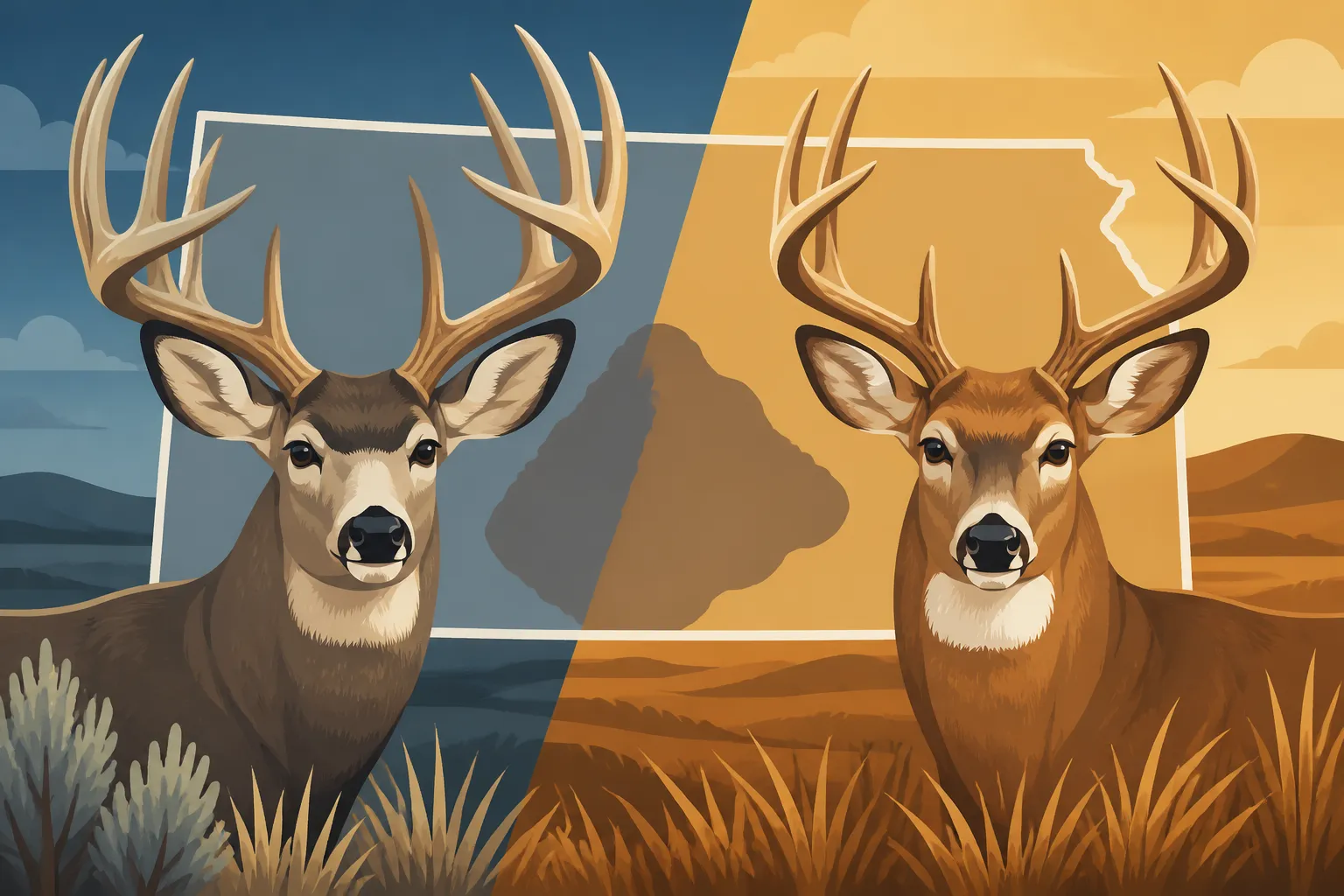
Mule Deer and Whitetail Overlap
For many hunters, the image of Kansas is synonymous with giant whitetail bucks roaming creek bottoms and crop fields. But what happens when you head west, where the rolling plains begin to merge with more rugged terrain? The common frustration for those venturing into these transitional areas is trying to understand which deer species they're actually seeing and how their behavior might differ. This comprehensive guide will meticulously break down the fascinating phenomenon of mule deer and whitetail overlap in Kansas, helping you decipher their differences and adapt your hunting strategies.
Understanding the Geographical Divide
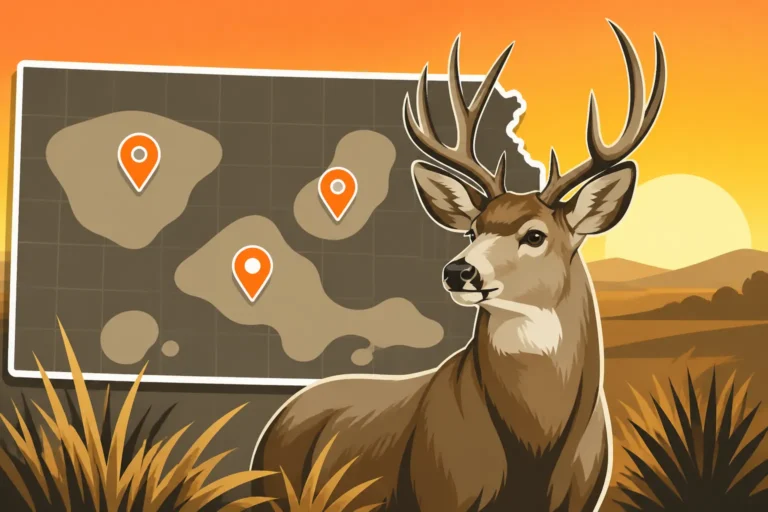
Historically, Kansas has been a meeting ground for two distinct deer species. The eastern part of the state, with its timber, rivers, and dense cover, has always been prime whitetail country. As you move west, the landscape gradually shifts, and with it, the prevalence of mule deer. However, this isn't a hard line in the sand, and the boundaries are constantly in flux, creating intriguing overlap zones.
Historical Range of Both Species
To truly grasp the current situation, it helps to look back. Whitetail deer historically dominated the eastern two-thirds of Kansas, thriving in the forested river corridors and brushy draws. Their survival strategy leans heavily on dense cover for bedding and escape, a characteristic that fits perfectly with the timbered eastern and central regions. Mule deer, on the other hand, are creatures of the wide-open spaces, traditionally found in the rugged, arid terrain of the American West. Their historical range barely dipped into extreme western Kansas, preferring the expansive high plains and broken badlands found further west. These contrasting preferences painted a clear picture for generations of hunters.
The Expanding Whitetail Frontier
Over the past few decades, a significant shift has occurred. Whitetail deer have proven incredibly adaptable, expanding their range westward into areas once considered exclusively mule deer territory. This expansion is largely fueled by agricultural development, which provides abundant food sources, and the establishment of shelterbelts and riparian corridors that offer the cover whitetails crave. As you travel through western Kansas today, you'll find healthy populations of whitetails pushing further into counties that were once predominantly mule deer strongholds. This means that hunters who remember the "good old days" might be surprised by the sheer number of whitetails they encounter in what they thought was classic mule deer country. Understanding this expansion is key to predicting where you might find Mule Deer and Whitetail Overlap.
Mule Deer Retreat in Eastern Kansas
While whitetails have expanded, mule deer populations in their historical eastern fringes of Kansas have generally receded. This isn't to say you won't ever see a mule deer east of their primary range, but it's becoming increasingly rare. Their struggle against encroaching whitetail populations is often attributed to several factors, including competition for resources, habitat loss due to development, and disease susceptibility. Mule deer simply aren't as successful at adapting to fragmented habitats and high human pressure as whitetails. This retreat means that for most practical hunting purposes, if you're east of Highway 283 or even further west in some areas, your chances of encountering a mule deer are significantly lower. When applying for a tag, knowing the specific Kansas Deer Units and What Each Holds is crucial, as some units have little to no mule deer presence.
Habitat Preferences: Where They Converge and Diverge
Even within the overlap zones, mule deer and whitetails often utilize the landscape differently, though there are certainly areas where their preferences blend. Recognizing these nuances can dramatically improve your scouting and hunting success.
Whitetail's Affinity for Cover and Water
Whitetail deer are masters of stealth and concealment. They thrive in areas with dense cover, whether it's thick timber, brushy creek bottoms, or tall CRP grass. They use this cover for bedding, escaping predators, and staging before moving to feeding areas. Access to water is also critical for whitetails, and they are often found near rivers, streams, ponds, or even irrigation ditches. In western Kansas, you'll often find whitetails concentrated in the narrow bands of timber along river systems like the Republican or Solomon, or in the dense plum thickets that dot the landscape. Their home range tends to be smaller, making them more predictable once you locate their preferred bedding and travel routes. Effective scouting often involves Scouting Kansas River Bottoms and Creek Draws to find these key whitetail hotspots.
Mule Deer's Open Country Adaptations
Mule deer, conversely, are built for the open plains. Their larger ears, keen eyesight, and signature "stotting" gait (a bounding leap with all four feet hitting the ground simultaneously) are adaptations for spotting and escaping danger in vast, exposed landscapes. They prefer more rugged, broken terrain, rolling hills, canyons, and areas with sparse cover. Instead of hiding in thick timber, they often bed on elevated points where they can observe their surroundings, relying on their vision and distance to avoid threats. You'll find them navigating the expansive vistas of the Western Kansas Plains Hunting Country, utilizing subtle depressions or rocky outcrops for concealment. Their home ranges are typically much larger than whitetails, and they can cover significant ground in a day, making traditional "stand hunting" more challenging without extensive scouting and mobility.
Transitional Zones and Agricultural Influence
The real magic, and challenge, occurs in the transitional zones where these habitat preferences blur. In western Kansas, vast agricultural fields – especially corn and milo – create incredible food sources that attract both species. Whitetails will use the edges of these fields and nearby shelterbelts, while mule deer will often venture further into the open fields, especially at night, before retreating to more open, broken ground for bedding. River and creek bottoms in these western areas become particularly intriguing, as they offer the cover whitetails love but are often surrounded by the open plains where mule deer roam. Understanding how Kansas Deer Habitat in Crop Country influences both species' movements is crucial. Hunters might find both species using the same water source or crossing the same pinch point, albeit perhaps at different times of the day or with slightly different travel patterns. This is where detailed aerial imagery, like that found on services such as GoHunt, becomes invaluable for identifying these mixed-species hotspots and potential overlapping travel corridors.
Behavioral Distinctions and Similarities
While both are deer, their inherent behavioral patterns differ significantly, influencing how you might encounter and hunt them. However, there are also commonalities driven by survival instincts.
Flight vs. Stotting
Perhaps the most iconic behavioral difference is how they react to perceived threats. A whitetail's primary defense mechanism is to "flag" its tail and quickly bound away, weaving through dense cover to break lines of sight. They are masters of using every bit of available brush or timber to disappear. If you jump a whitetail, it often won't go far if it feels secure in its escape route. Mule deer, on the other hand, tend to "stot" or "pronk," bounding away with all four feet off the ground, often traveling in a more linear path across open terrain. This allows them to quickly cover ground while keeping an eye on the predator. They rely on distance and open country to escape rather than concealment. This difference means that if you jump a mule deer in open country, they might put a mile between you in short order, whereas a whitetail might just duck into the nearest thicket.
Social Structures and Grouping
Both species are social, but their grouping tendencies can vary. Whitetail does and fawns typically form matriarchal family groups, while bucks are often solitary or form small bachelor groups outside of the rut. During the rut, bucks become more mobile and solitary in their pursuit of does. Mule deer often form larger, more cohesive herds, especially does and fawns, and bachelor groups of bucks can be quite large outside the breeding season. You might see a dozen or more mule deer does and fawns moving together, which is less common for whitetails unless they are congregating on a prime food source. These larger groups can make mule deer easier to spot from a distance in open country, but also mean more eyes and ears to contend with. During the When the Kansas Rut Peaks, both species' bucks will be actively moving, making identification even more critical as they chase does.
Dietary Habits and Foraging
While both are herbivores and opportunistic feeders, their preferred diets reflect their habitats. Whitetails are primarily browsers, preferring to munch on leaves, twigs, forbs, and acorns. They will certainly eat agricultural crops when available, but their natural inclination is toward a varied diet from brush and timber. Mule deer are also browsers but are more adapted to drier, tougher forage found in arid environments, including sagebrush and other shrubs. However, in Kansas, both species readily exploit agricultural crops like corn, milo, alfalfa, and winter wheat. In the overlap zones, you might find both species gorging on the same standing cornfield or recently cut milo stubble. This shared food source is a major reason for their coexistence in agricultural landscapes. Using tools like GoHunt can help identify potential food sources where both species might be present.
Hunting Strategies in Overlap Zones
Hunting in areas where mule deer and whitetails coexist requires a flexible mindset and an understanding that a "one-size-fits-all" approach simply won't cut it. Your tactics will need to adapt to the specific species you're targeting or encounter.
Scouting for Mixed Species Sign
Effective scouting is paramount. Don't assume that if you find deer sign, it's automatically one species or the other. Look for clues that differentiate between the two. Whitetail tracks tend to be smaller and more pointed, while mule deer tracks are typically larger and more rounded. Mule deer droppings are often larger and more clumped together, while whitetail droppings are smaller and more individual pellets. Look for rub lines in thicker cover (more likely whitetail) versus rubs on isolated small trees or brush in more open areas (could be either, but mule deer will use whatever is available). Pay close attention to trails: those leading into dense timber or along creek beds are classic whitetail, while those traversing open ridges or crossing large fields could be either. Reading Aerial Imagery for Bedding Cover for both species – identifying thickets for whitetails and subtle terrain features for mule deer – will give you a major advantage.
Tailoring Approaches in Overlap Areas
Once you've identified likely areas for both, you'll need to adapt your hunting style. For whitetails, traditional ambush tactics like treestands or ground blinds overlooking known travel corridors, food sources, or bedding areas remain effective. Consider hunting during the low-light hours when whitetails are most active moving to and from cover. For mule deer, a spot-and-stalk approach is often more successful, especially in open country. Use binoculars and spotting scopes to cover vast amounts of terrain, then carefully plan your stalk to take advantage of terrain features and wind direction. In mixed areas, you might start your morning glassing open hillsides for mule deer, and then transition to still-hunting a creek bottom for whitetails midday. Being mobile and adaptable is key.
Weapon Choice and Shot Placement Considerations
Your weapon choice should align with the likely shot opportunities. In open western Kansas, longer shots are more common, making a flat-shooting rifle a popular choice. However, if you're targeting whitetails in dense creek bottoms, bowhunting can be incredibly effective. Even if you're rifle hunting, be prepared for varied shot distances. Regardless of the species, always aim for ethical shot placement. While both are deer, their typical body sizes can vary; mule deer generally being larger and stockier. A good rule of thumb is to mentally envision the vitals of the animal before taking the shot. Make sure you understand Shot Placement on a Whitetail at Twenty Yards and how to adjust for distance and angle, as these principles apply broadly to both species. Services like GoHunt can provide detailed maps to help you visualize terrain and plan your shots.
Identification Challenges in Mixed Territory
Perhaps the biggest hurdle for hunters in overlap zones is accurately identifying the species. Misidentification can lead to tagging out on the wrong deer or passing up a valuable opportunity. Knowing the key physical differences is critical.
Antler Configuration and Ear Size
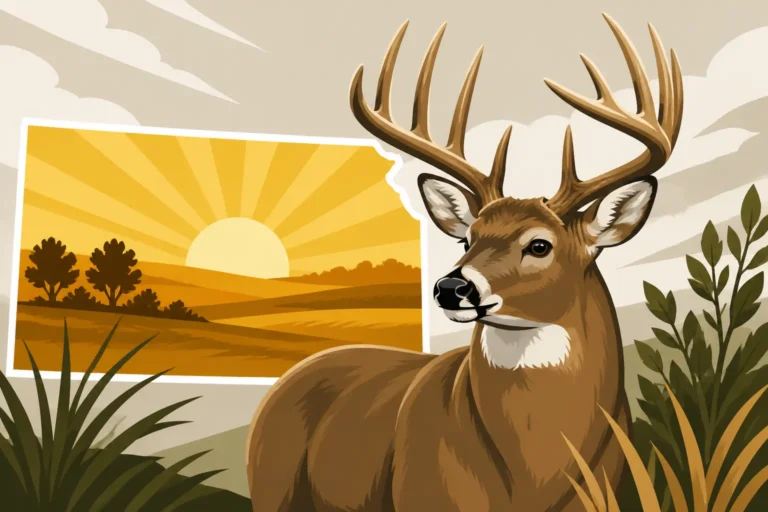
The most obvious difference, especially in bucks, lies in their antlers. Whitetail antlers typically grow from a single main beam, with individual tines branching off that beam. They tend to be more upright and less branched overall. Mule deer antlers, conversely, are dichotomous, meaning they "fork" and then "fork again," creating a more branched, often wider appearance. While there are exceptions and non-typical antlers in both, this general rule holds true. Ear size is another quick identifier: mule deer have noticeably larger ears that are often described as "mule-like," hence their name. Whitetail ears are smaller and more proportionate to their head. These are often the first things you'll notice when trying to discern the species from a distance. For more detailed comparisons, refer to a guide like Telling a Mule Deer From a Whitetail.
Tail Morphology and Rump Patches
Another tell-tale sign is the tail. Whitetails have a broad, flag-like tail that is brown on top and pure white underneath. When alarmed, they raise it high, exposing the white underside, hence the "whitetail" name. Mule deer have a narrower, rope-like tail that is typically white with a black tip. They don't usually "flag" it in the same dramatic fashion as whitetails; instead, it might be held down or only slightly elevated when they run. Additionally, examine the rump patch. Both species have white rump patches, but a whitetail's is often less distinct and more integrated with the rest of its hindquarters. A mule deer's rump patch is usually more prominent and sharply defined, often encircling the tail. These subtle differences become more apparent with practice and observation.
Gait and Movement Patterns
As briefly touched upon earlier, their movement patterns are a major differentiator. When a whitetail feels threatened, it tends to dash away in a series of powerful bounds, often weaving and dodging through cover. They will typically tuck their tail or flag it high. Mule deer, as mentioned, are known for their distinctive "stot" or "pronk," a stiff-legged bounding gait where all four feet leave and land simultaneously. This looks almost like a spring-loaded jump. They cover ground quickly this way and often hold their tail relatively low or slightly elevated with the black tip visible. Observing these movement patterns, especially when they're startled, can be a definitive way to identify the species in areas where they overlap.
| Feature | Whitetail Deer | Mule Deer |
|---|---|---|
| Antler Growth | Main beam with tines branching off | Dichotomous (forks and then forks again) |
| Ear Size | Proportionately smaller | Larger, "mule-like" ears |
| Tail Appearance | Broad, flag-like, brown top, white underside | Narrow, rope-like, white with black tip |
| Movement/Gait | Dashes, weaves, "flags" tail | Stotting/pronking (all four feet land together) |
| Rump Patch | Less distinct, blends with hindquarters | Prominent, sharply defined, often encircles tail |
| Preferred Habitat | Dense cover, timber, riparian areas | Open country, rugged terrain, high plains |
Conservation and Management Efforts
The presence of two deer species in the same landscape presents unique challenges for wildlife managers and raises important questions about the long-term health and genetic integrity of both populations.
Disease Transmission Concerns
One of the significant concerns in overlap zones is the potential for increased disease transmission. Both whitetails and mule deer can be susceptible to various diseases, and when their populations mix, the risk of pathogens spreading between species can escalate. Chronic Wasting Disease (CWD) is a particular concern. While CWD is present in both whitetails and mule deer, their close contact in shared habitats could potentially accelerate its spread and complicate management efforts. The Kansas Department of Wildlife, Parks and Tourism (KDWP) closely monitors these populations for disease, and hunters play a vital role in reporting sick animals or participating in sampling programs. Staying informed about Kansas Wildlife Disease Monitoring and following KDWP guidelines is crucial for responsible hunting.
Hybridization and Genetic Integrity
Another fascinating, yet concerning, aspect of overlap is the potential for hybridization. While rare, instances of whitetail-mule deer hybrids have been documented, particularly in areas where one species might be numerically dominant over the other, or where suitable mates of their own kind are scarce. These hybrids can pose challenges for species identification and raise questions about the long-term genetic purity of both populations. KDWP aims to maintain distinct, healthy populations of both species, but the forces of nature in these transitional zones are complex. Understanding Mule Deer and Whitetail Hybridisation can help hunters appreciate the subtle variations they might encounter in the field.
KDWP's Role in Population Monitoring
The Kansas Department of Wildlife, Parks and Tourism (KDWP) plays a critical role in monitoring and managing both whitetail and mule deer populations across the state, especially in areas of overlap. They conduct aerial surveys, harvest surveys, and health assessments to track population trends, health, and distribution. This data informs their decision-making on permit allocations, season structures, and conservation initiatives. Their management aims to ensure sustainable hunting opportunities while protecting the ecological health of both species. Hunters are encouraged to participate in harvest reporting and provide accurate information, which is vital for these ongoing efforts. If you're planning a hunt, checking the KDWP website or GoHunt for the latest regulations and population data for specific units is always a good idea. Hunters interested in the draw process should explore resources like Kansas Deer Permits and the Nonresident Draw.
Disclaimer
Please be aware that hunting regulations and wildlife populations can change. Always consult the official Kansas Department of Wildlife, Parks and Tourism (KDWP) regulations and current season dates before planning any hunt. This guide is for informational purposes only and does not replace official state regulations.