Field Hunting Geese in Stubble
There's nothing quite as frustrating as driving endless miles through prime Kansas agricultural country, seeing thousands of geese, only for them to give your spread the cold shoulder. You set up where you think they want to be, you put out every decoy you own, but they just flare away, mocking you from above. This guide is here to walk you through the nitty-gritty of field hunting geese in stubble, giving you the real-world tactics and detailed setups that help you turn those frustrating fly-bys into memorable hunts.
Understanding Goose Behavior in Stubble Fields
To successfully hunt geese in stubble, you first have to get inside their heads, or at least understand their daily routine. Geese aren't just flying around randomly; they have a purpose, and often, that purpose is food and safety. Kansas offers vast expanses of agricultural land, and these fields become vital feeding grounds for migrating and resident geese, especially during the colder months.
Why Geese Prefer Stubble Fields
Geese are primarily grazers, and after the harvest, many crop fields offer a veritable smorgasbord of dropped grains. Whether it's corn, milo, or even wheat stubble, there's usually enough leftover to make it worth their while. This isn't just a casual snack; it's a critical energy source, particularly for birds migrating along the Central Flyway. They're looking to fuel up for long journeys or to sustain themselves through harsh Kansas winters.
Beyond the readily available food, stubble fields offer a crucial element: safety. These open areas provide excellent visibility, allowing geese to spot predators from a considerable distance. They can see coyotes, foxes, or even an approaching hunter long before danger gets too close. This combination of abundant food and open, secure surroundings makes stubble fields irresistible to large flocks of geese. It's why you'll often see them piled into a single field, sometimes by the thousands, while seemingly identical fields nearby remain empty. They're creatures of habit and security, and once they find a good thing, they stick to it.
Reading Goose Feeding Patterns
Identifying which stubble fields geese are actively using is the most critical step. Just because a field looks good doesn't mean it's where the birds want to be today. Geese are habitual. They'll often feed in the same fields for several days or even weeks until the food source is depleted, or they're pressured too much. Your scouting efforts should focus on observing their daily flight paths and pinpointing the exact spots where they're landing and feeding.
Take the time to drive around at dawn and dusk, or even midday if you have the flexibility. Look for large concentrations of birds. Pay attention to how they enter the field – do they come in high and circle, or do they drop in quickly from a certain direction? Note the specific area within the field where they're feeding. Often, they'll congregate in a tight "pod" or spread out across a particular section. This isn't just about finding a field; it's about finding the field and the spot within that field. Even if you don't hunt that day, this information is gold for future hunts. Using tools like the mapping features on GoHunt can help you mark these observations and analyze access routes. Remember, the fresher the feeding sign, the better your chances.
Essential Gear for Stubble Field Goose Hunting
Once you've located your hot field, it's time to talk gear. Goose hunting in stubble fields requires specific equipment designed for concealment and attracting birds in open country. Skimping on these items can drastically reduce your success.
Decoy Spreads and Types
Decoys are your primary tool for convincing geese to commit. You'll need a good number of them – often dozens, if not hundreds, to create a truly convincing spread that mimics a large feeding flock.
- Full-Body Decoys: These are the most realistic, offering 3D realism that geese can spot from far away. They're also the most expensive and cumbersome to transport and deploy. Brands like Avian-X and Dakota Decoy Co. make fantastic full bodies that hold up well. They come with bases that allow them to stand up, moving slightly in the wind to add lifelike motion.
- Shell Decoys: These are hollow, lighter plastic bodies that sit lower to the ground, offering a more compact and cost-effective option than full bodies. They're great for adding bulk to your spread without breaking the bank or your back.
- Silhouettes (Sillosocks, Windsocks): These are lightweight, foldable decoys that offer incredible realism with minimal weight and bulk. Sillosocks, in particular, move with the slightest breeze, creating an illusion of active feeding that can be incredibly effective. They're easy to carry in large numbers and can make your spread look huge from a distance. However, they lack the 3D profile of full bodies when viewed from directly above.
- Motion Decoys: Flapping wing decoys or "flag" style decoys (like the Mojo Outdoors Motion Decoys) can add crucial movement to your spread, especially on calm days. Geese are constantly moving, heads up and down, stretching their necks. Mimicking this behavior can be a game-changer. Just be mindful of local regulations on motorized decoys.
A mixed spread is often the most effective. Use full bodies in the most visible areas, shells to bulk up the middle, and Sillosocks or silhouettes to extend the perimeter, making your spread look massive and irresistible. The goal is to create a dynamic, lifelike scene that screams "safe and abundant food here!"
Concealment Strategies
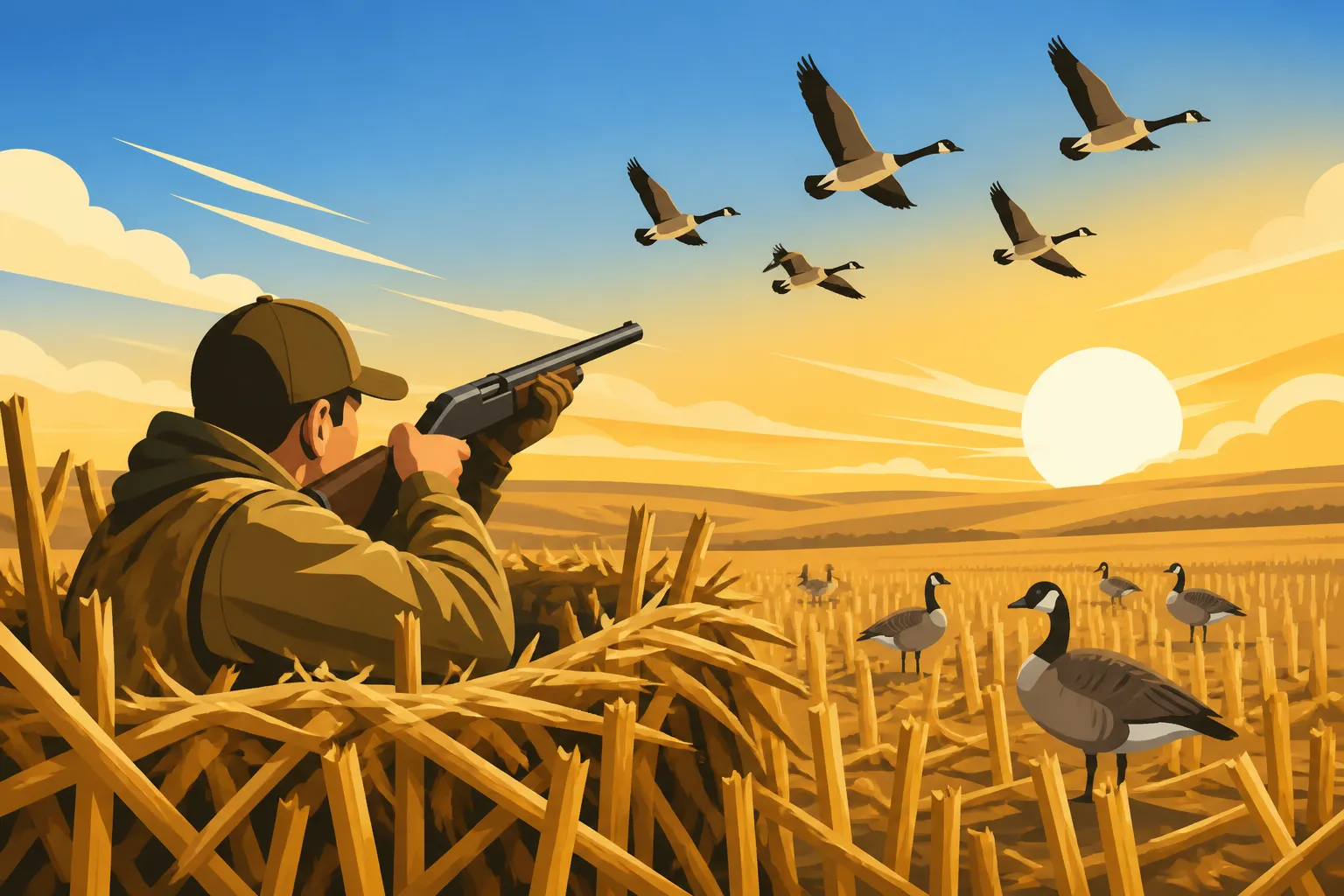
Hunting geese in open stubble fields means you have absolutely nowhere to hide naturally. This makes effective concealment paramount. If geese spot you, they're gone.
- Layout Blinds: These low-profile blinds are your best friend in stubble fields. They allow you to lie down, blending seamlessly with the field while providing excellent visibility for shooting. Modern layout blinds from companies like Avery Outdoors, Final Approach, and Rogers Sporting Goods are designed to be brushed in with local vegetation, making them virtually invisible.
- Brushing Your Blind: This step is non-negotiable. Merely laying out a blind in a field isn't enough. You must gather stubble, corn stalks, or whatever vegetation is present in the field and weave it into the loops and straps of your blind. The goal is to break up the hard lines of the blind and make it look like a natural clump of crop residue. The more time you spend brushing in your blind, the better your chances.
- Face Masks and Gloves: Even if your blind is perfectly brushed, your exposed face and hands will shine like a beacon to wary geese. Always wear a face mask, balaclava, or face paint, and dark gloves. Earth tones or camouflage patterns that match the dry stubble are ideal.
- Dog Blinds: If you're hunting with a retriever, don't forget their concealment. Dog blinds are available that sit low to the ground and can be brushed in just like your own layout blind. Your dog needs to be hidden and quiet for the setup to be successful.
Remember, the success of your hunt often comes down to how well you disappear into the landscape. Geese have incredible eyesight, and they've evolved to avoid anything out of the ordinary in their feeding grounds. For more insights on blending into specific field types, you might find information on Milo and Corn Stubble Deer Patterns useful, as the principles of concealment apply broadly to open agricultural settings.
Setting Up for Success: Tactics and Placement
Once you have your gear and have identified your field, the real work begins. Your setup strategy—from scouting to decoy arrangement and blind placement—will dictate whether those high-flying geese commit or flare.
Scouting for Active Fields
This isn't just a pre-hunt task; it's an ongoing process. Geese patterns can change daily based on weather, food availability, and hunting pressure. If you truly want to consistently find the birds, you need to be out scouting frequently.
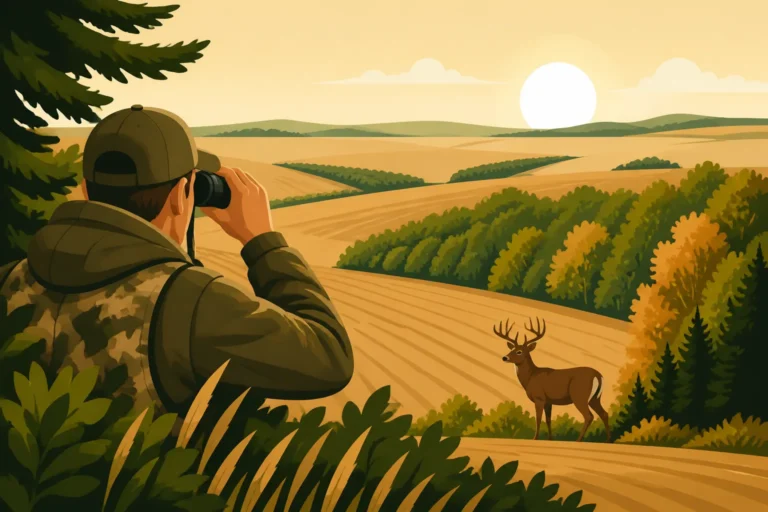
- Glassing: Use good binoculars or a spotting scope to observe geese from a distance. Watch where they land, how they move across the field, and their general demeanor. Are they nervous and constantly looking around, or are they relaxed and feeding hard?
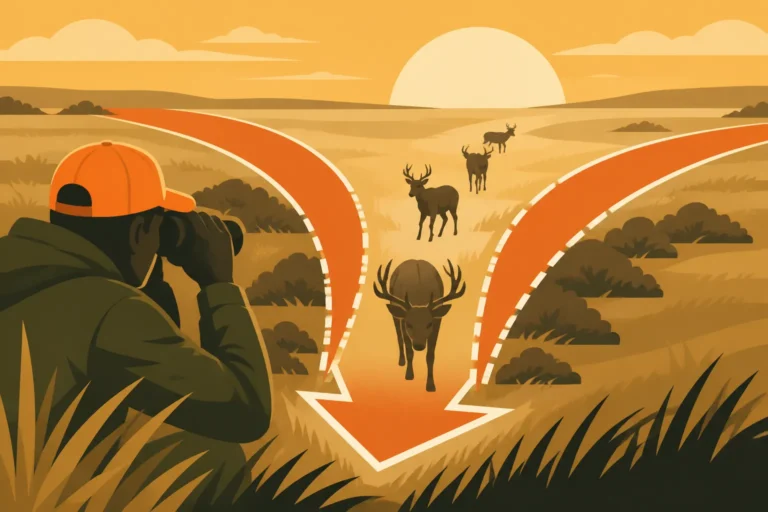
- Flight Paths: Pay close attention to their ingress and egress routes. Often, geese will use specific corridors or low spots to enter and exit fields. Setting up along these routes can be highly effective.
- Time of Day: Geese typically have peak feeding times in the morning and late afternoon. Observing them during these periods will give you the most accurate picture of their preferences. However, on cold, snowy, or cloudy days, they might feed all day long.
- Utilizing Technology: Modern mapping apps like GoHunt are invaluable for scouting. You can mark specific feeding areas, note wind directions, plan access routes, and identify property lines. This helps you avoid trespassing and optimizes your approach to the field. Many hunters overlook the importance of finding legal access points that don't spook birds on neighboring properties.
- Weather Conditions: Keep an eye on the forecast. Geese are often more active feeders before or during significant weather changes, like a cold front or snowstorm. Understanding Duck and Goose Migration Timing can help you anticipate when new birds might be moving into your area.
Decoy Placement and Wind Direction
This is where art meets science. Geese almost always land into the wind, much like an airplane. Your decoy spread needs to capitalize on this natural behavior.
- The Landing Zone: The most crucial element is creating a clear, open landing zone directly in front of your blinds, downwind of your main decoy spread. This is where you want the geese to commit and set their wings.
- The "J" or "U" Pattern: A classic and effective spread is shaped like a "J" or a "U." Your blinds are placed at the bend or base of the "J" or "U," directly upwind of the landing zone. The bulk of your decoys are spread out in the arms of the "J" or "U," extending upwind. This creates an open funnel that naturally draws geese into your desired shooting zone.
- Family Groups: Place decoys in small, realistic family groups of 3-7 birds, rather than evenly spaced lines. Geese are social, but they don't feed like soldiers. Have some "feeders" with heads down, some "sentinels" with heads up, and a few "resters."
- Wind Influence: Always set up with the wind at your back, blowing towards the landing zone. This forces incoming geese to turn into the wind and fly directly over or in front of your blinds as they attempt to land. Misjudging the wind direction can lead to geese landing far away or flaring off to the side. For a deeper dive into how wind impacts waterfowl, check out Reading a Kansas Wind for Waterfowl.
Blind Setup and Hunter Concealment
Your layout blinds are only as good as their setup. The goal is to disappear completely.
- Low Profile: Ensure your layout blinds are truly low to the ground. If you're on a slight rise, dig a shallow trench for the blind to sit in, or at least brush it in even more heavily.
- Brushing-In: As mentioned before, this cannot be overstressed. Use the actual stubble from the field you're hunting. If it's corn stubble, use corn stalks. If it's milo, use milo stalks. Break up the outline of the blind. Look at it from a goose's perspective—from above and a distance. Does it look natural?
- Spacing: If hunting with multiple people, space your blinds out slightly within the "J" or "U" pocket, allowing everyone clear shooting lanes. Don't pile them on top of each other.
- Patience and Stillness: Once you're in the blind, remain absolutely still. Even the slightest movement, a glint off a watch, or an exposed patch of skin can send a flock of geese soaring away. Wait until the birds are committed, cupped up, and within killing range before making any move. You can learn more about effective hiding in fields by reading about Layout Blinds in Cut Fields.
Here's a quick comparison of popular decoy types for field hunting:
| Decoy Type | Realism | Weight/Bulk | Cost (per dozen) | Movement in Wind | Pros | Cons |
|---|---|---|---|---|---|---|
| Full-Body | High | Heavy/Bulky | High | Moderate | Most realistic, good visibility, durable | Expensive, hard to transport large numbers |
| Shell | Medium | Medium/Compact | Medium | Low | Adds bulk affordably, stackable | Less realistic profile, less movement |
| Silhouette | Medium | Very Light/Flat | Low | High | Excellent motion, easy to carry large numbers | Only realistic from certain angles, less 3D depth |
| Windsock | Medium | Very Light/Flat | Very Low | Very High | Incredible motion, very lightweight, cost-effective | Can look unnatural on calm days, less durable |
| Motion (Flag) | High | Medium | High (per unit) | N/A | Attracts attention, mimics feeding activity | Expensive, requires manual operation or batteries |
Calling and Decoy Strategies During the Hunt
Once you're hidden and your spread is out, the hunting really begins. It's not just about sitting and waiting; effective calling and making real-time adjustments to your decoy spread are crucial for success.
Effective Goose Calling Techniques
Goose calling is an art form, but it's one that anyone can learn and master with practice. The goal isn't just to make noise, but to sound like a contented flock of geese on the ground, inviting others to join.
- Greeting Call: This is often your first call when you spot a distant flock. It's a series of excited honks, like "honk-honk-honk-HOOONK." It says, "Hey, we're here! Come check us out!"
- Comeback Call: If geese start to drift away or lose interest, use a louder, more urgent series of honks and clucks. This mimics a goose trying to get the attention of its buddies, urging them back.
- Feeding Clucks and Murmurs: Once geese are getting closer and show signs of committing, switch to soft clucks and murmurs. This is the sound of geese happily feeding, signaling safety and abundance. It's calming and reassuring. This is where subtle calling makes a big difference.
- Finishing Calls: As geese are directly over your spread, setting their wings, you want to go quiet. The decoy spread itself should do the work. Overcalling at this stage can often spook them.
- Read the Birds: The most important rule of calling is to read the birds. Are they responding to your calls? Are they coming closer or veering off? Adjust your calling volume and style based on their reaction. Sometimes, less is more; other times, a lot of noise is exactly what they need to hear. Think about how important calling is for other game, like when you're working on Rattling and Grunting During the Kansas Rut – it's all about mimicry and timing.
Adjusting to Changing Conditions
Stubble field hunting isn't static. Conditions change, and you need to be ready to adapt.
- Wind Shifts: Kansas weather is notoriously fickle. If the wind shifts significantly, you might need to quickly adjust your blinds and decoy spread to maintain your landing zone advantage. A slight shift might mean just moving your blinds a few feet, but a major reversal could necessitate a full re-setup.
- Sun Angle: Geese have excellent eyesight. If the sun is glaring directly into your spread or off your blinds, it can give you away. Try to position your blinds to avoid direct glare, or at least have a darker background.
- Hunting Pressure: If you're on public land or a heavily hunted area, geese will quickly become wary. They might start to avoid common setups or landing zones. You may need to adapt by trying less conventional spreads, reducing calling, or increasing your concealment efforts. Understanding Hunting Pressure Patterns on Kansas Public Land can give you an edge in these situations.
- Passing Up Shots: It's hard, but sometimes the best move is to pass up a questionable shot on a high-flying goose. Waiting for birds to fully commit and drop their landing gear often leads to cleaner kills and less wasted ammunition, and it doesn't educate the birds as much as taking long-range fliers.
- The "Run and Gun" Approach: While full field setups are common, sometimes a smaller, more mobile approach works, especially if you're scouting new areas or trying to catch small groups. This involves a smaller spread of light, portable decoys and quick setup/takedown. This is especially true for hunters who are always on the move, similar to those employing Run-and-Gun Turkey Tactics on Kansas Walk-In Ground.
Ultimately, success in field hunting geese in stubble comes down to meticulous preparation, keen observation, and the willingness to learn and adapt with every hunt. Kansas offers some incredible opportunities, and with the right approach, you'll be bringing those honkers down.
Disclaimer
Hunting is an inherently dangerous activity. Always prioritize safety by following all local, state, and federal hunting regulations. Ensure you have the proper licenses and permits for Kansas. Be mindful of property boundaries, identify your target, and always know what is beyond it. This guide is for informational purposes only, and individuals are responsible for their own safety and adherence to all applicable laws.