Fence Crossings Deer Use Every Day
It's a common frustration, isn't it? You spend hours scouting what looks like prime Kansas deer country, seeing plenty of sign, but when you settle into your stand, the deer seem to melt into thin air. They're there, you know it, but they're not using the obvious trails you found. Often, the key to unlocking consistent deer movement, especially in our agricultural landscapes, lies in something as simple and often overlooked as a fence line. This guide is all about helping you identify and strategically hunt those predictable fence crossings deer use every single day, turning an unseen obstacle into your next hot spot.
The Unseen Highways of Whitetails: Why Fences Matter
Deer, particularly whitetails in Kansas, are creatures of habit. They constantly seek the path of least resistance between bedding, food, and water. While a fence might seem like a barrier to us, for a deer, it often dictates predictable travel patterns, creating hidden "highways" that can be absolute goldmines for hunters.
Understanding Deer Movement and Fences
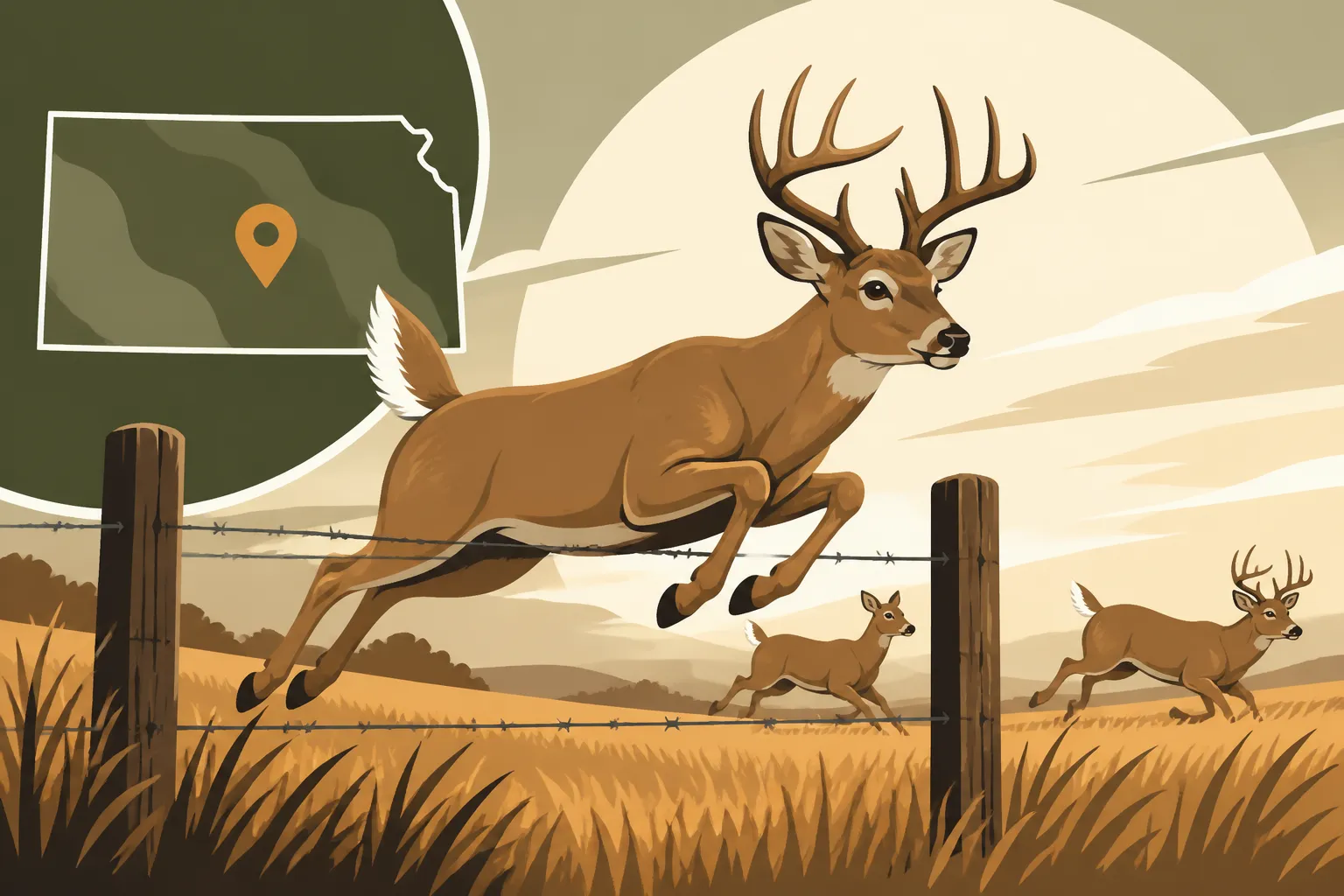
Think about how you navigate your daily life. You take the easiest route to work, the quickest path to the grocery store. Deer are no different. They don't want to expend unnecessary energy jumping a perfectly good fence if there's an easier way under, through, or over. This behavioral trait is especially pronounced in flat, open country where natural topography might be less dominant. Instead of cresting a high barbed-wire fence, a deer will actively seek out a sagging section, a spot where the bottom wire is bent, or a completely broken-out gap. Over time, these preferred crossing points become ingrained in their daily routines.
These aren't random occurrences either. Often, these favored crossings are dictated by subtle shifts in terrain, existing game trails that predate the fence, or even where a natural cover feature like a creek draw or a timber edge meets the fence line. A well-worn deer trail might lead right up to a fence, and instead of abruptly ending, it continues on the other side through a specific low spot. Observing this continuity is critical. An old, neglected fence with sections missing or wires loose from years of cattle rubbing against them can be a perfect example of a daily deer commute route, often overlooked by human eyes.
The Hidden Value of Fence Crossings for Hunters
For hunters, these consistent fence crossings aren't just curiosities; they are significant choke points and ambush locations. Deer tend to slow down, hesitate, or funnel their movement as they approach and navigate a fence. This momentary pause or restricted movement offers a hunter a much more predictable shot opportunity compared to trying to intercept a deer moving at full speed through an open field.
These locations are also prime spots for bucks to check for does, leave their scent, or mark territory. During the rut, a cruising buck might follow a fence line, checking every crossing for fresh scent left by does. This makes them high-traffic areas during key parts of the season. Contrast this with the challenge of setting up a stand in a vast expanse of milo stubble. While deer might be anywhere in that field, they are only going to cross a fence at specific points. Identifying these spots focuses your efforts, making your time in the stand exponentially more efficient and increasing your odds of encountering mature deer.
How to Spot a Daily Deer Crossing in Kansas
Finding these fence crossings requires careful scouting, combining visual cues on the ground with an understanding of how terrain and habitat influence deer movement. It's about putting yourself in a deer's shoes and looking for the path of least resistance.
Visual Cues and Ground Sign
When you're out in the field, get down and dirty. Don't just scan from a distance. Get on the fence line and examine it closely. Look for specific signs that scream "deer traffic here!"
- Worn Trails: The most obvious sign is a distinct trail leading directly to and away from a particular spot on the fence. These trails will often be sunken or have compacted soil, especially if the ground is soft.
- Hair Snags: Deer squeezing under or through tight spots on a barbed-wire or woven-wire fence will often leave strands of hair caught on the wire. Whitetail hair is coarse and often sticks quite well. Fresh hair is a strong indicator of recent use.
- Low Wires or Broken Sections: Deer will consistently use spots where the bottom strand of a barbed-wire fence sags, or where a section of woven wire is broken out. Look for evidence of repeated use in these gaps.
- Rub Marks: Sometimes, a deer will rub against a fence post or a low-hanging wire as it passes through. Keep an eye out for fresh rubs or even older ones that show consistent use.
- Tracks and Droppings: Fresh deer tracks concentrated at a crossing point, or a higher density of droppings nearby, are undeniable evidence that deer are actively using the spot. Pay attention to the size of the tracks – larger tracks can indicate mature bucks.
- Compressed Grass/Vegetation: In grassy areas, deer will literally "iron down" the vegetation as they cross, leaving a flattened path.
Consider the type of fence as well. Barbed wire fences often have specific "crawling" spots. Woven wire fences might have broken sections or areas where the wire has rusted through. Even old electric fences, if not properly maintained, can have dead sections that become preferred crossings. The key is finding where deer are consistently sliding under, stepping over, or squeezing through without jumping.
Topographic and Habitat Influences on Crossings
While deer look for the easiest way across a fence, where they look is often dictated by the landscape itself. Natural features can funnel deer movement directly to a specific fence crossing.
- Natural Funnels: Look for where timber blocks narrow down to a point before hitting a fence, or where a thicket of cedars creates a natural pinch point. Deer traveling along these cover features will eventually hit the fence and look for the easiest way through right there. Similarly, a small ditch or wash that crosses under a fence line often provides a natural low spot that deer will exploit. These low spots offer both easier passage and often a degree of concealment.
- Creek and River Bottoms: In Kansas, our creek and river bottoms are magnets for deer. A fence running parallel to or intersecting one of these draws will almost certainly have heavily used crossings where the deer can easily get from one side to another, especially where the creek itself might be shallow enough to cross or where the bank provides an easy transition. Understanding how deer move within these riparian corridors is crucial. A good starting point would be learning to identify Reading a Kansas Creek Bottom for Deer Sign to see how these animals utilize water features.
- Field Edges and Inside Corners: Where a fence line forms an inside corner of a crop field, it can create a natural funnel. Deer moving along the field edge will often be pushed towards that corner and look for a crossing there, especially if it provides access to another field or a bedding area.
- Shelterbelts and Tree Lines: Many Kansas farms have shelterbelts or tree lines planted for windbreaks. When these linear cover features meet a fence, deer often use that intersection as a crossing point to continue their travel, especially if the shelterbelt provides an easy concealment route. This is a common pattern for Shelterbelt Ends and Buck Travel.
E-Scouting and Scouting with Technology
Before you even lace up your boots, modern technology can give you a significant head start in locating potential fence crossings. This saves valuable time and helps you prioritize your ground scouting.
- Satellite Imagery Apps: Applications like GoHunt (a personal favorite for many hunters) are invaluable. Use their high-resolution satellite imagery to identify fence lines that connect obvious bedding areas (thick timber, CRP fields) to food sources (crop fields, food plots). Look for areas where these fence lines intersect with other features like creek draws, timber points, or even subtle ditches. Zoom in and look for faint lines that might indicate trails leading to and from a fence. GoHunt's mapping layers can highlight elevation changes, which might reveal those natural low spots in a fence line.
- Topographic Maps: Overlaying topographic maps can help confirm natural funnels. Even in relatively flat Kansas, subtle elevation changes can create depressions where fences naturally sag or where water might collect, leading to washed-out sections that deer readily use. For more on how to leverage digital scouting from your couch, check out E-Scouting Kansas Farm Country From Home.
- Property Boundaries: Once you've identified potential crossings, use GoHunt's property line feature to verify land ownership. This is critical for avoiding trespass and ensuring you have legal access to hunt the spot. There's nothing worse than finding the perfect crossing only to realize it's on posted private land where you don't have permission.
- Ground Truthing: E-scouting is a powerful tool, but it's only the first step. You must follow up with boots-on-the-ground scouting to confirm your suspicions, find fresh sign, and pinpoint the exact best crossing location. What looks good on a map might not be as active in person, or you might find an even better crossing nearby that wasn't visible from the air.
By combining your digital reconnaissance with thorough physical scouting, you'll be able to quickly narrow down and confirm the fence crossings deer truly use every day.
Strategizing Your Hunt Around Fence Crossings
Once you've pinpointed a hot fence crossing, the real work begins: setting up your hunt for success. This involves careful consideration of stand placement, timing, and minimizing your impact on the area.
Optimal Stand Placement for Fence Crossings
Where you place your treestand or ground blind relative to the crossing is paramount. You want to be close enough for a good shot but far enough away not to spook approaching deer.
- Avoid Direct Overhang: Don't put your stand directly over the crossing itself. Deer tend to slow down or even pause at these spots, and having a human directly above them can make them skittish. Instead, position your stand 15-30 yards downwind (or crosswind, depending on prevailing patterns) from the actual crossing point. This allows deer to pass naturally, giving you time to prepare for a shot while they're still focused on navigating the fence.
- Consider Wind Direction: Always, always, always play the wind. Deer approach fence crossings from both directions. Position your stand so your scent cone blows away from the anticipated approach and crossing paths. If you have a predominant wind, set up on the downwind side, letting your scent blow into an area where deer aren't expected to be. This is a fundamental principle for any stand placement, and critical when hunting confined travel routes.
- Elevated Advantage: A treestand is often the best choice for hunting fence crossings in Kansas, especially in areas with limited vertical cover. It gets your scent above the deer's primary detection zone and offers a better vantage point for observing deer behavior and shot placement. Look for a robust tree with good cover that offers a clear shooting lane to the crossing. For those looking for excellent stand locations even in flat terrain, consider the advice in Best Stand Locations in Flat Farm Country.
- Ground Blind Options: If suitable trees are scarce, a well-brushed-in ground blind can be highly effective. Place it at a similar distance downwind, taking advantage of natural cover like a brush pile, a clump of cedars, or even standing crops at the edge of a field. Remember, blending into the environment is key. For more on proper setup, refer to Ground Blind Brushing In. No matter your choice, ensure you have multiple shooting lanes cleared and a solid backstop for your arrow or bullet.
Timing Your Sit for Maximum Success
Understanding when deer are most likely to use a specific fence crossing is almost as important as knowing where it is. Timing is everything when trying to intercept a whitetail.
- Morning and Evening Commutes: Deer are most active during dawn and dusk, moving between their bedding areas and preferred food sources. Set up early in the morning before legal light, and stay until dark in the evening. These transition periods are when you'll see the most consistent activity at fence crossings.
- Midday Rut Cruising: During the peak of the Kansas rut, typically in early to mid-November, bucks will often cruise fence lines and property borders at all hours of the day, checking for estrous does. They'll frequent known crossings as part of their search. This can be a fantastic time for an all-day sit. For detailed insights into this period, check out When the Kansas Rut Peaks.
- Weather Fronts and Pressure: Pay attention to cold fronts and other significant weather changes. Deer often become more active just before a front moves in. Similarly, understand how hunting pressure from nearby properties or other hunters on public land might shift deer movement patterns, potentially pushing them to use less obvious crossings or to use them at different times of day. A sudden drop in temperature in December can also spur increased activity, making a fence crossing near a food source particularly appealing during Cold Front Movement in December.
- Trail Camera Data: If possible, place a trail camera on the fence crossing for a week or two before you plan to hunt. This will give you invaluable intel on the exact times of day deer are using it, the direction they're coming from, and even the specific deer (bucks vs. does) that are frequenting the spot. This data allows you to fine-tune your hunt timing for the highest probability of success.
Scent Control and Entry/Exit Routes
Deer are incredibly sensitive to human scent and disturbance. No matter how good your stand location or timing, a careless approach or exit can ruin a hunt and make a particular crossing a "dead" spot for days.
- Meticulous Scent Control: Treat your clothing, gear, and body with the utmost care. Use scent-eliminating sprays, wash hunting clothes in scent-free detergent, and store them in airtight containers. Avoid strong-smelling foods or colognes. The goal is to be as invisible to a deer's nose as possible. While there are many products on the market, the basic principle of cleanliness and playing the wind is your best defense.
- Stealthy Entry and Exit: Plan your access routes to avoid bumping deer or leaving a strong scent trail in their travel corridors. Walk parallel to the fence line but far enough away that your presence doesn't alert deer using the crossing. If possible, use natural features like ditches, tall grass, or timber to conceal your approach. Always try to approach with the wind in your favor, so your scent blows away from the crossing. Think about how your Access Routes That Do Not Bump Deer can be optimized to remain undetected.
- Parking Strategy: Park your vehicle well away from the access point. Deer are incredibly wary of vehicles, and the sight or sound of one too close to their travel route can make them hesitant to use that crossing. Consider how far you're willing to walk to ensure your Parking Away From Your Stand strategy doesn't compromise your hunt. The less impact you make on the landscape, the more likely deer are to behave naturally.
- Minimize Disturbance: When you're on stand, move as little as possible. Any sudden movement, sound, or flash of light can be detected by keen deer eyes. Wait for the opportune moment to draw your bow or raise your rifle, ensuring the deer is calm and unaware of your presence.
By focusing on these strategic elements, you'll maximize your chances of success at those productive Kansas fence crossings.
Fence Crossing Types and What to Look For
Here's a quick reference table to help you identify common fence types and the specific signs to scout for at potential deer crossings:
| Fence Type | Common Materials | What to Look For at Crossings | Best Approach for Deer |
|---|---|---|---|
| Barbed Wire | Steel wire with barbs | Sagging bottom wires (most common), bent-down wires, broken strands, hair snags on barbs (especially belly/chest hair). | Crawling under, stepping over low sections. |
| Woven Wire | Welded or knotted mesh of wire | Torn or broken sections, areas where bottom wire is pushed up or pulled down, gaps, areas with matted grass underneath. | Squeezing through gaps, stepping over low sections. |
| Electric Fence | Insulated wire, insulators | Non-electrified sections, broken wires, areas where wires are close to the ground, sections that have fallen over. | Walking through non-charged areas, stepping over dead wires. |
| Board/Rail | Wood boards, posts | Broken or missing boards, low sections, areas where ground is worn down, wider gaps between rails, usually where older fences meet terrain changes. | Stepping through gaps, crawling under low rails. |
| Chain Link | Woven steel wire, steel posts | Ripped sections, areas where bottom is pulled up, holes dug underneath. Less common in rural Kansas for agricultural purposes but found around homes/towns. | Squeezing through tears, crawling through dug holes. |
Finding and effectively hunting fence crossings can truly be a game-changer for your Kansas hunting strategy. These often-overlooked spots concentrate deer movement, offering predictable and repeatable opportunities that can be hard to come by in our wide-open landscapes. Put in the time to scout them out, choose your stand carefully, and be meticulous with your scent control and approach, and you'll soon be tagging out where others simply drive by.
Disclaimer
Hunting is an inherently dangerous activity. Always prioritize safety, understand and follow all Kansas Department of Wildlife, Parks and Tourism (KDWPT) regulations, and obtain appropriate licenses and permits. This guide is for informational purposes only and does not endorse illegal or unethical hunting practices. Always hunt responsibly and respectfully.