Kansas Units With the Most Walk-In Ground
Finding quality hunting land in Kansas can feel like trying to solve a puzzle with half the pieces missing, especially if you're a non-resident or someone who doesn't have private land connections. It’s easy to feel overwhelmed, staring at maps and wondering where you can actually stretch your legs and pursue game without constant worry. This guide is here to demystify the process, focusing specifically on Kansas deer units that boast the most abundant Walk-In Hunting Access (WIHA) ground, giving you a strong starting point for planning your next hunt and unlocking more opportunities.
Understanding Walk-In Hunting Access (WIHA) in Kansas
Before we dive into specific units, it’s crucial to grasp the two main types of Walk-In Hunting Access you'll encounter in Kansas: the traditional WIHA program and the more modern Interactive WIHA (iWIHA) system. Both are incredible resources, but they operate with some key differences that can impact your hunting strategy.
The WIHA Program Explained
The Walk-In Hunting Access (WIHA) program is a cornerstone of public hunting opportunity in Kansas. It's a fantastic initiative where the Kansas Department of Wildlife and Parks (KDWP) leases hunting and fishing access from private landowners, opening up millions of acres for public use. For hunters who don't own land or have established private permission, WIHA is a true game-changer.
Imagine being able to drive down a gravel road, see a distinctive yellow sign marking private land as open for hunting, and know that you have a legal right to be there. That's the essence of WIHA. These tracts are primarily agricultural lands – crop fields, pastures, Conservation Reserve Program (CRP) grass, and timber belts – that landowners enroll to gain a little extra income and help provide public access. This program is absolutely vital for both resident hunters who might not have family farms to hunt and for non-residents traveling long distances to experience Kansas hunting.
Finding these areas is straightforward yet requires diligence. The KDWP publishes an annual Kansas WIHA Acres and Enrollment atlas, which is available in both print and online formats. This atlas is your Bible for locating these tracts, showing boundaries and access points. However, it’s not just about finding the land; it’s about understanding the rules. Each WIHA tract has specific regulations, often posted on signs at the entrance. Generally, you’re expected to respect the landowner's property, which means no driving off established roads, packing out everything you pack in, and being mindful of gates and fences. Familiarizing yourself with the general Kansas Walk-In Rules and Restrictions is a must before you ever set foot on a property. Also, keep in mind that not all WIHA tracts are open for all seasons. While many are available for big game like deer, some might be specific to upland bird or small game seasons, so always double-check the details for your intended hunt.
The iWIHA System: Daily Capacity and Check-Ins
While the traditional WIHA program offers open access, the Interactive WIHA, or iWIHA, system introduces a layer of management designed to enhance the hunter experience by controlling pressure. Think of iWIHA as a specialized subset of WIHA. These are also private lands leased by KDWP, but they come with a crucial difference: daily hunter capacity limits.
The goal behind iWIHA is to prevent overcrowding, especially on smaller, highly desirable tracts or those with sensitive wildlife populations. We've all been there – pulling up to what you thought was a secret spot only to find three other trucks already parked. iWIHA aims to mitigate that frustration. To hunt an iWIHA tract, you are required to check in and out electronically using the Go Outdoors Kansas mobile app or website. Checking In and Out on iWIHA Ground is mandatory, and you can only enter if the tract has not reached its pre-set daily hunter limit.
This system has a significant impact on how you plan your hunt. You can’t just show up; you need to check the real-time availability. This means spontaneity isn’t always an option, and you might need to have backup plans if your first choice is full. Daily Capacity Limits on iWIHA Tracts can be particularly challenging during peak hunting times, like the opening weekend of deer season or the heart of the pheasant opener. These tracts are often found in areas that experience higher demand or offer unique hunting opportunities, and while specific counties are often highlighted for iWIHA, they can pop up anywhere across the state. The benefit, of course, is that if you get in, you'll likely have a less crowded hunting experience, which can be invaluable for success.
Identifying Kansas Units Rich in Walk-In Ground
When it comes to pinpointing Kansas deer units with the most walk-in ground, it's not always about a single magical unit, but rather understanding regional tendencies and then drilling down into specific areas. Kansas is a diverse state, from the heavily timbered river bottoms in the east to the wide-open plains of the west, and WIHA distribution reflects this variety.
General Trends in WIHA Availability Across the State
Broadly speaking, you'll find a higher concentration and larger, more contiguous blocks of WIHA land in the western and central parts of Kansas. This isn't to say there's no WIHA in the east, but the nature of the land and land ownership patterns tend to differ significantly.
- Western Kansas: This region is often characterized by vast crop fields (wheat, milo, corn), extensive native prairie, and significant Conservation Reserve Program (CRP) acreage. Land parcels tend to be larger, and the population density is lower. This combination often translates into more substantial WIHA offerings. You're more likely to find thousands of acres of grassland or crop stubble enrolled, providing huge expanses for hunting deer, upland birds, and even coyotes. Western Kansas Plains Hunting Country offers unique challenges and rewards, and WIHA is critical for accessing it.
- Central Kansas: This area represents a transition zone, blending agricultural fields with river and creek systems that feature more timber and brush. WIHA tracts here can be a mix of both worlds – large crop fields alongside smaller, but often highly productive, timbered river bottoms or shelterbelts. This region is particularly good for those seeking a mix of habitat for both deer and Upland Bird Hunting Kansas Grass and Milo Edges. The variety in habitat can make these WIHA tracts incredibly appealing, as they often concentrate deer movement.
- Eastern Kansas: As you move east, the landscape becomes more broken by timber, especially along river systems like the Missouri, Kansas, and Marais des Cygnes rivers. Private land holdings tend to be smaller, and population density increases. While WIHA exists here, the tracts are generally smaller and more fragmented. They might consist of a small woodlot, a specific field edge, or a narrow creek corridor. While less numerous in terms of sheer acreage, these smaller eastern WIHA tracts can be incredibly valuable for bowhunters seeking timber hunting opportunities, as deer density can be very high in these areas.
It’s a misconception that WIHA is solely for deer hunting. These tracts are also invaluable for Kansas Turkey Hunting Tactics for Spring Gobblers, providing access to roosting timber and feeding fields, and for various small game and predator hunting opportunities.
Specific Units Known for Abundant Walk-In Access
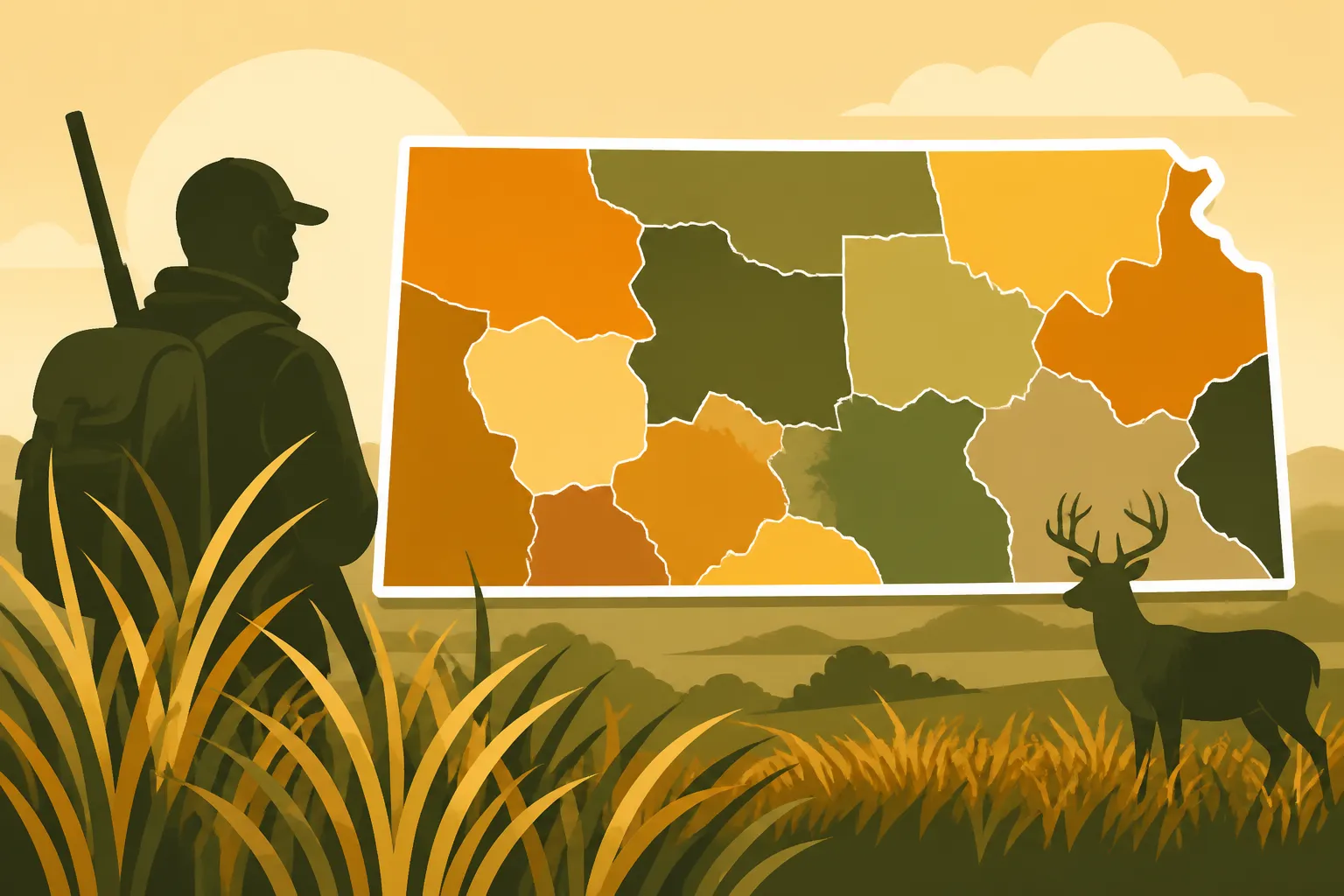
While the landscape can shift, certain deer management units (DMUs) consistently stand out for their extensive WIHA offerings. Keep in mind that WIHA enrollment can change annually, so always consult the latest KDWP WIHA atlas or online map portal before planning your trip. However, based on historical patterns and land characteristics, here are some general trends for units with more walk-in ground:
- Units 1, 2, 3 (Northwest Kansas): These units, deep in the heart of prime Western Kansas habitat, frequently offer some of the largest and most numerous WIHA tracts. Expect vast expanses of CRP, wheat stubble, and native grassland. Deer here often travel long distances, and these large tracts provide crucial bedding and feeding areas. If you're looking for wide-open spaces and the potential for mule deer alongside whitetails, these units are often a strong bet for WIHA.
- Units 17, 18 (Southwest Kansas): Similar to the northwest, these units in the southwestern corner of the state offer significant WIHA acreage. They share many characteristics with Units 1-3, featuring expansive agricultural fields and rangeland. Access to water sources within these tracts can be particularly important in drier years.
- Units 4, 5, 10, 15 (Central Kansas): While not as consistently vast as the western units, these central Kansas units often provide a healthy balance of WIHA, especially in counties where agriculture is prominent and intersected by river or creek drainages. These units can offer excellent opportunities, particularly if you're looking for larger whitetail bucks that utilize a mix of crop fields for feeding and timbered river bottoms for cover. Unit 4, for example, is well-known for its turkey hunting, and the WIHA provides access to crucial timber.
It's critical to remember that "most walk-in ground" isn't always just about total acreage. A unit with a slightly lower total WIHA acreage might have a few incredibly large, contiguous blocks that are far more valuable than a unit with a higher total spread across dozens of tiny, isolated parcels. Always examine the actual layout of the tracts using the Kansas Hunting Atlas Online or a mapping app like onX Hunt.
Here's a general overview of WIHA characteristics by region:
| Region | Typical WIHA Habitat | Average Tract Size | Potential Hunting Pressure | Primary Game Species |
|---|---|---|---|---|
| Western | Expansive CRP, native grass, crop stubble, sparse timber | Large (160+ acres) | Moderate | Whitetail, Mule Deer, Pheasant, Quail, Coyote |
| Central | Mix of crop fields, grasslands, timbered creek draws | Medium (40-160 acres) | Moderate to High | Whitetail, Turkey, Pheasant, Quail |
| Eastern | Timbered river bottoms, small crop fields, brushy draws | Small (10-80 acres) | High | Whitetail, Turkey, Small Game |
This table provides a generalized view. Always use current KDWP resources for the most accurate and up-to-date information on specific units and tracts.
Strategies for Maximizing Your Hunt on Walk-In Ground
Having access to WIHA land is just the first step; knowing how to effectively hunt it is where the real success lies. You can find yourself on a beautiful tract of land, but if you don't have a plan, you might as well be anywhere.
Leveraging Technology for WIHA Scouting
In today's hunting world, technology is your best friend, especially when hunting public or walk-in ground. Gone are the days of relying solely on paper maps (though they still have their place). Digital mapping applications are indispensable.
onX Hunt is an absolute must-have for any serious Kansas hunter utilizing WIHA. This app allows you to see property lines with clear distinctions between private and public lands, including WIHA. You can overlay aerial imagery with topographic maps, identify potential bedding areas, food sources, and travel corridors, all from the comfort of your home. Before you even drive to Kansas, you can spend hours E-Scouting Kansas Farm Country From Home, identifying pinch points, cover, and potential stand locations. With onX Hunt, you can mark waypoints, measure distances, and save maps for offline use – crucial in areas with spotty cell service. This level of preparation will give you a significant advantage, helping you avoid wasting precious hunting time looking for access or suitable habitat.
While GoHunt also offers useful tools and insights, particularly for drawing tags and understanding broader regulations, onX Hunt is specifically tailored for in-field navigation and detailed property-level mapping, making it the more critical tool for direct WIHA use.
The KDWP’s own online hunting atlas is another vital resource. While onX Hunt often pulls this data, checking the KDWP site directly ensures you have the absolute latest information, as WIHA tract enrollments can change annually. Some tracts might be added or removed, or their boundaries might be adjusted. Regularly reviewing these resources is key to staying current and avoiding surprises.
Adapting to Pressure on Public and Walk-In Land
One of the biggest realities of hunting walk-in ground, especially in popular units or during peak seasons, is hunting pressure. You're rarely going to be the only hunter out there, and pretending you will be is a recipe for frustration. Instead, embrace it and adapt your strategy.
- Expect Company: During firearm season or the heart of the rut, many WIHA tracts, especially those with easy access, will see significant Hunting Pressure Patterns on Kansas Public Land. Hunters are looking for the same thing you are, and often they're heading to the most obvious spots.
- Hunt Smarter, Not Harder: This means going beyond the obvious. Look for the overlooked corners, the thickest cover, or the areas that require a bit more effort to reach. Often, deer will retreat to these less-pressured pockets once hunters hit the woods. This might involve a longer walk, crossing a ditch, or navigating a dense plum thicket. Consider Access Routes That Do Not Bump Deer – a quiet, less-direct path can be far more effective than barging straight in.
- Midweek and Midday Advantage: If your schedule allows, hunting on weekdays will almost always encounter less pressure than weekends. Similarly, don't write off midday. Many hunters head out early and are back in camp by 10 AM, leaving prime midday hours relatively undisturbed, especially during the rut when bucks are cruising.
- Embrace Mobility: Being able to quickly adapt and move is a huge asset on walk-in ground. Don't commit to a single stand for the entire hunt. A lightweight treestand, or even better, a saddle hunting setup, allows you to pick up and move if conditions change or if you find more promising sign elsewhere. Mobile Hunting With a Saddle in Kansas can be a game-changer, allowing you to get into spots quickly and quietly that a traditional stand hunter might overlook.
- Focus on Overlooked Cover and Funnels: Deer use cover to feel safe. On heavily hunted land, this means they'll gravitate towards the densest Cedar Thickets as Bedding Cover, the thickest CRP, or the most secluded creek bottoms. Look for subtle terrain features that funnel deer movement through these cover areas. Even in flat farm country, slight elevation changes, fence lines, or isolated pockets of timber can create natural funnels.
- Pre-Season Scouting is Key: Even if you can't put boots on the ground, extensive e-scouting can make a huge difference. Identify these pressure points and potential sanctuaries before you go. Having multiple spots pre-scouted on your mapping app means you have options if your primary spot is occupied. Scouting Kansas Walk-In Tracts Before the Opener will help you prioritize locations and understand the lay of the land without impacting deer movement.
By understanding the WIHA and iWIHA programs, focusing your search on units known for extensive walk-in ground, and employing smart, adaptable hunting strategies, you can significantly increase your chances of success on Kansas public land. It takes effort, but the reward of harvesting a deer on ground you've carefully scouted and accessed yourself is truly unparalleled.
Disclaimer
This article is for general informational purposes only and does not constitute professional advice. Laws, prices and regulations vary by location and change over time. Consult a qualified professional for guidance on your specific situation.