Kansas Record Book Whitetails
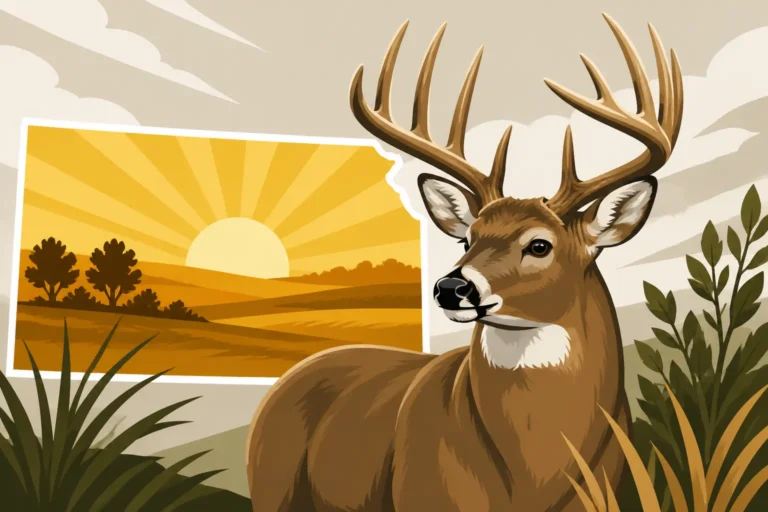
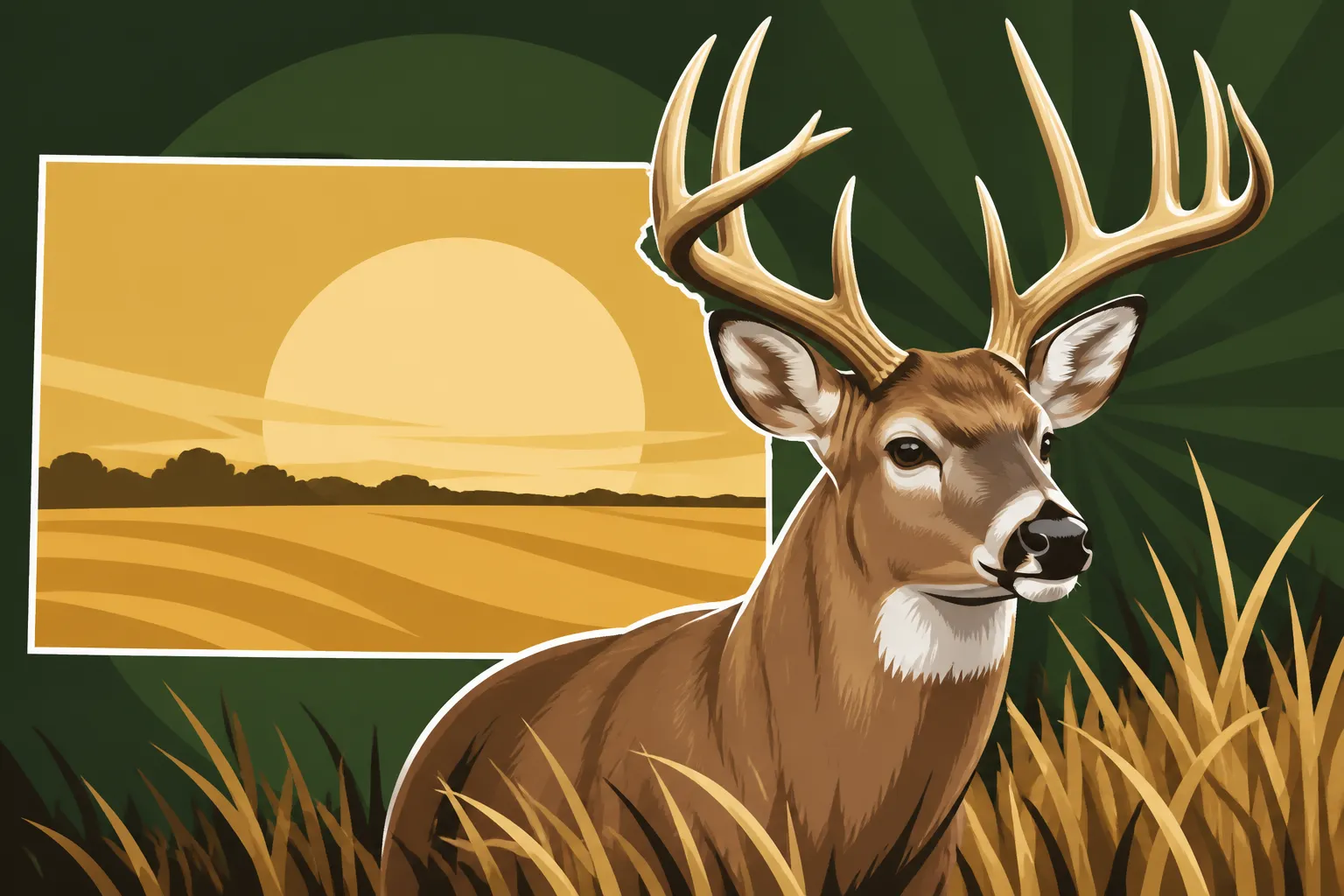
Every serious deer hunter dreams of that one-in-a-lifetime buck, the kind of animal that not only makes your heart pound but also earns a place in the hallowed pages of the record books. It’s a monumental achievement, especially when you’re hunting in a state like Kansas, which has rightfully earned its reputation for producing some truly incredible whitetails. This guide isn't just about bagging any big deer; it’s about understanding what it takes to pursue and successfully harvest a Kansas whitetail that truly stands out and might even qualify for official recognition, breaking down the myths and realities of record book status.
The Lure of Kansas and What Defines a "Record Book" Whitetail
For many, Kansas is synonymous with big deer, and for good reason. There’s a magic in this state that consistently helps whitetail bucks grow massive antlers, drawing hunters from all corners of the country. But what exactly makes a deer a "record book" animal, and why does Kansas seem to have more than its fair share?
Why Kansas is Synonymous with Big Bucks
If you’ve spent any time hunting whitetails, you’ve heard the whispers, then the shouts, about Kansas. It’s not just hype; there are genuine, tangible reasons why this state consistently ranks among the top for trophy whitetails. First, the genetics here are phenomenal. We're talking about deer that simply have the inherent ability to grow impressive headgear. Combine that with the absolute buffet of nutrition provided by Kansas's vast agricultural landscape – endless fields of corn, soybeans, milo, and winter wheat – and you have a recipe for antler growth that's hard to beat. Bucks are essentially living in a nutrient-rich grocery store. You can read more about this in Why Kansas Produces Big Whitetail Bucks.
Beyond genetics and nutrition, another critical factor is age structure. Kansas has a healthy population of older-age-class bucks. This means more deer are surviving long enough to express their full antler potential, often reaching 4.5, 5.5, or even 6.5 years old. When a buck hits these mature ages, and he's been fueling up on Kansas crops, his antlers can really explode. It's a combination that few other states can match, making every trip to the sunflower state a hopeful pursuit of a true giant. The quality of the soil and its direct impact on what these deer consume is profound; it's a topic deeply tied to antler development and can be explored further in Soil Fertility and Antler Growth.
Understanding "Record Book" Standards
Now, let's clarify what "record book" actually means, because it's more specific than just "a really big deer." When hunters talk about record books, they're typically referring to official scoring systems established by organizations dedicated to preserving hunting heritage and recognizing exceptional animals. The two primary clubs for whitetails are the Boone and Crockett Club (B&C) and the Pope and Young Club (P&Y). Each has its own stringent measurement criteria and minimum scores that an animal must meet to be entered.
It's not just about length or mass; it's a detailed mathematical equation that considers multiple dimensions of the antler. Furthermore, these clubs differentiate between "typical" and "non-typical" racks. A typical rack is symmetrical, with points growing mostly off the main beams. A non-typical rack has abnormal points, drops, or kickers that add mass and unique character but often detract from a "typical" score due to deductions for asymmetry. So, a true "record book" deer isn't just big; it's big and it conforms to a very specific set of measurement rules that highlight its exceptional qualities. It’s a level of achievement that requires both luck and an understanding of what makes a buck truly outstanding.
Deciphering the Scoring Systems: Boone and Crockett, Pope and Young, and Beyond
Navigating the world of antler scoring can feel a bit like learning a new language. You hear terms like "gross score," "net score," "typical," and "non-typical," and it can get confusing quickly. But if your goal is a true record book whitetail, understanding these systems is absolutely crucial. They’re the benchmarks against which all trophy bucks are measured.
The Boone and Crockett Club: The Gold Standard for Firearms
When you hear "Boone and Crockett," you're hearing about the absolute pinnacle of big game records in North America, particularly for animals harvested with firearms or muzzleloaders. Founded by Theodore Roosevelt, B&C is dedicated to fair chase hunting and the conservation of big game. For a Kansas whitetail to make it into the B&C record book, it needs to be an exceptional animal, truly a buck of a lifetime. The minimum entry score for a typical whitetail is generally 160 inches for their Awards program, and a staggering 170 inches for their all-time records. For non-typical whitetails, the bar is set at around 185 inches for Awards and 195 inches for all-time. These aren't just arbitrary numbers; they represent the upper echelon of antler growth.
The B&C scoring method is incredibly detailed. It involves measuring the length of the main beams, the length of all normal points, four circumference measurements taken at specific points along the main beam, and the inside spread. The total gross score is then calculated, and deductions are made for any asymmetrical differences between corresponding points on each side of the rack. For non-typical deer, abnormal points are added to the gross score, and then deductions are applied. It’s a precise, objective system designed to recognize true antler quality. Learning these minimums is a critical first step for any hunter with aspirations of a truly big buck, and you can dive deeper into these requirements in Boone and Crockett Minimums for Whitetail.
Pope and Young Club: Bowhunting's Equivalent
For the dedicated bowhunter, the Pope and Young Club holds the same esteemed status as Boone and Crockett does for firearm hunters. P&Y is exclusively for animals taken with archery equipment under fair chase principles. It celebrates the skill, patience, and dedication inherent in bowhunting, recognizing that the challenge of getting within bow range often means a slightly different scale for "trophy" status.
The minimum entry scores for whitetails into the Pope and Young record book are generally more accessible than B&C, reflecting the added difficulty of harvesting with a bow. A typical whitetail usually needs to score at least 125 inches, while a non-typical whitetail needs to hit around 155 inches. The actual scoring methodology is essentially the same as B&C, measuring main beam length, point length, circumferences, and inside spread, with deductions for asymmetry. While the numbers may be lower, the achievement of harvesting a P&Y record book whitetail with a bow is no less significant; it speaks volumes about a hunter's prowess and dedication to their craft.
Kansas State Records and Other Local Programs
Beyond the national stages of Boone and Crockett and Pope and Young, many states, including Kansas, often maintain their own record-keeping programs or actively track B&C and P&Y entries specific to their state. These local records are incredibly important because they celebrate the unique hunting heritage and quality of game within state borders. While the B&C and P&Y standards are universal, state record books often highlight animals that might not quite make the national all-time lists but are still monumental trophies for that specific region.
These state-level recognitions foster a sense of pride among Kansas hunters and provide an accessible goal for those chasing truly exceptional animals without having to meet the highest national thresholds. They also serve as a fantastic historical archive, showcasing the consistent quality of Kansas Whitetail Body and Antler Size over the decades. Sometimes, these programs even offer categories for unique local conditions or alternative weapon types not covered by the national clubs. If you're serious about pursuing a record-class buck in Kansas, familiarizing yourself with any state-specific programs in addition to the national standards is a smart move. Always check the Kansas Department of Wildlife, Parks and Tourism (KDWP) resources for current details on state-level recognition.
Here’s a quick overview of typical minimum score requirements for whitetail deer across the major record-keeping organizations:
| Category | Organization | Typical Whitetail Minimum Score | Non-Typical Whitetail Minimum Score | Weapon Type |
|---|---|---|---|---|
| All-Time | Boone and Crockett | 170 | 195 | Firearm, Muzzleloader |
| Awards | Boone and Crockett | 160 | 185 | Firearm, Muzzleloader |
| All-Time | Pope and Young | 125 | 155 | Archery |
| Awards | Pope and Young | 125 | 155 | Archery |
The Path to a Kansas Record Book Whitetail
So, you understand the scoring systems. Now, how do you actually go about pursuing one of these legendary Kansas whitetails? It's not just about luck, though a little bit never hurts! It’s a strategic, long-term endeavor built on understanding deer biology, meticulous scouting, and disciplined hunting.
The Pillars of Growth: Age, Genetics, and Nutrition
To grow a true record book rack, a buck needs three things to align perfectly: age, superior genetics, and abundant, high-quality nutrition. In Kansas, these elements converge beautifully. First, age is non-negotiable. A buck simply cannot grow antlers of record book proportions if he’s harvested at 2.5 or 3.5 years old. These giants typically need to be 4.5, 5.5, or even 6.5 years old to truly max out their potential. This means that as hunters, we often need to exercise patience and restraint, passing up younger bucks in the hopes they survive to maturity. For more on this, check out Antler Growth and Nutrition.
Second, genetics play a huge role. Just like people, some deer are simply predisposed to growing bigger or more unique antlers. While you can't control the genetics of a wild deer herd, the overall quality of the Kansas herd suggests a strong genetic pool for impressive antler growth. Finally, nutrition is where Kansas really shines. The state's fertile agricultural lands provide an unparalleled food source. Bucks have access to protein-rich alfalfa, energy-packed corn and milo, and soybeans—all the essential building blocks for robust body size and massive antlers. This constant, high-quality diet allows them to funnel immense energy into antler development year after year, especially when you factor in local farming practices like crop rotation. You can learn more about this specific advantage in Crop Rotation and Deer Nutrition.
Hunting Strategies for Trophy Bucks
Chasing a record book whitetail in Kansas isn't like chasing just any deer. It requires a different mindset and a highly refined strategy. First and foremost, patience and discipline are paramount. You'll likely pass up many good bucks before you even get a glimpse of a potential record-setter. This means being able to resist the urge to fill your tag early and holding out for that truly exceptional animal.
Extensive scouting is your best friend. This means not only spending time in the woods, looking for sign, but also utilizing modern tools like the GoHunt platform. With GoHunt, you can pore over aerial imagery, identify potential bedding areas, travel corridors, and feeding grounds from your couch. This "e-scouting" is invaluable for pinpointing specific areas where a mature buck might be living or moving, especially when looking at the vastness of Kansas farm country. Read our guide on E-Scouting Kansas Farm Country From Home for more ideas. Identifying terrain funnels, pinch points, and cover in otherwise open fields is critical.
Timing your hunts strategically around the pre-rut and the peak of the rut is also crucial. This is when mature bucks are most vulnerable, cruising for does and less cautious than at other times of the year. Understanding When the Kansas Rut Peaks in your specific hunting unit can make all the difference. When it comes to stand placement, remember that mature bucks are incredibly wary. Focus on pinch points, inside corners of crop fields, and subtle terrain features that funnel deer movement. Best Stand Locations in Flat Farm Country will offer you some great starting points. Remember, the goal is to get into position without alerting the deer you're after.
Official Measurement and Verification
So, you've done it. After countless hours of scouting, disciplined hunting, and a dose of good fortune, you've harvested a Kansas whitetail that looks like it belongs in the record books. Congratulations! But the journey isn't over yet; the next crucial step is official measurement and verification.
The very first thing you need to do, after properly tagging and caring for your animal, is to ensure a 60-day drying period for the antlers. This is a non-negotiable rule for both Boone and Crockett and Pope and Young. Antlers can shrink slightly as they dry, and this period ensures the measurement is stable and accurate. Attempting to score antlers before this period will result in an unofficial measurement that won't qualify.
Once the drying period is complete, you need to find an official measurer. Both B&C and P&Y have networks of certified scorers across the country. You can typically find a list of official measurers on their respective websites or through your state wildlife agency. Contact them, explain what you have, and schedule an appointment. During the scoring session, the measurer will meticulously go over every aspect of the rack, using a flexible steel tape to measure lengths, circumferences, and spreads, as outlined in Scoring a Whitetail Rack. They will also identify and deduct for any asymmetrical differences in typical points. The process is thorough, and it's exciting to watch your buck's dimensions slowly add up to a final score. If it meets the minimum, your Kansas whitetail will officially join the ranks of record book animals – a truly unforgettable moment. When discussing Kansas deer hunting and specific units, tools like GoHunt can help you analyze harvest data and understand which Kansas Deer Units and What Each Holds might produce these giants, even assisting in finding areas with potentially higher trophy buck density.
Disclaimer
This article is for general informational purposes only and does not constitute professional advice. Laws, prices and regulations vary by location and change over time. Consult a qualified professional for guidance on your specific situation.