Cottontail and Jackrabbit Range
There’s something wonderfully accessible and consistently challenging about hunting rabbits in Kansas. While many hunters focus on deer or turkeys, the pursuit of cottontails and jackrabbits offers year-round opportunities (with specific season dates, of course!) and a chance to truly connect with the diverse landscapes of our state. However, understanding where these fast-moving critters actually live is the first, and often most frustrating, hurdle. This guide will walk you through the distinct ranges and preferred habitats of both Eastern Cottontails and Black-tailed Jackrabbits, helping you pinpoint their hideouts and refine your hunting strategy.
The Distinctive Habitats of Kansas Cottontails
When we talk about "rabbit hunting" in Kansas, for most folks, the Eastern Cottontail is probably the image that springs to mind. These furry dynamos are ubiquitous across much of the state, but they certainly aren't found just anywhere. They are creatures of edge and cover, preferring areas where they can quickly dive for safety.
Brush Piles, Timber Edges, and Agricultural Field Borders
Cottontails thrive in what we call "edge habitat"—where one type of cover transitions into another. Think about those old, overgrown fencelines that separate a cornfield from a pasture, or the tangled mess of multiflora rose and hedge along a creek. These are prime cottontail havens. They need dense, escape cover to feel secure, and they love to feed on the fresh growth that often pops up in these disturbed areas.
You’ll find them tucked into gnarly brush piles that farmers have pushed up, often around old homesteads or at the corners of fields. Timber edges, especially where a woodlot meets open ground, are also fantastic spots. They use the dense undergrowth for bedding and escaping predators, venturing out into the more open areas for food, especially during dawn and dusk. This makes them a natural fit for areas that also hold pheasant and quail. You might even find yourself Working Pheasant Fields Without a Dog and flush a cottontail instead! Look for areas where taller grass, like that found in CRP Grass and Where Bucks Bed, gives way to denser woody cover. These transition zones are goldmines.
Imagine walking the perimeter of a standing milo field in central Kansas. The milo itself provides some cover and food, but where that milo meets a tangled line of cedars and osage orange, that's where the cottontails will be hunkered down. They'll dart from the field into the thick stuff at the first sign of danger. Understanding this need for quick escape is key to finding them.
Suburban Green Spaces and River Bottom Thickets
It might surprise some, but cottontails are incredibly adaptable and can even be found flourishing closer to human habitation. Suburban parks, unkempt backyards with dense shrubbery, and even abandoned lots can hold surprising numbers of cottontails, especially if there's enough natural cover and limited human disturbance. Just remember that local ordinances and safety always come first in these areas; hunting within city limits is rarely an option.
However, a much more common and productive location for cottontails is the rich, often neglected habitat found in river and creek bottoms. The Neosho, Marais des Cygnes, Smoky Hill, and Arkansas River systems, along with countless smaller creeks throughout Kansas, create perfect environments. These areas are typically choked with dense thickets of willow, wild plum, sumac, and brush, offering impenetrable cover from predators and harsh weather. They also provide a consistent food source with diverse vegetation.
When scouting these river bottoms, you're not just looking for deer sign. You're scanning for the distinct trails rabbits create through dense vegetation, often leading to small openings where they might feed. These thickets are often shared with other small game like quail; if you’re trying to locate Quail Coveys in Plum Thickets, you’ll likely jump a cottontail or two in the process. The sheer volume of cover means you often need to actively push through these areas, or use a good small game dog, to get them moving.
Navigating the Open Prairies: Jackrabbit Country in Kansas
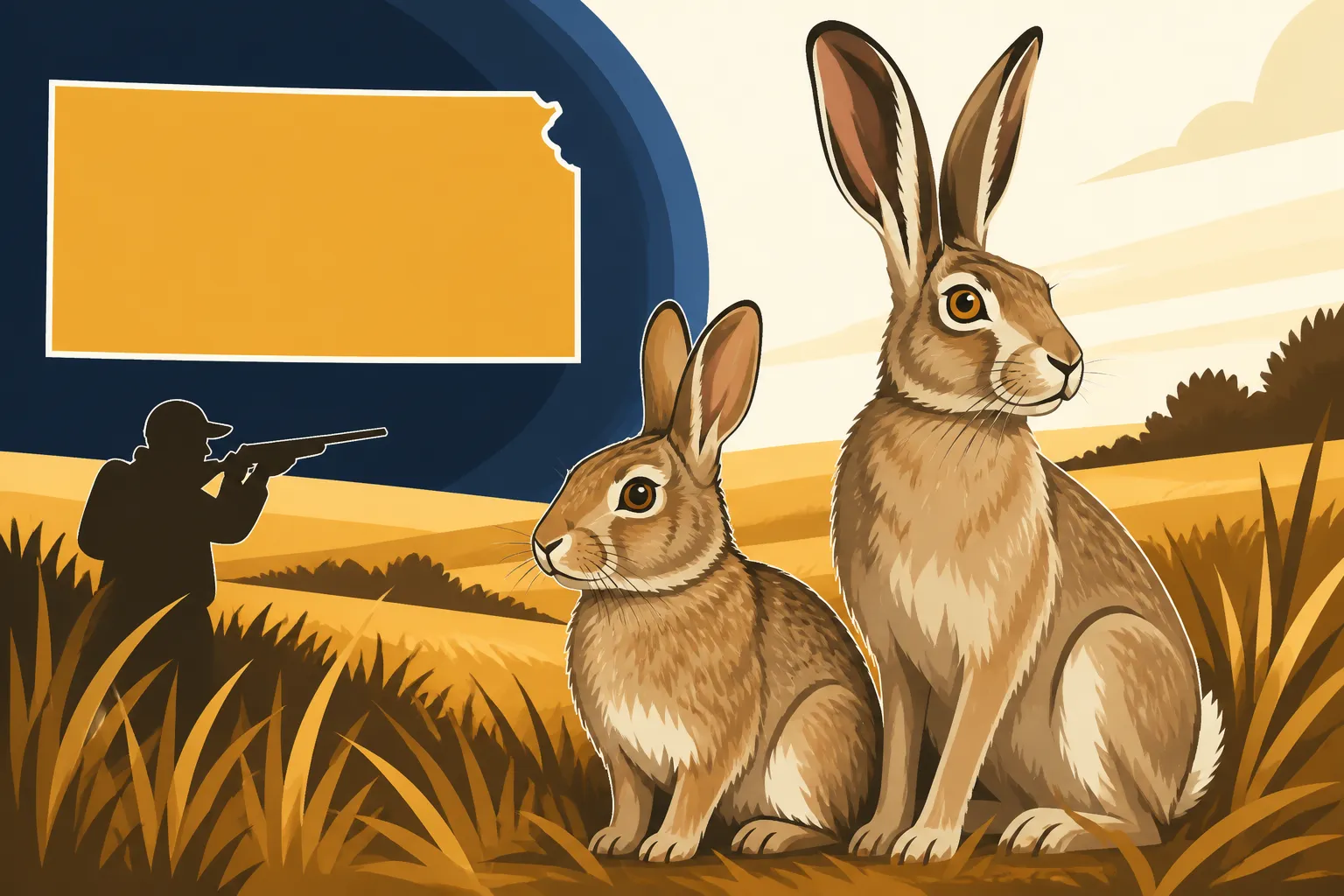
While cottontails prefer dense cover, the Black-tailed Jackrabbit is a creature of the open plains, a true icon of western Kansas. These aren't rabbits; they're actually hares, distinguished by their longer legs, massive ears, and habit of relying on speed and camouflage in wide-open spaces rather than diving into thick brush.
Shortgrass Prairies and Rangeland Plateaus
The heart of jackrabbit country in Kansas lies in the western two-thirds of the state, particularly where expansive shortgrass prairies and rangeland plateaus dominate the landscape. These areas, characterized by sparse vegetation, low-growing grasses, and rocky outcrops, are where jackrabbits truly shine. Their incredible speed, sometimes reaching bursts of over 40 miles per hour, is their primary defense mechanism, and they need open ground to utilize it effectively.
They blend in remarkably well with their surroundings, often "holding tight" until you are almost on top of them before exploding into a zig-zagging sprint. Imagine a vast, undulating prairie in units like 1, 2, or 3 in the far west. This is where you'll find them. They’ll often use slight depressions, the base of yucca plants, or small clumps of prickly pear cactus for minimal cover from the elements and aerial predators.
When hunting in these areas, you might be focused on larger game, but keep an eye out. A well-placed GoHunt map on your phone can help you identify these open, grassy expanses, especially on public access areas like the Cimarron National Grassland. Pay attention to the subtle changes in elevation or cover that might offer a jackrabbit a temporary reprieve from the sun or wind.
Crop Fields and Winter Wheat Stubble
Even though jackrabbits prefer open prairie, they are not averse to utilizing agricultural fields, especially during certain times of the year. Winter wheat fields, particularly those with plenty of stubble after harvest, offer both food and surprisingly good camouflage. The golden-brown stubble perfectly matches their fur, and the endless rows provide corridors for quick escapes.
You’ll often find them hunkered down right in the middle of these vast fields, especially on cooler days or after a light rain. As you walk through, they might not flush until you are just yards away, then they're off, bounding across the stubble in those characteristic long strides. This type of hunting can feel a lot like Working Grass Edges Without a Dog or even Blocking and Driving Kansas Milo Fields for pheasants, just in a much more expansive environment.
Consider a late fall or winter day in western Kansas. The corn and milo have been harvested, leaving stubble fields stretching for miles. A jackrabbit will rely on its camouflage and then its incredible speed when approached. They might skirt the edges of these fields, especially where they meet a fenceline or a very sparse shelterbelt, but they prefer to stay out in the open where they can see danger coming and make a dash for it.
Why Understanding Range Matters for Kansas Hunters
Knowing the general range of cottontails and jackrabbits isn't just academic; it fundamentally changes how you approach hunting each species. You wouldn't hunt a whitetail in the middle of a shortgrass prairie any more than you'd expect to find a mule deer in a dense river bottom thicket. The same principle applies here.
Tailoring Your Hunting Strategy to the Species
The habitat dictates the tactic. For cottontails, because they prefer dense cover, your strategy often involves pushing through thickets, jump shooting them as they bolt, or using dogs to flush them out. Often, it's a social hunt, with several hunters pushing a section of brush towards blockers positioned at the end. This is a very active, often fast-paced style of hunting, where quick reflexes and good shotgun skills are paramount. You might find yourself in the same habitat you'd explore for Hunting Terrain Funnels in Flat Country for deer, simply adjusting your focus to smaller game.
For jackrabbits, the game changes entirely. Their open-country preference means long shots are common, and often a .22 rifle or even a centerfire rifle is a more suitable tool than a shotgun, depending on local regulations and the specific hunting situation. Spot-and-stalk or walk-ups in wide-open fields are typical. You might spend more time scanning the horizon with binoculars, trying to pick out the tell-tale long ears or the slight silhouette of a jackrabbit hunkered down. When you do get them up, they're not heading for a brush pile; they're putting distance between you and them as fast as possible. This is where mapping applications like GoHunt become invaluable, helping you understand terrain features and potential escape routes in vast areas.
Seasonal Movements and Preferred Cover
Both species can exhibit some seasonal changes in their preferred cover and locations, primarily driven by weather and available food sources. In the deep cold of winter, cottontails might seek out even denser thermal cover, like heavy cedar thickets or the leeward side of large brush piles, to escape the wind and snow. They might also concentrate around reliable food sources, such as fallen grain in agricultural fields or patches of green browse that remain accessible.
Jackrabbits in winter may similarly congregate in areas where food is more readily available, such as winter wheat fields, or along fencelines that offer a slight windbreak. Their natural hardiness, however, allows them to endure harsh conditions out in the open more readily than cottontails. During the extreme heat of summer, both species might become more nocturnal, or at least more active during the cooler parts of dawn and dusk, seeking shade during the midday sun. Knowing this can influence your hunting times. Always ensure you have the correct Kansas Small Game Licence Requirements before heading out.
Tips for Locating Rabbits and Maximizing Your Hunt
Rabbit hunting is a fantastic way to enjoy the outdoors, hone your shooting skills, and put some delicious meat in the freezer. It’s also often less competitive than hunting larger game, making it an excellent option for beginners or those looking for a relaxed outing.
Scouting for Sign and Key Habitat Features
Just like deer hunting, scouting for rabbits can significantly improve your success. While you might not be looking for massive rubs, you're certainly looking for distinct signs.
- Droppings: Rabbit droppings are small, round pellets. A concentration of them indicates regular use of an area.
- Tracks: In soft soil, snow, or mud, look for their distinctive tracks. Cottontails often leave a more clustered pattern, while jackrabbits have longer, more spread-out prints.
- Runways: Rabbits create small, tunnel-like paths through dense grass and brush. These "runways" are often visible and lead to feeding areas or escape cover.
- Browsing: Look for clipped vegetation, especially on young saplings or brush, where they’ve been feeding.
- Visual Confirmation: The best sign, of course, is seeing rabbits! Drive slowly along backroads bordering prime habitat during early morning or late evening. Use your binoculars to scan open fields or field edges for feeding rabbits. A good mapping app like GoHunt can help you mark these locations for later investigation on foot.
When Scouting Kansas Walk-In Tracts Before the Opener for other game, always keep an eye out for these rabbit signs. You might discover an unexpected honey hole for small game.
Essential Gear for a Successful Rabbit Outing
Rabbit hunting doesn't require a ton of specialized gear, which is part of its appeal. However, a few items can make your hunt more comfortable and successful.
- Shotgun: A 12 or 20 gauge shotgun with an open choke (like Improved Cylinder or Modified) is ideal for cottontails. For jackrabbits in wide-open country, a .22 rifle or even a centerfire can be more appropriate for longer shots. Always check local regulations on weapon choice.
- Ammunition: For shotguns, #6 or #4 shot is commonly used. For rifles, choose ammunition appropriate for small game.
- Boots and Brush Pants: If you're busting through briars and thickets for cottontails, sturdy, waterproof boots and brush-resistant pants are a must.
- Orange Vest/Hat: Safety is paramount. Always wear hunter orange, especially if hunting with others, to ensure you're visible. This is a crucial aspect of Hunter Orange Rules During Firearm Season and good practice for any group hunt.
- Game Vest/Bag: Something to carry your harvested rabbits comfortably.
- Gloves: For handling briars and game.
- Water and Snacks: Always stay hydrated, especially during long walks.
- Mapping App: An app like GoHunt on your phone or a GPS unit is incredibly helpful for navigating property lines, tracking your route, and marking spots where you see activity. This is particularly useful on larger public areas or when determining Which Kansas Units Have the Most Walk-In Ground.
- Hunting Partners: Rabbit hunting, especially for cottontails, is often more productive and certainly more social with a few friends. You can coordinate pushes and blocking routes. Consider how Firearm Season Drives on Small Timber might translate to rabbit hunting techniques in smaller brush patches.
- Small Game Dogs: If you have access to a good beagle or other rabbit dog, they can drastically improve your success rate and make the hunt incredibly fun.
Remember to always have your Kansas Hunting Licence and Permit Costs covered and review the current regulations before heading afield. A successful rabbit hunt is not just about the harvest, but about the experience of being out in the Kansas landscape, appreciating the small game it offers, and perhaps even spotting a coyote out Coyote Calling in Open Kansas Country – a natural predator of the rabbits you pursue.
Disclaimer
This article is for general informational purposes only and does not constitute professional advice. Laws, prices and regulations vary by location and change over time. Consult a qualified professional for guidance on your specific situation.