Blocking and Driving Kansas Milo Fields
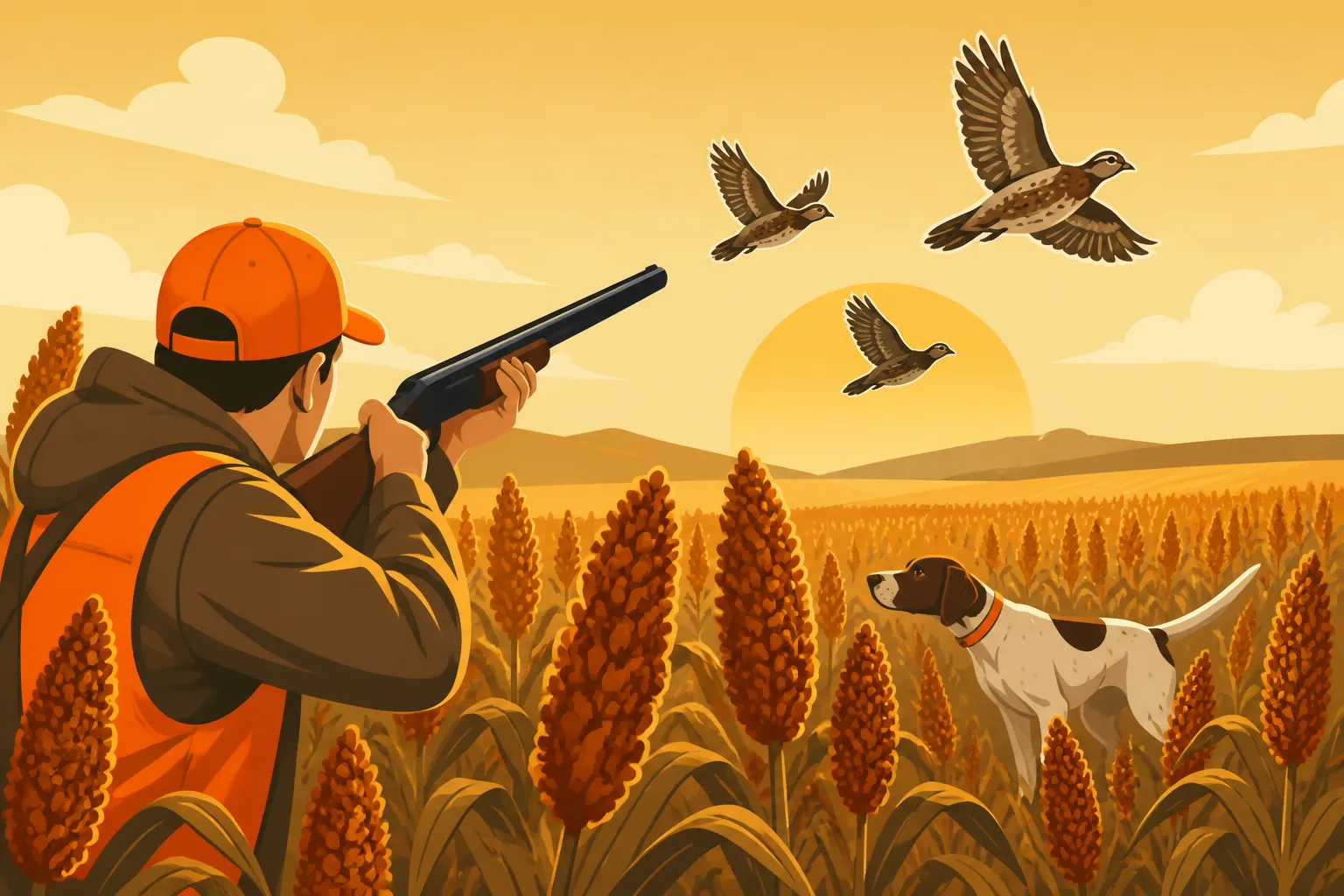
Hunting expansive Kansas milo fields can feel like searching for a needle in a haystack, especially when you know deer are in there, but they just won't show themselves. These dense, often towering crops provide incredible cover, making it nearly impossible to spot a whitetail until it's too late. This comprehensive guide will walk you through the effective, coordinated tactics of blocking and driving milo fields, helping you push deer out strategically and increase your shot opportunities.
Understanding Milo Field Dynamics
Milo, or grain sorghum, isn't just another crop; it's a whitetail sanctuary, a fortress of food and cover. For hunters, this presents both immense opportunity and significant challenge. Understanding why deer gravitate to these fields and how they use them is the first step toward effective hunting.
Why Milo is a Deer Magnet
Kansas is famous for its agricultural landscape, and milo fields are a prime example of this environment creating ideal deer habitat. Deer, especially mature bucks, are constantly seeking two things: food and security. Milo offers both in abundance. During the growing season, the lush plants provide forage, but it's in the late season, after the harvest, that milo truly shines as a critical food source. The dropped grains, often left behind during mechanical harvesting, become an irresistible buffet for deer looking to pack on calories before or during the harsh winter months. You'll often find deer literally living in these fields, only venturing out under the cover of darkness. This makes them a prime target for hunters employing Late-Season Food Source Hunting strategies, but the challenge remains getting them to move during daylight.
Beyond just food, milo fields offer unparalleled cover. Unlike standing corn, which can be somewhat sparse underneath, milo often grows much denser and shorter, creating a thick canopy that obscures movement from above and provides incredible visual and thermal cover. A deer can disappear into a milo field and seemingly vanish, moving silently through the rows, completely hidden from view. This dense cover makes traditional stand hunting difficult unless you happen to be positioned exactly on an exit route or a cross-field travel corridor.
Milo's Structure and Cover Benefits
The physical structure of a milo field dictates how deer move and how hunters should approach a drive. Milo stalks are generally robust and spaced closely enough to create a formidable barrier, slowing down human movement while offering deer agile pathways. Deer often create intricate trail networks within these fields, using the rows as natural highways and bedding down deep within the densest sections. These hidden trails are critical to scout, as they often lead to key escape routes.
The height of milo, which can range from knee-high to well over a hunter's head depending on the variety and moisture, means that hunters lose visual contact almost immediately upon entering. This lack of visibility, combined with the rustling of the stalks in even a slight breeze, makes it incredibly difficult to pinpoint a deer's exact location by sound alone. This is precisely why a coordinated effort is crucial. A lone hunter trying to push deer through milo is likely to bump them out unseen, or worse, have them circle back behind the driver. The dense foliage also dampens sound, meaning communication among hunters needs to be planned meticulously. Hunters must factor in these elements when planning their approach and assigning roles, recognizing that a deer's ability to remain hidden is significantly enhanced in this environment.
Scouting and Pre-Hunt Preparation
Successfully driving a milo field isn't something you decide to do on a whim. It requires meticulous planning, detailed scouting, and a clear understanding of the terrain and deer movement. Neglecting this crucial phase often leads to frustration, missed opportunities, and even unsafe hunting conditions.
E-Scouting for Milo Fields
Before you even step foot in the field, modern e-scouting tools can be your best friend. Services like GoHunt offer high-resolution satellite imagery that can reveal a tremendous amount of information about milo fields, even if the imagery isn't perfectly current. Look for distinct edges where the milo meets timber, CRP, waterways, or other crop fields. These transitions are prime areas for deer to enter and exit. Pay close attention to any anomalies within the field itself – small patches of timber, overgrown fencelines, drainage ditches, or even changes in crop density. These irregularities often serve as bedding areas or funnel points within the larger field. Identifying potential travel corridors and exit points from the comfort of your home is vital.
Additionally, use topographic maps available through platforms like GoHunt to identify subtle changes in elevation, even in otherwise flat Kansas country. A slight rise can offer a strategic vantage point for a blocker, while a subtle depression might serve as a hidden escape route for deer. Marking these potential hot spots and escape routes on your digital map will create a blueprint for your ground reconnaissance and subsequent drive strategy. Don't forget to examine historical aerial imagery if available, as deer patterns often repeat year after year.
On-the-Ground Reconnaissance
Once you've narrowed down your potential milo fields through e-scouting, it's time to put boots on the ground. This phase is critical for confirming your e-scouting observations and discovering fresh sign. Walk the perimeter of the field, looking for well-used trails leading into and out of the milo. Pay close attention to the edges where deer might be feeding or crossing. Look for tracks, scat, and rub lines along these field edges, as they will tell you if deer are actively using the field.
Venturing into the milo itself is often necessary, but do so carefully and strategically to avoid disturbing deer unnecessarily before your planned hunt. On a calm day, enter the field along a likely travel route or where your e-scouting indicated a bedding area might be. Look for beaten-down trails within the milo, often indicating bedding areas. These trails will give you insight into how deer navigate the dense cover and which directions they prefer to exit. Identify specific bottlenecks or natural funnels created by the field's shape or adjacent cover, which will be prime spots for blockers. This detailed scouting will confirm the Milo and Corn Stubble Deer Patterns you're hoping to exploit. Remember, the goal here is to gather intelligence, not to bump deer out of the county. The more you know about the deer's preferred routes, the more effective your drive will be.
Strategies for Effective Blocking
The success of a milo field drive hinges just as much on the strategic placement and patience of your blockers as it does on the drivers. These individuals are the silent sentinels, positioned to intercept deer that are pushed out of their cover. Without proper blocking, deer will simply slip away unseen.
Positioning Blockers Effectively
Choosing the right spots for your blockers is paramount. Based on your scouting, you should have identified the most likely escape routes from the milo field. These often include:
- Corners: Deer frequently try to exit a field by cutting corners, especially where the milo meets another type of cover like a timber edge or a drainage ditch.
- Transition Lines: Any abrupt change in habitat – where the milo ends and a creek bottom begins, where it meets a CRP field, or where it borders a fence line – is a high-traffic area.
- Natural Funnels: Look for narrow sections of the field, or areas where adjacent features (like a road or a patch of timber) naturally constrict deer movement. These are ideal ambush points. You can learn more about finding these in Terrain Funnels That Work Without Hills.
Blockers should be positioned downwind of these escape routes whenever possible, to prevent their scent from alerting deer before they are in range. They need to be in elevated positions, if available, such as a sturdy treestand along a timber edge, or using a ground blind that offers good concealment and a clear line of sight into the field edge. The goal is to maximize their visibility of the exit area while minimizing their visibility to the deer until it's time to shoot. For more ideas on effective positioning, consider strategies from Best Stand Locations in Flat Farm Country, adapting the principles to milo field edges.
Each blocker needs a clear understanding of their assigned zone of fire and the direction of the drive. Safety is non-negotiable, and blockers must know exactly where the drivers will be at all times. Use a mapping app like GoHunt to clearly mark each blocker's position and define their safe shooting lanes. This visual aid ensures everyone is on the same page.
Anticipating Deer Escape Routes
Deer are incredibly intuitive and will always try to use the path of least resistance or the most familiar escape route. During a drive, they'll initially try to sneak out unnoticed. If that fails, they'll often bolt for the densest cover available, or try to circle around the drivers if the field is large enough. A common tactic for pressured deer is to run back through the drivers, hoping to slip by once the initial push has passed. This is why having multiple drivers spread out across the field is crucial.
Blockers should be mentally prepared for deer to come out at any speed – from a slow, cautious walk to a full-blown sprint. They should also expect deer to try and skirt the edges, hoping to remain in cover as long as possible. Sometimes, a deer won't exit the field at all, but rather skirt the inside edge, attempting to loop around the drivers. This makes having a continuous line of blockers and drivers, or at least strategically placed individuals, paramount. If you're working with a smaller group, you might need to prioritize the most obvious escape routes and accept that some deer might slip through. Observing how deer respond to pressure during previous hunts, or even just general movement patterns observed during scouting, will greatly inform where you expect them to go. Understanding how deer access the field, covered in resources like Access Routes That Avoid Bedding Areas, can also inform where they'll exit when pressured.
Executing the Drive
Once your blockers are in position and everything is set, the actual drive begins. This phase requires coordination, clear communication, and a disciplined approach from every member of your hunting party. A well-executed drive can be incredibly effective, while a disorganized one can quickly become chaotic and dangerous.
Driver Roles and Pace
Typically, a milo field drive involves two types of hunters: blockers (who are stationary at exit points) and drivers (who walk through the field to push deer). For the drivers, spacing and pace are critical. Drivers should spread out in a line, maintaining visual contact with each other if possible, or at least maintaining consistent vocal contact to ensure the line moves uniformly. The number of drivers needed depends entirely on the size of the milo field. For smaller, narrower fields, two or three drivers might suffice, echoing concepts found in Small Timber Drives With Two Hunters, but scaled for the denser cover. For larger fields, you'll need more to cover the width effectively.
The pace of the drive should be slow and deliberate, especially at the beginning. The goal isn't to blast through the field as fast as possible, but to gently nudge deer forward, allowing them time to react and move towards the blockers. A fast, noisy push often causes deer to panic and break cover wildly, sometimes even circling back through the drivers unseen. A slow, steady walk, pausing occasionally, can make deer nervous enough to move, but not so panicked that they become unpredictable. This gives both drivers and blockers more time to react. Drivers should move forward in a straight line, avoiding zig-zagging, which can create gaps for deer to slip through or put other hunters in unsafe positions.
Communication During the Drive
Communication is the lifeline of a successful drive. Given the dense nature of milo fields, visual contact among drivers can be challenging, making verbal cues and agreed-upon signals essential. Before the drive begins, establish clear communication protocols:
- Handheld Radios: These are invaluable, especially in larger fields or with bigger groups. Assign channels and check that everyone's radio is working before starting.
- Vocal Commands: Even without radios, simple, loud vocalizations can keep everyone aligned. A consistent "Hey!" or "Forward!" every minute or so can help drivers maintain their line and pace.
- Whistles: A simple whistle blast can signal a stop, a deer spotted, or a warning.
- Pre-arranged Signals: For instance, one short whistle for "stop," two for "go," three for "deer sighted."
It's equally important for drivers to communicate with blockers. While radios are best, loud shouts can work in a pinch. Blockers need to know when the drivers are getting close to their position so they can be extra vigilant. Drivers should call out if they see a deer, noting its general direction of travel. This allows blockers to anticipate and adjust. Always prioritize safety over the game. If communication breaks down, the safest course of action is to stop the drive until clarity is restored. Emphasize that no shot is worth the risk of injuring another hunter.
Safety Considerations in Milo Drives
Hunting drives, particularly in dense cover like milo fields, inherently carry higher safety risks than static stand hunting. The reduced visibility, moving targets, and multiple hunters in close proximity demand an unwavering commitment to safety protocols. A successful drive is always a safe one.
Hunter Orange and Visibility
The absolute non-negotiable rule for any deer drive, especially in milo, is the wearing of hunter orange. In Kansas, specific regulations dictate how much orange must be visible during firearm seasons. It's not just a suggestion; it's a legal requirement and a life-saving measure. Every single hunter – drivers and blockers alike – must wear sufficient hunter orange to be highly visible to others, even through the dense stalks. This includes an orange hat and an outer garment with a significant amount of visible orange on both the front and back. Even if you're bowhunting during a firearm season when drives are often employed, wearing orange is paramount. For detailed information on regulations, refer to Hunter Orange Rules During Firearm Season.
Beyond hunter orange, consider how you can further enhance visibility. Brightly colored flags or streamers tied to hats or backpacks can provide additional visual cues for drivers to maintain their line. Blockers should choose stand locations or ground blind positions that offer not just good shooting lanes, but also maximum visibility to approaching drivers and other blockers. Before the drive begins, everyone should visually confirm the location of every other hunter, understanding their position relative to one another.
Shot Lanes and Zones of Fire
Before anyone steps into the field, every hunter involved in the drive must have a crystal-clear understanding of their zone of fire and safe shooting lanes. This is critical to prevent accidents.
- Blockers: Your zone of fire is typically out into the field, away from other hunters. Never shoot towards the line of drivers. If deer are moving along the field edge, always confirm no other hunter is in your line of sight. Be especially cautious when shooting into the dense milo, as a deer might be partially obscured, and you might not see other hunters behind it.
- Drivers: Your zone of fire is generally limited to shots away from the line of other drivers, or at deer that are moving back past you (but only if you have a clear, safe backdrop and are certain no blocker is in the path). Shooting forward into the direction of the drive, especially towards where blockers are positioned, is almost always unsafe.
Always identify your target positively, and be absolutely certain of what's beyond it. In milo, this means understanding that a deer could be walking just ahead of another hunter, or that a bullet could travel through the crop and hit an unseen individual. Never take a shot if there is any doubt about safety. A good rule of thumb is: if you can't clearly see a safe backdrop for your shot, don't take it. This means shots into the thickest part of the milo where visibility is zero are generally too risky. Pre-drive discussions should explicitly cover these scenarios, reinforcing the message that safety is the top priority, and that a missed deer is always preferable to an unsafe shot.
Post-Drive Evaluation and Next Steps
The drive doesn't end when the last driver exits the milo. A crucial phase of learning and improvement begins immediately afterward. Analyzing what happened, whether you were successful or not, provides invaluable lessons for future hunts.
Interpreting Deer Movement
After the drive, take time to debrief with your hunting party. Even if no deer were harvested, observing how deer reacted to the pressure is vital.
- Did deer bolt out predictably, or did they circle back? If they circled, it might indicate gaps in your driver line, a pace that was too fast, or blockers positioned too far in.
- Which escape routes did they use? This confirms or contradicts your scouting intel and helps refine future blocker placements.
- Did they respond to specific driver behaviors? Were they more likely to move with vocalizations, or did quiet pushes work better?
- Did any deer get through the blockers? If so, why? Was it a visibility issue, a poor shooting lane, or did the deer simply come out in an unexpected place?
Pay attention to any fresh tracks or signs left immediately after the drive. This might reveal where deer were bedding, how they navigated the field, and where they ultimately exited. Even finding a single track exiting an unexpected area provides new data. This interpretation helps refine your understanding of Reading Aerial Imagery for Bedding Cover for more subtle clues in the future. Document these observations, perhaps on your GoHunt app, adding notes to your map layers for future reference. Over time, you'll build a comprehensive understanding of deer behavior in specific milo fields.
Adjusting Tactics for Future Drives
Every milo field and every hunting day is different, and rarely will a drive go perfectly. The real value comes from learning and adapting. Based on your post-drive evaluation, consider these adjustments for your next attempt:
- Driver Spacing: If deer consistently slipped through, you might need more drivers, or closer spacing between them. If they were too bunched, you might need to spread out more.
- Pace: Experiment with slower, more deliberate pushes versus slightly faster ones, observing which elicits the desired movement without causing panic.
- Blocker Placement: Adjust blocker positions based on observed escape routes. If deer are consistently exiting a certain area, reinforce that spot.
- Wind Direction: Always factor in wind. While difficult to control, understanding how deer will use the wind when pressured can help you anticipate their movements and place blockers and drivers accordingly.
- Time of Day: Deer often have preferred times for movement. A drive earlier in the morning might catch them moving from bedding to feeding, while an afternoon drive could push them from daytime bedding back to evening feeding.
- Number of Hunters: Sometimes, having fewer, highly coordinated hunters is more effective than a large, disorganized group. Conversely, a really big field might simply require more manpower.
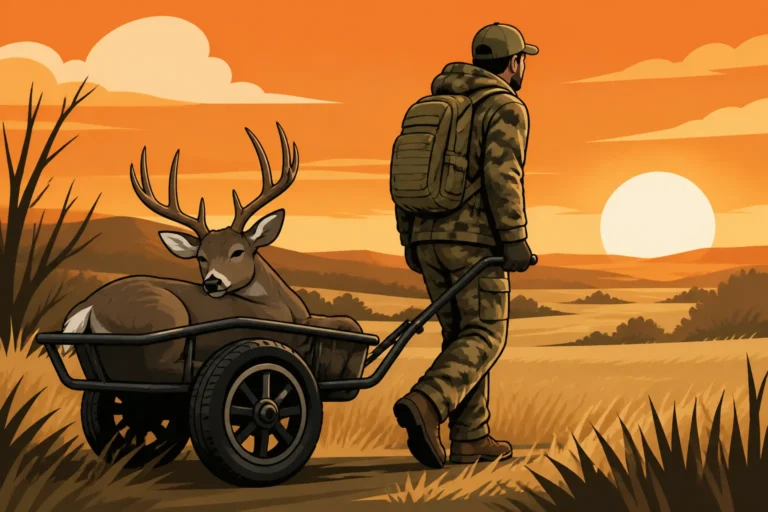
Keep a mental (or even written) log of what works and what doesn't. Hunting milo fields effectively through blocking and driving is an iterative process, constantly refined by experience. Don't get discouraged by drives that don't yield a harvest. The knowledge gained from each attempt is a trophy in itself, preparing you for ultimate success in the challenging and rewarding landscape of Kansas milo. After a successful harvest, remember to consider the logistics of retrieving your deer, especially if on public land, which could involve using Deer Carts on Walk-In Ground.
| Drive Role | Primary Objective | Key Responsibilities | Ideal Gear/Positioning |
|---|---|---|---|
| Blocker | Intercept exiting deer | Remain silent and still; monitor assigned zone of fire; positively identify target and backdrop. | Elevated stand or well-brushed ground blind; good visibility into milo edge; hunter orange. |
| Driver | Push deer forward | Maintain steady pace and straight line; communicate with other drivers/blockers; scan for deer ahead. | Hunter orange for high visibility; comfortable walking gear; radio/whistle for communication. |
Disclaimer
The information provided in this guide is for informational purposes only and is not intended as legal advice. Hunting regulations, including those pertaining to hunter orange, season dates, legal weapons, and private land access, can change frequently. It is the responsibility of every hunter to consult the most current Kansas Department of Wildlife, Parks, and Tourism (KDWPT) regulations before heading into the field. Always prioritize safety, respect landowners, and adhere to all applicable laws.