Best Kansas Counties for Quail
Finding reliable information on where to chase bobwhite quail in Kansas can feel like searching for a needle in a haystack, especially with populations fluctuating and habitat constantly changing. Many hunters get frustrated driving countless miles only to find barren fields or locked gates. This guide is here to cut through the guesswork, helping you understand the key factors that contribute to healthy quail populations and pointing you toward the regions and counties in Kansas that historically offer the best opportunities for a successful hunt.
Understanding Kansas Quail Habitat: More Than Just Grass
When we talk about hunting quail in Kansas, we're almost exclusively talking about the bobwhite quail. These energetic little birds are truly a product of their environment, and understanding their preferred habitat is the absolute bedrock of finding them. It's not just about finding "cover"; it's about finding the right kind of cover, perfectly interwoven to meet all their needs in a small area. Quail don't roam far from where they were hatched, so finding good habitat means finding good quail.
The Importance of Edge Cover
Quail thrive in what biologists call "edge habitat"—places where different types of cover meet. Think about the transition zone where a CRP field meets a plum thicket, or where a brushy fence line borders a harvested milo field. These aren't just aesthetic features; they're vital for survival. The tall grasses provide nesting and escape cover, the plum thickets offer protection from aerial predators and harsh weather, and the crop fields provide essential food sources. This intricate mosaic allows quail to move between feeding, loafing, and roosting areas with minimal exposure. It's often where you'll find Plum Thickets and Quail Cover in perfect synergy. When you're driving down a country road, look for that "choppy" landscape rather than vast, monotonous fields; that's where the edges are.
Agricultural Impact on Habitat
Kansas is, first and foremost, an agricultural state, and farming practices profoundly impact quail numbers. While intensive, clean farming can reduce habitat, certain agricultural practices can be incredibly beneficial. Milo, or grain sorghum, is a prime example. After harvest, the stubble fields often provide residual grain, which is a fantastic food source for quail through the fall and winter. Combined with weedy field edges, idle corners, or conservation buffers, these fields can become prime quail locations. Conversely, areas with vast, unbroken fields of wheat or corn that are cleanly harvested and tilled immediately offer little to no benefit for quail. It's a delicate balance, and knowing how to read the landscape for beneficial agricultural practices is a huge advantage.
Water Sources and Roosting Cover
While bobwhite quail can get a fair amount of moisture from dew and their diet, readily available water sources are still important, especially during dry spells. These might be small farm ponds, seep springs, or even temporary puddles after a rain. More critical, however, is adequate roosting cover. Quail are ground roosters, forming tight circles, tail-to-tail, to conserve heat and provide all-around vigilance against predators. This requires dense, overhead cover—often a thick patch of weeds, briars, or low-lying shrubs—that can conceal them from owls and other nocturnal hunters. If you find perfect feeding and loafing cover but no secure place for them to roost, the birds simply won't be there. All these elements, when combined, create the ideal Bobwhite Quail Habitat in Kansas.
Key Factors Influencing Quail Populations
Quail populations are notoriously cyclic, often swinging wildly from boom years to bust years. This isn't just random; it's driven by a confluence of environmental factors that greatly influence their survival and reproductive success. A particular county might have excellent habitat, but if the conditions aren't right, the bird numbers will still be low. Understanding these dynamics helps set realistic expectations and informs where you might have better luck from one season to the next.
Rainfall and Brood Rearing Success
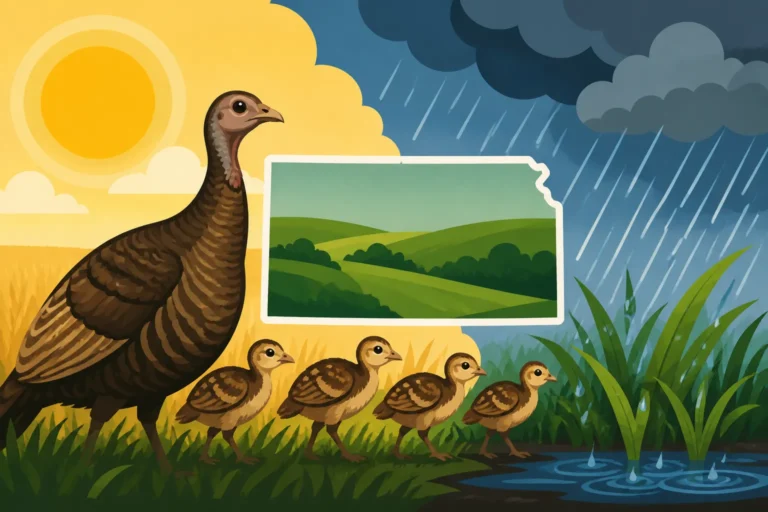
One of the most significant drivers of quail populations is the amount and timing of rainfall, particularly during the nesting and brood-rearing season (late spring and summer). Adequate, but not excessive, moisture is crucial. A wet spring helps vegetation grow, providing essential cover and increasing insect populations, which are a critical food source for newly hatched chicks. However, too much rain can be detrimental, leading to drowned nests or chilling young chicks, which have poor thermoregulation. Conversely, a drought can dry up critical insect populations and stunt cover growth, making chicks vulnerable and reducing food availability. Hunters often see a direct correlation between a good spring/summer rain pattern and higher Quail Numbers After a Wet Spring.
Winter Severity and Survival
While the flush of chicks in summer is exciting, winter is truly the ultimate test for a quail covey. Harsh winters with deep, prolonged snow cover can be devastating. Snow can bury crucial food sources like fallen seeds and grains, forcing birds to burn through their limited fat reserves. Extreme cold, especially when combined with wet conditions, can also lead to high mortality. The quality of winter cover, like dense plum thickets or cedar groves that can shed snow, becomes paramount. A mild winter, on the other hand, allows more birds to survive and enter the breeding season in good condition, contributing to healthier populations in the following year. This is why Winter Weather and Quail Survival is such a critical topic for bird hunters.
Predator Management and Habitat Diversity
Predators are a natural part of any ecosystem, and a healthy quail population can typically withstand a certain level of predation. However, when habitat is degraded, quail become more vulnerable. Dense, diverse cover allows quail to evade hawks, owls, coyotes, and other predators more effectively. The problem often isn't an overabundance of predators, but rather a lack of escape and hiding cover that allows quail to avoid them. Furthermore, fragmentation of habitat—where prime areas are broken up by large, open spaces—can make it harder for quail to move safely between food and cover, increasing their exposure to predators. Focusing on habitat improvement rather than just predator reduction is usually the most effective strategy for boosting quail numbers.
Top Kansas Counties for Quail Hunting
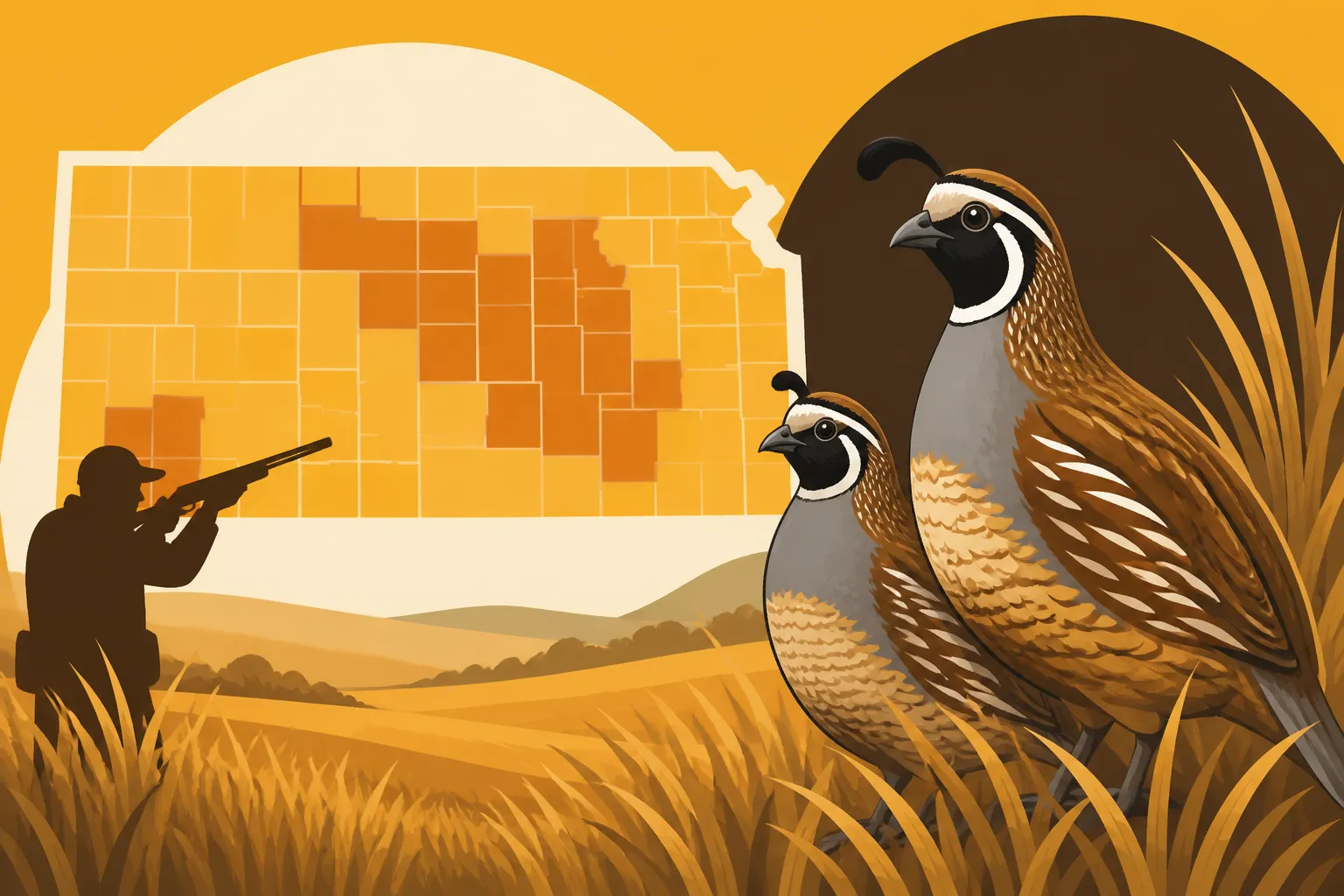
Alright, let's get down to brass tacks: where in Kansas are you most likely to find these elusive little rockets? While populations fluctuate, certain regions and counties consistently offer better prospects due to their historically rich habitat and land use patterns. Generally, western and central Kansas often outshine the eastern part of the state for consistent quail numbers, though good pockets can be found anywhere.
Western Kansas Hotspots
The western third of Kansas, particularly the southwest and parts of the northwest, often holds the strongest quail populations. This area tends to have a more arid climate, which can be less conducive to dense timber but ideal for the scrubby cover, plum thickets, and grassland/cropland interfaces that quail adore. Counties like Barber, Comanche, Clark, Meade, and Ness are frequently highlighted for their quail potential. These areas often feature extensive CRP (Conservation Reserve Program) ground, which, when managed correctly, provides excellent nesting and brooding cover. Coupled with milo and wheat stubble fields, the habitat can be outstanding. However, private land dominates here, so securing permission or finding ample public access like Kansas Walk-In Hunting Access Explained is key.
Central Kansas Opportunities
Moving into central Kansas, particularly the south-central and parts of the north-central regions, you'll still find excellent quail hunting. This area often represents a transition zone with a mix of row crops, pastures, and some scattered timber, providing a rich tapestry of habitat. Counties such as Graham, Rooks, Osborne, and Russell in the northwest central, and Kingman, Pratt, and Stafford further south, can be very productive. Here, you'll encounter a good blend of agricultural fields, brushy draws, and riparian corridors, all of which are excellent for bobwhites. The key is finding areas where these habitat components are tightly intermixed, creating those critical "edge" environments. Again, public access may require diligence in scouting and utilizing resources like the online Kansas Hunting Atlas or GoHunt.
Eastern Kansas Challenges
While eastern Kansas has its fair share of game, consistent, widespread quail populations can be more challenging to find compared to the central and western parts of the state. The more humid climate leads to denser timber and often more uniform agricultural fields or expansive cattle pastures, which can reduce the ideal edge habitat. However, that's not to say you can't find quail. Instead, the focus shifts to more localized pockets: brushy creek bottoms, powerline cuts, neglected farmsteads, and areas where small-scale farming or habitat conservation efforts are in place. Counties like Osage, Lyon, and Coffey, particularly where you find a good mix of timber, pasture, and some row crops, can hold decent numbers. It often requires more legwork and local knowledge to pinpoint these hidden gems.
Scouting and Accessing Prime Quail Country
Once you have a general idea of where the quail might be, the next step is to get boots on the ground—or at least eyes on a map. Successful quail hunting is as much about diligent scouting and securing access as it is about shooting. Don't expect to just drive up and start flushing coveys without doing your homework.
Utilizing Digital Scouting Tools
In today's age, digital mapping tools are invaluable for hunters, especially when looking for birds that prefer specific habitat types. Platforms like GoHunt provide detailed aerial imagery, topographical maps, and public/private land ownership overlays. Start by looking for the "quaily" habitat features we discussed: plum thickets, CRP fields, weedy fence rows, milo stubble, and brushy draws. Pay close attention to the transitions between these features. You can often spot key features like River Oxbows and Deer Movement or even isolated Cedar Thickets as Bedding Cover that might also serve as excellent quail cover. These tools help you narrow down areas before you ever leave your living room, saving you precious time and fuel. Use the public land layers to identify Walk-In Hunting Access (WIHA) tracts or State Wildlife Areas that match your habitat criteria.
Identifying Prime Public Lands
Kansas offers a fantastic public hunting program through its WIHA (Walk-In Hunting Access) lands. These are private lands leased by the Kansas Department of Wildlife, Parks and Tourism (KDWPT) specifically for public hunting. You'll need to consult the annual WIHA atlas, which is also available digitally, or use the Reading the Kansas WIHA Atlas feature on the KDWPT website or through apps like GoHunt. Look for tracts marked as having "upland bird" opportunities and then cross-reference those with your digital maps to identify the specific habitat within. Remember that WIHA tracts can experience significant hunting pressure, especially early in the season, so consider hunting weekdays or later in the season for a better experience. Also, state wildlife areas and Corps of Engineers lands around reservoirs can offer good, albeit sometimes pressured, opportunities.
Gaining Private Land Access
Let's be realistic: a vast majority of Kansas is private land. For truly consistent and often less pressured quail hunting, gaining private land access is gold. This means knocking on doors, asking politely, and building relationships with landowners. Be respectful, offer to help with chores, leave gates as you found them, and always follow up with a thank-you. Some hunters even offer to help with light pest control (coyotes, raccoons) or minor habitat improvements in exchange for access. Before you knock, use your digital maps to identify landowners whose property seems to hold promising habitat. It's often easier to get permission for quail than for deer, as quail hunting typically involves less impact on crops or livestock. Understanding the nuances of Asking a Kansas Landowner for Permission can make all the difference.
Regional Quail Hunting Prospects at a Glance
| Region | Typical Quail Habitat | Access Type Dominance | General Population Trend (Historical) | Key Scouting Focus |
|---|---|---|---|---|
| Western Kansas | CRP, plum thickets, milo/wheat stubble, brushy draws | Private land, some WIHA | Often stronger, more consistent | Edge habitat, water sources, unharvested grain |
| Central Kansas | Mix of row crops, pasture, creek bottoms, shelterbelts | Private land, good WIHA spread | Good, but more variable by specific area | Cropland transitions, brushy draws, timber points |
| Eastern Kansas | Timber edges, creek bottoms, small clearings, dense briars | Private land, less WIHA | More localized pockets, often lower | Small, fragmented cover, specific habitat projects |
Remember, while these regions give you a general guide, scouting on a micro-level is still paramount. The very best quail hunting is often found in specific coverts that have all the right ingredients, regardless of the county they happen to fall within. Learning to identify these key habitat elements from afar, then confirming them on the ground, will make you a much more successful bird hunter. If you're Working Pheasant Fields Without a Dog, many of those same principles apply to quail in terms of reading cover and understanding bird behavior.
Disclaimer
This article is for general informational purposes only and does not constitute professional advice. Laws, prices and regulations vary by location and change over time. Consult a qualified professional for guidance on your specific situation.