What a Kansas Hunt Contract Should Say
Oh, the sheer excitement of booking a Kansas hunt! It's a dream for many, envisioning those vast fields, timbered creek bottoms, and the chance at a truly magnificent whitetail. But amidst all that anticipation, there’s a crucial step that often gets overlooked or rushed: understanding your hunting contract. This guide is all about breaking down what that piece of paper should clearly state, protecting your hard-earned money and ensuring your dream hunt doesn't turn into a nightmare of misunderstandings.
The Essentials: Core Information Every Contract Needs
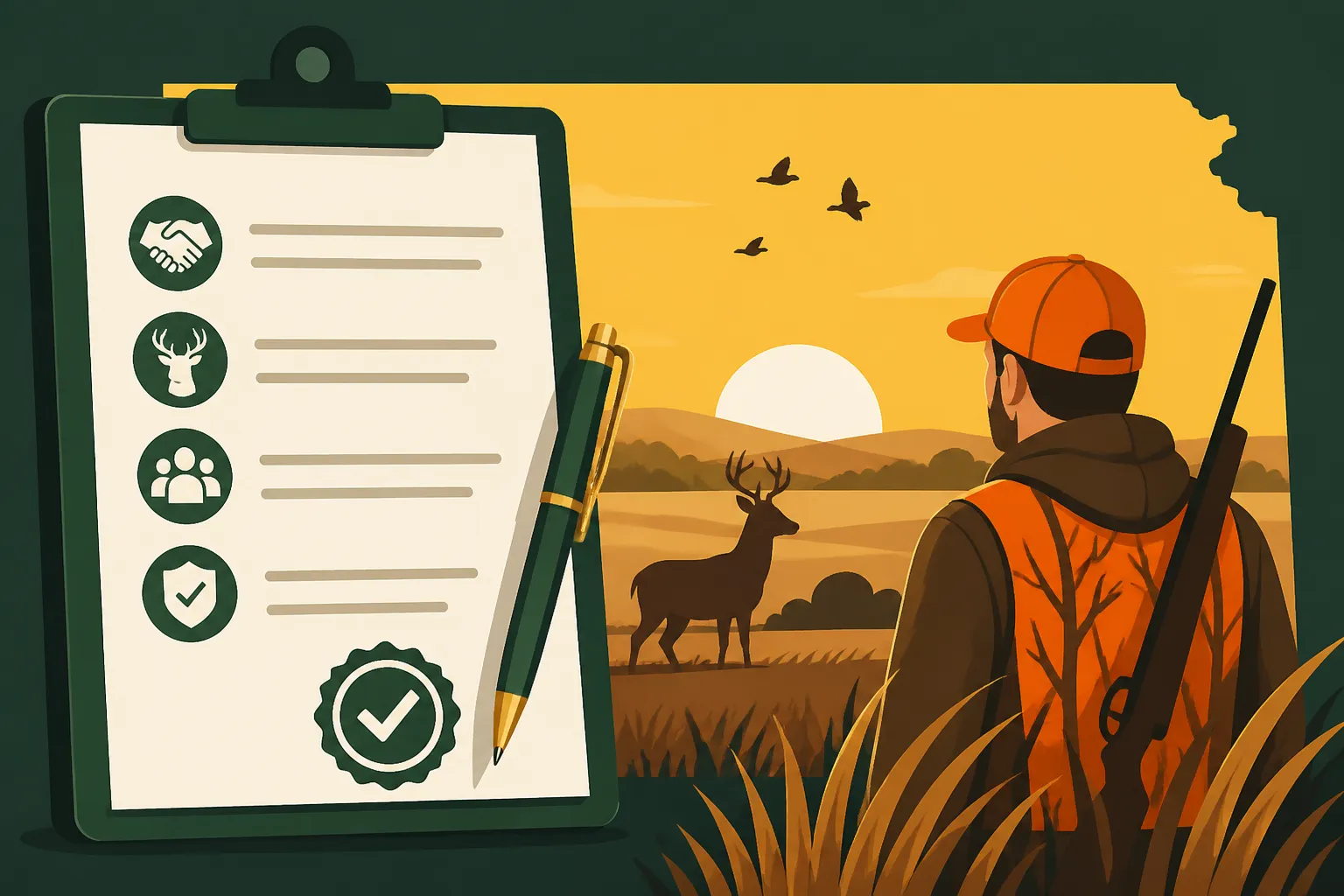
When you're committing to a hunting trip, especially one that involves significant travel and expense, the last thing you want is ambiguity. A good contract isn't just a formality; it's the blueprint for your entire experience, laying out all the non-negotiables in black and white. Think of it as a pre-hunt scouting trip for your expectations.
Clearly Defined Dates and Duration
This might seem obvious, but you'd be surprised how often hunters and outfitters operate on assumptions about dates. Your contract should explicitly state the start and end dates of your hunt, including the number of actual hunting days. Does your booking include arrival and departure days that aren't for hunting? Is it five full days of hunting, or is it five calendar days, meaning your travel days cut into that? These details matter significantly when you’ve flown halfway across the country.
Consider a scenario where you arrive on a Sunday and depart on a Saturday. Is that a 5-day hunt or a 6-day hunt? A clear contract will specify exactly which days are for hunting and which are for travel, camp setup, or just relaxing. This is particularly important for seasons like the Kansas firearm season in December, where every moment in the field counts. If harsh weather rolls in, does the contract have a provision for what happens if you can't hunt for a day or two? While rescheduling might not always be possible, a clear understanding of the policy minimizes frustration later. You should look for details that explain how Hunt Dates Written Into the Agreement are handled under various circumstances.
Hunt Type and Species Specifics
Kansas offers incredible hunting for a variety of species, from monster whitetails to abundant upland birds and spring turkeys. Your contract needs to be crystal clear about exactly what you’re hunting. Is it a whitetail deer hunt, a turkey hunt, or an upland bird combo? Furthermore, what weapon type is allowed? Bow, muzzleloader, or rifle? If it's a deer hunt, is it for an antlered buck, an antlerless deer, or an either-sex tag?
This level of detail is critical for ensuring you have the right permits and understanding the regulations. For example, a contract for Kansas Whitetail Hunting Tactics Through the Rut should specify if it’s an archery hunt during the early part of November or a rifle hunt later in the firearm season. If it's a turkey hunt, does it guarantee an opportunity at a Rio Grande or an Eastern? (Kansas has both, but their ranges differ.) Clarity here ensures you and the outfitter are on the same page regarding the target species and legal means of take. This protects both parties from miscommunication and allows you to plan your gear and practice accordingly.
Inclusions and Exclusions – What You're Paying For
This is where many hunters get tripped up, assuming certain amenities are included when they aren't. A comprehensive contract meticulously lists everything that is part of your package price, as well as what isn’t. Common inclusions might be lodging, meals, guide services, and in-field transportation. Exclusions often include your hunting license and permits, meat processing, taxidermy, personal hunting gear, and gratuities for guides and camp staff.
Let’s say you’re booking a guided deer hunt. Does the "guide service" mean they sit with you in the stand, or do they drop you off and pick you up? Are meals provided, and if so, how many per day and what quality? Does "lodging" mean a private cabin or a bunk in a shared bunkhouse? Understanding these details upfront prevents awkward conversations in camp. For instance, knowing that Tipping a Kansas Guide isn't included in the package price allows you to budget appropriately. I always recommend having a clear understanding of who handles what once a deer is down – from field dressing to getting it back to camp and prepared for cooling. This section can vary widely, so don't assume anything.
Financials and Contingencies: Protecting Your Investment
Hunting trips, especially guided ones, are an investment. You’re putting down hard-earned money and precious vacation time. A solid contract serves as your financial safeguard, detailing how your money is handled and what recourse you have if plans change.
Deposit Structure and Payment Schedule
Every outfitter requires a deposit to secure your hunt dates, and this should be clearly outlined. The contract should state the exact amount of the deposit, whether it’s a percentage or a flat fee, and when it’s due. It should also detail the payment schedule for the remaining balance – often 30, 60, or 90 days before the hunt. What payment methods are accepted? Are there any fees for credit card payments?
Imagine you’ve booked a prime rut hunt in Kansas. You pay your deposit, but then unforeseen circumstances arise, and you can’t make the next payment. A well-written contract will spell out the consequences. Will you forfeit your deposit? Is there a grace period? Clarity on these points removes guesswork and potential disputes. Many outfitters require full payment months in advance, especially for popular seasons like the Kansas Deer Season Dates by Weapon, so knowing those deadlines is critical. This section is all about transparency: how much, when, and how.
Cancellation, Refunds, and Rescheduling Policies
Life happens. Sometimes, despite the best intentions, you might need to cancel your hunt. Conversely, an outfitter might face unforeseen circumstances. The contract needs to address these scenarios explicitly. What are the terms for hunter cancellation? Is the deposit non-refundable? Is there a tiered refund schedule based on how close to the hunt date you cancel? What if you can find someone to take your spot?
It’s equally important to understand the outfitter’s cancellation policy. If they have to cancel due to unforeseen issues like a natural disaster or illness, what happens to your money? Will it be refunded, or can you roll it over to the next season? Some contracts offer the option to purchase "hunt insurance" – something I strongly recommend for any significant hunting investment. This insurance can protect your financial outlay against personal emergencies or travel disruptions. A good contract provides clear answers to Cancellation Terms on a Kansas Booking, giving you peace of mind. Without clear language here, you could be left in a lurch.
Trophy Fees and Penalty Clauses
For many deer hunters, Kansas is synonymous with big antlers. If you’re booking a trophy whitetail hunt, it’s not uncommon for outfitters to have trophy fees or penalty clauses in their contracts. These are designed to manage harvest goals and ensure hunters target mature animals. A trophy fee might be an additional cost incurred if you harvest a buck above a certain Boone and Crockett score, while a penalty clause might apply if you shoot an immature buck that doesn't meet the outfitter's minimum antler criteria.
These clauses need to be incredibly clear. What is the minimum score? Is it gross or net? What is the penalty amount for shooting an undersized buck? Does the outfitter have a "wounded game policy" – meaning if you shoot and wound an animal that isn't recovered, does it count as your tag filled, and is a trophy fee still applicable? Having these details in the contract prevents an unpleasant surprise when you get back to camp with your buck. Don't let Penalties for Shooting a Small Buck catch you off guard; discuss it thoroughly beforehand and make sure it's reflected in your agreement.
Legalities and Responsibilities: Understanding the Fine Print
Hunting involves inherent risks and a strict set of regulations. A comprehensive contract ensures that both you and the outfitter understand your respective legal and ethical responsibilities. This section is often overlooked because it’s not as exciting as discussing antler size, but it's vital for a safe and lawful hunt.
Hunter and Outfitter Responsibilities
This part of the contract outlines what is expected of you as the hunter and what the outfitter is responsible for providing. As a hunter, you'll typically be responsible for following all state hunting regulations, respecting property boundaries, practicing ethical hunting methods, and adhering to safety protocols. This might include wearing hunter orange during firearm seasons or knowing Kansas Hunter Orange Rules During Firearm Season.
The outfitter’s responsibilities generally include providing access to huntable land, ensuring stands are safe and properly maintained, offering guidance on hunting strategies, and adhering to all local and state laws. They should also provide a safe environment within the camp. If you're discussing Best Stand Locations in Flat Farm Country with your guide, the contract ensures they provide a safe, well-maintained stand in one of those spots. This mutual understanding creates a safer and more enjoyable experience for everyone involved.
Liability Waivers and Indemnity Clauses
Hunting is an inherently risky activity, and reputable outfitters will include liability waivers and indemnity clauses in their contracts. These clauses essentially state that you acknowledge the risks involved in hunting (like falls from treestands, encounters with wildlife, or adverse weather) and that you agree not to hold the outfitter responsible for accidents or injuries that may occur.
It's crucial to read and understand these sections. While they don't absolve an outfitter of negligence, they do protect them from unforeseen accidents that are part of the hunting experience. If you’re concerned, you might consider talking to your insurance provider about personal accident coverage. This is also where researching the outfitter's insurance and safety record becomes paramount, to ensure they're taking all reasonable precautions. Always ask about their protocols for emergencies and first aid in the field, especially if you're hunting remote areas or on a Mobile Hunting With a Saddle in Kansas trip where assistance might be further away.
Game Retrieval, Processing, and Transport
The moment you harvest an animal is just the beginning of a crucial process. Your contract should clearly detail who is responsible for what after a successful kill. Does the outfitter handle game retrieval from the field? Do they provide assistance with field dressing and getting the animal back to camp? How will the animal be cooled, especially in warm early seasons like Muzzleloader Deer Hunting in Kansas's September Season?
Furthermore, clarify the arrangements for meat processing and taxidermy. Does the outfitter have preferred local processors, and is transport to them included? Are you responsible for getting your cape and antlers to a taxidermist, or does the outfitter facilitate this? This is also the section where you should expect to see information about adhering to regulations for CWD Rules for Taking a Kansas Deer Home and Carcass Transport Across State Lines, especially if you're a nonresident. Ensuring these logistics are ironed out beforehand avoids unnecessary stress and ensures your harvest is handled respectfully and legally.
Communication and Expectations: Setting the Stage for a Successful Hunt
Beyond the legal and financial aspects, a good contract implicitly sets the stage for communication and managing expectations. A clear, thorough contract reflects an outfitter who values transparency and professionalism, which often translates to a better overall hunting experience.
Pre-Hunt Information and Communication Protocols
Before your hunt, you should expect certain information from your outfitter. This might include a detailed gear list, travel directions to camp, specific meeting times, and perhaps a rundown of expected weather or current hunting conditions. The contract itself won't list these, but it should be understood that this pre-hunt communication is part of the service.
A professional outfitter will have established communication protocols. How should you reach them with questions before the hunt? What's the best way to get updates? A good outfitter will welcome your questions and provide clear answers, alleviating any pre-hunt anxieties. If you're wondering about Cold Weather Stand Clothing for a December hunt, your outfitter should be a reliable resource for local conditions. Clear communication ensures that by the time you arrive, you’re fully prepared and know what to expect.
References and Reputation Check
While the contract lays out the formal agreement, it's wise to look beyond the document itself to gauge an outfitter's reputation. A contract doesn't tell you if the food is good or if the guides are knowledgeable and friendly. Ask for references from previous clients – and make sure they are recent references. Talk to those hunters about their actual experiences, not just their success rates. Did the outfitter deliver on their promises? Was the camp atmosphere enjoyable? Were there any hidden fees or surprises?
Resources like BookYourHunt and GoHunt can be invaluable here. They often provide detailed outfitter listings, client reviews, and sometimes even direct booking options that add a layer of accountability. Getting References From Past Clients is one of the most important steps you can take to ensure you're choosing a reputable operation. If an outfitter is hesitant to provide references or has consistent negative reviews, that’s a significant red flag, no matter how good the contract looks on paper. A solid contract combined with a stellar reputation is the ideal combination.
| Contract Element | Why It's Crucial | What to Look For |
|---|---|---|
| Dates & Duration | Prevents misunderstandings on hunt length and available hunting days. | Exact start/end dates, number of actual hunting days, clarity on travel days. |
| Hunt Type | Ensures you're hunting the correct species with the correct weapon. | Specific species (Whitetail, Turkey, Upland), weapon (Bow, Rifle, Muzzleloader), antlered/antlerless, specific unit if applicable. |
| Inclusions/Exclusions | Defines what your package price covers and what it doesn't. | Detailed list of provided services (lodging, meals, guide, transport), and a clear list of what is not included (licenses, processing, tips). |
| Deposit/Payment | Protects your financial investment and outlines payment obligations. | Exact deposit amount, payment schedule, accepted payment methods, consequences of non-payment. |
| Cancellation/Refunds | Provides recourse for unforeseen changes by either party. | Clear policy for hunter/outfitter cancellations, refund schedule, rollover options, mention of hunt insurance. |
| Trophy Fees/Penalties | Manages harvest expectations and ensures targeting of mature animals. | Specific minimum score requirements, penalty amounts for undersized animals, wounded game policy. |
| Responsibilities | Outlines ethical and legal obligations for both hunter and outfitter. | Hunter's duty to follow laws/safety, outfitter's duty to provide safe environment/services. |
| Liability Waiver | Acknowledges inherent risks of hunting and protects the outfitter from unavoidable accidents. | Clear language regarding assumption of risk, indemnity clauses, recommendations for personal insurance. |
| Game Handling | Ensures proper and legal handling of your harvest post-kill. | Who retrieves, fields dresses, transports to processor/taxidermist; compliance with CWD Rules for Taking a Kansas Deer Home and Carcass Transport Across State Lines. |
Disclaimer
This article is for general informational purposes only and does not constitute professional advice. Laws, prices and regulations vary by location and change over time. Consult a qualified professional for guidance on your specific situation.