Red Flags in an Outfitter Contract
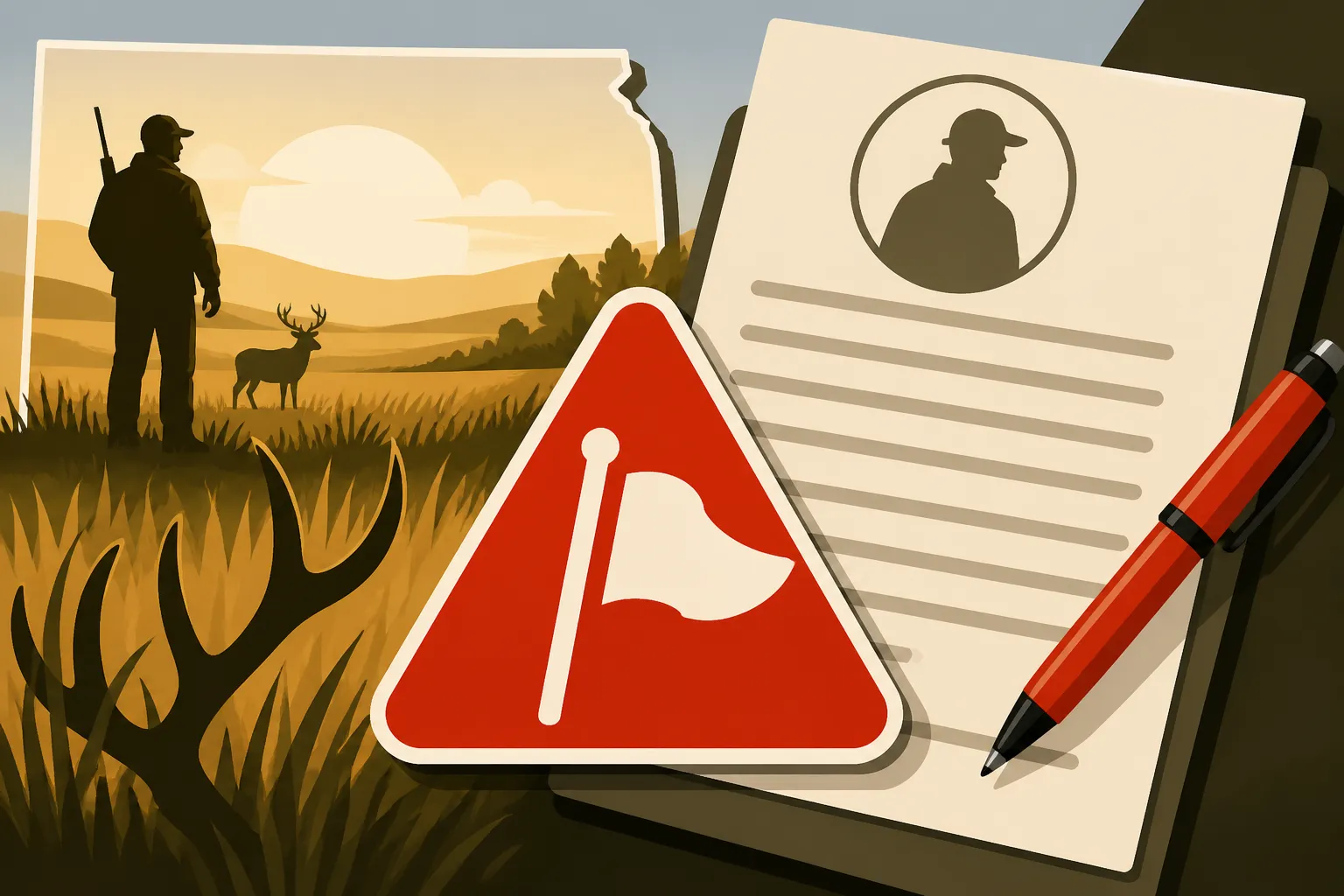
Booking a Kansas hunting trip, especially for a dream whitetail or a spring turkey hunt, is incredibly exciting. You've spent hours poring over maps, watching videos, and maybe even dreaming about that big buck. But when it comes time to put down a deposit, the contract often feels like an afterthought—a necessary evil you just want to sign and move past. However, this is precisely where many hunters get tripped up, overlooking crucial details that can turn a fantastic experience into a frustrating, costly nightmare. This guide is designed to help you spot those sneaky red flags in an outfitter contract before you commit, ensuring your Kansas hunting adventure starts on the right foot.
The Absolute Essentials: What a Solid Contract Should Always Include
Before we dive into the murky waters of red flags, let's set a baseline. A good outfitter contract isn't just a piece of paper; it's a clear, mutually understood agreement that protects both you and the outfitter. It should be comprehensive, leaving little to interpretation, and written in plain language. If you're struggling to understand the legal jargon, that's often a red flag in itself. You're making a significant investment, so you deserve clarity.
Dates, Species, and Specific Services
Your contract should clearly outline the exact dates of your hunt. Is it October 28th to November 2nd, or just "late October"? Precision matters for travel and planning. It should also explicitly state the species you are hunting—whitetail deer, spring gobbler, pheasant, etc. If it's a deer hunt, is it an archery hunt, muzzleloader, or firearm season? What about gender? Is it an either-sex tag, or strictly buck only, or an antlerless hunt? Any ambiguity here can lead to disappointment or even legal trouble down the road.
Beyond the core hunt, the contract needs to detail the services included. Does your package include lodging, and if so, what kind? Is it a rustic bunkhouse, a private room, or a local motel? Are meals provided, and how many per day? What about transportation during the hunt—is it provided from the lodge to the stands, or are you responsible for your own? Clarify if a guide is dedicated to your group, or if they're rotating between multiple hunters. It's easy to assume things, but assumptions are the enemy of a smooth hunting trip. Make sure the fine print matches your expectations. This is where what a Kansas hunt package includes can really help set expectations.
Financial Clarity and Breakdown of Costs
This is arguably the most critical section. A well-written contract will itemize every cost, leaving no room for surprise charges. It should explicitly state the total hunt price, the required deposit amount, and the payment schedule for the remaining balance. Are there additional fees for things like field dressing, caping, or basic meat processing? What about airport pickup or drop-off if you're flying in? All these details need to be laid out upfront.
Think about a common scenario: you arrive, have a fantastic hunt, and then at checkout, you're hit with an unexpected "trophy fee" for a buck that was larger than some arbitrary score. This is where a clear contract saves the day. It should define any trophy fees, detailing specific antler score minimums, and the exact cost if you exceed them. If there are no trophy fees, that should also be stated. Remember, transparency builds trust. If you're interested in understanding different payment models, Trophy Fees on Kansas Deer Hunts offers a deeper dive into this specific cost structure.
Spotting Financial Red Flags in the Contract
Now, let's talk about the specific warning signs that should make you pause and ask more questions. Financial red flags are often the most painful because they hit your wallet directly.
Vague Pricing or Hidden Fees
One of the biggest red flags is a contract that offers a general price without a detailed breakdown. If it just says "$X for a deer hunt" and then has a tiny clause about "additional charges may apply," you need to dig deeper. What are those additional charges? When and how are they assessed? A reputable outfitter wants you to know exactly what you're paying for.
For instance, imagine a contract that doesn't mention the cost of a non-hunting guest. You show up with your spouse, and suddenly, there's a daily lodging and meal fee that you never budgeted for. Or perhaps the contract doesn't explicitly state that the guide's tip is not included and then implies it's a mandatory 15-20% at the end. These can add up quickly. Always ask for a line-item breakdown if one isn't provided, and question any blanket statements about "incidentals" or "miscellaneous expenses." If the outfitter is using platforms like BookYourHunt, the details are usually more structured, but always verify the contract against the listed inclusions.
Unclear Deposit and Cancellation Terms
Every outfitter requires a deposit, and that's standard. However, the terms surrounding that deposit and any cancellations are critical. A major red flag is a contract that is vague about what happens if you cancel, or even worse, if the outfitter cancels. Is your deposit non-refundable under all circumstances? Is there a sliding scale for refunds based on how far in advance you cancel?
Consider this: life happens. Someone in your family gets sick, or you have an unexpected work obligation. If you have to cancel your hunt six months out, does the outfitter keep your entire deposit? A fair contract will often have a policy that allows for a partial refund or, ideally, a rollover to the next season if enough notice is given. Even better, some outfitters will allow you to find a replacement hunter. Conversely, what if the outfitter cancels due to unforeseen circumstances (e.g., severe weather, loss of hunting ground)? The contract should clearly state whether you get a full refund or if they will reschedule your hunt. You need to know your options. Understanding Deposits and Cancellation Terms in Kansas is key to protecting your investment.
| Contract Clause | Good Language Example | Red Flag Example |
|---|---|---|
| Hunt Price | "$X,XXX total, breakdown attached." | "$X,XXX, plus additional fees." |
| Deposit Terms | "50% non-refundable, balance due 60 days prior. Rollover option with 90 days notice." | "Deposit non-refundable." |
| Trophy Fees | "No trophy fees for deer under 150". Fee for over 150." | "Outfitter reserves right to assess trophy fees." |
| Cancellation by Hunter | "Full refund if cancelled >180 days out, 50% refund 90-179 days, no refund <90 days or rollover to next year if a replacement is found." | "No refunds for cancellations." |
| Cancellation by Outfitter | "Full refund or credit for future hunt if cancelled by outfitter due to unforeseen circumstances." | "Outfitter not responsible for cancellations." |
| What's Included | "7-day hunt, 6 nights lodging, 3 meals/day, guide service, field dressing." | "Hunting package as described." |
| Guide Service | "One guide per two hunters, dedicated." | "Guide service provided." |
Hidden Traps in Hunt Details and Guarantees
Beyond the money, the actual hunt experience can be undermined by unclear or misleading contract language. These details might not seem like immediate financial burdens, but they can dramatically impact your satisfaction and success.
Exaggerated Guarantees or Vague "Success Rates"
Beware of any contract that "guarantees" a kill, especially for wild animals. Hunting is hunting, and there are no guarantees when it comes to free-ranging game. An outfitter who promises a sure thing is either running a preserve (which might be what you want, but should be clear) or being dishonest. This often points to a larger problem with their ethics or practices.
What a good outfitter will talk about is "opportunity rates" or "historical success rates." For example, an outfitter might say, "Our hunters had a 90% opportunity rate on 130-inch-plus bucks last season," meaning most hunters had a chance to shoot a buck of that caliber. This is very different from saying "100% kill rate." Always read Reading Kansas Outfitter Success Rates to understand how these numbers are calculated and what they truly mean. If a contract uses terms like "guaranteed opportunity," clarify exactly what that entails. Does it mean seeing a deer, or seeing a shootable deer?
Unspecified Hunting Areas or Stand Rotation Policies
A red flag that's less about money and more about the hunt itself is a lack of specifics regarding hunting areas. While an outfitter isn't going to give you GPS coordinates of their best stands, a contract that doesn't at least confirm the general geographic area or units you'll be hunting in Kansas should raise an eyebrow. This is especially true if you applied for a permit in a specific unit based on the outfitter's advertised location. Kansas Deer Units and What Each Holds can give you an idea of the landscape and deer quality for different regions.
Furthermore, how will stands be assigned? Will you be hunting the same stand all week, or will you be rotated? Is there a policy on hunting pressure? Some contracts might allow for an outfitter to move you to a different property or stand if conditions aren't ideal, which can be a good thing. However, if it's completely vague, you could find yourself stuck in a high-pressure spot or moved to properties that don't match what was advertised. Always ask Questions to Ask a Kansas Outfitter about their stand management and hunter density policies.
Navigating Cancellations and Unexpected Issues
Even with the best planning, things can go wrong. A strong contract anticipates these possibilities and outlines the steps to take, offering both parties protection.
Ambiguous Liability Clauses
Most outfitter contracts will include a liability waiver, and that's completely normal. Hunting is an inherently risky activity. However, a red flag here would be an overly broad or unclear liability clause that attempts to absolve the outfitter of all responsibility, even for gross negligence on their part. For example, if the contract states the outfitter is not liable for injuries caused by faulty equipment they provided, that's a problem.
It's important to understand what you're signing away. While you can expect to waive responsibility for accidents like falling out of a stand you hung yourself or getting lost in the woods, the outfitter should still maintain a reasonable duty of care. Always inquire about the outfitter's insurance coverage. If they're a legitimate operation, they should carry liability insurance. For a comprehensive look at this, consult Kansas Outfitter Insurance and Liability. If you're using a platform like GoHunt to research potential outfitters, sometimes they'll have vetting processes that touch on these areas.
Poor Communication Protocols for Issues
A red flag isn't always something written in the contract; sometimes, it's what's missing. A good contract, or at least the outfitter's policy, should clearly lay out how issues or disputes will be handled. What's the process if you have a complaint during the hunt? Who do you talk to? Is there an escalation path? If the contract is silent on dispute resolution, it could be a sign that the outfitter isn't prepared to handle problems professionally.
Think about a common hunting scenario: you shoot a deer, but the blood trail goes cold, and the guide gives up quickly, not putting in a solid effort to recover it. How is that handled? Is there a policy for wounded but unrecovered animals? Some outfitters count a wounded animal as a filled tag, which is fair, but it should be stated. Without clear communication protocols, minor frustrations can escalate into major disagreements, leaving you feeling unheard and unsatisfied. This is why getting References From Past Clients can be so valuable; they can share their experiences with how the outfitter handled unexpected situations.
What Happens If You Don't Draw a Tag?
For nonresident Kansas deer hunters, the draw is a reality. Many outfitters operate in specific units that can be tough to draw, especially if you're looking to book a Kansas Rut Hunt Early. Your contract must address what happens if you don't draw your permit. This is a huge investment, and you need to know your options.
A major red flag is a contract that doesn't mention this at all, or simply states "hunter responsible for drawing tag." While it's true you are responsible for applying, a fair outfitter will offer solutions. Will they roll your deposit over to the next year's draw, often with a point purchase? Will they offer a refund (usually minus an application fee)? Can you transfer your deposit to a different hunt (e.g., a turkey hunt instead of deer)? Or perhaps they have landowner tags available as an alternative, though these typically come at an additional cost. Knowing What Happens if You Do Not Draw is paramount before you sign anything.
Final Considerations When Reviewing Your Contract
Always remember that a contract is a legally binding document. If you have any doubts or find glaring red flags, do not sign it. It's perfectly acceptable to ask for clarifications, amendments, or even to seek legal counsel if you're making a very substantial investment.
Take your time. Don't feel pressured to sign immediately. Review the contract at home, away from any sales pitches. Share it with a trusted friend or family member for a second pair of eyes. Research the outfitter's reputation beyond just their testimonials; look for independent reviews on forums or hunting platforms. Your peace of mind is worth more than rushing into a commitment that could cost you both money and a memorable hunting experience.
Disclaimer
This article is for general informational purposes only and does not constitute professional advice. Laws, prices and regulations vary by location and change over time. Consult a qualified professional for guidance on your specific situation.