Practicing Shots From a Treestand
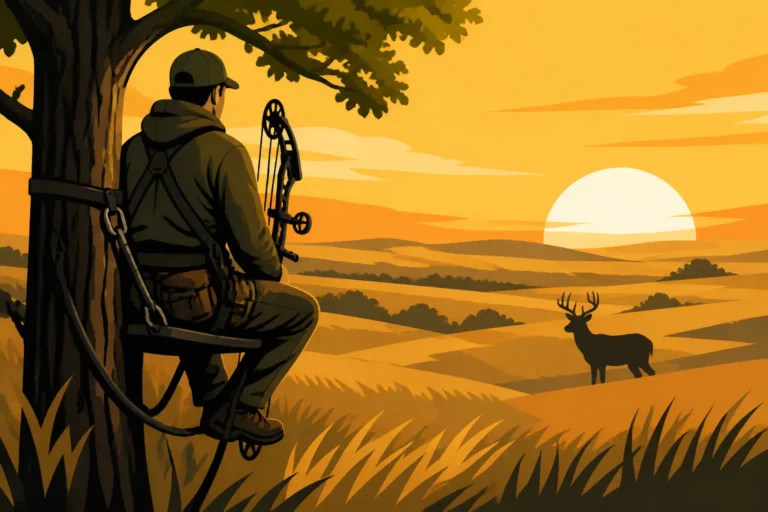
It’s a scenario many of us have faced: you spend countless hours at the archery range or shooting bench, meticulously dialing in your bow or rifle, feeling completely confident in your ability to hit a bullseye. Then, opening day arrives, you’re perched comfortably in your treestand, a beautiful Kansas whitetail steps out, and… you miss. That gut-wrenching feeling isn't just bad luck; often, it's because shooting from an elevated position introduces a whole new set of challenges that flat-ground practice simply doesn't prepare you for. This guide will walk you through the nuances of practicing shots from a treestand, ensuring you're ready for those critical moments high above the deer woods.
Why Shooting from a Treestand is a Unique Challenge
Many hunters make the mistake of thinking practice is practice, regardless of the shooting position. While building fundamental skills on flat ground is essential, overlooking the unique dynamics of an elevated shot can lead to costly misses in the field. It’s not just about aiming down; it’s about a complete shift in geometry, body mechanics, and even mental approach. Understanding these differences is the first step toward correcting them.
The Angle Challenge and Gravity's Role
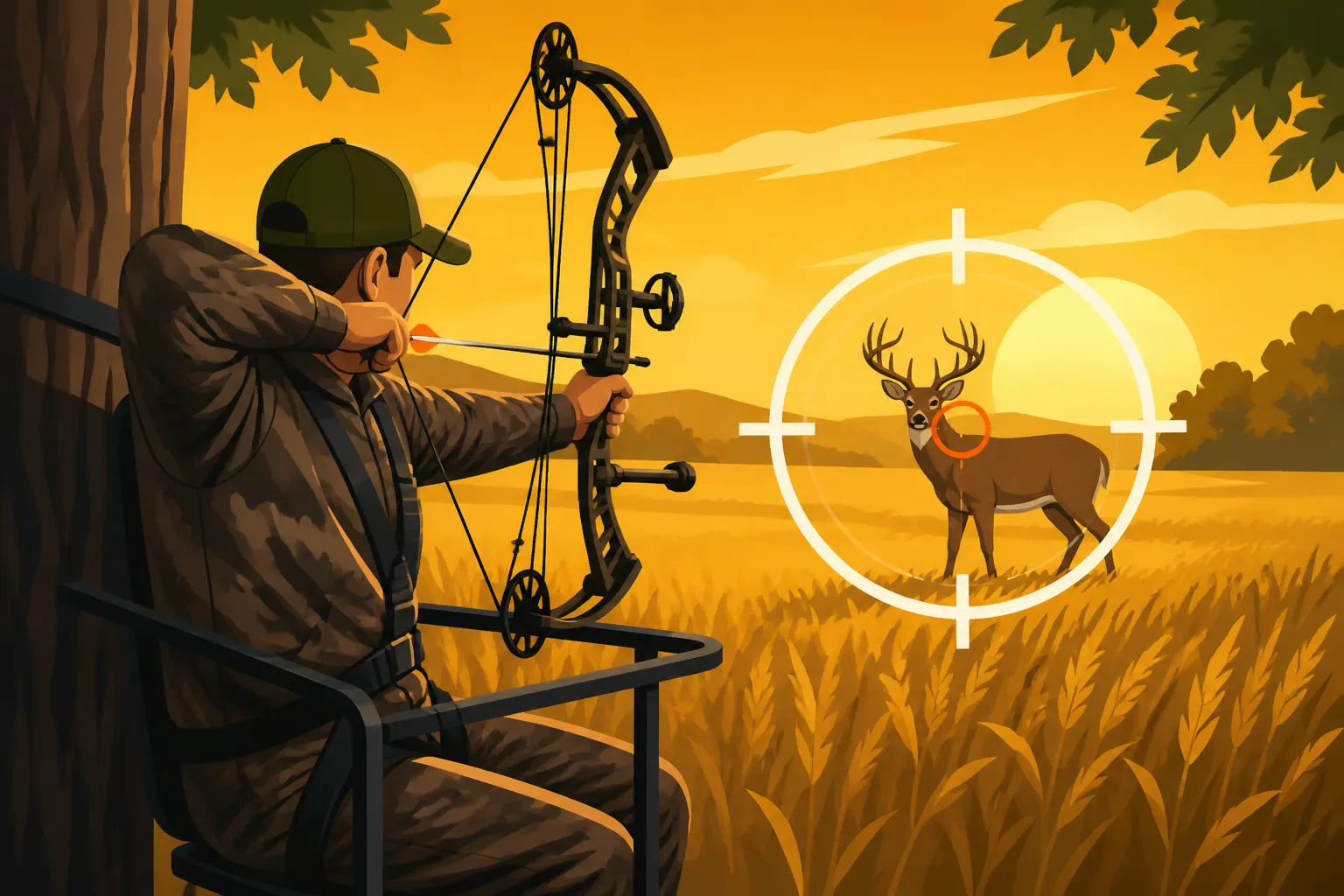
When you shoot from a treestand, you're not shooting at a flat, horizontal target. You're aiming downward, often at a steep angle. This downward angle significantly changes how gravity affects your projectile – especially an arrow. On a flat shot, gravity has more time to pull your arrow or bullet down over its trajectory, necessitating sight pin adjustments for distance. However, on a steep downward shot, the horizontal distance to the target is effectively shorter, and gravity has less time to act perpendicular to your line of sight.
For bowhunters, this means your arrow will impact higher than it would on a flat shot at the same measured distance. If your rangefinder says 30 yards to a deer directly below you, but you shoot it like a flat 30-yard shot, you’ll likely shoot over its back. Many modern rangefinders, like those offered by Bushnell or Vortex, come with angle compensation technology, often displaying both the line-of-sight distance and the "shoot-for" distance, which accounts for the angle. For rifle hunters, while less pronounced at typical deer hunting ranges, extreme angles (common in hilly terrain or very tall stands) can still cause high impacts. Ignoring this physics lesson is one of the quickest ways to wound or miss an animal.
Body Mechanics and Form Distortions
Think about your perfect shooting form on flat ground: feet shoulder-width apart, knees slightly bent, core engaged, bow arm extended, string hand anchored consistently. Now, try to replicate that same form when you're 20 feet up in a treestand, especially if you're twisting to shoot to your side. It’s incredibly difficult, if not impossible, to maintain identical form. The treestand platform restricts your foot placement, the harness might pull on you, and your body naturally wants to compensate for the awkward angle.
This often leads to poor rotational stability, bending at the waist instead of twisting at the hips and core, and an inconsistent anchor point. When you bend at the waist, your bow arm drops, your string arm may contact your clothing, and your entire shot sequence becomes compromised. For a rifle shooter, an unstable stance or awkward body position can lead to flinching, poor trigger control, and an inconsistent cheek weld, all of which throw off accuracy. The small platform of a treestand, especially when bundled up in Cold Weather Stand Clothing, makes these issues even more pronounced, creating a real challenge for consistent accuracy.
Setting Up a Realistic Treestand Practice Scenario
You wouldn't train for a marathon by only running sprints, right? The same logic applies to hunting. If you hunt from a treestand, your practice needs to simulate that environment as closely as possible. This means more than just occasionally shooting from a tree. It requires a dedicated setup that replicates the angles, distances, and movements you'll encounter in a real Kansas hunting situation.
The Right Gear and Practice Setup
First things first: use your actual hunting gear. This isn't the time for a light target bow or an un-scoped rifle. Use the same treestand you plan to hunt from, wear your full hunting clothes (including your safety harness), and shoot your hunting broadheads or bullets. Set up your treestand in a safe location, ideally on a large property where you won't bother neighbors. A backyard with mature trees is perfect, but if you don't have that, even a sturdy platform at the correct height can work in a pinch. Remember to always practice with your safety harness properly secured – not just for safety, but because it subtly affects your body movements and stability, just like it will during the hunt.
When positioning your target, think about the angles and distances you typically encounter. Don't just place it directly in front of you. Place targets at various distances and angles, simulating deer moving through timber, crossing a Creek Crossings Worth Hanging a Stand On, or feeding in a small food plot. A 3D deer target is ideal, allowing you to visualize actual shot placement on an animal. If you’re scouting new public land or a new lease, a tool like GoHunt's mapping features can be incredibly useful. You can use it to pinpoint potential treestand locations on aerial imagery, then measure distances to anticipated deer trails or feeding areas. This lets you visualize and plan your practice shots based on real-world hunting scenarios.
Varying Angles and Distances
The key to effective treestand practice is variety. Don't just shoot at 20 yards straight out. You need to simulate the awkward shot opportunities that always seem to present themselves when a buck steps out.
Start by placing a target directly below your stand at 10 to 15 yards. This steep, close-range shot is often one of the trickiest for angle compensation. Then, move targets to 20, 30, and even 40 yards at varying degrees around your stand. Place one target slightly quartering away, another broadside, and another slightly quartering to. Simulate deer moving through different areas, forcing you to twist your body, potentially shoot between branches, or hold for a brief window. If you're practicing for specific terrain, like Scouting Kansas River Bottoms and Creek Draws, remember that shots can often be very steep on the river bank side or relatively flat across the wide bottom.
Consider building a small platform on uneven ground or using a natural rise in the terrain to simulate the varying heights that deer might be at relative to your stand. You could be in a tree 25 feet up, but the deer might be walking on a slight rise, making the vertical drop less extreme. This dynamic practice helps you understand how different angles impact your point of aim. A practice session might involve taking three shots at 20 yards to your left, three at 30 yards directly in front, and three at 15 yards to your right, simulating a deer browsing its way past your stand. Always practice aiming for the exact vitals on your 3D target, preparing for a perfect Shot Placement on a Whitetail at Twenty Yards.
Mastering the Shot Process from Above
Once your practice setup is in place, it's time to refine your actual shooting technique from an elevated position. This involves both mental and physical adjustments to ensure consistency and accuracy when it counts. It’s about transforming those awkward motions into smooth, repeatable actions.
Mental Preparation and Target Acquisition
The mental game is half the battle in hunting. When you're in a treestand, waiting for a shot, the anticipation can be overwhelming. Practice helps build confidence, but specifically practicing from a treestand builds the right kind of confidence for those elevated shots. When a deer appears, your heart will race. Take a breath. Mentally run through your shot process: identify the animal, range the target, pick your pin, locate your precise aiming point (e.g., behind the shoulder, middle of the body), settle your pin, and execute a smooth trigger pull.
Practice quickly identifying shooting lanes. You might have scouted the area and cleared a few key lanes, but deer rarely follow the script. They might step out in a small gap you hadn't anticipated. Practicing quick target acquisition and assessing the best shot angle, even in less-than-ideal spots, is crucial. If you use a mapping tool like GoHunt for scouting, you can drop pins on potential stand locations and then mark various shot distances and lanes around it, which mentally prepares you for those specific scenarios before you even climb into the tree. This mental rehearsal, combined with physical practice, makes a significant difference.
Physical Adjustments and Follow-Through
The biggest physical adjustment for most treestand hunters is learning to twist at the waist rather than bending at the hips or knees. Bending at the waist throws off your center of gravity and can cause your bow arm to drop, leading to a high shot. Instead, keep your core tight, feet firmly planted (if possible), and rotate your entire upper body toward the target. Think of it like a pivot from your belt buckle. Your shoulders should remain level, and your draw arm should maintain its consistent anchor point.
For bowhunters, pay extra attention to string clearance. When twisting, it’s easy for the string to hit bulky clothing or your safety harness, resulting in a horrible shot. Practice drawing and shooting in your actual hunting clothes to identify and mitigate any contact points. For rifle hunters, maintaining a solid three points of contact (shoulder, cheek weld, trigger hand) can be challenging in a treestand. Use your stand's rail or a sturdy shooting rest attached to the stand, if available, to create a stable platform. Don't rush. Take a solid rest, control your breathing, and execute a smooth trigger pull, following through with your shot as if you were on flat ground. Regardless of weapon, holding steady after the shot and watching where your projectile impacts is vital for ethical hunting.
Integrating Technology and Advanced Techniques
Modern hunting offers incredible tools that can significantly enhance your treestand practice and overall success. From sophisticated rangefinders to digital mapping, leveraging technology can give you an edge, especially in diverse Kansas landscapes.
Rangefinders and Angle Compensation
We touched on angle compensation earlier, but it bears repeating: it is a game-changer for treestand hunting, especially with a bow. Rangefinders like those from Vortex, Leupold, or Sig Sauer, equipped with angle compensation (often labeled as "ARC" or "True Ballistic Range"), don't just tell you the line-of-sight distance; they calculate the horizontal equivalent distance, which is the actual distance your arrow or bullet needs to travel as far as gravity is concerned.
Here’s how it typically works: You range a deer at 30 yards below your stand, and the angle compensation feature might tell you to "shoot for 25 yards." This means you should use your 25-yard sight pin. Ignoring this feature, especially on steep angles, is a recipe for shooting high. Get to know your rangefinder inside and out. Practice ranging targets from your stand at various angles and confirm the "shoot-for" distances. This builds muscle memory and trust in your equipment. For rifle hunters, while less critical at typical distances, angle-compensated rangefinders are still valuable for precise ethical shots at extended ranges or very steep terrain.
Here's a quick comparison of common differences:
| Line-of-Sight Distance | Angle (from horizontal) | Shoot-For Distance (approx. for bow) | Impact Adjustment (if shooting for LOS) |
|---|---|---|---|
| 20 yards | 30 degrees | 17-18 yards | High |
| 30 yards | 30 degrees | 26-27 yards | High |
| 40 yards | 30 degrees | 34-35 yards | High |
| 20 yards | 45 degrees | 14-15 yards | Very High |
| 30 yards | 45 degrees | 21-22 yards | Very High |
Practice Tools and Drills
Beyond just shooting arrows or bullets, there are specific drills and tools that can fine-tune your treestand skills.
- Drawing Drills: Practice drawing your bow silently and smoothly from your treestand while wearing all your gear. Do it from seated positions, standing, twisting left, twisting right. Identify any clothing interference or harness noise. Repeat this until it's second nature. Many Kansas hunters find Mobile Hunting With a Saddle in Kansas to be an effective method, and practicing drawing from a saddle requires its own specific set of drills to master the different body mechanics.
- Blind Shooting Drills: Sometimes, a deer will appear in a tight window, and you'll only have a few seconds. Practice quick aiming and target acquisition. Have a friend call out random distances and angles to targets, and try to draw and shoot as quickly and accurately as possible within a few seconds.
- Pre-Set Yardage Markers: Before the season, use a mapping app like GoHunt to mark key distances around your stand location. Maybe it's a rub line at 25 yards, a scrape at 18, or a Best Stand Locations in Flat Farm Country pinch point at 30. During practice, try to internalize these distances so that when a deer steps into one of those zones, you instinctively know the range. This can be particularly useful when you're hunting vast, open areas and need to know distances to specific landmarks like a Shelterbelt Ends and Buck Travel or a field edge.
- Mental Walk-Throughs: Even without shooting, spend time in your treestand, visualizing deer approaching from different directions. Practice silently drawing and aiming at imaginary deer. Think about how Wind and Thermals on a River Bank might affect deer movement and where your shot opportunities might arise. The more you mentally rehearse, the more prepared you'll be when the real moment arrives.
By dedicating time to practicing shots from a treestand, you're not just improving your aim; you're building confidence, developing muscle memory for awkward positions, and truly preparing yourself for success in the field. Don't let a flat-ground mentality lead to a treestand miss.
Disclaimer
The information provided in this guide is for informational purposes only and is not a substitute for professional hunting instruction or adherence to all applicable hunting laws and safety regulations. Always consult the official Kansas Department of Wildlife, Parks and Tourism (KDWP) regulations for current rules and requirements. Practice safe hunting at all times.