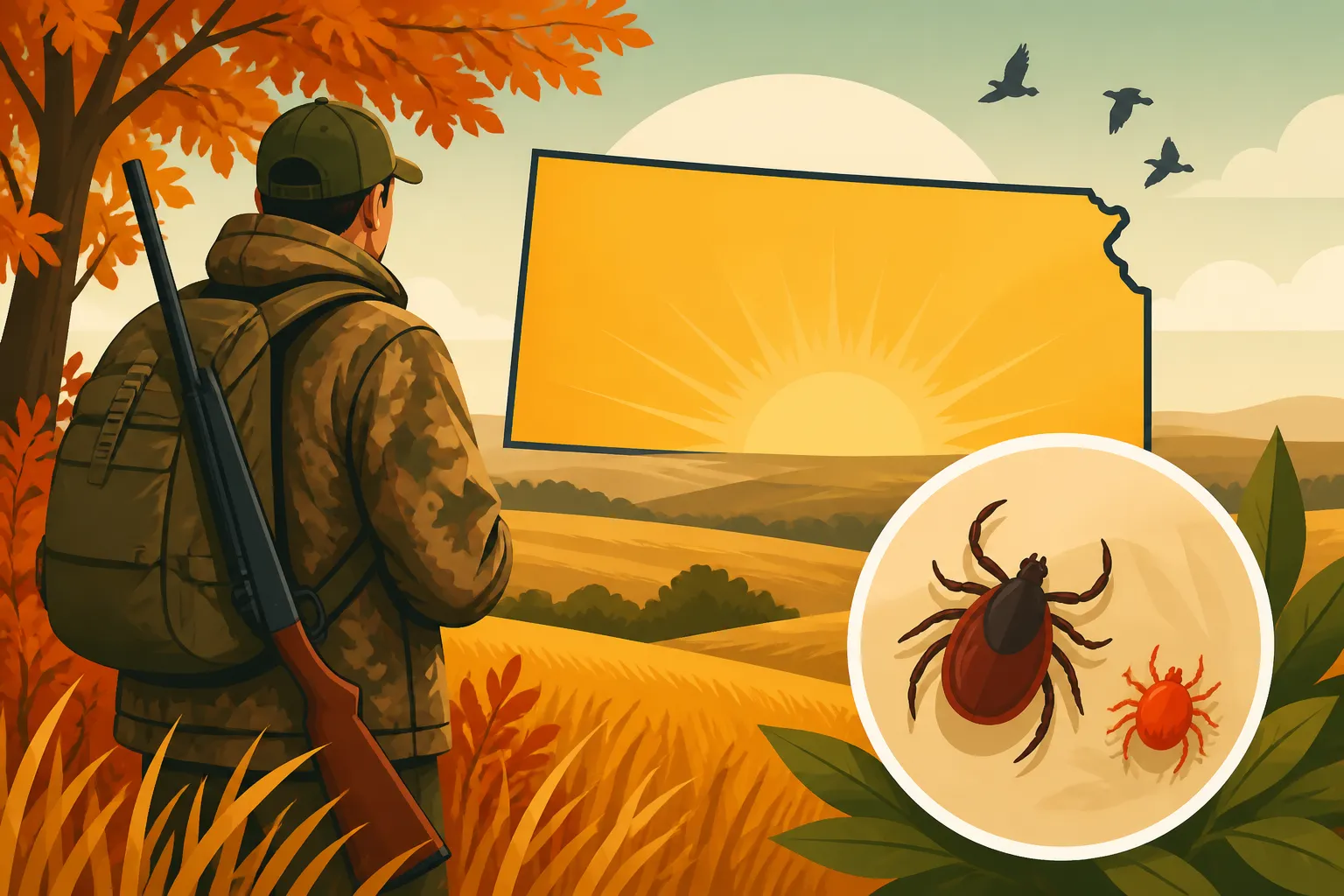
Tick and Chigger Season in September
You've got your archery tag in hand, the air is finally starting to whisper hints of autumn, and you're ready to hit the Kansas timber or tall grass. But just as you step out of the truck, that familiar dread creeps in: the realization that September, despite its cooler evenings, is still very much prime time for ticks and chiggers. It's a frustrating reality for hunters, as these tiny pests can not only make a hunt miserable with incessant itching but also pose real health risks. This guide is here to walk you through why these creepy crawlies are still so prevalent in early fall and, more importantly, how to defend yourself, identify the threats, and deal with bites so you can focus on the hunt, not the itch.
Why September Still Means Peak Bug Season in Kansas
When you think of peak tick and chigger season, your mind probably jumps to the humid dog days of summer. And while that's certainly true, many hunters get a rude awakening when they head out in September, only to find these tenacious pests are still very much alive and well. The truth is, the end of summer doesn't automatically mean the end of their activity, especially in Kansas.
Lingering Warmth and Moisture Extend Activity
Kansas weather in September can be a real mixed bag. We often get those beautiful crisp mornings, but by midday, temperatures can easily soar into the 80s, sometimes even pushing 90 degrees. This prolonged warmth creates an ideal environment for ticks and chiggers to continue their life cycles and remain active. They're not just waiting for the first hard freeze to call it quits; they're quite content as long as the ground isn't frozen solid and there's enough humidity. A good rain shower in late August or early September, followed by warm days, can actually trigger a resurgence in certain populations.
Think about those early archery hunts you’ve experienced, perhaps during the Early-Season Bowhunting Over Water or when tackling Muzzleloader Deer Tactics in Warm September Weather. You're sweating, the air is thick, and the conditions feel more like August than early fall. These are exactly the conditions these tiny tormentors thrive in. Their metabolism is still high, and they're actively seeking a blood meal to progress to their next life stage or, in the case of adults, to reproduce before winter truly sets in.
Prime Habitats Remain Active and Dense
The thick vegetation that provides excellent cover for deer and turkeys in Kansas also serves as prime real estate for ticks and chiggers. In September, much of this undergrowth, especially in creek bottoms, CRP fields, and timber edges, is still lush and dense. The leaves haven't fallen yet, and the tall grasses haven't withered from frost. This means there's ample opportunity for these pests to hitch a ride as you move through their territory.
Consider the dense CRP Grass and Where Bucks Bed. Walking through these fields, even carefully, can lead to dozens of chiggers latching on and ticks crawling up your legs. Similarly, scouting the dense cover of river bottoms or creek draws means you're almost guaranteed to encounter them. The simple act of brushing against a leaf or a blade of grass is all it takes for a chigger larva or a nymph-stage tick to transfer to your clothing. This is why it’s so critical to understand where they live when you're planning your approach and Access Routes That Avoid Bedding Areas.
Knowing Your Enemy: Identifying Kansas's Persistent Pests
Before you can effectively defend yourself, it helps to know who you’re up against. Kansas is home to several species of ticks and, of course, the ever-present chigger. Understanding their appearance, habits, and the diseases they can transmit is your first line of defense.
The Tick Family: From Nymphs to Adults
In Kansas, hunters commonly encounter three main types of ticks that remain active into September: the Lone Star tick, the American dog tick, and the blacklegged (or deer) tick. Each has distinct characteristics and potential health risks.
- Lone Star Tick: These are aggressive biters, easily identified by the white "star" or spot on the back of the adult female. They are common in wooded areas, tall grass, and brush, particularly in central and eastern Kansas. A bite from a Lone Star tick can cause a red meat allergy, known as Alpha-gal Syndrome, which is a growing concern for many outdoor enthusiasts. You'll often find these ticks in large numbers, sometimes even nymph-stage ticks that are barely larger than a poppy seed.
- American Dog Tick (Wood Tick): Larger than the Lone Star, these ticks are dark brown with mottled white or yellowish markings on their backs. They prefer grassy fields, brushy areas, and lightly wooded locations. While less common to transmit Lyme disease, they are known carriers of Rocky Mountain Spotted Fever. These are the ticks you often find crawling on your clothes, visible enough to pick off before they burrow in.
- Blacklegged Tick (Deer Tick): These are the smallest of the trio and often the hardest to spot, especially in their nymph stage, where they are no bigger than a pinhead. They are primarily responsible for transmitting Lyme disease in the Midwest. While historically more common in eastern states, their range is expanding, and they are present in Kansas, particularly in wooded and brushy areas with high deer populations. These tiny terrors are notorious for going unnoticed until symptoms of disease appear.
The key takeaway here is that while adult ticks are easier to spot, the nymph stages of all these ticks are incredibly small and can attach undetected. This is why a thorough body check is non-negotiable after every hunt, especially during Kansas Archery Season Opening Date.
Chiggers: The Itch You Can't See
Chiggers, also known as red bugs, harvest mites, or scrub-itch mites, aren't actually insects; they're the larval stage of a mite. Unlike ticks, which burrow into the skin, chigger larvae attach to hair follicles and inject digestive enzymes that break down skin cells. They then feed on this liquefied tissue, not blood. It's this enzymatic injection, not the bite itself, that causes the intense, prolonged itching and the characteristic red welts that often appear a few hours after exposure.
Chiggers are most active in dense vegetation, tall grasses, and areas with damp soil. They tend to congregate in shaded, protected areas. When you walk through a chigger-infested area, they climb onto your clothes and then migrate to areas where skin is thin or clothing is tight, like ankles, waistbands, armpits, and groin. You won't see them on your skin without magnification, as they are barely visible to the naked eye (about 0.2-0.4 mm). The real problem isn't the bite; it's the maddening itch that follows, which can last for days or even weeks.
Here’s a quick comparison of these common Kansas pests:
| Pest Type | Appearance | Size | Habitat Preference | Primary Concern | Active Seasons (Kansas) |
|---|---|---|---|---|---|
| Lone Star Tick | Dark brown, female has white "star" on back | Nymph: Poppy seed Adult: Sesame seed |
Woodlands, tall grass, brush | Alpha-gal Syndrome, Ehrlichiosis | Spring, Summer, Fall |
| American Dog Tick | Dark brown with mottled white/yellow markings | Adult: Larger, up to a pea | Grassy fields, brush, light woods | Rocky Mountain Spotted Fever | Spring, Summer, Fall |
| Blacklegged Tick | Small, dark brown/black, teardrop shape | Nymph: Pinhead Adult: Sesame seed |
Dense woods, brush, leaf litter | Lyme Disease, Anaplasmosis | Spring, Summer, Fall |
| Chigger (Larva) | Tiny, reddish-orange, barely visible | Microscopic (0.2-0.4mm) | Tall grass, dense vegetation, damp soil | Intense itching, skin irritation | Spring, Summer, Fall |
Building Your Armor: Effective Prevention Strategies
The best offense is a good defense when it comes to ticks and chiggers. Proactive prevention can save you from days of discomfort and potential health complications. Incorporating these strategies into your Kansas Whitetail Hunting Tactics Through the Rut or any other hunt will significantly reduce your risk.
Dressing for Maximum Defense
What you wear can make a huge difference in whether these pests make it to your skin. Layering properly and treating your clothing are crucial steps.
- Tuck and Tighten: This is a classic for a reason. Always tuck your pants into your socks or boots. This creates a barrier, forcing ticks and chiggers to climb over your clothing to reach your skin, making them easier to spot and brush off. Similarly, tuck your shirt into your pants. The goal is to create a complete seal against skin access. Wearing gaiters can add an extra layer of protection around the ankles, a common entry point for both pests.
- Light-Colored Clothing: Opt for lighter shades of hunting clothing when practical, especially for your outer layers. Ticks, particularly the tiny nymph stages, are much easier to spot against a khaki or light green background than against dark camo. This gives you a better chance to brush them off before they attach.
- Permethrin Treatment: This is, arguably, your most powerful weapon. Permethrin is an insecticide that kills ticks and chiggers on contact. It should only be applied to clothing and gear, never directly to skin. Spray your hunting clothes, boots, socks, and even your backpack with a permethrin product (like Sawyer Permethrin Insect Repellent) well in advance of your hunt, allowing it to dry completely. A single treatment can last through several washes, providing long-lasting protection. When you’re spending hours Working Pheasant Fields Without a Dog, this treated clothing is invaluable.
The Power of Repellents and Smart Application
Beyond clothing, topical repellents are essential for direct skin protection. Not all repellents are created equal, so choose wisely and apply correctly.
- DEET: This is the gold standard for insect repellents and is highly effective against both ticks and chiggers. Concentrations between 20-30% are generally recommended for adequate protection without being excessive. Apply DEET to exposed skin, but avoid contact with eyes, mouth, and open wounds. Remember, DEET can damage some synthetic fabrics and plastics, so apply carefully around gear.
- Picaridin: An excellent alternative to DEET, Picaridin is effective against a broad range of biting insects, including ticks and chiggers. It's often preferred for its less greasy feel and its inability to damage plastics or fabrics. Look for formulations with 20% Picaridin for effective, long-lasting protection.
- Oil of Lemon Eucalyptus (OLE): For those preferring a more natural option, OLE (note: not lemon eucalyptus essential oil) has shown effectiveness against ticks and mosquitoes. It's often formulated at 30% concentration. While generally effective, its protection might not last as long as DEET or Picaridin.
When you're out scouting new ground or checking a Kansas Walk-In Hunting Access Explained tract before the season, having both treated clothing and skin repellent on hand, combined with the detailed maps on platforms like GoHunt, helps you visualize and navigate potential bug havens.
Proactive Scouting and Field Awareness
Smart hunting practices extend beyond simply finding game; they involve minimizing your exposure to pests. Being aware of where ticks and chiggers live can help you avoid the densest concentrations.
- Identify High-Risk Areas: As mentioned, tall grasses, dense brush, and leaf litter are hotbeds. When Scouting Kansas Walk-In Tracts Before the Opener, make mental notes of these areas and plan your routes to minimize direct contact. If you absolutely have to traverse them, do so quickly and with heightened awareness.
- Stick to Trails When Possible: While not always feasible for deer hunting, if there's a mowed path or a well-worn trail, use it. Avoiding the thickest vegetation will naturally reduce your exposure.
- Frequent Checks: Even with treated clothing and repellents, make it a habit to check yourself periodically during your hunt, especially if you've been sitting or moving through dense cover. A quick visual scan of your pants and arms can dislodge ticks before they have a chance to climb higher or attach.
Post-Hunt Protocol and Treatment
So, you've done everything right, but a sneaky bug still managed to make its way through your defenses. Or maybe you just got caught off guard. Don't despair! Knowing how to properly deal with bites and recognizing potential issues is just as important as prevention.
The All-Important Post-Hunt Body Scan
The moment you get back to the truck or camp, your tick and chigger defense isn't over. In fact, this is one of the most critical stages.
- Strip Down Outdoors: Before you even step inside your house or vehicle, remove your outer hunting clothes. Give them a good shake-out. This prevents any hitchhiking ticks or chiggers from coming indoors with you.
- Full Body Inspection: Take a thorough shower as soon as possible. Use a washcloth to scrub your skin, which can help dislodge chiggers. While showering, perform a meticulous head-to-toe tick check. Pay close attention to warm, moist areas and skin folds: behind the ears, scalp, neck, armpits, belly button, groin, and behind the knees. Don't forget to check your gear too; a quick wipe-down or shake-out of your pack and boots can prevent them from making their way into your home. This is especially important during Field Dressing in Warm Kansas Weather when you might be distracted and sweaty.
- Laundry Protocol: Throw your hunting clothes directly into the washer. Washing in hot water and then drying on high heat for at least 10 minutes can kill any remaining ticks. Don't just toss them into a hamper to sit for days.
Removing Ticks and Relieving Chigger Bites
If you find a tick attached or feel the tell-tale itch of chiggers, quick and correct action can minimize discomfort and disease risk.
-
Tick Removal: The key is to remove the tick as soon as possible.
- Use Fine-Tipped Tweezers: Grasp the tick as close to the skin's surface as possible.
- Pull Upward Steadily: Apply steady, even pressure. Don't twist or jerk the tick; this can cause the mouthparts to break off and remain in the skin.
- Clean the Area: After removing the tick, thoroughly clean the bite area and your hands with rubbing alcohol, an iodine scrub, or soap and water.
- Dispose Properly: Place a live tick in rubbing alcohol, seal it in a bag or container, or flush it down the toilet. Never crush a tick with your fingers.
- Monitor the Bite: Keep an eye on the bite area for several weeks for any rash, fever, or other symptoms. If you develop a rash (especially a bull's-eye rash), fever, or flu-like symptoms, contact a healthcare provider immediately and tell them about your tick bite. Using a powerful mapping tool like GoHunt to pinpoint where you were when you found the tick can even help doctors assess exposure risks.
-
Chigger Relief: Since chiggers are usually gone by the time the itching starts, the focus is on symptom relief.
- Hot Shower and Scrub: A hot shower and vigorous scrub with soap and water can help dislodge any remaining chiggers.
- Anti-Itch Treatments: Over-the-counter hydrocortisone creams, calamine lotion, or topical antihistamines can help alleviate the itching. Oral antihistamines can also provide relief.
- Avoid Scratching: As tempting as it is, excessive scratching can lead to skin infections. Keep the area clean.
When to Seek Medical Attention
While many tick and chigger encounters are mere nuisances, some can lead to serious health issues. Knowing when to get professional help is crucial.
- Tick-Borne Illnesses: Be vigilant for symptoms of tick-borne diseases. For Lyme disease, look for an expanding bull's-eye rash, fever, headache, and fatigue. Rocky Mountain Spotted Fever can cause a rash, fever, and muscle pain. Alpha-gal Syndrome symptoms (red meat allergy) can appear hours after consuming red meat, including hives, nausea, and even anaphylaxis. If you experience any unusual symptoms after a tick bite, particularly within a few weeks, don't hesitate to consult a doctor. Even if you don't recall a bite, unexplained symptoms in September after hunting should prompt a discussion with your physician about potential tick exposure.
- Severe Chigger Reactions: While less common, some individuals can have more severe allergic reactions to chigger bites, or persistent scratching can lead to secondary bacterial infections. If bites become extremely swollen, painful, or show signs of infection (pus, spreading redness, warmth), seek medical advice.
- Always Document: It's a good idea to note down the date and location of any significant tick bite. This information can be valuable for healthcare providers if symptoms develop later. Even jotting down the general area you were hunting, perhaps referenced against your GoHunt maps, can be helpful.
September hunting in Kansas offers incredible opportunities, from chasing whitetails during Bowhunting Kansas Deer From September to December to preparing for the late season. Don't let the threat of ticks and chiggers ruin your experience. By understanding their presence, implementing strong prevention tactics, and knowing how to respond if a bite occurs, you can minimize the hassle and stay focused on the incredible outdoor adventures Kansas has to offer.
Disclaimer
The information provided in this guide is for general informational purposes only and does not constitute medical advice. Always consult with a qualified healthcare professional for any health concerns or before making any decisions related to your health or medical care. The recommendations for pest control are based on current general guidelines; always follow product-specific instructions and warnings.