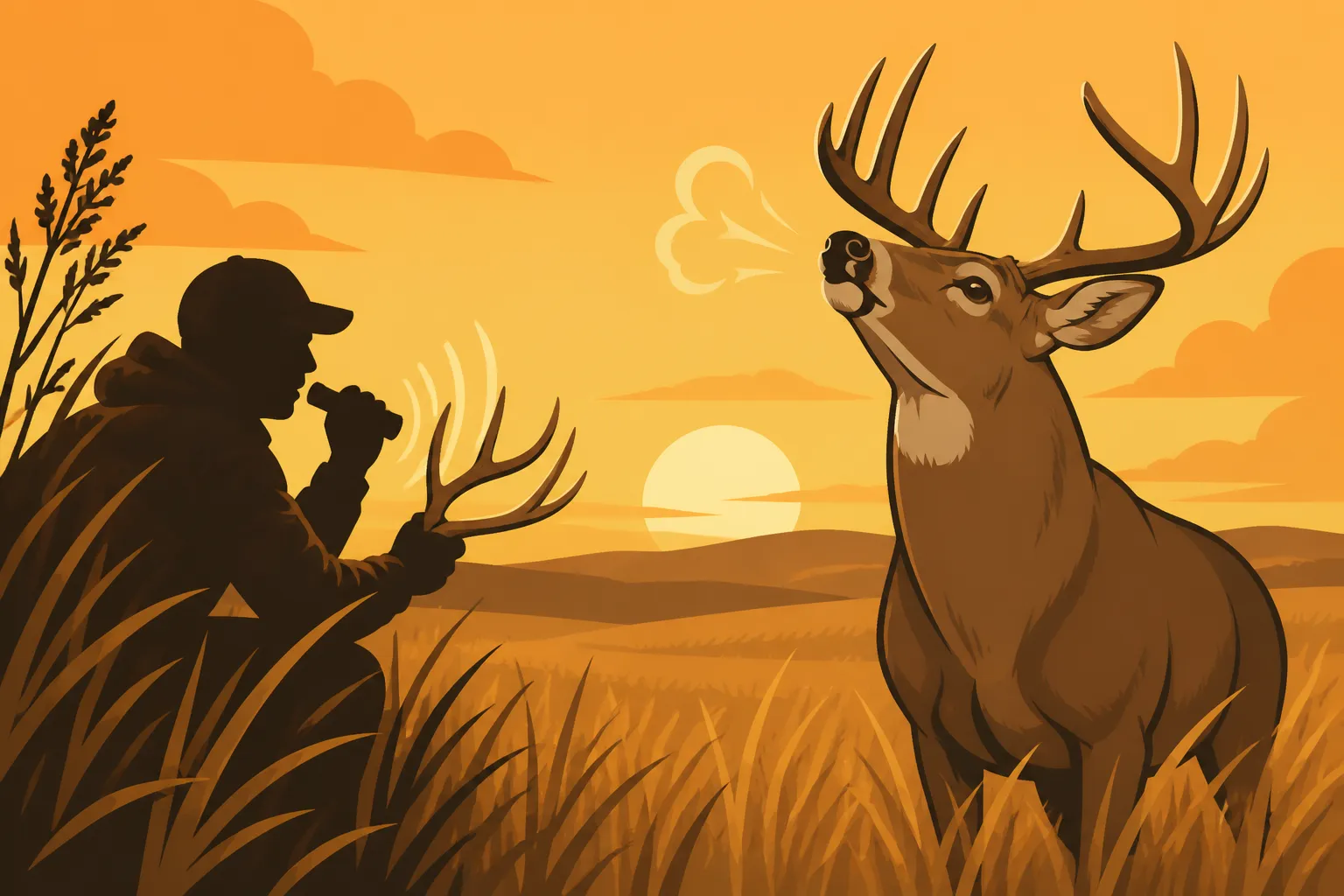
Rattling and Grunting During the Kansas Rut
That moment when a Kansas whitetail hangs up just out of range, or worse, spooks entirely, is a frustration every hunter knows deeply. It leaves you second-guessing every choice, especially when it comes to communication. The good news is, mastering the art of rattling and grunting during the frantic Kansas rut can dramatically increase your chances of bringing a buck into bow or gun range, and this guide is going to walk you through exactly how to do it effectively, covering everything from timing to technique.
Understanding the Kansas Rut and its Phases
The Kansas rut is a magical, yet often unpredictable, time. Bucks that were once ghosts suddenly seem to lose their minds, driven by an overwhelming urge to breed. But it's not a single, monolithic event. It unfolds in distinct phases, and understanding these shifts is absolutely critical for knowing when and how to deploy your calls. Using the right call at the wrong time can be as detrimental as making no call at all.
Early Pre-Rut Aggression (Late October)
Before the does are actively receptive, bucks are feeling their oats and establishing dominance. This early pre-rut period, typically in late October, is characterized by increasing scrape and rub activity. Bucks are keyed into each other, constantly assessing the pecking order and willing to challenge perceived rivals. This is a time of escalating tension, and it's where aggressive calling strategies can really shine.
During this phase, mature bucks are highly susceptible to calls that mimic a fight or a challenge. They're still somewhat daylight active and actively patrolling their territories, making them more likely to investigate a disturbance. Think of it like a bar fight – everyone wants to see who's winning, or maybe even join in. This is prime time for loud, drawn-out rattling sequences designed to sound like two bucks are genuinely locked up. When you hear the phrase "Hunting the Kansas Pre-Rut in Late October", remember that it’s this specific window where a challenging call can be most effective. Bucks are pumped full of testosterone and not yet exhausted from constant chasing, making them eager to engage.
Peak Rut Dominance (Early November)
Ah, the peak rut. This is what most hunters dream about, generally kicking off in early November and running strong for a couple of weeks. Does are now coming into estrus, and bucks are throwing caution to the wind, often seen cruising endlessly, scent-checking every doe they encounter. While their focus shifts heavily to finding receptive females, they haven't forgotten about rivals. In fact, competition is at its fiercest.
During the peak rut, bucks are often seen chasing does, nose-to-tail. They are physically exhausted but incredibly driven. While some hunters believe rattling isn't as effective because bucks are so focused on does, a well-timed rattling sequence or a challenging grunt can pull a buck off a doe or divert a cruising monarch. They're still territorial, and the sound of another buck intruding on their breeding grounds can be an irresistible draw. This is the period when a quick, sharp grunt from a rival can intercept a buck before he crosses that property line or disappears into a thicket. Understanding "When the Kansas Rut Peaks" is essential for timing these high-stakes encounters.
Late Rut Scramble (Mid-to-Late November)
As the initial rush of the rut begins to wane in mid-to-late November, many of the primary does have been bred. However, there's a secondary rut that can occur, often involving younger does coming into estrus, or older does that weren't bred during the first cycle. Bucks are incredibly tired by this point, having lost significant body weight. They're still looking, but often less aggressively and with more caution.
During the late rut, bucks are often more interested in finding that last receptive doe than engaging in another grueling fight. This means your calling strategy needs to adapt. While a light rattling sequence might still work to pique curiosity, doe bleats and estrus whines become increasingly effective. Bucks are listening for any sign of a receptive female. This is also a time when they might be more responsive to subtle, inquisitive grunts rather than outright challenges. They're conserving energy, so a full-blown brawl isn't as appealing unless they perceive an easy victory or a truly hot doe is at stake.
The Art of Rattling for Kansas Whitetails
Rattling is essentially mimicking the sounds of two bucks fighting, a primal display of dominance that can ignite curiosity, fear, or aggression in nearby bucks. It's a high-reward, high-risk tactic that, when done correctly, can bring a trophy buck storming into your setup.
Choosing Your Rattling Repertoire (Antlers vs. Rattling Bags)
When it comes to making that bone-on-bone sound, you've got options. The traditionalists swear by actual shed antlers, and for good reason. Real antlers produce an incredibly authentic, varied sound that's hard to replicate. You can achieve loud, clashing blows, subtle tickling of points, and even grind them together to simulate pushing and shoving. The downside? They can be bulky, noisy to carry, and can sometimes bash your knuckles if you get too enthusiastic. Many hunters prefer actual antlers for their raw, natural sound, especially for aggressive sequences.
On the other hand, rattling bags or synthetic rattling devices offer convenience and often a quieter carry. Brands like GoHunt offer compact rattling solutions that fit easily into a pack. They are designed to replicate the sound of antlers clashing, and while they might not offer the exact same range of nuanced sounds as real sheds, they are fantastic for getting the job done, especially if you're trying to keep things light and mobile. Some even come with built-in grunt calls, providing an all-in-one solution. The key is to practice with whatever you choose to ensure you can create a realistic sequence that doesn't sound like two twigs snapping.
Aggressive vs. Subtle Rattling (When to Go Hard, When to Ease Up)
The intensity of your rattling needs to match the phase of the rut, the deer's mood, and even the terrain. There's no one-size-fits-all approach.
-
Aggressive Rattling: This involves loud, sustained clashing and grinding, simulating a full-blown fight. It's best deployed during the early pre-rut and the very beginning of the peak rut, when bucks are full of aggression and testing boundaries. It works particularly well in open country where sound travels farther, and you need to grab a buck's attention from a distance. Think of it as a broadcast call. When considering "Rattling Volume for Open Country", an aggressive sequence can carry for hundreds of yards, potentially drawing in bucks that wouldn't hear a softer approach. Start with a loud crash, followed by a minute or two of intense clashing, grinding, and pushing, then incorporate some grunts. End with a few soft clicks and scrapes, as if one buck is leaving. Then, wait patiently for 15-20 minutes.
-
Subtle Rattling: This involves softer, shorter clashes, light tickling of points, and less intense grinding. It's ideal for situations where a buck might be closer than you think, or during the later stages of the rut when bucks are more cautious. If you're hunting thick timber or areas with a lot of pressure, subtle rattling can be more effective. It sounds like two bucks sparring or lightly testing each other, rather than fighting to the death. This can pique a buck's curiosity without immediately putting him on high alert. You might start with a soft tickle, a short clash, and a few light grunts. This is often a better choice when you suspect deer are already nearby or if you've had an aggressive sequence fail to produce results.
Situational Rattling Tactics (Open Country, Thick Cover)
The environment you're hunting in dictates a lot about how you should rattle. Kansas offers a diverse landscape, from wide-open crop fields and CRP grasslands to dense creek bottoms and shelterbelts.
-
Open Country Rattling: In expansive Kansas fields, your rattling needs to carry. This usually means a more aggressive, longer sequence to attract attention. Position yourself in a way that allows you to see a buck approaching from a distance. Often, bucks will circle downwind to scent-check the "fight," so anticipate their approach and set up accordingly. This is where a strategic stand choice, perhaps on a timber point or inside corner, can be a game-changer. Remember to factor in the wind, as sound carries differently with it. You'll want to project your sound downwind so it reaches bucks potentially moving upwind. Using a decoy in open fields can also provide a visual cue that complements your aggressive calling.
-
Thick Cover Rattling: In dense creek draws, timber blocks, or plum thickets, a more subdued approach is often better. The sound won't travel as far, and a super loud, aggressive sequence might sound unnatural or even spook deer at close range. Focus on shorter, softer bursts of rattling, interspersed with grunts and bleats. The goal here is to intrigue a buck and draw him closer within the limited visibility. Instead of rattling directly from your stand, sometimes rattling from the ground (if you have good cover) a short distance away can make the sound seem more mobile and less connected to your exact location. Always be ready for a quick shot, as bucks can appear silently and suddenly in thick cover. Understanding how to read a Kansas creek bottom for deer sign can also inform where to set up for these close-quarters encounters.
| Rattling Technique | Rut Phase | Terrain Type | Sound Intensity | Expected Buck Behavior |
|---|---|---|---|---|
| Aggressive | Pre-Rut, Peak Rut | Open Fields, Timber Edges | Loud, Sustained | Investigate, Challenge, Circle |
| Subtle | Peak Rut (Cautious), Late Rut | Thick Cover, Timber | Soft, Short Bursts | Curiosity, Investigate Downwind |
| Grinding/Pushing | Pre-Rut, Peak Rut | Any | Moderate | Dominance Display, Curiosity |
| Light Sparring | Mid-Rut, Late Rut | Any | Soft, Intermittent | Curiosity, Assess Rival |
Grunting and Other Vocalizations
Rattling is powerful, but deer communicate through a much wider range of vocalizations. Adding grunts, bleats, and snort-wheezes to your repertoire can make your calling incredibly realistic and effective. These calls can convey everything from a challenge to an invitation, significantly expanding your ability to manipulate a buck's movements.
Decoding the Whitetail Grunt (Types of Grunts and Their Meaning)
Not all grunts are created equal. A whitetail's grunt can convey different messages depending on its duration, volume, and inflection. Learning to differentiate and mimic these can make a huge difference in your success.
-
Contact Grunt: This is a soft, short grunt, often heard as deer move through cover, letting other deer know where they are. It's a non-threatening call, used primarily to gather or reassure. You can use this to grab the attention of a buck that might be out of sight or to calm a deer that seems a bit skittish. It's a good introductory call when you don't want to come on too strong.
-
Trailing Grunt: Often a series of short, choppy grunts, bucks make these while actively pursuing a doe. It's a low-key, persistent sound that says, "I'm right behind you, and I'm interested." If you see a buck cruising or following a scent trail, a few trailing grunts can sometimes pull him off course or make him curious enough to investigate. Many excellent "Grunt Calls That Work in the Pre-Rut" will allow you to make this sound easily.
-
Aggressive Grunt/Challenge Grunt: This is a louder, longer, and deeper grunt, often with more inflection. It's a direct challenge to another buck, signaling dominance or frustration. These are extremely effective during the pre-rut and peak rut, especially when you see a buck cruising alone or interacting aggressively with rubs and scrapes. Using this call requires confidence; you're essentially challenging the buck, so be ready for him to respond. You might hear this from a buck pushing another buck off a doe.
The Power of the Snort-Wheeze (Aggressive Challenge)
The snort-wheeze is arguably the most aggressive vocalization a whitetail buck makes. It’s a rapid, sharp expulsion of air through the nose, often sounding like a whistle or hiss, followed by a wheezing sound. It's a clear declaration of dominance and a direct warning to a rival: "Get out of here, or we're going to fight."
Deploying a snort-wheeze is a high-stakes move. It's best reserved for bucks that are already showing signs of aggression – maybe they're staring intently, bristling their hair, or even pushing smaller bucks around. If you've got a buck hanging up just out of range, or one that's cautiously circling, a single, sharp snort-wheeze can be the catalyst that pushes him over the edge and brings him storming in, ready for a confrontation. However, use it sparingly. If a buck isn't in an aggressive mood, or if you overdo it, it can spook him completely. It's a confidence call, meant to be used when you know a buck is within earshot and looking for a fight. Mastering the "Snort-Wheeze on a Cruising Buck" can be the ultimate closing call.
Doe Bleats and Estrus Whines (Attracting Bucks and Does)
While grunts and snort-wheezes are buck-centric, doe bleats and estrus whines are invaluable for their ability to attract bucks looking for a receptive female.
-
Doe Bleats: A doe bleat is a soft, often drawn-out "baa-aah" sound that a doe makes. It can be a contact call, a distress call, or a signal of curiosity. Fawn bleats, a higher-pitched version, can sometimes draw in does (and curious bucks), especially during the early season. During the rut, a general doe bleat can simply signal the presence of a female, making a cruising buck pause and investigate.
-
Estrus Whine (or Estrus Bleat): This is a very specific, high-pitched, drawn-out bleat that a doe makes when she is in peak estrus and ready to breed. It sounds like a "Maaah-ah-ah-ah" that rises and falls in pitch. This is an incredibly powerful call during the peak rut. Bucks are biologically programmed to respond to this sound, as it signifies a hot doe. If you know a buck is nearby, but unresponsive to grunts or rattling, an estrus whine can often be the magic bullet that brings him in. It taps directly into his strongest drive. Using this call in conjunction with a doe decoy can create an incredibly compelling scenario for a lovesick buck.
Reading Deer Body Language and Response
Making the call is only half the battle; the other half is understanding how deer react to it. Whitetails are incredibly expressive, and their body language can tell you whether your calls are working, whether you need to change tactics, or if you're about to blow your chance. Paying close attention is paramount.
Interpreting Buck Reactions (Approaching, Circling, Fleeing)
A buck's response to your call provides a direct feedback loop. Learning to read these signals will guide your next move.
-
Approaching Directly: This is the dream scenario. A buck that hears your call, stops, turns, and walks directly towards you, head up, ears forward, is usually curious or confident. He might be a younger buck looking for a fight, or an older buck simply checking things out. If he's coming straight in, stay still, be quiet, and prepare for a shot. Avoid further calling unless he clearly hangs up.
-
Circling Downwind: This is the most common reaction, and it's a critical one to anticipate. Deer rely heavily on their nose, and a buck will almost always try to get downwind of the sound source to scent-check for rivals or a hot doe. If you see a buck stop and then start to angle away, he's likely trying to get your wind. This is where your stand placement and scent control become crucial. If you're set up for the wind, he'll hopefully walk into range before he gets your scent. Platforms like GoHunt can help you analyze wind direction for various stand locations. Be ready for a shot as he circles, as he might only present a narrow window.
-
Hanging Up: A buck that comes to within 60-100 yards, then stops, looks around intently, and refuses to come closer is "hanging up." He's heard your call, is interested, but is also cautious. This is a moment to reassess. He might need a little more convincing. Sometimes, a soft contact grunt or an estrus bleat can be enough to draw him the rest of the way. Other times, he might be looking for the visual cue of a fight or a doe, in which case a decoy might be your best bet.
-
Fleeing: If a buck immediately turns tail and bolts, you likely either spooked him with movement, he winded you, or your call sounded completely unnatural. If he's already alarmed, further calling is usually futile. Take note of what might have gone wrong and adjust for your next setup.
Knowing When to Stop (Over-calling vs. Sustained Interest)
It's tempting to keep calling, especially if you're not seeing immediate results, but knowing when to shut up is often more important than knowing when to call. Over-calling can make your sequence sound unnatural and even alert deer to your presence.
-
When to Stop: Once a buck is committed and clearly approaching, especially if he's coming directly towards you, stop calling. Any further noise might make him nervous or cause him to pinpoint your exact location too accurately. Let him come to you. If he hangs up, then you can consider a very soft, subtle follow-up call, but err on the side of caution. Similarly, if you've done a full rattling sequence and waited 15-20 minutes with no response, it's often best to let the woods settle before trying again or moving to a new location. Constantly blaring calls will only put deer on alert.
-
Sustaining Interest: There are times, particularly with cruising bucks or those circling downwind, where a well-timed, subtle follow-up call can maintain interest. If a buck starts to drift away, a soft trailing grunt or a short bleat might make him pause or turn back. The key is subtlety and observation. You're trying to whisper "over here" rather than shouting. Think about creating a narrative – if two bucks were fighting, they wouldn't stop instantly and completely. A few soft clicks or grunts as if one buck is disengaging can sound very realistic.
Adjusting Your Strategy Mid-Sequence (Responding to What You See)
Hunting isn't a script; it's an improvisation. What worked yesterday might not work today, and what works for one buck won't work for another. Be prepared to adapt.
If you start with an aggressive rattling sequence and a buck comes in cautiously, hanging up at 80 yards, don't keep rattling aggressively. Switch to a soft contact grunt or an estrus bleat. If he's circling hard downwind, consider whether he's looking for a visual. This might be the time to use a doe decoy if you have one deployed, especially when thinking about "Decoying a Kansas Whitetail Buck". If he's acting particularly dominant, bristling and posturing, a snort-wheeze might be the perfect closer. The most successful callers are those who can read the deer's mood and adjust their calls on the fly, tailoring their "conversation" to what the buck is telling them through his actions. Always have a plan B, and even a plan C, ready in your mind.
Gear and Setup for Effective Calling
Your calls are just tools, and like any tool, they're only as effective as the hands that wield them and the environment they're used in. The right gear and a smart setup are crucial for maximizing your calling efforts.
Selecting Your Calls Wisely (Quality and Versatility)
Investing in quality calls that offer versatility will pay dividends. There are countless calls on the market, but not all are created equal.
-
Grunt Tubes: Look for grunt tubes that allow for a range of sounds – from soft contact grunts to aggressive challenge grunts, and even doe bleats. Many have adjustable O-rings or reeds that let you change the pitch and tone. Practice with it until you can consistently produce the sounds you want. Brands like Primos, Flextone, and HS Strut offer reliable options that are often praised by seasoned hunters. The best grunt tube is the one you know how to operate silently and effectively in the field.
-
Rattling Devices: As discussed earlier, whether you choose real antlers or a synthetic rattling bag, ensure it produces a realistic sound. Some rattling bags also incorporate a grunt call, which can be convenient for quick, seamless transitions between sounds. If using real antlers, try to find a pair with several points that will clash and grind naturally. You want to avoid a dull, clunky sound.
-
Doe Bleat Calls: Dedicated doe bleat calls, especially those that produce an estrus whine, can be incredibly effective during the peak rut. These are usually small, easy-to-use calls that don't require much practice. A simple push-button or blow-through design works well.
When packing your calls, consider noise. Rattling antlers can clank around in your pack. Using a silent carrying system or wrapping them in a cloth can prevent accidental noise that might alert deer on your "Access Routes That Do Not Bump Deer".
Crucial Considerations for Setup (Wind, Cover, Visibility)
Your physical setup before you even make a sound is just as important as the calling itself. A bad setup can negate the best calling sequence.
-
Wind Direction: The wind is your number one enemy and your best friend. Always position yourself downwind of where you expect deer to approach. As mentioned, bucks will almost always circle downwind, so if you're set up where the wind carries your scent away from their likely approach path, you're in a much better position. This ties into crucial decisions like "Best Stand Locations in Flat Farm Country". If you anticipate a buck circling, have a shooting lane in that direction. Using tools like a wind checker (a small bottle of powder) is essential before and during your sit.
-
Cover: You need enough cover to break up your silhouette and allow you to draw your bow or raise your rifle without being seen. However, too much cover can restrict your visibility and shooting lanes. Find that balance. A good treestand in a strategic timber patch, or a well-brushed ground blind, are excellent options.
-
Visibility: You need to be able to see deer approaching from a distance, giving you time to react. In open country, this might mean elevated stands that offer a wide view. In thicker cover, focus on natural funnels or pinch points where deer are likely to travel, giving you a smaller area to watch intensely. Being able to see a buck's body language from afar allows you to tailor your calling approach.
Scent Control and Concealment (Minimizing Your Presence)
Even the best calls can be ruined by poor scent control or sloppy movement. Deer have an incredible sense of smell and can detect movement in their peripheral vision with shocking accuracy.
-
Scent Control: This is non-negotiable, especially when calling. Shower with scent-free soap, use scent-free laundry detergent for your hunting clothes, and store them in airtight containers. Use scent elimination sprays before heading to your stand. While some products like ozone generators claim to eliminate all scent, the most effective strategy is to hunt the wind and minimize what you put into the air. Always consider the wind direction as your primary scent control method.
-
Concealment: Wear camouflage that breaks up your outline and blends with the environment. If using a ground blind, brush it in thoroughly to make it look like a natural part of the landscape. When calling, keep your movements slow and deliberate. If you're using antlers, make sure the movement of clashing them isn't visible to an approaching buck. Be mindful of sunlight reflecting off shiny surfaces. The less a buck perceives your presence, the more he'll focus on the sounds you're making, believing them to be genuine deer activity.
Advanced Calling Strategies and Scenarios
Once you've mastered the basics of rattling, grunting, and reading deer, you can start combining techniques and adapting to more complex scenarios. This is where calling becomes an art form, allowing you to paint a vivid picture for an approaching buck.
Combining Rattling and Grunting (Creating a Realistic Fight Scene)
The most effective calling sequences often blend multiple vocalizations to create a dynamic, lifelike scenario. A genuine buck fight isn't just clashing antlers; it's grunts, snorts, heavy breathing, and even the sounds of feet scuffing the ground.
-
The Full Fight Simulation: Start with some light sparring (subtle rattling) to mimic two bucks testing each other. This can grab a buck's initial attention. Then, escalate into an aggressive rattling sequence – loud clashes, grinding, and pushing – for 30 seconds to a minute. During this intense phase, intersperse several aggressive grunts. Think about the rhythm: clash, clash, grunt, grind, push, grunt, clash. Then, taper off. Imagine one buck "winning" and chasing the other off. After the main fight, do a few soft clicks, a trailing grunt, or even a snort-wheeze as if one buck is asserting dominance. Then, be completely silent for 10-15 minutes, scanning intensely. This creates a full narrative that can be incredibly compelling to a nearby buck. This is a powerful tactic, especially when "Rattling and Grunting During the Kansas Rut" in its peak.
-
Grunts to Accent Rattling: Even if you're primarily rattling, a well-placed grunt can add depth. If you're doing a subtle rattling sequence, a soft contact grunt can make it sound like more than just sparring – perhaps two bucks are feeding together and having a minor dispute. If you're trying to draw a buck closer after an aggressive rattle, a series of trailing grunts can make him think one of the "fighters" is moving off, potentially enticing him to investigate the winner or the remaining buck.
Integrating Decoys with Calls (Visual and Auditory Appeal)
A visual element can exponentially increase the effectiveness of your calls. When a buck hears a fight or a hot doe, but sees nothing, he can become wary. Add a decoy, and you provide the missing piece of the puzzle.
-
Buck Decoy for Fighting Scenarios: If you're using aggressive rattling and grunting, a buck decoy can be incredibly powerful. Set it up slightly downwind of your position, facing away from you, as if it's looking at the "fight" or moving towards it. Many bucks will approach a decoy from the front, ready to confront the intruder. Be prepared for a very aggressive charge. When thinking about "Using a Decoy in Open Fields", ensure your decoy is visible and appears natural from a distance. A slight breeze can even make a flexible decoy move, adding to the realism.
-
Doe Decoy for Estrus Whines: A doe decoy combined with estrus whines or bleats is a classic peak rut tactic. Position the doe decoy to look receptive, perhaps with its head down or slightly turned. Some hunters even add a small, young buck decoy nearby to simulate a breeding pair, making a cruising monarch even more jealous. The visual confirms the sound, convincing a buck that a real, hot doe is present. Always consider "Decoy Placement and Wind Direction" to ensure the decoy is presented realistically and doesn't draw a buck's circle directly into your scent cone.
Calling Pressure on Public vs. Private Land (Adapting to Hunter Density)
The amount of hunting pressure in an area dramatically influences how deer react to calls. What works on a secluded private lease might be detrimental on heavily hunted public land.
-
Public Land Considerations: On public land, deer are often warier and more accustomed to human scent and sounds. Over-calling or making unrealistic sounds will likely educate or spook them. Here, subtlety is often key. Focus on softer contact grunts or subtle bleats. If you do rattle, keep sequences shorter and less aggressive. Bucks on public land are more likely to circle widely and be extremely cautious. You'll need to be hyper-aware of your scent and concealment. Understanding "Hunting Pressure Patterns on Kansas Public Land" is crucial here; if the area is heavily hunted, deer might become call-shy. It might be better to observe their natural movement patterns and only use calls sparingly to stop a deer or adjust its direction.
-
Private Land Considerations: On private land, especially well-managed tracts with less pressure, deer might be more responsive and less wary. You can often get away with more aggressive and sustained calling sequences. Bucks might respond more readily and directly, without circling as widely. This doesn't mean you can be reckless, but it does allow for more experimentation and bolder tactics. On a low-pressure property, a full-blown fight simulation with a buck decoy might bring multiple bucks running to investigate.
Always remember that every buck is an individual, and every hunting scenario is unique. The best callers are those who are patient, observant, and adaptable, constantly learning from each encounter and refining their techniques.
Disclaimer
Please consult the latest Kansas Department of Wildlife, Parks and Tourism (KDWP) regulations before engaging in any hunting activities. Seasons, regulations, and bag limits are subject to change. Ensure you have all necessary licenses and permits.