Dragging Versus Cart Hauling
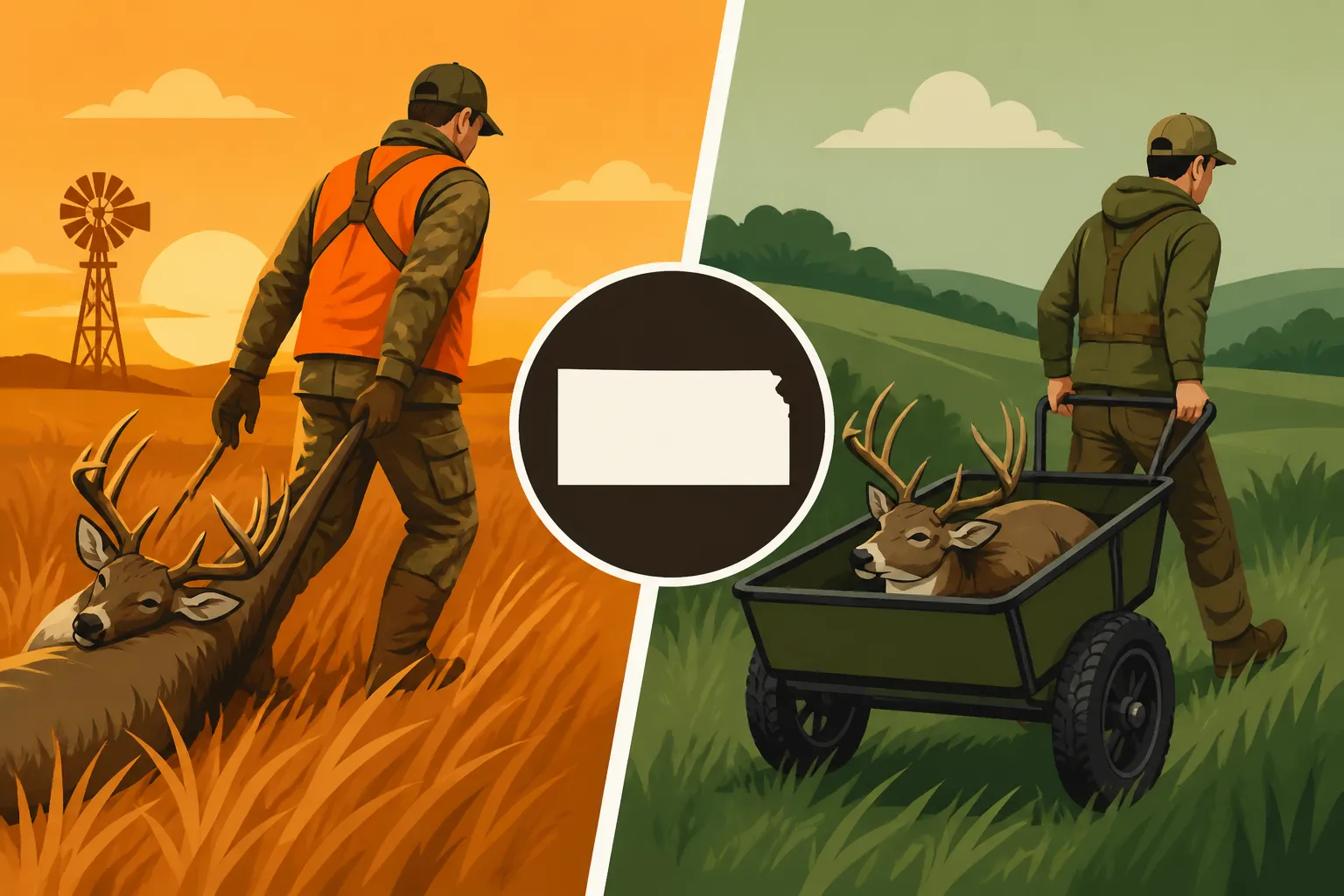
You've just made the shot, the deer is down, and that initial rush of adrenaline starts to fade, replaced by a new, heavy realization: now you've got to get it out of here. This is where the real work often begins, especially if you're alone, deep in a creek bottom, or far from any easy access. The challenge of moving a large whitetail from where it falls to your vehicle can be absolutely back-breaking, leaving many hunters wondering about the best way to tackle this essential part of the hunt. This guide will dive deep into the age-old debate of dragging versus cart hauling, helping you figure out which method makes the most sense for your next Kansas deer recovery.
The Raw Reality of Dragging a Deer Out
Sometimes, no matter how much you plan, dragging is simply the hand you're dealt. Whether it's the sheer density of the timber or the unexpected location of your downed animal, knowing when and how to drag effectively can save you a lot of grief—and potential injury.
When Dragging is Your Only Option Or the Best One
There are countless scenarios in the Kansas woods where a cart just isn't practical, or maybe you didn't even bring one. Think about those dense cedar thickets in central Kansas, or the tangled mess of honeysuckle and multiflora rose along a small creek. Trying to maneuver a deer cart through that kind of cover is often more trouble than it's worth. If your deer piles up right on a steep river bank, like those found along the Kansas River, or you're wrestling it out of a deep, muddy ditch, dragging might be your only feasible option. For short distances, say from the edge of a food plot to a nearby truck, or if you're lucky enough to drop a deer just a hundred yards from the road in a fairly open field, a quick drag can be surprisingly efficient. It’s also the default if you’re trying to recover an animal in an area where vehicles or even wheeled carts are prohibited, such as some parts of larger wildlife areas. Sometimes, you just didn't expect to be successful so quickly, and you're caught without your ideal tools.
Dragging can be incredibly physically demanding. I've pulled more than my share of deer through tough Kansas terrain, and I can tell you firsthand that it takes a toll on your back, shoulders, and stamina. The exhaustion can set in quickly, especially if you're alone and dealing with a mature buck. It's a slow grind, often requiring frequent stops to catch your breath and reassess your route. If you're tackling a challenge like this, understanding Getting a Deer Out of a River Bottom Alone is critical for your safety and success.
Techniques and Tools for More Efficient Dragging
While dragging might sound simple, there are ways to make it less brutal. The most basic tool is a sturdy drag rope. I prefer a flat, wide strap-style drag rope over a thin cord, as it's much easier on your hands and distributes the pressure better. Loop it around the deer's neck or antlers, or if you're really looking to protect the hide, you can run it through the deer's chest cavity after field dressing and out the mouth or through a leg. For larger deer, a shoulder harness can be a game-changer. These harnesses transfer the pulling effort from your arms and hands to your stronger core and legs, making a significant difference in how long you can sustain the pull. You hook the drag rope to the harness, freeing up your hands and allowing you to maintain better balance.
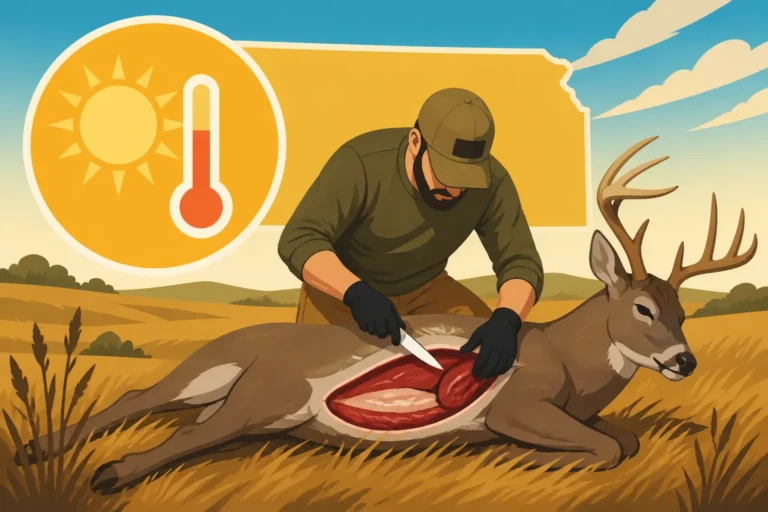
Another option, especially for smaller deer or if you’re concerned about the hide, is a heavy-duty deer sled or tarp. These allow the deer to slide more easily over grass, stubble, or even light snow, protecting the carcass from abrasive ground. Just make sure it’s robust enough not to tear on sticks or rocks. And speaking of reducing weight, remember that field dressing immediately after the kill can significantly lighten the load. Removing the entrails can drop 20-30% of the animal's total weight, making any subsequent drag much easier. For more insights on this crucial step, check out our guide on Field Dressing in Warm Kansas Weather.
The Downsides and Damage of Dragging
Let's be real, dragging isn't always pretty. The primary drawback, beyond the sheer physical exertion, is the potential for damage to the deer. As you pull a deer across corn stubble, through brush, or over rough ground, the hide can get scraped, torn, and embedded with dirt and debris. This can make the skinning process more difficult and potentially compromise the quality of the cape if you're planning a shoulder mount. The meat, particularly the hindquarters, can also suffer bruising or pick up excessive dirt, necessitating more trimming during processing.
The process is also inherently slow. What might be a 15-minute walk without a deer can easily turn into an hour-long, exhausting ordeal when you're dragging a 150-pound animal. This extended time in the field, especially in warmer Kansas weather, can be detrimental to meat quality. Furthermore, dragging leaves a very obvious scent trail, which might not be a concern for you, but it's something to consider in high-pressure public areas where other hunters might key into your activity.
The Advantages of Using a Deer Cart
For many hunters, the deer cart has become an indispensable tool, transforming a grueling recovery into a far more manageable task. It’s not always suitable, but when it is, it’s a lifesaver.
Types of Deer Carts and Their Best Use Cases
Deer carts come in various configurations, each with its own advantages. The most common are two-wheel models, which offer stability and are excellent for hauling heavier loads over relatively smooth or moderately uneven terrain. These carts distribute the weight over two wheels, making them easier to balance and requiring less upper body strength than single-wheel designs. Materials range from lightweight aluminum, which is fantastic for packing in, to heavier, more durable steel frames. When you're assessing potential hunting spots, particularly on Kansas walk-in lands, consider how far you'll need to go from an access point. For long hauls across CRP fields or wide-open ag ground, a two-wheel cart with large pneumatic tires (the ones you pump up with air) can make a world of difference. These tires absorb shocks better and roll over obstacles more easily than solid tires.
Single-wheel carts, while less common, offer greater maneuverability in tighter spaces, acting almost like a wheelbarrow. They require more balance from the user but can sometimes navigate narrower trails where a two-wheel cart might get hung up. Many carts are designed to fold down, making them easier to transport in your truck or ATV. Others have rigid frames for maximum strength, which might be better if you routinely haul massive animals or multiple deer. If you're serious about being self-sufficient on public hunting lands, investing in a good quality deer cart can truly change your hunting experience, especially for extended distances. For further reading on this topic, check out our piece on Deer Carts on Walk-In Ground.
Loading and Navigating Difficult Terrain with a Cart
Properly loading your deer onto the cart is crucial for an efficient haul. The key is to balance the weight evenly over the axle. Position the heaviest part of the deer (usually the hindquarters) over or slightly forward of the axle. Secure the deer tightly to the cart frame using straps or bungee cords to prevent it from shifting. A shifting load can make the cart unstable and much harder to control, especially when going over bumps or around turns. Think of it as packing a backpack – you want the heaviest items close to your back.
While carts excel on open ground, they can still be navigated through moderately difficult terrain. When encountering logs or small ditches, approach them slowly and use your body weight to lift or guide the wheels over. You might need to momentarily lift the front of the cart to get the first wheel over an obstacle, then repeat for the second. In slightly brushy areas, you'll need to find the widest path possible, as the cart's width can be a limiting factor. However, very deep mud, heavy wet snow, or extremely dense thickets will bog down even the best cart, quickly turning your advantage into a frustrating struggle. This is where a good pre-hunt scouting trip, perhaps utilizing a tool like GoHunt to study aerial imagery and identify potential access routes, can really pay off in predicting extraction challenges. Navigating public land often means dealing with varied and sometimes challenging terrain, making proper planning essential for successful deer recovery.
The Benefits to Your Body and Your Harvest
The most immediate and obvious benefit of a deer cart is the dramatic reduction in physical strain. Instead of dragging hundreds of pounds of dead weight, you're primarily pushing or pulling the cart, allowing the wheels to do the heavy lifting. This saves your back, shoulders, and knees, reducing the risk of injury and leaving you less exhausted after the hunt. Imagine a long day of hunting, then having the energy to properly process your deer back at camp, rather than collapsing from exhaustion.
Beyond the physical relief, a cart offers superior protection for your harvest. By keeping the deer elevated off the ground, it significantly minimizes hide abrasion, dirt contamination, and bruising to the meat. This means a cleaner, higher-quality carcass for the processor or your own home butchering efforts. Over longer distances, a cart is undeniably faster than dragging. You can maintain a more consistent pace, covering ground much more efficiently. Plus, many carts have extra capacity, allowing you to haul out your backpack, stand, or other gear along with your deer, consolidating trips and saving even more effort. This efficient transport is crucial, especially on vast public land tracts, as detailed in our guide on Public Land Deer Hunting in Kansas.
Making the Right Choice: Factors to Consider
Deciding between dragging and cart hauling isn't a one-size-fits-all answer. It's about weighing your unique circumstances and making the smartest choice for each specific hunt.
Terrain and Distance: The Ultimate Deciders
When that shot rings out and your deer drops, the first thing to assess is the immediate terrain and the estimated distance back to your vehicle. If you're hunting expansive Kansas crop fields, like those found in the western part of the state, or open grasslands, a cart is almost always going to be your best friend for anything more than a short hop. It glides over stubble and relatively flat ground, making long hauls far less daunting. However, if you're deep in the dense timber along the Marais des Cygnes River or navigating the countless finger draws and ravines that feed into a larger river system, a cart can quickly become a liability. Trying to force a cart through thick brush, up steep, slippery banks, or over multiple fallen logs is a recipe for frustration and potential injury.
Consider your access routes. Did you scout a clear path from your stand to the nearest road, or are you in a remote corner of a walk-in hunting area? A mile-long drag through heavy cover is infinitely more difficult than a mile-long cart haul across open ground. But a short, brutal 100-yard drag through a creek bottom might be preferable to trying to wrangle a cart down into and back out of it. This is where thorough pre-hunt scouting really pays dividends. Using mapping apps like GoHunt to study topographical maps and aerial imagery can help you identify potential obstacles and plan your extraction route before you even step into the woods. Our guide on Scouting Kansas Walk-In Tracts Before the Opener offers more insights on this crucial preparation.
Hunter Condition and Available Help
Let's be honest with ourselves: deer recovery is physically demanding work, regardless of the method. Your personal physical condition plays a huge role in what you can realistically accomplish. Are you hunting alone, or do you have a buddy? An extra set of hands, even for a drag, makes an incredible difference. Two hunters can typically manage a substantial deer much more easily than one. If you're hunting solo, especially on long, remote public land tracts, a cart becomes almost essential for anything larger than a fawn. If you have any existing back issues, knee problems, or simply aren't as young as you used to be, a cart can literally save your hunting season—and your body.
Don't overestimate your strength or underestimate the weight of a mature Kansas whitetail buck, which can easily tip the scales at 200 pounds or more dressed. Factor in adrenaline, fatigue from a long hunt, and possibly cold weather that stiffens your muscles, and that deer can feel twice as heavy. Sometimes, making the smart choice for recovery is more about self-preservation than tradition.
Species and Size of Game
While we're primarily talking about deer, the species and size of your quarry certainly matter. Recovering a hefty Kansas spring gobbler or a limit of pheasants from a field requires vastly different considerations than a mature whitetail buck. A turkey can easily be carried out or even dragged a short distance by hand. However, for deer, size becomes a critical factor. A small antlerless deer or a young fawn might be manageable for a solo hunter to drag a moderate distance, even through some lighter cover. But if you've harvested a large, heavy-bodied buck—the kind Kansas is famous for—and you're a significant distance from your truck, trying to drag it solo without a cart can be an almost impossible feat, even for the strongest individuals.
It's wise to plan for the largest animal you might reasonably take. While you might hope for an antlerless deer to fill the freezer, always have a contingency plan for that monster buck you've been chasing all season.
| Feature / Scenario | Dragging | Cart Hauling |
|---|---|---|
| Physical Effort | High, especially for large deer/long distance | Low to Moderate, deer weight is distributed |
| Speed | Slow, requires frequent stops | Moderate to Fast, consistent pace |
| Terrain Suitability | Best for dense cover, steep inclines/declines | Best for open fields, moderate trails, flat ground |
| Hide/Meat Damage | High risk of scrapes, dirt contamination | Low risk, keeps carcass elevated and protected |
| Distance | Best for short distances (under 200 yards) | Ideal for long distances (over 200 yards to miles) |
| Cost | Very low (rope, harness) | Moderate to High (cart investment) |
| Stealth | Minimal noise | Can be noisy on rough terrain (wheels, frame) |
| Hunter Alone | Difficult for large deer | Manageable for large deer, reduces strain |
| Maneuverability | High in tight timber, thickets | Low in dense cover, narrow trails |
| Gear Required | Rope, optional harness/sled | Deer cart, tie-down straps |
Practical Tips for a Smooth Recovery
No matter which method you ultimately choose, a little foresight and preparation can dramatically simplify the daunting task of deer recovery. Being prepared means less stress, less struggle, and a better outcome for your hard-earned harvest.
Pre-Hunt Preparation and Mindset
The work of recovery really begins long before you pull the trigger. Always, and I mean always, carry a quality drag rope in your pack, even if you plan to use a cart. It’s a lightweight, inexpensive backup that can get you out of a bind if your cart breaks down or the terrain becomes impassable. Beyond gear, dedicate time to scouting your exit routes. When you're using GoHunt or similar mapping tools to identify potential stand locations or analyze Reading Aerial Imagery for Bedding Cover, also spend time looking at the easiest path from those spots back to your vehicle. Are there fences to cross? Deep ditches? Access roads that you might be able to use after the shot? Knowing these things beforehand can save you precious daylight and energy after a successful hunt.
Consider the weather forecast for your hunt. A dry day makes dragging or carting significantly easier. However, if rain is in the forecast, know that fields will turn to mud, and creek bottoms will become slick and soft. This kind of weather can make carting much harder, as wheels bog down, and dragging becomes a messy, heavy chore. Mentally prepare yourself for the work that follows the shot. The adrenaline will wear off, and the physical effort will begin. Having a positive, problem-solving mindset can go a long way when you're tired and facing a tough haul. Remember, these pre-planned Access Routes That Do Not Bump Deer are equally important for extraction without disturbing other areas.
Hybrid Approaches and Contingency Plans
Sometimes the best solution isn't one or the other, but a combination of both. You might find yourself in a situation where you need to drag the deer a short distance through extremely thick timber to a more open trail or field, where you can then load it onto your cart for the longer haul out. This hybrid approach leverages the strengths of each method: dragging for maneuverability in tight spots, and carting for efficiency over distance.
Another excellent contingency plan, especially for truly remote locations or massive deer, is to quarter the deer in the field. This involves breaking the animal down into manageable pieces – typically the four quarters, backstraps, and tenderloins – and packing them out in game bags. This dramatically reduces the weight of each individual load and allows you to carry the meat on your back, which can be the only way to get a big animal out of exceptionally rugged terrain. Our detailed guide on Quartering a Deer in the Field provides a step-by-step approach to this method. If you're mobile hunting with a saddle in Kansas, this might be your go-to method for ethical and efficient meat recovery.
Finally, always have a plan for who you can call for assistance if things go sideways. A quick phone call to a buddy might be the difference between an exhausting six-hour solo struggle and a much faster two-person effort. Remember, getting your deer out cleanly and safely is the goal, and sometimes that means adapting your strategy on the fly. Don't be afraid to change your plan based on the reality of the situation.
Disclaimer
Please note that hunting regulations, seasons, and access rules can change. Always consult the official Kansas Department of Wildlife, Parks, and Tourism (KDWPT) regulations before heading into the field to ensure you are compliant with all current laws. The information provided here is for general guidance and educational purposes only.