Kansas Big Buck Records by County
That feeling when you see a picture of a monster Kansas whitetail buck, antlers like a tangled oak branch, and your heart skips a beat? We’ve all been there. It sparks the dream: could my next Kansas hunt yield a buck worthy of the record books? This guide is going to pull back the curtain on the magic and the reality of Kansas's legendary whitetail genetics, delving into which counties consistently produce those magnificent, heavy-horned deer that make hunters' dreams come true, and how you can use this knowledge to inform your own pursuit of a trophy.
The Allure of Kansas Whitetails and Record Books
Kansas has become a genuine hotspot for trophy whitetail deer, a reputation earned through decades of dedicated wildlife management, rich agricultural lands, and some serious genetics. But what exactly contributes to a deer becoming a "record book" animal, and what do those terms even mean for the average hunter? It’s more than just luck; there’s a science and a story behind every giant buck.
What Makes a Kansas Buck Special
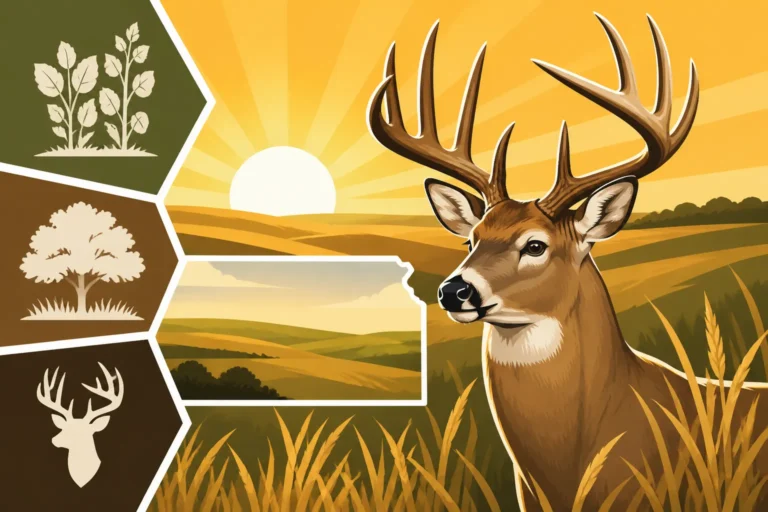
When we talk about what makes a Kansas buck stand out, we're really discussing a perfect storm of environmental and biological factors. First and foremost, the genetics here are phenomenal. The deer herds in Kansas, particularly the whitetails, have a robust genetic foundation that allows for impressive antler growth when other conditions are met. These aren't just any deer; they're descendants of lineages that have proven capable of producing exceptional headgear.
Beyond genetics, nutrition is king. Kansas is an agricultural powerhouse, blanketed with vast fields of corn, soybeans, milo, and alfalfa. This isn't just cattle feed; it's a buffet for deer. Bucks have access to an incredibly protein-rich diet for much of the year, which is absolutely crucial for antler development. Antlers are bone, and growing a significant rack requires a tremendous amount of calcium, phosphorus, and other minerals, all derived from their food sources. A healthy, diverse diet means a healthier deer, and healthier deer tend to grow bigger antlers. You can see why a state like Kansas, with its fertile soils and extensive crop rotations, is a consistent producer. Soil Fertility and Antler Growth is a huge piece of this puzzle.
Finally, age structure plays a pivotal role. It doesn't matter how good the genetics or nutrition are if a buck isn't given the time to mature. Kansas has a solid tradition of hunters being selective, passing on younger bucks, and allowing them to reach their full potential. A 1.5-year-old buck might have great genes, but his antlers will be a fraction of what they could be at 4.5 or 5.5 years old. The management practices, both formal and informal among hunters, that encourage age class diversity contribute significantly to why Kansas consistently produces those jaw-dropping, mature deer. Understanding Buck Age Structure in Kansas is key to appreciating the hunting landscape.
Understanding Boone & Crockett and Pope & Young
When hunters talk about "record book" bucks, they're usually referring to one of two major organizations: Boone & Crockett (B&C) and Pope & Young (P&Y). Both are highly respected conservation organizations that maintain official records of North American big game animals, but they have one key difference: the weapon used.
Boone & Crockett records are for big game harvested with a firearm, muzzleloader, or crossbow (though specific B&C categories might differentiate). Their scoring system is meticulously designed to measure the size and symmetry of a deer's antlers. It involves measuring main beam length, circumference at various points, and the length of each tine. Symmetry is highly rewarded, with deductions for abnormal points or differences between the left and right sides. The minimum score for a typical whitetail to make the all-time B&C record book is 170 inches, and for a non-typical, it's 195 inches. These are truly exceptional animals, and making the book is a monumental achievement for any hunter. We go into more detail on Boone and Crockett Minimums for Whitetail elsewhere.
Pope & Young, on the other hand, is specifically for animals taken with a bow and arrow. Their scoring system is identical to Boone & Crockett's, using the same measurements and deduction rules. The only difference is the method of harvest. The minimum score for a typical whitetail to make the P&Y record book is 125 inches, and for a non-typical, it's 155 inches. While these minimums are lower than B&C, it reflects the added challenge and skill required for consistent success with traditional archery equipment. Both organizations emphasize fair chase hunting ethics and promote conservation efforts.
The Dream vs. Reality
It's easy to get caught up in the allure of "record book" bucks, scanning every photo of a giant whitetail and imagining yourself standing over it. The reality is, harvesting a deer that qualifies for either B&C or P&Y is an extremely rare accomplishment, even in a state as renowned as Kansas. Thousands of deer are harvested each year in Kansas, but only a tiny fraction will ever meet those stringent minimums.
This isn't meant to discourage you, but rather to ground the dream in reality. The vast majority of mature bucks, even those that look like absolute monsters in the field, will fall short of the official record book. That doesn't make them any less impressive, or the hunt any less successful or meaningful. The true trophy lies in the experience, the challenge, the connection to nature, and the satisfaction of a fair chase hunt.
However, understanding which counties have a history of producing these giants does give you a strategic advantage if that's your goal. It helps you focus your efforts on areas where the combination of genetics, nutrition, and age structure is most conducive to growing truly exceptional antlers. It's about playing the odds, even if those odds are still long. Every hunter has their own definition of a "trophy," and for many, just seeing a mature buck in its prime is a reward in itself.
Top Counties for Record Book Whitetails
Kansas is a big state, and while big bucks can turn up almost anywhere, certain regions and counties consistently punch above their weight when it comes to producing the kind of deer that make the record books. This isn't just anecdotal evidence; it's backed by years of harvest data and official scoring statistics.
The Usual Suspects
When you look at the historical data for Boone & Crockett and Pope & Young entries from Kansas, a pattern emerges. Certain counties, particularly in the central and eastern parts of the state, frequently appear at the top of the lists. These areas typically boast a fantastic blend of dense timbered creek bottoms and river corridors, interspersed with vast agricultural fields. This combination provides everything a trophy buck needs: prime bedding cover for security, abundant food sources for nutrition, and often less road access or human disturbance than areas closer to large towns.
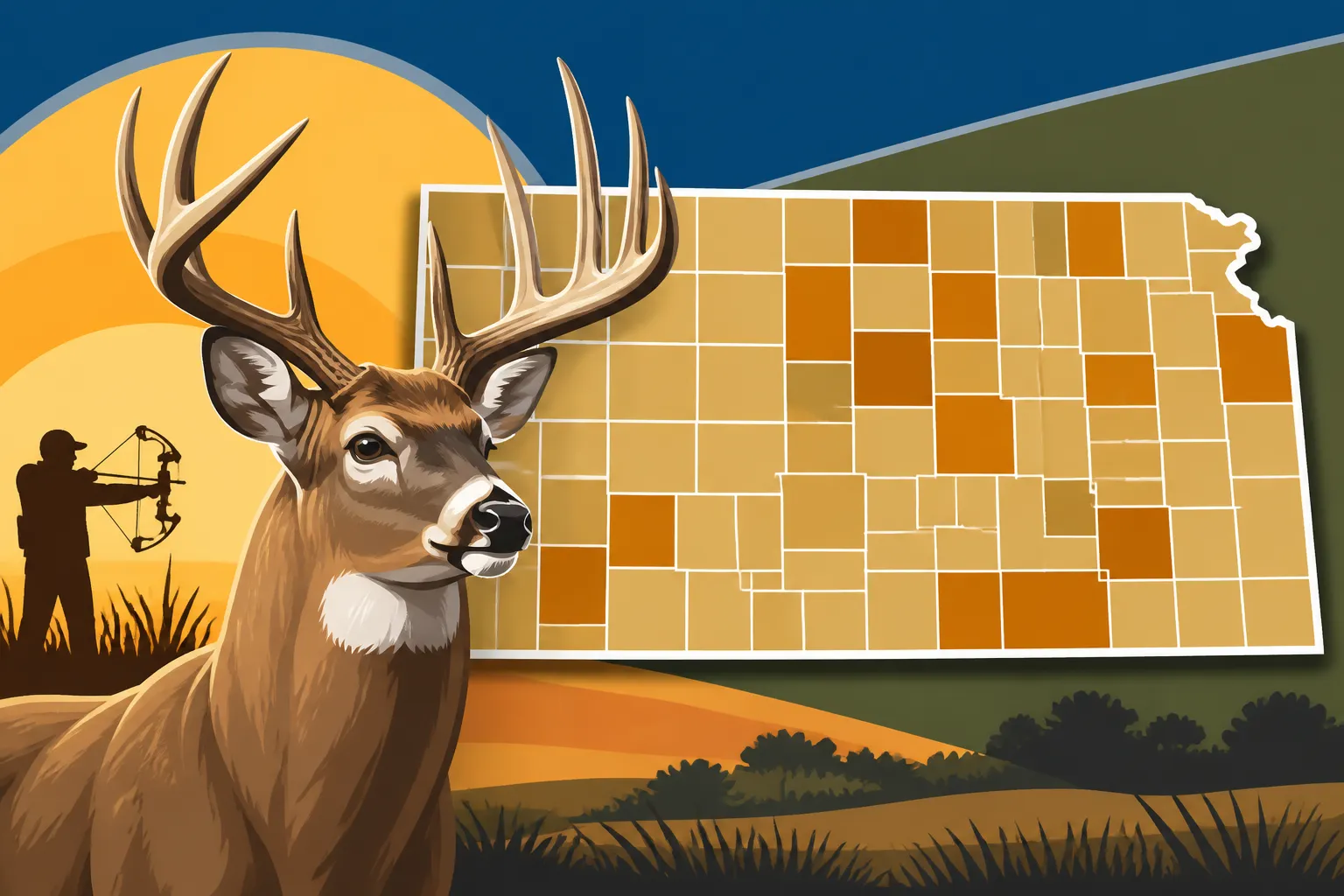
Counties like Nemaha, Brown, Marshall, Pottawatomie, Jackson, Shawnee, Wabaunsee, Riley, and Geary in northeastern and east-central Kansas are often cited. Further south, counties like Butler, Greenwood, Chautauqua, Elk, and Montgomery also show strong numbers. What these counties share is a healthy mix of woodland, often along significant drainages like the Kansas River or its tributaries, and widespread row crops. The deer have the food to fuel antler growth and the cover to grow old. These are the areas where you're more likely to find a mature buck that has reached his genetic potential. Kansas Deer Units and What Each Holds gives a broader overview of these regions.
It's not just about the numbers; it's about the consistency. These counties aren't one-hit wonders; they've been producing big deer for decades, which speaks volumes about the sustained habitat quality and herd health. Hunters looking for that dream buck often focus their efforts, whether through applying for specific tags or seeking private land access, in these historically rich areas.
Hidden Gems and Under-the-Radar Counties
While the "usual suspects" grab most of the headlines, it's a mistake to think that record-book bucks only come from those well-known counties. Kansas is full of surprises, and truly exceptional deer can pop up in unexpected places. In fact, some hunters deliberately seek out these "under-the-radar" counties, hoping to find less hunting pressure and potentially overlooked pockets of prime habitat.
Often, these hidden gems might be counties that have slightly less timber, perhaps more CRP or grasslands, but still possess a critical component: isolated pockets of cover with nearby food sources, and most importantly, an older age structure in the local buck population. Sometimes, a county might have fewer overall deer, but the bucks that do exist are allowed to mature due to lighter hunting pressure or more difficult terrain that offers sanctuary. For instance, some of the less populated western counties, while primarily known for mule deer, can occasionally kick out an incredible whitetail, especially in river bottom habitats. Mule Deer in Western Kansas are often the focus there, but whitetails persist.
A truly patient and dedicated hunter, willing to put in the scouting time, might find a diamond in the rough. These areas might not have the sheer volume of record entries, but they often offer a unique hunting experience and the chance to find a buck that hasn't been pressured heavily. This is where meticulous E-Scouting Kansas Farm Country From Home and then putting boots on the ground to Scouting Kansas River Bottoms and Creek Draws can really pay off.
Factors Influencing County Performance
So, why do some counties consistently produce giants while others, seemingly similar, lag behind? It boils down to a complex interplay of factors:
- Habitat Diversity and Quality: The ideal scenario is a mosaic of dense thermal cover (cedar thickets, heavy timber), bedding areas (CRP, tall grass), and abundant, high-quality food sources (row crops, mast crops like acorns). Counties with extensive river systems, creek bottoms, and shelterbelts integrated into agricultural landscapes tend to be top performers.
- Hunting Pressure: This is a double-edged sword. Some pressure is good, as it pushes deer to be more nocturnal and wary, allowing them to grow older. Too much pressure, however, can lead to over-harvesting of younger bucks, preventing them from reaching trophy potential. Counties with a balanced approach, perhaps a mix of well-managed private land and accessible public ground, can strike this balance. Hunting Pressure Patterns on Kansas Public Land are crucial to understand.
- Land Access and Management: A significant portion of Kansas is privately owned, and how landowners manage their property makes a huge difference. Those who practice quality deer management (QDM), letting young bucks walk and focusing on doe harvest, contribute immensely to the trophy potential of an area.
- Predator Control: While not always a primary factor in antler size, a healthy predator-prey balance ensures a robust deer herd overall, which indirectly benefits antler growth by maintaining a healthy population.
- Disease Prevalence: Outbreaks of diseases like EHD (Epizootic Hemorrhagic Disease) or the presence of CWD (Chronic Wasting Disease) can impact herd health and ultimately, the ability of bucks to grow to their full potential. While Kansas monitors these closely, they can affect specific areas.
Understanding these factors helps explain the historical performance of counties and can guide your own research into where to focus your efforts.
| County Type | Characteristics | Typical Antler Quality | Hunting Pressure | Scouting Potential |
|---|---|---|---|---|
| High-Producing | Rich ag-land, extensive timber, river bottoms | Excellent, consistent | Moderate to High | Requires detailed e-scouting and permission |
| Under-the-Radar | Mix of ag, CRP, scattered timber, isolated cover | Good, occasional giants | Lower, but variable | Rewards extensive boots-on-the-ground scouting |
| Western Mule Deer | Mostly open plains, limited timber, river corridors | Whitetails less common | Low to Moderate (Whitetail) | Focus on river/creek bottoms; GoHunt for water |
How County Data Helps Your Hunt Planning
Knowing which counties have a history of producing big bucks isn't just trivia; it's a vital piece of the puzzle for any hunter serious about pursuing a trophy whitetail in Kansas. This data can inform everything from permit applications to specific scouting strategies, giving you a measurable edge in a state known for its hunting opportunities.
Researching Specific Units and Areas
Kansas is divided into deer management units, and these units often encompass multiple counties or parts of them. When you're looking at applying for a tag, especially as a nonresident, understanding which units correlate with those top-producing counties is absolutely critical. For example, if Nemaha County is known for big bucks, you'll want to investigate which deer unit it falls within and understand its permit allocation process. Kansas Deer Permits and the Nonresident Draw is one of the biggest hurdles for many hunters.
Beyond the broad county lines, you can use this knowledge to narrow down your focus to specific areas within those units. For instance, if a county is renowned for river bottom bucks, you'll prioritize scouting the major river systems and their feeder creeks. Conversely, if a county is known for big bucks coming out of large CRP fields, your scouting efforts will lean more towards analyzing those vast tracts of grass and identifying key bedding areas and travel corridors within them. CRP Grass and Where Bucks Bed can be absolute goldmines if you know how to read them.
This targeted approach prevents you from wasting precious scouting time in areas that, while potentially holding deer, might not offer the same trophy potential. It's about optimizing your efforts and increasing your chances of encountering those older, larger-antlered deer that Kansas is famous for. You're trying to stack the odds in your favor, even if just by a small percentage, by being where the proven history is.
Leveraging GoHunt for Data-Driven Decisions
In today's hunting world, technology has become an indispensable tool for research and planning. Platforms like GoHunt are fantastic examples of how digital resources can help you integrate county-level data into your personal hunt strategy. While I don't have live access to their specific features, I can tell you that such services typically provide detailed maps, harvest statistics, and unit-specific information that directly builds upon the knowledge of top-producing counties.
Imagine being able to overlay historical harvest data onto a topographical map, seeing exactly where big bucks have been taken in a particular unit. These platforms often allow you to research specific land types, identify public access points, and even analyze habitat features that correlate with trophy production. If you know certain counties are hotbeds for big bucks, a tool like GoHunt can help you visually dissect those areas, identifying timber blocks, food plots, and water sources that are likely holding mature deer. It’s like having an advanced scouting partner in your pocket.
You can use these tools to identify potential access routes that avoid bumping deer, locate strategic pinch points or funnels, and even assess how hunting pressure might be distributed across a specific tract of land. Integrating these powerful mapping and data analytics tools with the knowledge of historically high-producing counties is a game-changer for modern hunters, offering a depth of insight that was simply unavailable a couple of decades ago.
Beyond the Record Book: Ethical Hunting and Enjoying the Process
While the pursuit of a record-book buck is certainly an exciting goal, it's vital to remember that hunting is about so much more than antler inches. The true essence of the experience lies in the challenge, the connection to nature, and the ethics we uphold. Chasing a score can sometimes overshadow the beauty of the hunt itself.
Ethical hunting means respecting the animal, adhering to fair chase principles, and understanding the role you play in conservation. It means celebrating every buck, whether he's a potential world record or a solid mature deer that fills your freezer and provides incredible memories. The thrill of outsmarting a wary whitetail, the quiet solitude of a morning in the stand, the camaraderie with hunting partners – these are the elements that truly enrich our lives as hunters.
So, use the record book data as a guide, a tool to enhance your strategy, but don't let it be the sole measure of your success. Enjoy the process of learning, scouting, and immersing yourself in the Kansas landscape. Whether you harvest a small buck, a doe, or that once-in-a-lifetime Boone & Crockett entry, the memories and experiences gained are what truly count. It's about being a responsible, knowledgeable hunter who appreciates the privilege of being in the field.
Practical Strategies for Hunting a Kansas Trophy
Once you've done your homework on which counties are known for big bucks, the real work begins. Translating that knowledge into a successful hunt requires practical strategies, meticulous scouting, and often, a healthy dose of patience. It’s not just about being in the right place; it’s about knowing what to do when you get there.
Habitat Selection and Scouting
Choosing the right habitat within those trophy-producing counties is paramount. It's not enough to simply be in a good county; you need to be in the best part of that county. This almost always comes back to the interaction between food, water, and cover. Look for areas where these three essentials are in close proximity, creating a secure environment for older bucks.
River and creek bottoms, particularly those with dense, mature timber, are classic big buck habitats in Kansas. These areas provide excellent thermal cover, year-round water sources, and often act as natural travel corridors for deer. Bucks will often cruise these bottoms, especially during the rut, moving between bedding areas and food sources. Reading a Kansas Creek Bottom for Deer Sign is a skill worth developing, paying attention to rubs, scrapes, and tracks.
Beyond the timbered draws, consider how agricultural fields integrate with cover. Inside corners of crop fields, where two timber lines or CRP edges meet, can be fantastic ambush points. Deer use these transition zones heavily as they move from bedding to feeding. Also, don't overlook areas of heavy CRP (Conservation Reserve Program) grass, especially if it's mature and tall. These fields provide incredible bedding cover, allowing bucks to feel secure and grow old. Knowing CRP Grass and Where Bucks Bed can lead you to overlooked opportunities. Look for islands of timber or plum thickets within or adjacent to these fields. Use mapping software, like what you might find on GoHunt, to identify these habitat transitions from home before you ever set foot on the ground.
Age Structure and Patience
This point can't be stressed enough: big antlers come from old bucks. You simply won't find many record-book deer that are 2.5 or 3.5 years old. The vast majority of these giants are 4.5, 5.5, or even older. This means that to consistently hunt trophy deer, you have to be willing to pass on younger, immature bucks. It's a discipline that can be hard to maintain, especially when any buck seems like a trophy after long hours on stand.
This strategy requires patience and commitment. It means focusing your efforts on areas where there’s a higher likelihood of older bucks simply existing. If you consistently see only young deer, it might be a sign that the local population isn’t reaching its full potential, perhaps due to heavy hunting pressure or lack of quality habitat for older animals.
Before the season, set your personal antler criteria, whether it's an outside-the-ears spread, a certain number of points, or a specific mass measurement. Stick to it. Passing on a young buck today increases the chances that he'll be a true giant next year or the year after. This is the core principle behind quality deer management, and it's how many of Kansas's top-producing properties yield incredible results year after year.
Hunting Pressure and Public vs. Private
Hunting pressure is a massive factor in how deer, especially mature bucks, behave. High pressure can turn even the biggest bucks largely nocturnal, making them incredibly difficult to hunt during legal shooting hours. In Kansas, with its popularity, understanding and adapting to pressure is crucial.
On public lands, particularly Walk-In Hunting Access (WIHA) tracts or State Wildlife Areas, expect more pressure, especially during opening weekends and the peak of the rut. This doesn't mean you can't find big bucks on public ground; it just means your strategy needs to adapt. Consider hunting weekdays, utilizing difficult-to-access areas, or targeting areas that hunters overlook. Learning to read Hunting Pressure Patterns on Kansas Public Land can help you find overlooked sanctuaries. This might mean walking further, using a mobile setup like a saddle to get into tight spots, or hunting thick cover that others avoid.
On private land, the situation can vary wildly depending on how it's managed. Some private lands are strictly managed for trophies, with very little pressure. Others might be hunted intensely. Gaining access to well-managed private land is often the "holy grail" for trophy hunters, as it can offer predictable deer movement and less disturbance. If you’re fortunate enough to have private land access, discuss the management goals with the landowner. Understanding if they're also committed to letting young bucks walk will be a huge advantage.
Maximizing Your Draw Odds
For many non-resident hunters, getting a deer permit in Kansas is the first big hurdle. Even if you've identified the best counties, you need to draw a tag for the unit those counties are in. Kansas uses a preference point system for its non-resident draw, which means the more points you have, the better your odds of drawing your desired unit.
It's a process that requires foresight and patience. You might not draw your dream unit in a top-tier county in your first year of applying, but accumulating points increases your chances down the road. Research the draw odds for specific units in those big buck counties. Some units are notoriously difficult to draw, while others might be more attainable with fewer points. How Many Points to Draw a Kansas Unit is a common question, and it changes, so always check the most current information.
This long-term strategy means you might not hunt every year, or you might choose to hunt a less popular unit while building points for your target area. It's all part of the commitment to hunting trophy whitetails in Kansas.
When to Hunt
While big bucks can be harvested throughout the season, there's no denying that the Kansas Whitetail Hunting Tactics Through the Rut offer the highest probability of encountering a mature buck on his feet during daylight hours. The peak of the rut, typically the first two weeks of November, sees bucks actively cruising for does, often throwing caution to the wind. This is when a buck that has been largely nocturnal for months might make a mistake.
If your goal is a record-book buck, prioritizing your hunt dates during this crucial window in a historically productive county will significantly increase your odds. Knowing When the Kansas Rut Peaks helps you plan your leave from work, book your travel, and ensures you're in the stand when the action is most intense. However, don't overlook other seasons; early September bowhunting over water can be deadly in warm weather, and late-season food source hunting in December can also produce giants that are focused on recovery. Every phase of the season offers unique challenges and opportunities, but for sheer trophy potential, the rut is hard to beat.
Disclaimer
This article is for general informational purposes only and does not constitute professional advice. Laws, prices and regulations vary by location and change over time. Consult a qualified professional for guidance on your specific situation.