Public Land Deer Hunting in Kansas
Hunting deer on public land in Kansas can feel like an uphill battle, especially for those new to the state or those who primarily hunt private ground. The perception often is that public access is limited, heavily pressured, or simply doesn't hold the caliber of deer Kansas is famous for. But let me tell you, with the right approach and a deep understanding of the resources available, unlocking successful public land deer hunting in the Sunflower State is absolutely within reach. This comprehensive guide will walk you through everything you need to know, from understanding the different types of public land to employing smart hunting tactics that beat the crowds.
Understanding Kansas Public Land Options
Kansas might be known for its vast stretches of private agricultural land, but don't let that fool you into thinking public hunting opportunities are scarce. There's actually a surprising amount of diverse public access available if you know where to look and understand the nuances of each type. Each offers unique challenges and rewards, and tailoring your strategy to the specific public land type is key.
State Wildlife Areas and Refuges
Kansas Department of Wildlife and Parks (KDWP) manages numerous State Wildlife Areas (SWAs) across the state. These areas are specifically acquired and maintained for wildlife habitat and public recreation, including hunting. They often represent some of the best habitat in a given region, ranging from sprawling wetlands and timbered river bottoms to tracts of native prairie and cultivated food plots.
While SWAs can be prime hunting grounds, they also tend to receive the most attention from hunters, especially during peak seasons. Some larger SWAs, like Cheyenne Bottoms Wildlife Area or Marais des Cygnes Wildlife Area, are renowned for waterfowl but also hold significant deer populations in their timbered edges and dense cover. Others, such as Milford Wildlife Area or Tuttle Creek Wildlife Area, offer extensive tracts of timber and brush along reservoir shorelines and tributaries. Hunters need to be diligent about checking specific regulations for each SWA, as some may have special draw hunts, archery-only zones, or restrictions on vehicle access and stand types. Non-residents generally have the same access rights as residents, but it's always wise to confirm any area-specific rules before planning a trip. Always remember that while these areas are managed for wildlife, they are also managed for people, meaning you'll likely encounter other outdoor enthusiasts, from bird watchers to hikers.
Corps of Engineers Land Around Reservoirs
Scattered across Kansas are numerous large reservoirs, and the land surrounding many of these is managed by the U.S. Army Corps of Engineers. This "Corps Land" is often overlooked by deer hunters, offering a fantastic opportunity for those willing to do their homework. These areas are typically characterized by a mix of timber, dense brush, and sometimes old fields that have reverted to native grasses, creating excellent cover for deer. The topography can vary, from gently rolling hills to steep bluffs overlooking the water, providing a diverse range of habitats.
The rules on Corps Land can sometimes be a bit of a gray area, as regulations can vary between different reservoir projects. However, generally speaking, these lands are open to public hunting unless specifically posted otherwise, such as near developed recreation areas or campgrounds. Deer in these areas often thrive due to the consistent water source and the thick cover provided by the shoreline timber. They learn to navigate the ebb and flow of human activity, often bedding in the thickest pockets close to the water during the day and moving to feed at dawn and dusk. Access can sometimes be tricky, requiring a boat or a longer walk away from established parking areas, which can be a blessing in disguise as it deters other hunters. Exploring maps for Kansas Reservoirs and Corps of Engineers Land can reveal many hidden gems. These spots can be particularly productive during the rut when bucks are cruising shorelines looking for does.
Cimarron National Grassland and Other Federal Lands
In the far southwest corner of Kansas lies the Cimarron National Grassland, a vast expanse of shortgrass prairie managed by the U.S. Forest Service. This unique federal land offers a completely different public hunting experience than the timbered river bottoms of eastern Kansas. While primarily known for its Prairie Chicken Hunting in the Flint Hills, it also holds a respectable population of whitetail deer, and critically, it's one of the few places in Kansas where you might encounter Mule Deer in Western Kansas.
Hunting deer on the Cimarron National Grassland requires a different mindset and approach. Deer here often bed in deep draws, along the Cimarron River breaks, or in isolated pockets of heavier brush. They are accustomed to wide-open spaces and can be incredibly wary. The sheer scale of the grassland means you'll need to cover a lot of ground, often glassing from elevated positions and making long stalks. This type of hunting is physically demanding but incredibly rewarding for those seeking a true Western hunting experience within Kansas. Other smaller federal tracts, such as some Bureau of Land Management (BLM) lands or National Wildlife Refuges (NWRs), also exist but often come with more stringent or specific regulations, so thorough research is always necessary. The solitude and wide-open feel of the Cimarron can be a refreshing change from the more crowded public lands elsewhere.
Navigating the Kansas Walk-In Hunting Access (WIHA) Program
For many hunters, especially non-residents or those without private land access, the Kansas Walk-In Hunting Access (WIHA) program is the cornerstone of public land deer hunting in the state. This innovative program leases private land from landowners, making it available for public hunting during specific seasons. It truly expands the amount of huntable ground exponentially, offering opportunities that would otherwise be unavailable.
What is WIHA and How it Works
The WIHA program is essentially a partnership between the KDWP and private landowners. Landowners receive payment for allowing public access to their property for a designated period, usually from September 1st through January 31st or during specific pheasant/quail seasons. The beauty of WIHA is its dynamic nature; tracts are enrolled and removed from the program annually, meaning you need to stay current with the latest maps. The KDWP publishes an annual WIHA atlas, available online and at KDWP offices, which is your bible for these lands. This atlas details the specific boundaries of each tract, the species allowed, and the dates of access. It's a goldmine of information, showing not just the land but often indicating the type of cover, like timber or CRP.
Understanding How Kansas WIHA Works is crucial. These aren't just random fields; many are strategically chosen for their habitat potential. While some tracts are small, others are substantial and can provide excellent deer hunting opportunities. I always recommend downloading the latest atlas and familiarizing yourself with potential areas well before the season. Tools like GoHunt's mapping features can integrate WIHA layers, making it incredibly easy to visualize these tracts in conjunction with other crucial data like topo lines and aerial imagery. It's truly a game-changer for finding huntable ground.
iWIHA and Daily Capacity Limits
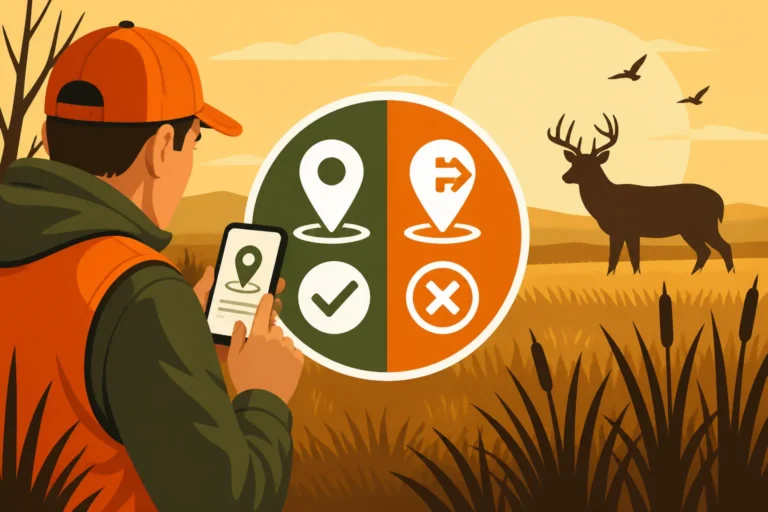
In recent years, the KDWP introduced an enhanced version of the WIHA program called iWIHA (interactive WIHA). These tracts often consist of higher-quality habitat or areas that traditionally receive intense pressure, so KDWP manages hunter numbers to ensure a quality experience and prevent over-pressuring the deer herd. The key difference with iWIHA is the mandatory check-in/check-out system, typically done through the Go Outdoors Kansas mobile app or website.
iWIHA tracts have specific daily capacity limits, meaning only a certain number of hunters are allowed on the property at any given time. This can be a double-edged sword: it reduces hunter density and pressure, leading to a potentially better hunt, but it also means you might get locked out if you don't check in early enough, especially on popular weekends. Knowing Kansas iWIHA Check-In Rules is essential. You need to check the status of a tract before you head out and be prepared to be flexible. If your chosen iWIHA tract is full, have a backup plan for a regular WIHA tract or another public land option nearby. While it adds a layer of planning, the reduced pressure on iWIHA properties can be incredibly beneficial for encountering less wary deer.
Rules and Restrictions on WIHA Tracts
Hunting on WIHA lands comes with a specific set of rules and guidelines that all hunters must adhere to. These are designed to protect the resource, ensure landowner cooperation, and maintain a safe and ethical hunting environment. Unlike many State Wildlife Areas, WIHA tracts are private land temporarily opened to the public, so respecting the landowner's property is paramount.
A major rule to be aware of is the prohibition of permanent stands or blinds. While you generally can't leave stands overnight or install screw-in steps, portable ladder stands, climbing stands, and saddle hunting setups are typically allowed, provided they are removed daily. Always check the specific WIHA regulations for the particular tract you're hunting, as some may have even stricter rules. Vehicle access is typically limited to established roads and parking areas; you cannot drive onto a tract unless specifically designated. Furthermore, baiting is strictly prohibited on WIHA lands, mirroring the statewide ban on public land. These rules, while sometimes restrictive, encourage a more mobile and active hunting style, which can be highly effective in outsmarting deer that are accustomed to stationary hunters. For those interested in flexible setups, understanding Portable Stand Rules on Kansas Public Land is vital.
| Public Land Type | Management Agency | Key Characteristics | Typical Game Species | Common Rules/Considerations |
|---|---|---|---|---|
| Walk-In Hunting Access (WIHA) | KDWP (Private Lease) | Private agricultural/habitat lands, temporary access | Deer, Pheasant, Quail, Turkey | No permanent stands, check WIHA Atlas/iWIHA, no baiting |
| State Wildlife Areas (SWA) | KDWP | Managed habitat (wetlands, timber, prairie), permanent access | Deer, Waterfowl, Upland, Turkey | Area-specific regulations, some draw hunts, varied vehicle access |
| Corps of Engineers Land | U.S. Army Corps of Engineers | Timbered shorelines, mixed cover around reservoirs | Deer, Turkey, Waterfowl | General public land rules, check local reservoir specific regs |
| Cimarron National Grassland | U.S. Forest Service | Vast shortgrass prairie, river breaks, unique habitat | Deer (Whitetail/Mule), Prairie Chicken, Antelope | Dispersed camping allowed, vast area, different hunting style |
E-Scouting for Success on Public Ground
In today's hunting world, the days of just showing up to public land with a paper map are largely over. E-scouting, or using digital tools to scout from home, has become an indispensable first step for any serious public land hunter, especially in Kansas where identifying subtle terrain features and access points is critical.
Utilizing Digital Mapping Tools
Digital mapping applications like OnX Hunt, GoHunt, and even Google Earth are powerful allies in your public land preparation. These tools allow you to meticulously analyze potential hunting areas without ever stepping foot in the woods, saving precious time and reducing scouting pressure on animals. With high-resolution satellite imagery, you can identify various habitat types, such as mature timber, dense cedar thickets, standing crop fields, and CRP (Conservation Reserve Program) grass. Each of these offers clues about deer bedding, feeding, and travel patterns.
For instance, looking at a potential WIHA tract, I'll use OnX Hunt or GoHunt to layer the public land boundaries over aerial photos. I can then trace creek bottoms, identify shelterbelts, and pinpoint inside corners of crop fields. These aren't just lines on a map; they represent potential travel corridors and pinch points where deer are likely to move. You can also drop pins on potential stand sites, mark possible bedding areas, and even plot out low-impact access routes from parking areas. When E-Scouting Kansas Farm Country From Home, paying attention to where cover meets open ground is paramount, as these transition zones are often high-activity areas. The ability to zoom in and out, switch between aerial and topographic maps, and measure distances empowers you to formulate a robust game plan before ever hitting the field.
Identifying Key Terrain Features and Funnels
Kansas might be "flat" compared to mountainous regions, but it's far from featureless. Deer, being creatures of efficiency, will always use the path of least resistance or the most secure cover to travel. E-scouting allows you to identify these subtle terrain funnels and features that concentrate deer movement. Look for linear elements that cut through open country, such as creek draws, drainage ditches, fencelines with brushy cover, or rows of trees planted as shelterbelts.
These features act as highways for deer, providing cover and directing their movement, even across vast agricultural landscapes. A single timber point jutting out into a crop field or a brushy finger along a creek can be a magnet for deer. Identifying where these funnels constrict—known as pinch points—is crucial. An example could be where a wide creek bottom narrows significantly, forcing deer into a smaller area, or where two patches of timber nearly connect. Bucks, especially, will often skirt the edges of these features, using them for concealment. Analyzing these on digital maps is a great way to understand Hunting Terrain Funnels in Flat Country. Remember, even a slight change in elevation or vegetation can create a "hidden" funnel that a mature buck will exploit.
Locating Water Sources and Thermal Hubs
Deer, like all living creatures, need water, and pinpointing reliable water sources is a key element of effective e-scouting, particularly in the drier western half of Kansas or during early, warm hunting seasons. Look for ponds, river oxbows, small feeder creeks, or even drainage culverts that hold standing water after rain. During warm September bow seasons, a good water source can be as attractive as a food plot, especially for a mature buck not wanting to expose himself in open fields.
Beyond water, identifying "thermal hubs" or secure bedding areas is paramount. These are typically the densest, nastiest cover available – think thick cedar thickets, overgrown plum thickets, or areas of tall, undisturbed CRP grass. Deer will gravitate to these areas for security, particularly when facing hunting pressure or seeking refuge from harsh weather. On cold, windy days, a south-facing slope with heavy cover provides warmth and protection. Conversely, on hot days, north-facing slopes or shady creek bottoms offer cooler bedding. CRP Grass and Where Bucks Bed can be complex, but e-scouting helps you pinpoint the largest, most secluded patches. These locations are where deer feel safest, and understanding their preferences will lead you to productive stand sites on the fringes.
On-the-Ground Scouting and Access Strategies
While e-scouting is an invaluable first step, there's no substitute for getting boots on the ground. Physical scouting confirms your digital findings, reveals fresh sign, and allows you to truly understand the lay of the land and how deer are using it. It's also where you refine your access plans to ensure you don't spook the very deer you're trying to hunt.
Foot Scouting Pre-Season
Pre-season foot scouting is your opportunity to validate all those potential hotspots you identified on your digital maps. This involves walking the actual boundaries of a public tract, examining pinch points, confirming bedding areas, and searching for fresh deer sign. Look for heavily used trails, fresh rubs on saplings, and active scrapes under licking branches. These are concrete indicators that deer are using the area and give you confidence in your stand locations.
When Scouting Kansas Walk-In Tracts Before the Opener, try to do it in the off-season or well before hunting pressure builds. The goal is to learn without disturbing the deer. Walk slowly, paying attention to wind direction, potential noise, and any scent you might be leaving. Take notes, mark waypoints on your GPS, and take photos. You'll often find subtle features that aren't apparent on satellite imagery, such as a slight dip in terrain that provides a hidden travel lane or a small, overlooked food source. This intimate knowledge of the ground will pay dividends when the season opens.
Stealthy Access Routes
One of the biggest challenges on public land, especially heavily pressured areas, is getting to your stand undetected. Deer are incredibly sensitive to human presence, and a noisy, scent-filled walk-in can ruin your hunt before it even begins. Planning Access Routes That Do Not Bump Deer is paramount. This means more than just finding the shortest path; it means finding the smartest path.
Consider using natural cover to your advantage. Walk along the edges of standing crops, deep creek beds, or in the shadows of thick timber. Always factor in the wind direction for your entrance and exit. If the wind will carry your scent into a known bedding area on your way in, you need a different route, or perhaps even a different stand location for that day. Often, the best access involves a longer, more circuitous route that keeps you out of the deer's primary travel and bedding zones. Parking a little further away from the most obvious access points, as detailed in Parking Away From Your Stand, can also give you an advantage by allowing you to approach from an unexpected direction, potentially getting ahead of other hunters who stick to the easy paths.
Portable Stands and Ground Blinds
Given the restrictions on permanent structures on most Kansas public lands, embracing portable hunting setups is essential. This typically means using climbing stands, lightweight hang-on stands paired with climbing sticks, or saddle hunting systems. Each has its advantages and disadvantages regarding portability, setup time, and concealment.
Saddle hunting, for example, offers incredible versatility and mobility, allowing you to set up on virtually any tree with sufficient trunk diameter, often on the side of the tree opposite from where you expect deer to approach. Climbing stands are great for quick deployment if you find the right trees. Lightweight hang-on stands with climbing sticks offer stability and allow you to precisely choose your shooting lanes. For situations where suitable trees are scarce, like in open CRP fields or along sparse creek banks, a well-brushed-in ground blind can be highly effective. The key is to be adaptable and quick. Whether you're Climbing Sticks Versus a Climber or building a natural blind, you need to be able to get in, set up, and get out with minimal disturbance. Practice setting up your chosen system in the backyard before hitting the field so it becomes second nature in the dark.
Tactics for Hunting Pressure Patterns on Kansas Public Land
Public land hunting, by its very definition, means sharing the resource. This shared access often translates to increased hunting pressure, which can significantly alter deer behavior. Successful public land hunters aren't just good at finding deer; they're experts at anticipating and adapting to the presence of other hunters.
Understanding Hunter Behavior
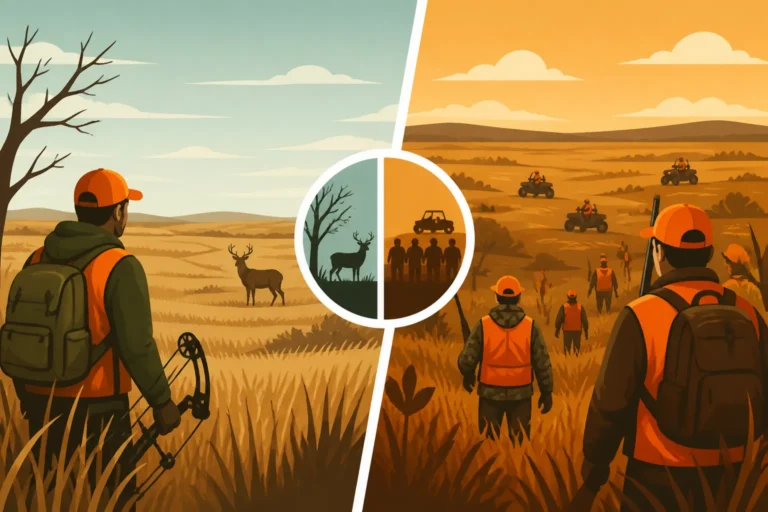
Most hunters, particularly those new to a public tract, tend to gravitate toward easily accessible areas – parking lots, main trails, and obvious patches of timber near roads. They often stop where the walking gets tough or the cover appears less appealing. This predictable human behavior creates distinct patterns of deer movement. Deer, being intelligent and quick learners, quickly adjust to this pressure. They learn to avoid easily accessible areas during daylight hours and seek refuge in places that hunters typically overlook or find too difficult to reach.
This insight into hunter behavior is your secret weapon. Instead of being frustrated by other hunters, you can use their presence to your advantage. If you know most people hunt the first 200 yards from the road, you go 400 yards. If you know they walk main trails, you parallel those trails through dense cover. Understanding Hunting Pressure Patterns on Kansas Public Land isn't about avoiding other hunters entirely; it's about anticipating where they will push deer and positioning yourself accordingly.
Finding Sanctuaries and Overlooked Pockets
The most successful public land hunters actively seek out "sanctuaries" – areas within a public tract that, due to their remote nature, rough terrain, or exceptionally dense cover, receive minimal hunting pressure. These are the places where mature bucks, especially, will retreat to feel safe during daylight hours.
To find these sanctuaries, look for areas that require extra effort: a longer walk, crossing a tricky creek, navigating dense plum thickets, or traversing extremely rough terrain. Sometimes, it's a small island of timber in the middle of a vast CRP field, surrounded by open ground that most hunters won't cross. Other times, it's the steepest, brushiest part of a river bottom that seems too difficult to penetrate. These areas, like Cedar Thickets as Bedding Cover or isolated pockets of heavy weeds, become secure bedding havens. Deer will often stage in these pockets for hours, only emerging into more open feeding areas after dark or when pressure subsides. Your job is to set up quietly on the fringes of these sanctuaries, catching deer as they transition. Using your GoHunt mapping app to identify these hard-to-reach spots is key, as is a willingness to put in the extra legwork.
Adaptability to Changing Pressure
Deer behavior on public land isn't static; it constantly shifts in response to hunting pressure, weather, and the rut. What worked one day might be completely ineffective the next if other hunters move into an area or deer get spooked. Therefore, adaptability is paramount. Have multiple stand locations scouted and ready to go for different wind directions and pressure scenarios.
If you arrive at your planned spot and find another hunter there, don't just give up. Move to your backup location. If you observe deer continually being pushed from one side of a timber block, consider setting up on the opposite side to intercept them as they try to escape. The first few days of the Kansas firearm season or opening weekend of archery often see the most intense pressure, and deer will quickly go nocturnal or shift their patterns dramatically. Being mobile, whether using a tree saddle or a lightweight ground blind, allows you to react to these changes. Don't be afraid to pull your stand and move to a completely new area if your current spot isn't producing, especially if you're experiencing a lot of Hunting Pressure After Opening Weekend. Flexibility and a willingness to explore different zones are hallmarks of an effective public land hunter.
Essential Gear for Public Land Deer Hunting
Public land hunting often means covering significant ground and being self-sufficient. Every item in your pack should serve a purpose, contributing to your mobility, comfort, safety, and success. Investing in the right gear can make or break your experience, especially when you're miles from your truck.
Lightweight and Mobile Equipment
When you're hiking into remote public land, every ounce matters. Opt for lightweight versions of all your essentials. This applies to your stand or saddle system, climbing sticks, backpack, and even your water bottle. A comfortable, well-fitting backpack is non-negotiable, something designed to carry your gear efficiently without causing undue fatigue during long walks. Brands like KUIU and Sitka are popular for their lightweight hunting apparel, but focusing on the type of gear rather than specific brands is key.
A mobile stand setup, such as a tree saddle or a lightweight hang-on stand with three or four compact climbing sticks, allows you to move quickly and set up on various trees. This mobility is invaluable on public land where deer patterns can shift rapidly, or you need to react to pressure. Your clothing should also be lightweight, breathable, and layered appropriately for Kansas's often unpredictable weather. Don't forget high-quality, broken-in hunting boots that can handle miles of walking over varied terrain, from muddy creek bottoms to crunchy crop stubble. For comparing different portable options, check out Climbing Sticks Versus a Climber.
Navigation and Communication Tools
Getting lost on public land, especially in unfamiliar territory, is a serious concern. A reliable GPS device or a smartphone with a robust mapping app (like OnX Hunt or GoHunt) is absolutely essential. Don't rely solely on your phone; always carry a backup power bank, and consider a dedicated GPS unit for redundancy, especially in areas with poor cell service. These tools allow you to mark your stand, plot routes, identify property lines, and navigate safely in the dark.
Beyond navigation, communication is critical for safety. While cell service can be spotty, ensure your phone is fully charged. Carrying a two-way radio can be helpful if hunting with a partner. Most importantly, always inform someone trusted of your hunting plans: where you're going, your intended return time, and who to contact if you don't check in. This simple step, outlined in Leaving a Trip Plan for a Public Hunt, can be a lifesaver in an emergency.
Field Dressing and Game Recovery Essentials
Once you've arrowed or shot a deer, the work isn't over; it's just beginning. Having the right tools for field dressing and game recovery is crucial for preserving the meat and making the arduous task easier. A sharp, durable knife (or two) and a small sharpener are vital. Carry latex or nitrile gloves for hygiene during field dressing. Game bags are excellent for protecting the meat from dirt and insects, especially if you plan to quarter the deer in the field for easier transport.
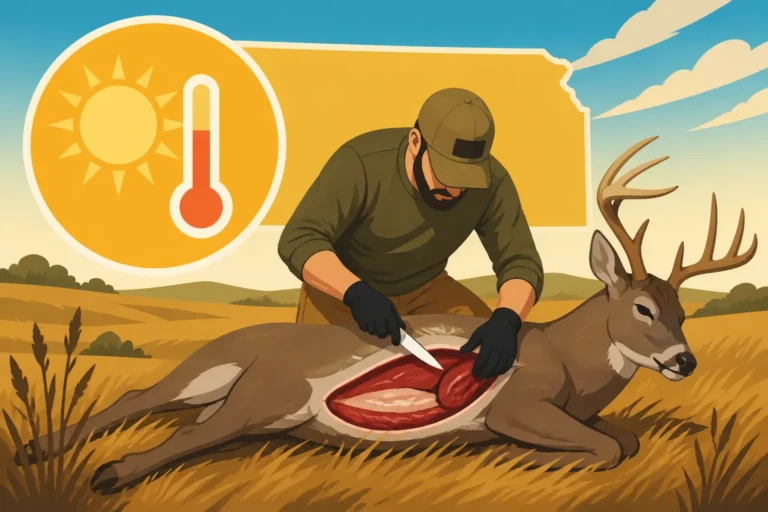
A reliable flashlight or headlamp with extra batteries is non-negotiable for blood trailing in low light, or if you end up recovering a deer after dark. For getting a deer out of a tricky spot, a sturdy drag rope or a game cart can be invaluable. Even on flatter ground, a quality game cart can save your back and make a long haul much more manageable. In Kansas's often warm early seasons, it's also wise to have a plan for cooling the meat quickly, which might involve a large cooler with ice waiting at your vehicle. Read up on Field Dressing in Warm Kansas Weather to be fully prepared.
Hunting Strategies for Specific Kansas Public Land Habitats
Kansas's public lands offer a diverse range of habitats, from dense eastern timber to wide-open western prairies. Successful public land hunting means understanding these different environments and employing strategies tailored to each. A one-size-fits-all approach simply won't cut it.
Timber Strips and Creek Bottoms
Many of Kansas's public lands, particularly in the eastern and central regions, feature linear timber strips and extensive creek bottoms. These areas are magnets for deer, providing cover, food, and water. Deer often use these features as primary travel corridors, moving between bedding areas and food sources, especially in agricultural landscapes where continuous timber is scarce.
When hunting these habitats, focus on identifying pinch points where the timber narrows, forcing deer through a smaller area. Look for creek crossings that show heavy deer sign; these are natural funnels. Inside corners of crop fields where the timber meets the agriculture are also prime locations, as deer will often stage here before entering the field to feed. Setting up your stand overlooking these travel routes and pinch points, using the wind to your advantage, can be incredibly effective. Pay attention to the subtle elevation changes within creek bottoms; deer will often walk the high ground within a creek bed to stay dry and get a better vantage point. Learning to read Reading a Kansas Creek Bottom for Deer Sign will help you identify these hotspots.
Crop Field Edges and Stubble
Kansas is an agricultural state, and deer thrive on the bounty of corn, soybeans, and milo. On public lands adjacent to or containing crop fields, the edges and stubble fields become critical areas for deer activity, especially during the early season and late season. Deer will bed in thick cover and move to these fields to feed, often utilizing the cover provided by the field itself.
Hunting standing corn can be particularly exciting and challenging. Deer feel incredibly secure within a cornfield, and setting up on a main trail leading into or out of a standing cornfield can intercept deer as they transition. Later in the season, after crops are harvested, the stubble fields become important food sources, especially for gleaning residual grain. Focus your efforts on inside corners of fields, which offer both food access and a sense of security from approaching hunters. Also, look for draws or brushy ditches that extend into large fields; these provide covered travel lanes. Understanding Milo and Corn Stubble Deer Patterns is crucial for effective hunting in these agricultural landscapes.
CRP and Tall Grass Prairie
Large tracts of Conservation Reserve Program (CRP) grass and native tallgrass prairie are common on Kansas public lands, especially in the central and western parts of the state. These areas offer vast expanses of dense, unforgiving cover where deer can seemingly vanish. Hunting here requires patience, meticulous scouting, and often a more mobile approach.
Deer use these thick grasslands primarily for bedding and security. Finding the specific spots where deer bed can be tough, as they can lie down almost anywhere. However, look for subtle breaks in the terrain, small clumps of trees, plum thickets, or even old farmsteads within the CRP, as these often concentrate deer. Bucks will often cruise the edges of these large grass fields, or follow slight topographical changes within the grass, creating "cruising lanes." Still-hunting slowly into the wind through these areas, or strategically placing a ground blind near a known travel route or water source, can be effective. After a shot, Blood Trailing in Tall CRP can be extremely difficult, so precise shot placement is even more critical. These wide-open areas require different tactics than dense timber, but they hold big deer that feel secure in the vastness.
Post-Harvest Considerations and Ethics
The moment of truth—the shot—is only one part of the hunting equation. What happens next, from ethical blood trailing to proper field care and respectful conduct, is just as important, especially on public land where your actions reflect on all hunters.
Ethical Blood Trailing and Recovery
After taking a shot, exercising patience is not just good practice, it's an ethical imperative. Rushing a blood trail can push a wounded deer further, making recovery much harder, sometimes impossible. The general rule of thumb is to wait at least 30 minutes for a suspected heart or lung shot, and several hours (4-6+) for a gut shot, or even overnight if the conditions allow. This gives the animal time to bed down and expire.
When you do take up the trail, do so slowly and systematically. Mark the spot of the shot, the last known location of the deer, and every piece of sign you find – blood, hair, bone fragments. Look for patterns in the blood (frothy for lung, dark for liver, green for gut) to determine the wound's severity. If the blood trail peters out, expand your search in ever-widening circles around the last sign, looking for tracks, disturbed vegetation, or even the deer itself bedded in thick cover. If needed, consider contacting KDWP about using a tracking dog, as Using a Tracking Dog Legally in Kansas is permitted under certain conditions. Persistence and thoroughness are key to a responsible recovery.
Field Care and Transport
Once you've recovered your deer, the next crucial step is proper field care to ensure the meat is preserved. In Kansas, especially during the warm early seasons, getting the animal cooled down quickly is paramount. This starts with immediate field dressing to remove the entrails, which helps the carcass cool from the inside out. If the temperature is high, consider quartering the deer in the field to allow for more rapid cooling and easier transport.
Getting a deer out of challenging terrain, such as a deep Getting a Deer Out of a River Bottom Alone, requires planning. A sturdy game cart, a good drag rope, or even quartering the animal into a backpack can make a seemingly impossible task manageable. If you do quarter, ensure you have quality game bags to protect the meat. Once back at your vehicle, get the deer into a cooler with ice, or transport it quickly to a locker plant or your home processing setup. The goal is to drop the core body temperature as rapidly as possible to prevent spoilage and ensure delicious venison for your freezer.
Respecting the Resource and Other Hunters
Hunting on public land is a privilege, not a right, and maintaining access for future generations depends on every hunter's ethical conduct. Always adhere to the principles of "Leave No Trace." This means packing out everything you pack in, including spent shell casings, food wrappers, and any trash. Leave your stand site cleaner than you found it.
Be courteous and respectful to other hunters you encounter. A friendly nod or a quiet wave goes a long way. Avoid encroaching on another hunter's setup, and if you see someone already in a spot you intended to hunt, quietly move on to a different area. Report any wildlife violations you witness to the KDWP; protecting the resource from poaching and unethical behavior is everyone's responsibility. Your actions on public land reflect on the entire hunting community, so strive to be a responsible ambassador for the sport.
Disclaimer
The information provided in this guide is for general informational purposes only and is not intended as legal advice. Hunting regulations in Kansas are subject to change, and specific rules may vary by unit, species, or public land area. It is the hunter's sole responsibility to consult the most current Kansas Department of Wildlife and Parks (KDWP) regulations and to obtain all necessary licenses and permits before engaging in any hunting activity. Always confirm season dates, bag limits, and specific area rules directly with KDWP.