Which Kansas Counties Produce Big Deer
Trying to figure out where the giants roam in Kansas can feel like searching for a needle in a haystack, especially with so much incredible hunting ground. Many hunters get frustrated wading through rumors and old stories, never quite knowing how to pinpoint those sweet spots for big deer. This guide is going to cut through the noise, helping you understand what truly makes certain Kansas counties stand out for producing trophy whitetails and how you can identify those areas for your next hunting adventure.
Understanding What Makes a "Big Deer" in Kansas
Before we dive into specific areas, it’s really important to define what we mean by a "big deer" in the context of Kansas hunting. For many, this means a mature whitetail buck with an impressive rack, often scoring high in official record books. But "big" also encompasses overall body size and the general health of the deer herd. Kansas has a well-deserved reputation for producing some truly enormous whitetails, and it’s not just by accident.
The Three Pillars: Age, Genetics, and Nutrition
The magic formula for a big deer, especially a buck with a significant rack, boils down to three core components: age, genetics, and nutrition. A buck simply cannot grow a large rack without reaching maturity. Younger bucks might have good genetics, but they're still in their growth phase, dedicating energy to body development rather than maxing out antler potential. This is why areas where bucks are allowed to reach 3.5, 4.5, or even 5.5 years old consistently produce bigger deer.
Genetics play an undeniable role, though it's often the hardest factor for hunters to directly influence. Some deer simply have the genetic predisposition to grow larger, denser antlers with more points. While you can't pick out the "best genes" from a distance, counties with a history of big deer often indicate a strong genetic pool within their populations. Finally, nutrition is the fuel for antler growth. A deer herd with access to abundant, high-quality food sources — think protein-rich agricultural crops and lush native browse — will consistently outperform a herd scrounging in poor habitat. This is a massive advantage Kansas provides, especially in its agricultural heartland.
Defining a Trophy Whitetail
What one hunter considers a "trophy" can vary wildly. For some, it's about the width and mass of a rack; for others, it's the sheer number of points or a specific score for the Boone and Crockett Club. In Kansas, however, the term "trophy" almost universally implies a mature buck, often a 140-inch class or better whitetail, and sometimes significantly larger. The state consistently produces bucks that exceed these benchmarks, drawing hunters from all over the country.
Understanding this definition helps focus our search. We're not just looking for deer, but for areas that have the ecosystem and management practices in place to foster mature, well-fed bucks with strong genetics. This means we'll be looking beyond simply high deer densities and instead focusing on the quality of the deer within a given area. You might find more deer in some places, but fewer truly big, old bucks. If you're wondering Why Kansas Produces Big Whitetail Bucks, it truly comes down to a combination of these factors.
Key Factors Influencing Big Deer Production
It’s not enough to just point at a map and say "hunt here!" The reality of deer management and growth is far more nuanced. Several interconnected factors create the perfect storm for trophy whitetail production in certain Kansas counties. Hunters who understand these elements have a much better chance of finding those elusive giants.
Habitat Diversity and Agricultural Influence
Kansas is a mosaic of landscapes, but its agricultural prowess is a huge driver of deer quality. Counties with a diverse mix of row crops like corn, soybeans, and alfalfa, interspersed with timbered creek bottoms, CRP (Conservation Reserve Program) fields, and dense plum thickets, offer the ideal habitat. The crops provide unparalleled nutrition, especially during antler growth and post-rut recovery. The timber and thickets offer crucial bedding cover, escape routes, and thermal protection, especially during harsh winters or hot early seasons.
This diversity means deer aren't stressed searching for food or cover. They have everything they need to thrive and express their full genetic potential. For instance, Crop Rotation and Deer Nutrition plays a vital role. A county dominated by monoculture, without good cover or varied food sources, simply won't sustain the same caliber of bucks, even if deer are present. The ideal Kansas county for big deer is one where agriculture and wild habitat exist in a delicate, beneficial balance.
Managing for Older Age Classes and Low Pressure
One of the most critical, yet often overlooked, factors in producing big deer is the age structure of the buck population. If every 1.5 or 2.5-year-old buck is harvested, very few will ever reach their true potential. Counties where landowners and hunters practice voluntary quality deer management (QDM) or where hunting pressure is naturally lower, tend to hold more mature bucks. This doesn't necessarily mean no one hunts there, but rather that hunters are either choosing to pass younger bucks or the sheer size of the landscape dilutes hunting pressure.
On public lands, this can be a tougher challenge, but even there, understanding Hunting Pressure Patterns on Kansas Public Land can guide you to less disturbed areas. Some private land areas, often leased or carefully managed, create pockets where bucks can age gracefully. It's a testament to the patient approach of many Kansas hunters and landowners that these older deer continue to show up year after year.
Water Sources and Mineral Rich Soils
While often taken for granted, access to consistent water sources and mineral-rich soils also contributes to robust deer health and antler growth. In drier western Kansas counties, proximity to rivers, creeks, or even reliable farm ponds becomes incredibly important, especially during drought years. Deer need water for basic metabolic functions, and a well-hydrated deer is a healthier deer.
Even more subtly, the underlying geology of Kansas plays a role. Soil Fertility and Antler Growth are directly linked. Counties with rich, fertile soils translate into healthier forage, which means deer are consuming more essential minerals like calcium, phosphorus, and trace elements critical for strong bone and antler development. While you can't change the soil in a county, recognizing which areas have these inherent advantages can point you towards better deer.
General Regions Renowned for Potential
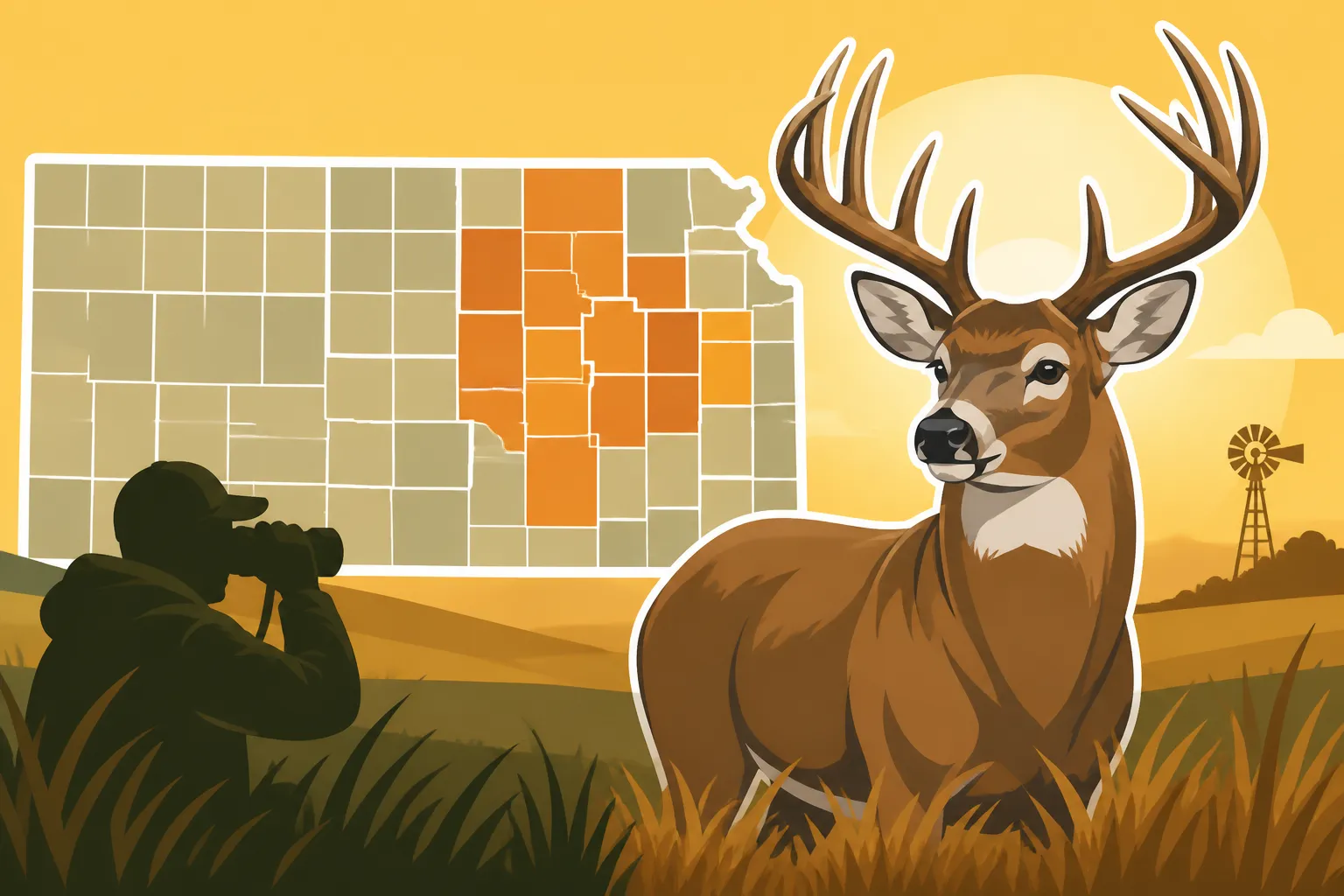
While I can't name specific counties because conditions and hunter ethics vary year to year, we can certainly talk about the general regions of Kansas that consistently produce some of the state's biggest deer. These regions share characteristics that align with the factors we've just discussed: excellent habitat, abundant nutrition, and often, a history of responsible deer management.
Eastern Kansas River Corridors and Timber Blocks
Eastern Kansas, particularly the counties bordering larger river systems like the Missouri, Kansas, and Marais des Cygnes rivers, consistently produces exceptional whitetails. These areas are characterized by extensive timber blocks along river bottoms and tributaries, providing dense cover and travel corridors. This timber often gives way to rich agricultural fields, offering that perfect blend of food and sanctuary.
The sheer amount of cover, combined with high-quality food, allows bucks to grow old and hide effectively. These areas might see higher deer densities than some other parts of the state, but the cover is so vast that mature bucks can often evade hunters. If you're looking for Reading a Kansas Creek Bottom for Deer Sign or thinking about Scouting Kansas River Bottoms and Creek Draws, these regions are prime examples of where those tactics shine.
Central Kansas Farm and Creek Country
Moving west into Central Kansas, the landscape transitions to more open farmland, but don't let that fool you. The counties in this region, especially those with significant creek drainages and smaller timbered tracts cutting through vast expanses of corn, wheat, and milo, are absolute powerhouses for big deer. The deer here are masters of using every ditch, every shelterbelt, and every bit of standing crop for cover.
The nutrition from the crops is undeniable, leading to heavy-bodied deer and impressive antler growth. While timber is less continuous than in the east, these scattered pockets of cover create natural pinch points and travel corridors that mature bucks utilize. Knowing how to hunt Shelterbelts and Timber Points in Kansas Farm Country or decipher Milo and Corn Stubble Deer Patterns is key to success in these counties, which are known for producing some truly legendary bucks year after year.
Western Kansas and the Mule Deer Overlap
While the focus is often on whitetails, it's worth noting that some western Kansas counties offer the unique opportunity to pursue both species, including impressive mule deer. The landscape here is much more open, characterized by CRP grass, rolling hills, and dry creek beds. Whitetails here tend to be concentrated along the limited timbered river and creek bottoms, and they often grow to impressive sizes, benefiting from the lower deer densities and abundant, if scattered, resources.
The challenge in these western counties is often locating the deer and adapting hunting strategies to the open terrain. However, the reward can be substantial, with mature whitetails that might not see the same level of pressure as their eastern counterparts. Hunters need to adjust their scouting and hunting methods, perhaps relying more on glassing vast landscapes or understanding CRP Grass and Where Bucks Bed. It's a different kind of hunt, but one that can yield spectacular results. For hunters interested in Mule Deer in Western Kansas, these counties offer prime opportunities.
Researching Specific Counties for Your Hunt
Identifying a general region is a great start, but serious hunters want to pinpoint specific counties or even specific tracts of land within those counties. This requires a bit of homework, but the tools available today make it much easier to narrow down your focus and increase your odds of encountering a big deer.
Utilizing Harvest Data and Scouting Tools
One of the best ways to gauge a county's potential is to look at the Kansas Deer Harvest Survey Data. While specific county-level harvest data might not always be publicly broken down by Boone and Crockett scores, you can often find information on overall harvest numbers, buck-to-doe ratios, and sometimes even age class estimates. Counties showing a healthy percentage of older bucks in the harvest are often good indicators of quality deer management and the potential for big deer. You can learn a lot from Reading a Kansas Harvest Report and looking for trends over several seasons.
Beyond state-level data, modern mapping and scouting platforms are indispensable. Tools like GoHunt can provide invaluable insights into land ownership, public land access, habitat types, and even topographical features down to a specific section. You can use these platforms to perform E-Scouting Kansas Farm Country From Home, identifying potential bedding areas, travel corridors, and food sources within a given county before you ever set foot on the ground. By layering satellite imagery with harvest data, you can build a strong case for why certain counties have more potential.
Understanding Deer Unit Dynamics
Kansas is divided into numerous Deer Management Units, and understanding how these units function is crucial for drawing a tag and for understanding deer populations. While a single county might span multiple units, or a unit might cover several counties, the unit boundaries often reflect ecological or management distinctions. When applying for a permit, you'll select a primary and often an adjacent unit. Knowing which units consistently produce the largest animals, or have favorable draw odds combined with good deer quality, is a strategic advantage.
For instance, when you're looking at Kansas Deer Units 1 Through 19, you'll notice differences in habitat and deer populations. Some units are known for higher deer densities, while others might have lower overall numbers but a higher proportion of mature bucks. Researching Choosing a Kansas Primary Unit and understanding the characteristics of each unit based on official data and anecdotal reports from reliable sources will significantly aid your planning process. Combining this unit-level knowledge with county-specific habitat analysis is the ultimate strategy for finding where the biggest bucks in Kansas reside.
| Kansas Region | Dominant Habitat Types | General Deer Quality Potential | Challenges | Key Hunting Tactics |
|---|---|---|---|---|
| Eastern Kansas | River bottoms, extensive timber, agriculture | High (trophy whitetails) | Higher hunter density, finding large tracts of accessible land | Stand hunting, understanding access routes, using wind/thermals |
| Central Kansas | Large agricultural fields, scattered timber, creek draws | High (trophy whitetails) | Deer are more spread out, limited natural cover | Scouting crop patterns, hunting terrain funnels, mobile hunting |
| Western Kansas | CRP, open plains, dry creek beds, limited river timber | Moderate to High (quality whitetails & mule deer) | Low deer density, vast open spaces, limited public land | Glassing large areas, spot-and-stalk, identifying water sources |
This table provides a generalized overview, but remember, every county, even within these regions, will have its own unique characteristics. Always do your specific research!
Disclaimer
This article is for general informational purposes only and does not constitute professional advice. Laws, prices and regulations vary by location and change over time. Consult a qualified professional for guidance on your specific situation.