Where Kansas Pheasants Concentrate
There's nothing quite as frustrating as heading out to the vast expanses of Kansas, boots laced, shotgun ready, and then… finding nothing. You've heard the stories, seen the pictures of incredible pheasant hunts, but when you're actually out there trying to pinpoint where those wily roosters are hiding, it can feel like a game of hide-and-seek with a ghost. This guide is here to cut through that frustration, pulling back the curtain on the specific places and conditions that truly concentrate pheasants across the Sunflower State, helping you spend less time guessing and more time flushing birds.
Understanding Kansas Pheasant Habitat Basics
If you want to find pheasants consistently in Kansas, you first have to think like a pheasant. What makes a place home for them? It's not just about any old patch of grass; it's a specific recipe of cover, food, and water that draws them in and keeps them there. Understanding these fundamental habitat needs is the first step to unlocking their hiding spots.
The Ideal Landscape for Pheasants
Picture the perfect pheasant paradise in Kansas: it’s a mosaic, a patchwork quilt of different land uses that provides everything a pheasant needs to thrive through all four seasons. You're looking for areas that aren't monocultures, but rather a healthy mix of croplands, dense grasslands, and diverse low-lying cover. Croplands, especially those with grain sorghum (milo), corn, or even standing wheat stubble, are absolutely critical. These aren't just food sources; they offer excellent concealment from predators and shelter from the elements.
Then there's the essential element of dense cover. Pheasants need places where they can escape danger, nest their young, and roost safely at night. Think about areas with thick weeds, native grasses, or even patches of undisturbed brush. These "thermal cover" areas are especially vital in the colder months, providing insulation from biting Kansas winds and heavy snow. Without this diverse mix, birds will struggle to survive and reproduce, leading to scattered populations, or worse, no birds at all. This is often where you'll find them concentrated, especially once hunting pressure starts.
Importance of Water Sources
While pheasants aren't ducks, water is still a surprisingly critical component of their preferred habitat, especially in the often-dry Kansas landscape. They don't typically drink from open water like a duck or goose might, but they get much of their hydration from dew, insects, and succulent vegetation. However, proximity to actual water bodies like farm ponds, natural playa lakes, or even perennial creek bottoms, often indicates areas with lusher vegetation and higher insect populations. These areas become magnets, especially for young poults that rely heavily on insects for protein during their rapid growth phase.
During hot, dry periods, the availability of these slightly moister areas can dictate where birds gather. A dry summer can push birds to concentrate around the few remaining green spots, which often correlate with accessible water. So, when you're scouting, pay close attention to the contours of the land that suggest drainage or low-lying areas that might hold temporary water or support denser, more succulent vegetation. These spots can be overlooked by other hunters focusing only on grain fields, but pheasants will utilize them heavily.
Prime Agricultural Areas for Pheasants
When it comes to Kansas pheasants, it's not just about what habitat, but where that habitat exists. The state is a big place, and pheasant populations aren't evenly distributed. Understanding the geographical sweet spots and the specific crops that draw them in will significantly boost your hunting success.
Western and Central Kansas Focus
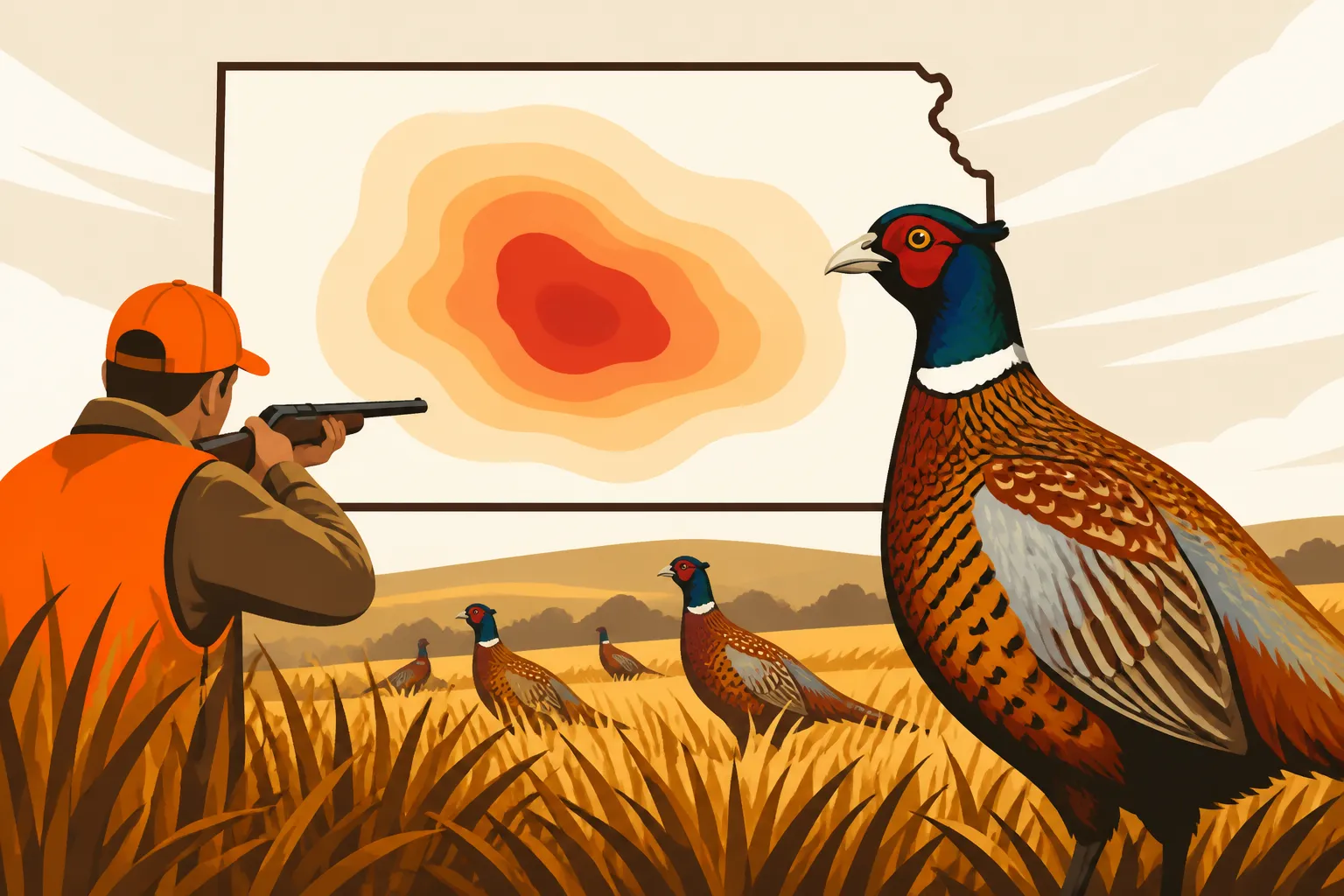
If you're chasing pheasants in Kansas, your compass should generally point west, or at least to the central parts of the state. These regions, particularly the northwest and north-central units, are renowned for their robust pheasant populations. Why? It's largely due to a combination of climate, soil, and agricultural practices. The drier conditions in western Kansas, combined with expansive grain production and plenty of grassland, create an ideal environment. The eastern side of the state, while beautiful, has more timber, higher rainfall, and different agricultural focuses, making it less suitable for pheasants.
Counties like Rawlins, Cheyenne, Sherman, Thomas, Decatur, Norton, Graham, and Sheridan in the northwest, or even parts of central Kansas further east, consistently report some of the highest pheasant harvest numbers. These areas are characterized by vast fields of milo and wheat, interspersed with Conservation Reserve Program (CRP) grasslands. When you're planning your trip or scouting new ground using mapping tools like GoHunt, focusing on these traditional strongholds will significantly increase your odds. Remember, some of these counties also offer excellent opportunities for other upland birds, making them multi-species hotspots.
Key Crop Types and Their Role
Pheasants are intrinsically linked to agriculture, and certain crops are far more valuable to them than others. Milo (grain sorghum) and standing corn are the absolute champions when it comes to providing both food and critical winter cover. A field of standing milo, with its dense stalks and heads of grain, offers a pheasant everything it needs to survive a harsh Kansas winter: readily available food, and excellent protection from wind, snow, and aerial predators. You can learn more about how deer use these fields, which often overlaps with pheasant usage, in our guide on Milo and Corn Stubble Deer Patterns
As the season progresses, and especially after crops are harvested, birds will concentrate in these remnants. Hunters often focus on these fields because the birds are predictable here. Beyond the obvious food benefit, the structural integrity of standing crops provides thermal cover when temperatures drop, making them indispensable during the colder months.
Wheat stubble fields, while not offering the same dense cover as standing milo, are incredibly important in the spring and early summer for nesting and brood-rearing. After the wheat is cut, the stubble provides just enough concealment for hens to nest, and the remaining grain offers a food source. Later in the year, these fields, especially if they've grown up with some weeds, can still hold birds. Similarly, vast acreages of CRP are vital, as they provide undisturbed nesting habitat and year-round cover. The interplay between these different crop types and grassland creates the optimal environment for pheasants, directing where they'll naturally concentrate throughout the year.
Recognizing Key Cover Types and Features
Beyond just the big picture of crop fields, successful pheasant hunting often boils down to understanding the nuances of smaller, specific cover types and how pheasants utilize them. These features act as magnets, drawing birds in for safety, warmth, and sustenance.
Dense Grasslands and CRP
The Conservation Reserve Program (CRP) has been a game-changer for upland birds in Kansas, pheasants included. These are fields taken out of agricultural production and planted with native grasses and sometimes forbs, creating vital habitat. CRP fields are not just patches of grass; they're thick, often waist-high, sprawling environments that provide everything from excellent nesting cover in the spring to impenetrable escape cover in the fall and winter. When disturbed, pheasants will often run rather than fly, and the sheer density of a large CRP field allows them to do just that, disappearing into the golden waves of grass.
Hunting these fields, especially expansive ones, requires strategy. If you're Working Pheasant Fields Without a Dog, you'll need to employ smart tactics like walking slowly, pausing frequently, and utilizing the wind to your advantage. Even with a dog, these can be challenging due to the amount of ground to cover and the birds' tendency to run. Pheasants will concentrate in CRP, particularly on sunny sides after a cold night, or deep within it during midday loafing hours. The edges of CRP, where it meets a crop field or a road, are often prime spots to begin your push, as birds frequently stage there before moving out to feed. Understanding CRP Loss and Kansas Pheasants, and its impact on populations, further underscores the importance of these conservation areas.
Edge Habitat and Shelterbelts
Pheasants are creatures of the edge. They rarely stay deep within a massive, homogenous field. Instead, they thrive where different cover types meet – the transition zones, or "edge habitat." This could be where a CRP field meets a milo stubble field, where a grassy ditch runs alongside a cornfield, or where a weed-choked fence line borders a pasture. These edges offer easy access to multiple resources: food from the crop field, and quick cover from the grassland or brush. It's often along these lines that you'll catch pheasants moving between feeding and loafing areas, or escaping from perceived threats.
Shelterbelts and timber points are another crucial element that cannot be overstated, especially as the season progresses and temperatures drop. These narrow strips of trees, often cedars or deciduous trees like Osage orange, were originally planted to break the wind for farmsteads or fields. For pheasants, they are lifelines. They provide unparalleled thermal cover, breaking the fierce Kansas winds and offering refuge from heavy snow. In bitter cold, pheasants will pack into these shelterbelts, sometimes by the dozens, to escape the elements. Learning to hunt Shelterbelts and Timber Points in Kansas Farm Country, even for deer, can provide valuable insights into how pheasants also utilize these critical features. Furthermore, plum thickets, often found growing wild along fence lines or in neglected corners, offer similar dense, thorny protection, and are known to hold not only pheasants but also Quail Coveys in Plum Thickets. These linear cover strips become major pheasant concentrations, making them prime targets for hunters, especially on cold, windy days.
The Impact of Weather and Annual Conditions
While habitat is the foundation, weather acts as the architect, shaping pheasant populations and their daily behavior. A season's success, or failure, often hinges on the preceding year's weather patterns and the immediate conditions on your hunting day.
Rainfall's Influence on Poult Survival
It might seem counterintuitive for a bird that lives in relatively dry country, but rainfall patterns have a monumental impact on Kansas pheasant numbers. A wet spring, particularly during the critical nesting and brood-rearing periods in May and June, can be devastating. Heavy rains can flood nests, drown young chicks (poults) before they fledge, and create conditions ripe for disease. Chicks, especially when very young, are susceptible to hypothermia if they get soaked in cold, wet weather. Conversely, a severe drought can also reduce insect populations – a vital food source for growing poults – and stunt the growth of protective cover, making the young birds more vulnerable to predators.
The ideal scenario for strong pheasant numbers is a mild, dry spring followed by moderate summer rains. This allows for successful nesting and abundant insect life. When you're assessing your hunting prospects, always consider the previous spring and summer's weather. State wildlife agencies often release annual upland bird forecasts that factor in these conditions. You can dive deeper into this topic in our article on Rainfall and Pheasant Numbers, and understand the broader trends with Kansas Pheasant Population Cycles. These weather-dependent fluctuations mean that some years will naturally be better than others, and birds will concentrate where conditions were most favorable for survival.
Winter Severity and its Effects
Just as spring weather shapes the population, winter weather dictates the survival of adult birds and, consequently, the breeding stock for the next year. Kansas winters can be deceptively harsh, with brutal cold snaps, heavy snowfall, and relentless winds. Deep snow, especially when combined with ice, can cover critical food sources, making it impossible for pheasants to feed. If these conditions persist for extended periods, birds can starve. Prolonged cold also demands more energy, which is hard to come by when food is scarce.
When winter hits hard, pheasants will gravitate towards the densest, most protective cover available – those shelterbelts, thick plum thickets, and tall, undisturbed CRP fields. These areas become winter sanctuaries, concentrating large numbers of birds in relatively small spaces. While this can make them more vulnerable to predators, it also makes them more predictable for hunters once the season opens. Understanding how winter conditions funnel birds into specific pockets of habitat is key to finding concentrations later in the season. These winter havens, if they offer food and sufficient cover, are often the same places that hold birds early in the fall before significant weather events occur.
Utilizing Public and Private Access to Find Pheasants
Knowing where pheasants should be is one thing, but knowing where you can legally hunt them is another. Kansas offers fantastic opportunities on both public and private land, but understanding the systems and using the right tools can make all the difference.
Walk-In Hunting Access WIHA and iWIHA
Kansas is a champion of public access, largely thanks to its Walk-In Hunting Access (WIHA) program. These are privately owned lands leased by the Kansas Department of Wildlife, Parks, and Tourism (KDWP) for public hunting, typically from September 1 to January 31. WIHA tracts are absolute goldmines for pheasant hunters, as many of them are specifically chosen for their prime upland bird habitat, featuring dense CRP, milo stubble, and brushy draws. The beauty of WIHA is that it provides non-residents and residents alike with vast amounts of huntable ground that would otherwise be inaccessible.
Beyond traditional WIHA, Kansas also has the innovative "iWIHA" (Interactive WIHA) system. These tracts, often smaller and more sensitive, require hunters to check in and out via a mobile app or website, managing hunter density and pressure. When Scouting Kansas Walk-In Tracts Before the Opener, you can use the official WIHA atlas (available online or in print) or digital mapping apps to identify prime pheasant country. Tools like GoHunt's mapping platform often integrate WIHA boundaries, allowing you to scout from home and pinpoint areas with ideal cover and crop rotations. This access is crucial, and learning how to properly utilize Hunting Kansas Walk-In Land Without Burning It Out, respecting landowners and fellow hunters, ensures these programs continue to thrive. Look for WIHA signs, respect boundaries, and always double-check the rules for each specific tract.
Leveraging Technology for Scouting
In today's hunting world, technology isn't just a convenience; it's a vital scouting tool. For pheasant hunting in Kansas, apps like onX Hunt or even the KDWP's own interactive map are indispensable. These tools allow you to "e-scout" from the comfort of your home, identifying potential pheasant concentrations long before you ever set foot in the field. You can zoom in on aerial imagery to spot those critical shelterbelts, delineate the edges of CRP fields, identify standing milo or corn, and even locate those brushy draws or plum thickets that hold birds.
With a few clicks, you can analyze hundreds, if not thousands, of acres of potential habitat. Look for the confluence of different cover types – a long CRP field bordering a harvested milo field, with a brushy creek running through it. These "transition zones" are where pheasants often stage, feed, and escape. Moreover, these apps will clearly show property lines, public land boundaries, and WIHA tracts, ensuring you're always hunting legally. Integrating these digital resources into your pre-hunt planning, as discussed in E-Scouting Kansas Farm Country From Home, is one of the most effective ways to find where pheasants concentrate, allowing you to prioritize your efforts and maximize your time in the field.
Understanding Pheasant Behavior for Better Hunting
Even with the best habitat and access, you won't consistently find pheasants if you don't understand how they behave. Their daily routines and reactions to pressure are major factors in where they'll be at any given moment.
Daily Movement Patterns
Pheasants are creatures of routine, and understanding their daily movement patterns is key to intercepting them. Typically, their day begins around dawn when they leave their roosting cover, often in dense grass, to move towards feeding areas. These feeding areas are usually crop fields like milo, corn stubble, or wheat stubble where they forage for grain, seeds, and insects. This early morning period can be a fantastic time to hunt, as birds are active and relatively exposed.
As the sun gets higher and the morning progresses, especially on colder days, pheasants will often seek out loafing cover. This could be a sunny side of a thick shelterbelt, a dense plum thicket, or even a deep, brushy ditch that offers protection from predators and the elements. They'll spend the midday hours resting, digesting, and soaking up warmth. In the late afternoon, they'll often make another move to feeding areas before heading back to roosting cover as dusk approaches. However, these patterns are flexible. On very cold, windy days, they might stick to dense thermal cover for longer, only venturing out to feed briefly. Conversely, on mild days, they might be more scattered. Knowing these general patterns helps you target the right type of cover at the right time.
How Hunting Pressure Shapes Concentrations
Pheasants are incredibly adaptable and learn quickly. Nothing disperses a concentration of birds faster than intense hunting pressure. When a field or a WIHA tract gets hammered on opening weekend, those birds that survive become "educated" in a hurry. They learn to run further, flush wilder, and utilize the densest, most inaccessible cover available. This often means moving into private land that sees less pressure, or deeper into thickets that hunters are less willing to push through.
High pressure will concentrate birds in pockets that offer maximum security. Think about those overlooked corners of a property, the center of a massive CRP field that most hunters only walk the edges of, or dense, thorny draws that are a nightmare to navigate. These areas become sanctuaries where pressured birds will stack up. It also means adapting your tactics; instead of hoping for close-flushing birds, you might need to try Blocking and Driving Kansas Milo Fields, using multiple hunters to push birds out of heavy cover. Understanding Hunting Pressure Patterns on Kansas Public Land, and how birds react to it, is vital for success, especially later in the season or on heavily hunted public ground. Don't be afraid to think outside the box and hunt the "uncomfortable" spots; that's often where the smart roosters are hiding.
Here's a quick reference to the prime features that concentrate pheasants:
| Habitat Feature | Importance | Optimal Conditions | Hunting Strategy |
|---|---|---|---|
| Milo & Corn Fields | Food source, dense winter cover, thermal protection | Standing crops post-harvest, cold/windy days | Focus on edges, drives through fields, early morning/late afternoon |
| CRP Grasslands | Nesting, brood-rearing, loafing, escape cover | Undisturbed, tall, dense stands; after rain for insects | Walk slowly, work edges, use wind, consider blocking large fields |
| Wheat Stubble | Early season cover, nesting cover, residual food | Immediately after harvest, areas with regrowth/weeds | Good for early season, check edges with thicker cover |
| Shelterbelts/Trees | Critical thermal cover, escape from predators, winter refuge | Cold, windy, snowy days; year-round travel corridors | Push from one end, focus on sunny sides, check for tracks in snow |
| Plum Thickets/Brush | Dense escape cover, thermal cover, predator protection | Any time birds feel pressured, cold/windy days | Tough to push, good for blocking, often hold multiple birds |
| Brushy Creek Bottoms | Travel corridors, food, water access, escape cover | Dry conditions concentrate birds, transition zones | Walk the banks, check for movement between fields |
| Field Edges/Fencelines | Transition zones, travel routes, staging areas between cover & food | All day, especially mornings/evenings | Key starting points, birds often run along these lines before flushing |
Disclaimer
Please note that hunting regulations, seasons, and access rules can change frequently. Always consult the latest official Kansas Department of Wildlife, Parks, and Tourism (KDWP) regulations and maps before planning any hunting trip. It is the hunter's responsibility to know and follow all applicable laws.