Antelope Range in Northwest Kansas
Hunting in Kansas often brings to mind visions of massive whitetail deer lurking in creek bottoms or pheasants exploding from CRP fields. But for some, the real allure lies in a far more elusive and unique pursuit: the pronghorn antelope. These incredible animals, often mistakenly called "antelope," are a true symbol of the American West, and trying to find them in the vast, open expanses of Northwest Kansas can feel like searching for a needle in a hayfield if you don't know where to start. This guide will walk you through the specific geographic range where you can expect to find pronghorn in Kansas, what their preferred habitats look like, and how understanding these details can dramatically improve your chances of an encounter.
Understanding Kansas Pronghorn Distribution
It's easy to get caught up in the excitement of hunting big game, but when it comes to pronghorn in Kansas, the first crucial step is recognizing just how localized their populations truly are. Unlike whitetails, which thrive across nearly every corner of the state, pronghorn are specialists, requiring vast, unbroken tracts of specific habitat found primarily in the westernmost counties.
Historical Range Versus Current Concentrations
Historically, pronghorn roamed across much of the Great Plains, their numbers waxing and waning with human settlement and land use changes. They were once found in a broader swath of western Kansas, but modern agricultural practices, fencing, and habitat fragmentation have pushed them into more concentrated pockets. Today, if you're looking for these speedsters, you need to set your sights squarely on the western edge of the state.
The current stronghold for Kansas pronghorn is rooted deeply in the unique landscape of its northwest quadrant. These aren't animals that thrive in timber or dense brush; they are creatures of the open plains, relying on their unparalleled eyesight and incredible speed to evade predators. This fundamental need for wide-open spaces dictates exactly where they can sustain viable populations. While you might occasionally hear reports of a lone pronghorn pushing eastward, these are typically transient animals, and consistent populations are found far to the west. Understanding Kansas Antelope Herd Size is critical, as it directly influences the hunting opportunities and the specific areas where management efforts are focused.
Key Counties for Antelope Encounters
When we talk about Northwest Kansas, we're zeroing in on a handful of counties that consistently hold the most significant pronghorn populations. These include Wallace, Sherman, Cheyenne, Rawlins, Thomas, Logan, and Greeley counties. These areas share common characteristics: vast acreages of shortgrass prairie, relatively sparse human populations, and a significant amount of land dedicated to large-scale agriculture, often with extensive pasture and rangeland mixed in.
These counties offer the expansive vistas that pronghorn require, with an abundance of native grasses and forbs that make up their diet. While there are plenty of crop fields in these regions, the sheer scale of the landscape still provides ample room for pronghorn to roam and establish their territories. You'll notice a distinct shift in the landscape as you head west across Kansas, moving from rolling farmland dotted with timber to much flatter, more treeless plains. This visual change is your first clue that you're entering prime pronghorn country. When scouting or planning a hunt, utilizing mapping applications like GoHunt can be incredibly valuable for identifying these large, open tracts and understanding land ownership boundaries in these key areas.
Prime Pronghorn Habitat Characteristics
To truly understand where pronghorn live in Northwest Kansas, you need to get into the weeds (quite literally!) of their preferred habitat. It's not just about open space; it's about the specific types of vegetation, the subtle nuances of the terrain, and how these animals interact with the agricultural landscape.
Open Grasslands and Shortgrass Prairie
Pronghorn are intrinsically tied to open grasslands, particularly the shortgrass prairie ecosystems that dominate the western reaches of Kansas. Imagine vast, uninterrupted seas of grass, with gentle swells and dips that offer minimal visual obstruction. This is their kingdom. The primary vegetation includes species like buffalo grass, blue grama, and various sagebrush species, which not only provide essential forage but also create the low-lying cover they prefer.
Unlike deer, which seek out dense timber or brushy creek bottoms for bedding, pronghorn prefer elevated spots within these grasslands, allowing them to survey their surroundings with their legendary eyesight. They feel most secure when they can see danger approaching from a great distance, which is why areas with extensive, unbroken shortgrass are so vital to their survival. The topography in these areas is often subtle, with long, gradual slopes and wide draws that provide slight undulations in the terrain, which a hunter can potentially use for cover. This contrasts sharply with the whitetail habitat of Eastern Kansas Timber and River Bottoms.
Agriculture's Influence on Antelope Movement
While native grasslands are their core habitat, agriculture plays a significant role in how pronghorn utilize the landscape in Northwest Kansas. Wheat fields are particularly important, both during the growing season when young shoots offer nutritious forage, and after harvest when stubble fields provide both food and a degree of cover. Corn and milo fields, while less critical than for deer, can also be utilized, especially their edges or harvested stubble.
The presence of vast crop fields interspersed with pastureland creates a mosaic that pronghorn navigate daily. They are adaptable animals and will certainly feed in agricultural fields, but they will rarely bed down deep within them as deer might. Instead, they often use the edges of these fields, or transition zones back into rangeland. Fence lines, while a barrier, are often navigated by pronghorn crawling under them rather than jumping, a testament to their low-slung body structure designed for speed across the ground. Understanding how these agricultural features create patterns for movement can be just as crucial as understanding natural terrain features. Thinking about Milo and Corn Stubble Deer Patterns can give you an idea of how agricultural food sources influence big game, though pronghorn use them differently.
Water Sources in Arid Landscapes
Northwest Kansas is known for being drier than the eastern part of the state, making water sources a critical component of pronghorn habitat. While pronghorn are remarkably adapted to arid environments and can derive much of their moisture from the plants they eat, they still need access to standing water, especially during hot summer months or periods of drought.
This makes playas, ephemeral lakes that fill after rain events, stock tanks, and intermittent stream beds important features to identify. These water sources can act as magnets, concentrating animals in their vicinity. Although not as dependent as some other species, a reliable water source can define a pronghorn's home range, particularly for does and fawns. When scouting, identifying these water points is key, especially if you're looking for early season activity. For a deeper dive into water availability in the region, you might find information on Finding Water in Dry Western Kansas helpful.
Pronghorn Behavior and Locating Them
Understanding the pronghorn's inherent behaviors is paramount to successfully locating them within their Northwest Kansas range. These aren't simply deer in a different costume; they are a distinct species with unique survival strategies that dictate their daily lives and movements.
Their Incredible Eyesight and Detection
The most famous trait of the pronghorn is undoubtedly its phenomenal eyesight. Possessing the largest eyes relative to body size of any land mammal, they can spot movement and detect threats at incredible distances, often several miles away. This unparalleled vision is their primary defense mechanism against predators on the open plains. Because of this, pronghorn rarely seek heavy cover to hide; instead, they rely on spotting danger early and outrunning it.
This means that as a hunter, you are almost always at a disadvantage if you're not proactive. They will see you long before you see them, especially in the flat, open country they inhabit. Your strategy, therefore, must adapt to this reality. Spotting them first, often with high-quality optics from a vantage point, becomes absolutely critical. They are constantly scanning, and any movement or unusual silhouette in their peripheral vision will immediately put them on high alert.
Group Dynamics and Movement Patterns
Pronghorn in Kansas typically live in small bands, often a mix of does, fawns, and younger bucks, or bachelor groups of bucks outside the breeding season. During the rut in September and early October, mature bucks will establish territories and gather harems. These groups are constantly on the move, covering vast distances in a day as they graze. Their movements are often dictated by forage availability, water sources, and perceived security.
They tend to follow subtle contours of the land, using slight rises and depressions to their advantage. They are not creatures of habit in the same way deer might be, often appearing in areas one day only to be miles away the next. This makes understanding large landscape features more important than pinpointing exact bedding sites. While looking for Reading Aerial Imagery for Bedding Cover might be useful for deer, for pronghorn, it's more about identifying expansive, contiguous areas of suitable habitat. Using advanced mapping tools like GoHunt, you can analyze vast tracts of uninterrupted open ground, which is where you're most likely to find these wide-ranging animals.
Seasonal Shifts and Forage Preferences
Pronghorn are primarily browsers and grazers, adapting their diet to what is most available and nutritious throughout the year. In spring and early summer, they feast on tender green grasses and a variety of forbs. As the landscape dries out in late summer and fall, they shift to more drought-tolerant plants, including various species of sagebrush, forbs, and even cactus fruit. They are also known to readily consume agricultural crops like alfalfa and winter wheat when available.
These seasonal dietary shifts naturally influence their movements. For instance, in late summer, they might be more concentrated around water sources and areas with still-green vegetation. In fall, they might gravitate towards harvested wheat or alfalfa fields. Understanding these preferences helps in predicting where they might be feeding during different parts of the limited Kansas pronghorn season, which often falls in late September or early October.
Scouting and Hunting Strategies for Northwest Kansas Pronghorn
Hunting pronghorn in Northwest Kansas requires a different approach than chasing whitetails in timber or pheasants in grass. It's a game of long distances, keen observation, and strategic movements.
The Importance of E-Scouting and Boots on the Ground
Effective pronghorn scouting begins long before you set foot in the field, leveraging modern technology to narrow down vast expanses. E-scouting platforms are invaluable for identifying the most promising areas. You can pore over satellite imagery to pinpoint large tracts of continuous open grassland, identify potential water sources like playas and stock tanks, and mark subtle terrain features that might offer a stalk route. Checking land ownership maps is also crucial, especially when planning to hunt Public Hunting Land in Kansas or seeking permission for private ground. These tools allow you to rule out unsuitable areas and focus your precious time on high-potential zones. For a comprehensive overview, consider delving into E-Scouting Kansas Farm Country From Home.
However, e-scouting is only the first step. Nothing replaces "boots on the ground" scouting. The satellite image won't tell you about recent fence repairs, current crop rotations, or the subtle changes in vegetation height. Drive the backroads, glass from public vantage points, and observe animal patterns. Look for fresh tracks, droppings, and feeding areas. This physical presence allows you to confirm e-scouting intel and discover nuances that digital maps simply can't convey, giving you a crucial advantage in this wide-open country.
Glassing Techniques for Open Country
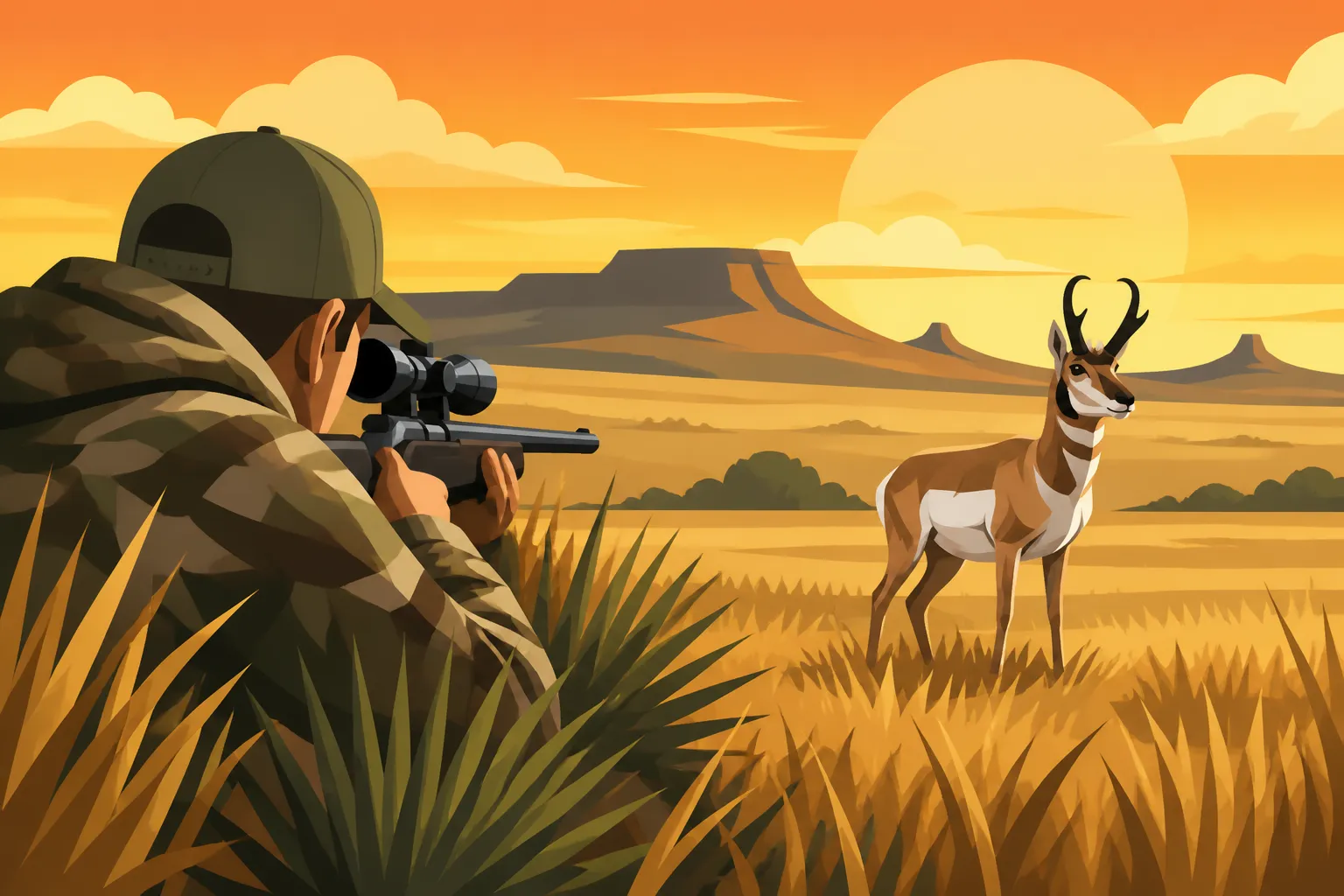
With pronghorn, your binoculars and spotting scope are arguably more important than your rifle. Their exceptional eyesight means you need to spot them before they spot you, often at ranges of a mile or more. This necessitates a systematic and patient glassing approach. Find a high vantage point, set up your optics, and methodically scan the landscape. Divide the area into grids, slowly moving your binoculars or spotting scope across each section, looking for any subtle movement, a flash of white, or an unusual shape that doesn't quite blend in.
Spend significant time behind the glass. What initially looks like a distant fence post might, with patience, reveal itself to be a pronghorn buck. Use a tripod for your spotting scope to ensure stability and reduce eye strain, allowing for prolonged observation. The key is to be more patient and thorough than the pronghorn's constant vigilance. This is a drastically different tactic than what you might employ when Scouting Kansas River Bottoms and Creek Draws for whitetails, where close-range sign is often the focus.
Approaching Pronghorn in Sparse Cover
Once you've spotted a pronghorn, the real challenge begins: the stalk. In wide-open Northwest Kansas, cover is minimal, often consisting only of subtle changes in elevation, dry creek beds, or the occasional small clump of sparse brush. This requires extreme patience, meticulous planning, and often, a lot of crawling.
Start by analyzing the terrain between you and the animals. Identify any low spots, folds in the earth, or even the back side of a distant hill that could provide visual obstruction. Use wind direction to your advantage to keep your scent from drifting towards them, though pronghorn rely more on sight than smell. Approach slowly, utilizing every piece of available cover, no matter how small. Be prepared to belly crawl for hundreds of yards. Sometimes, a well-placed Ground Blinds in Open Country might be your best option, especially if you can get it set up well in advance near a known travel route or water source. It's a mentally demanding process, often resulting in busted stalks, but the satisfaction of a successful close approach on these wary animals is unparalleled.
Challenges and Conservation of Kansas Pronghorn
While pursuing pronghorn in Northwest Kansas offers a unique thrill, it's important to understand the broader context of their populations, the challenges they face, and the conservation efforts underway. These insights not only inform your hunting approach but also highlight the importance of responsible stewardship.
Population Trends and Management Efforts
The Kansas Department of Wildlife, Parks and Tourism (KDWP) closely monitors the state's pronghorn population through aerial surveys and hunter harvest data. While the numbers are relatively stable within their core range in Northwest Kansas, they are far from abundant. The population tends to fluctuate based on factors like winter severity, spring moisture (which impacts forage quality and fawn survival), and disease outbreaks. You can learn more about specific influences on their numbers by looking at Antelope Fawn Survival in Dry Years.
KDWP manages pronghorn primarily through a limited draw permit system, ensuring that harvest levels remain sustainable and aligned with population goals. This means that unlike over-the-counter deer tags in some units, drawing a Kansas antelope permit is highly coveted and often requires multiple years of applying for Kansas Antelope Permits and Seasons. The aim is to provide recreational opportunity while maintaining a healthy, viable pronghorn herd for future generations.
Habitat Loss and Fragmentation
Despite their vast open country habitat, pronghorn in Kansas are not immune to the impacts of habitat loss and fragmentation. The expansion of intensive agriculture, particularly row crops, can reduce the amount of native grassland available for foraging and breeding. While they adapt to using agricultural fields, large-scale conversion of native prairie is a long-term concern.
Another significant challenge comes from fencing. While pronghorn are adept at crawling under fences, certain types of fences, particularly those with multiple strands of barbed wire close to the ground, can impede their movement, especially for fawns. This fragmentation can limit access to critical resources like food and water, disrupt migration corridors, and isolate small populations, making them more vulnerable. Conservation efforts often focus on working with landowners to implement wildlife-friendly fencing practices and preserve contiguous tracts of native grassland, which is also beneficial for Prairie Chicken Hunting in the Flint Hills further east.
The Permit Draw and Hunter Opportunity
The reality for most aspiring pronghorn hunters in Kansas is that obtaining a permit is a significant hurdle. Kansas offers a limited number of "any legal weapon" permits for antelope, issued through a highly competitive draw. Unlike the preference point system for deer, which can improve your odds over time, the Kansas antelope draw does not use a true preference point system; instead, it's often a pure lottery or a bonus point system that slightly increases your odds with more applications, but doesn't guarantee a tag. This makes it a tough draw, especially for non-residents. You can find detailed information about the application process, costs, and permit numbers by researching Kansas Antelope Permits and Seasons.
This competitive draw means that many hunters apply for years before finally drawing a tag. It also underscores the importance of being fully prepared once you do draw, maximizing your opportunity through thorough scouting and refined hunting skills. For hunters who do get a tag, it's often a hunt of a lifetime, a chance to pursue a truly unique big game animal in the wide-open, starkly beautiful landscape of Western Kansas Plains Hunting Country.
| Feature | Typical Kansas Whitetail Hunting | Northwest Kansas Pronghorn Hunting |
|---|---|---|
| Primary Habitat | Timber, creek bottoms, dense brush, crop fields | Open shortgrass prairie, rangeland, wheat fields |
| Key Defense | Scent, cover, nocturnal movement | Exceptional eyesight, speed, open country |
| Scouting Focus | Tracks, rubs, scrapes, bedding cover, pinch points | Long-range glassing, water, large open tracts, subtle terrain |
| Hunting Method | Treestands, ground blinds, still-hunting, drives | Spot-and-stalk, strategic use of ground blinds |
| Average Detection Range | 50-200 yards | 1,000 yards – 3+ miles |
| Required Optics | Binoculars (8-10x) | High-quality binoculars (10-15x), spotting scope (15-60x) |
| Movement Speed | Deliberate, stealthy | Rapid, long-distance movements |
| Permit Availability | Varies by unit, some OTC, draw | Highly limited draw only |
Disclaimer
The information provided in this guide is for general informational purposes only and is subject to change. Hunting regulations, season dates, and permit requirements are determined by the Kansas Department of Wildlife, Parks and Tourism (KDWP) and can be modified. Always consult the most current KDWP regulations before planning any hunting activity. It is the hunter's responsibility to know and obey all applicable laws and regulations.