Western Kansas Deer Units
Heading out to hunt deer in western Kansas can feel like stepping into a whole different world compared to the timber-choked creek bottoms of the eastern part of the state. The vast, open plains, sprawling agricultural fields, and often sparse cover present a unique set of challenges and opportunities that can leave a hunter scratching their head if they're not prepared. This guide is here to help you navigate those wide-open spaces, understand the specific characteristics of western Kansas deer units, and give you a solid foundation for planning a successful hunt.
The Distinctive Landscape of Western Kansas Deer Units
When you envision deer hunting, many people picture dense forests or rolling hills with plenty of cover. Western Kansas, however, often paints a different picture entirely. The landscape out here is defined by immense horizons, endless skies, and a mosaic of shortgrass prairie, irrigated cropland, and subtle changes in elevation that become paramount to understanding deer movement. It's a place where a small, isolated stand of trees or a hidden drainage can hold a giant, and knowing how to read these subtle cues is key.
Sparse Timber and Crucial Riparian Zones
Forget about continuous timber blocks stretching for miles. In western Kansas, substantial timber is a rare commodity, typically hugging the major river systems and their tributaries. These ribbons of cottonwoods, willows, and cedars – often referred to as riparian zones – are absolute magnets for deer, providing cover, food, and crucial thermal protection from the brutal summer heat and harsh winter winds. When you're scouting, these areas should be your primary focus.
It's not just the big rivers like the Smoky Hill, Republican, or Arkansas that matter; even small, dry creek beds with a few scattered trees can concentrate deer. These become natural travel corridors and bedding areas in an otherwise open environment. Learning to identify these lifeline habitats, especially when looking at aerial maps, will save you countless hours of walking unproductive ground. Deer will often bed right on the edge of these areas, ready to slip into the surrounding fields under the cover of darkness. Reading a Kansas Creek Bottom for Deer Sign is essential, as these zones are lifeblood in a dry landscape.
Agriculture's Dominance and Deer Nutrition
Western Kansas is an agricultural powerhouse, dominated by vast fields of corn, milo (grain sorghum), wheat, and alfalfa. These crops aren't just a backdrop; they are the foundation of the deer's diet and play a massive role in their patterns and overall health. A buck's antler growth is directly tied to the nutrition he receives, and the protein and energy provided by these crops contribute significantly to the impressive antler size Kansas is known for.
Deer will often bed in taller crops like standing corn or CRP fields during the day, emerging in the evenings to feed. As seasons change and crops are harvested, deer patterns shift dramatically. Knowing the harvest schedule and understanding which crops are available at different times of the year is vital. For example, a freshly cut milo field can be a late-season buffet, while standing corn might offer unparalleled bedding cover earlier in the year. This constant interaction between agriculture and deer movement creates dynamic hunting opportunities, but also requires flexibility in your approach.
The Influence of the High Plains on Deer Movement
The true High Plains climate brings its own set of challenges, from extreme temperature swings to persistent winds. Deer in these western units are adapted to these conditions, often displaying different behaviors than their eastern counterparts. They might travel longer distances between bedding and feeding areas, using subtle terrain features for cover from the wind or to stay out of sight of predators and hunters.
Visibility is a double-edged sword out here. You can see for miles, which is fantastic for spotting deer at a distance, but they can see you too. This means meticulous attention to cover, wind direction, and approach paths is even more critical. Understanding how Wind and Thermals on a River Bank or how deer use subtle draws to travel undetected across seemingly flat land will give you a significant advantage. This environment also tends to lead to lower deer densities compared to eastern Kansas, making every encounter more valuable.
Key Western Deer Units and Their Characteristics
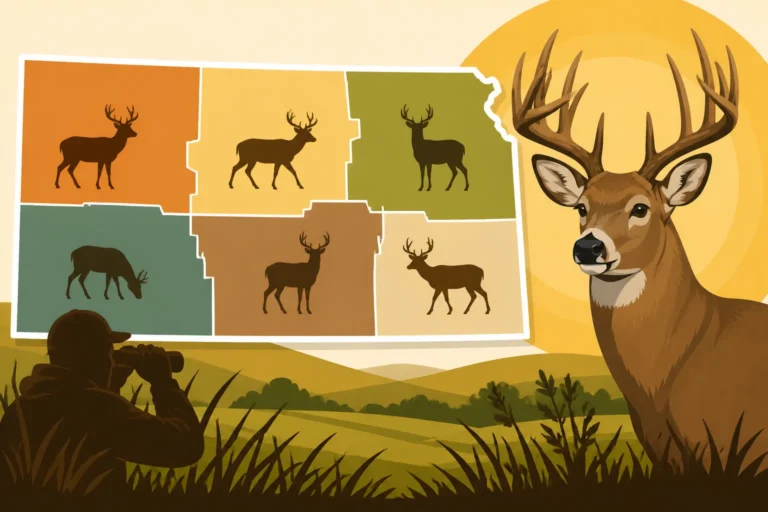
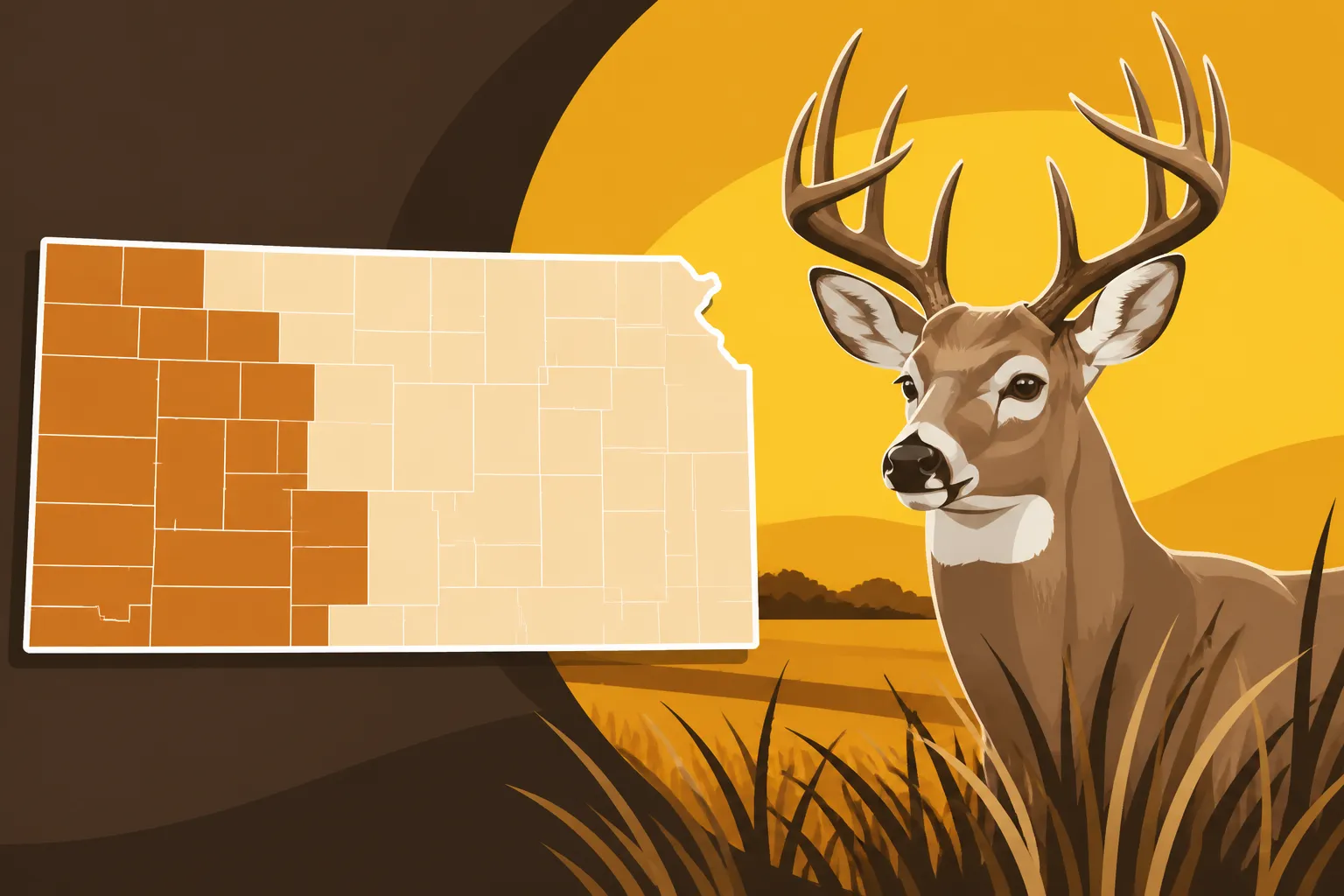
Kansas is divided into 19 deer management units, and the western units, particularly those in the far west, offer unique hunting experiences and often feature the highest likelihood of encountering mule deer alongside whitetails. It's crucial to research each unit thoroughly, considering factors like habitat, deer density, public land access, and draw success rates.
The Far Western Units: Mule Deer Country
Units like 1, 2, and 17, stretching into the extreme western reaches of the state, are your best bet if you're hoping to chase a mule deer. While whitetails are still the predominant species, these units have a viable, albeit smaller, population of mule deer. The landscape here transitions to more true prairie and rangeland, with less timber and more breaks, canyons, and deep draws providing cover.
However, drawing a permit for these units, especially for mule deer, can be notoriously difficult for non-residents. The Kansas Mule Deer Stamp Draw is a separate application process, and success is far from guaranteed. Hunters pursuing these units need to be prepared for vast distances, challenging terrain, and a keen eye for spotting deer at long range. Success often comes down to covering a lot of ground, both physically and with optics, and understanding that densities are generally lower than in whitetail-focused units.
Central Western Units: Whitetail Dominance with Some Muleys
Units such as 3, 4, 10, 15, and 16 offer a blend of habitats, with whitetails being the primary target, but still holding scattered mule deer populations, especially on the western edges of these units. Here, you'll find a mix of agricultural fields, river breaks, and rolling native grasslands. Public land access, particularly through the Kansas Walk-In Hunting Access Explained program, can be significant in these areas.
These units often have higher whitetail densities than the far western units, and the habitat offers more pockets of cover. Rivers like the Solomon, Saline, and Smoky Hill provide crucial corridors. Hunters here might focus more on finding funnels within agricultural landscapes or thickets within the river bottoms. Understanding Kansas Deer Herd Numbers by Unit can help set realistic expectations, and recognizing the overlap between whitetail and mule deer ranges is important for proper species identification.
Transitional Units: East Meets West
As you move slightly east into units like 7, 8, and 9, you'll find an even stronger whitetail presence and fewer mule deer, though still possible to encounter them in certain areas. These units bridge the gap between the open plains and the more timbered eastern regions. They often feature larger river systems with extensive bottomland timber, making them excellent for whitetail.
These units can offer a different type of challenge, often with more hunting pressure due to better whitetail numbers and easier draw odds for non-residents. The focus here shifts to dissecting river bottoms, scouting timbered draws, and identifying key travel routes between these cover areas and the surrounding crop fields. Being able to adapt your tactics from open-country glassing to tighter-cover stand hunting within the same unit is a valuable skill.
| Deer Unit Type | Primary Species | General Habitat | Draw Difficulty (Non-res) | Notable Features |
|---|---|---|---|---|
| Far Western (e.g., 1, 2, 17) | Whitetail/Mule Deer | Prairie, rangeland, canyons, sparse riparian | Very High (Mule Deer) | Best chance for Mule Deer, vast open country |
| Central Western (e.g., 3, 4, 10, 15, 16) | Whitetail (some Mule Deer) | Ag fields, river breaks, native grassland | Moderate to High | Good Whitetail numbers, some Mule Deer pockets |
| Transitional (e.g., 7, 8, 9) | Whitetail | Extensive river bottoms, ag, mixed timber | Moderate | Strong Whitetail focus, denser cover in drainages |
Habitat and Terrain Challenges in Western Units
Hunting in western Kansas is an exercise in resourcefulness and patience. The landscape demands a different approach, where subtle features become major advantages and adaptability is key. Without dense, continuous cover, deer movements are often more exposed and influenced by elements like wind and topography.
Reading Subtle Topography and Draws
In what might appear to be flat country to the untrained eye, even the slightest change in elevation or a shallow drainage becomes a critical piece of the puzzle. These subtle draws and low spots act as natural travel corridors, providing deer with concealment as they move from bedding areas to feeding grounds. A deer can disappear into a depression that's only a few feet deep, making them incredibly difficult to spot until they emerge.
Learning to read these topographical nuances on a map, especially using a robust mapping app like onX Hunt, is absolutely invaluable. You can identify pinch points, funnels, and natural barriers that concentrate deer movement. What looks like an insignificant ripple on a satellite image might be a superhighway for a mature buck trying to avoid detection. Spending time Hunting Terrain Funnels in Flat Country will pay dividends. Understanding how deer use these features for thermal regulation and protection from the wind is a game-changer.
Finding Water in an Arid Landscape
Water sources are often limited in western Kansas, especially during dry periods. This makes any permanent or semi-permanent water — even a muddy farm pond, a stock tank, or a reliable spring — an absolute hotspot for deer activity. In arid units, deer will often travel significant distances to access water, and these locations can be prime ambush points, particularly during the early archery season when temperatures are still high.
Monitoring water sources can provide consistent opportunities, especially if you're hunting in September. Deer, like all wildlife, need to drink regularly, and in areas where water is scarce, their patterns will revolve around it. Placing trail cameras on these key water points can reveal not only what deer are using the source but also when they are using it. Always keep a mental note of water sources, as Finding Water in Dry Western Kansas becomes a top priority.
Understanding CRP and Tall Grass Beds
Conservation Reserve Program (CRP) ground, characterized by dense, tall grasses, provides critical bedding cover for deer in western Kansas. These areas offer excellent concealment from predators and harsh weather, making them prime daytime refuges. Bucks will often bed in the thickest sections of CRP, particularly those adjacent to food sources or near subtle elevation changes.
Hunting CRP requires a different strategy than hunting timber. You often can't see far into it, so you might need to hunt the edges, look for defined travel trails within the grass, or consider a strategic ground blind setup. Understanding CRP Grass and Where Bucks Bed can help you pinpoint high-probability areas within these vast fields. The wind is always a factor when hunting tall grass, as your scent can swirl and betray your presence long before you see a deer.
Permit Strategy for Western Kansas Deer
Securing a deer permit for western Kansas can be one of the most challenging aspects of hunting the region, especially for non-residents. Kansas operates on a draw system, and understanding the nuances of the application process is critical to putting yourself in the best position for success.
Navigating the Nonresident Draw System
Nonresidents must apply for a deer permit through a lottery draw, typically held in April. This process is highly competitive, particularly for the coveted mule deer stamps or units known for producing giant whitetails. You'll apply for a primary unit and an adjacent unit, and you'll also declare your weapon choice. The system is designed to give residents priority, so nonresidents often need to accumulate preference points over several years to draw a desirable tag.
It's vital to research the draw odds for specific units and species (whitetail vs. mule deer) before applying. Resources like GoHunt can provide valuable data on draw success rates, helping you make an informed decision on which unit to apply for and how many preference points you might need. Don't underestimate the competition; a good strategy often involves applying for a preference point even if you don't plan to hunt that year, simply to build up your chances for a future hunt. How to Apply for a Kansas Nonresident Deer Permit is a must-read for anyone considering a western Kansas hunt.
The Role of Preference Points
Preference points are your ticket to eventually drawing a tag in a highly sought-after western Kansas unit. You earn one point for each year you apply and are unsuccessful in drawing your first-choice permit. These points accumulate and increase your odds in subsequent draws. The more points you have, the better your chances of drawing in a unit with historically low success rates.
However, keep in mind that preference points are not a guarantee, especially for mule deer stamps, which operate on a true lottery system. For whitetail permits, points significantly improve your odds. Understanding Kansas Preference Points Explained is crucial. It’s a long-term strategy that requires patience, but it's often the only realistic path for non-residents to hunt the best western units. Don't lose track of your points; they usually have an expiration if not used within a certain timeframe or if you fail to apply.
Antlerless Permits and Opportunity
Even if you don't draw an either-sex permit for a western unit, there are often opportunities for antlerless deer permits, particularly during certain seasons. These permits are typically less expensive and easier to obtain, sometimes even available over the counter after the main draw. While they won't get you a trophy buck, they can provide a fantastic hunting experience, a chance to fill the freezer, and an opportunity to scout a unit for future seasons.
Consider an antlerless hunt as a valuable way to learn a new unit, understand deer movements, and gain experience in the western Kansas landscape without the pressure of a trophy buck tag. These hunts are especially effective during Kansas Antlerless Hunts and Filling the Freezer or extended antlerless seasons, which help manage deer populations and can be excellent for introducing new hunters to the sport. Sometimes, combining an antlerless tag with a general hunting license allows for small game hunting as well, maximizing your time afield.
Hunting Tactics for Open Country Deer
Hunting western Kansas often requires a complete shift in tactics from what many hunters are used to. With vast, open landscapes and limited cover, long-range visibility and strategic movement become paramount.
Glassing and Spot-and-Stalk
In western Kansas, your binoculars and spotting scope are arguably your most important hunting tools. The ability to sit and patiently glass vast stretches of country from an elevated position is crucial. Deer often feed and move in the open during low light, and spotting them from a distance allows you to formulate a strategic plan. This style of hunting demands good optics and the discipline to sit and observe for extended periods.
Once a deer is spotted, the game shifts to spot-and-stalk. This involves using the terrain, subtle elevation changes, and any available cover to close the distance undetected. Wind direction is everything in a stalk, as is understanding how deer will react to pressure in such an open environment. It’s a physically demanding and mentally challenging endeavor, but incredibly rewarding when successful. Kansas Whitetail Hunting Tactics Through the Rut often involves significant glassing, even in more timbered areas.
Ground Blinds and Natural Cover
Given the scarcity of trees in many western units, traditional treestands are often not an option. This is where ground blinds, both pop-up and natural, really shine. A well-brushed-in pop-up blind can provide excellent concealment, especially near key food sources, water, or pinch points where deer are funneled. You need to get these blinds out early to allow deer to get used to them.
Even without a pop-up, you can use natural features like plum thickets, brush piles, or the edge of a standing crop field to create an effective ground setup. The key is to break up your outline and blend into your surroundings. Deer in open country are incredibly wary, and any unnatural silhouette will quickly put them on high alert. Ground Blinds in Open Country details the importance of careful placement and concealment.
Mobile Hunting and Adaptability
The highly dynamic nature of western Kansas deer, especially with changing agricultural practices and weather, means that being mobile can be a huge advantage. Instead of committing to a fixed stand for an entire hunt, a mobile hunting setup — whether it's a saddle, a lightweight climbing stand, or a ground blind you can move — allows you to react to fresh sign and changing patterns.
This approach lets you scout new areas, quickly set up on a hot sign, and abandon unproductive spots without much fuss. If you're on public land, being able to pack in and out light is especially helpful. Techniques like Mobile Hunting With a Saddle in Kansas are gaining popularity precisely because they offer this flexibility. The ability to adapt to where the deer are right now, rather than where you thought they'd be a week ago, will significantly increase your odds.
Public Land Access and Considerations
Hunting public land in western Kansas comes with its own set of unique opportunities and challenges. While private land dominates much of the state, there are significant public access options that, with proper planning and scouting, can lead to successful hunts.
The Kansas Walk-In Hunting Access WIHA Program
The Kansas Walk-In Hunting Access (WIHA) program is a game-changer for public land hunters. This program leases hunting access from private landowners, opening up thousands of acres to public use. Many of these WIHA tracts are in western Kansas and can offer fantastic hunting for deer, especially if you scout them thoroughly. The key is to understand the different types of WIHA and their specific rules.
Some WIHA tracts operate under the iWIHA system, requiring hunters to check in and out via an app to manage pressure. Others are open access. Always check the current WIHA atlas, available online or in print, for up-to-date information on tracts, boundaries, and regulations. It’s crucial to know When Kansas WIHA Tracts Open in Fall and their specific rules for things like stands, vehicles, and camping. Never assume rules are universal; always verify for each tract.
State Wildlife Areas and Corps of Engineers Land
Beyond WIHA, Kansas also offers hunting opportunities on State Wildlife Areas and Corps of Engineers land around federal reservoirs. These areas can provide consistent hunting year after year, often with a mix of timber, grass, and agricultural fields managed specifically for wildlife. They can be excellent resources, but often come with more specific regulations regarding vehicle access, stand placement, and hunting methods.
Researching individual wildlife areas in western Kansas is important, as each can have unique rules or even draw-only hunts. For instance, Kansas Reservoirs and Corps of Engineers Land can be great for deer, but you need to understand where hunting is permitted versus restricted zones around recreation areas. These areas can sometimes see more hunting pressure, especially on weekends, so considering Weekday Versus Weekend Public Land can improve your experience.
Scouting and Minimizing Pressure
Whether you're on WIHA or a State Wildlife Area, effective scouting is paramount for public land success. With public land, especially in more open western units, deer can become pressured quickly. This means looking for overlooked corners, remote pockets, or areas that are difficult for other hunters to access. E-scouting with tools like onX Hunt before you ever step foot in the field can help you identify these hidden gems.
Once you're on the ground, focus on finding areas with fresh sign that are a distance from easy road access. Deer quickly learn to avoid high-traffic areas. Pay attention to Hunting Pressure Patterns on Kansas Public Land and try to get into spots that other hunters might bypass. Early morning walks or late evening glassing sessions can reveal access routes that don't bump deer and show you how animals are reacting to human presence. Leaving no trace and respecting the land ensures these opportunities remain available for everyone.
Disclaimer
This article is for general informational purposes only and does not constitute professional advice. Laws, prices and regulations vary by location and change over time. Consult a qualified professional for guidance on your specific situation.