Corner Crossing Rules in Kansas
Navigating the patchwork quilt of public and private land in Kansas can feel like a high-stakes game of hopscotch, especially when you encounter those perplexing spots where public land corners touch. The question of whether you can legally step from one piece of public land to another by briefly crossing the airspace above a private land corner – without ever touching the private ground – has long been a source of confusion and frustration for hunters trying to do the right thing. This guide aims to demystify these corner crossing rules in Kansas, helping you understand the legal landscape, the risks involved, and how to stay on the right side of the law while still accessing the incredible hunting opportunities our state offers.
The Intricate Dance of Public and Private Land
Kansas, like many Western states, has a complex system of land ownership. While we don't have the vast tracts of federal land found further west, we have a significant amount of public ground accessible through programs like Walk-In Hunting Access (WIHA) and numerous state wildlife areas, often nestled right up against privately owned farms and ranches. This creates unique challenges for hunters.
The Checkerboard Dilemma
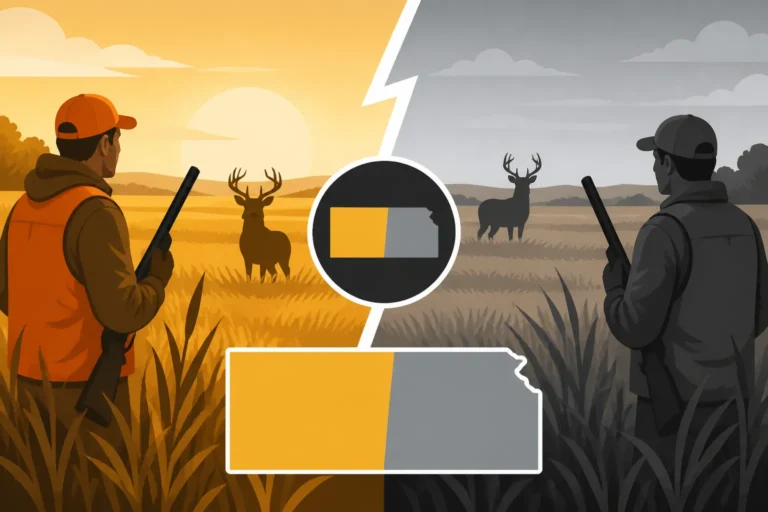
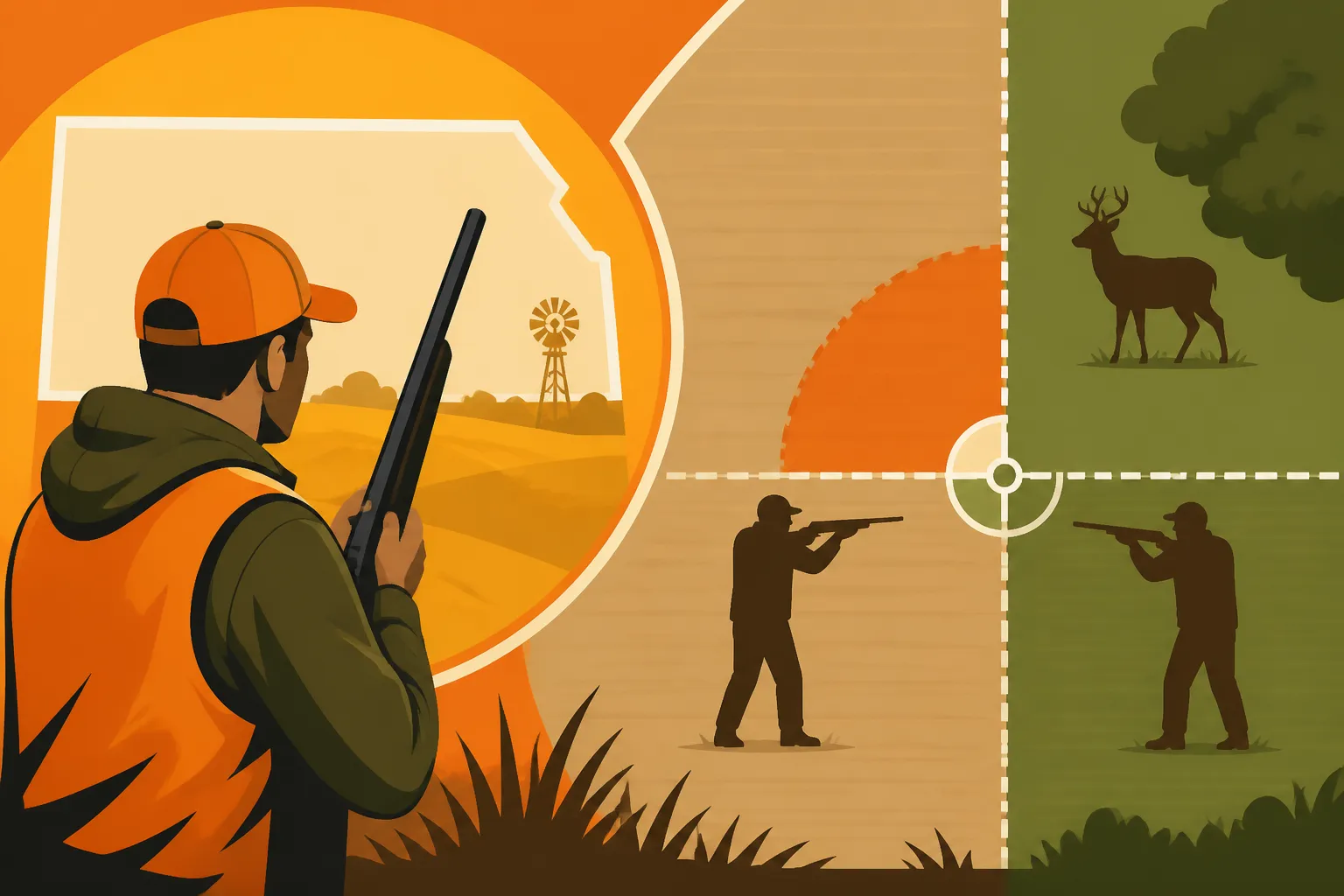
Imagine looking at a hunting map, perhaps on an app like onX Hunt, and seeing four squares. Two diagonally opposite are public, and the other two are private. Their corners touch in a single point, like a "checkerboard" pattern. On paper, it looks simple: you're moving from public to public. But the issue arises from the long-standing legal principle that private landowners control not just the surface of their property, but also the airspace directly above it.
This checkerboard pattern is particularly common where sections of land meet. These sections, often 640 acres each, were surveyed in a grid system. Over time, some sections or parts of sections became public property (like state school trust lands or public hunting areas) while others remained private. When four different land parcels converge at a single point, you get a "four corners" situation. For a hunter wanting to move between two public parcels that only touch at this corner, the question isn't just if they can cross, but how they can do so without committing trespass. This is the heart of the dilemma: physically, it seems like you could step over the corner without touching private ground, but legally, the airspace is often considered part of the private property below. It’s a situation that leaves many hunters scratching their heads, wanting to access legal hunting ground but terrified of inadvertently breaking the law or incurring the wrath of a landowner.
Key Laws and Definitions Related to Trespass
In Kansas, trespass is generally defined as entering or remaining on land or property without the consent of the owner or occupant. This consent can be expressed (like explicit permission) or implied (like unposted public land where hunting is allowed). The law differentiates between various types of property, but for hunters, the focus is on agricultural or fenced land. Posted signs, purple paint on fence posts or trees, and locked gates are all clear indicators that land is private and entry is prohibited without permission.
The crucial element here is "entering or remaining." Does merely passing over a corner, without your feet touching the private soil, constitute "entering"? This is where the legal interpretations get murky, and where the concept of a landowner's air rights comes into play. Kansas statutes typically focus on physical entry onto the surface of the land. However, the legal precedent for air rights has historically been robust, creating a strong deterrent for those considering corner crossing. It’s not just about setting foot on the ground; it’s about the perceived violation of a property boundary, even if it’s just a point in space. This ambiguity forces hunters into a tough spot: risk legal trouble or forgo accessing perfectly legal public hunting ground that's effectively landlocked.
What is Corner Crossing?
Corner crossing isn't just a theoretical concept; it's a real-world challenge that many hunters encounter when trying to access public land that's been divided up by private parcels. It refers specifically to crossing from one parcel of public land to another at the common corner point of four land parcels, where two are public and two are private.
The Physical Act of Corner Crossing
Imagine standing on a piece of public ground. You look across to another piece of public ground that's diagonally opposite. Between them are two private parcels, and their corners meet at a single point. To "corner cross," a hunter would typically use a ladder, a short walk, or some other method to step over that single corner point, theoretically without ever touching the ground of the private parcels. The idea is to traverse the small column of air directly above the property corner.
Proponents of corner crossing argue that if you never set foot on the private ground, you haven't committed trespass. They view the corner as a shared point, and moving from one public parcel to another via the airspace directly above this single point should be permissible. Hunters often try to navigate this by using specialized ladders or simply by taking a giant, careful step, ensuring their boots never touch the private soil. It's a precise, deliberate act born out of a desire to utilize every bit of legally accessible public hunting land. Access Routes That Do Not Bump Deer are already hard enough to plan without adding legal ambiguities to the mix.
Why it's a Gray Area
The "gray area" of corner crossing stems from conflicting interpretations of property rights. Landowners generally hold "ad coelum" rights, meaning ownership extends from the center of the earth to the heavens. This traditional view suggests that the air above their property, even at a single corner, is still their property. Therefore, passing through that air without permission would be a form of trespass.
On the other hand, some argue that public lands are meant to be accessible, and if a corner is the only way to connect two public parcels, then restricting access through the air at that single point effectively landlocks public ground. The legal system has struggled to definitively rule on this because it involves a precise intersection of ancient property law and modern land access needs. There isn't a specific statute in Kansas that explicitly permits or prohibits corner crossing, leaving it open to interpretation and, unfortunately, often to local discretion or individual landowner reactions. This lack of clear, statewide guidance puts hunters in a precarious position, forced to make a judgment call that could have serious legal repercussions. This is why tools like onX Layers for Kansas Land Status are so crucial, as they clearly show these tricky boundaries, but even they can't solve the legal ambiguity.
Legal Precedents and Interpretations
While Kansas might not have a definitive, state-level ruling specifically on corner crossing, legal cases in other states, particularly the recent developments in Wyoming, have sent ripples through the hunting community and offered significant insight into how these situations might be handled.
The Wyoming Case and Its Implications
In a widely watched case in Wyoming, four Missouri hunters were charged with criminal trespass for using a ladder to "corner cross" between two parcels of public land, allegedly without touching the private land below. While they were initially found not guilty of criminal trespass, a subsequent civil lawsuit brought by the private landowner resulted in a substantial judgment against the hunters. The court essentially affirmed the landowner's rights to the private air space above their property. This case, though not in Kansas, has had a profound impact on the national discussion surrounding corner crossing, reinforcing the idea that even brief incursions into the airspace above private property, regardless of physical contact with the ground, can be deemed trespass.
The implications for Kansas hunters are significant. While Kansas courts might interpret laws differently, the Wyoming ruling provides a strong precedent that land ownership often includes the air column above the surface. This means that merely stepping over a corner, even without touching private ground, could still be considered a violation of property rights. It underscores the importance of understanding not just the letter of the law but also how courts might interpret ambiguous situations when property owners assert their rights. For those considering hunting Landlocked Public Land in Kansas, this case certainly adds a layer of caution.
Kansas-Specific Legal Landscape
In Kansas, trespass laws focus on unauthorized entry onto property. K.S.A. 21-5808 defines criminal trespass, often referring to entering or remaining on land without authorization. While there's no specific statute addressing "corner crossing" by name, the broad definition of trespass and the traditional understanding of property rights would likely be applied. Landowners in Kansas often feel very strongly about their property boundaries, and even a perceived violation can lead to confrontations and potential legal action.
The Kansas Department of Wildlife and Parks (KDWP) generally advises hunters to secure permission before accessing private property, and that includes any airspace associated with it. They emphasize respect for landowners and their property. Without a specific Kansas Supreme Court ruling on corner crossing, the legal interpretation would likely fall to local judges, who may be influenced by national precedents or local customs. This makes corner crossing a high-risk endeavor, as the outcome can be unpredictable and depend heavily on the specific circumstances and the judge's interpretation. Even using the Kansas Online Hunting Atlas to verify public land won't resolve this specific gray area.
The Role of Enforcement and Landowners
Law enforcement in Kansas, including county sheriffs and KDWP game wardens, generally operate on the principle of respecting private property rights. If a landowner complains about corner crossing, law enforcement would typically investigate. While they might initially lean towards the landowner's interpretation, the specifics of the situation (e.g., whether private ground was touched, the intent of the hunter, the clarity of signage) would all factor into whether charges are pursued.
The most critical factor, however, is often the landowner themselves. Many Kansas landowners view corner crossing as a direct infringement on their property rights and a lack of respect. Even if a hunter truly believes they haven't technically trespassed, a landowner who feels violated can initiate legal proceedings. The civil case in Wyoming is a stark reminder that even if criminal charges don't stick, the financial and emotional toll of a civil lawsuit can be immense. Building relationships with landowners and seeking explicit permission for any access, even to corners, is always the safest and most respectful approach. For general access questions, checking Finding Private Land Access in Kansas can offer broader guidance.
Navigating Corner Crossing Safely and Legally
Given the legal ambiguities and the potential for serious consequences, approaching corner crossing in Kansas requires extreme caution and a thorough understanding of your options. The goal is to hunt legally, respectfully, and without fear of reprisal.
Tools for Identifying Land Boundaries
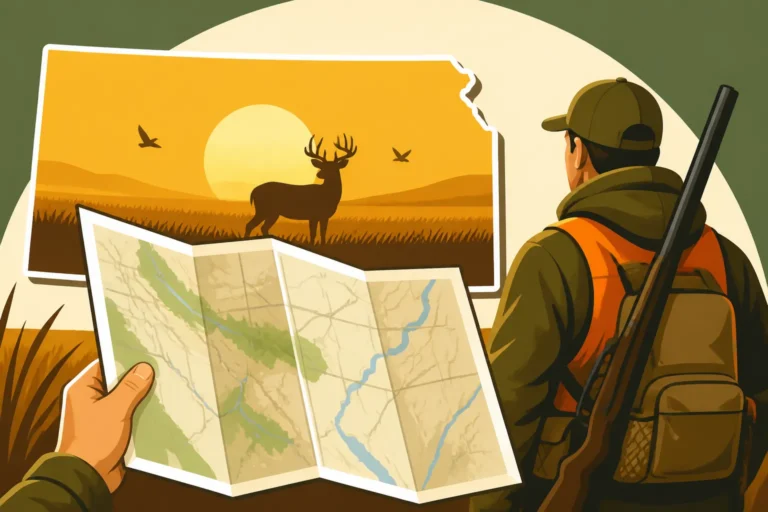
Before you even step foot on hunting ground, whether it's Public Hunting Land in Kansas or private, having a crystal-clear understanding of property lines is non-negotiable. Modern technology has revolutionized this aspect of hunting. Tools like the onX Hunt app are invaluable here. They provide detailed satellite imagery overlaid with property ownership information, clearly demarcating public and private land parcels, often color-coded for easy identification. You can see precisely where corners meet, where easements exist, and where potential access points might be.
Using such an app allows you to zoom in and visualize the exact property lines, helping you identify checkerboard situations. However, even with these sophisticated tools, remember that they represent an interpretation of property data. Always cross-reference with official county plat maps if there's any doubt, and be aware that GPS accuracy can sometimes have a margin of error. Relying solely on a line on a screen for an ambiguous legal decision is risky. Use these tools for planning, not as definitive legal proof in a confrontational situation. They are fantastic for understanding the lay of the land, but they don't change the legal interpretation of air rights.
Best Practices for Hunters
When it comes to corner crossing, the safest best practice is often avoidance. If you encounter a situation where public land corners meet private parcels, and there's no clear, legal, ground-level access between the public tracts, it's generally wiser to seek an alternative route or avoid that particular piece of public ground. The potential legal headaches, fines, and civil damages simply aren't worth the risk.
However, if you feel there's a compelling reason or you're absolutely certain of your rights (perhaps after consulting legal counsel specific to Kansas law, not just general hunting advice), here are some considerations:
- Do Your Homework: Thoroughly research the specific area. Check county records, plat maps, and KDWP resources. Some areas might have historically recognized easements or agreements that aren't immediately apparent.
- Never Touch Private Ground: If you must attempt to corner cross, ensure that absolutely no part of your body or equipment touches the private land below. This is incredibly difficult to do perfectly and consistently.
- Document Everything: If you're going to try it, consider taking photos or video of the corner, your method of crossing, and the posted signage (or lack thereof). This might be helpful if you face accusations.
- Be Prepared for Confrontation: Even if you believe you're within your rights, a landowner may not agree. Be prepared for verbal confrontation and potentially law enforcement involvement. Remain calm and respectful.
- Consider a Guide: While often associated with Booking a Kansas Whitetail Hunt With an Outfitter, some outfitters might have leased corner access, or know of specific legal access points that aren't obvious. This is rare for such specific access issues, but worth considering for larger tracts.
- Explore Other Access Points: Before even considering corner crossing, exhaust all other options. Are there other public access points, even if they require a longer walk? Is there WIHA ground nearby? Hunting Kansas Walk-In Land Without Burning It Out provides a wealth of information on utilizing these resources. GoHunt is an excellent resource for researching hunting areas and strategies, often highlighting areas with clearer access.
When in Doubt, Ask or Avoid
This is the golden rule of hunting ethically and legally in Kansas: When in doubt, always err on the side of caution.
- Ask for Permission: The absolute best way to resolve a corner crossing dilemma is to simply knock on the door of the private landowner and ask for permission to cross their corner. You might be surprised at the generosity of some landowners, especially if approached respectfully and well in advance. Explain exactly what you intend to do and assure them you will not deviate from the corner. Always get permission in writing if possible, even a text message can help, but a signed note is best. This proactive approach not only keeps you legal but also fosters positive hunter-landowner relations, which are crucial for the future of hunting in Kansas. Kansas Landowner Permission Basics covers this in more detail.
- Avoid the Situation Entirely: If you can't get permission, and the legal status of corner crossing remains ambiguous or high-risk in that specific spot, it's always best to choose another area. There's plenty of Kansas Walk-In Hunting Access Explained and other public lands available, even if they require more scouting or a longer hike. Focus on areas where access is undeniable and you can hunt with a clear conscience, knowing you're fully within the bounds of the law and respecting property rights. This helps avoid potential issues like Kansas Wildlife Violation Penalties and Reporting Poaching in Kansas, which can stem from misunderstandings or perceived trespass.
| Scenario | Legal Risk in Kansas (Current Interpretation) | Recommended Action |
|---|---|---|
| Stepping onto private corner | High (Clear Trespass) | Absolutely avoid. Seek permission or another route. |
| Jumping over private corner | Medium to High (Ambiguous, but risky) | High risk of confrontation/legal action. Avoid if possible. Seek permission. |
| Asking landowner for air-cross | Low (With permission) | Always recommended. Get permission in writing if possible. |
| Using public access roads/trails | Very Low (Clear Legal Access) | Preferred method. Verify with maps (e.g., onX Hunt). |
| Avoiding corner entirely | Very Low (No Risk) | Safest option. Find alternative public access. |
Remember, the landscape of hunting regulations can change, and legal interpretations can evolve. Staying informed, exercising good judgment, and prioritizing ethical behavior will always be your best defense against inadvertently breaking the law.
Disclaimer
This article is for general informational purposes only and does not constitute professional advice. Laws, prices and regulations vary by location and change over time. Consult a qualified professional for guidance on your specific situation.