Feeders and Mineral on Kansas Public Ground
It's incredibly tempting, isn't it? You see those pictures online, hear stories of deer hammering a feeder or a mineral site, and the thought naturally pops into your head: "Could I do that on Kansas public ground?" The reality, however, is often a harsh dose of regulations that can easily trip up even well-meaning hunters. This guide is here to clear up the confusion around using feeders and mineral on Kansas public land, explaining not just what the rules are, but why they exist, and what ethical alternatives you have for finding success.
Understanding the Legal Landscape: Kansas Regulations on Public Land
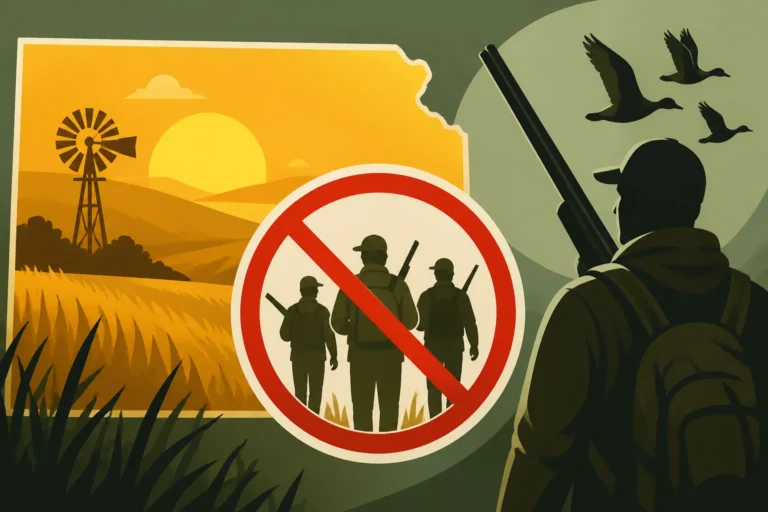
Let's get straight to it: when you're hunting on Kansas public land, the rules around attractants like feeders and mineral sites are very clear, and they are generally much stricter than what you might encounter on private property. This isn't just a suggestion; it's the law, and violating it can lead to hefty fines, permit revocations, and even loss of hunting privileges. It's a critical aspect of being a responsible hunter, and ignoring it can ruin your season and your reputation.
Defining "Baiting" and "Mineral" in Kansas
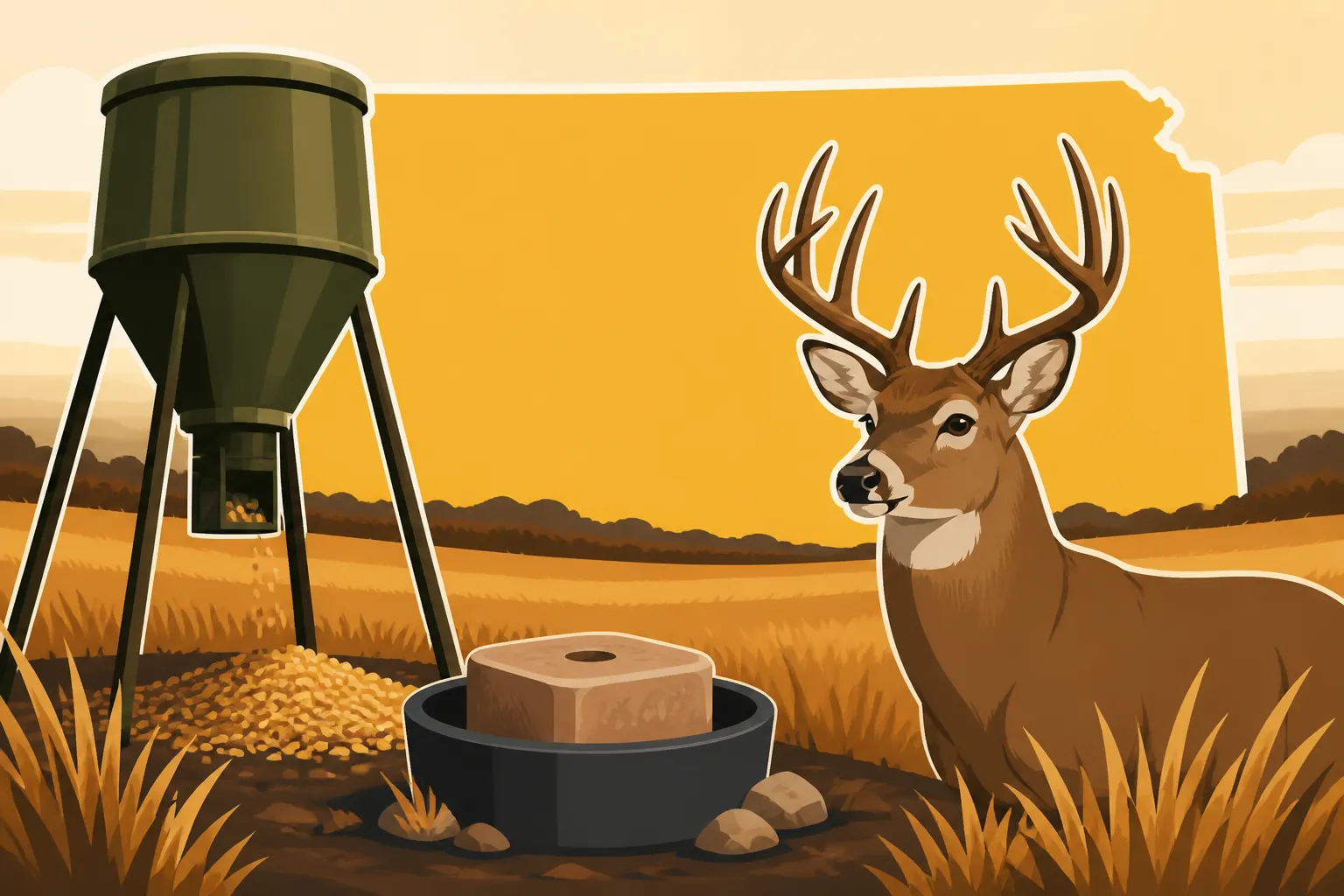
The Kansas Department of Wildlife and Parks (KDWP) has specific definitions for what constitutes baiting and supplemental feeding. Generally, anything that draws wildlife to a specific location by offering food, mineral, or other consumable attractants can fall under these regulations. This includes traditional deer feeders that dispense corn or protein pellets, but it also extends to mineral blocks, loose mineral mixes, and even large piles of grain or food. The intent isn't always the primary factor; simply having these items present can be considered a violation if done incorrectly or in prohibited areas. The rule of thumb for public land is often "if it didn't grow there naturally, and it's attracting game, it's probably illegal."
The line can sometimes feel blurry, especially when natural food sources are abundant, but the regulations are designed to prevent unfair advantage and potential disease spread. For example, scattering a small amount of corn might feel innocent, but if it's placed to draw deer for hunting, it falls under the baiting umbrella. This is why knowing the specifics for each type of public land you hunt is so important.
Specific Rules for Public Hunting Areas
Kansas is home to a variety of public hunting areas, and while the general sentiment against baiting and mineral on public land holds true, it's crucial to understand that specific rules can sometimes vary slightly between different designations.
Walk-in Hunting Access (WIHA) and iWIHA: These tracts, generously provided by private landowners, are subject to KDWP regulations. Generally, the use of feeders and mineral is strictly prohibited on WIHA and iWIHA lands. The spirit of these programs is to provide accessible, fair-chase hunting opportunities, and introducing artificial attractants goes against that principle. It's about hunting the natural movements of deer and other game. You can find detailed information on these specific areas in guides like Kansas Walk-In Hunting Access Explained. Before you check into an iWIHA tract, always confirm the specific rules for that parcel, as landowners might have additional, more restrictive rules, but never less restrictive than KDWP.
State Wildlife Areas (SWAs): These are lands managed directly by the KDWP, and the rules here are typically even more stringent. The use of any type of feeder, mineral lick, or baiting is almost universally prohibited. These areas are managed for overall wildlife health and habitat, and introducing artificial attractants can disrupt natural foraging patterns and concentrate animals in ways that facilitate disease transmission. If you're planning a hunt on a specific State Wildlife Area, make sure to check the individual area's regulations, which are usually available on the KDWP website or at kiosks located at the area entrances. It's easy to get caught off guard, so a quick check can save a lot of trouble. Our guide on Kansas State Wildlife Areas dives deeper into how these lands are managed.
Corps of Engineers Lands and Other Federal Lands: Areas around federal reservoirs, often managed by the U.S. Army Corps of Engineers, generally align with the state's public land regulations regarding baiting and mineral. This means it's typically prohibited. However, federal regulations can sometimes have their own nuances, so it's always best to consult the local office or online resources for the specific lake or federal property you intend to hunt. It's an extra step, but one that ensures you're on the right side of the law.
To help visualize the general rules, here's a quick breakdown:
| Public Land Type | Feeders (e.g., corn, pellets) | Mineral Licks/Blocks | Food Plots (Hunter Planted) | General Rule of Thumb |
|---|---|---|---|---|
| WIHA / iWIHA | Prohibited | Prohibited | Prohibited | No artificial attractants |
| State Wildlife Areas (SWA) | Prohibited | Prohibited | Prohibited | No artificial attractants; check area-specific rules |
| Corps of Engineers Land | Prohibited | Prohibited | Prohibited | Generally no artificial attractants; check federal rules |
| National Grasslands | Prohibited | Prohibited | Prohibited | No artificial attractants |
This table is a general guideline; always, always verify with current KDWP regulations or the specific managing agency for the exact location you plan to hunt.
Why the Rules Exist: Ethics, Disease, and Fair Chase
It's easy to feel frustrated by these regulations, especially if you're used to hunting over feeders on private land. You might wonder why these rules are so strict. However, understanding the reasoning behind them can help you appreciate their importance for wildlife management and the integrity of hunting.
Maintaining Fair Chase Principles
One of the cornerstone principles of hunting is "fair chase." This ethical standard dictates that hunters should not have an undue advantage over the animals they pursue. Using feeders or mineral sites on public land is generally seen as providing such an advantage, essentially "cornering" or habituating animals to a predictable food source. Public land is meant to offer a challenge, where hunters rely on scouting, tracking, and understanding natural animal behavior, not on artificial means of concentration. It ensures that the hunt remains a true test of skill and patience. It's about the pure essence of the hunt, not just the harvest.
Preventing Disease Transmission
This is a huge one, and it's a critical reason why wildlife agencies are so strict about baiting and feeding. When deer and other wildlife congregate in unnaturally high densities around a feeder or mineral site, the risk of disease transmission skyrockets. Diseases like Chronic Wasting Disease (CWD), EHD, and other pathogens can spread rapidly through saliva, urine, and feces left at these communal sites. Kansas, like many states, is actively monitoring and managing CWD. Concentrating deer makes controlling these outbreaks incredibly difficult and threatens the health of the entire herd. While disease outbreaks can occur naturally, human activities that exacerbate them are heavily scrutinized.
Protecting Natural Foraging Patterns and Habitat
Artificial feeding can also disrupt the natural foraging patterns of wildlife. Animals become reliant on the supplemental food, potentially neglecting natural food sources and altering their movement patterns. This can lead to nutritional deficiencies if the artificial feed isn't balanced, or it can draw animals away from areas where they would naturally disperse, putting more pressure on localized habitat. The KDWP manages public lands to promote healthy, diverse ecosystems where wildlife can thrive naturally, and widespread artificial feeding undermines these efforts. It’s about letting nature lead, not human intervention.
Practical Implications and Alternatives for Public Land Hunters
So, you can't use feeders or mineral on Kansas public land. Does that mean your chances of success are severely limited? Absolutely not! It simply means you need to adjust your tactics to align with fair-chase principles and focus on what is legal and effective. This is where the real skill of public land hunting shines through.
Intensive E-Scouting and Boots-on-the-Ground Reconnaissance
Since you can't rely on drawing deer in, you need to find where they already are. This means diving deep into scouting, both from your couch and with boots on the ground.
E-Scouting from Home: Start with satellite imagery and mapping applications like onX Hunt or GoHunt. These platforms are invaluable for identifying key features such as timber edges, creek bottoms, pinch points, funnels, and potential bedding areas. Look for changes in vegetation, subtle elevation changes that create natural travel corridors, and access points that allow you to get into an area without spooking deer. Our article on E-Scouting Kansas Farm Country From Home provides a detailed walkthrough of this process. Pay close attention to agricultural fields adjacent to public ground, as these will often be primary food sources.
Physical Scouting: Once you've identified promising areas on your maps, hit the ground. Look for fresh tracks, rub lines, scrape lines, and bedding areas. Try to piece together the puzzle of how deer are moving through the landscape. Identify natural food sources like acorns, persimmons, or browse. Think about how deer will travel between bedding and feeding areas, and where they will feel safe moving during daylight. Pay particular attention to natural funnels, which are critical in flat Kansas country. Scouting Kansas River Bottoms and Creek Draws offers insights into specific terrain features to look for.
Focusing on Natural Food and Cover
Instead of providing food, find the food that's already there.
Identifying Key Forage: Deer are creatures of habit, especially when it comes to food. In early season, they might be hammering alfalfa or soybeans on adjacent private land. Later in the season, after crops are harvested, they'll shift to grain left in stubble fields, native browse, or acorns in timber. Knowing what deer are eating and where those food sources are located is paramount. For example, understanding Late-Season Food Source Hunting can be a game-changer when colder temperatures hit.
Locating Prime Bedding and Sanctuary Areas: Public land deer, especially mature bucks, are highly sensitive to pressure. They will seek out dense cover, thickets, and remote corners where they feel safe. Look for cedar thickets, heavy CRP grass, river bottom tangles, or any patch of cover that offers seclusion. Your stand or blind setup should be focused on intercepting deer moving between these bedding areas and natural food sources, often using terrain features like Hunting Terrain Funnels in Flat Country or CRP Grass and Where Bucks Bed.
Strategic Stand Placement and Access
Without feeders, your stand placement becomes even more critical. It's not about being where the deer are, but where they will be.
Playing the Wind and Access Routes: Always prioritize wind direction. Your scent is your biggest enemy. Plan your entry and exit routes carefully to avoid bumping deer from bedding areas or alerting them to your presence. This might mean longer walks or different parking strategies. Consider what Access Routes That Do Not Bump Deer look like in your chosen area. Platforms like onX Hunt can help you visualize wind direction and topography, aiding in optimal stand placement.
Using Decoys and Calls Ethically: While baiting is out, ethical calling and decoying are perfectly legal and highly effective tactics, especially during the rut. Grunts, bleats, and rattling can attract curious bucks. Deploying a realistic deer decoy, particularly during the peak of the rut, can draw bucks into shooting range. Make sure you understand Decoy Placement and Wind Direction for maximum effectiveness. These tactics still require skill and good timing, upholding the fair chase principle.
Identifying Public vs. Private Ground: A Crucial Step
Perhaps one of the most common pitfalls for hunters, especially those new to an area, is inadvertently crossing onto private land. This is incredibly important when discussing feeders and mineral, because while they're typically illegal on public land, they might be perfectly acceptable on adjacent private property. Misidentifying land boundaries can lead to trespass charges, even if unintentional.
Using Digital Mapping Tools
This is where technology becomes your best friend. Digital mapping applications like onX Hunt and GoHunt are essential for anyone hunting public land in Kansas. These tools use GPS to show your exact location relative to property lines, landowner names, and public land boundaries (WIHA, SWA, federal lands). Before you step out of your truck, and certainly before you set up a stand, double-check your location. The ability to see exactly where you are, in real-time, can prevent a lot of headaches. It's not just a convenience; it's a necessity for ethical and legal hunting.
Many public lands are patchwork, bordering multiple private landowners, some of whom may indeed be using feeders or mineral. You need to be aware of these boundaries at all times, not just for baiting rules but for general trespass. You'd be surprised how often a deer will walk a property line, making it vital to know where your arrow or bullet will land.
Consulting KDWP Maps and Resources
While digital apps are fantastic, always cross-reference with official Kansas Department of Wildlife and Parks (KDWP) maps and resources. The KDWP provides detailed online hunting atlases that clearly delineate public hunting areas, including WIHA tracts and State Wildlife Areas. These are the definitive sources for public land boundaries and specific area regulations. Make sure you download maps for offline use if you'll be in an area with spotty cell service. This is particularly important for areas like the Cimarron National Grassland or remote State Wildlife Areas where cell coverage can be unreliable.
Understanding and respecting the rules surrounding feeders and mineral on Kansas public land isn't just about avoiding legal trouble; it's about being a responsible, ethical hunter who respects wildlife and the spirit of fair chase. By focusing on smart scouting, understanding natural deer behavior, and using legal tactics, you can still find incredible success and create rewarding hunting experiences on Kansas's fantastic public lands. It simply requires a different, often more satisfying, approach to the hunt.
Disclaimer
This article is for general informational purposes only and does not constitute professional advice. Laws, prices and regulations vary by location and change over time. Consult a qualified professional for guidance on your specific situation.