Motorised Access on Kansas Wildlife Areas
It's incredibly frustrating, isn't it, when you've finally pinpointed that perfect hunting spot on a Kansas Wildlife Area, but then you're left scratching your head about how to actually get there without getting in trouble? The rules around motorized access on these public lands can feel like a constantly shifting puzzle, especially when you're just trying to figure out if your truck, ATV, or even an electric bike is allowed on that two-track road. This guide is going to break down those often-confusing regulations, helping you understand where and how you can use motorized vehicles to access your hunting grounds safely and legally across Kansas.
Understanding the General Rules for Kansas Wildlife Areas
Navigating public lands in Kansas, particularly our state wildlife areas, means understanding a pretty universal truth: vehicle access is generally restricted to designated roads and parking areas. It's not like the wide-open private ground where you can often drive right up to your stand. These rules are put in place for a lot of good reasons, and while they might seem like a hassle sometimes, they really do help protect the very habitat we're all out there to enjoy, and ensure a fair and safe experience for every hunter.
Stick to Designated Roads and Parking
The golden rule on most Kansas Wildlife Areas is this: if it's not a clearly marked, maintained road, or a designated parking lot, your vehicle likely doesn't belong there. This means no driving across fields, no creating new trails through the timber, and certainly no taking your rig off-road simply because it looks like a shortcut. Think of it this way: these areas are managed for wildlife, and unrestricted vehicle traffic can cause erosion, destroy sensitive vegetation, and disturb game animals.
You'll usually find signs indicating where public roads end and wildlife area boundaries begin. From that point, look for gravel roads, improved dirt roads, or clear two-track paths that are explicitly open for vehicle traffic. Parking often requires you to pull into a designated lot or along the shoulder of an open road, making sure you don't block gates or access points. It's not uncommon to see a single vehicle parked a mile or two down a dirt road, indicating a hunter has walked in from there. This is especially important when you're trying to avoid bumping deer near your stand, as covered in Access Routes That Do Not Bump Deer.
What Vehicles Are Generally Allowed and Prohibited
So, what can you actually drive on these areas? Most wildlife areas permit street-legal vehicles like your pick-up truck, SUV, or car on their designated, maintained roads. These are the vehicles you'd use to get from your home to the hunting area, and often to drive along the main access routes within the area itself.
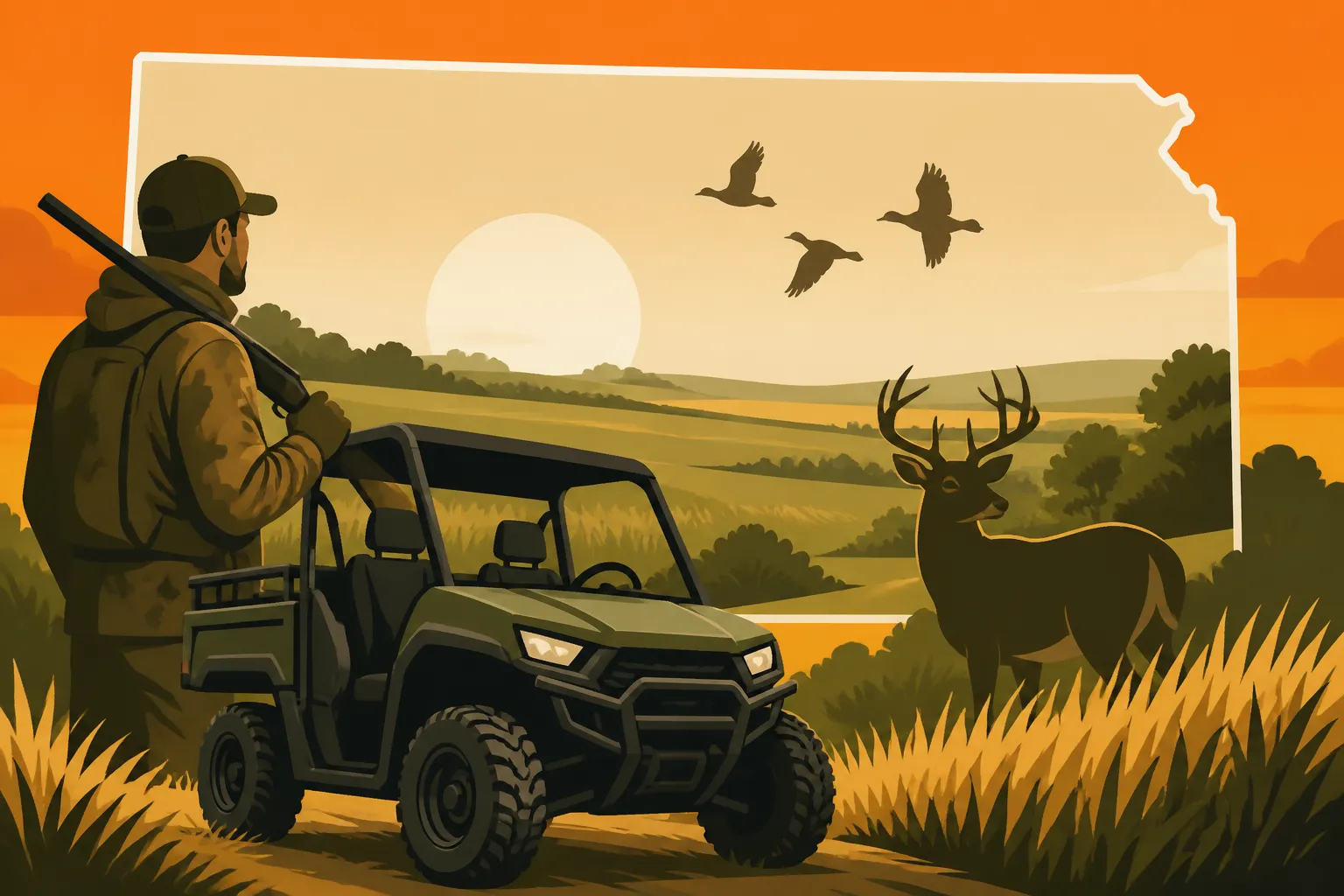
Where things get tricky, and where a lot of hunters face frustration, is with off-highway vehicles (OHVs) like ATVs, UTVs, or dirt bikes. In most cases, these are not permitted for general access on Kansas Wildlife Areas. The primary reasons are often related to minimizing habitat disturbance, reducing noise pollution for wildlife and other hunters, and preventing the creation of unauthorized trails. Imagine everyone on an ATV; the impact on the land would be significant. While there might be very rare, specific exceptions for things like game retrieval under strict permitting on some private lands, don't assume this is the case for public wildlife areas without explicit, written permission from the local area manager. This is a critical distinction, especially if you're Scouting Kansas Walk-In Tracts Before the Opener and thinking about how you'll get gear in.
Specific Restrictions and Exceptions on Select Wildlife Areas
While the general guidelines are helpful, it’s vital to remember that not all Kansas Wildlife Areas are created equal when it comes to vehicle access. Some areas, due to their unique habitat, management goals, or sheer size, will have very specific rules that deviate from the norm. It's often these nuances that trip up even experienced hunters.
Seasonal Closures and Limited Access Roads
You might encounter situations where certain roads or sections of a wildlife area are open to motorized traffic only during specific times of the year. For example, some areas might close interior roads to vehicles during the spring nesting season to protect ground-nesting birds, or during the late fall and winter to prevent damage from heavy use during wet conditions. This can be particularly common in areas managed for waterfowl or upland birds, where minimizing disturbance during critical periods is paramount.
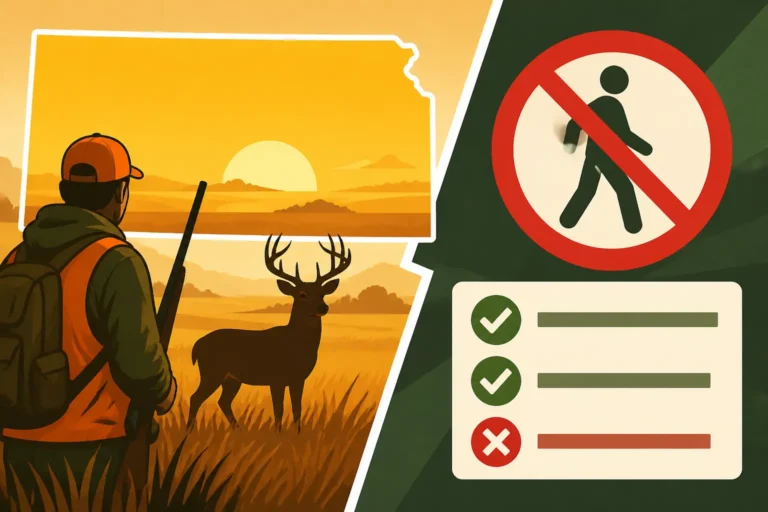
Another common restriction is the "two-track" road that might seem like an open invitation but is actually closed. These paths might be used by KDWP staff for management purposes but are not for public motorized vehicle use. Often, you'll see a gate, cable, or signs indicating "Foot Traffic Only" or "Closed to Vehicles." Disregarding these signs isn't just a potential fine; it can seriously impact the integrity of the area and the wildlife residing there. It’s tough when you see a perfect ridge line that would make an ideal access route, but it’s off-limits. Tools like onX Hunt can be useful here, but always cross-reference with official signs on the ground.
Areas with Enhanced Protections
Certain Kansas Wildlife Areas, particularly those with highly sensitive ecosystems or those managed for specific species (like nesting shorebirds or endangered plants), may have even more stringent motorized access rules. These might include complete closures of large sections to any vehicles, even on designated roads, requiring hunters to park at the perimeter and walk in. Wetlands and riparian zones, for instance, are incredibly fragile and typically have very limited vehicle access to prevent damage to the water quality and delicate plant life.
Think about areas like Cheyenne Bottoms or Quivira National Wildlife Refuge (though Quivira is federal, the principle applies to state-managed wetlands nearby). These are critical habitats for migrating waterfowl, and the management prioritizes their well-being above easy hunter access. While you might be able to drive to certain observation points or main parking areas, don't expect to be able to drive along dikes or into wetland units. When hunting areas near rivers, be aware of Wind and Thermals on a River Bank and how limited access might affect your approach.
| Vehicle Type | Generally Permitted on Designated Roads | Generally Prohibited Off-Road / Undesignated Areas | Special Considerations & Exceptions (Always Verify) |
|---|---|---|---|
| Street-Legal Trucks/Cars | Yes | Yes | Must stay on established, open roads and parking areas. |
| ATVs/UTVs | No | Yes | Very limited, if any, use. May require special permit for game retrieval on some areas. Check explicitly. |
| Dirt Bikes | No | Yes | Generally prohibited on all wildlife areas. |
| Electric Bicycles | Generally yes, if treated as traditional bicycle | No (cannot go off-road where bikes are prohibited) | Some areas might specify power limits or restrict them like motorized vehicles. Treat as a bicycle unless otherwise stated. |
| Horseback | Yes (on designated trails/areas) | No (cannot go off-trail where restricted) | Often allowed but must adhere to specific equestrian trails or open areas. Check for limitations. |
Always consult the specific rules for the Kansas Wildlife Area you plan to hunt.
How to Find Area-Specific Motorized Access Information
The best advice I can give any hunter looking to use motorized access on Kansas Wildlife Areas is this: never assume. What's permitted on one wildlife area might be strictly forbidden on another, even if they're geographically close. It's your responsibility as a hunter to know the rules, and thankfully, the Kansas Department of Wildlife and Parks (KDWP) provides several excellent resources to help you figure it all out.
The Kansas Department of Wildlife and Parks Website
Your first and most reliable source of information will always be the official KDWP website. They have dedicated sections for each state wildlife area, often including specific regulations that pertain to vehicle access. You'll want to search for the specific wildlife area you're interested in, and then look for links to "Regulations," "Public Use Rules," or "Area Map."
These pages will detail things like:
- Open and Closed Roads: Clearly indicating which roads are open to vehicular traffic and which are restricted to foot traffic only, or completely closed.
- Parking Areas: Where you are allowed to park your vehicle.
- Seasonal Restrictions: Any times of the year when certain access points or roads might be closed.
- Prohibited Vehicles: Explicitly stating if ATVs, UTVs, or other off-road vehicles are forbidden.
- Special Permits: Very rarely, for specific purposes like disabled access or game retrieval in certain scenarios, there might be a permit system. Do not count on this for general access.
It’s easy to get lost in all the KDWP documentation, but taking the time to review these specific area rules can save you a lot of headache and potential fines. This is a lot like checking Kansas Hunter Education and Licensing Basics before you even head out.
Utilizing Online Mapping Tools
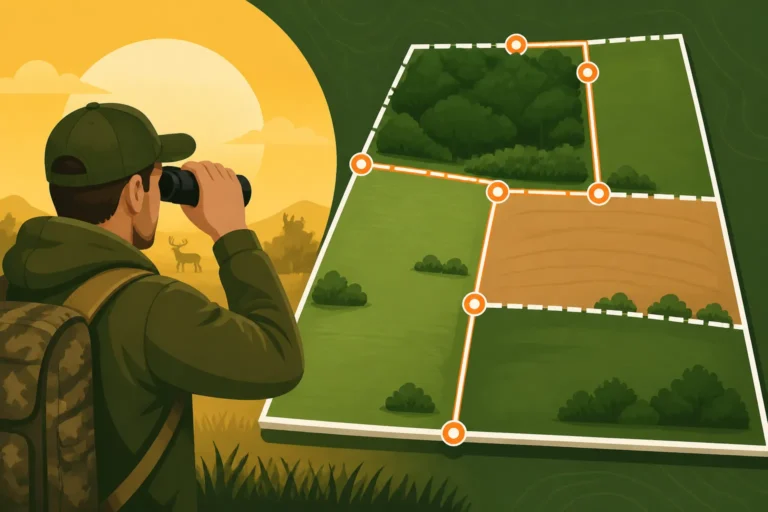
Beyond the official KDWP website, advanced online mapping tools have become indispensable for planning hunts and understanding access. While these tools shouldn't replace the official regulations, they offer incredible visual clarity that can help you interpret those rules on the ground.
Platforms like onX Hunt and GoHunt are fantastic for this. With these apps, you can layer public land boundaries, roads, and sometimes even specific land classifications right on your smartphone or tablet. Many of these apps will show you:
- Public vs. Private Land: Crucial for knowing where you can even consider driving.
- Designated Roads: Often marked differently from foot trails or unmaintained paths.
- Parking Areas: Helping you locate where to leave your vehicle.
- Satellite Imagery: Giving you a real-world view of the terrain, helping you spot gates, closed roads, or natural barriers.
While these tools are excellent for visual planning, always verify the most current access rules with the KDWP's official site or by calling the local area office. A road that appears open on a satellite image might have been recently gated or closed due to changing conditions or management decisions. For example, if you're trying to figure out Access Routes That Do Not Bump Deer, looking at satellite imagery can give you a better idea of how far you'll need to walk from the nearest legal parking spot.
Checking In-Person Signage and Contacting Area Managers
Finally, never underestimate the value of on-the-ground signage. When you arrive at a Kansas Wildlife Area, pay close attention to any signs posted at entry points, parking lots, or along roads. These signs are the most up-to-date and legally binding information you'll find for that specific location. If a sign says "No Motorized Vehicles Beyond This Point," then that's the rule, regardless of what a map or an older regulation summary might have stated.
If you're ever in doubt, or if the signage seems unclear, don't hesitate to contact the local KDWP office or the wildlife area manager directly. Their contact information is usually available on the KDWP website. A quick phone call can clear up any confusion and ensure you're hunting legally and responsibly. They are the ultimate authority on day-to-day access. This level of diligence is similar to confirming Portable Stand Rules on Kansas Public Land or Overnight Stand Storage on Public Ground before you haul your gear in. It’s always better to ask than to assume and face a citation or, worse, inadvertently damage the precious habitat we all cherish.
Disclaimer
This article is for general informational purposes only and does not constitute professional advice. Laws, prices and regulations vary by location and change over time. Consult a qualified professional for guidance on your specific situation.