Hunting From a Blind Without Movement
Kansas whitetail hunting strategies for minimizing movement inside a blind through proper placement, brushing, and layout.
Close the distance.
Archery, muzzleloader, and firearm techniques — calling, stand placement, still-hunting, spot-and-stalk, and the weapon rules that change at the state line.
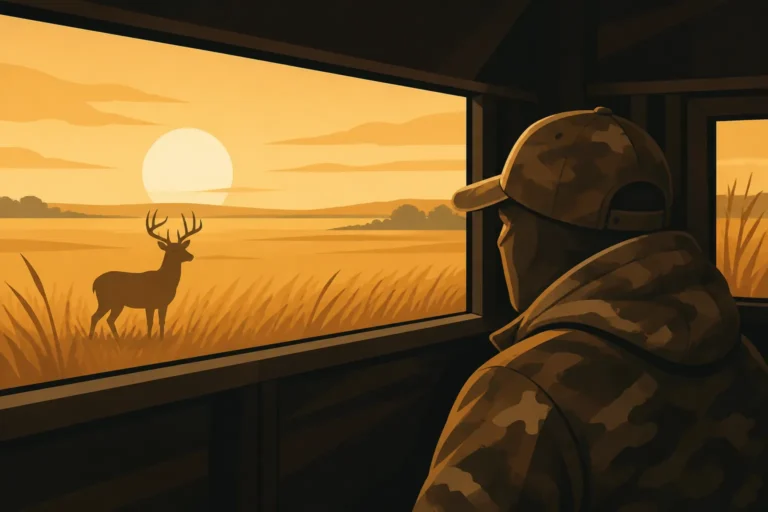
Kansas whitetail hunting strategies for minimizing movement inside a blind through proper placement, brushing, and layout.
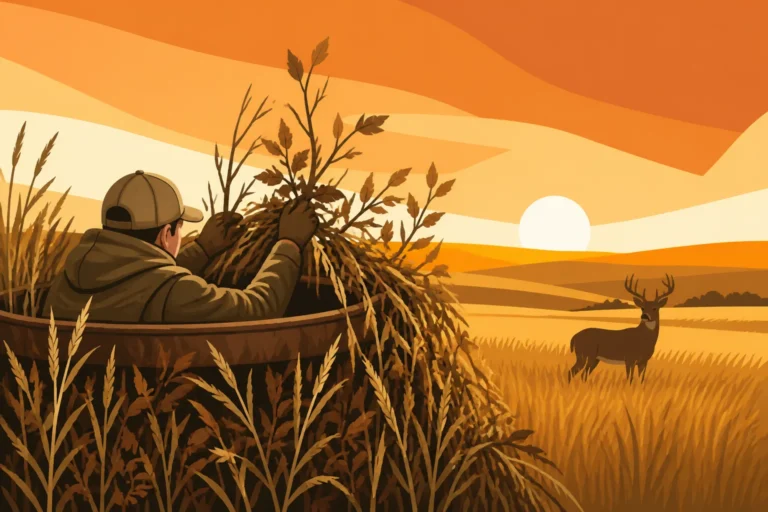
Ground blind brushing in techniques help Kansas deer hunters blend geometric outlines into natural vegetation for better shots.
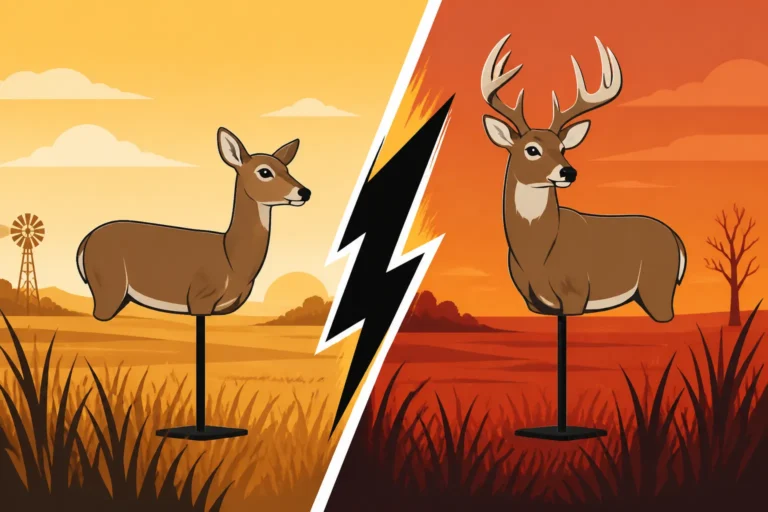
Choosing between doe and buck decoys helps Kansas deer hunters attract whitetails during the rut by using visual instincts.
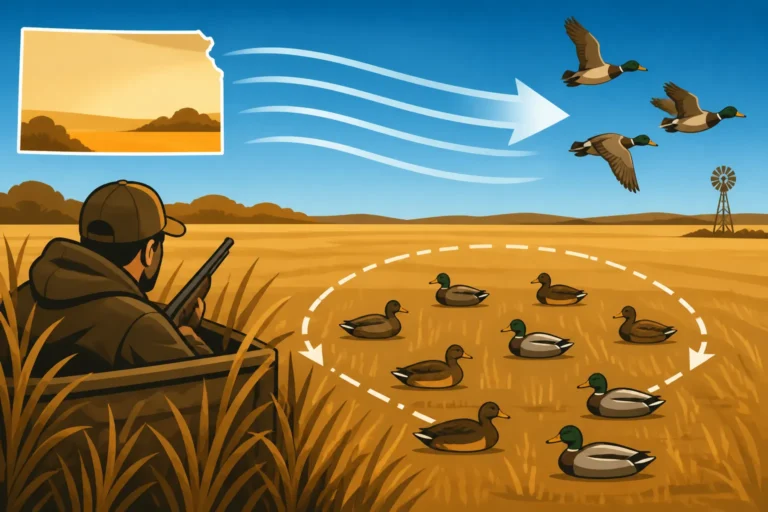
Strategic deer decoy placement aligned with wind direction helps hunters bring mature Kansas whitetail bucks into shooting lanes.
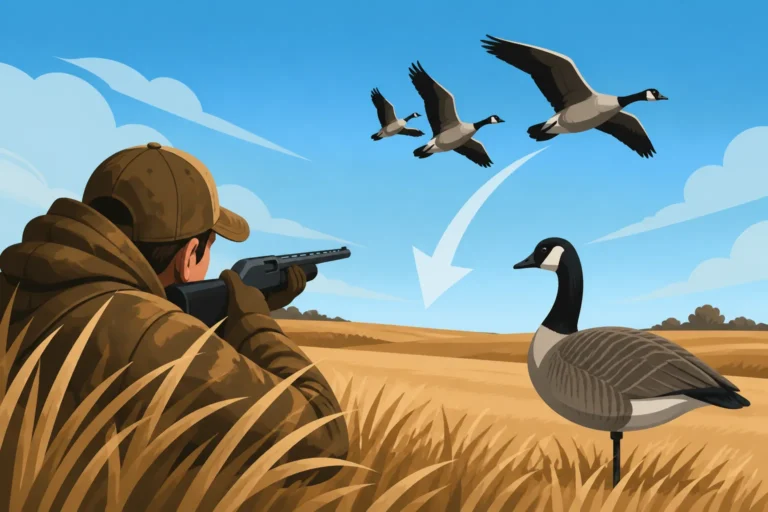
Using a deer decoy in open Kansas fields draws cautious bucks into range by breaking visibility and leveraging territorial instincts.
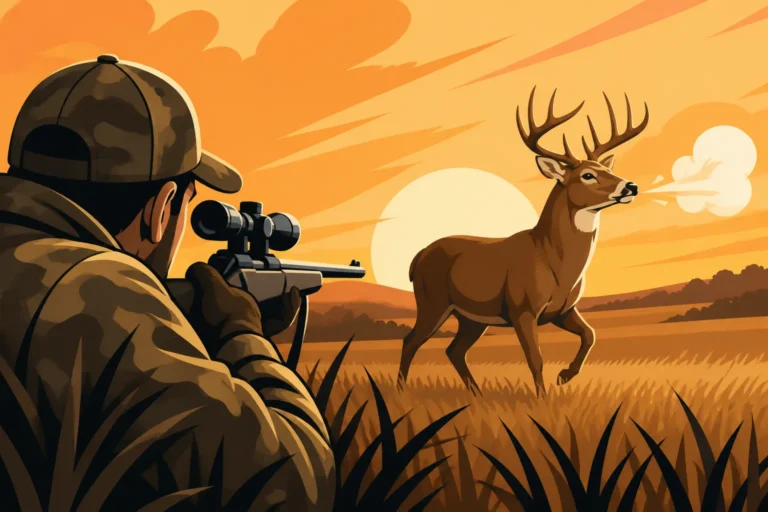
Mastering the snort-wheeze call explains how hunters can stop cruising whitetail bucks during the Kansas rut in October and November.
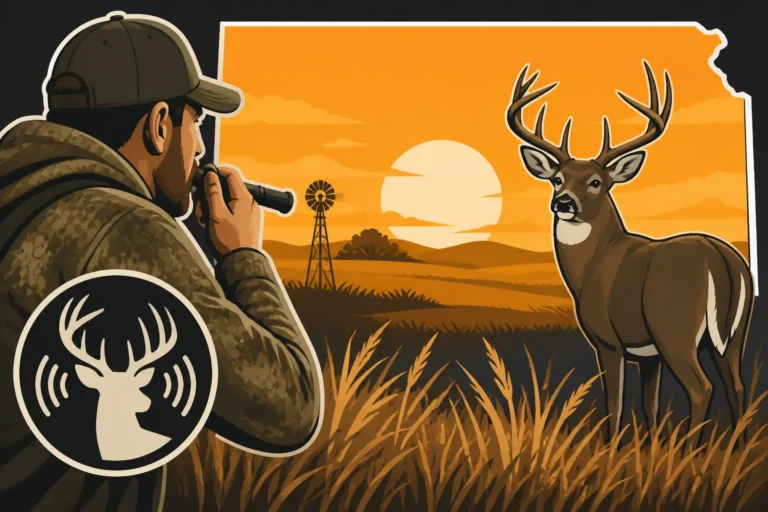
Deer in the Kansas pre-rut are vocal, yet a buck can walk past a grunt tube unconcerned, so call choice and strategy matter in the weeks before the main rut.
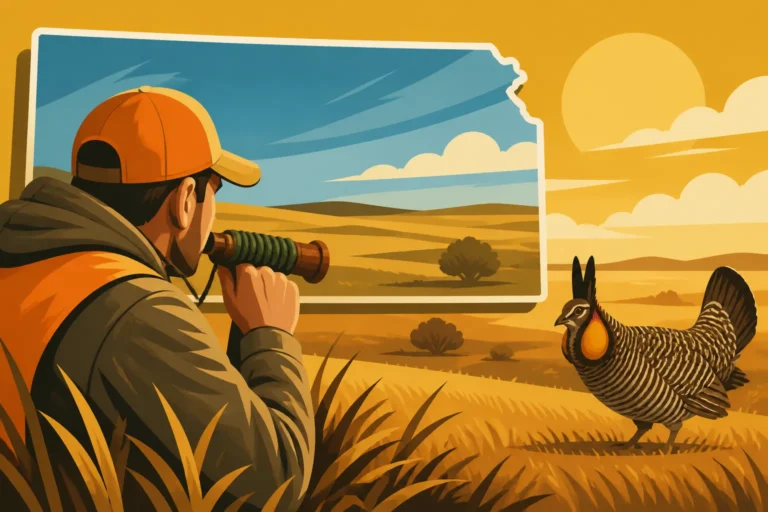
Kansas whitetail deer hunting rattling volume strategies for open plains, windy weather conditions, and sparse natural sound barriers.
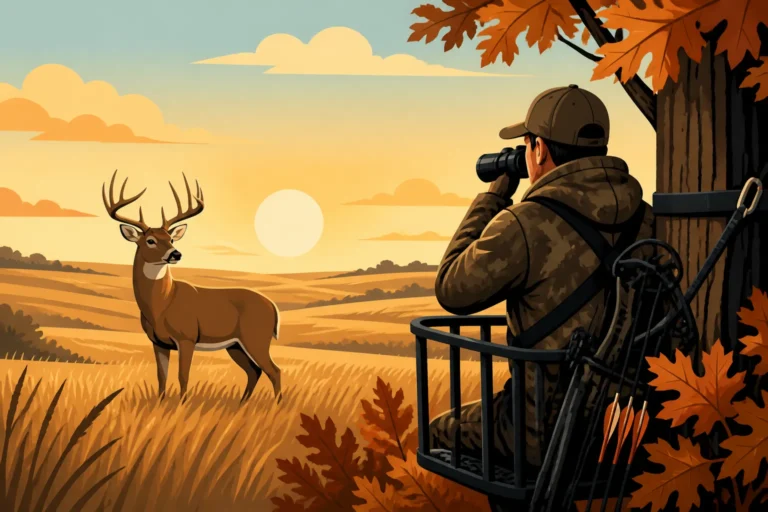
Kansas deer hunters learn how to select ideal stand locations during the early November seeking rut phase and food shifts.

The Kansas whitetail deer rut cycle phases, from September through December chasing to peak breeding, explained for hunters.