Reading Aerial Imagery for Bedding Cover
Aerial imagery analysis for Kansas deer hunters pinpoints prime whitetail bedding cover and predicts daily movement routes.
Close the distance.
Archery, muzzleloader, and firearm techniques — calling, stand placement, still-hunting, spot-and-stalk, and the weapon rules that change at the state line.
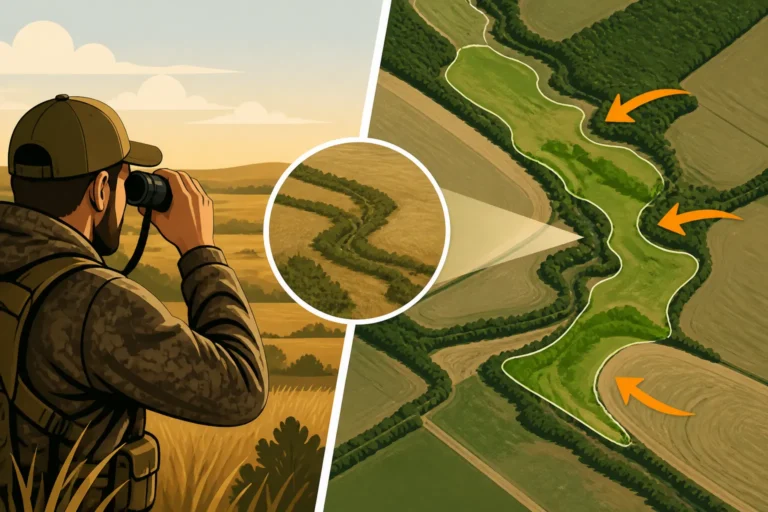
Aerial imagery analysis for Kansas deer hunters pinpoints prime whitetail bedding cover and predicts daily movement routes.
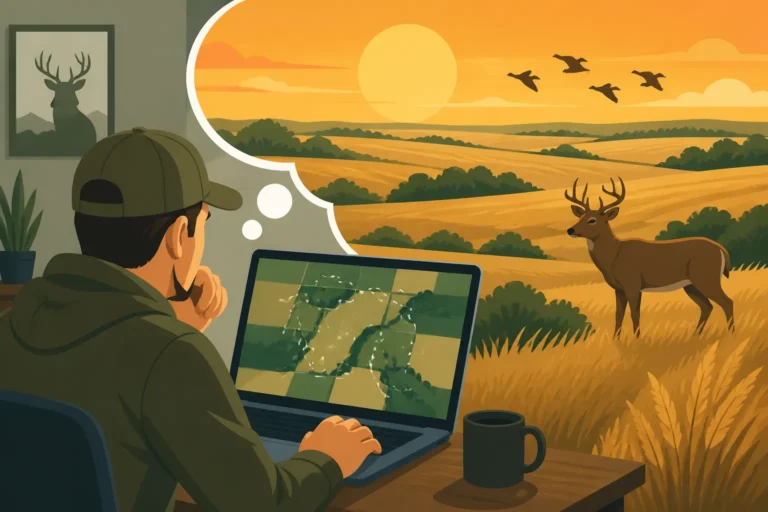
Digital tools and satellite imagery help hunters analyze Kansas farm country geography and predict whitetail deer movement.
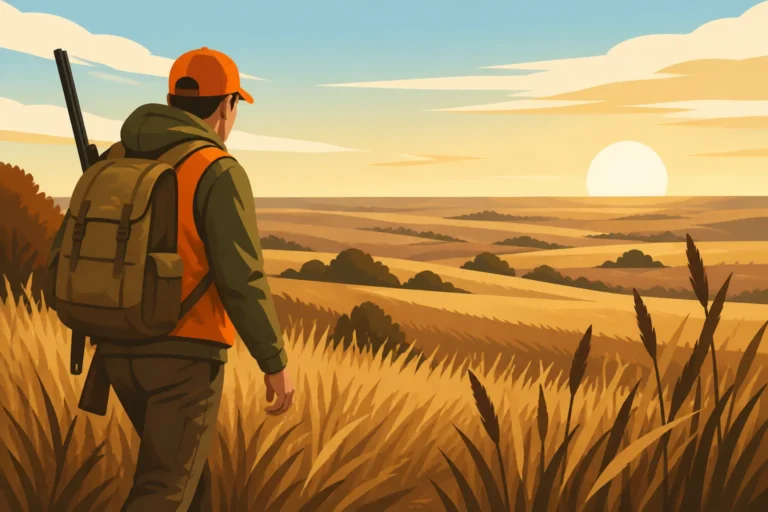
Foot scouting Kansas Walk-In Hunting Access tracts reveals fresh deer sign and current ground conditions that maps miss.
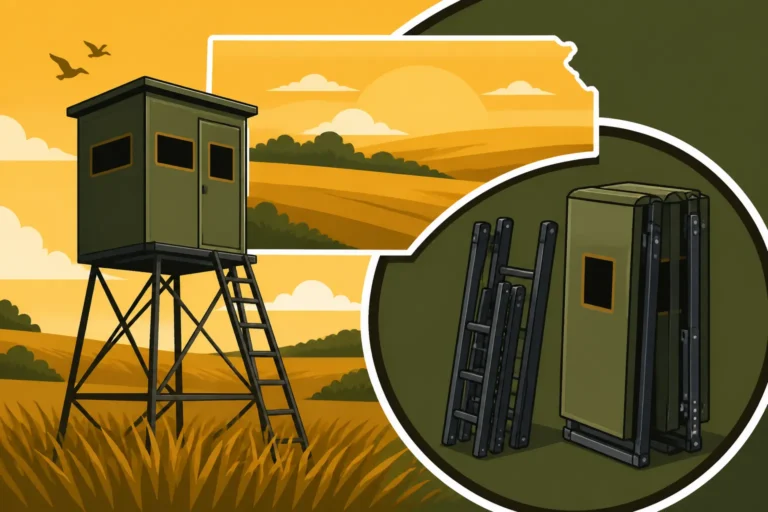
Kansas Department of Wildlife and Parks regulations explain whether hunters can leave tree stands overnight on public land.
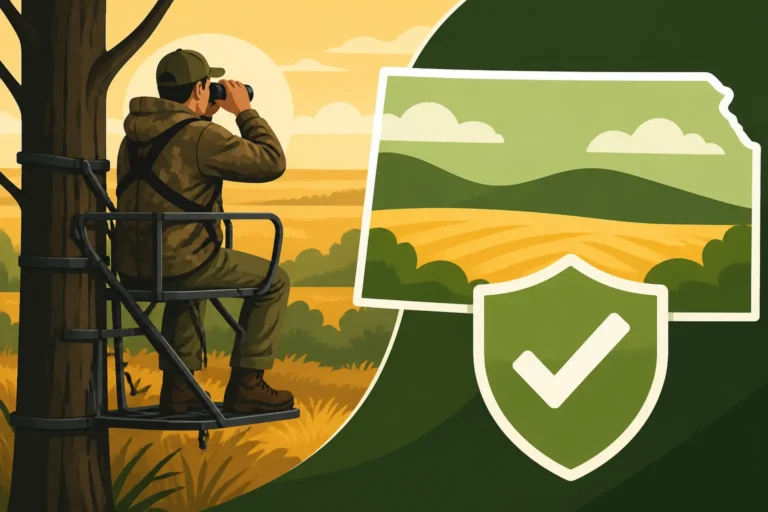
Kansas portable stand regulations vary by property type, including Walk In Hunting Access lands and State Wildlife Areas.
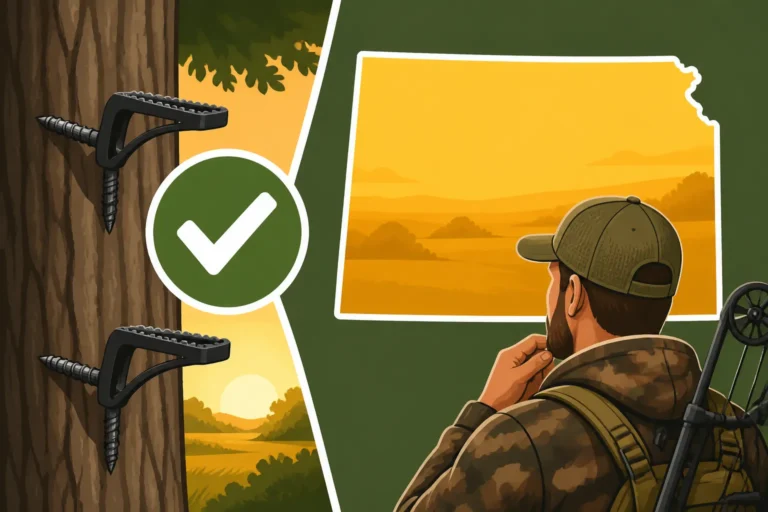
Kansas Department of Wildlife and Parks regulations explain why screw-in steps damage trees and remain illegal on public land.
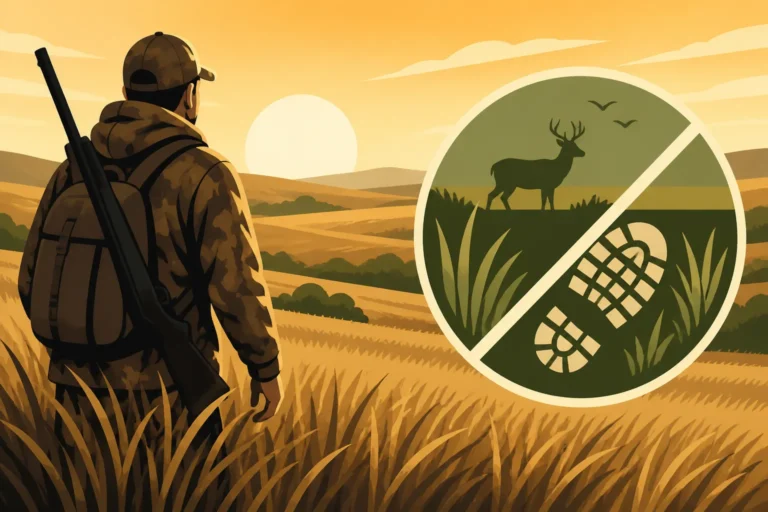
Kansas Walk-In Hunting Access stewardship methods explain how hunters minimize environmental impact and protect future land access.
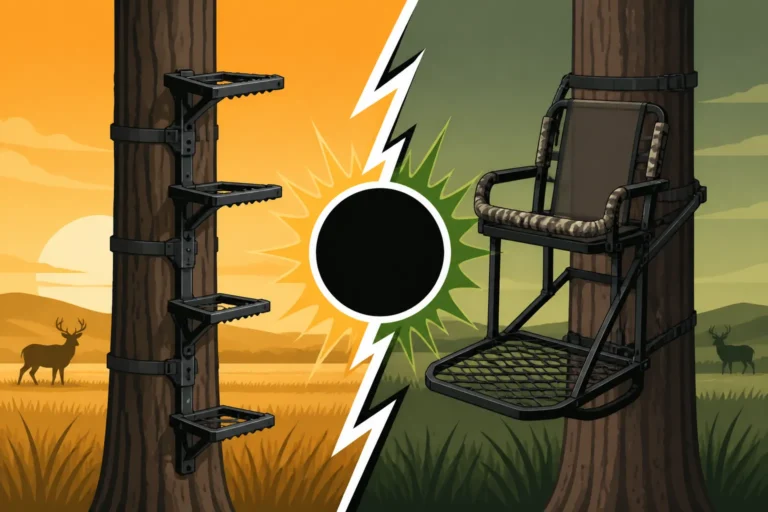
Climbing sticks versus traditional climbing stands helps Kansas deer hunters choose mobile treestand setups for varied landscapes.
The one-stick method for Kansas deer hunters reduces gear weight and explains how to ascend trees using a single climbing stick.
Saddle hunting on Kansas public land offers stealth and mobility to navigate diverse terrain and pressure from educated deer.