Buck Age Structure in Kansas
It can be incredibly frustrating to spend countless hours scouting, hanging stands, and putting in the work, only to consistently see young bucks that haven't yet reached their potential. Many hunters, especially those new to the state or traveling from out of state, wonder how Kansas consistently produces so many mature whitetails. This guide will meticulously break down the buck age structure in Kansas, exploring the factors that contribute to it and how you can use this knowledge to become a more successful hunter.
Understanding Buck Age Structure in Kansas
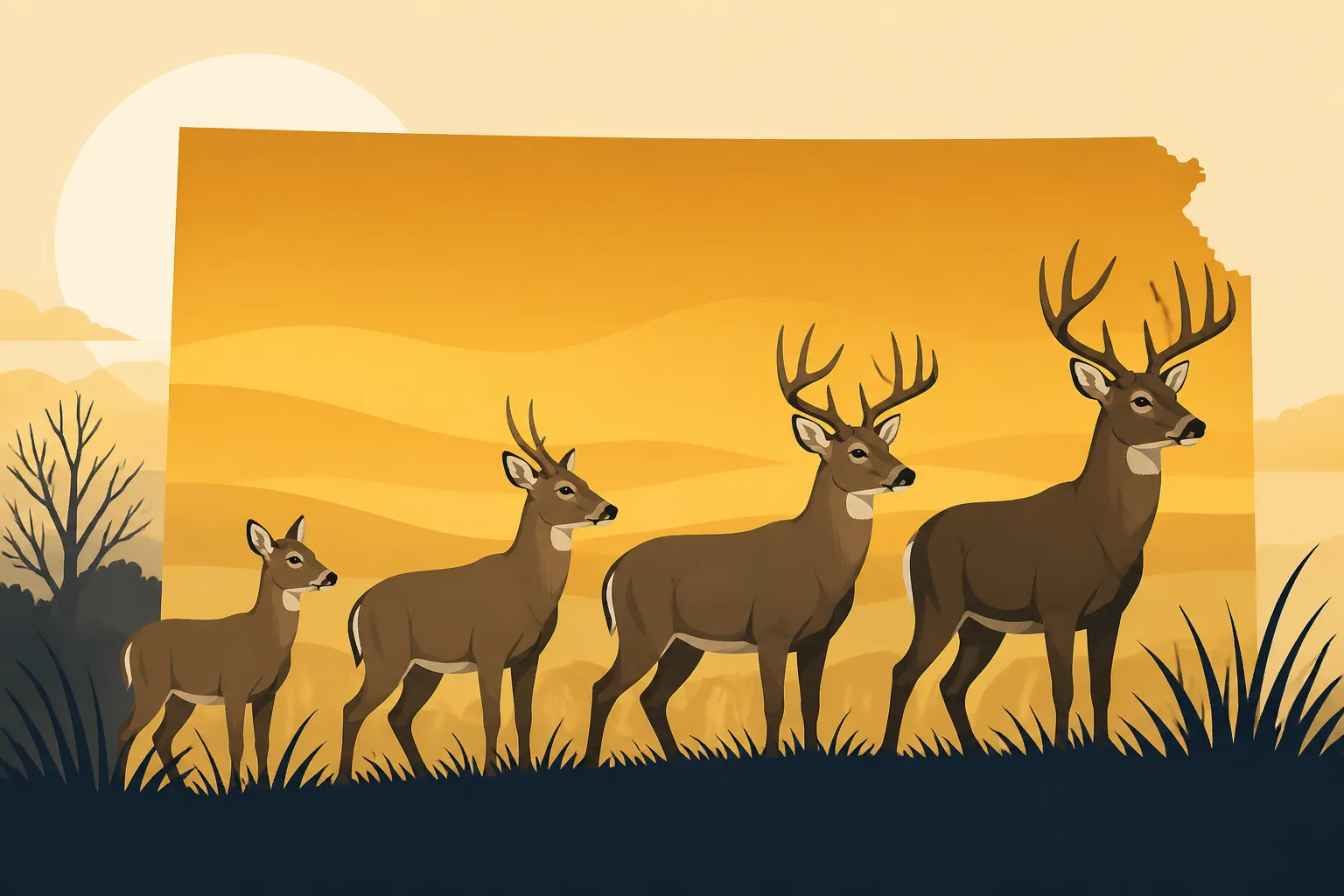
When we talk about buck age structure, we're really digging into the distribution of different age classes within the overall male deer population. It's not just about how many deer there are, but how many 1.5-year-old bucks, 2.5-year-old bucks, 3.5-year-old bucks, and so on, are present on the landscape. This balance is absolutely crucial for creating the kind of hunting opportunities Kansas is famous for.
What "Age Structure" Really Means for Hunters
For a hunter, a healthy buck age structure means more than just a numbers game. It translates directly to seeing more mature deer, having better opportunities to harvest a truly impressive animal, and observing more natural rutting behavior. If the majority of bucks are young, say 1.5 or 2.5 years old, they're typically smaller, less wary, and their rutting activities are often less intense, leading to a less exciting and challenging hunt. But when you have a good percentage of 3.5, 4.5, and even 5.5+ year old bucks, the dynamic changes entirely. These older deer have learned the ropes; they've survived multiple hunting seasons and are often the ones driving the breeding, creating thrilling encounters for observant hunters. Understanding this distribution is key to managing expectations and refining your hunting strategies.
Why Kansas is Known for Mature Bucks
Kansas didn't get its reputation for trophy whitetails by accident. It's a combination of several significant factors that have allowed bucks to routinely reach older age classes. Firstly, the rich agricultural landscape provides an incredible food source year-round, giving bucks the nutrition they need to grow large bodies and impressive antlers. This high-quality diet means that even younger bucks can exhibit antler growth that might be considered mature in other regions. Secondly, the state's hunting regulations and management philosophies, particularly concerning nonresident permits and antlerless harvest, play a massive role. By limiting pressure and encouraging the harvest of does, the Kansas Department of Wildlife and Parks (KDWP) helps maintain a healthy buck-to-doe ratio and ensures more bucks survive to maturity. When you add in expansive private land holdings where landowners can implement their own management practices, you create a recipe for big deer. This isn't just theory; you can see it reflected in the harvest data, especially when you look at Why Kansas Grows Trophy Whitetails.
Factors Influencing Buck Age Structure
The age structure of a buck population isn't static; it's a dynamic system influenced by a myriad of environmental, biological, and human factors. Understanding these elements can give you a clearer picture of why certain areas might consistently produce older bucks while others struggle. It's a complex interplay, but a fascinating one for any serious deer hunter.
Genetics and Nutrition: The Building Blocks
The foundation of a robust buck age structure starts with genetics and nutrition. While genetics dictate the potential antler growth, it's the nutrition available to a buck throughout its life that allows it to actually reach that potential. In Kansas, the vast agricultural fields—think corn, soybeans, alfalfa, and winter wheat—provide an unparalleled buffet of high-energy, protein-rich food sources. This abundance means bucks can invest significant energy into body growth and antler development from a young age. A buck that is well-fed from fawn-hood simply grows faster and healthier, leading to larger bodies and better racks at earlier ages compared to deer in less fertile regions. Even poor genetics can be somewhat overcome by exceptional nutrition, leading to impressive animals. However, good genetics combined with superb nutrition is where you get true giants. This nutritional bounty is a primary reason for the impressive Kansas Whitetail Body and Antler Size you see across the state.
Hunting Pressure and Harvest Management
Perhaps the most significant human-controlled factor impacting buck age structure is hunting pressure and how the KDWP manages harvest. If hunters are consistently harvesting young bucks, the population will skew towards younger age classes. Kansas, however, has implemented strategies that encourage bucks to live longer. The nonresident deer permit draw system, which often requires preference points for certain units, effectively limits the number of hunters and overall pressure. This means fewer young bucks are shot, allowing them to mature. Additionally, the emphasis on antlerless harvest through specific permit offerings and extended seasons helps maintain a balanced buck-to-doe ratio. When there are enough mature does, young bucks aren't forced to breed prematurely, allowing them to conserve energy for growth. Many experienced hunters in Kansas understand that passing on young bucks is a key personal management strategy that contributes to the overall older age structure, benefitting everyone in the long run. When considering where to hunt, it's always worth looking into Hunting Pressure Patterns on Kansas Public Land to see how hunter density might influence the local age structure.
The Role of KDWP and Regulations
The Kansas Department of Wildlife and Parks (KDWP) plays an instrumental role in shaping the state's buck age structure through its carefully crafted regulations and management strategies. These aren't just arbitrary rules; they're designed with specific goals in mind, primarily to ensure a healthy deer population and quality hunting opportunities. Understanding these regulations is critical for anyone planning a hunt in the Sunflower State.
Permit Structure and Draw Systems
One of the most impactful tools KDWP uses to manage deer populations and age structure, especially for bucks, is its permit system. For nonresidents, drawing a coveted whitetail permit often involves navigating a preference point system. This system inherently limits nonresident hunting pressure, particularly in the state's most popular or high-potential units. By making it more challenging to draw a tag, the KDWP effectively reduces the number of hunters in the field, allowing more bucks to survive to older age classes. The system balances hunter opportunity with population management, ensuring that bucks have a chance to mature without being over-harvested. For resident hunters, permits are generally more accessible, but overall statewide limits and unit-specific quotas still contribute to controlling total harvest. For a deeper dive into how this all works, check out Kansas Deer Permits and the Nonresident Draw. Using tools like GoHunt's mapping and draw odds features can give you a significant advantage in understanding these complexities and applying strategically.
Antlerless Harvest Strategies
Another cornerstone of KDWP's management philosophy that directly impacts buck age structure is the promotion of antlerless deer harvest. By encouraging hunters to take does, several positive outcomes are achieved. First, it helps keep the overall deer population in check, preventing overbrowsing of habitat and reducing the risk of disease transmission. Second, and crucially for buck age structure, it helps maintain a healthy buck-to-doe ratio. When the ratio is balanced, mature bucks don't have to expend as much energy competing for a limited number of receptive does during the rut. This means they are less stressed, potentially improving their survival rates and overall health. KDWP offers various antlerless permits and extended seasons, often designed to target specific areas where doe populations need to be reduced. These opportunities, such as Kansas Antlerless Hunts and Filling the Freezer, are vital for population health and indirectly contribute to the quality of the buck hunting experience by allowing more bucks to survive and mature.
| Age Class (Years) | Typical Antler Characteristics | Behavior | Impact on Hunting |
|---|---|---|---|
| 0.5 (Fawn) | No antlers (males) | Stays with doe, learning survival skills. | Not a target for antlered buck hunters. |
| 1.5 (Yearling) | Spikes to small 8-points, thin beams, little mass. | Less cautious, still learning, often travels with does. | Common harvest for meat, but often passed by trophy hunters. |
| 2.5 | Good 8-points, some mass, spread improving. | More wary, starting to establish independence, participates in rut. | Shows potential, often a target for those seeking a "good" buck. |
| 3.5 | Larger 8-points to 10-points, better mass and tine length. | Experienced, more nocturnal, asserts dominance during rut, smarter. | Highly desirable, offers a good challenge. |
| 4.5+ | Heavy mass, wide spread, long tines, potential for non-typical. | Very cunning, often solitary, highly sensitive to pressure, dominant. | True "trophy" class, incredibly challenging and rewarding to pursue. |
How Age Structure Impacts Your Hunt
The buck age structure in your hunting area is more than just a biological detail; it’s a critical piece of the puzzle that directly influences your hunting strategy and success. Knowing what to expect in terms of age classes allows you to fine-tune your approach, making you a more efficient and effective hunter.
Predicting Buck Behavior
When you're hunting in an area with a healthy age structure, meaning a good number of older bucks, you can expect different behaviors compared to areas dominated by young deer. Older bucks are generally more cautious, often more nocturnal, and their movements are less predictable. They've survived multiple hunting seasons by being smart, using the wind to their advantage, and sticking to thicker cover. During the rut, however, these older bucks can become more visible as they actively seek out does, making When the Kansas Rut Peaks a prime time to target them. Younger bucks, especially 1.5 and 2.5-year-olds, are often more easily fooled by calls or decoys and are less hesitant to move during daylight. They're still learning the ropes, often exhibiting more sporadic movements and less wariness. Understanding the age class you're primarily hunting helps you predict their travel corridors, bedding areas, and feeding patterns, allowing you to set up more strategically.
Tactics for Targeting Mature Bucks
Hunting mature bucks in Kansas requires a different mindset and approach than simply trying to fill a tag. Because these deer are older and wiser, they demand more from the hunter. Firstly, impeccable scent control is paramount; an old buck won't tolerate any human odor. Secondly, patience is key. Mature bucks often move at first and last light, or during the middle of the day during the rut. Extended sits are often necessary. Thirdly, focusing on escape cover and overlooked pockets of habitat can pay dividends. Mature bucks know where the pressure is and will often gravitate to areas hunters tend to avoid. This might mean getting into a thick cedar patch or a remote corner of a river bottom where other hunters won't venture. E-scouting platforms, like those offered by GoHunt, can be invaluable for identifying these overlooked areas and crucial travel corridors when you're Reading Aerial Imagery for Bedding Cover. Lastly, understanding and adapting to wind and thermals, especially in varied terrain like a Scouting Kansas River Bottoms and Creek Draws, is non-negotiable for getting close to a seasoned buck without being detected.
Challenges and Considerations for Maintaining Age Structure
While Kansas boasts a generally excellent buck age structure, it's not without its challenges. Maintaining this healthy balance requires ongoing effort from both wildlife managers and hunters alike. Understanding these considerations helps us appreciate the complexity and contribute to the long-term health of the deer herd.
CWD and Disease Management
One of the most pressing challenges facing Kansas's deer population, and thus its age structure, is Chronic Wasting Disease (CWD). This fatal neurological disease can impact deer populations by reducing survival rates, particularly in older age classes. As the disease spreads, it can lead to fewer mature animals on the landscape. KDWP actively monitors CWD prevalence and implements strategies to manage its spread, including mandatory testing in certain units and recommendations for carcass transport. Hunters play a crucial role by adhering to these regulations and reporting any sick deer they observe. Ignoring CWD can have severe long-term consequences for the health and age structure of the herd. Learn more about the specifics of Chronic Wasting Disease in Kansas to understand how you can help.
Habitat Loss and Fragmentation
Another significant challenge is the ongoing pressure of habitat loss and fragmentation. While Kansas has abundant agricultural land, the conversion of natural habitats like timber blocks, dense shelterbelts, and native grasslands into cultivated fields or development can reduce the amount of quality cover available for deer. Older, more wary bucks rely heavily on secure bedding and escape cover to evade predators and hunters. When these areas are fragmented or lost, it can make it harder for bucks to reach older age classes. The quality of habitat directly influences a buck's ability to survive and thrive. Therefore, supporting conservation efforts and land management practices that protect and enhance diverse deer habitat, even on smaller tracts like Shelterbelt Ends and Buck Travel, is vital for preserving the robust buck age structure that Kansas hunters have come to expect. Understanding How KDWP Counts Deer helps managers identify areas where habitat changes are having the most impact.
Disclaimer
Please note that hunting regulations and season dates can change. Always consult the most current Kansas Department of Wildlife and Parks (KDWP) regulations before planning any hunting trip. This guide is for informational purposes only and does not supersede official KDWP guidelines.