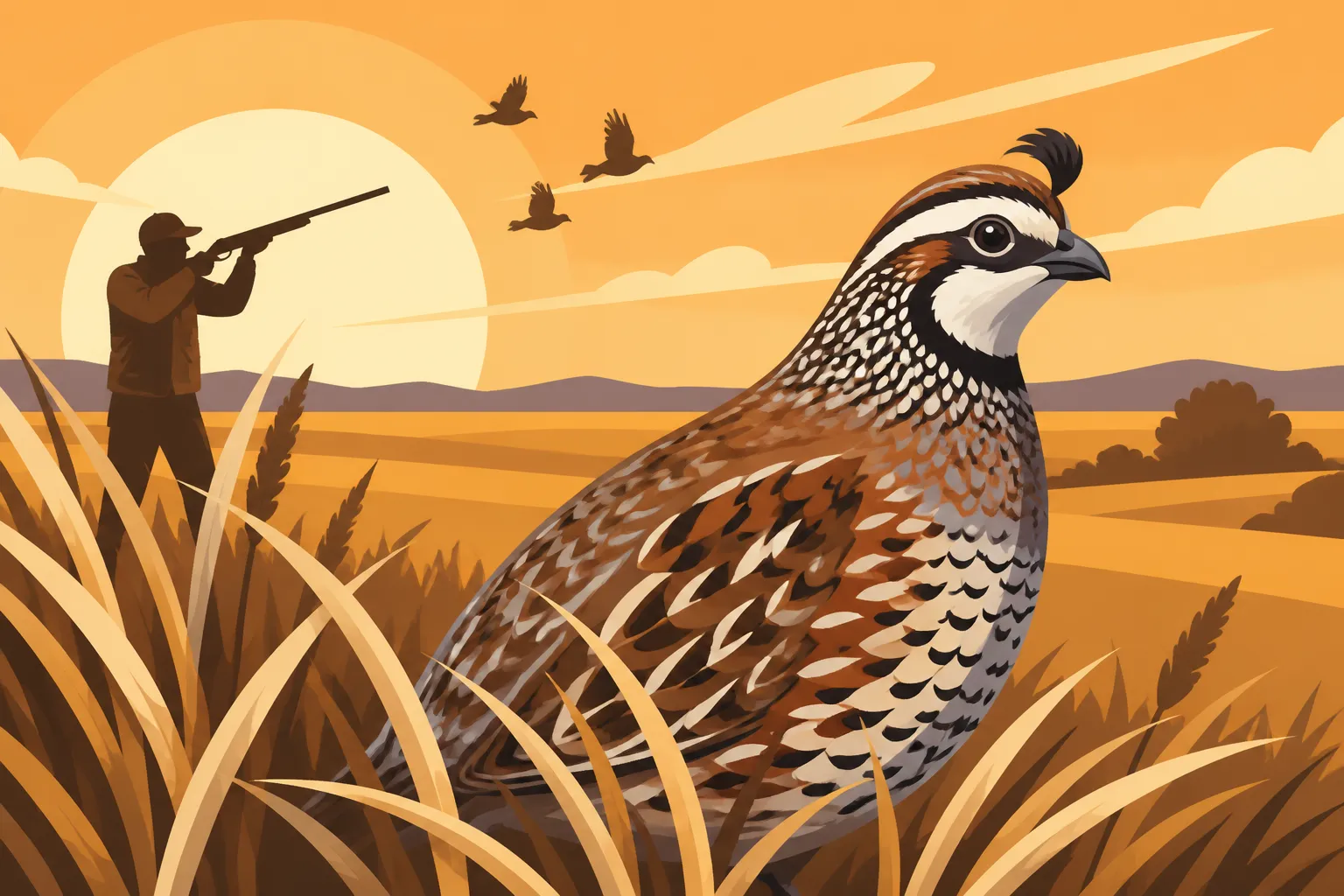
Bobwhite Quail Across Kansas
There’s a unique sting of frustration that hits when you’ve walked miles of promising cover, your dog has ranged enthusiastically, and yet the only birds you’ve put up are a few lonesome doves. Quail hunting in Kansas, with its legendary reputation, can sometimes feel like chasing ghosts if you don't understand the nuances of this remarkable little bird. This comprehensive guide is dedicated to pulling back the curtain on Kansas Bobwhite Quail, helping you unravel their secrets, decipher their preferred habitats, and ultimately put more coveys in the air.
The Enduring Allure of Kansas Bobwhite Quail
For generations of upland hunters, the sudden, explosive flush of a Bobwhite covey has been the ultimate thrill. Kansas, with its vast agricultural lands and pockets of wildness, holds a special place in this tradition, drawing hunters from across the country.
Why Kansas is a Quail Hunter's Dream (Despite Challenges)
Kansas has long been revered as a top-tier destination for quail hunting, a reputation earned through a unique combination of factors. While populations fluctuate and challenges persist, the dream of experiencing a classic Kansas covey rise remains a powerful draw. The state's diverse landscape, a patchwork of agricultural fields, native grasslands, and riparian corridors, creates an intricate mosaic of habitats that, when managed correctly, can be incredibly productive for Bobwhites. There’s a magic in the crisp autumn air as you walk along a plum thicket edge, anticipating the whistle of a covey. It’s a hunt that demands effort, knowledge, and often, a good bird dog, making the reward of a successful flush all the sweeter.
The unique blend of cover types across Kansas is what truly sets it apart. You'll find everything from dense cedar thickets offering crucial winter protection to vast expanses of CRP (Conservation Reserve Program) ground providing nesting and loafing cover. Add to this the abundant food sources provided by agricultural crops like milo and corn, and you have the ingredients for thriving quail populations. It’s this rich diversity, rather than any single perfect habitat, that allows Bobwhites to find everything they need to survive and reproduce. Hunters cherish the opportunities this diverse landscape presents, even as they acknowledge the ever-present challenges that face wild bird populations.
Ultimately, it’s the hunter's passion and the inherent challenge of these wary birds that keep the flame alive for Kansas quail hunting. Bobwhites aren't easy. They demand your attention, your conditioning, and your understanding of their habits. The anticipation of a dog locking up on point, the sudden roar of wings, and the scramble to get a shot off—it's an experience that etches itself into your memory. This deep connection to the hunt, combined with the often generous bag limits when populations are strong, ensures that Kansas continues to be a pilgrimage site for upland bird enthusiasts seeking the quintessential quail experience.
Understanding the Bobwhite's Place in the Ecosystem
The Bobwhite Quail isn't just a game bird; it's a vital indicator species for the health of our grasslands and agricultural edges. When quail populations are strong and stable, it often signals a balanced and thriving ecosystem. These birds rely on a diverse habitat structure, including tall native grasses for nesting, dense woody cover for protection from predators and harsh weather, and accessible food sources. Their presence, or absence, can tell us a lot about land management practices, pesticide use, and the overall ecological integrity of an area.
As a relatively small ground-dwelling bird, the Bobwhite plays a crucial role in the food chain. They are a primary prey item for a wide array of predators, including hawks, owls, coyotes, bobcats, and various snake species. This position in the food web makes them a central component of ecosystem health. A robust quail population supports these predator populations, contributing to the natural balance of the environment. Without sufficient numbers of prey species like quail, predators would struggle, potentially leading to cascading effects throughout the ecosystem.
Therefore, the presence of healthy Bobwhite Quail populations signifies much more than just good hunting opportunities. It suggests that the environment is rich enough to support a complex web of life. It means there’s adequate cover for small mammals, insect populations are thriving (providing food for young quail), and the overall landscape can withstand environmental pressures. For land managers, conservationists, and hunters alike, observing Bobwhites can be a tangible sign that habitat improvement efforts are working, demonstrating a healthier environment for all game and non-game species.
Deciphering Bobwhite Quail Habitat in Kansas
Finding quail consistently means understanding their habitat. They are creatures of specific needs, requiring a perfect blend of cover for nesting, roosting, loafing, and escape, all within close proximity to food and water.
The Critical Components of Prime Quail Country
Quail are masters of "edge habitat," those transition zones where different cover types meet. Think of it as the seam where a dense plum thicket meets a field of milo, or where tall native grass gives way to a creek bottom lined with brush. These edges offer the perfect blend of easy access to food and immediate cover from predators, making them incredibly attractive to coveys. This isn't just about cover, but about interconnectedness – quail don't like to travel far between food and safety. Identifying these natural borders and transition areas is often the first step in locating birds.
Beyond these edges, specific woody cover is absolutely crucial for quail survival. Plum thickets are legendary for a reason; their dense, thorny nature provides impenetrable overhead and lateral cover, protecting birds from raptors and ground predators alike. Osage orange rows, often planted as fencerows, serve a similar purpose, offering a tangled web of branches that can make a dog go nose-to-nose with a covey without being able to bust them easily. These thickets provide critical roosting cover, especially during colder months, and are often where a covey will scatter after a flush. For hunters, recognizing these thorny bastions is key to understanding where quail will seek refuge.
Finally, the role of native grasses, particularly warm-season varieties like big bluestem and indiangrass, cannot be overstated. These grasses provide crucial nesting cover in the spring and early summer, offering concealment for hens and their clutches. In the fall and winter, these taller grasses provide thermal protection, allowing birds to roost safely on the ground, hidden from view and sheltered from harsh winds. These grass areas, sometimes resembling CRP Grass and Where Bucks Bed, also provide excellent bugging grounds for poults (young quail) in the summer. A healthy mix of native grasses adjacent to woody cover and food sources creates the ultimate quail haven.
How Agriculture Shapes Quail Distribution
Kansas is an agricultural state, and farming practices inevitably have a profound impact on quail populations and their distribution. Grain crops, particularly milo (sorghum) and corn, are absolutely vital food sources for Bobwhites, especially as the season progresses and natural seeds become scarce or covered by snow. A standing milo field, or even its stubble, can hold an incredible amount of birds, providing both sustenance and cover. Understanding harvest patterns and which fields have been left standing or partially harvested can be a game-changer for finding coveys in the late season.
However, the trend towards "clean farming" practices has been a major challenge for quail. Gone are many of the brushy fencerows, odd corners, and uncultivated edges that historically provided crucial habitat. Farmers now often plant right up to the property line, minimizing waste but simultaneously eliminating the dense, linear cover that quail depend on for travel and escape. This loss of interstitial habitat means quail are forced into smaller, more isolated pockets, making them more vulnerable to predation and less able to expand their range.
Despite these challenges, innovative agricultural practices can still benefit quail. Leaving unharvested strips along field edges, planting buffer strips of native grasses or wildflowers, and maintaining brushy creek bottoms or drainage ways can create vital corridors and safe havens. Farmers who participate in conservation programs or simply choose to manage their land with wildlife in mind can significantly impact local quail numbers. Recognizing where these landowner-friendly practices are in place can often lead you to the most productive quail hunting spots.
Water's Role in Quail Survival and Location
While quail are not as dependent on open water as waterfowl, it is still a critical component of their survival, particularly during prolonged dry spells or in arid western Kansas. Just like any living creature, quail need hydration, and while they can derive some moisture from dew, succulent plants, and insects, direct access to water sources is always a benefit. In dry conditions, birds will congregate closer to available water, making these areas natural magnets for coveys.
Throughout Kansas, farm ponds, stock tanks, and intermittent creeks serve as vital water sources for quail. Even small, overgrown ditches or seeps can provide enough moisture to sustain a covey. Hunters often find that in dry years, searching areas adjacent to these water features can be much more productive. The cover around these water sources often tends to be thicker as well, providing additional appeal for quail seeking both hydration and security.
In areas like Western Kansas, where natural surface water can be scarce, the importance of these sources intensifies. A small pond surrounded by a plum thicket in the middle of a vast prairie can be an absolute honey hole. Conversely, during wet periods, quail can be more spread out as water is abundant. Understanding the current environmental conditions and how they might influence bird distribution is a crucial skill for any quail hunter looking to find birds consistently.
Kansas Bobwhite Quail Population Dynamics and Trends
Quail populations are inherently volatile, experiencing natural highs and lows based on a complex interplay of environmental factors. Understanding these dynamics is essential for any hunter.
The Boom and Bust Cycles of Quail Populations
Bobwhite Quail populations are famously cyclical, characterized by dramatic "boom and bust" periods. Unlike some other game species, quail have a very short lifespan, with a high annual turnover rate. The vast majority of quail alive today will not survive to see next year's hunting season. This rapid turnover means that population numbers are heavily reliant on successful reproduction each spring and summer. A few good years can lead to an explosion in numbers, while a couple of bad years can see populations plummet.
This high reproductive rate is the engine behind the "boom" side of the cycle. A single hen can lay multiple clutches if early nests fail, attempting to bring off chicks well into the summer. Each clutch can have a dozen or more eggs, meaning that if conditions are right, a few successful breeding pairs can quickly produce a large number of young birds. This ability to bounce back quickly is what gives quail hunters hope even after a tough season.
However, the "bust" side of the cycle is often dictated by weather, particularly spring rainfall. Too much rain during the nesting and brooding season can be catastrophic. Cold, wet conditions lead to hypothermia in young poults, and heavy rains can flood nests. Conversely, extreme drought can reduce insect populations (a critical food source for chicks) and make it harder for hens to bring off successful broods. As we've seen with Quail Numbers After a Wet Spring, just the right amount of precipitation at the right time is crucial for robust quail recruitment.
Key Factors Influencing Quail Decline and Recovery
While natural cycles are part of the Bobwhite's story, a significant long-term trend has been habitat loss and fragmentation. This is the primary driver behind overall quail population declines across much of their historic range, including parts of Kansas. Expansive tracts of mixed grassland, brush, and timber have been converted to monoculture agriculture, urban development, or simply become too "clean" for quail to thrive. When habitat becomes fragmented, coveys are isolated, limiting genetic diversity and making them more vulnerable to localized threats.
Predation also plays a role, especially on nests and young poults. Raccoons, opossums, skunks, snakes, and even domestic cats can decimate nests, while hawks and owls are efficient predators of adult birds. While predation is a natural part of the ecosystem, its impact can be amplified in areas with poor habitat, where quail have fewer places to hide and escape. When quail habitat is thin, predators have an easier time locating nests and birds, contributing to higher mortality rates.
Beyond habitat and predation, disease and severe winter weather can also impact quail. While widespread disease outbreaks are less common than habitat loss, local events can certainly affect covey numbers. More significant is the impact of harsh winters, especially when combined with a lack of protective cover. Deep snow and prolonged cold can prevent birds from accessing food, leading to starvation and increased vulnerability to predators. A thick, brushy plum thicket, for example, can be the difference between a covey surviving a blizzard or perishing in the cold.
Monitoring and Management Efforts in Kansas
Recognizing the challenges faced by Bobwhite Quail, the Kansas Department of Wildlife and Parks (KDWP) actively monitors populations and implements management strategies. One of their key tools is the annual roadside survey, where biologists drive specific routes, counting birds and listening for covey calls. This data provides invaluable insights into population trends and helps forecast hunting prospects for the upcoming season. It’s the data point many hunters check eagerly as fall approaches.
Habitat improvement programs are another cornerstone of KDWP's efforts. These programs often focus on restoring native grasslands, planting woody cover, and creating brush piles or food plots in strategic locations. KDWP also works closely with private landowners, offering technical assistance and incentives to implement wildlife-friendly practices. These efforts are crucial because the vast majority of Kansas land is privately owned, meaning that landowner participation is paramount for widespread quail recovery.
Indeed, private landowner participation is perhaps the most critical element in the long-term health of Kansas quail populations. Farmers and ranchers who actively manage their land with quail in mind—whether it's through delayed haying, planting cover crops, maintaining brushy draws, or participating in programs like CRP—are making an enormous difference. Their efforts, combined with consistent monitoring and targeted management by KDWP, represent the best hope for ensuring that the call of the Bobwhite continues to echo across the Kansas landscape for future generations of hunters.
Scouting and Locating Quail Coveys
Finding quail isn't just about stumbling upon them; it's a strategic process that involves understanding the landscape, utilizing modern tools, and applying a bit of old-fashioned woodsmanship.
Reading the Landscape for Prime Quail Holding Areas
Successful quail hunting starts long before you ever step foot in the field, by learning to "read" the landscape. Your eyes should be drawn to those distinct "weedy edges" where different cover types abruptly meet. Think about the transition from a cut milo field to a dense fencerow, or a strip of tall native grass bordering a creek bottom. These aren't just random spots; they are critical junctions where quail find the perfect balance of food, loafing cover, and escape routes. Finding Plum Thickets That Hold Quail is a prime example of understanding specific cover. These areas are worth slowing down and thoroughly investigating.
Aerial maps, often found on platforms like GoHunt, have revolutionized this scouting process. They allow you to virtually scan vast tracts of land, identifying promising areas from the comfort of your home. You can pinpoint dense plum thickets, winding creek lines, and the precise intersections of crop fields and grassy cover. Look for habitat "fingers" that extend into open areas, or isolated patches of brush that might serve as refuges. Using map layers to differentiate between forest, agriculture, and grasslands helps narrow down your search immensely before you ever drive a mile.
Ultimately, you're looking for areas where all of a quail's needs are met within a compact space. They need food (seeds, insects), water (pond, creek, dew), and multiple layers of cover: short cover for feeding, medium cover for nesting/roosting, and dense, impenetrable cover for escape and protection from the elements. If you can identify these habitat complexes—where everything is close at hand—you've likely found a spot where quail will be present, assuming local populations are healthy.
Pre-Season Scouting Without Flushing Birds
Effective scouting isn't just about identifying habitat; it's also about finding signs of birds without disturbing them before the season opens. During the off-season, you can walk potential areas and look for signs that a covey has been present. Identify robust roosting cover like stands of tall native grass, dense cedars, or plum thickets, as these are where coveys will gather for the night. The thicker and more protective, the better.
Look for physical evidence of quail activity. Small, shallow depressions in dusty soil, often found near cover, indicate dusting bowls where quail shake off parasites. Droppings, though small, can sometimes be found concentrated in roosting areas or near favored feeding spots. While challenging to spot, tracks in soft ground, particularly after a rain, can confirm the presence of birds. The goal is to piece together the puzzle of quail usage without causing them to flush and potentially relocate.
One of the most exciting ways to confirm quail presence pre-season is by listening. Bobwhites are known for their distinctive "bob-white" call, but more importantly, coveys often give out a "covey call" at dawn and dusk. This is a series of soft, conversational chirps as the birds gather or disperse. Listening quietly from a vantage point at first light or last light can pinpoint the exact locations of coveys, giving you invaluable intelligence for opening day. Using apps or maps in conjunction with these auditory clues can help mark precise locations for later investigation.
Leveraging Technology and Local Knowledge
In today’s hunting world, technology is an indispensable tool. Apps like onX Hunt or GoHunt provide satellite imagery, topo maps, and crucially, property lines, allowing you to identify public access areas, such as those found through the Kansas Walk-In Hunting Access Explained program. These digital tools also allow you to drop pins, draw boundaries, and mark potential covey locations discovered during your pre-season scouting. The ability to visualize the terrain and land ownership at a glance saves countless hours of aimless wandering and helps you plan efficient hunting routes.
While technology is powerful, never underestimate the value of local knowledge. Talking to landowners, farmers, and long-time local hunters can provide insights that no app can replicate. They often know where certain coveys habitually hang out, which fields tend to hold birds, or where new habitat work has been done. Always be respectful, offer to help, and approach these conversations with genuine curiosity. Many landowners appreciate a hunter who takes the time to learn and show respect for their property and the wildlife on it.
Understanding historical covey locations is also beneficial, though it's important to remember that quail are dynamic. While a specific plum thicket might have held a covey for years, changes in farming practices, nearby development, or even a harsh winter can cause birds to shift. Use historical knowledge as a starting point, but always verify with current scouting and conditions. Cross-referencing older maps or local stories with modern satellite imagery can sometimes reveal why a former hotspot might no longer be productive, or why a new area might now be holding birds.
Effective Bobwhite Quail Hunting Tactics
Once you've found promising ground, the real work begins. Hunting Bobwhite Quail requires patience, methodical movement, and often, the invaluable partnership of a well-trained dog.
The Essential Role of a Good Bird Dog
For many, quail hunting without a good bird dog is almost unthinkable. These incredible animals possess an unparalleled sense of smell that allows them to locate subtle bird scent that no human could ever detect. A well-trained pointing dog, like a German Shorthaired Pointer or an English Setter, will range out, work the cover meticulously, and then lock up on point, indicating the exact location of a covey. This allows the hunter to approach, prepare for the flush, and get into prime shooting position. The anticipation of watching a dog work, then go on a rock-solid point, is one of the highest thrills in upland hunting.
Different breeds bring different strengths to the Kansas landscape. Pointers are celebrated for their wide casts and ability to cover ground quickly, ideal for vast prairie country. Flushers, such as Springer Spaniels or Brittany Spaniels, work closer, rooting out birds from dense cover. The best dog for you depends on your hunting style and the type of cover you typically encounter. Regardless of breed, consistent training is paramount. A dog that honors other dogs' points, retrieves reliably, and is steady to wing and shot dramatically improves both success and enjoyment in the field.
Beyond their practical hunting skills, there's a pure, unadulterated joy in watching a dog work a covey. Their enthusiasm is infectious, their focus absolute. They become an extension of your own senses, interpreting the wind, the scent, and the subtle movements of the birds. The bond formed between a hunter and their bird dog in the quail fields is profound, a partnership built on trust, instinct, and shared purpose. It's an experience that transcends mere hunting, becoming a truly enriching outdoor adventure.
Dogless Quail Hunting Strategies
While a dog is a huge advantage, it's absolutely possible to enjoy successful quail hunts without one. Dogless quail hunting tactics often revolve around carefully reading the cover and walking strategic patterns. The key is to think like a quail: where would you hide if you were a small bird seeking food and cover? Focus on those critical edge habitats we discussed—where thickets meet fields, or where tall grass borders a creek. Walk these lines slowly and methodically, making sure to work both sides of the cover.
When hunting without a dog, your pace is crucial. Don't simply stride through the cover. Instead, walk slowly, pausing frequently. These pauses disrupt the birds' sense of security and often make them nervous enough to flush. Listen for subtle sounds—the rustle of leaves, a nervous chirp. When you reach a particularly dense piece of cover, kick the brush and stamp your feet to encourage a flush. Vary your approach, sometimes walking parallel to a fencerow, sometimes cutting through it. For specific guidance, researching how to approach Dogless Quail Hunting Tactics can provide invaluable tips tailored to this challenging, yet rewarding, method.
Utilizing natural funnels and pinch points in the terrain can be incredibly effective. Quail, like many game animals, will often use the path of least resistance or areas that provide maximum cover for travel. Look for narrow strips of cover, brushy draws, or points of timber that funnel birds into a smaller area. By positioning yourself to intercept them in these choke points, you increase your chances of a flush. This approach requires more upfront scouting and a keen eye for topography, but it can pay off handsomely, especially on pressured public land.
Post-Flush Strategy and Relocating Singles
The initial covey flush is exhilarating, but the hunt isn't over. Once the covey explodes, take a moment to mark the direction and approximate distance each bird flies, especially focusing on where they appear to drop into cover. This is critical for successfully working singles. A scattered covey means multiple individual targets, and often, these single birds will hold tighter than the original covey, offering more deliberate shooting opportunities.
After the initial scatter, approach the area where the birds dropped systematically. If you have a dog, this is where their retrieving and re-pointing skills shine, as they can track individual birds. Without a dog, you'll need to walk slowly and thoroughly grid the area. Pay close attention to any small, isolated patches of cover, even a single bush or clump of grass, as a single quail might be hiding just feet away. These birds are now much more vulnerable and tend to hunker down tight.
Be aware that single quail behave differently than a covey. They are often more nervous and prone to flushing wild, but just as often, they'll sit incredibly tight, allowing you to walk right past them before erupting. Sometimes, a single bird will even try to run instead of fly. The key is patience and persistence. Work the area thoroughly, moving in a crisscross or serpentine pattern. The reward of finding and cleanly taking a single after a covey flush is a testament to focused hunting and good follow-up.
Equipment and Preparation for Kansas Quail Hunting
Having the right gear and being physically prepared can make a huge difference in your enjoyment and success in the quail fields.
Shotguns, Ammunition, and Choke Choices
Choosing the right shotgun for quail hunting is often a matter of personal preference, but certain gauges are perennial favorites. The 20-gauge is perhaps the most popular, offering a lighter firearm for long days in the field and ample firepower for fast-flushing birds. Many experienced hunters also swear by the elegant 28-gauge for its quick handling and efficient patterns. Of course, the venerable 12-gauge remains a solid choice, offering maximum payload, though it can be heavier. For youth or smaller framed hunters, a lightweight .410 can also be a joy to carry.
When it comes to ammunition, shot size is critical. For Bobwhite Quail, smaller shot sizes are generally preferred. #7.5, #8, and even #9 shot are excellent choices. These smaller pellets create denser patterns, increasing your chances of hitting the fast-moving, relatively small target. They also carry less energy, which is ideal for preserving meat. Heavier loads with larger shot are unnecessary and can damage the bird. Focus on high-quality, fast-burning loads that pattern well in your chosen shotgun, ensuring clean kills at typical quail ranges.
Choke choice is equally important for quail, which are often flushed at close to moderate ranges. Open chokes are your friend here. Skeet, Improved Cylinder (IC), or even Cylinder chokes are often preferred for the first shot, providing a wide, forgiving pattern for those close, explosive flushes. If your shotgun has interchangeable chokes, consider a more open choke in your first barrel (for over/unders or side-by-sides) and perhaps a Light Modified or Modified in the second barrel for longer follow-up shots on scattered singles. Patterning your shotgun with your chosen ammunition and choke combination before the season is always a good idea to ensure optimal performance.
Essential Gear for Comfort and Safety
Kansas quail hunting can be physically demanding, and the terrain can be unforgiving. Proper footwear is paramount; choose comfortable, waterproof, and briar-proof boots that provide good ankle support. You’ll be walking through thorny plum thickets and dense CRP, so briar-proof pants or chaps are an absolute must to protect your legs from cuts and scratches. An upland vest or bird bag is also essential, allowing you to carry shells, water, and securely hold any birds you harvest. Many vests also have built-in hydration systems, which are invaluable on warm days.
Always prioritize safety. Carry a well-stocked first-aid kit for both yourself and your dog, addressing common injuries like cuts, thorns, or snakebites. Communication devices, whether a cell phone with a reliable signal or a satellite messenger like a Garmin InReach, are crucial, especially if you're hunting in remote areas with limited cell service. Always let someone know your hunting plan, including where you'll be and when you expect to return. This is especially important when you're exploring large public tracts, such as during Public Land Deer Hunting in Kansas.
Finally, don't forget the importance of hunter orange. Kansas law requires hunters and persons accompanying hunters to wear at least a total of 200 square inches of hunter orange, with at least 100 square inches visible from the front and 100 square inches visible from the back. This typically means a vest or a blaze orange cap. This highly visible color is vital for preventing accidents, especially when hunting with partners or when Working Pheasant Fields Without a Dog where visibility can be limited. Always prioritize safety over stealth in the upland field.
Physical Conditioning and Ethical Considerations
Chasing Bobwhite Quail across Kansas is not a leisurely stroll. It’s a physically demanding endeavor that often involves walking miles over uneven terrain, through thick cover, and sometimes in challenging weather conditions. Before the season, gradually build up your endurance through walking, jogging, or other cardiovascular exercises. Strong legs and good stamina will not only make your hunt more enjoyable but also safer, reducing the risk of fatigue-related accidents. Don't underestimate the physical toll of wading through dense grass and briars for hours on end.
Ethical hunting practices are the cornerstone of our sport. Always respect landowners, whether you're hunting private land with permission or accessing public tracts. Leave no trace of your presence – pack out all your trash, including spent shell casings. Be courteous to other hunters you might encounter, sharing the field respectfully. Good sportsmanship extends to fair chase, ensuring clean kills, and promptly retrieving any downed birds.
Responsible game handling is another critical ethical consideration. Field dress your birds quickly to cool them down, especially on warmer days, to preserve the quality of the meat. Understand and abide by bag limits and season dates, which you can find under Kansas Quail Season Dates. If you're using an app like GoHunt, it should have a section for regulations to double-check. Consider only taking what you will eat, and leave enough birds for future reproduction. These practices ensure the long-term health of the quail population and uphold the positive image of hunters as conservationists.
Public Land Opportunities for Bobwhite Quail
While private land offers many opportunities, Kansas also provides a wealth of public hunting grounds where dedicated quail hunters can find success.
Utilizing Kansas Walk-In Hunting Access (WIHA)
The Kansas Walk-In Hunting Access (WIHA) program is an absolute lifeline for public land quail hunters. This innovative program leases hunting rights from private landowners, opening up thousands of acres to public access. It's often where you'll find some of the best habitat for quail, as many participating landowners are those with good cover, brushy draws, and field edges that might not be intensively farmed. If you're looking for opportunities, understanding Kansas Walk-In Hunting Access Explained is key.
Finding WIHA tracts is made easy with the annual WIHA Atlas, available digitally through the KDWP website or physical copies at licensing agents. Many hunters also rely on mapping apps like GoHunt, which integrate WIHA boundaries directly onto their maps, allowing for easy identification of open ground. Look for tracts that are a mix of grassland, agricultural edges, and brushy cover. Don't be afraid to walk a little further or explore lesser-known tracts; these often hold less pressured birds.
It's crucial to understand the specific rules and seasonal closures of WIHA tracts. Some areas might be open for only certain seasons, or have special restrictions on vehicle use or blind placement. Always check the atlas or the KDWP website for the most up-to-date information. Respecting these rules is paramount to ensuring the continued success of the WIHA program, which provides invaluable access for thousands of hunters each year, especially those looking for Kansas Public Land Upland Bird Ground.
State Wildlife Areas and Their Potential
Kansas is home to numerous State Wildlife Areas (SWAs) managed by the KDWP, many of which offer excellent quail hunting opportunities. These areas are specifically managed for wildlife habitat, often including a beneficial mix of native grasses, woody cover, and food plots that are ideal for Bobwhites. While they can see more pressure than some WIHA tracts, their consistent habitat management often makes them reliable destinations year after year.
Specific SWAs are particularly well-known for their quail populations. Jamestown Wildlife Area, in the north-central part of the state, often boasts strong pheasant and quail numbers. Byron Walker Wildlife Area is another fantastic option, especially for its diverse upland habitat. Other areas like Clinton Wildlife Area or Milford Wildlife Area also hold promise, depending on the year's habitat conditions. It pays to research and check KDWP reports or contact local biologists to get current conditions for specific SWAs.
Before heading out to a State Wildlife Area, always take the time to check for special regulations. Some SWAs might have unique rules regarding hunting hours, specific zones closed to hunting, or even draw-only hunting periods for certain species. These regulations are in place to manage hunter pressure and protect wildlife, so adhering to them is crucial. A quick search on the KDWP website or a check on your GoHunt app's regulatory section can ensure you're in compliance and ready for a great hunt.
The Challenge and Reward of Public Land Quail
Hunting quail on public land, whether it’s WIHA or an SWA, comes with its own set of challenges, primarily increased hunter pressure. Especially on opening weekend and early in the season, you can expect to encounter other hunters and their dogs. This means birds can become more wary, flushing wilder, and quickly moving into the densest, hardest-to-reach cover. However, this challenge also presents an opportunity to refine your hunting skills and strategy.
To find unpressured pockets on public land, you often need to be willing to walk further than most. Look for areas that are difficult to access, perhaps requiring a longer hike or navigating more rugged terrain. Explore obscure corners of tracts, narrow strips of cover, or areas that don't immediately jump out on a map. Sometimes, the best birds are found in the overlooked spots that other hunters pass by. This requires a bit of grit and determination, but the reward of finding a covey that hasn't been pressured is immense.
Ultimately, there's a unique satisfaction that comes from finding and working a covey of Bobwhites on public ground. It's a testament to your scouting efforts, your perseverance, and your ability to adapt to challenging conditions. The feeling of success is amplified by the knowledge that you earned it, competing with other hunters and the inherent difficulties of wild bird hunting. It underscores the spirit of adventure and discovery that makes upland hunting such a cherished pursuit.
| Habitat Feature | Quail Use | Ideal Location | Hunter's Advantage |
|---|---|---|---|
| Plum Thickets | Escape cover, roosting, winter protection | Edges of fields, creek bottoms, fencerows | Birds hold tight, good for dog work, check thoroughly |
| Native Grass (CRP) | Nesting, roosting, bugging for poults | Large blocks, adjacent to food/woody cover | Walk edges, listen for covey calls, difficult walking |
| Crop Fields (Milo/Corn) | Food source (especially unharvested/stubble) | Next to woody cover, late season | Focus on edges, unharvested strips, good for dogs |
| Brushy Creek Bottoms | Travel corridors, escape, food | Winding through fields, connecting cover blocks | Hunt both sides, look for crossings, natural funnels |
| Osage Orange Rows | Dense escape cover, travel lanes | Old fencerows, property boundaries | Impenetrable cover, often forces a flush near edge |
| Weedy Edges | Feeding, loafing, transitional cover | Any interface between field & cover | High probability of encountering birds, easy to target |
| Water Sources (Ponds/Creeks) | Hydration, concentrate birds in dry periods | Within easy reach of good cover | Focus scouting here in drought years, good sign |
Disclaimer
This guide is intended for informational purposes only and should not be considered legal advice. Hunting regulations, season dates, and permit requirements in Kansas are subject to change. Always consult the official Kansas Department of Wildlife and Parks (KDWP) regulations and statutes before engaging in any hunting activities. It is your responsibility to know and follow all applicable laws.