Best Stand Locations in Flat Farm Country
Staring out across an endless sea of Kansas cropland, feeling like you're hunting in a giant, open billiard table, can be incredibly daunting. Many hunters, especially those accustomed to mountainous or heavily timbered terrain, find themselves scratching their heads wondering where a deer could possibly hide, let alone what path it might take. This guide is all about peeling back the layers of seemingly featureless flat farm country to reveal the subtle, yet crucial, stand locations that can put you on big Kansas whitetails.
The Illusion of Flatness: Uncovering Hidden Structure
The biggest mistake hunters make in flat farm country is assuming there’s no "structure" to hunt. While you might not have dramatic elevation changes or thick, continuous timber, deer in Kansas's agricultural landscapes are masters at using even the slightest variations in the land. It’s all about perspective and learning to read the subtle cues the landscape provides. The deer are there, often in impressive numbers and size; it's just a different kind of puzzle to solve.
Beyond the Obvious: Micro-Terrain Features
When the land is mostly flat, your focus needs to shift to micro-terrain. These aren't the dramatic ridges and valleys you'd find elsewhere, but rather the small, almost imperceptible changes that, to a deer, mean everything. Think like a deer: where would you find a slight advantage, a bit of cover, or an easier path in an otherwise open environment?
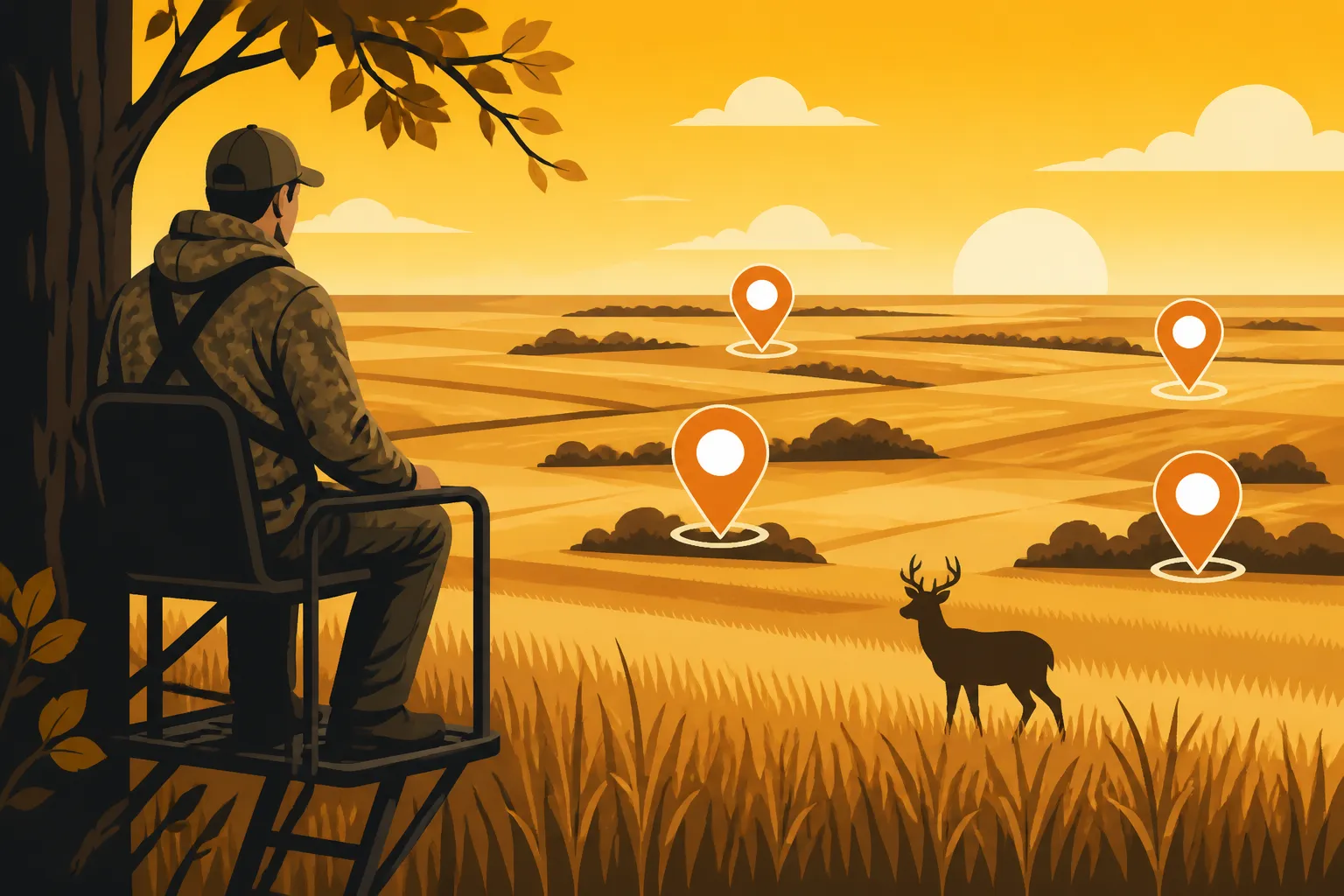
A slight rise, even just a foot or two, can create a vantage point for a cautious buck or a sheltered bedding area out of the wind. Depressions, even shallow ones, offer a sense of security and can concentrate deer movement. These subtle breaks in topography are often found near old farmsteads, along fence lines that might have accumulated debris over decades, or where waterways have etched gentle swales into the land. Using satellite imagery tools like GoHunt, you can zoom in and identify these small variations that might not be visible from a road. Pay close attention to areas where contour lines on a topographic map begin to bunch even slightly, indicating a change in elevation. Deer will naturally gravitate to these areas for bedding, feeding, and travel, especially when trying to avoid human detection. They use these small features to stay below the skyline and out of sight.
Remnant Cover and Edge Habitat
While vast fields dominate, few landscapes are truly barren. There are always remnants of natural habitat that become magnets for deer. These are your gold mines in flat farm country. Think about what breaks up the monotony of crops or pasture.
Shelterbelts, those long rows of trees planted to block wind or mark property lines, are prime examples. These linear strips of timber, often cedars or Osage orange, act as superhighways for deer moving between bedding areas and food sources. The ends of these shelterbelts, in particular, are bottlenecks where deer activity often concentrates. A stand positioned at a Shelterbelt Ends and Buck Travel can offer incredible opportunities. Similarly, creek bottoms and river draws, even dry ones, provide invaluable cover and natural travel corridors. Deer will instinctively follow these lines of timber and brush, using the banks for cover and the draws themselves as protected pathways. Learning to recognize Reading a Kansas Creek Bottom for Deer Sign is an essential skill. Even small patches of dense CRP (Conservation Reserve Program) grass or briar thickets, too small to be worth farming, become crucial bedding and staging areas. When considering your strategy for CRP Grass and Where Bucks Bed, remember that even a small, isolated patch of thick cover can hold deer, especially mature bucks seeking refuge.
Funnels, Pinch Points, and Travel Corridors
Deer, like all wild animals, are creatures of efficiency. In flat farm country, their movements are often dictated by the easiest path of travel and the need to stay concealed. This leads to the formation of natural funnels and pinch points that are absolute magnets for stand placement.
Understanding Natural Deer Funnels
A funnel is essentially anything that naturally channels deer movement into a narrower path. In flat, open country, these aren't always obvious topographical features. They might be hedgerows, fence lines with a preferred crossing point, or strips of timber that connect two larger blocks of cover. Imagine a large, open crop field. If there’s a small, finger-like projection of timber or a thick brushy fence line extending into it, deer are likely to follow that cover as far as they can before venturing out into the open. That timber finger or fence line acts as a funnel.
Another classic example is the inside corner of a crop field. Deer, especially bucks, prefer to hug the edges of cover. When a field edge makes a sharp turn, that inside corner becomes a natural pinch point where deer often cut the corner, creating a concentrated travel route. This is where Hunting Inside Corners of Crop Fields becomes incredibly effective. These areas offer predictable travel patterns, making them ideal for ambush sites. Look for subtle changes in vegetation, like where two different types of crops meet, or where an unharvested section of standing corn borders a cut field. These transitions can create significant travel corridors that deer use daily.
Identifying Man-Made Pinch Points and Bottlenecks
Beyond natural features, human activity and infrastructure often create critical pinch points. Old, unused farm roads or trails that cut through otherwise dense cover can become primary travel routes. A single creek crossing, especially if it’s the only easily traversable spot along a long stretch of water, will concentrate movement. These are the kinds of Creek Crossings Worth Hanging a Stand On where you often find well-worn trails.
Consider also the impact of a road or a subdivision on deer movement. While these might seem like deterrents, deer often find specific, low-risk crossing points or travel along the edges of development where they feel less exposed. Even gaps in fences that deer have consistently used for years can create a bottleneck. These are the spots where deer are practically forced into a confined area, offering a highly predictable setup. Tools like GoHunt can help you overlay property lines and topographical features, making it easier to visualize how deer might be funneled by various barriers and covers. Don't overlook these man-made features; deer adapt to their environment, and sometimes the best stand is right where human influence creates a constriction.
Seasonal Adaptations and Environmental Factors
Flat farm country hunting isn't just about finding structure; it's also about understanding how deer use that structure throughout the season and how external factors like wind, thermals, and hunting pressure influence their movements. Being adaptable is key to success.
Food Sources and Staging Areas
Kansas is renowned for its agricultural bounty, and deer revolve around it. Early season often sees deer focused on lush alfalfa or soybean fields. As the season progresses, corn and milo become dominant. Deer will travel from their bedding areas to these food sources, often staging in cover just before dark. A staging area is a patch of dense cover—a thicket, a CRP field, or a small timber patch—adjacent to a food source where deer gather before moving into the open field to feed. A stand placed between a known bedding area and a staging area, or within the staging area itself, can be deadly during these transitional times. Later in the year, when most crops are harvested, understanding Late-Season Food Source Hunting means zeroing in on remaining standing crops like corn or milo, or even foraging for waste grain. These remaining food sources become critical, and deer will often travel significant distances to reach them. If you're hunting in areas with Milo and Corn Stubble Deer Patterns, pay close attention to the days following a harvest, as deer will immediately capitalize on the newly available waste grain.
| Feature | Deer Movement Pattern | Ideal Stand Placement (General) | Considerations |
|---|---|---|---|
| Shelterbelt | Linear travel, cover, rubs/scrapes. | Downwind end, interior junction, or crossing points. | Wind direction, sun glare, entry/exit routes. |
| Inside Field Corner | Deer cut the corner, especially mature bucks. | 20-40 yards into the timber, facing the corner. | Prevailing wind, observation of both field edges. |
| Creek Bottom/Draw | Natural travel corridor, bedding in dense sections. | Overlooking a crossing, bend in the creek, or choke point. | Wind/thermals (see Wind and Thermals on a River Bank), water levels. |
| CRP Patch | Bedding cover, staging for food sources. | Downwind edge between CRP and food, or interior funnel. | Scent control, entry/exit, scouting for bedding. |
| Isolated Timber | Bedding, staging, security, transition point. | Downwind edge where deer enter/exit, or travel corridor. | Cover for approach, sun position, surrounding food. |
The Critical Role of Wind and Thermals
In flat country, wind is your absolute master. Without dramatic topography to swirl and baffle air currents, the wind often blows consistently from one direction, and deer rely heavily on it for scenting danger. Ignoring the wind in open country is a surefire way to get busted. Always set up your stand with the prevailing wind in mind, ensuring your scent is carried away from where you expect deer to approach or travel.
Thermals, the rising and falling air currents, are also at play, especially along creek bottoms or any slight depressions. In the morning, cool air sinks into these low-lying areas, and as the sun warms the earth, the air begins to rise. This means your scent can be carried downhill in the morning and uphill in the afternoon. Understanding these dynamics is crucial when choosing your stand location for a morning versus an evening hunt. A slight bench along a creek bank might hold thermal advantage for a few hours. Always consult a detailed weather app like GoHunt that provides wind forecasts, and be prepared to move your stand if the wind changes direction unexpectedly. Being scent-conscious in these open environments is paramount.
Hunting Pressure and Deer Adaptations
Public hunting land in flat farm country, particularly those Kansas Walk-In Hunting Access Explained tracts, can experience significant hunting pressure. Deer quickly adapt to this pressure, becoming more nocturnal and using the thickest, nastiest cover they can find. If you're hunting public land, expect deer to be extremely wary. They will learn to avoid obvious access points and travel during low light conditions or through areas hunters typically shy away from.
To combat this, you need to think outside the box. Look for small, overlooked pockets of cover that are hard to access, or that require a longer, less obvious walk. Consider hunting midday, when many hunters are out of the woods. Focus on secondary funnels or bedding areas that are tucked away. Sometimes the best stand isn't where the most sign is, but where the deer feel the safest. Hunting Pressure Patterns on Kansas Public Land will show you how deer move from high-pressure zones to areas of sanctuary. Don't be afraid to Scouting Kansas Walk-In Tracts Before the Opener to find those hidden gems and obscure travel routes. A mature buck in pressured farm country is a master of evasion, and you need to be just as cunning to intercept him.
Strategic Stand Setup and Considerations
Once you've identified promising locations, the next step is to set up your stand effectively, keeping in mind the unique challenges and opportunities of flat farm country. This isn't just about hanging a stand; it's about creating a successful ambush.
Choosing the Right Stand Type for Open Country
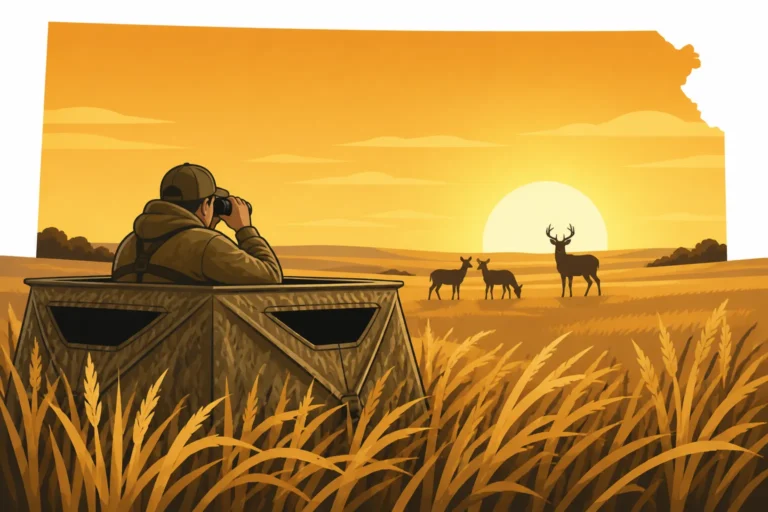
The type of stand you choose can make a big difference in flat country. Ladder stands offer stability and height, which is an advantage for seeing over standing crops or low cover, but they are generally less mobile. Climber stands provide mobility, allowing you to adapt to changing conditions, but require suitable trees. Perhaps the most versatile option for Kansas’s often sparse timber is a portable hang-on stand combined with climbing sticks. This setup allows you to get into a wide variety of trees, even smaller ones, and offers excellent concealment. For areas completely devoid of trees, a well-brushed-in Ground Blinds in Open Country can be highly effective, especially for firearm seasons or if you prefer to be at ground level.
Consider your visibility. In flat areas, you're often silhouetted against the sky. Choose a tree with good natural back cover, like a thick cedar, or brush in your stand thoroughly. Your height advantage helps with visibility but also exposes you more. Aim for at least 15-20 feet high, if the tree allows, to give you a better angle and help your scent dissipate. When using a ground blind, ensure it's set up well in advance of your hunt and is thoroughly camouflaged with natural vegetation.
Entry and Exit Strategies Without Bumping Deer
This is arguably the most crucial aspect of hunting flat farm country. With limited cover, getting to and from your stand without alerting deer is incredibly difficult but absolutely essential. Deer have incredible hearing and a keen sense of smell, and in open areas, they'll pick up on any disturbance.
Your access route should utilize any existing cover—creek bottoms, hedgerows, fence lines, or tall standing crops—to shield your approach. Walk slowly and quietly, especially in the dark. Plan your route using satellite imagery and walk it out once or twice during the offseason. Always approach your stand with the wind in your favor, even if it means taking a longer, more circuitous route. If you must cross an open area, do it quickly and confidently, preferably before first light or after dark. Avoid walking directly through known bedding areas. For evening hunts, aim to leave your stand only after dark, well after deer have moved into the fields. If you spook deer on your way in or out, you've compromised that stand location for days, if not weeks. Remember, the goal is to be a ghost in the landscape. Practice Access Routes That Do Not Bump Deer to refine your method and ensure longevity in your chosen spots.
Disclaimer
Hunting is an inherently dangerous activity. Always prioritize safety, follow all local and state regulations, and obtain proper licenses and permits before heading into the field. The information provided here is for educational purposes and should not replace professional guidance or personal judgment. Be aware of your surroundings, hunt ethically, and respect the land and wildlife.