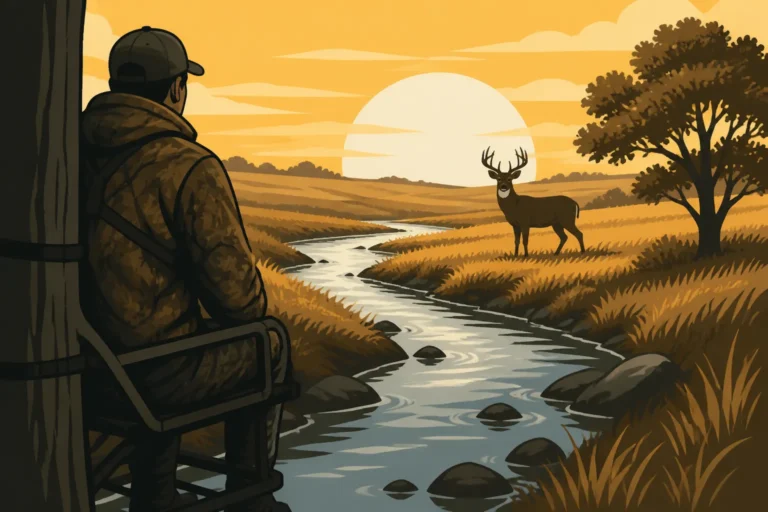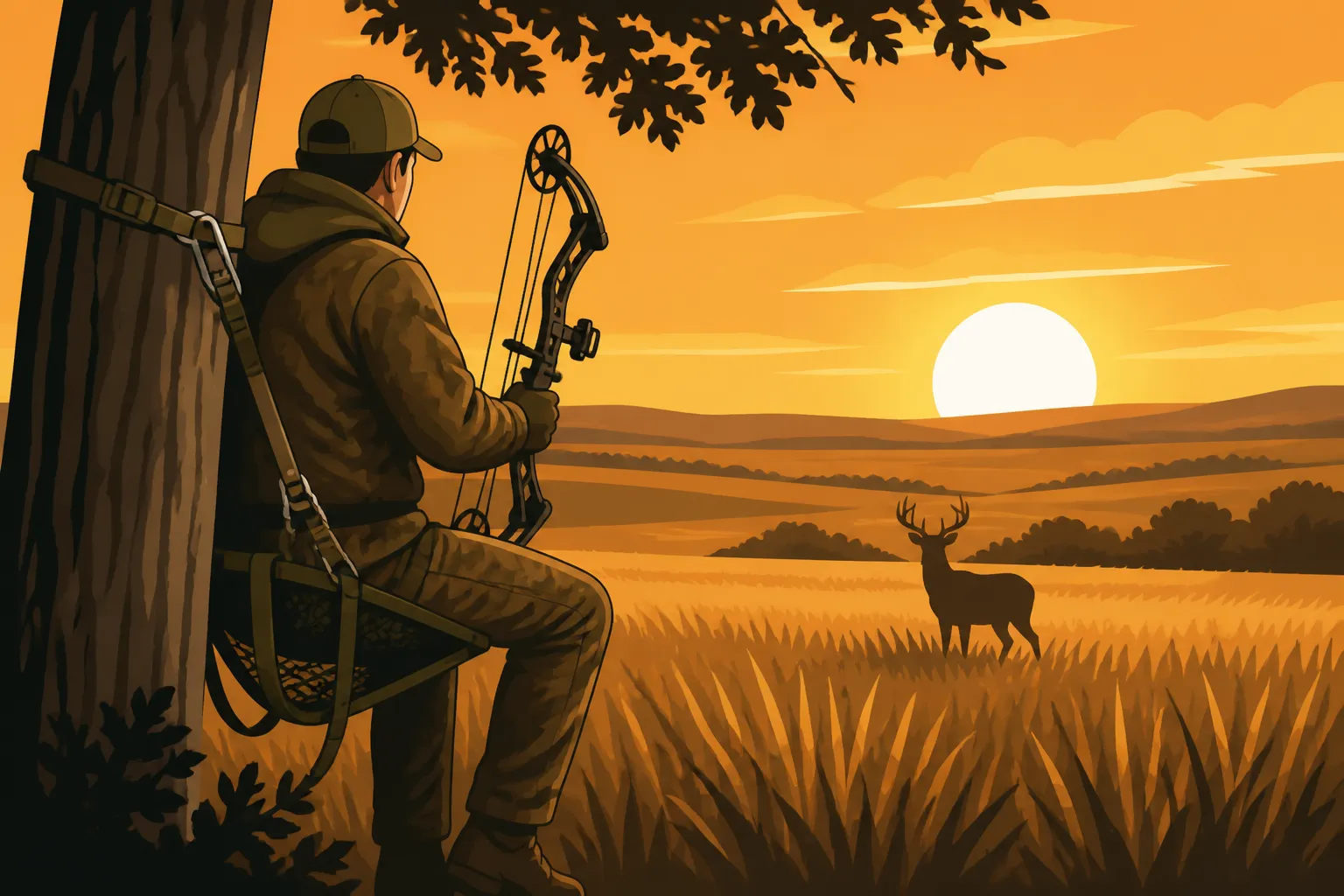
Mobile Hunting With a Saddle in Kansas
It’s a scenario every Kansas hunter knows well: you spent hours, maybe even days, scouting a particular stand location, hung your treestand, and now you’re finally there, ready for the perfect sit. But then, conditions change. The wind shifts unexpectedly, that prime food source got hammered by other hunters or the deer simply decided to move somewhere else. Suddenly, your fixed stand feels like a permanent fixture in the wrong spot, leaving you frustrated and watching deer from afar. This guide is all about equipping you with the knowledge and confidence to break free from static setups, embracing the flexibility and stealth of mobile hunting with a saddle in the vast and ever-changing landscapes of Kansas.
Why Mobile Hunting Makes Sense in Kansas
Kansas hunting often presents unique challenges that traditional fixed-stand hunting struggles to address. The deer are constantly on the move, pressure can be intense, and conditions shift like the prairie wind. Mobile hunting, particularly with a saddle, isn't just a trend; it's a strategic advantage for hunters who want to adapt and succeed.
Adapting to Dynamic Deer Behavior
Deer in Kansas, especially mature bucks, are masters of evasion. Their patterns can change overnight due to hunting pressure, sudden weather shifts, or new food sources emerging. A fixed treestand, no matter how well-placed initially, quickly becomes obsolete if the deer decide to change their core areas or travel routes. Imagine hunting a prime pinch point for a week, only for a new corn field to be harvested a mile away, pulling deer out of your area. With a mobile saddle setup, you aren't tied down. You can observe the new patterns, pack up your lightweight system, and relocate to a more productive spot in a matter of hours, not days. This adaptability allows you to stay on top of the deer, rather than constantly chasing their old patterns. It's about being reactive to their behavior and not letting a previous scouting trip dictate your entire season.
Kansas deer, especially on public land or areas with significant pressure, often become nocturnal or move through areas at unexpected times. Being able to quickly move to a bedding area edge in the afternoon, or intercept a buck on a mid-morning cruise, is a huge advantage. This flexibility is key to understanding and capitalizing on the subtle shifts in deer activity. You can learn a lot more by being able to pick a fresh sign, like a new rub line or recent tracks, and immediately set up downwind, rather than waiting for deer to come to your old spot.
Navigating Diverse Kansas Landscapes
Kansas isn't all flat fields, though we certainly have our share! From the dense river bottoms and creek draws of eastern Kansas to the rolling hills and sparse timber of the central and western regions, the terrain varies greatly. Each landscape presents its own set of challenges for traditional stands. In dense timber, finding a straight, climbable tree can be tough. In more open country, suitable cover might be few and far between.
Saddle hunting excels in these diverse environments. Its minimalist nature means you can access tight cover that a bulky stand would never allow. Think about those thick plum thickets or small cedar clusters that bucks love to bed in—a saddle can get you into a suitable tree on the edge, offering the perfect ambush point. You might even find a unique setup in a small, isolated timber point or a lone tree along a fence line that a traditional climber or hang-on stand would be too cumbersome to carry in and set up quietly. Furthermore, when you're Hunting Kansas River Bottoms and Creek Draws, you might encounter varying tree species and sizes. A saddle system is more forgiving, allowing you to climb a wider range of trees than many traditional stands.
Overcoming Public Land Challenges
Public land hunting in Kansas, while offering incredible opportunities, also comes with its own frustrations. High hunting pressure, limited suitable trees, and the constant battle to find unpressured deer often mean your "perfect" spot won't stay perfect for long. One of the biggest advantages of mobile hunting on public land is the ability to move away from other hunters. If you show up to your planned spot and there’s another truck parked there, you’re not out of luck. Instead of stubbornly sticking to a pressured area, you can pivot, quickly consult your mapping app like GoHunt, and head to a completely different section.
This mobility also allows you to focus on Hunting Pressure Patterns on Kansas Public Land, identifying those overlooked pockets of cover or subtle travel corridors that other hunters might bypass because they're too far to carry a heavy stand. When you're constantly scouting and moving, you minimize your impact, leaving minimal trace and keeping your hunting locations fresh. You're less likely to "burn out" a spot because you're not staying in one place for too long. Plus, if you're trying to set up on Kansas Walk-In Land Without Burning It Out, being able to quickly move from one end of a large tract to another is invaluable.
Essential Gear for Your Kansas Saddle Setup
Venturing into mobile hunting with a saddle requires a thoughtful approach to gear. It’s not just about buying a saddle; it’s about building a lightweight, efficient, and safe system that works for you in the Kansas outdoors. The beauty of saddle hunting is its modularity and the freedom it offers, but that means understanding each component.
The Saddle System Itself
The heart of mobile hunting is, of course, the saddle. Unlike a traditional full-body harness that's purely for fall arrest, a hunting saddle is designed to be sat in comfortably for extended periods, allowing you to lean around the tree to shoot.
- Saddle Selection: Modern saddles come in various designs, from minimalist "tree skirts" to more padded, belt-like systems. Brands like Tethrd, Trophyline, and Latitude Outdoors are popular choices, each offering different comfort levels, storage options, and attachment points. When choosing, consider the balance between comfort and packability. A more padded saddle might be great for long sits but adds bulk and weight. A lighter, more streamlined option might be ideal for quick, aggressive moves but could sacrifice some comfort over hours. The key is to find one that fits your body type, distributes weight evenly, and allows for full range of motion.
- Lineman's Belt: This essential piece of gear wraps around the tree, securing you while you climb and set up your climbing sticks. It keeps your hands free and provides stability. It’s crucial for safety during ascent and descent. Always use a high-quality, adjustable lineman's belt that is rated for climbing.
- Tree Tether: Once at hunting height, the tree tether connects your saddle to the tree, allowing you to lean back and maneuver around the trunk for shots. It needs to be adjustable so you can find the perfect height and angle for comfort and shooting lanes. Many modern tethers use a rope-mod or prusik hitch for easy adjustment. Always double-check that your tether is properly secured before putting your weight on it.
- Carabiners and Aiders: You’ll need several strong, reliable climbing-rated carabiners for attaching your lineman's belt, tree tether, and other accessories. Aiders (small webbing loops) can be attached to your climbing sticks to give you an extra step, allowing you to get higher with fewer sticks, making your setup even lighter.
Climbing Aids: Sticks, Ropes, and Aiders
Getting up the tree quickly and quietly is paramount for mobile hunting. This is where your climbing system comes into play. Forget bulky climbing stands that limit your tree choices; modern climbing sticks offer incredible versatility.
- Climbing Sticks: These lightweight, stackable sections attach to the tree and provide steps for ascent. Brands like XOP, Hawk, and Novix make excellent lightweight sticks. Consider the length of the individual sticks and how many you'll need to reach your desired hunting height. Shorter sticks are lighter but require more attachments; longer sticks cover more ground but can be bulkier. Some hunters prefer the One-Stick Method for Mobile Hunting, using a single stick and an aider for ultra-light setups.
- Rappelling/Descent Rope: While not always necessary, a separate descent rope can be a game-changer, especially for deep timber insertions or when you want an extra layer of security. It allows for a controlled, quiet descent, which can be critical if you need to get down without spooking game.
- Platform or Ring of Steps: Once at height, you'll need a way to comfortably stand and maneuver. A dedicated platform, like those offered by Tethrd or Out On A Limb, provides a stable, flat surface. Alternatively, a "ring of steps" system (multiple small steps around the tree) can be even lighter, though perhaps less comfortable for longer sits. Your choice depends on your preference for stability versus weight.
| Component | Description | Key Considerations |
|---|---|---|
| Hunting Saddle | Wearable harness to sit in and lean from. | Comfort, weight, packability, attachment points |
| Lineman's Belt | Secures you to the tree during ascent/descent. | Adjustable length, robust construction, strength |
| Tree Tether | Connects saddle to tree for hunting position. | Adjustable length, quiet operation, strength |
| Climbing Sticks | Modular steps for ascending the tree. | Weight, number of sections, attachment method, height |
| Platform/Steps | Provides standing/sitting surface at hunting height. | Stability, weight, size, quietness |
| Carabiners | Connects various parts of the system safely. | Climbing rated, locking mechanism |
| Aiders | Webbing loops for extra steps on sticks. | Durability, length, ease of use |
Accessories for Efficiency
Beyond the core components, a few key accessories can dramatically improve your mobile hunting experience in Kansas.
- Backpack: A quality pack is crucial for carrying your entire system. Look for one that's lightweight, quiet, and offers good organization for your sticks, platform, and other gear. Many hunters prefer a smaller, streamlined pack that doesn't add unnecessary bulk.
- Quiet Storage Solutions: Pouches and fanny packs that attach to your saddle or belt are perfect for small, frequently used items like rangefinders, grunt calls, or a headlamp. The goal is to keep everything within easy reach without creating noise. Companies like Marsupial Gear or FHF Gear offer excellent options.
- Haul Rope: A light but strong rope (often paracord) is essential for silently pulling up your bow, backpack, or rifle once you're in the tree. This ensures you don't climb with unnecessary weight or risk damaging your weapon. Always use a dependable knot to secure your gear.
Mastering the Art of the Mobile Saddle Set-Up
The real magic of saddle hunting isn't just in the gear, but in the execution. Being able to set up silently, safely, and efficiently in the dark is a skill that comes with practice. In Kansas, where deer can bust you with even the slightest creak or rustle, precision is everything.
Safety First: Harness, Ropes, Checks
Before you even think about climbing a tree, safety needs to be your absolute top priority. Saddle hunting is incredibly safe when done correctly, but complacency can lead to serious injury.
- Pre-Hunt Checks: Before every single hunt, inspect all your ropes, straps, carabiners, and the saddle itself for any wear, fraying, or damage. A small nick in a rope can have catastrophic consequences. Ensure all your knots are tied correctly and securely. Make it a habit.
- Always Be Tethred: From the moment your feet leave the ground, you should be connected to the tree. Your lineman's belt keeps you secure while you climb, allowing you to work hands-free. Once you reach hunting height, transition smoothly to your tree tether. Never, ever unclip your lineman's belt until your tree tether is securely attached and tested. This "always be tethred" rule is non-negotiable. Many new hunters get tripped up on transitions, which is where most accidents occur. Practice these transitions at ground level until they are second nature.
- Practice at Home: Don't wait until opening morning to try out your new saddle system. Set it up in your backyard or a safe, familiar tree. Practice climbing, setting your sticks, attaching your platform, and getting comfortable in the saddle at various heights. This practice builds muscle memory, identifies potential issues with your gear, and, most importantly, instills confidence. This is also a great time to practice Sighting In Before Firearm Season from an elevated position to get used to the unique angles you'll encounter.
Efficient Ascent and Platform Deployment
Speed and stealth are critical when setting up in the dark, particularly on pressured Kansas ground. Every minute saved, and every noise avoided, increases your chances of success.
- Pre-Planning Your Climb: Use an app like GoHunt to e-scout your tree before you even leave the truck. Identify potential obstacles, the best side of the tree to climb for concealment and shot opportunities, and the general branch structure. When you arrive, quickly confirm your chosen tree.
- Quiet Stick Placement: Carry your climbing sticks bundled tightly to prevent rattling. When attaching them, work slowly and deliberately. If using cam-straps, ensure they don't scrape against the bark loudly. Minimize metal-on-metal contact. Many hunters wrap their stick sections in silencing tape or use rubberized coatings. The goal is to make each attachment as quiet as possible. Aim to place your sticks efficiently, using aiders if desired to reduce the number of sticks needed and get higher with less equipment.
- Fluid Transitions: Once you've reached your desired height, the transition from lineman's belt to tree tether needs to be seamless. Practice this motion repeatedly. Attach your tree tether, ensure it's tight and secure, then unclip your lineman's belt. Next, attach your platform or ring of steps. Again, quietness is key. Some platforms have quick-attach systems that minimize fumbling in the dark.
Comfort and Concealment in the Tree
Once you're at hunting height, it's not just about being there; it's about being comfortable and hidden for the long haul, ready for any shot opportunity.
- Adjusting for Comfort: The beauty of a saddle is its adjustability. Once you're tethered, experiment with your tether length and height to find the most comfortable lean. You can shift your weight, rotate around the tree, and adjust your posture throughout the sit to stay comfortable and minimize fatigue. This constant micro-adjustment helps prevent stiffness, which can lead to noisy movements when a deer appears.
- Optimizing Concealment: Unlike a traditional stand that dictates a single facing direction, a saddle allows you to use the tree trunk itself for concealment. Lean into the tree, using its bulk to break up your silhouette. Position yourself so you can naturally peek around the tree without excessive movement. Consider your background – often, leaning into the tree provides a darker, more natural backdrop than standing out in front of it. This ability to move 360 degrees around the tree means you can adjust for changing deer movement or even the sun's position.
- Practicing Shot Angles: A saddle allows for unique shot opportunities around the tree, but it also means you need to practice. From your saddle, practice shooting from various positions—leaning left, leaning right, even backward if necessary. Understand how to manage your bow or rifle clearance around the tree and how to take those crucial Shot Angles From an Elevated Stand on quartering-away or broadside deer. Being able to shoot effectively 360 degrees around the tree is a significant advantage in the whitetail woods.
Strategic Deployment: When and Where to Use a Saddle in Kansas
Mobile saddle hunting truly shines when it's integrated with smart scouting and tactical decision-making. In Kansas, this means understanding deer movement relative to vast agricultural fields, limited timber, and changing environmental factors. It's about putting yourself in the absolute best spot, not just a good one.
Scouting for Immediate Opportunities
Kansas deer behavior can change quickly, driven by pressure, crop rotations, and weather. The ability to scout aggressively and set up immediately is where a saddle system pays dividends.
- Fresh Sign First: Forget old sign; focus on what's fresh. A mobile hunter is constantly looking for new rubs, fresh scrapes, hot tracks, or recently browsed vegetation. If you find a new rub line that wasn't there last week, it signals recent buck activity. With your lightweight saddle system, you can set up on that sign within minutes, rather than having to lug in a heavier stand. This immediate responsiveness to "hot" sign dramatically increases your odds.
- Real-Time Adaptability: Whether you're scouting before the season or during a mid-day break, use your mapping apps like GoHunt to identify potential setup locations on the fly. You might find an unexpected staging area next to a Milo and Corn Stubble Deer Patterns field, or a unique transition point in a timber block. A mobile setup allows you to take advantage of these fleeting opportunities. Being able to adapt to sudden changes, like a sudden cold front pushing deer to specific food sources, means you're always hunting the "now."
- Micro-Scouting: Saddle hunting encourages a different type of scouting—one that's focused on hyper-local details. Instead of looking for a general area, you're looking for the exact tree, the perfect limb, the optimal shooting lane. This granular level of scouting, often done silently and quickly, is only possible with a light, versatile system.
Targeting Specific Habitat Features
Kansas offers a variety of habitat types, and understanding how deer use them is critical. A saddle allows you to exploit these features with surgical precision.
- Funnels and Pinch Points: Deer, especially mature bucks, often use natural funnels or pinch points to move between bedding and feeding areas. These can be obvious, like a narrow strip of timber between two large fields, or subtle, like a slight elevation change or a small creek crossing. Using your saddle, you can easily set up in a tree directly in these travel corridors. Whether it's a Terrain Funnels That Work Without Hills in flat farm country or a narrow gap in a dense shelterbelt, your mobile system allows you to capitalize on these high-traffic areas.
- Edges and Transitions: Deer love edges—where two habitat types meet. This could be the edge of a timber block meeting a CRP field, a crop field bordering a creek bottom, or even the subtle transition from tall grass to shorter browse. These areas often provide both cover and food. A saddle allows you to pick the exact tree on that edge, giving you a vantage point over both habitat types. For example, if you're Reading a Kansas Creek Bottom for Deer Sign, you can identify a rub line on the edge of the creek timber and immediately set up to intercept deer moving along that natural corridor.
- Water Sources: In dry periods, or during the early season, water sources can be major deer magnets. A secluded pond, a slow-moving creek, or even a standing puddle after rain can attract deer. With a saddle, you can quickly move to a vantage point overlooking these crucial water points. This is particularly effective for Early-Season Bowhunting Over Water when temperatures are high.
Adapting to Wind and Thermals
Wind direction and thermals are paramount for whitetail hunting success, and in Kansas, they can be particularly unpredictable. A mobile setup gives you the power to always hunt the wind.
- Always Downwind: Your scent is your biggest enemy. Never, under any circumstances, hunt with your wind blowing towards where you expect deer to come from. If the wind shifts unexpectedly during your sit, a saddle allows you to silently rotate around the tree to adjust your position, or if the shift is too drastic, quietly pack up and relocate to an entirely new spot downwind. This flexibility is vital, especially when hunting Wind and Thermals on a River Bank, where air currents can swirl.
- Playing Thermals: In areas with even subtle elevation changes, thermals (air currents that rise in the morning and fall in the evening) play a significant role. In the morning, you might want to be lower to catch deer as thermals rise and carry your scent up. In the evening, being higher can keep your scent above deer as thermals fall. A mobile setup means you can adapt your elevation to best utilize these natural air currents, rather than being stuck at a fixed height.
- Using GoHunt for Wind Planning: Advanced mapping apps like GoHunt often include wind direction tools that show you how scent will drift from your chosen stand location. This is incredibly powerful for pre-planning your approach and exit routes, as well as your exact tree choice, ensuring you minimize your scent footprint before you even step foot in the woods. This foresight saves valuable time and minimizes disturbances.
Addressing Common Challenges of Saddle Hunting in Kansas
While saddle hunting offers incredible advantages, it's not without its specific challenges, particularly in the unique environment of Kansas. Understanding and proactively addressing these hurdles will make your mobile hunting experience far more successful and enjoyable.
Finding Suitable Trees
One of the biggest concerns for potential saddle hunters in Kansas, especially those accustomed to the dense forests of other states, is finding suitable trees. Kansas often features smaller timber blocks, isolated trees, or areas dominated by species not ideal for climbing.
- Smaller Diameter Trees: Many parts of Kansas, particularly in central and western regions, have smaller, younger trees or species like Osage Orange (Hedge) that are not large enough for many traditional stands. The good news is that saddles are far more forgiving with tree diameter. You can comfortably hunt out of trees that are too small for a hang-on or too crooked for a climber. This opens up a vast number of previously unhuntable trees.
- Utilizing Isolated Cover: Don't overlook single trees or small clumps of timber in otherwise open country. These isolated pieces of cover can be absolute magnets for cruising bucks, especially during the rut. A saddle allows you to set up on these key features quickly and quietly. Often, a lone cedar or a small oak will provide just enough cover for a quick ambush.
- Considering Tree Species: While some trees are easier to climb than others, a saddle allows for more flexibility. Elms, hackberries, cottonwoods, and various oaks are common and generally good for climbing sticks. Hedge trees can be tricky due to thorns and rough bark, but even they can be utilized with care and the right climbing method. Always prioritize safety and stability, regardless of tree species. If you're struggling, consider the local knowledge for Cedar Thickets as Bedding Cover and scout for taller, straighter cedars on the edges.
Managing Cold Weather Comfort
Kansas winters can be brutal, with strong winds and freezing temperatures. Staying warm and comfortable in a saddle during a long December sit presents a unique set of challenges compared to a fully enclosed ground blind.
- Layering is Key: The principle of layering is even more critical in a saddle. Start with moisture-wicking base layers, add insulating mid-layers (fleece, down), and finish with a windproof and waterproof outer shell. Since you're not moving much, focus on quality insulation. Brands like Sitka, Kuiu, and First Lite offer excellent cold-weather hunting gear designed for warmth without excessive bulk. For specific advice, check out our guide on Cold Weather Stand Clothing.
- Hand and Foot Warmth: These are often the first parts of your body to get cold. Invest in high-quality insulated gloves or mittens, and consider hand warmer pouches. For your feet, insulated boots a size larger than normal (to allow for thicker socks and air circulation) combined with toe warmers are essential. Staying warm in a saddle often means focusing on the extremities.
- Minimizing Exposed Skin: A good balaclava, neck gaiter, and warm hat are crucial. Not only do they prevent heat loss, but they also aid in concealment. The less skin exposed to the biting Kansas wind, the better. Consider a small, packable blanket or "sit pad" to add an extra layer of insulation between you and the saddle material. For more tips on Staying Warm on a December Sit, make sure to read our detailed guide.
Packing Light and Efficiently
The core philosophy of mobile hunting is "go light, go fast." Every ounce matters when you're hiking into remote public land or covering significant distances on private ground.
- Necessity Over Luxury: Critically evaluate every item you pack. Do you really need it? Can you find a lighter alternative? A minimalist mindset is crucial. Instead of a bulky rangefinder, perhaps a smaller, lighter model. Instead of multiple grunt tubes, one versatile call.
- Multi-Purpose Gear: Look for items that serve multiple functions. A small utility rope can be a haul rope, a drag rope, or even a makeshift clothesline. A headlamp with a red light setting serves both navigation and minimal disturbance.
- Streamlined Organization: A well-organized pack means less fumbling and noise. Use small stuff sacks or designated pockets for different gear categories (e.g., calls, scent control, first aid). Practice packing and unpacking your system until it's a smooth, silent routine. This efficiency not only saves time but also minimizes the chances of dropping or losing gear in the dark. Every piece of your setup should have its place and be easily accessible.
Elevating Your Mobile Strategy with Advanced Tactics
Once you've mastered the basics of saddle hunting in Kansas, it's time to refine your strategy. Advanced mobile tactics focus on precision, adaptability, and an even deeper understanding of deer behavior in relation to specific land features and conditions. This is where you truly become a ghost in the woods.
Fine-Tuning Your Access Routes
The journey to and from your stand is often as critical as the stand itself. Bumping deer on your way in or out can ruin a hunt before it even begins, especially on highly pressured ground.
- Stealthy Approaches: Use natural terrain features, creek beds, or dense cover to conceal your approach. Always consider the wind and thermals, even when walking in. Try to walk into the wind or with a quartering wind to prevent your scent from drifting into bedding areas. GoHunt mapping tools can help you visualize these natural corridors and plan your route precisely. This is crucial for creating Access Routes That Do Not Bump Deer.
- Pre-Scouting Routes: Before the season, or even the day before a hunt, walk your planned access routes in daylight. Identify any noisy obstacles (crunchy leaves, thorny thickets) and plan how to navigate them silently in the dark. Sometimes, a slightly longer, quieter route is far more effective than a direct, noisy one.
- Leaving No Trace: As a mobile hunter, you inherently leave less impact than a fixed stand. However, be mindful of your tracks, broken branches, or dropped items. The goal is to move through the woods as if you were never there, leaving the deer undisturbed for future hunts. This is especially important when you consider Leaving No Trace on Walk-In Ground.
Leveraging Specific Food Sources
Kansas is an agricultural state, and deer movement is heavily dictated by food sources throughout the year. A mobile saddle allows you to pinpoint and exploit these changing patterns.
- Seasonal Food Shifts: Deer transition between food sources throughout the year. In early season, they might be on lush green fields or browse. As fall progresses, acorns become crucial, followed by various grain crops. In late season, standing corn, soybean stubble, or winter wheat can be absolute magnets. Your mobile system allows you to adapt to these shifts. If you notice deer have abandoned one food source for another, you can quickly move your setup to the new hot spot. This tactic is particularly effective for Late-Season Food Source Hunting.
- Crop Field Edges: For much of Kansas, crop fields are central to deer movement. Instead of just setting up on a general field edge, use your mobile saddle to find the "inside corners" or specific transition points where deer funnel from timber to feed. These subtle nuances, often visible through detailed aerial imagery on GoHunt, can be the difference between seeing a few does and encountering a mature buck.
- Micro-Plot Opportunities: If you have access to private land or permission to plant, even small, strategically placed food plots (e.g., a quarter-acre clover plot) can create incredible ambush opportunities, especially if they're close to bedding cover. A saddle is perfect for hunting these smaller, often dense, setups.
Integrating Calls and Decoys from Your Saddle
Being mobile doesn't mean sacrificing calling and decoying tactics. In fact, the adaptability of a saddle can enhance them.
- Strategic Calling Positions: With a saddle, you can easily adjust your position around the tree to call effectively in any direction. If you grunt and a buck responds from your left, you can subtly shift your body and lean to face that direction, minimizing movement and maximizing your sound projection. Experiment with Grunt Calls That Work in the Pre-Rut or try Rattling Volume for Open Country from your mobile setup.
- Decoy Placement: While carrying a full-sized decoy can be cumbersome, smaller, foldable decoys or even just an antler rack can be effectively deployed from a mobile setup. Once in your tree, you can use a haul rope to set up a decoy strategically at a distance that draws deer into your shooting lane. Being in a saddle allows you to position the decoy to take advantage of the wind, setting it up slightly downwind of your position to draw bucks past you. For optimal results, always consider Decoy Placement and Wind Direction.
- Adapting to Deer Reaction: If a deer responds unexpectedly to a call or decoy, your ability to move 360 degrees in the saddle means you can adjust your shot angle and concealment instantly. You're not stuck facing one direction, hoping the deer cooperates. This adaptability can turn a marginal opportunity into a successful harvest.
Disclaimer
Please be aware that hunting regulations, seasons, and licensing requirements can change. Always consult the most current Kansas Department of Wildlife, Parks and Tourism (KDWP) regulations before planning any hunting trip. This guide is for informational purposes only and does not supersede official state regulations. Safety should always be your number one priority in the field.