Muzzleloader Deer Hunting in Kansas’s September Season
The Kansas September muzzleloader season offers a unique opportunity to chase big whitetails before the full swing of bow season and the intense pressure of the general firearm season. However, it's also a challenging time, often marked by lingering summer heat, active insects, and deer still holding onto their somewhat predictable summer patterns. Hunters often struggle with managing scent in warm, humid conditions and finding deer that aren't yet exhibiting those classic fall behaviors. This comprehensive guide will walk you through everything you need to know to navigate these challenges and make the most of your September muzzleloader hunt in the Sunflower State.
Understanding Kansas Muzzleloader Season Specifics
The muzzleloader season in Kansas is a special window, allowing hunters to hit the woods when conditions can be tough, but rewards can be high. It's often seen as a bridge between the early bow season and the later general firearm season, offering a chance to hunt specific deer with a different weapon platform. Getting the details right on dates, permits, and legal requirements is crucial to avoid any missteps.
Key Dates and Permit Information
Kansas offers a dedicated muzzleloader deer season, typically running for a couple of weeks in mid-to-late September. It's important to remember that this specific season is often only available to hunters who successfully drew a whitetail deer permit that allows muzzleloader as a weapon choice. For non-residents, this usually means applying during the main draw period, which typically opens in April. You'll declare your weapon choice during the application process, and if successful, your permit will be valid for the designated muzzleloader season, as well as the entire archery season.
Residents have a few more options, including various either-sex or antlerless permits that might be valid during this period. Always double-check the current year's Kansas Department of Wildlife, Parks and Tourism (KDWP) regulations online or in their annual hunting regulations summary, as dates and permit availability can shift slightly. The key here is not to assume; confirm your permit allows for muzzleloader use during the September dates. Missing that application window or misunderstanding your permit's scope can be a costly mistake, both in terms of time and money.
Legal Muzzleloader Requirements
Kansas has specific definitions for what constitutes a legal muzzleloader for deer hunting. Generally, this means a firearm loaded from the muzzle, using black powder or a synthetic substitute, and firing a single projectile. Sabots are usually allowed, which means you can fire a smaller diameter bullet encased in a plastic sleeve, providing better accuracy and ballistic performance than a traditional round ball. However, shotgun primers are often restricted, with most regulations requiring percussion caps or 209 primers only.
It's absolutely critical to verify these regulations before you head afield. Some states have nuances about what's considered "primitive" enough for muzzleloader season. Kansas generally allows modern inline muzzleloaders, which are far more accurate and reliable than traditional side-hammer flintlocks or caplocks, but confirm the specifics of projectile diameter, powder type, and ignition system. Using a rifle that doesn't meet the legal definition, even if it's technically a muzzleloader, can lead to serious legal trouble. Make sure your chosen firearm is compliant, sighted in, and that you've practiced loading and firing it repeatedly.
Unit Restrictions and Antlerless Opportunities
While your permit will specify the deer management unit (DMU) you can hunt in, it's worth noting that some units might have different antlerless permit availability or special restrictions. Generally, a successfully drawn either-sex permit for a specific unit allows you to harvest one antlered whitetail buck or one antlerless whitetail deer within that unit during the muzzleloader season. If you're primarily interested in filling the freezer or increasing your odds, keep an eye out for dedicated antlerless-only muzzleloader permits or seasons, which sometimes open up in units with high deer populations.
However, these opportunities are often specific and limited, so consult the KDWP regulations carefully. The great plains of Kansas offer diverse habitat, and deer densities can vary wildly between units. Understanding Kansas Deer Units and What Each Holds can give you a strategic advantage when applying for permits or planning your hunt. Some units, particularly in eastern Kansas, might have more timber and higher deer numbers, while western units might be more open country with fewer deer but potentially larger-bodied animals. Always check your permit for specific unit validity and any antler point restrictions that might apply to antlered deer.
Essential Muzzleloader Gear and Setup
Stepping into the woods with a muzzleloader in hand isn't just about loading powder and a bullet; it's about a complete system designed for accuracy, reliability, and ethical harvesting. The September heat adds another layer of complexity, demanding careful consideration of everything from your rifle choice to the small accessories that can make or break your hunt.
Choosing the Right Muzzleloader for Kansas
When it comes to muzzleloaders for Kansas deer, modern inline rifles are generally the top choice for most hunters. Brands like Traditions, CVA, Thompson/Center, and Savage Arms offer excellent options that provide impressive accuracy and consistent ignition. Unlike the traditional side-hammer designs, inline muzzleloaders have a direct firing pin strike to the primer, leading to faster lock times and better consistency. This is a huge advantage, especially when you're presented with a fleeting shot opportunity on a wary Kansas buck.
Consider features like a reliable trigger, an accurate barrel (often stainless steel for durability and rust resistance in the field), and a synthetic stock that can withstand the elements. Weight is also a factor, particularly if you plan on covering a lot of ground. A lighter rifle is easier to carry, but a slightly heavier one might offer better stability for those longer shots from a rest. Remember, the goal is consistent performance, shot after shot, to ensure you can make a clean, ethical kill when the moment arrives.
Projectile and Powder Selection for Accuracy and Ethics
Your projectile and powder combination are the heart of your muzzleloader's performance. For projectiles, modern sabots firing conical bullets (like Hornady SSTs, Federal Bor-Lok, or Barnes Spit-Fire T-EZ) are incredibly popular. These offer excellent ballistic coefficients, meaning they fly flatter and retain energy better than traditional round balls or lead conicals. Their expansion characteristics are also designed for reliable energy transfer and penetration on deer-sized game. Practice with several types to find what your rifle prefers and aim for consistent groupings at your intended hunting distances, usually out to 100-150 yards for most muzzleloaders.
When it comes to powder, you'll generally choose between granular black powder (like Hodgdon Triple Seven or Goex) or compressed pellets (like Hodgdon Pyrodex or Triple Seven pellets). Pellets are incredibly convenient, offering pre-measured charges that simplify loading and ensure consistency. However, some rifles might show better accuracy with loose powder, allowing for finer tuning of your load. Always follow the manufacturer's recommendations for maximum loads. Remember, in Kansas's September heat, you'll want a powder that is relatively stable across temperature fluctuations and ignites reliably. Reliability is paramount – a misfire on a trophy buck is an experience no hunter wants.
Accessories for a Successful Hunt
Beyond the rifle itself, a few key accessories will significantly improve your muzzleloader hunt. First and foremost, a quality optic. A low-power variable scope (1-4x or 2-7x) is ideal, offering quick target acquisition at close ranges and enough magnification for longer shots without being overly bulky. Ensure it's waterproof and fog-proof, as early mornings can be dewy.
Next, a durable ramrod is essential. The factory ramrods are often flimsy. Invest in a solid, one-piece or threaded-section ramrod that won't flex or break while loading. You'll also need a capper/de-capper tool, a spare supply of primers, a speed loader system (pre-loaded tubes with powder and projectile make quick follow-up shots possible, though often not necessary for deer), and a cleaning kit suitable for black powder. A rangefinder is also invaluable for accurately gauging distances in open Kansas country, helping you stay within your ethical shooting limits. Finally, don't forget good scent control products. Even with a good wind, the Kansas heat can make scent management a real challenge, and a quality spray or carbon-lined clothing can make a difference.
Decoding Early September Deer Behavior
Successfully hunting deer in Kansas during the September muzzleloader season hinges on understanding how whitetails are behaving during this unique transitional period. They're not in full rut mode, nor are they strictly on summer patterns. The lingering heat plays a huge role in their daily routines.
Summer Patterns and Transition to Fall
In early September, Kansas deer are still largely operating on summer patterns, but you'll start to see subtle shifts. Bucks are typically still in bachelor groups, though these groups may begin to break up as antlers harden and testosterone levels slowly rise. Their main priorities are food, water, and security cover, often dictating their movements to crepuscular periods – dawn and dusk – to avoid the worst of the daytime heat. They'll spend the hottest parts of the day bedded in thick cover, often near a reliable water source.
As September progresses, especially after the first significant cool front, you might notice an increase in daytime activity, but don't count on it being consistent. The transition is gradual, not a flip of a switch. This means you can't hunt them like it's November; you need to adapt to the present conditions. Focusing on where they find relief from the heat and access their primary nutritional needs will be key. This often means early mornings and late evenings are your best bets for catching them on their feet.
Water Sources and Bedding Areas in Warm Weather
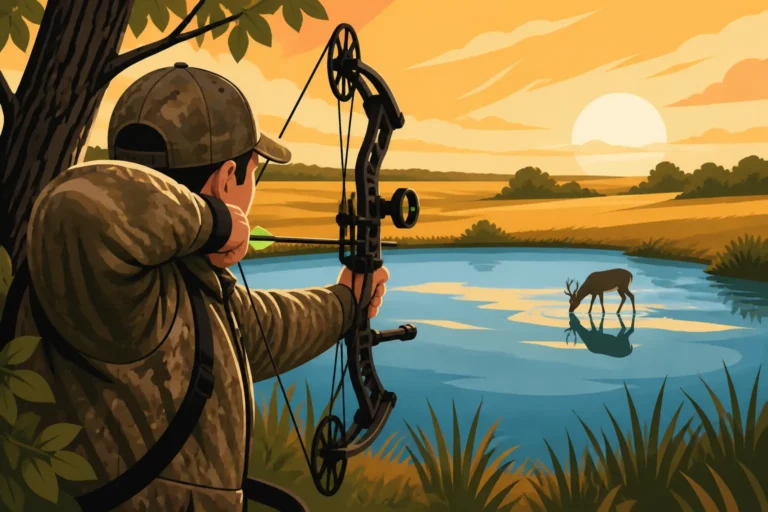
When the temperatures soar in Kansas, water becomes an absolute magnet for deer. They need it not just for drinking, but also for thermoregulation. Ponds, creek bottoms, and even small puddles or damp areas can be prime locations. Scouting for these critical water sources and the trails leading to and from them can be incredibly productive. Deer will often bed very close to water in the early season, minimizing the distance they need to travel in the heat.
Bedding areas during September are typically dense, shady cover that offers a breeze and protection from insects. This could be a thick cedar grove, a stand of tall CRP grass, or the cool, dense undergrowth along a river bottom. Pay close attention to these areas when Scouting Kansas River Bottoms and Creek Draws. Deer will often use the same bedding sites repeatedly if they feel secure and the conditions are right. Look for sign like freshly disturbed beds, droppings, and rubs on smaller saplings – bucks might start making a few token rubs as their velvet sheds. The key is to approach these areas carefully, ideally from downwind, to avoid bumping deer.
Food Sources and Feeding Habits
Early September in Kansas means agricultural fields are often still green or in various stages of harvest. Corn and soybean fields are major draws, providing both food and cover. Alfalfa fields, still lush and green, can be irresistible, especially if there's a good rain. Native browse, such as forbs and tender shoots, will also be consumed. As the month progresses, and some crops are harvested, deer may shift their focus to fallen grains or newly exposed green shoots.
Your scouting efforts should concentrate heavily on identifying active food sources and the trails leading from bedding areas to these feeding grounds. Deer will often stage in thicker cover just outside a field before entering it at last light. This "staging area" can be a phenomenal ambush point. Again, timing is everything. Deer are less likely to brave open fields during the heat of the day, preferring to feed under the cover of darkness or in the coolest parts of the morning and evening. Understanding these patterns is fundamental for Muzzleloader Deer Tactics in Warm September Weather.
Scouting and E-Scouting for Early Season Success
Effective scouting is the bedrock of any successful deer hunt, and it's especially critical for muzzleloader season in Kansas when deer patterns are still somewhat in flux due to the heat. Combining boots-on-the-ground recon with modern digital tools will give you the best chance to pinpoint where deer are living and moving.
Pre-Season Scouting Without Pressuring Deer
Ideally, your ground scouting should happen well before the season opener to avoid alerting deer to your presence. Early summer is a great time to identify bedding areas, travel corridors, and perennial water sources without risking a run-in with an antlered buck. Walk creek bottoms, glass open fields from a distance, and look for sheds from the previous season to get a sense of the caliber of bucks in the area. Focus on finding historical sign – old rubs, scrapes, and well-used trails.
As the season approaches, shift your ground scouting to more covert methods. Limit your time in the woods, especially in core areas, and utilize trail cameras to do the "heavy lifting." Place cameras on primary trails leading to known food sources, pinch points, or near water. Check them sparingly to minimize disturbance, and approach from downwind. The goal is to gather intelligence on current deer activity, group dynamics, and antler development without educating the deer you hope to pursue. Remember, deer are highly sensitive to human intrusion, particularly on smaller public land tracts or heavily hunted private land.
Utilizing Digital Tools for Kansas Public and Private Land
In today's hunting world, e-scouting is an indispensable tool, especially for hunters trying to figure out vast areas of Kansas. Services like GoHunt offer incredible mapping overlays that reveal land ownership, topographical features, and various habitat types. You can identify potential bedding cover in dense timber, locate subtle terrain funnels that deer might use, and pick out crucial water sources from the comfort of your home. Use satellite imagery to find those hidden pockets of cover or isolated groves of trees that might act as bedding sanctuaries in otherwise open agricultural landscapes.
When planning to hunt Public Land Deer Hunting in Kansas, tools like GoHunt are invaluable for identifying Walk-In Hunting Access (WIHA) tracts, state wildlife areas, and other public land parcels. You can mark potential access points, anticipate wind directions for specific stand locations, and even pre-plan retrieval routes for a downed animal. This digital groundwork saves you countless hours of unproductive walking and helps you focus your limited time on the most promising areas. Learn how to effectively utilize these tools to read E-Scouting Kansas Farm Country From Home.
Identifying Key Travel Corridors and Funnels
During the early season, deer movement patterns are often dictated by the path of least resistance between bedding, food, and water. These are your key travel corridors and funnels. Look for natural pinch points: narrow strips of timber connecting larger woodlots, creek crossings, fence line gaps, or the edges of dense cover that meet an open field. Deer will almost always follow the easiest, safest route available.
These funnels are often subtle in flat Kansas country, but they exist. A slight rise in elevation, a ditch line, a small stand of cedars, or even a line of mature trees can create a funnel. On satellite imagery, look for changes in vegetation density, subtle elevation changes, or linear features that concentrate deer movement. Field edges where a crop changes from corn to beans, or where a timber edge meets a CRP field, are also classic travel corridors. Finding and understanding these can be the difference between seeing a lot of deer and seeing the deer you want.
Effective Stand and Blind Placement in Warm Weather
The September muzzleloader season often comes with warm temperatures, which means scent control and strategic placement are more critical than ever. Deer are more likely to bust you if your scent is wafting through their core areas. Your choice of elevated stand or ground blind, coupled with an understanding of wind and thermals, will dictate your success.
Elevated Stands for Scent Control and Vantage
An elevated stand is often your best friend in warm weather. Getting 15-20 feet off the ground helps to get your scent above the primary deer travel lanes, allowing it to dissipate more effectively. This is particularly important in Kansas where prevailing winds can be strong. Treestands also offer a broader vantage point, allowing you to observe more ground and spot deer approaching from a distance. For the mobile hunter, a treestand saddle system, as discussed in Mobile Hunting With a Saddle in Kansas, provides versatility and comfort while keeping your profile low.
When choosing a specific tree, look for one that provides natural cover around the stand to break up your silhouette. Consider the sun's position throughout the day to avoid being backlit or having the sun directly in your eyes during prime hunting hours. Your access route to and from the stand is just as important as the stand location itself. Plan a route that avoids known bedding areas and minimizes your disturbance to the surrounding habitat. Ideally, you want to get in and out undetected, leaving no trace of your presence.
Ground Blinds and Natural Cover Utilization
While treestands are great, sometimes a ground blind is the only option, or even the better option. In areas with limited suitable trees, or for hunters who prefer a more comfortable, enclosed setup, a pop-up ground blind can be incredibly effective. They offer excellent concealment and help contain scent, especially when properly brushed in. For the September muzzleloader season, positioning a blind along the edge of a standing crop field, near a watering hole, or at a natural pinch point between cover and food can be deadly.
However, brushing in your blind is crucial. Don't just pop it up and hunt it. Use local vegetation – branches, corn stalks, tall grass – to break up its outline and make it blend seamlessly into the environment. Give the deer a few days to get used to its presence if possible. Another excellent tactic is to utilize existing natural cover, such as thick Cedar Thickets as Bedding Cover or brush piles. With careful pruning and camouflage, you can create an incredibly effective ground setup without the bulk of a manufactured blind. This approach works well for still hunting or ambushing from a concealed position.
Adapting to Wind and Thermals in September
Wind direction is always paramount in deer hunting, but it takes on added significance during the warm September muzzleloader season. Your scent signature is a deer's primary defense, and in humid conditions, scent can hang in the air longer. Always hunt with the wind in your favor, positioning yourself downwind of where you expect deer to approach. This might mean having multiple stand or blind locations for different wind directions.
Thermals also play a significant role, especially in the early mornings and late evenings. As the ground warms with the rising sun, thermals will typically rise, carrying your scent upwards. In the evening, as the air cools, thermals will fall, carrying your scent downwards into creek bottoms and low-lying areas. Understanding this dynamic is crucial when hunting topographical features. For instance, if you're hunting a creek bottom in the morning, your scent will likely rise, potentially clearing the creek bed. In the evening, it will fall, making hunting from a lower position trickier. Pay attention to how wind and thermals interact, particularly around features like riverbanks and draws, as explored in Wind and Thermals on a River Bank.
Mastering Muzzleloader Hunting Tactics
Muzzleloader hunting in September requires a blend of patience, precise execution, and adapting classic deer hunting tactics to the early season conditions. The single-shot nature of many muzzleloaders means every shot counts, and meticulous planning is crucial.
Still Hunting and Spot-and-Stalk in Open Terrain
Kansas, particularly the western and central parts, can be surprisingly open, making spot-and-stalk tactics a viable, albeit challenging, option. Still hunting, a slow and deliberate movement through cover, can also be productive. For spot-and-stalk, utilize binoculars or a spotting scope from a vantage point at dawn or dusk to locate deer in feeding areas or traveling between bedding and food. Once a deer is spotted, the real work begins.
Planning your stalk requires an intimate knowledge of the terrain, wind direction, and the deer's behavior. Use every fold in the land, every draw, and every bit of cover to conceal your approach. This is where a good mapping app like GoHunt shines, allowing you to identify terrain features that can hide your movement. Move slowly, deliberately, and be prepared to freeze for extended periods if the deer looks your way. The challenge is closing the distance to within your muzzleloader's effective range, typically 100-150 yards, without being detected. This method demands extreme patience and physical conditioning.
Ambush Points and Patience at Water/Food
For many muzzleloader hunters in September, setting up an ambush point is the most reliable strategy. Deer are creatures of habit, especially in the early season, following predictable paths between their bedding areas, food sources, and water. By identifying these high-traffic areas through scouting and trail camera intel, you can place yourself in a prime position for an encounter. These locations are often at the edge of standing crop fields, along well-used trails in a timber line, or near a secluded pond.
Patience is your biggest virtue in these setups. You might sit for hours without seeing anything, then suddenly have a buck appear. Remain absolutely still, minimize movement, and manage your scent meticulously. The heat means deer might move later in the evening or earlier in the morning than you expect, so commit to long sits during the prime hours. Don't get discouraged by slow periods; the next deer could be a trophy. The single-shot nature of the muzzleloader also emphasizes the importance of waiting for the perfect, high-percentage shot opportunity.
Calling and Decoying Strategies for Early Season
While rattling and aggressive grunting are typically associated with the peak rut, some calling and decoying tactics can be effective during the September muzzleloader season, especially as bucks shed velvet and become more aggressive. A soft tending grunt or a few quiet social grunts can sometimes pique a buck's curiosity, particularly if they are cruising an edge or seem unaware of your presence. Don't overdo it; subtlety is key in the early season.
Decoys can also play a role, especially if you're hunting in open country where visual cues carry further. A single doe decoy or a young buck decoy can draw in curious bucks. The key with decoying is placement: ensure the wind is in your favor relative to both the decoy and your position, and place the decoy in a clear shooting lane. Decoys can also draw attention away from you, allowing for better shot opportunities. Experiment with different setups and observe how deer in your area react.
| Muzzleloader Hunting Tactic | Ideal Conditions | Pros | Cons |
|---|---|---|---|
| Elevated Stand Ambush | Fixed location near food/water, consistent wind | Better scent control, wider view, comfort | Limited mobility, noisy entry/exit if not careful |
| Ground Blind Ambush | Limited trees, open fields, need maximum concealment | Excellent concealment, comfort, scent containment when brushed | Requires meticulous brushing, potential for deer to spot if not set early |
| Still Hunting | Dense cover, changing conditions, good visibility | Highly adaptable, covers more ground, active hunting | High risk of scent dispersal, requires extreme stealth |
| Spot-and-Stalk | Open terrain, low pressure, good vantage points | Exciting, targets specific animals, covers large areas | Demands extreme patience, fitness, and exceptional wind management |
Shot Placement, Tracking, and Warm Weather Recovery
The muzzleloader is a powerful tool, but its single-shot nature and the early season conditions demand extra diligence in shot placement, tracking, and post-harvest care. A clean, ethical kill and quick recovery are paramount.
Ethical Shot Placement for Muzzleloaders
Just like with any firearm, ethical shot placement is critical. For deer, the aim is for the "boiler room" – the heart and lungs. A broadside shot, targeting behind the front shoulder and about one-third of the way up the body, will penetrate both lungs and often the heart, leading to a quick, humane kill. Due to the generally slower velocity of muzzleloader projectiles compared to modern centerfire rifles, avoiding shoulder bones and taking quartering-away shots that allow the bullet to exit through the vitals is often preferred. This increases the chances of a pass-through and a good blood trail.
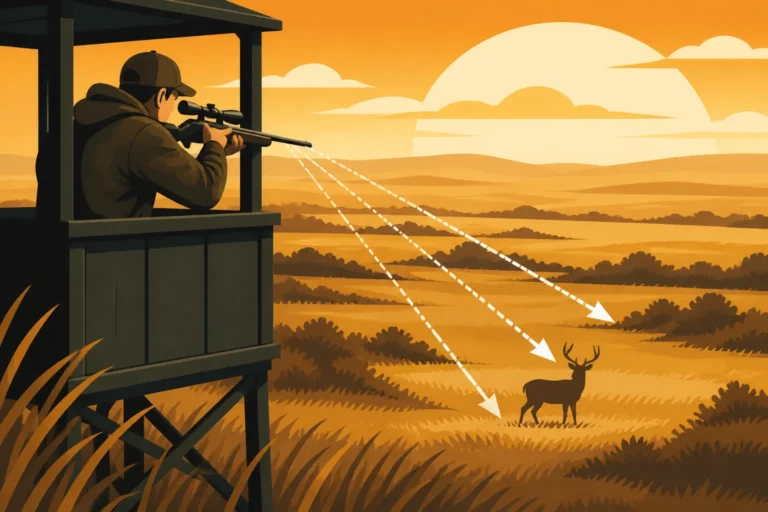
Practice at the range to ensure you know your muzzleloader's trajectory at various distances. A rangefinder is crucial for confirming exact distances to your target, especially given the typically more pronounced bullet drop of muzzleloaders. Only take shots you are 100% confident in, and always aim for the vitals. Avoid head and neck shots, as these offer very little margin for error and often result in wounded, unrecoverable animals. For more detailed guidance, revisit resources like Shot Placement on a Whitetail at Twenty Yards.
Blood Trailing in Tall Grass and Dense Cover
Kansas is known for its tall CRP grass, dense cedar thickets, and brushy creek bottoms – all of which can make blood trailing a challenge, even with a well-placed shot. If your deer runs, mark the exact spot of the shot and the deer's last known direction of travel. Wait at least 30 minutes, or longer if you suspect a marginal hit, to allow the deer to expire. Pushing a wounded deer too soon can push it further, making recovery more difficult.
When trailing, move slowly and methodically, looking for blood, broken branches, disturbed leaves, and tracks. If the blood trail is sparse, expand your search pattern in the direction of travel. In tall grass, sometimes you have to get down on your hands and knees to find drops of blood or overturned leaves showing the red stain. In dense cover, look for scuffs, hair, or small pieces of bone. If you lose the trail, back out, mark your last known blood, and come back with more help or at a later time (if conditions allow). Some states, including Kansas, allow the use of tracking dogs, which can be invaluable for tough trails in thick cover like Blood Trailing in Tall CRP.
Rapid Recovery and Field Dressing in the Heat
The September heat poses a significant challenge for preserving venison. Once you've located your deer, immediate field dressing is crucial to begin the cooling process. Get the guts out as quickly as possible to prevent heat buildup and bacterial growth. If you're alone and the deer is heavy, consider quartering it in the field to make it easier to haul out, especially if you have a long way to go or are getting a deer out of a river bottom alone.
After field dressing, focus on getting the carcass cooled down as rapidly as possible. If it's still warm outside, prop open the cavity with a stick to allow air circulation. If you have ice, place bags of ice inside the cavity for immediate cooling. This is essential to prevent spoilage. Getting the deer to a processor or your cooler setup within a few hours of harvest is ideal. For detailed advice, reference guides on Field Dressing in Warm Kansas Weather will provide essential tips for managing your harvest in challenging conditions.
Post-Harvest Care and Meat Preservation
Your work isn't done once the deer is on the ground. The September heat in Kansas makes proper post-harvest care and prompt meat preservation absolutely critical. Neglecting these steps can compromise the quality of your venison, turning a successful hunt into a disappointing culinary experience.
Cooling and Transporting Your Harvest
After field dressing, the immediate goal is to get that deer cooled down as quickly and thoroughly as possible. If you're still in the field and have a significant haul ahead, consider bringing heavy-duty game bags and breaking the deer down into quarters. This not only makes extraction easier but also exposes more surface area to air, aiding in cooling. Once quartered, place the meat in breathable game bags to protect it from dirt and insects while still allowing air circulation. If you're on a public land tract, remember to adhere to all rules regarding game transport and tagging.
For transport, having a large cooler packed with ice is non-negotiable for September hunting. Even if the evening air is cooling, the internal temperature of a deer carcass can remain high for hours. Pack the body cavity with ice, and if quartering, layer the meat with ice in your coolers. Drain melted water frequently and replace with fresh ice. This continuous cold treatment is vital to inhibiting bacterial growth. If you have a long drive ahead, having multiple coolers and a plan for buying more ice along the way can save your venison. Remember that strict rules apply for transporting deer carcasses across state lines due to Chronic Wasting Disease (CWD), so be familiar with Kansas's regulations and those of your home state.
Processing Options in Rural Kansas
Once your deer is cooled and transported, you have two primary options: take it to a professional meat processor or process it yourself at home. Professional processors are widely available across Kansas, especially in rural hunting towns. They typically offer services ranging from basic cuts and grinding to specialty products like summer sausage and jerky. The advantage here is convenience and expertise; they know how to efficiently break down a deer and handle the meat hygien However, processors can get incredibly busy during hunting seasons, so call ahead to ensure they have capacity and understand their turnaround times.
Processing your own deer at home gives you complete control over the cuts and ensures you know exactly how the meat was handled. It requires a dedicated space, proper tools (sharp knives, a meat grinder, vacuum sealer), and a good understanding of anatomy. For many hunters, this is a rewarding part of the experience, connecting them even more deeply to their harvest. Whichever route you choose, ensure the meat is kept cold throughout the entire process, from skinning to packaging, to maintain its quality and flavor. Don't let your hard work in the field go to waste due to improper handling.
Disclaimer
Please note: Hunting regulations and season dates can change. Always consult the official Kansas Department of Wildlife, Parks and Tourism (KDWP) regulations for the current year before planning any hunting trip. This guide is for informational purposes only and does not supersede state or federal hunting laws.