Weather Days and Who Absorbs Them
You've booked your dream Kansas hunt, perhaps after years of planning and saving, only to find the weather forecast looking grim. Maybe it's a September archery hunt staring down triple-digit heat, or a December rifle trip threatened by a blizzard that's shutting down highways. The frustration is real, and the immediate question that pops into every hunter's mind is: what happens now? Who's on the hook for those lost hunting days or the trip you can't even make? This guide will dive deep into the often-murky waters of weather-related hunt disruptions and how outfitters typically handle them, helping you understand your options and what to look for before you ever sign on the dotted line.
Understanding the Unpredictable Nature of Kansas Weather and Its Hunting Impact
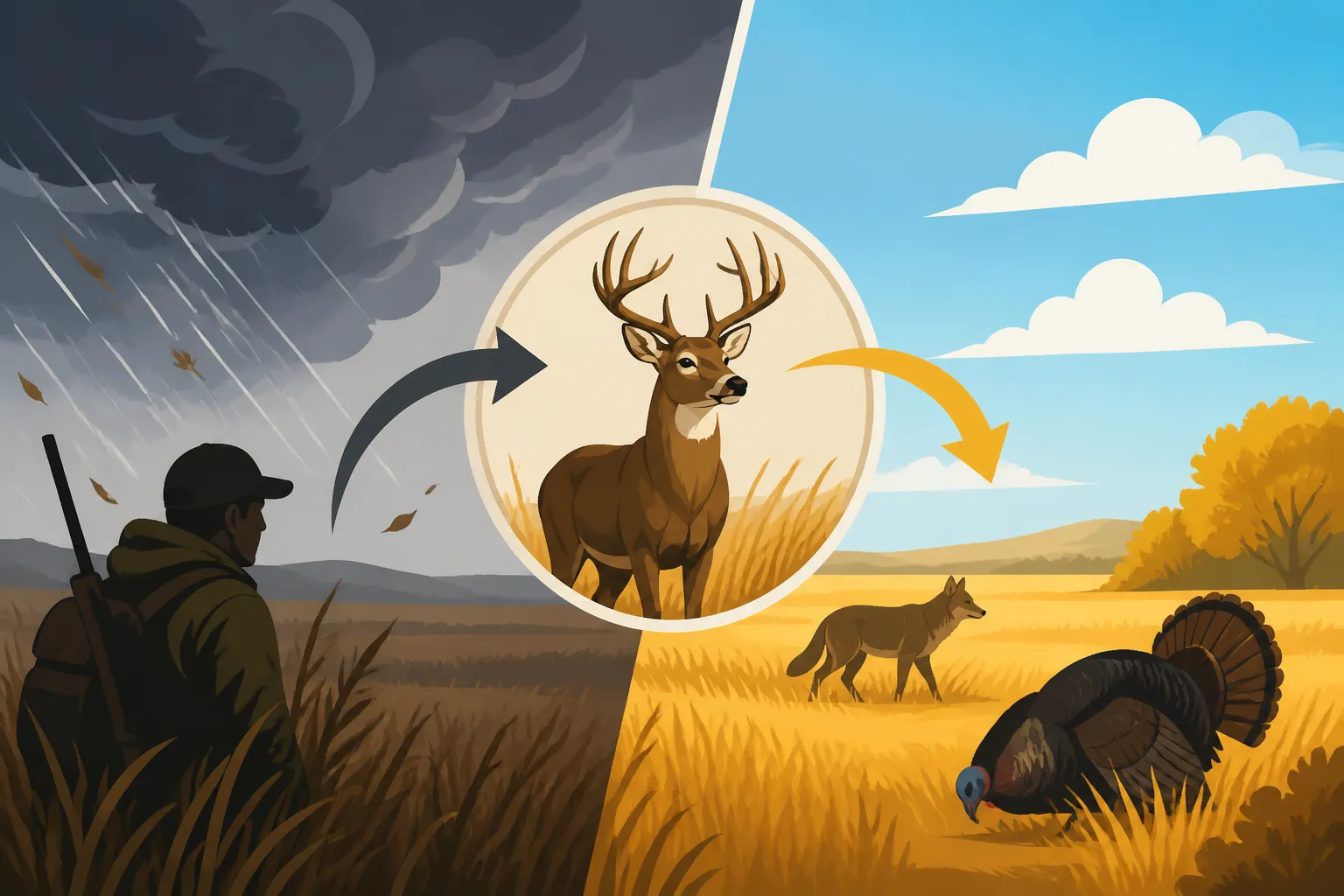
Kansas weather is, in a word, dynamic. We experience everything from sweltering heat waves in the early archery season to brutal blizzards during late firearm and antlerless hunts. These aren't just minor inconveniences; they can genuinely make hunting impossible, dangerous, or at the very least, severely diminish your chances of success and enjoyment. Recognizing the potential for these disruptions is the first step in understanding who ultimately absorbs the impact.
Early Season Heat and Hunter Safety Concerns
Imagine arriving in Kansas for an early September bow hunt, excited for cooler mornings and deer patterns around water. Instead, the thermometer consistently reads in the high 90s, or even over 100 degrees Fahrenheit. This isn't just uncomfortable; it's genuinely dangerous for both hunters and the game they pursue. Extreme heat can lead to heatstroke for hunters, especially those not accustomed to it, or those exerting themselves in heavy gear. Deer movement can grind to a halt during daylight hours, making sightings incredibly rare and success highly unlikely. Beyond that, the rapid spoilage of game meat in such conditions becomes a major concern. If you manage to harvest an animal, cooling it quickly becomes a race against time, a factor that can deter even the most dedicated hunter from heading into the woods. Early-Season Bowhunting Over Water might become your only hope, but even then, it's a tough grind.
Winter Storms and Access Challenges
On the other end of the spectrum, late-season firearm or archery hunts can be plagued by severe winter weather. A sudden blizzard in December can dump feet of snow, making roads impassable, especially on remote rural tracts where outfitters operate. I've seen situations where hunters get stranded, or simply can't even make it to their hunting areas. Stand access becomes dangerous, walking through deep snow is exhausting, and even finding deer becomes a challenge in a whiteout. Outfitters might prioritize hunter safety over hunting days, and rightfully so. When a major winter storm rolls in, the focus shifts from chasing deer to simply staying safe and warm, and this often means days lost from your booked hunt. Staying Warm on a December Sit is important, but sometimes the weather is just too much.
Heavy Rains, Flooding, and Muddy Conditions
It's not just temperature extremes that cause issues. Prolonged heavy rains can turn a beautiful Kansas creek bottom into a muddy, inaccessible mess, or even cause minor flooding. Access roads can become impassable even with four-wheel drive, and hunting on foot can be miserable and noisy. If you've ever tried to Blood Trailing in CRP and Cedars after a torrential downpour, you know how quickly conditions can deteriorate. For turkey hunters, incessant rain can keep gobblers on the roost longer and make calling less effective. These are days where the opportunity to hunt might technically exist, but the quality of the hunt, and your chances of success, are drastically reduced.
Outfitter Policies for Weather-Related Disruptions
Given the unpredictable nature of Kansas weather, it's absolutely crucial to understand your outfitter's policy regarding "weather days" before you put down a deposit. This is one of the most critical conversations you'll have, and it needs to be clearly laid out in your contract. Many hunters assume a full refund or a free reschedule is automatic if the weather tanks their trip, but this is rarely the case.
The "Act of God" Clause and Its Implications
Most outfitter contracts will include what's known as an "Act of God" clause. This legal language essentially states that if circumstances beyond the outfitter's control (like extreme weather, natural disasters, or even unforeseen road closures) prevent or disrupt the hunt, they are not liable for refunds or compensatory services. From their perspective, they've set aside the time, prepared the stands, scouted the ground, and incurred costs whether you hunt or not. A blizzard that prevents you from flying in, or a heatwave that makes hunting dangerous, falls into this category.
What this often means for you, the hunter, is that the financial burden of lost hunting days typically falls on you. You've paid for a certain number of days, and if conditions prevent you from using them, that payment is often considered non-refundable. It's a tough pill to swallow, especially when you've invested so much emotionally and financially. This is precisely why reviewing What a Kansas Hunt Contract Should Say is so vital.
Rescheduling Options and Credit for Future Hunts
While outright refunds are rare, many reputable outfitters will offer some form of credit or rescheduling option, especially for truly debilitating weather events. This isn't always a guarantee, but it's a common concession to maintain good client relationships.
- Reschedule within the same season: If a weather event occurs early in your hunt, and the conditions clear up, some outfitters might allow you to shift your remaining days to a later, open slot in the same season. This is often dependent on their schedule availability and if you have the flexibility to stay longer or return quickly.
- Credit for a future season: This is a more common option. If a significant portion of your hunt is lost, an outfitter might offer a credit towards a future hunt, often for the following year. This can be a great way to salvage your investment, but it means postponing your hunting adventure. Be sure to clarify if the credit covers the full value, or if you'll be responsible for any price increases in the subsequent season. It's important to get this in writing.
- No compensation: Unfortunately, some outfitters, especially those operating on tighter margins or with less flexible business models, might offer no compensation at all. Their stance is that you booked specific dates, and while the weather is unfortunate, it's not their fault or responsibility. This is more common with budget outfits or those that don't rely heavily on repeat clientele. This is why platforms like BookYourHunt are so useful, as they often feature client reviews that can shed light on an outfitter's flexibility in these situations.
Partial Refunds or Discounts for Severe Disruptions
Partial refunds are exceedingly rare for weather, but not entirely unheard of. In extreme cases where an outfitter genuinely cannot provide any hunting opportunity due to catastrophic weather (e.g., their property is flooded, or roads are completely impassable for the entire duration of your trip), they might offer a partial refund as a gesture of goodwill, though this is often at their sole discretion. More often, a discount on a future hunt is the compromise if they feel a significant part of your trip was completely lost.
Here's a quick look at how different outfitter types might approach weather policies:
| Outfitter Type | Common Weather Policy | Hunter Responsibility |
|---|---|---|
| Premium/High-End | May offer flexible rescheduling, full credit for future hunts, or even partial refunds in extreme cases, often with conditions. | Clearly defined in contract; may require a non-refundable deposit for the rescheduled hunt. May encourage hunt insurance. |
| Mid-Range/Standard | Typically offers credit for future hunts, sometimes within the same season, depending on availability. Limited refunds. | "Act of God" clause prevalent. Hunter responsible for travel costs. Must confirm rescheduling window. |
| Budget/Economy | Often has a strict "no refund/no reschedule" policy for weather-related disruptions. | Hunter bears almost all risk and financial loss. Contract will explicitly state no compensation for weather. |
Mitigating Risk: What Hunters Can Do Before and During a Hunt
The good news is that while you can't control the weather, you can absolutely take steps to protect your investment and peace of mind when booking a Kansas hunt. Being proactive and informed is your best defense against weather-related disappointment.
Thoroughly Review Outfitter Contracts and Ask Direct Questions
This cannot be stressed enough: read your contract thoroughly! Don't just skim it. Look specifically for clauses related to "weather," "acts of God," "cancellation policies," and "rescheduling." If it's not crystal clear, ask the outfitter directly.
Here are some specific questions to ask:
- "What happens if there's a blizzard and I can't physically get to camp, or we can't hunt for a day or more?"
- "If extreme heat makes deer movement non-existent and poses a safety risk, what are my options?"
- "Is there any provision for a credit or partial refund if more than X number of days are lost due to unhuntable weather?"
- "If I receive a credit, is it for the full amount, and does it expire? Will I have to pay any additional fees for the rescheduled hunt?"
Get answers to these questions in writing, preferably as an addendum to the contract if they aren't already explicitly stated. This clarity upfront will save you immense heartache and potential disputes later. You can also research Cancellation Terms on a Kansas Booking for typical industry standards.
Consider Trip and Hunt Insurance
While not always cheap, specialized trip and hunt insurance can be a lifesaver for situations just like this. These policies are designed to protect your financial investment in case of unforeseen circumstances, and severe weather is often a covered event.
- What it covers: Policies vary, but good hunt insurance might cover non-refundable hunt costs, travel expenses (flights, lodging), and even gear if it's lost or damaged. If you can't make your hunt because your flight is canceled due to a blizzard, or the outfitter's roads are washed out, the insurance could reimburse you for your lost hunt fees.
- When to buy: It's typically best to purchase hunt insurance shortly after booking your trip and paying your deposit. There are often deadlines related to how close to the trip you can purchase it, and some pre-existing conditions (like a named hurricane already forming) might not be covered if the policy is bought too late.
- Read the fine print: Just like with outfitter contracts, thoroughly read the terms and conditions of any insurance policy. Understand exactly what "severe weather" means in their definitions, what triggers a claim, and what documentation you'll need. This is where Hunt Insurance Worth Buying becomes a real consideration for many hunters.
Be Flexible with Your Schedule
If your personal schedule allows, having some flexibility can be a huge advantage. If the forecast looks dire for the first few days of your hunt, and your outfitter offers to shift your days later in the week, you might be able to salvage the trip. This isn't always possible for those with rigid work schedules, but it's something to consider when you're initially booking your hunt dates. Sometimes, booking a hunt with an outfitter that offers longer hunting periods or allows for more fluid scheduling can be beneficial, though these might come at a higher price point.
Do Your Own Weather Research and E-Scouting
Before your trip, monitor the long-range weather forecasts for your specific hunting area in Kansas. While forecasts can change, they can give you an early warning. Tools like GoHunt can provide valuable insights into typical weather patterns for different regions and times of year, helping you choose your hunt dates wisely or prepare appropriately. If you see a major weather event brewing, you can communicate with your outfitter proactively. They'll appreciate you being informed and understanding of the situation. This also allows you to make decisions about packing appropriate gear, like Cold Weather Stand Clothing or lightweight, breathable layers for heat.
The Financial and Emotional Toll of Unforeseen Weather Days
Beyond the direct costs of a lost hunt, there's a significant financial and emotional toll that weather disruptions can take. It’s not just about the money; it’s about the time, anticipation, and the hard-earned vacation days you might have spent.
The True Cost of a Canceled or Disrupted Hunt
When you book a guided hunt, you're not just paying for the days in the field. You're investing in flights, potentially rental cars, a hunting license and tag, food, and lodging (if not included in the package). All of these expenses can become non-recoverable if your hunt is canceled due to weather and you don't have adequate protection.
Consider a nonresident hunter flying into Kansas. A round-trip flight, a Kansas Nonresident Hunting Licence Price for the year, and a Kansas Nonresident Whitetail Permit Price are sunk costs even before you get to the outfitter. If a severe snowstorm grounds your flight and you miss the entire hunt, not only do you lose the outfitter fee (unless you have insurance or a generous reschedule), but also all your travel expenses. The "lost opportunity cost" – the value of your vacation days you can't get back – is also a real factor.
Managing Expectations and Emotional Impact
The emotional impact of a weather-ruined hunt can be just as significant as the financial one. You've likely spent months, if not years, anticipating this trip. The excitement, the planning, the gear preparation – all of it builds up to those few precious days in the field. When severe weather makes hunting impossible or unsafe, that excitement can quickly turn to frustration, disappointment, and even anger.
Managing these expectations starts with being realistic. Mother Nature is the ultimate boss in the outdoors, and she doesn't care about your hunting schedule. Acknowledge that bad weather is a possibility, and understand your outfitter's policies fully. Having a backup plan, even if it's just accepting the situation and making the most of a non-hunting trip (exploring local attractions, enjoying the camaraderie at camp, or doing some E-Scouting Kansas Farm Country From Home for a future trip), can help soften the blow. The goal is to minimize the "who absorbs them" question by understanding the answer beforehand, allowing you to focus on the joy of the pursuit, even when the elements aren't cooperating.
Disclaimer
This article is for general informational purposes only and does not constitute professional advice. Laws, prices and regulations vary by location and change over time. Consult a qualified professional for guidance on your specific situation.