Setting Up Before Fly-Down
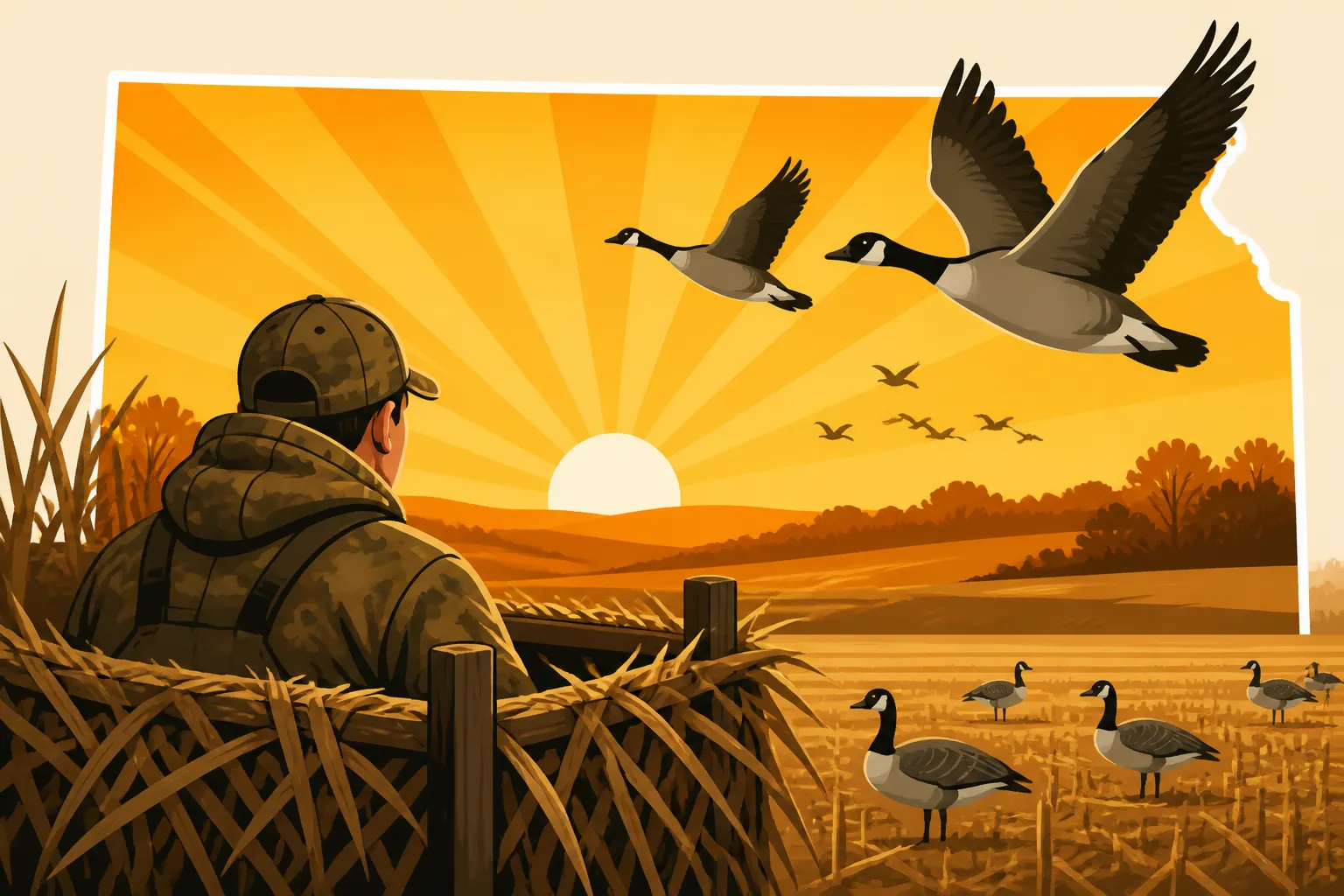
That pre-dawn chill, the nervous energy humming through your veins, and the intense pressure to get into position without spooking a single bird – it’s a feeling every turkey hunter knows well. Trying to slip silently through the darkness, navigate unfamiliar terrain, and set up your ambush before those gobblers ever leave their roost can feel like threading a needle in the dark. This guide is dedicated to dissecting those critical moments before fly-down, helping you master the art of the silent approach and strategic setup so you can be ready when those big Kansas toms hit the dirt.
Understanding Turkey Roosting Behavior
Turkeys are creatures of habit, especially when it comes to their nightly routine. Knowing why and where they roost is the first step in successfully setting up before they fly down. Without this fundamental understanding, you’re essentially wandering in the dark, both literally and figuratively.
Why Turkeys Roost in Specific Locations
Wild turkeys don't just pick any old tree to spend the night in. They choose their roosting spots with incredible deliberation, prioritizing safety above all else. During the day, turkeys are relatively safe on the ground, but at night, their vulnerability to ground predators like coyotes, bobcats, and even domestic dogs increases exponentially. Getting up high in a tree removes them from the immediate threat of these nocturnal hunters.
Factors like tree size and type play a significant role. Turkeys prefer large, sturdy trees with strong horizontal limbs that can comfortably support their weight and offer a clear flight path in and out. In Kansas, you'll often find them favoring mature cottonwoods along river bottoms or larger oaks in isolated timber blocks, especially those with good visibility around them. The height of the roost tree also provides a strategic advantage, allowing them to survey their surroundings for danger before descending. Furthermore, roosting near reliable food sources or water can simplify their morning routine, minimizing travel distance immediately after fly-down. This proximity to resources is a subtle but important factor in their nightly decision-making.
The Importance of Roosting the Night Before
If there's one piece of advice that can transform your turkey hunting success, it's the emphasis on "roosting a bird the night before." This isn't just an old wives' tale; it's a strategic necessity. Knowing precisely where a gobbler is roosted eliminates so much guesswork and allows you to plan your morning approach with surgical precision. It takes the "hunt" out of the first crucial hour of light and replaces it with a well-orchestrated ambush.
To roost a bird, you'll need to be in the field late in the afternoon, often an hour or two before sundown. Position yourself in an area where you can hear well, perhaps overlooking a known travel corridor or a dense timber block. As the sun dips below the horizon, listen intently for the distinctive sound of turkeys flying up to roost – a series of loud wing beats followed by light clucking and chattering as they settle in. Even better, listen for a shock gobble. A sharp owl hoot or coyote howl at dusk can often elicit a "goodnight" gobble, betraying a tom's exact location. Once you pinpoint that sound, you have invaluable intelligence. This confirmed roost location is the cornerstone of your entire next-morning strategy, dictating your entry route, setup point, and initial calling sequence. This is the difference between blindly stumbling around in the dark hoping to hear a gobble, and confidently slipping into a prime ambush spot.
Scouting and Pre-Season Reconnaissance
You can’t just show up on opening morning and expect success, especially when you need to be set up before fly-down. Strategic scouting, both from your armchair and on foot, is paramount to getting that edge. It’s all about doing your homework so you’re not caught scrambling.
E-Scouting for Potential Roosting Areas
Before you even step foot in the woods, the power of modern technology can give you a significant advantage. E-scouting, or electronic scouting, is a non-invasive way to identify high-probability turkey roosting areas from the comfort of your home. Platforms like GoHunt offer incredible aerial imagery that can reveal key habitat features you might otherwise miss. Start by looking for prominent timber blocks, especially those bordering large open fields, creek bottoms, or river systems.
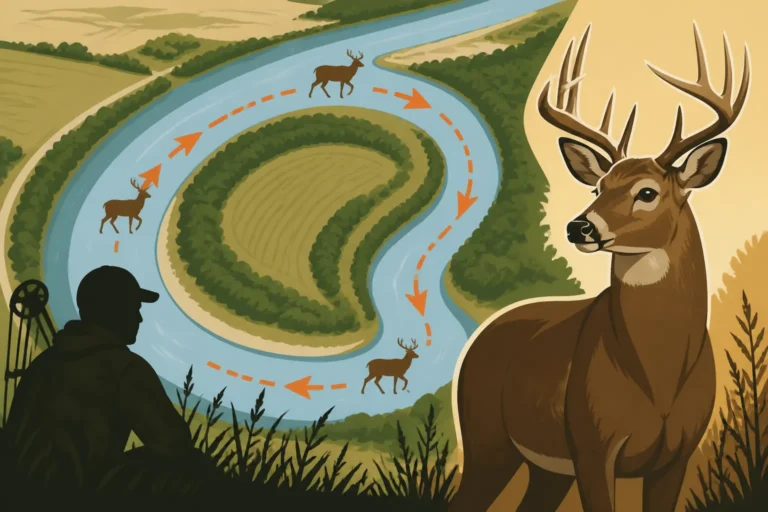
In Kansas, turkeys often roost in the tallest trees along major waterways. Focus your attention on winding creek draws and large river oxbows, as these areas provide both large trees and a natural travel corridor for birds. Pay close attention to areas where timber transitions into agricultural fields, as turkeys will often fly down directly into these feeding grounds. Look for areas of mature timber, particularly those with dense canopies and strong, spreading limbs. These are the kinds of trees a gobbler prefers for security. Remember, turkeys like a clear path up and down, so avoid overly dense, brushy areas if possible. E-scouting allows you to mark potential roost sites and plan preliminary access routes, saving you countless hours of unproductive walking. An excellent resource for understanding these landscape features in detail is to learn how to expertly interpret a Reading a Kansas Creek Bottom for Deer Sign, which applies surprisingly well to turkey habitat too. Similarly, understanding River Oxbows and Deer Movement can shed light on why turkeys gravitate to such areas for roosting.
On-the-Ground Scouting for Fly-Down Zones
While e-scouting gets you in the ballpark, nothing replaces boots on the ground. Once you’ve identified potential roosting areas from your maps, it’s time to physically scout those locations, ideally outside of hunting season or at least several days before your planned hunt. The goal here is to confirm roost trees and identify the most likely fly-down zones – the specific spots where turkeys will land and congregate after leaving their roosts.
Walk the timber edge, looking for tell-tale signs. Fresh turkey droppings, shed feathers (especially large primary wing feathers), and distinct scratch marks on the ground can all indicate recent turkey activity. Look for areas with a somewhat open understory where birds can comfortably land and walk. Turkeys prefer to fly down into relatively clear areas where they can quickly assess for predators. Identify natural openings, subtle ridges, or even open patches within the timber that offer good visibility. It's also critical to find a clear, concealed spot for your setup, typically within 100-150 yards of the roost tree, offering good cover and a clear shooting lane for when the tom hits the ground. This on-the-ground reconnaissance is also your chance to confirm your access routes and identify any obstacles that might hinder your silent approach in the dark. If you're struggling to locate a good roost, going out specifically to Roosting Kansas Turkeys the Night Before will give you the most accurate, real-time data for your morning setup.
Strategic Approach and Setup Tactics
Once you’ve done your scouting and you know where those birds are spending the night, the real challenge begins: getting into position without giving yourself away. This is where precision, patience, and silent execution truly shine.
Silent Entry and Minimal Disturbance
The cardinal rule of setting up before fly-down is absolute silence. Turkeys have incredible hearing, and even the smallest crunch of a leaf or snap of a twig can send them flying the other direction, ruining your entire morning. Your entry plan must be meticulously thought out. First, park your vehicle well away from your intended hunting area, preferably a quarter-mile or more from the roost, and choose an access route that minimizes noise. Consider paths like dirt roads, old two-track trails, or even mowed field edges that reduce the rustle of leaves. Avoid thick brush or areas with lots of downed timber.
Walk slowly, deliberately, and stop frequently to listen. Use a headlamp with a red-light setting to preserve your night vision and minimize your visible signature; white light can alert distant animals. Keep talking to an absolute minimum if you’re hunting with a partner, using hand signals or pre-arranged cues instead. If you hear turkeys clucking softly on the roost as you approach, freeze in place and wait for them to settle before continuing. The key is to be as stealthy as a ghost, moving like a predator, not a bulldozer. This meticulous approach to Access Routes That Do Not Bump Deer is equally critical for turkeys, as any disturbance before fly-down spells disaster.
Ideal Set-Up Locations for Fly-Down
Choosing your exact setup location is a blend of art and science. You want to be close enough to the roost tree to intercept the gobbler shortly after fly-down, but not so close that you risk spooking him as you set up. A good rule of thumb is to be positioned roughly 75-150 yards from the confirmed roost tree. This distance gives the bird enough space to fly down naturally, while still putting him in easy calling and potential shooting range.
Look for areas with good natural cover that breaks up your silhouette and allows you to remain still without being detected. A cluster of cedars, a brush pile, a large downed log, or even the base of a wide oak tree can provide excellent concealment. Position yourself so you have a clear view of the most likely fly-down zones, anticipating where the gobbler will land and walk. Crucially, try to set up with your back against a thick obstacle to prevent a tom from circling behind you undetected – they love to do that. Also, consider the terrain. If you can set up on a slight rise overlooking a flat or a field edge, you'll have better visibility. When using a ground blind, ensure it's been brushed in thoroughly to blend into its surroundings, as discussed in detail in guides on Ground Blind Brushing In. Remember, the goal is to be invisible and ready for action the moment that bird hits the ground.
Decoy Placement for Fly-Down Scenarios
Decoys can be a powerful tool for fly-down setups, but their placement is absolutely crucial. Misplaced decoys can do more harm than good. The primary purpose of decoys during a fly-down scenario is to provide a visual focal point for the gobbler once he's on the ground, drawing his attention away from your actual position and giving him a reason to commit. For early morning setups, a simple two-decoy spread – one hen and one jake or a lone hen – is often most effective. This setup signals safety and social interaction, which can be irresistible to a lonely gobbler.
Place your decoys 20-30 yards from your setup, ideally in a visible, open area where the gobbler can spot them easily as he approaches. Positioning them slightly offset from your line of sight can help create an ethical shot angle if the tom focuses on the decoys. Face your decoys towards your position or slightly quartering away. If you're using a jake decoy, place it facing the direction you expect the tom to approach from, making it appear as if it's challenging him. Remember to deploy your decoys quietly and efficiently in the dark, ensuring they are stable and visible. Don't overdo it with too many decoys; sometimes less is more in these intimate fly-down setups. For a deeper dive into optimal spreads, consult resources like Turkey Decoy Spreads That Work.
| Setup Distance from Roost | Expected Turkey Behavior | Recommended Cover | Decoy Strategy |
|---|---|---|---|
| < 50 Yards | High risk of detection during setup. Birds may fly the opposite direction or "pitch down" to distant cover. | Very dense, natural cover or pop-up blind. | Avoid decoys; too close to roost. Focus on soft calling. |
| 75-150 Yards | Ideal. Birds will typically fly down, land, and then look for hens/activity. | Natural vegetation (cedars, brush piles, large trees) or well-brushed ground blind. | 1-2 hen/jake decoys placed 20-30 yards out. |
| 150-250 Yards | Good if you can't get closer silently. Requires more calling to pull them. | Natural cover, allowing for gentle adjustments. | 2-3 hen/jake/strutter decoys for more visual pull. |
| > 250 Yards | Difficult. Birds may move off in another direction, especially if henned-up. | Focus on terrain features that funnel birds. | Aggressive decoy spreads (multiple hens/jakes) and consistent calling. |
Calling Strategies Before and After Fly-Down
Calling is the art of turkey hunting, and timing is everything, especially during the crucial fly-down period. Knowing when to call, how loudly, and what to say can be the difference between a bird marching right into your lap and one strutting away into the next county.
The Pre-Fly-Down Excitement Call
As the first sliver of light paints the eastern sky, and you’re settled in your spot, the air crackles with anticipation. This is the moment for your "excitement call" – a subtle yet potent invitation to the gobbler still on the roost. The goal here isn't to shock him into gobbling repeatedly, but rather to let him know a hen is nearby and ready to greet him when he descends. Start with very soft, sleepy tree yelps, clucks, and purrs. Think of a hen just waking up, stretching her wings, and murmuring contentedly.
Your first call should be quiet and confident, giving the tom just enough information to get him interested. Don't overdo it. Listen for his response. A soft gobble from the roost confirms he heard you. Then, remain silent for a few minutes, letting him stew in his own curiosity. As the light increases, you can slightly increase the volume and frequency of your soft yelps, perhaps adding a fly-down cackle as you imagine the hens pitching off the limb. The trick is to mimic the natural progression of a flock waking up without sounding aggressive or demanding. This careful, subtle approach is key to Calling a Gobbler Off the Roost without making him suspicious.
Adapting Calls as Birds Hit the Ground
Once those magnificent birds start pitching down from their roosts, your calling strategy needs to adapt immediately. The dynamics change significantly once the gobbler's feet are on the ground. He's now looking for the source of those calls, ready to survey his surroundings, and potentially join up with real hens. If he's already gobbling enthusiastically from the ground, it’s a good sign he’s interested. Match his intensity, but don't challenge him right away unless that's your specific tactic for the day.
Continue with a mix of yelps, clucks, and purrs, gradually increasing the volume and assertiveness if the gobbler is moving away or not responding strongly. If he's moving towards you, you might even go silent for a few minutes, forcing him to come looking for the source of the sound. This works especially well if you have decoys out. However, if he hangs up at a distance, a soft, seductive series of clucks and purrs can often be the final convincing factor. Conversely, if he seems to be losing interest, a more aggressive cutting sequence might re-ignite his curiosity. The ability to read the bird's mood and adjust your calling accordingly is a hallmark of an experienced hunter. For insights into those frustrating situations where a tom might have real hens, checking out tactics for Working a Henned-Up Tom Midday can be surprisingly relevant to an early morning hang-up.
Overcoming Common Fly-Down Challenges
Turkey hunting is rarely straightforward, and those early morning fly-down setups often present unique challenges. Being prepared for these common hurdles can help you turn a potentially frustrating situation into a successful one.
Dealing with "Henned-Up" Gobblers
Ah, the dreaded "henned-up" gobbler. You've roosted him, you've set up perfectly, he's gobbling his head off on the limb, and then… a flock of real hens fly down and surround him. He's got everything he wants right there, and your calls suddenly become irrelevant. This is a common and incredibly frustrating scenario in Kansas, where turkey populations can be dense. When a tom is already surrounded by hens, his motivation to seek out your calls plummets to near zero.
Patience, above all else, becomes your most potent weapon. Do not overcall. Aggressive calling can sometimes push the entire flock away. Instead, mimic the soft clucking and purring of a contented hen, as if you're just another bird in the flock. The hope is that the hens, being social creatures, might eventually move, dragging the gobbler with them. Sometimes, a "power move" where you move around the flock and try to get ahead of them, placing yourself in their travel path, can work, but this is risky and requires exceptional woodsmanship. Often, the best strategy is to wait them out. Let the flock move off on its own, and then, once the gobbler is alone or with fewer hens, he might remember your calls. This is a situation where specialized tactics for Calling a Henned-Up Kansas Gobbler become absolutely invaluable, as it requires a delicate touch and strategic thinking.
Public Land Considerations and Pressure
Hunting public land in Kansas during turkey season, especially during the early morning fly-down period, adds another layer of complexity: hunting pressure. You’re not the only one who did their homework and roosted a bird. The pre-dawn woods can sometimes sound like a convention of hunters, all trying to get into position. This increased pressure means birds can be more wary, alter their routines, and quickly become "educated."
To succeed on public ground, you need to be an "early bird" in every sense of the phrase. Get to your spot earlier than you think you need to, allowing extra time for other hunters to potentially get ahead of you, or for you to find an alternative route if someone else beats you to your primary spot. Seek out overlooked areas – sections of public land that are harder to access, have tougher terrain, or are simply further from parking areas. Most hunters will take the path of least resistance. Embrace the grind, be willing to walk further, and explore the fringes of popular areas. Having a solid understanding of how Hunting Pressure Patterns on Kansas Public Land affect game animals is crucial here. Furthermore, always prioritize safety. Wear hunter orange when walking in and out (if legal in your specific hunting situation for turkeys), and be absolutely certain of your target and what lies beyond it. Being considerate and respectful of other hunters can go a long way in fostering a positive public land hunting experience for everyone.
Essential Gear for Early Morning Setups
Successfully setting up before fly-down isn't just about stealth and strategy; it's also about having the right gear to support your efforts. The proper equipment can make the difference between a smooth, silent approach and a fumbling, frustrating start to your hunt.
Lighting and Navigation
Moving through dense timber or open fields in the pitch black requires reliable lighting and precise navigation tools. A high-quality headlamp is non-negotiable. Look for one with multiple brightness settings and, crucially, a red-light option. Red light helps preserve your night vision, making it easier to see in the dark once you turn off your lamp, and it's less alarming to game animals than a bright white beam. Use the lowest effective setting to navigate, only bumping it up when absolutely necessary to avoid tripping hazards. A spare set of batteries, or even a backup headlamp, is a smart addition to your pack.
For navigation, a GPS device or a smartphone app like GoHunt with downloaded offline maps is essential. Mark your truck, your setup location, and any key landmarks during your scouting trips. This allows you to follow your pre-planned route precisely, even in complete darkness, ensuring you arrive at your spot without getting disoriented or making unnecessary detours that could create noise. Knowing your exact location and bearing at all times is paramount for safety and efficiency in the pre-dawn hours.
Clothing and Comfort
The early morning hours, especially during spring turkey season in Kansas, can present a wide range of temperatures. It might be near freezing when you leave the truck, but quickly warm up to 60 degrees by mid-morning. Layering your clothing is key to staying comfortable and silent throughout your hunt. Start with a moisture-wicking base layer, add an insulating mid-layer, and finish with a quiet, camouflage outer layer that breaks up your silhouette. Merino wool or synthetic blends are excellent choices for base and mid-layers as they manage moisture and odors effectively.
Your outer layer should be made of silent fabric, avoiding anything that rustles or scrapes loudly against brush. Consider materials like fleece or soft-shell fabrics. A lightweight rain shell should also be packed, as spring showers can pop up unexpectedly. Don't forget a warm hat and gloves for those chilly walks in the dark, which you can shed as the morning warms up. Comfort is vital for stillness; if you’re shivering or constantly fidgeting to adjust your clothes, you're more likely to be detected by sharp-eyed turkeys. Having dedicated gear for Cold Weather Stand Clothing is a good investment, even for warmer spring mornings, as it ensures you're prepared for any temperature swing Kansas throws at you.
Disclaimer
Hunting is an inherently dangerous activity. Always prioritize safety, follow all local, state, and federal regulations, and obtain proper licenses and permits before engaging in any hunting activities. This guide is for informational purposes only and does not replace official hunter education courses or professional guidance. The author and publisher are not responsible for any accidents, injuries, or legal issues that may arise from the use of this information.