Asking Which Kansas Unit You Will Hunt
Booking a guided whitetail hunt in Kansas is a big investment of time, money, and hope. It’s incredibly frustrating when you’re trying to plan everything, from applying for your permit to traveling across the country, but your potential outfitter seems cagey about which exact Kansas deer unit you’ll actually be hunting. This guide is here to shed light on why that might be, why knowing your unit is so important, and how you can approach the conversation with outfitters to get the clarity you need to make an informed decision.
Why Outfitters Can Be Vague About Specific Units
It’s easy to feel like an outfitter is hiding something when they’re hesitant to name a specific deer unit or even the general area they hunt. Believe me, I've been there, staring at a map, wondering if I'm even in the right ballpark. But often, there are legitimate, business-oriented reasons behind their reluctance that aren't meant to deceive you. Understanding their perspective can help you approach the conversation with more empathy and less frustration.
Protecting Proprietary Information and Trade Secrets
Think of it from an outfitter's point of view: their hunting ground, their leases, and their knowledge of those specific areas are their bread and butter. It's their intellectual property, their hard-won advantage in a competitive market. Revealing exact unit numbers or even general regions too early can feel like handing over their business strategy to competitors or even to potential clients who might then try to book directly with landowners, cutting out the outfitter entirely. They’ve invested years, sometimes decades, building relationships with landowners and scouting these particular tracts. That information is valuable, and they have a right to protect it, especially before a deposit is even laid down. They don’t want their hard work exploited, and that’s perfectly understandable in a free market.
Dynamic Lease Portfolios and Changing Conditions
Kansas outfitters, especially those managing a lot of ground, often have a dynamic portfolio of leases. Land agreements can change from year to year; a landowner might sell a property, decide to lease to someone else, or take it back for personal hunting. This means an outfitter’s available hunting ground might shift or be adjusted before the season even begins. If they commit to a specific unit too early and then lose a key piece of property in that unit, it puts them in a difficult position. By keeping their options a bit more open initially, they retain the flexibility to adapt to these changes without having to disappoint hunters who were promised a specific area. It’s less about being evasive and more about managing the unpredictable nature of land leases in agricultural states like Kansas. They want to ensure they can provide a quality hunt, and sometimes that means being flexible on the precise location until closer to the season.
Managing Hunter Expectations and Logistics
Let’s be honest, we all go into a hunt with a certain set of expectations, often shaped by those incredible photos of monster bucks. Outfitters know this. Sometimes, being overly specific about a unit too early can lead to unrealistic expectations from hunters. For example, if a hunter has researched Unit X and seen a few giant bucks come out of it, they might assume every acre in that unit holds a "Boone and Crockett" contender. An outfitter might want to guide hunters towards a broader understanding of their overall operation and the quality of deer they consistently produce across all their holdings, rather than focusing on the reputation of one specific unit that might only represent a fraction of their hunting grounds. Moreover, logistics like the number of hunters booked for a given week, or unexpected issues like localized EHD outbreaks, can necessitate shifting hunters between properties, even across unit lines. By maintaining a little flexibility, outfitters can better manage the flow of hunters and ensure everyone gets a fair shake.
The Importance of Knowing Your Kansas Deer Unit
While an outfitter's reasons for vagueness might be understandable from a business perspective, as a hunter, having clarity on your potential hunting unit is absolutely crucial. It affects everything from your permit application strategy to your expectations for the type of hunt you'll experience. It’s not just a trivial detail; it’s fundamental to your entire hunting plan, especially when dealing with Kansas's nonresident draw system.
Impact on Kansas Deer Permit Draw Success
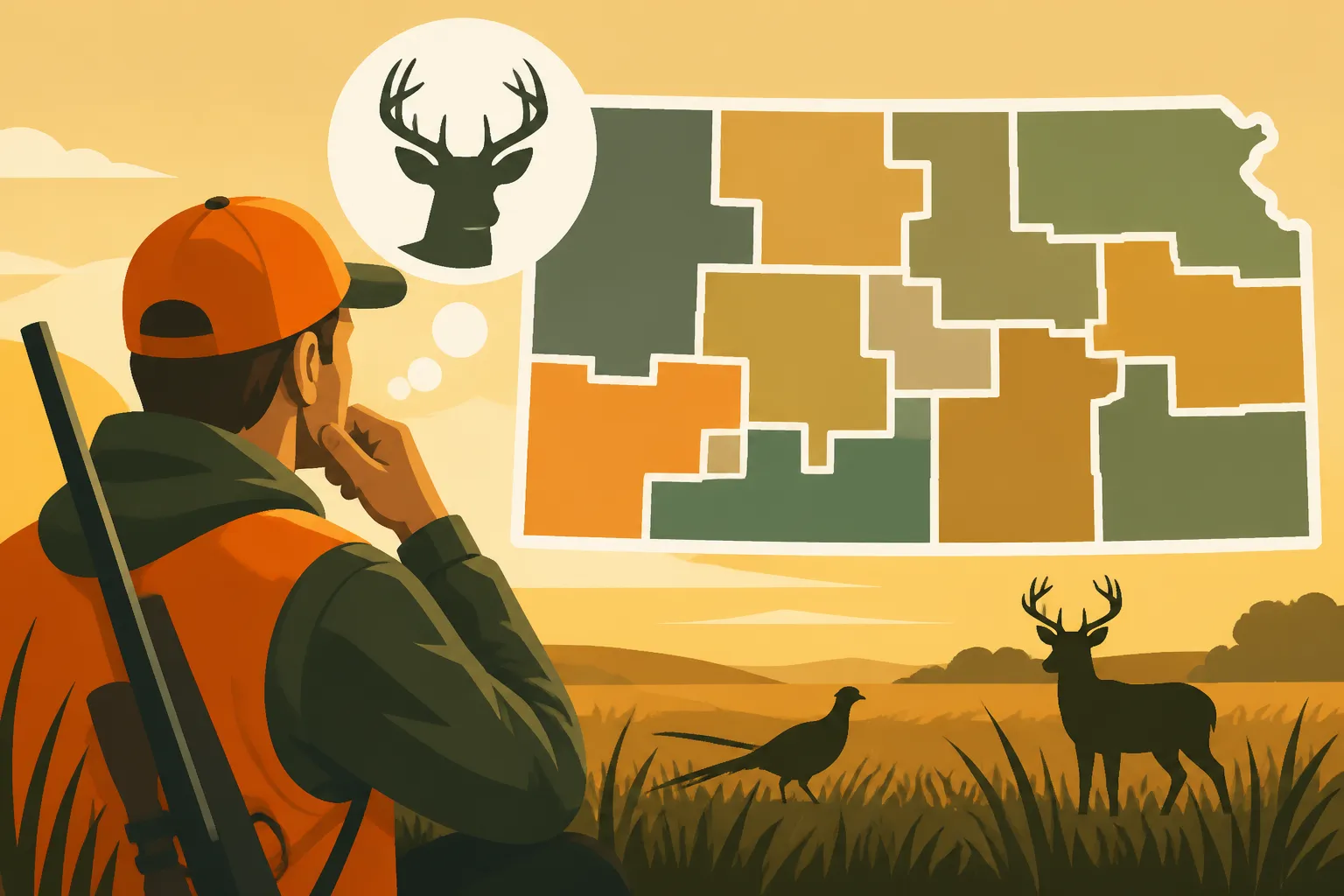
For nonresident hunters, the Kansas deer draw system is, to put it mildly, complex. Your choice of a primary and adjacent unit on your permit application is probably the most critical decision you'll make before you even step foot in the state. Units vary dramatically in their draw odds, population densities, and public land access. If an outfitter won't tell you which unit they primarily operate in, how can you confidently choose your units on the application? You might end up drawing a permit for a unit far from where your outfitter hunts, or worse, for a unit with very different regulations or deer quality than what you anticipated.
Understanding Kansas Deer Permits and the Nonresident Draw is paramount. Some units might require several preference points to draw, while others are easier. If you spend years building points for a specific unit only to find your outfitter doesn't hunt there, it's a massive setback. You need to know if the outfitter hunts in a unit where you can realistically draw a permit with your current point total. For some units, especially those known for trophy potential, you might need a significant number of points. How Many Points to Draw a Kansas Unit can give you an idea of what you're up against. Without knowing the unit, you're essentially applying blind, which is a gamble few hunters can afford to take.
Understanding Habitat and Game Species Consistency
Kansas is a big state, and the landscape changes dramatically from east to west. What you find in the rolling timbered hills of eastern Kansas is vastly different from the open plains and crop country of the west. Different units often mean different habitats, and different habitats mean variations in deer behavior, density, and even antler growth potential.
For example, if you're dreaming of hunting big timbered river bottoms, you'll want to focus on units in eastern Kansas. If your ideal hunt involves spot-and-stalk opportunities in vast open landscapes, western Kansas units are your target. Knowing the unit allows you to research its specific characteristics. You can consult resources like Kansas Deer Units and What Each Holds to get a feel for the general environment and what kind of hunting opportunities exist there. Are you looking for the massive body size and typical racks of Kansas Whitetail Deer and Why They Grow Big in the eastern part of the state, or is the allure of potentially seeing a mule deer in the far west more your style? Even within similar habitat types, deer densities and pressure can vary significantly by unit. This information directly influences the tactics you might need to employ and the gear you'll want to bring.
Assessing Hunt Quality and Expectations
Ultimately, knowing the unit helps you align your expectations with reality. Every hunter wants a successful hunt, but "success" means different things to different people. For some, it's about the opportunity to harvest a mature buck, while for others, it's just about the experience of being in wild country. If you're chasing a particular antler score, knowing the unit an outfitter operates in can give you a better idea of the potential for Average Kansas Buck Antler Score in that specific region.
You can compare an outfitter's reported success rates against historical harvest data for that unit. If an outfitter claims 100% opportunity on 150-inch bucks in a unit where the average buck harvested is significantly smaller, that should raise a red flag. On the other hand, if their claims align with the unit's known potential, it builds confidence. Knowing the unit also allows you to research things like average hunter density, typical hunting pressure, and prevalent diseases (like CWD or EHD, which can be localized). All of these factors contribute to the overall quality and character of your hunt.
Strategies for Getting Specific Unit Information from Outfitters
It’s clear that knowing the unit is important. So, how do you navigate this sensitive topic with an outfitter without alienating them? It requires a blend of polite persistence, smart questioning, and thorough research. Remember, this is a business transaction, and you have a right to sufficient information to make a sound decision.
The Right Questions to Ask, and When
Timing is everything. Don't expect a detailed map and GPS coordinates on your first phone call. Start broad and narrow your focus. Early in the conversation, after discussing their general operation and availability, you can ask questions like, "Which general regions of Kansas do you primarily operate in?" or "What units do your leases typically fall within?" Frame it as needing information for your permit application, which is completely legitimate.
Once you've drawn a permit or are closer to making a booking decision, you can be more direct. "If I were to book a hunt with you, which unit would I most likely be hunting in?" or "Could you share the primary unit or units where I would be spending my time, so I can ensure my permit aligns?" If they continue to be vague, explain your need: "I understand the need for discretion, but as a nonresident, my permit application depends heavily on understanding which unit I'll be hunting to ensure draw odds and proper tagging. Can you provide enough information so I can apply appropriately?"
Be prepared to explain why this matters to you specifically. For example, "I'm really hoping to hunt an area with good river bottom timber, so knowing the unit helps me visualize the terrain." This shows you've done your homework and aren't just trying to extract sensitive information without cause. Check out Questions to Ask a Kansas Outfitter for more ideas on what to discuss beyond just the unit.
Utilizing Outfitter Resources and Industry Tools
Many reputable outfitters provide resources that can indirectly give you clues about their hunting units, even if they don't explicitly state them. Look at their website’s "About Us" or "Contact" page for a general location. While they might not list the unit, a mailing address or nearby town can narrow it down. Pay close attention to their photo galleries. Are the backgrounds consistent with a particular region of Kansas? Do you see specific landmarks?
Don't shy away from asking for references from past clients. When you call references, ask them which unit they hunted in and if the outfitter was transparent about location. Platforms like BookYourHunt and GoHunt often feature outfitter listings that may include more granular details about their operations, including general areas or even specific unit information, especially if the outfitter has chosen to be more transparent in their marketing. Some outfitters, especially those that cater to a discerning clientele, might share this information in a detailed prospectus or during a follow-up conversation once you've expressed serious interest.
Interpreting Generalities and Red Flags
It’s a fine line between an outfitter protecting their assets and being outright evasive. If an outfitter consistently dodges the question, offers only extremely vague answers (e.g., "we hunt all over Kansas"), or becomes defensive, those are potential red flags. A trustworthy outfitter should be able to provide some level of geographic clarity, even if it's a range of units or a general region, especially once you've shown serious intent and explained your reasons.
Consider the context: Is this an initial inquiry, or are you moments away from sending a deposit? The level of detail you can reasonably expect should increase as you get closer to booking. If an outfitter won't even confirm a general region of the state, it might indicate issues with consistency, legal access, or even a lack of established hunting ground. While protecting a "honey hole" is understandable, completely refusing to tell a paying client which general area they'll be hunting makes it almost impossible to prepare adequately or even apply for the correct permit. Trust your gut. If it feels too vague, it probably is.
| Information Category | Outfitter’s Perspective (Why Vague) | Hunter’s Perspective (Why Needed) | How to Ask Effectively |
|---|---|---|---|
| Specific Deer Unit | Proprietary knowledge, dynamic leases, competitive advantage | Permit application, habitat assessment, draw odds | "Which units do your primary leases fall within for the upcoming season?" |
| General Region (East/West Kansas) | Protecting overall location, not wanting to pigeonhole themselves | Broad habitat type, travel planning, initial expectation setting | "Do you primarily operate in eastern or western Kansas?" |
| Closest Major Town/Landmark | Still provides too much specific location detail early on | Logistics, travel, understanding local services | "What's the closest major town to your hunting lodge or primary hunting area?" |
| Acreage Hunted | Varies by season, competitive info | Hunter density, quality of experience, opportunities | "Roughly how many acres do you manage for deer hunting across your operations?" |
| # of Hunters per Week/Season | Varies by package, not always fixed | Hunting pressure, guide attention, quality of experience | "How many hunters do you typically host in camp per week during the rut?" |
What to Do If an Outfitter Won't Disclose the Unit
Sometimes, despite your best efforts, an outfitter simply won't budge on disclosing the specific unit. This doesn't necessarily mean they're dishonest, but it does mean you have to decide if you're comfortable moving forward with less information. If transparency about the unit is a non-negotiable for you, then it might be time to look elsewhere. However, if you're still interested, there are ways to mitigate the risk and ensure you're making the best decision possible given the circumstances.
Focusing on Other Key Hunt Details
If the unit information remains elusive, shift your focus to other critical aspects of the hunt that can give you a strong indication of the outfitter's quality and the potential for success. Start by grilling them on their actual success rates and, importantly, their opportunity rates. There's a big difference between seeing a buck and harvesting one. Ask about their historical data for their clients' harvests – average antler scores, typical age classes of bucks taken. This can often provide a clearer picture than just a unit name.
Dig into the specifics of their hunting methods. Do they use ground blinds, treestands, or saddle hunting? Are stands pre-hung, or do you bring your own? What is the typical Hunter Density on a Kansas Lease? How many hunters are on a particular property at any given time? What is the guide-to-hunter ratio? Ask about the guide's experience – how long have they been guiding in Kansas, what's their familiarity with the properties? Good answers to these questions can often build confidence, even without a specific unit. A strong reputation built on consistent success across their entire operation can sometimes outweigh the lack of a precise unit designation.
Considering Semi-Guided or DIY Options
For some hunters, the lack of transparency about the unit might be a deal-breaker, or it might signal that a fully guided experience isn't the right fit. If knowing your exact hunting grounds is paramount to your planning and peace of mind, then exploring semi-guided or even do-it-yourself (DIY) options might be a better route for you.
With a semi-guided hunt, you might still get some assistance with scouting or stand placement, but you’d have more control over the specific land you're hunting. Outfitters offering "self-guided lease hunts" often lease specific tracts of land to groups of hunters, giving you complete knowledge of the property boundaries and often the unit it resides within. This allows you to do your own e-scouting, map work, and pre-season research to your heart's content. Or, if you're comfortable with the challenge, pursuing a DIY hunt on Kansas Walk-In Hunting Access (WIHA) land or other public ground allows you to pick your units and scout them thoroughly yourself, giving you ultimate control over your hunting location and strategy. While it requires more effort, it provides the geographic certainty some hunters crave. Hunting Kansas Walk-In Land Without Burning It Out offers insights into how to approach those areas.
Trusting Your Gut and Gathering More Information
Ultimately, the decision of whether to book with an outfitter who won't disclose their hunting unit comes down to your personal comfort level and the overall confidence you have in their operation. Don't be afraid to trust your instincts. If something feels off, or if the answers you're getting are just not satisfying your need for information, it's okay to walk away.
Beyond direct questions, do your due diligence. Check online forums for reviews of the outfitter. See if past clients mention anything about the specific areas they hunted. Look for any red flags in their communication or contract terms. Ensure their promises align with the realities of hunting in Kansas. Is their success rate believable for the region? Are their photos genuine? Sometimes, the collective weight of many small details can either reassure you or confirm your suspicions. If you have serious reservations, it's always better to err on the side of caution than to invest in a hunt that leaves you disappointed or feeling misled.
Remember, a good relationship with an outfitter is built on trust and clear communication. While some discretion is part of their business model, a complete blackout on such a fundamental piece of information as the hunting unit makes it difficult for you to prepare and plan effectively.
Disclaimer
This article is for general informational purposes only and does not constitute professional advice. Laws, prices and regulations vary by location and change over time. Consult a qualified professional for guidance on your specific situation.