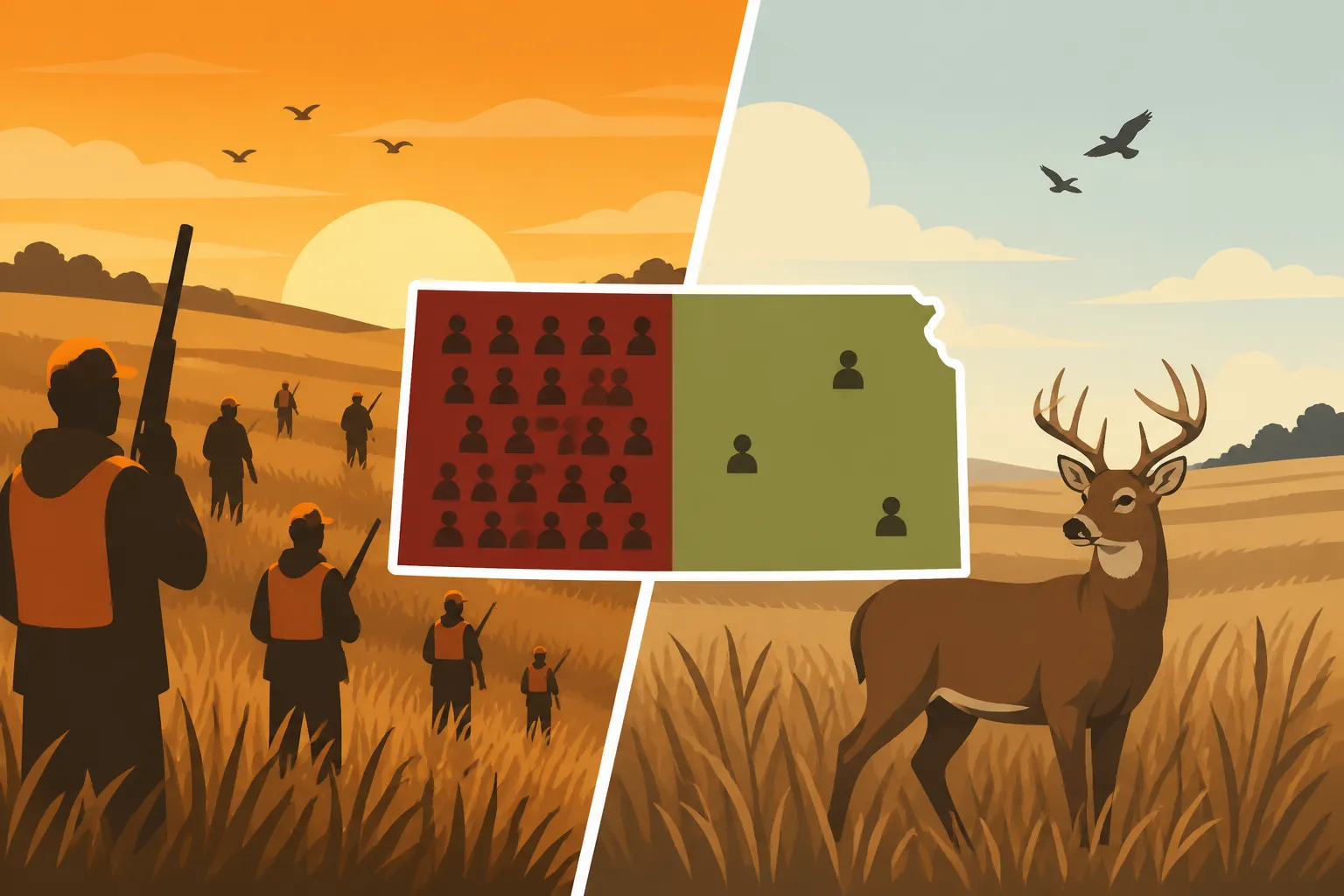
Hunter Density on a Kansas Lease
One of the most disheartening experiences for a hunter who has invested significant time, money, and anticipation into a Kansas deer lease is arriving only to find it's more crowded than a grocery store on a Saturday afternoon. You envision pristine, untouched ground, but sometimes the reality is a constant stream of hunters pushing deer around, ruining patterns, and leaving you wondering if you paid for a private lease or a public hunting carnival. This guide will walk you through understanding hunter density on a Kansas lease, why it matters, how to assess it before you book, and strategies to ensure your hunting experience isn't diluted by too many boots on the ground.
The Invisible Impact of Hunter Density on Your Kansas Lease
You've saved your money, drawn your coveted Kansas tag, and booked a lease with high hopes for that trophy whitetail. But what many hunters overlook in their excitement is the often-unspoken factor that can make or break a hunt: hunter density. It's not just about the number of deer; it's about the number of people chasing them on the same piece of dirt. Overcrowding, even on private ground, can lead to frustration, spooked game, and a general feeling of your hard-earned dollars being poorly spent.
Defining "Hunter Density" in Lease Hunting
At its core, hunter density refers to the number of hunters actively using a specific parcel of land at any given time, relative to the acreage available. On a self-guided lease, this might mean how many members are part of a hunting club sharing a property. On an outfitter-managed lease, it translates to how many clients the outfitter books per week or per hunt period, spread across their total leased ground. It’s not just the total number over a season, but the simultaneous number. Imagine an outfitter with 5,000 acres, which sounds fantastic. But if they run 10 hunters on that acreage during a single five-day hunt, that's 500 acres per hunter. Now imagine another outfitter with 2,500 acres, but they only ever book 3 hunters at a time. That's over 800 acres per hunter, a significantly different experience. The key is understanding the ratio and how it translates to actual hunting pressure.
When considering a Kansas lease, whether it's through an outfitter or a private arrangement, the true measure isn't just the sheer size of the property but how many people will be sharing it with you. A massive chunk of timber might seem appealing, but if it's got three other guys hunting the same creek bottom, suddenly that huge tract feels very small. Understanding this dynamic is crucial for setting expectations and ensuring you have enough elbow room to hunt effectively without constantly bumping into fellow hunters or their deer.
Why Hunter Numbers Matter More Than You Think
The impact of hunter density extends far beyond personal preference for solitude. High hunter numbers on a lease directly influence deer behavior. Whitetails, especially mature bucks, are incredibly sensitive to human intrusion. Consistent pressure from multiple hunters can quickly turn daytime deer into nocturnal ghosts. If a deer feels constant pressure from different stand locations or access routes, it will adapt by moving less during daylight hours, altering its travel corridors, or even abandoning the area altogether. This means that prime bedding areas and feeding spots become unproductive because the deer simply aren't using them during legal hunting times.
Furthermore, a high hunter density can limit your strategic options. If every pinch point, food plot, and timber edge is already claimed by another hunter's stand, or if multiple hunters are trying to rattle and grunt in the same block of timber, your ability to adapt to changing deer patterns or wind conditions becomes severely restricted. This isn't just about avoiding an awkward encounter; it's about preserving the natural movement and patterns of the deer herd you're trying to hunt. Even with a trophy-rich area, too many hunters can create an environment where the deer simply don't cooperate.
The Psychological Toll on Hunters
Beyond the deer, high hunter density can have a significant psychological impact on you, the hunter. You travel to Kansas, often from a long distance, investing substantial funds in the hope of an immersive, rewarding experience. Constantly seeing other hunters, hearing their ATVs, or finding their boot tracks near your stand can erode that feeling of wilderness and anticipation. It shifts the focus from the peaceful pursuit of game to an internal competition or a nagging sense of being crowded. This can lead to frustration, resentment, and ultimately, a less enjoyable hunt.
Imagine putting in the effort to scout a property, hang a stand, and plan your hunt around specific deer patterns, only to find another hunter has set up 150 yards away. This kind of encroachment can feel like a violation of the unspoken agreement that should exist on a hunting lease. It’s not just about ethics; it's about the erosion of the unique experience hunting provides—the solitude, the connection to nature, and the intense focus on your quarry. When these elements are compromised by too many people, the hunt can feel less like an adventure and more like a shared chore, especially during Kansas Whitetail Hunting Tactics Through the Rut when everyone is trying to capitalize on peak activity.
Key Factors That Dictate How Many Hunters Are Too Many
Several elements combine to determine the effective hunter density on a Kansas lease. It's not a simple one-size-fits-all calculation, but rather a dynamic interplay of acreage, habitat, the outfitter's operational philosophy, and even the time of year you choose to hunt. Understanding these factors will help you discern whether a prospective lease aligns with your expectations for a quality hunting experience.
Acreage and Habitat Diversity: The Obvious Equation
The most fundamental factor in hunter density is the total huntable acreage available, coupled with the quality and diversity of the habitat. A 2,000-acre lease sounds expansive, but if 1,500 of those acres are open, flat pasture with no cover, the actual huntable acreage for deer might only be 500 acres. This effectively concentrates hunters into smaller, more desirable pockets of timber, creek bottoms, or CRP fields. Conversely, a 1,500-acre lease with excellent timber, dense cover, varied topography, and consistent food sources might support more hunters comfortably because the deer are naturally spread out and have more options for movement and bedding.
It’s crucial to look beyond just the raw number of acres. Ask about the specific terrain and habitat types. Is it mostly river bottom? Are there shelterbelts and timber points? How much of it is standing crops or CRP grass? A property with diverse cover allows deer to disperse and offers more unique hunting opportunities, thus mitigating the impact of each individual hunter. A hunter on a river bottom tract might be less impacted by another hunter a mile away if there's sufficient cover and varied access points. Consider this closely when looking at Reading a Kansas Creek Bottom for Deer Sign or Hunting Terrain Funnels in Flat Country.
Outfitter Business Models and Client Turnover
Outfitters operate with different business models, which directly influence hunter density. Some outfitters prioritize a high volume of clients, running multiple groups simultaneously or overlapping hunt dates to maximize revenue. This approach can lead to more hunters sharing the same ground over a season, even if only a few are present at any single time. Others focus on a lower volume, higher-quality experience, booking fewer hunters and providing more acreage per client. This difference in philosophy often dictates pricing, with lower-density hunts typically commanding a higher premium.
It's important to ask an outfitter directly about their booking philosophy. Do they run concurrent groups? How many hunters are typically on the property with you during your hunt dates? Some outfitters manage multiple separate leases across a large area, ensuring that each group has its own dedicated ground, while others might rotate groups through the same core properties. Understanding how an outfitter structures their hunts is paramount. A good question to pose is "How many hunters share a Kansas lease?" to get a clear picture of their strategy.
Weapon Seasons and Overlapping Pressure Windows
The type of weapon season also plays a significant role in hunter density and pressure. Archery season in Kansas, particularly the early part, tends to have lower overall hunter numbers than the firearm season. Bowhunters are often more spread out, and their impact on deer movement can be less immediately disruptive than a rifle hunt. However, during the peak of the rut, even bow season can see increased pressure.
The Kansas firearm deer season in December, while short, is known for intense pressure. Many hunters, especially those who prefer rifle hunting, will target this brief window. This concentrated effort can quickly push deer into nocturnal patterns or off properties altogether, especially on smaller leases. Similarly, special seasons like muzzleloader or youth hunts can add layers of pressure. If an outfitter offers hunts during multiple seasons on the same ground, it's worth inquiring how they manage the cumulative pressure. A property that is hunted heavily during archery, then muzzleloader, and then firearm season will have a far more educated and wary deer herd by the time the later seasons roll around. This is especially true on Public Land Deer Hunting in Kansas but applies just as much to heavily managed lease ground.
| Hunter Density (Acres per Hunter) | Potential Impact on Hunt Quality | Recommended for Hunters Seeking |
|---|---|---|
| < 100 acres/hunter | Very High Pressure, Frequent Encounters with Other Hunters, Deer Highly Nocturnal, Limited Stand Options | Budget hunts, High-volume opportunity (e.g., antlerless), Less focus on trophy class |
| 100 – 300 acres/hunter | Moderate to High Pressure, Some Deer Pattern Disruption, Manageable but still competitive | Mid-range budgets, Decent opportunity for encounters if skilled, Tolerant of some competition |
| 300 – 600 acres/hunter | Moderate Pressure, Deer maintain more natural patterns, Good stand rotation possible, Occasional Hunter Encounters | Good balance of cost/quality, Solid chance at quality buck encounters, Value solitude |
| 600 – 1000+ acres/hunter | Low Pressure, Deer behave naturally, Ample Stand Options, High Solitude, Minimal Hunter Interaction | Premium experience, High trophy potential, Prioritize solitude and unpressured deer |
The Tangible Effects of Over-Pressured Lease Ground
When a piece of ground, whether private or public, sees too many hunters, the consequences are stark and measurable. It’s not just an abstract concept; it manifests in altered deer behavior, a frustrating lack of opportunities, and even potential safety concerns. Recognizing these tangible effects can help you appreciate why vetting hunter density is such a critical step in planning your Kansas hunting adventure.
Deer Behavior Changes and Nocturnal Activity
The most significant and immediate effect of high hunter density is a dramatic shift in deer behavior. Whitetails are incredibly adaptable, and their primary defense mechanism against perceived threats, including human hunters, is to become nocturnal. On heavily pressured leases, deer, especially mature bucks, quickly learn to move primarily under the cover of darkness. They might feed, travel, and even rut after legal shooting light, only venturing out during the day in the most secluded, unpressured pockets of cover, or when forced by extreme weather conditions.
This shift means that even if a lease has a healthy population of big deer, your chances of seeing them during hunting hours dwindle significantly. You might capture incredible trail camera photos of giant bucks, but if all those photos are taken between midnight and dawn, they offer little hope for a shot opportunity. This is why tactics like Late-Season Food Source Hunting become so critical, as deer will often only hit these spots after dark when pressure is high. It forces hunters to rethink their entire strategy, often making the hunt far more challenging and less productive than anticipated.
Stand Placement Competition and Burned-Out Spots
On a lease with too many hunters, competition for prime stand locations becomes inevitable. Everyone wants to hunt the best pinch points, creek crossings, or food plot edges. When multiple hunters are vying for these limited "hot spots," several problems arise. First, you might find that the most obvious and effective spots are already taken, forcing you into less-than-ideal locations. Second, if multiple hunters are trying to access, hunt, and retrieve deer from the same small area, it quickly becomes "burned out." The constant human scent and movement will make deer avoid that area entirely.
Even if an outfitter attempts to assign specific stands, the sheer volume of human presence accessing those stands, walking through bedding areas, or pushing deer from one hunter to another creates a chaotic environment. Deer can no longer establish predictable patterns because their environment is constantly being disrupted. This scenario can quickly turn a promising piece of land into a frustrating patchwork of spooked deer and unfulfilled potential, directly impacting your ability to even find Best Stand Locations in Flat Farm Country.
Safety Concerns and Overlapping Hunt Zones
While less common on well-managed private leases, high hunter density can, in extreme cases, lead to safety concerns. When hunters are too close to one another, especially during firearm season, there's an increased risk of misunderstanding boundaries, mistaking another hunter for game, or shooting into another hunter's zone of fire. Even on archery hunts, close proximity can lead to deer being pushed directly toward another hunter unexpectedly, potentially increasing the risk of an unsafe shot or an accidental injury.
Responsible outfitters and lease managers implement strict rules regarding hunter spacing and designated hunting zones. However, the more hunters on a property, the more challenging it becomes to enforce these rules perfectly. It's a critical consideration for your peace of mind and the safety of everyone in the field. When planning your hunt, especially during Firearm Season Drives on Small Timber, understanding the designated areas for each hunter and the overall density becomes paramount for a safe and enjoyable experience.
Strategies for Vetting Hunter Density Before You Commit
Committing to a Kansas deer lease, whether guided or self-guided, is a significant investment. You don't want to show up only to discover you're sharing your hunting paradise with a small army. Proactive vetting is essential. By asking pointed questions, leveraging online tools, and critically assessing references, you can gain a clearer picture of the hunter density you can expect.
Asking the Right Questions to Your Outfitter
When you're speaking with a prospective outfitter, don't be shy about asking direct questions about hunter density. This isn't just a polite inquiry; it's a critical part of your due diligence. Here are some key questions to consider:
- "How many hunters will be on the ground during my specific hunt dates?" This is the most important question. Get a precise number.
- "What is the total acreage you lease/own, and how much of that is huntable for deer?" As discussed, a large acreage number doesn't always translate to large huntable acreage.
- "How do you rotate hunters through your properties, or do all hunters have access to all ground?" Understanding their rotation strategy will tell you if you'll truly have fresh ground.
- "What is your typical hunter-to-acreage ratio during the rut/my chosen season?" Push for this specific ratio if they're hesitant.
- "How many stands/blinds do you have on your properties, and how many are available per hunter?" This indicates how many options you'll have.
- "Do you guarantee exclusive access to a certain amount of acreage, or a specific block of ground?" Some high-end operations offer this level of exclusivity.
- "What are your rules regarding hunter movement and access during the hunt?" Strict rules often indicate a more controlled, lower-pressure environment.
Be wary of vague answers or deflections. A reputable outfitter will be transparent about their operations and proud of the experience they offer. Their response to "Questions to Ask a Kansas Outfitter" should be detailed and reassuring.
Leveraging Online Resources and Hunter Communities
In today's connected world, you have powerful tools at your fingertips to research potential leases and outfitters. Websites like BookYourHunt or GoHunt often provide detailed listings for guided hunts, sometimes including information on hunter capacity or acreage per hunter. While these platforms are great for discovery, always follow up directly with the outfitter for the most current and specific details.
Online hunting forums and social media groups dedicated to Kansas hunting can also be invaluable resources. While you should always take personal opinions with a grain of salt, repeated mentions of overcrowding or negative experiences with a particular outfitter can be a red flag. Search for reviews, read past hunt reports, and ask general questions about what others have experienced regarding hunter density on Kansas leases. Just remember that every hunter's definition of "crowded" might differ, so try to extract factual information about numbers and acres rather than just subjective feelings. The Kansas Online Hunting Atlas can also give you a feel for public access nearby, which can sometimes spill over and impact private land.
Reading Between the Lines: What References Tell You
After speaking with an outfitter, always ask for references—ideally, clients who have hunted with them during the same season you plan to go, and within the last year or two. When you call these references, don't just ask, "Did you have a good hunt?" Dig deeper, specifically about hunter density.
Ask questions like:
- "How many other hunters were in camp with you, and how many did you see in the field?"
- "Did you ever feel crowded or like another hunter was impacting your hunt?"
- "Were there plenty of stand options available, or did you feel limited?"
- "Did the deer seem pressured or mostly natural in their movements during daylight?"
Listen carefully to their tone and any hesitations. Sometimes, what isn't said is as important as what is. A fantastic reference who gushes about the experience but dodges questions about other hunters might be a sign. Conversely, a reference who openly discusses the number of hunters but emphasizes how well the outfitter managed them across vast acreage can be a very positive sign. This thorough approach to "Getting References From Past Clients" can save you a lot of heartache.
Finding That Sweet Spot: Balancing Cost and Quality
It’s an age-old dilemma in hunting: balancing your budget with the quality of the experience. When it comes to hunter density on a Kansas lease, this balance is particularly acute. You're trying to find that sweet spot where the price is right, but you also have enough room to hunt effectively without feeling like you're constantly competing for space or pressuring the deer.
Understanding Different Lease Structures
The type of lease structure you choose often dictates the hunter density you can expect.
- Guided Hunts: These are typically the most expensive but often come with the lowest hunter density per guide. A reputable guided outfit might have a few hunters, but each is assigned a specific guide and often a dedicated section of ground for their hunt, leading to a highly managed experience with minimal overlap. This is about maximizing your Booking a Kansas Whitetail Hunt With an Outfitter experience.
- Semi-Guided Hunts: These fall in the middle. You might have some level of assistance from a guide, like stand suggestions or deer retrieval, but you're largely hunting independently. Hunter density can vary wildly here. Some outfitters might run more clients through semi-guided options, assuming hunters will manage themselves. It's crucial to pin down the exact hunter numbers.
- Self-Guided/Lease Access Hunts: These are typically the most affordable and often carry the highest risk of density issues. You're usually paying for access to a property, and the outfitter might be selling that access to several individuals or small groups concurrently. While cheaper, it's where you need to be most vigilant about asking about the total number of hunters on the ground at any given time. This type of hunt often puts more onus on you to understand the Kansas Self-Guided Lease Hunts dynamics.
Each structure has its pros and cons, but your expectations for solitude and unpressured deer should align with the specific density limits of each model.
The Value of Exclusivity: Smaller Groups, Higher Prices
It's a simple economic truth: fewer hunters on more ground typically means a higher price per hunter. Exclusivity comes at a cost, but for many hunters, it's an investment well worth making for the enhanced experience. An outfitter who limits their bookings to just 2-3 hunters per 2,000-acre block of prime ground, for example, will charge significantly more than one running 8-10 hunters on similar acreage.
This premium pays for several things:
- Reduced Pressure: The deer on these properties remain less educated, leading to more natural movement and better daytime opportunities.
- More Options: You'll have a wider array of stand locations, allowing you to adapt to changing winds, deer patterns, and even your own preferences without fear of encroaching on another hunter.
- Increased Solitude: The mental aspect of hunting alone in quality habitat, without the constant worry of other hunters, significantly enhances the overall experience.
- Higher Trophy Potential: Less pressure often translates to older, bigger bucks that feel safe enough to move during legal hunting hours. This is what many seek when considering Why Kansas Grows Trophy Whitetails.
If your budget allows, investing in an outfitter who prioritizes lower hunter density and provides more exclusive access can dramatically improve your chances of a successful and fulfilling hunt.
Planning Your Hunt to Avoid Peak Pressure Times
Even on a lease that generally manages hunter density well, certain times of the season will inherently attract more hunters. The Kansas rut, particularly the first two weeks of November, is a prime example. Everyone wants to hunt when the bucks are on their feet, chasing does, which means more demand for spots and potentially higher density, even on well-managed ground.
If your primary goal is to avoid high hunter density, consider alternative hunt dates:
- Early Archery Season (Late September/Early October): While it can be warm, this period often sees fewer hunters, and deer are in predictable patterns around food and water. You might find fewer hunters chasing during Early-Season Bowhunting Over Water.
- Late Season (December/January Bow): After the main firearm season and rut frenzy, many hunters pack up. If you're willing to brave the cold and focus on food sources, you can often find unpressured opportunities, especially on extended antlerless permits.
- Mid-Week Hunts: If you have flexibility, booking a hunt that runs Monday through Friday instead of overlapping with weekends can often mean fewer hunters in camp and in the field.
By strategically planning your hunt around periods of naturally lower demand, you can enhance your experience and minimize encounters with other hunters, allowing you to focus purely on the deer.
Disclaimer
This article is for general informational purposes only and does not constitute professional advice. Laws, prices and regulations vary by location and change over time. Consult a qualified professional for guidance on your specific situation.