Kansas Greater Prairie Chicken Only Rule
One of the trickiest aspects of upland bird hunting in Kansas, especially for those new to the prairie, is navigating the regulations around prairie chickens. It can be incredibly frustrating to spend hours scouting and hunting, only to realize there's a specific rule that might throw a wrench into your plans, or worse, lead to a violation if you're not careful. This guide is here to unravel the complexities of the "Greater Prairie Chicken Only" rule in Kansas, helping you confidently identify your target and stay on the right side of conservation.
Understanding the Greater Prairie Chicken Only Rule in Kansas
Kansas is home to both Greater and Lesser Prairie Chickens, but when you're out there with your shotgun, the regulations are crystal clear: only Greater Prairie Chickens are legal to harvest. This isn't just some arbitrary bureaucratic hurdle; it's a critical conservation measure designed to protect the declining populations of the Lesser Prairie Chicken. For hunters, it means a heightened responsibility to know exactly what you're shooting at before you pull the trigger.
Why Species Identification Matters for Hunters
The stakes are pretty high when it comes to distinguishing between these two similar-looking birds. Misidentification can lead to severe penalties, including fines and license suspension, which no ethical hunter wants to face. Beyond the legal ramifications, understanding and adhering to this rule is vital for the long-term health of both prairie chicken species. The Lesser Prairie Chicken has faced significant habitat loss and population declines across its range, leading to its listing as a federally protected species under the Endangered Species Act. Every hunter has a role to play in its recovery by ensuring they only pursue the more abundant Greater Prairie Chicken. It's about respecting wildlife and supporting the conservation efforts that keep our hunting traditions alive for future generations.
The Specifics of the Kansas Regulation
Kansas hunting regulations explicitly state that only Greater Prairie Chickens may be harvested during the open season. The Kansas Department of Wildlife and Parks (KDWP) clearly defines the huntable species, leaving no room for ambiguity. This rule primarily impacts hunters in the western and central parts of the state, where the ranges of the two species overlap or where Lesser Prairie Chickens historically existed. While Greater Prairie Chickens can be found across a broader swath of Kansas, particularly in the Flint Hills and into central Kansas, hunters operating in areas closer to the Lesser Prairie Chicken's former or current range need to be particularly vigilant. Always consult the most current KDWP upland bird hunting regulations summary for specific season dates, bag limits, and any unit-specific restrictions, as these can change year to year based on population surveys and conservation needs.
Historical Context of Prairie Chicken Management
The "Greater Prairie Chicken Only" rule isn't new; it reflects decades of shifting wildlife management strategies driven by population trends. Historically, both species were much more widespread across the plains. However, intensive agriculture, energy development, and habitat fragmentation have taken a severe toll, especially on the Lesser Prairie Chicken. In Kansas, the Lesser Prairie Chicken populations have been pushed into the southwestern corner of the state, primarily in counties like Morton, Stanton, and Hamilton. The KDWP, in conjunction with federal agencies, has implemented this specific regulation to create a buffer and ensure that hunting pressure does not inadvertently impact the struggling Lesser Prairie Chicken. It's a testament to the ongoing dedication to preserve these iconic birds, even if it means an extra layer of challenge for hunters. Understanding the Lesser Versus Greater Prairie Chickens differences, and why those differences matter, is central to responsible hunting in Kansas.
Identifying Greater Versus Lesser Prairie Chickens in the Field
Knowing the rule is one thing, but confidently identifying the correct bird in the field is another challenge entirely. Prairie chickens are not always cooperative, and a quick flush can make identification tough. However, there are several key characteristics that, when combined, can help you make an informed decision before taking a shot. Paying attention to these subtle differences is paramount for ethical hunting and compliance with the Kansas Prairie Chicken Permit Requirement.
Visual Distinctions and Field Marks
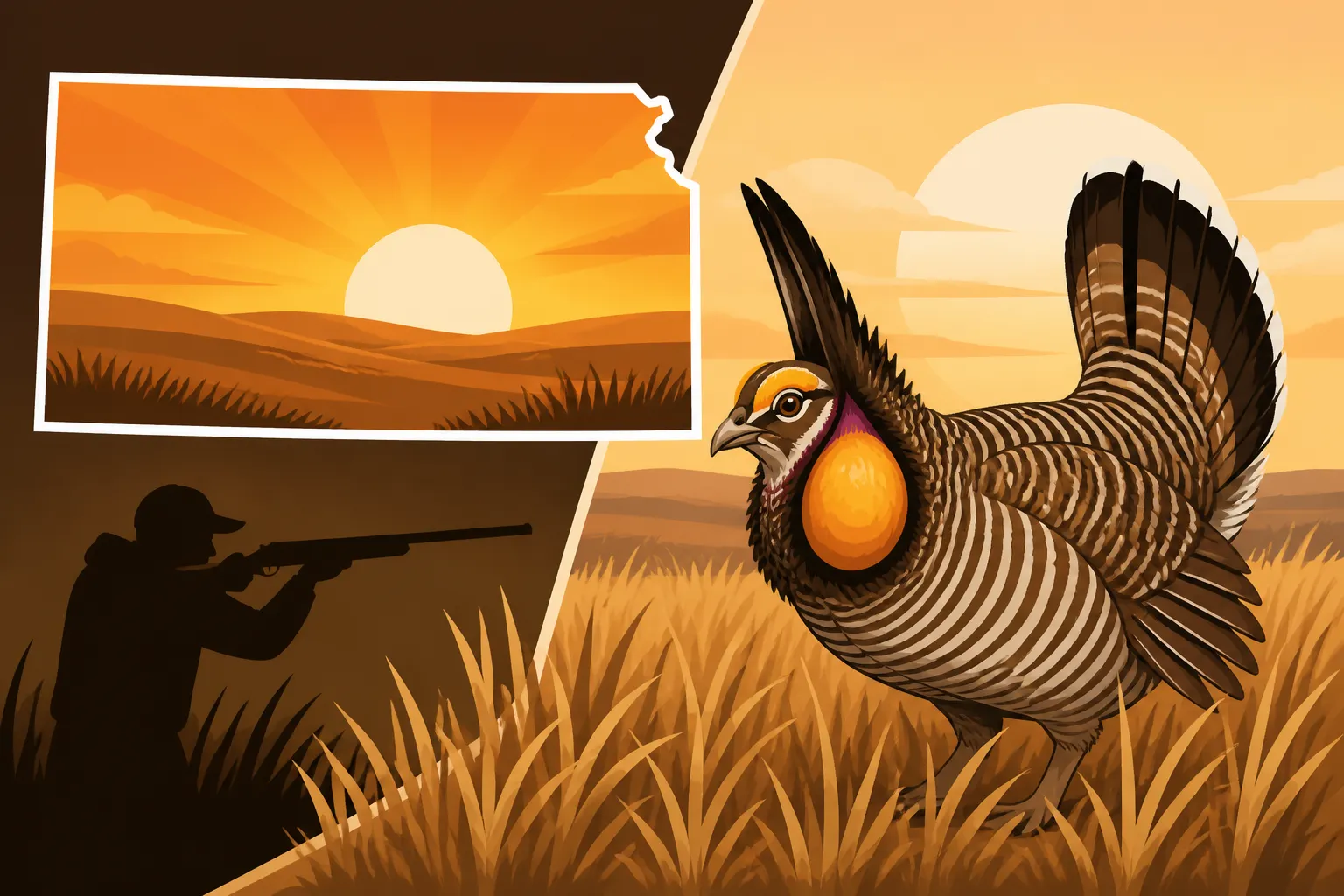
When a prairie chicken flushes, or if you spot one on the ground, try to quickly assess a few key visual markers. Greater Prairie Chickens are generally larger and have more pronounced, longer pinnae (the feather tufts on the sides of their neck) than their Lesser counterparts. Their barring pattern across the breast and flanks is also usually more distinct and often appears as horizontal bars. Lesser Prairie Chickens, on the other hand, tend to be a bit smaller, paler, and have less prominent pinnae. Their barring often looks more broken or mottled. The males of both species perform elaborate courtship displays on communal breeding grounds known as leks. On these Booming Ground Behaviour in Spring, Greater Prairie Chicken males inflate bright orange-yellow air sacs on their necks, while Lesser Prairie Chicken males display smaller, reddish-orange sacs. While you're unlikely to be hunting during the booming season, observing these differences can reinforce your understanding of the species.
Here's a quick comparison table to help differentiate the two species:
| Feature | Greater Prairie Chicken | Lesser Prairie Chicken |
|---|---|---|
| Size | Larger, heavier (1.5-3 lbs) | Smaller, more slender (1.5-2 lbs) |
| Plumage Color | Darker brown, more distinct horizontal barring | Paler, more grayish-brown, less distinct/broken barring |
| Pinnae (Ear Tufts) | Longer, more prominent; often held erect during display | Shorter, less conspicuous |
| Air Sac Color (Male) | Bright orange-yellow | Smaller, reddish-orange |
| Tail Feathers | Dark, broad central feathers with narrow white tips | White outer tail feathers often visible in flight |
| Flight Pattern | Strong, direct flight, less erratic | More erratic, "fluttery" flight, especially when flushed |
Habitat and Geographic Range Differences
Perhaps one of the most practical ways to avoid misidentification is to understand the geographic distribution of these birds within Kansas. Prairie Chicken Range and Leks are not uniform across the state. The Greater Prairie Chickens of the Kansas Flint Hills are abundant and widespread in the eastern and central regions, particularly in the vast expanses of tallgrass prairie. As you move west, their range extends into mixed-grass prairies and agricultural mosaic landscapes. Lesser Prairie Chickens, however, are restricted to the arid, shortgrass and shinnery oak prairies of extreme southwestern Kansas. This specific habitat preference means that if you are hunting in the core Flint Hills or much of central Kansas, you are almost certainly encountering Greater Prairie Chickens. If you find yourself hunting in the far southwestern counties of Kansas, especially Morton, Stanton, or Hamilton, extreme caution is warranted, and positive identification is non-negotiable. Using tools like GoHunt or the Kansas Hunting Atlas to pinpoint your exact location and cross-reference with known Lesser Prairie Chicken range maps is a smart pre-hunt strategy.
Behavioral Cues and Vocalizations
While visual cues are primary, behavioral patterns can also offer hints, especially if you're patient and observe the birds before attempting a shot. Greater Prairie Chickens tend to form larger flocks outside of the breeding season, particularly in fall and winter. They often feed in agricultural fields, especially corn and milo stubble, and roost in tall grass. Their flush can be powerful, rising quickly with a distinctive cackle. Lesser Prairie Chickens, conversely, are often found in smaller coveys and are generally more secretive. Their flush might seem less explosive, and their calls are subtly different. Of course, discerning vocalizations on the wing can be incredibly challenging, but repeated exposure to both species (even through recordings) can help train your ear. When considering Prairie Chicken Tactics in Flint Hills Grass, remember that behavior often aligns with the typical species found in that region.
Practical Strategies for Compliance and Ethical Hunting
The "Greater Prairie Chicken Only" rule demands a proactive approach from hunters. It's not enough to simply know the rule; you need to integrate strategies into your hunting routine that minimize the risk of accidental harvest. Being prepared and making informed decisions in the field are hallmarks of an ethical hunter.
Pre-Hunt Research and E-Scouting for Prairie Chickens
Your hunt begins long before you step foot in the field. Effective pre-hunt research is your first line of defense against misidentification. Start by thoroughly studying the Kansas hunting regulations, paying close attention to the Kansas Prairie Chicken Season Segments and any specific unit restrictions. Utilize online resources like the KDWP website's interactive maps and upland bird forecasts. These forecasts often highlight areas where Greater Prairie Chicken numbers are strong.
Next, dive into e-scouting tools. Platforms like GoHunt, along with the official Kansas Hunting Atlas, are invaluable. Use them to examine aerial imagery, identifying suitable habitat for Greater Prairie Chickens like extensive grasslands, CRP fields, and crop field edges. Cross-reference this with known Lesser Prairie Chicken distribution maps. If your chosen hunting area borders or overlaps with a region where Lesser Prairie Chickens are known to exist, be extra cautious. Mark these sensitive areas on your GPS or mapping app. For instance, if you're planning to hunt Prairie Chicken Hunting in the Flint Hills, you can be fairly confident you'll only encounter Greaters, but moving west requires more diligence. Knowing the likely species in your chosen location is a huge advantage.
In-Field Decision Making and When to Hold Your Shot
Once you're actually in the field, vigilance is key. It's easy to get caught up in the excitement of a flush, but a moment of pause can prevent a mistake. Always aim for positive identification before you even think about raising your shotgun. If a bird flushes quickly or flies off into heavy cover before you can clearly see its distinguishing features (size, plumage, tail), the safest and most ethical decision is to hold your shot. It's far better to miss an opportunity than to risk harvesting a protected species.
When hunting in areas where Lesser Prairie Chickens could be present, try to get a clear look at the bird on the ground if possible, or observe its flight pattern and vocalizations if it flushes. Remember the subtle differences in size, color, and pinnae length. If you're hunting with a partner, communicate what you're seeing. Two sets of eyes are better than one. This level of caution is crucial, especially during Early Season Prairie Chicken Timing when younger birds might be present and harder to identify. Trust your gut; if there's any doubt, don't shoot.
Reporting and Resources for Hunters
Even with the best intentions and careful preparation, questions can arise. The Kansas Department of Wildlife and Parks is your primary resource for clarification. Don't hesitate to reach out to their regional offices or game wardens if you have specific questions about regulations or identification in a particular area. They are there to help ensure legal and ethical hunting practices.
In the rare and unfortunate event that you accidentally harvest a Lesser Prairie Chicken, immediately contact the KDWP. Do not attempt to conceal the bird or discard it. Explain the situation to a game warden; honesty and prompt reporting are crucial and often result in a more understanding response from law enforcement. Additionally, if you witness any poaching or illegal activity related to prairie chickens, report it through the KDWP's Operation Game Thief program. Your actions contribute directly to the conservation of these magnificent birds and the integrity of the hunting community. For those who enjoy Pass Shooting Prairie Chickens, swift identification and responsible reporting are key to maintaining the privilege of the hunt.
Conservation Efforts and the Future of Prairie Chickens in Kansas
The "Greater Prairie Chicken Only" rule isn't just about hunter compliance; it's a small piece of a much larger conservation puzzle. Both species of prairie chickens face significant challenges, and understanding these broader efforts can help hunters appreciate the importance of their role in the birds' future. The reality is that Prairie Chicken Range Loss is a serious concern.
The Lesser Prairie Chicken's Endangered Status
The Lesser Prairie Chicken has been a subject of intense conservation focus for years due to alarming population declines. It has fluctuated in its listing status under the Endangered Species Act, most recently being re-listed as endangered in the Southern Distinct Population Segment (which includes Kansas) and threatened in the Northern DPS. This status reflects critical threats to its survival, primarily habitat loss and fragmentation from agricultural conversion, oil and gas development, and infrastructure expansion. The legal protections that come with an endangered listing underscore why the "Greater Prairie Chicken Only" rule is so strictly enforced. Every individual Lesser Prairie Chicken is vital to the species' recovery, and accidental harvest, though unintended, can have disproportionate impacts on small, struggling populations.
Habitat Challenges and Ongoing Conservation Initiatives
The biggest hurdle for both prairie chicken species, but especially the Lesser, is the degradation and loss of their native grassland habitats. Tallgrass, mixed-grass, and shortgrass prairies are rapidly disappearing or being altered. Factors like overgrazing, invasive plant species, and a lack of proper fire management also play a role. The very nature of modern agriculture and energy demands further fragments these critical landscapes, making it harder for prairie chickens to find suitable nesting, brooding, and wintering cover.
However, many dedicated individuals and organizations are working tirelessly to reverse these trends. Conservation initiatives include:
- Voluntary landowner programs: Incentives are offered to private landowners to enroll in programs like the Conservation Reserve Program (CRP) or to implement specific habitat improvements, such as prescribed burning, grazing management, and native grass restoration. These efforts are crucial, as a significant portion of prairie chicken habitat exists on private lands.
- Research and monitoring: KDWP and other research institutions continuously monitor prairie chicken populations, study their ecology, and evaluate the effectiveness of various management techniques. This scientific data informs policy and management decisions, including season dates and bag limits for Greater Prairie Chickens.
- Public awareness and education: Efforts are made to educate the public, including hunters, about the importance of prairie chicken conservation and how to distinguish between the species.
These conservation efforts, combined with responsible hunting practices, offer the best hope for ensuring that prairie chickens continue to grace the Kansas prairies for generations to come.
Disclaimer
Please note that hunting regulations, season dates, and species listings can change. This guide is intended for informational purposes only and should not replace your due diligence in consulting the most current Kansas Department of Wildlife and Parks (KDWP) official regulations before heading afield. Always verify specific rules and laws directly from the KDWP website or official publications.