Choosing a Primary and Adjacent Kansas Unit
Oh, the perennial dilemma for any serious hunter looking at Kansas: staring at that application page, cursor hovering, trying to decide on the perfect primary and adjacent unit. It’s enough to make your head spin, especially when you know one wrong click could mean a season spent regretting your choices, or worse, not drawing a tag at all. This guide is here to break down the Kansas unit selection process, taking the guesswork and anxiety out of choosing the best primary and adjacent deer units for your next hunt, helping you make informed decisions that align with your hunting goals.
Understanding the Kansas Deer Unit System
Navigating the Kansas deer permit draw can feel like deciphering a secret code, but it's built on a pretty straightforward unit system designed to manage deer populations and hunting pressure. Understanding this foundation is crucial before you even start dreaming about big bucks.
How Kansas Deer Units Are Structured
Kansas is divided into 19 deer management units, each with its own unique characteristics in terms of habitat, deer density, and hunting opportunities. These units range from the heavily timbered river bottoms and agricultural fields of eastern Kansas to the vast, open plains and rolling hills of the west, where mule deer sometimes roam alongside whitetails. The Kansas Department of Wildlife, Parks and Tourism (KDWP) sets quotas for each unit, trying to balance hunter success with maintaining a healthy deer population. It's not just about drawing a tag; it's about drawing a tag in a unit that suits your hunting style and expectations. Knowing the general lay of the land for all 19 units is your first step. You can explore more about individual units in our guide on Kansas Deer Units 1 Through 19.
What makes each unit unique often boils down to its dominant landscape features. For instance, Unit 16 in the southeast is known for its timbered creeks and heavy agriculture, often holding impressive whitetail bucks. Contrast that with Unit 1, up in the northwest corner, where you'll find more wide-open spaces, some mule deer presence, and often less overall deer density but potentially higher trophy quality for those specific species. Your hunting success will largely depend on how well you understand these nuances and how they align with your personal preferences, whether you prefer chasing whitetails through dense cover or glassing for mule deer across vast expanses.
The KDWP also manages these units based on species-specific quotas. While most units offer whitetail permits, only a select few in the western part of the state have the possibility of drawing a mule deer stamp, which converts a whitetail permit to an either-species, either-sex tag. This adds another layer of complexity and strategy for those hoping to chase a big muley. It's vital to know which units offer these opportunities if a mule deer is on your bucket list, as the draw odds for these highly coveted stamps are notoriously long, making strategic unit selection even more critical.
The Draw System: Why Units Matter
For non-resident hunters, getting a Kansas deer permit is almost entirely through a lottery draw system, which typically has an Kansas Deer Application Window in April. This means your chosen unit isn't just a place you want to hunt; it's a strategic entry point into a competitive draw. Each unit has its own set of draw odds, influenced by the number of permits available and the number of applicants, including those accumulating preference points. The more popular a unit, or the fewer permits it offers, the tougher the draw. This is where the concept of "primary" and "adjacent" units comes into play, giving you a fallback option if your first choice is oversubscribed.
The draw system is designed to provide some flexibility, but it's not without its stresses. Many hunters spend countless hours analyzing past draw statistics, looking for an edge. Some units consistently require more preference points to draw, while others might be obtainable with zero or very few points. This directly impacts your application strategy. Do you go for your dream unit and risk not drawing for several years, hoping your preference points eventually pay off? Or do you pick a unit with better odds to ensure you get a tag sooner, even if it's not your absolute top choice? These are the questions that keep hunters up at night, and they're precisely why a thoughtful approach to unit selection is so critical.
Furthermore, the KDWP is always evaluating herd health and hunter pressure, which can lead to subtle shifts in permit numbers or unit boundaries from year to year. While these changes are usually minor, they can sometimes impact draw odds. Staying updated with the latest KDWP regulations and harvest reports is vital. Websites and apps like GoHunt often compile this data, offering insights into trends that might affect your chances, helping you make decisions based on the most current information available rather than outdated assumptions.
Non-Resident vs. Resident Considerations
It’s no secret that the Kansas deer draw presents different challenges for residents and non-residents. Residents generally have better draw odds and more permit options, often being able to purchase over-the-counter tags for antlerless deer or certain youth permits. For non-residents, however, the playing field is much narrower, typically limited to a single whitetail permit application.
Non-residents face higher competition for a limited number of non-resident permits. This scarcity means that primary and adjacent unit selection for non-residents becomes an even more critical strategic decision. You're not just picking a place to hunt; you're playing the odds. This is why many non-residents invest heavily in researching How Many Points to Draw a Kansas Unit before committing to their application. It's a calculated gamble that requires a deep understanding of the draw history and potential future trends.
Residents, while having more flexibility, still benefit from strategic unit selection, especially if they are targeting trophy animals or specific hunting experiences. They might prioritize units known for excellent public land access or consistent trophy production. The key difference is the pressure: residents have more pathways to obtain a tag, making the primary/adjacent choice less about if they'll hunt and more about where and what quality of hunt they'll have. For non-residents, it's often a matter of getting any tag, so minimizing the risk of a "no draw" outcome often takes precedence.
The Strategic Importance of Primary Unit Selection
Your primary unit choice isn't just a wish; it's the foundation of your entire Kansas deer hunting strategy. This decision dictates your initial draw odds and sets the stage for the type of hunt you'll experience. Don't rush this part; it deserves careful thought and plenty of research.
Assessing Deer Density and Trophy Potential
When picking a primary unit, most hunters are naturally drawn to areas with high deer density and a reputation for producing trophy-class whitetails or mule deer. Eastern Kansas, particularly the units along the Missouri River and in the southeast, often boast higher deer numbers due to a blend of timber, abundant agriculture, and good cover. These units can offer more opportunities to see deer throughout your hunt. However, higher density can sometimes mean more pressure, especially on public lands.
Trophy potential, on the other hand, isn't always directly tied to sheer numbers. While fertile agricultural lands across central and eastern Kansas contribute to Why Kansas Grows Trophy Whitetails, some western units, despite lower deer densities, might produce fewer but larger-racked deer due to genetics, age structure, and less overall human disturbance. It’s a balance: do you want more consistent deer sightings with good potential, or are you willing to grind it out in a lower-density area for a chance at a truly giant buck? Tools like the KDWP harvest reports and historical data, often aggregated by platforms such as GoHunt, can provide insights into Kansas Deer Herd Numbers by Unit and antler quality, helping you make a more informed decision based on actual harvest data.
It's also crucial to remember that "trophy potential" isn't a guarantee; it's a reflection of the opportunity for a mature animal. A unit known for big bucks still requires skillful hunting, and a unit with lower "potential" can still surprise you. Consider the overall health of the herd and what factors contribute to antler growth, such as soil fertility and mast crops, which are often more prevalent in the central and eastern regions of the state. These units often provide the consistent nutrition needed for bucks to reach their full genetic potential.
Public Land Availability and Pressure
For many hunters, especially non-residents, public land access is a make-or-break factor. Kansas has a fantastic Walk-In Hunting Access (WIHA) program, along with state wildlife areas and Corps of Engineers land, but these are not evenly distributed across all units. Some units have significantly more public land acres than others, and this directly impacts hunter pressure. Choosing a primary unit with ample public access can increase your hunting opportunities, but it also means more competition from other hunters.
Units with a high percentage of public land, such as those in central Kansas that feature large tracts of WIHA, might seem appealing on paper. However, these areas can see intense pressure, especially during opening weekends and the peak rut. You need to consider how well you handle hunting around others and if you have the strategies to mitigate pressure, such as Hunting Pressure Patterns on Kansas Public Land. Conversely, units with less public land might offer a more solitary experience, but you'll have fewer options and might need to put in more effort to secure private land permission.
Mapping applications like GoHunt are invaluable for visualizing public land tracts. They can show you not just where public land exists, but also the types of public land (WIHA, State Wildlife Area, Corps land) and their regulations. You can overlay aerial imagery to scout potential hunting spots and identify access points, giving you a significant advantage. Don't just look at the total acreage; examine the distribution of public land within a unit. Are there large, contiguous blocks, or is it fragmented into smaller, isolated parcels? This makes a huge difference in how you can hunt it effectively.
Habitat Diversity and Your Hunting Style
Your primary unit choice should also align with your preferred hunting style and what kind of terrain you feel most comfortable navigating. If you love still-hunting through dense timber and setting up treestands, an eastern unit with extensive creek bottoms and hardwood draws might be perfect. If you prefer long-range glassing and spot-and-stalk tactics, the more open, rolling country of western Kansas might be your ideal.
Kansas offers a surprising amount of habitat diversity, from the dense riparian corridors of the eastern rivers to the mixed-grass prairies and agricultural fields of the central region, and the High Plains sagebrush and breaks out west. Each habitat type presents different challenges and opportunities. For example, a unit dominated by large agricultural fields interspersed with shelterbelts will require different scouting and hunting tactics than a unit rich in thick CRP grass and small timber pockets. Your weapon choice also plays a role; long-range rifle hunters might favor open country, while archers often seek out tighter cover and pinch points.
Think about how you like to hunt. Do you prefer a mobile approach, carrying a saddle and climbing sticks to adapt to deer movement? Then finding a unit with varied terrain and good timber might be beneficial, allowing you to scout and adapt. If you prefer to set up a ground blind and wait, then identifying units with consistent food sources and thick bedding cover might be more important. The best unit for you isn't necessarily the one with the biggest deer numbers; it's the one that best suits your capabilities and preferences, maximizing your enjoyment and potential for success.
Navigating the Adjacent Unit Choice
While your primary unit is your top pick, the adjacent unit is your critical backup. This choice isn't just a formality; it's a strategic move that can literally make the difference between hunting Kansas and sitting home.
The Purpose of an Adjacent Unit
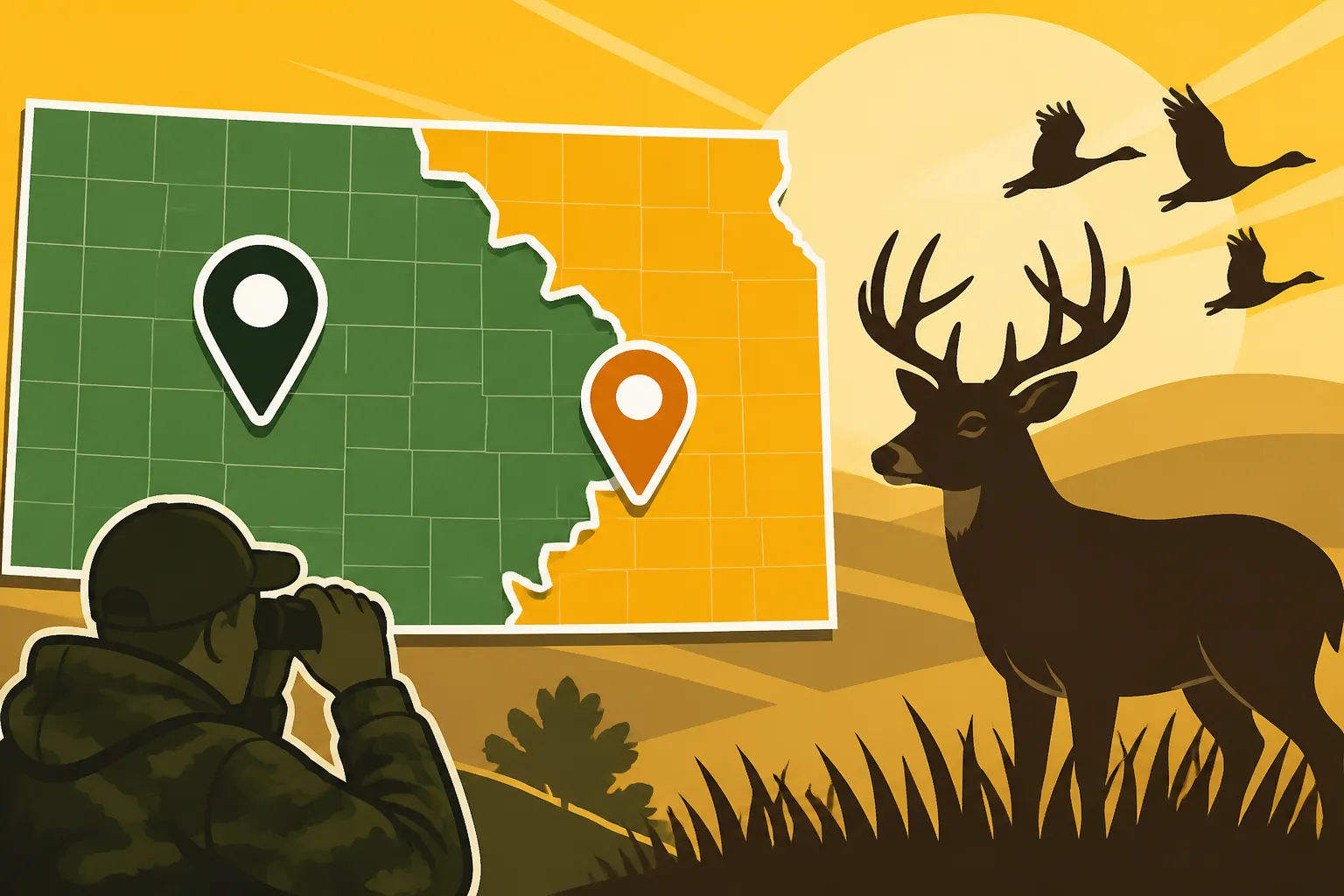
The adjacent unit essentially acts as your "Plan B" in the Kansas deer draw. If your primary unit selection is oversubscribed and you don't draw a tag for it, the KDWP will then consider you for your adjacent unit. This is especially important for non-residents, who face tougher odds. Without an adjacent unit selected, if you miss your primary, you're out of luck entirely for that year's draw, aside from potentially being able to buy a leftover antlerless permit later.
The adjacent unit significantly increases your chances of getting a tag, even if it's not in your absolute dream spot. It’s a pragmatic choice, acknowledging the competitive nature of the draw. However, it's not a free pass. The draw for the adjacent unit still considers its own permit quotas and applicant numbers. The key is to pick an adjacent unit that has reasonable draw odds and still offers a quality hunting experience, even if it might require a slight adjustment to your original plans. It's not uncommon for hunters to strategically pick a slightly less popular adjacent unit to almost guarantee a tag. You'll definitely want to understand What Happens if Your Kansas Primary Unit Fills before making your choices.
Think of it this way: your primary unit is your swing for the fences, your adjacent unit is your solid double. You want both to be good options, but you're probably willing to accept slightly lower trophy potential or slightly less ideal public land in your adjacent choice if it means getting a tag. This is where researching draw odds for multiple units becomes absolutely critical. You might use historical data to identify units that consistently have higher success rates in the draw for non-residents, even if they aren't the "hot" units everyone talks about.
Matching Adjacent Units to Your Primary Strategy
Your adjacent unit shouldn't just be any neighboring unit; it should ideally complement your primary choice or at least offer similar hunting conditions. This minimizes the amount of re-scouting or re-planning you might have to do if you draw the adjacent. For example, if your primary unit is known for vast tracts of WIHA in rolling crop country, choosing an adjacent unit with similar characteristics makes for an easier transition.
Consider factors like habitat, deer species (whitetail-only vs. potential for mule deer), and public land access when selecting your adjacent unit. If your primary is a mule deer unit in western Kansas, an adjacent unit that also has mule deer potential would be a logical choice, even if the odds are still tough. If you're targeting whitetails in timbered areas, an adjacent unit with similar timber and river bottom habitat would make sense. The goal is to avoid drawing an adjacent unit that forces you to completely re-evaluate your gear, scouting, and hunting strategy.
Sometimes, a strategic move might involve picking an adjacent unit that is geographically close but perhaps a bit less known, or has slightly fewer public land acres but also less pressure. This could give you a better chance of drawing that adjacent unit, while still keeping you within a reasonable drive of familiar terrain. GoHunt's mapping tools can be very useful here, allowing you to compare adjacent units side-by-side, analyzing their features, public access, and historical harvest data to find the best fit for your primary strategy. This detailed comparative analysis can save you a lot of headache down the road.
What Happens if Your Primary Unit Fills
When the Kansas deer draw results are released, usually around the Kansas Deer Draw Results Date, the first thing everyone checks is their primary unit. If you're successful, congratulations! If not, don't despair—this is where your adjacent unit selection truly pays off. If your primary unit fills up before your application is drawn, your application then moves into the pool for your selected adjacent unit.
It's important to understand that your application does not lose any preference points when it moves to the adjacent unit draw. If you are unsuccessful in drawing either your primary or adjacent unit, you still retain your preference points and gain another one for the next year. This system provides a safety net, ensuring that your investment in preference points continues to grow even if you don't draw a tag in a given year. However, it's worth noting that if you do draw your adjacent unit, your preference points are then reset to zero, just as if you had drawn your primary.
This sequential draw process underscores the importance of having a thoughtful adjacent unit choice. It's your insurance policy for getting a tag. Imagine spending months planning, scouting, and dreaming about a Kansas hunt, only to be shut out because you didn't have a viable adjacent unit. It’s a heartbreaking scenario many hunters experience. By carefully researching both primary and adjacent units, you dramatically increase your chances of having a hunting season in Kansas, even if it's not exactly where you originally envisioned it. It's a strategic concession that often leads to a successful and enjoyable hunt nonetheless.
Factors Influencing Your Unit Decision
Deciding on your primary and adjacent units involves more than just looking at a map. You need to pull together various pieces of information to create a comprehensive strategy.
Scouting and E-Scouting Insights
In today's hunting world, effective scouting starts long before you ever set foot in Kansas. E-scouting, using online mapping platforms, satellite imagery, and weather data, has become an indispensable tool. Before you even apply, you should be virtually exploring potential units. Look for key features like creek drainages, timber blocks, shelterbelts, crop fields, and access roads. Identify potential bedding areas, travel corridors, and likely food sources. This process can quickly narrow down your unit choices. Our guide on E-Scouting Kansas Farm Country From Home can help you get started.
Once you have a few units in mind, a physical scouting trip, if feasible, can solidify your decision. Nothing beats boots on the ground for understanding the terrain, verifying access points, and finding actual deer sign. However, for many non-residents, a physical scouting trip isn't possible before the application deadline. This makes robust e-scouting even more critical. You're relying on digital tools to make decisions that will impact your entire hunting season.
Utilize resources like KDWP public land maps, county plat maps for landowner information (if pursuing private land permission), and topographic maps to understand elevation changes (even in relatively flat Kansas, subtle elevation can funnel deer). Platforms like GoHunt, onX Hunt, and BaseMap offer advanced features that allow you to mark waypoints, measure distances, and save maps for offline use, transforming your e-scouting process into a highly efficient pre-hunt strategy. Don't underestimate the power of spending hours on your computer screen; it can save you days of frustration in the field.
Preference Points and Draw Odds
Kansas uses a preference point system for its deer draw, primarily benefiting non-residents. Each year you apply and are unsuccessful, you gain a preference point. The more points you accumulate, the better your odds of drawing a permit in subsequent years. However, this system can be a double-edged sword. Some hunters chase points for years, hoping to draw into a premier unit, while others prefer to apply for units with lower point requirements to ensure a tag more frequently.
You need to understand the current draw odds for your desired units, both primary and adjacent, relative to your current number of preference points. KDWP publishes draw statistics each year, showing how many points were required to draw various units. This data is crucial for strategizing. Are you willing to bank points for three, five, or even seven years for a chance at a specific unit, or would you prefer to get a tag every year or two in a more accessible unit? There's no right or wrong answer, but your preference point strategy significantly impacts your unit choices.
For example, if you have zero points, applying for a unit that historically takes 5+ points to draw is almost certainly a waste of your primary choice, though it would earn you a point. In this scenario, your adjacent unit choice becomes paramount. You might apply for your dream unit as primary to earn a point, but pick a zero- or one-point unit as your adjacent to maximize your chances of hunting that year. As your points grow, your options expand, allowing you to gradually target more sought-after units. It's a long game, but understanding the system is key to playing it effectively. Our detailed guide on Kansas Preference Points Explained offers a deep dive into this system.
Weapon Choice and Season Dates
Your preferred weapon and the time of year you want to hunt significantly influence your unit selection. Kansas offers archery, muzzleloader, and firearm seasons, each with distinct dates and experiences.
- Archery Season: Generally runs from mid-September through December. If you're a bowhunter, you'll want units with good cover, timber, and funnel points that allow for close-range encounters. Early season might focus on water sources, while the rut in November is all about cruising bucks. Units with varied terrain and plenty of pinch points are often ideal for bowhunting.
- Muzzleloader Season: A short window in mid-September. This season is often less crowded than the archery rut or firearm season, offering a unique opportunity. If muzzleloading is your game, look for units with good early-season food sources and accessible cover.
- Firearm Season: Typically a two-week period in early December. This is often the most popular and crowded season. If you're hunting with a rifle, more open country or larger timber blocks can be productive, allowing for longer shots. Units with abundant crop fields or CRP often shine during this colder time of year, as deer concentrate on food sources.
Your weapon choice should align with the unit's characteristics. A muzzleloader in dense timber might be frustrating, just as a bow in vast, open plains could be challenging. Conversely, a rifle in a unit with large, open fields provides different opportunities than a unit primarily composed of small, fragmented timber blocks. Matching your weapon to the terrain and typical deer behavior during that season is a crucial consideration for maximizing your success and enjoyment.
Common Pitfalls and How to Avoid Them
It’s easy to get excited and make a hasty decision when filling out that application. But a few common mistakes can derail your Kansas hunt before it even begins.
Overlooking Public Land Maps
One of the biggest blunders hunters make is simply looking at a unit's reputation or general deer numbers without thoroughly examining the actual public land available. A unit might be famous for big bucks, but if 90% of it is private land and you don't have permission, it's essentially inaccessible to you. Many hunters just glance at the KDWP Hunting Atlas and assume vast swaths of green mean endless opportunities, but often those green areas are fragmented, inaccessible, or heavily pressured.
To avoid this, spend serious time with the Kansas Online Hunting Atlas and other mapping tools like GoHunt or onX Hunt. Zoom in on every public parcel in your potential primary and adjacent units. Look at the size, shape, and surrounding land. Are there obvious access points? Are there roads running through it that might allow other hunters easy access? Does it connect to private land that looks like prime bedding or feeding? Even small slivers of public ground can be productive if they are strategically located next to prime private land.
Don't just look for any public land; look for quality public land. Some public tracts are small and isolated, offering little more than a quick morning sit. Others are large enough to allow for extensive still-hunting or provide multiple stand locations. Pay close attention to the boundaries of WIHA tracts, as these properties can change year to year. Make sure you understand the rules for Kansas Walk-In Hunting Access Explained, as some have specific dates they are open or require an iWIHA check-in. This detailed scrutiny of public land resources is what separates a hopeful application from a strategic one.
Underestimating Hunting Pressure
Kansas has earned its reputation as a trophy whitetail state, and with that comes a lot of hunter interest. It's a fact: good hunting spots, especially on public land, will see pressure. Ignoring this reality is a recipe for frustration. A unit with excellent habitat and high deer numbers can quickly become a challenge if every timber stand and creek bottom has a hunter in it.
To counteract this, try to anticipate pressure. Consider applying for units that are slightly off the beaten path, or adjacent units that might not be as "glamorous" but offer solid hunting with less competition. If you do draw a popular unit, strategize how you'll hunt pressured deer. This often means going deeper, hunting harder, focusing on overlooked pockets, or timing your hunts for weekdays when pressure is typically lower. Sometimes, a smaller, less attractive-looking parcel, overlooked by others, can be a hidden gem simply because it's undisturbed.
Also, think about access. Units with easy road access to public land often get hit hardest. Can you find public land parcels that require a longer walk, or that are situated away from main roads? These often hold less pressured deer. Even in relatively flat farm country, small terrain features can create natural sanctuaries. Look for these areas during your e-scouting process. Don't be afraid to hunt the "fringes" or less obvious spots, as these are often where smart, mature bucks will retreat when feeling the heat.
Ignoring Local Factors
Kansas is a big state, and local factors like agricultural patterns, weather, and specific land uses can vary wildly from one unit to the next. What works in an eastern unit dominated by corn and soybeans might not apply to a western unit with wheat and milo fields. Ignoring these hyper-local details can leave you unprepared.
For instance, the timing of crop harvest in your chosen unit can dramatically affect deer movement. Standing corn or milo provides excellent cover and food well into the season, concentrating deer. If these crops are harvested before your hunt, deer patterns will change, forcing them to seek new food sources or move into timber. Keep an eye on local agricultural reports and historical harvest dates for your target unit. Understanding Milo and Corn Stubble Deer Patterns can be a game-changer.
Similarly, consider the typical weather patterns for your chosen season in that specific region of Kansas. Early season in western Kansas can be brutally hot and dry, impacting deer behavior and water sources. A December firearm hunt in northern Kansas could mean bitter cold and snow, requiring different gear and tactics than a milder December further south. Don't assume Kansas weather is uniform across the entire state. A quick check of historical climate data for the county your unit is in can provide valuable insights, helping you to pack appropriately and plan your hunting days effectively.
Leveraging Tools and Resources for Success
In today's interconnected world, you have more resources at your fingertips than ever before to make informed decisions about your Kansas hunting units. Using them wisely can give you a significant advantage.
Utilizing Online Mapping Platforms
Online mapping platforms have revolutionized how hunters scout and plan their trips. Services like GoHunt, onX Hunt, and BaseMap provide detailed satellite imagery, topographic maps, and crucial landowner information. With these tools, you can identify public and private land boundaries, pinpoint potential food plots, locate creek crossings, and mark optimal stand locations—all from the comfort of your home. For non-residents, these platforms are indispensable, serving as your virtual boots on the ground.
GoHunt, for example, often integrates state-specific hunting data, including draw odds, harvest statistics, and even unit descriptions, making it a comprehensive resource for Kansas hunters. You can layer different map views to see everything from elevation changes to recent burns, helping you understand the terrain and potential deer movement patterns. Identifying key features like River Oxbows and Deer Movement or Shelterbelt Ends and Buck Travel becomes much easier when you can view the landscape from above.
Investing in a good mapping subscription is not just a luxury; it's a critical tool for strategic unit selection and successful hunting. Before you commit to your primary and adjacent units, spend hours poring over these maps. Look for isolated pockets of timber, small drainage systems, or unique terrain features that might hold deer and escape pressure. The more thoroughly you e-scout, the more confident you'll be in your unit choices, and the more productive your actual hunt will be.
KDWP Resources and Harvest Data
The Kansas Department of Wildlife, Parks and Tourism (KDWP) website is a treasure trove of official data that every hunter should consult. They provide annual harvest reports, which detail deer harvest numbers by unit, broken down by weapon type, sex, and often age class. This data is invaluable for understanding the health of the herd in each unit and assessing its trophy potential. Looking at the buck-to-doe ratio, for instance, can indicate hunting pressure and herd management success.
Beyond harvest reports, the KDWP offers detailed unit maps, season dates, and specific regulations for each unit and public land area. Don't rely solely on third-party aggregators; always cross-reference information with the official KDWP site to ensure you have the most accurate and up-to-date rules. This includes checking for any emergency regulation changes that might occur throughout the year.
Pay particular attention to the draw statistics that KDWP publishes. These reports show how many applicants applied for each unit, how many permits were issued, and often the minimum number of preference points required to draw. This is the bedrock of your preference point strategy and helps you determine the realistic odds for your primary and adjacent unit choices. While historical data doesn't guarantee future results, it provides the best available insight into the competitive landscape of the Kansas deer draw.
Connecting with Local Knowledge
While e-scouting and data analysis are powerful, there's no substitute for local knowledge. If you have friends or acquaintances who hunt in Kansas, pick their brains. Ask about specific units, common deer patterns, pressure points, and even local services like processors or lodging. Local hunters often have nuanced insights that can't be found on a map or in a harvest report.
If you don't have personal connections, consider joining online hunting forums or social media groups dedicated to Kansas hunting. Be respectful and ask thoughtful questions. While some hunters are tight-lipped about their honey holes (and rightly so!), many are willing to share general advice about units, public land access, or overall hunting conditions. Remember to filter information, as online advice can sometimes be biased or outdated, but it can still provide valuable starting points for your research.
Visiting local sporting goods stores, gas stations, or diners in small towns near your potential units can also offer a wealth of information. Locals are often happy to chat about the local deer herd and hunting conditions. These informal conversations can yield priceless tidbits about unpressured areas, recent deer sightings, or even changes in crop rotations that could impact your hunt. Combining hard data with anecdotal insights from those who live and breathe Kansas hunting will give you the most well-rounded perspective for making your unit selections.
| Unit Feature / Criteria | Low Point/High Draw Odds (Example) | High Point/Trophy Potential (Example) | Considerations for Both |
|---|---|---|---|
| Draw Odds | Higher (1-2 points) | Lower (4-7+ points) | Check KDWP historical data annually. |
| Public Land Access | Moderate (WIHA often available) | Can be lower, more private | Utilize mapping apps like GoHunt to verify access. |
| Deer Density | Moderate to High | Variable, often higher in specific niches | Refer to KDWP harvest reports and local observations. |
| Trophy Potential | Good, but often lower average scores | Excellent, higher average scores for mature bucks | Genetics, nutrition (agriculture) are key drivers. |
| Habitat Type | Mixed agriculture, some timber | River bottoms, extensive timber, specific crop rotations | Match to your hunting style (e.g., archery vs. rifle). |
| Hunting Pressure | Moderate to high on accessible public land | Variable; can be high on coveted public, low on private | E-scout for remote access, hunt weekdays. |
| Primary Unit Strategy | Seek guaranteed tag, gain experience | Target specific trophy, accumulate points | Balance immediate hunt with long-term goals. |
| Adjacent Unit Strategy | Maximize draw success, similar habitat | Secondary trophy area, slightly better odds than primary | Crucial backup, ensures a tag if primary fails. |
Disclaimer
Please remember that hunting regulations, season dates, and permit draw odds in Kansas are subject to change. Always consult the official Kansas Department of Wildlife, Parks and Tourism (KDWP) website for the most current and accurate information before planning your hunt or applying for permits. This guide is for informational purposes only and does not supersede official KDWP regulations.