What Happens if Your Kansas Primary Unit Fills
Applying for a Kansas deer permit can feel like navigating a complex maze, especially for non-residents. There's a lot of hope and planning tied to those unit selections, and the nagging question of "what if my primary unit fills?" can be a real source of anxiety. It's a valid concern, as the Kansas draw is competitive, and understanding the mechanics behind it is crucial for setting expectations and planning your hunt. This guide is here to demystify that process, breaking down exactly what happens if your primary unit fills and what options you have, so you can approach the draw with confidence.
Decoding the Kansas Deer Permit Draw System
Kansas is renowned for its incredible deer hunting, particularly for trophy whitetails, which naturally makes the permit draw a highly anticipated and often stressful event. The system is designed to distribute a limited number of permits fairly, but it's not always straightforward, especially when trying to understand how your choices interact with the sheer volume of other applicants.
The Role of Preference Points in the Draw
At the heart of the Kansas deer draw lies the preference point system. Many hunters, especially those new to Kansas or from out-of-state, sometimes misunderstand how these points truly function. A preference point doesn't guarantee you a permit outright, but rather, it gives you an advantage over applicants with fewer points when demand for a specific unit exceeds the available quota. Essentially, the system tries to fulfill applications from hunters with the highest number of points first, working its way down until the unit's quota is met.
Each year you apply for a permit and are unsuccessful, you accrue one preference point. If you choose not to apply for a permit but still want to build points, you can simply purchase a preference point during the application period. This is a common strategy for hunters who know they can't make the trip one year but want to improve their odds for future seasons. For a deeper dive into how these points work, check out our guide on Kansas Preference Points Explained. It's vital to remember that these points are specific to the deer draw; they don't carry over to other species like turkey or elk.
Primary and Adjacent Unit Selection
When you fill out your permit application, you'll be asked to select a "primary unit" and an "adjacent unit." This is where many hunters put a lot of thought and research, trying to balance their dream unit with a backup that still offers good hunting opportunities. The primary unit is your top choice, the unit you're really hoping to draw. The adjacent unit acts as your second choice, a fallback if your primary unit fills up.
The Kansas Department of Wildlife, Parks and Tourism (KDWP) uses a specific methodology for processing these choices. They first attempt to fulfill all primary unit selections, prioritizing applicants based on their accumulated preference points. Only after the primary unit draw is completed, and if your primary unit was not drawn because it filled, will your application then be considered for your adjacent unit. Our article on Choosing a Primary and Adjacent Kansas Unit offers detailed strategies for making these critical selections.
Nonresident Quotas and Shifting Demand
It’s no secret that Kansas is a magnet for nonresident deer hunters. The quality of bucks and the accessible public lands, like the extensive Walk-In Hunting Access (WIHA) program, make it incredibly appealing. However, this popularity means that nonresident permits are highly sought after, and each deer management unit (DMU) has a specific quota for these permits.
The demand for permits in certain units can fluctuate year to year based on various factors: harvest success rates from the previous season, anecdotal reports of big bucks, changes in habitat conditions, and even broader hunting trends. A unit that might have been relatively easy to draw a few years ago could become highly competitive due to increased interest. This dynamic nature means that while preference points help, they don't make the draw entirely predictable, especially for those applying for highly desired units.
The "Primary Unit Fills" Scenario Laid Bare
This is the moment of truth for many applicants: what actually happens when your carefully selected primary unit gets too many applicants and fills its quota before your name (or your preference point tier) comes up? It's a common occurrence, and understanding the automatic process that follows can alleviate a lot of uncertainty.
How the Draw Processes Unit Choices
When the KDWP runs the draw, it's not a simple free-for-all. It's a structured process designed to allocate permits based on the rules. First, all applications are sorted by the hunter's preference point totals, from highest to lowest. Within each preference point tier, a random drawing occurs. This ensures that even if you have the same number of points as a hundred other people, everyone in that tier has an equal chance.
The system then goes through the primary unit requests. If a unit has 100 nonresident permits available, it will continue to assign those permits to the highest-point applicants (and then randomly within point tiers) until all 100 permits are gone. If you applied for that unit and your name wasn't chosen within that initial 100, your primary unit is considered "filled" for you. It's not that your application was rejected outright; it's simply that the quota was met by other, higher-priority applications or through the random draw within your point tier.
Automatic Consideration for Your Adjacent Unit
Here’s the critical piece of information: if your primary unit fills, your application doesn't just get tossed aside. Instead, it is automatically rolled over and entered into the draw for your adjacent unit. This is why selecting a strategic adjacent unit is almost as important as your primary choice. The KDWP system will then process your application for that adjacent unit, once again prioritizing by preference points and conducting a random draw within point tiers until that unit's quota is met.
This automatic consideration is a built-in safety net, providing a second chance at securing a permit. Many hunters who don't draw their dream primary unit still end up with a quality permit in their adjacent unit. It’s important to understand that your preference points for that year are consumed if you draw either your primary or adjacent unit. They reset to zero, and you start accumulating them again for the next year if you are unsuccessful in future draws.
The Unfortunate Reality: Both Units Fill
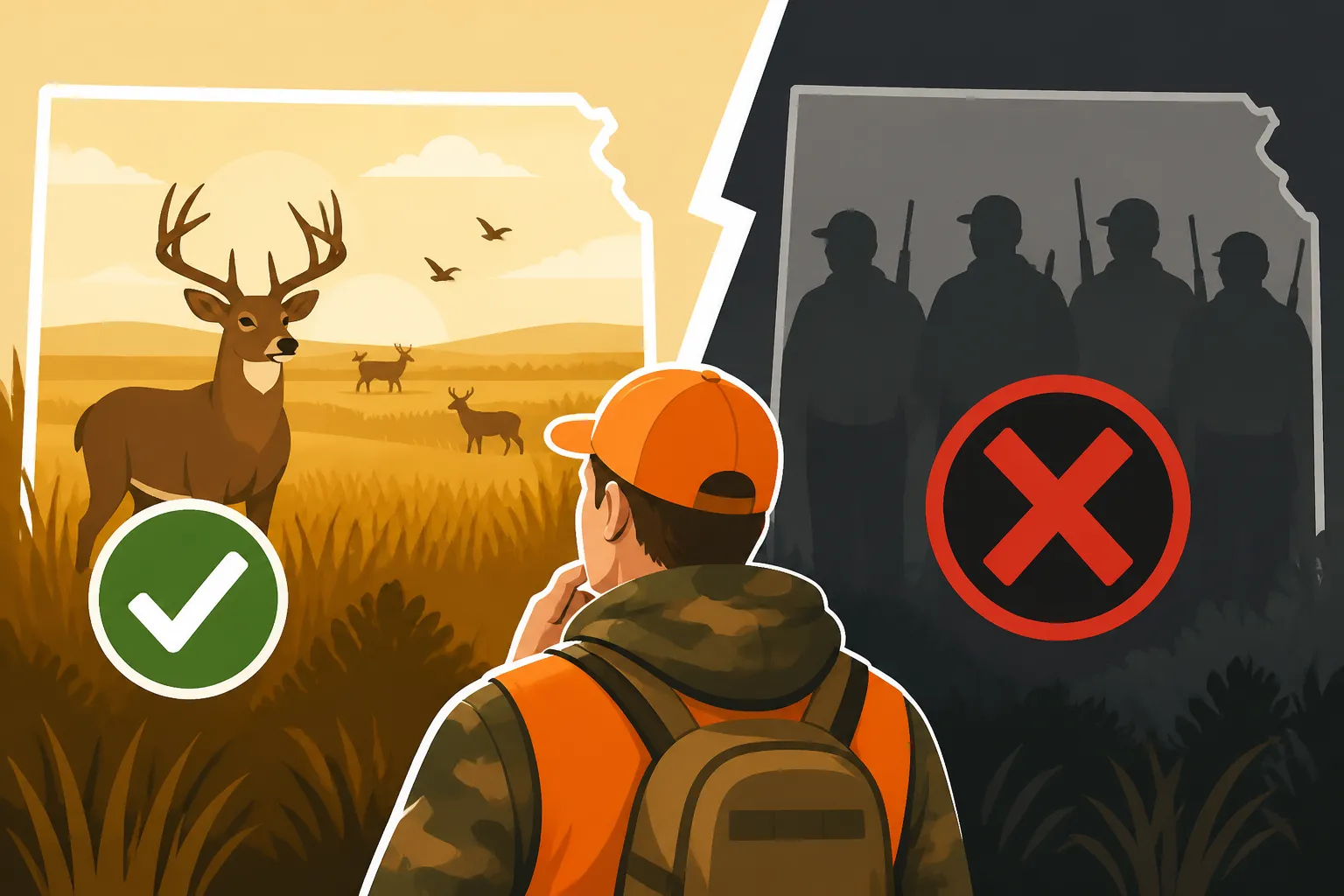
While the adjacent unit provides a valuable second chance, it's entirely possible that both your primary and adjacent units could fill. This is the least desirable outcome for any applicant. If both units fill before your application can be fulfilled, you will not receive a deer permit for that season.
This often happens when hunters select two highly popular or highly restrictive units without enough preference points to be successful in either. The good news (if you can call it that) is that if you don't draw any permit, your preference point total does not reset. Instead, you automatically receive one additional preference point for the next year, improving your odds for the following season. Furthermore, the permit fee you paid will be refunded, though the initial application fee is generally non-refundable. For more details on what happens if you don't draw, including refunds, refer to our guide on Kansas Permit Refunds if You Are Not Drawn.
Proactive Strategies to Improve Your Draw Odds
Understanding the draw mechanics is one thing, but actively strategizing to improve your chances is where you can make a real difference. It requires research, planning, and sometimes, a little patience.
In-Depth Research into Unit Draw Odds
Before you even think about marking your application, dive deep into the draw odds for various units. The KDWP provides past draw statistics, showing how many points were needed to draw certain units, nonresident success rates, and demand. However, compiling and interpreting this data can be a time-consuming process.
This is where specialized tools and platforms become invaluable. Resources like GoHunt, for instance, offer detailed analytics and predictions based on historical draw data, making it easier for hunters to assess their chances. They often provide insights into point creep (the increase in points needed year over year) and overall unit demand, which can be a game-changer for making informed decisions. Knowing How Many Points to Draw a Kansas Unit in previous years gives you a baseline for your own application. Use these resources to evaluate not just your primary choice, but also your adjacent unit, considering current trends and your personal point total.
Crafting a Strategic Unit Selection Plan
Your choice of primary and adjacent units is perhaps the most crucial decision in the application process. Don't just pick two units based on hearsay or a single trophy photo. Consider a balanced approach:
- Balance Popularity with Practicality: If you have low preference points, applying for a unit that consistently requires 4-5 points is likely to result in disappointment. Instead, consider a primary unit that might be on the higher end of your point range but has a reasonable chance, paired with an adjacent unit that has historically been easier to draw.
- Evaluate Public Land Access: Kansas offers incredible public hunting opportunities, especially through its WIHA program and State Wildlife Areas. Before selecting a unit, look at the amount of accessible public ground. Some units might be trophy hotbeds but consist almost entirely of private land, making access a significant challenge if you don't have a lease or private permission. Our article on Public Land Deer Hunting in Kansas can help you find areas with ample access.
- Consider Hunt Style and Habitat: Each unit in Kansas offers different types of habitat, from eastern timber and river bottoms to western plains and agricultural fields. Think about your preferred hunting style—treestand, ground blind, mobile hunting—and choose units where the habitat aligns with how you like to hunt. For example, some units might offer more chances for Reading a Kansas Creek Bottom for Deer Sign, while others are wide-open agricultural zones.
- Geographic Considerations: Take into account your travel plans and how accessible your chosen units are. If you're traveling a long distance, focusing on units that are closer together or in a region you're familiar with might reduce logistical headaches. It also helps to be familiar with the Kansas Deer Unit Map to visualize locations and adjacencies.
Long-Term Preference Point Accumulation
For many nonresident hunters, drawing a top-tier Kansas unit with limited public access or high demand is a multi-year game. If you're not in a rush to hunt Kansas immediately or if you're consistently unsuccessful in the units you desire, accumulating preference points is a sound long-term strategy.
You can purchase a preference point during the application period without applying for a permit. This ensures you continue to build points, increasing your odds in future years. For instance, if you anticipate needing 3-4 points to reliably draw your target unit, and you only have one, buying a point for a couple of years makes good financial sense, especially since the permit fees are substantial. Our guide on Buying a Kansas Point Without Applying elaborates on this strategy and how to execute it effectively within the KDWP system. Many hunters, using tools like GoHunt, analyze the trends of point creep and decide when it's best to simply buy a point versus going all-in on a draw attempt.
Navigating Post-Draw Outcomes and Future Planning
Once the draw results are announced, the anxiety turns into either excitement or strategic planning for the next season. Regardless of the outcome, there are clear steps to take.
If You Didn't Draw Either Your Primary or Adjacent Unit
The sting of not drawing any permit can be tough, especially after investing time, money (for the application fee), and hope into the process. However, it's not the end of your Kansas hunting dreams. As mentioned, if you don't draw, you automatically gain a preference point for the next year, and your permit fee is refunded. You won't get the application fee back, but it's a small price to pay for a chance at a quality permit and to keep building points.
Use this outcome as a learning opportunity. Go back to the draw statistics. Were the units you chose significantly harder to draw than you anticipated? Did the point creep increase dramatically? Adjust your strategy for the next year based on this new information. The Kansas Deer Application Window in April will roll around again, and you'll be one point closer to your goal.
Exploring Over-the-Counter Antlerless Permits
Even if you don't draw a coveted buck tag, all is not lost if your primary goal is simply to hunt deer and put venison in the freezer. Kansas offers over-the-counter (OTC) antlerless-only deer permits. These permits are typically available for purchase starting in August and are valid in specific units during certain seasons, often including the archery season, muzzleloader season, and portions of the firearm season.
These antlerless permits are an excellent way to experience hunting in Kansas, scout new areas, and harvest deer without the pressure of the draw system. They are also significantly less expensive than an either-sex permit. If you find yourself permit-less after the draw, consider picking up an antlerless tag to get out in the field. This also provides a great opportunity to get familiar with Kansas Antlerless Hunts and Filling the Freezer tactics. Just remember to check the specific unit restrictions and season dates before purchasing.
Refining Your Strategy for the Next Season
Every hunting season, and every draw cycle, is a chance to learn and refine your approach. If you were unsuccessful this year, don't just reapply for the same units next year with one more point, hoping for a different outcome. Take the time to genuinely re-evaluate.
- Review Your Unit Choices: Based on the latest draw odds and KDWP harvest reports, are your chosen units still the best fit for your preference point total and hunting goals?
- Consider Different Weapon Seasons: The draw odds can vary significantly between archery, muzzleloader, and firearm seasons. Sometimes, applying for a less popular weapon season can improve your chances of drawing, even in desirable units. For instance, the Kansas Muzzleloader Deer Season might offer better odds in certain units compared to the general firearm season.
- Consult Hunter Forums and Communities: Engage with other Kansas hunters (both resident and non-resident) in online forums. While always take advice with a grain of salt, you can often glean valuable insights into unit conditions, pressure, and draw experiences that complement the official data. Many hunters share their strategies for Kansas Whitetail Hunting Tactics Through the Rut which can influence future unit choices.
- Utilize E-Scouting Tools: Beyond just draw odds, use mapping tools like onX Hunt or even Google Earth to digitally scout potential public land tracts or WIHA areas within your target units. This can help you confirm that the units you’re applying for actually have huntable ground that fits your style. For example, knowing how to conduct E-Scouting Kansas Farm Country From Home can make a huge difference in finding overlooked spots.
| Primary Unit Status | Adjacent Unit Status | Permit Outcome | Permit Fee Refunded? | Preference Point Impact |
|---|---|---|---|---|
| Successfully Drawn | N/A | Primary Unit Permit | No | Points reset to 0 |
| Filled (not drawn) | Successfully Drawn | Adjacent Unit Permit | No | Points reset to 0 |
| Filled (not drawn) | Filled (not drawn) | No Permit Issued | Yes | Gain 1 point for next year |
| Unsuccessful (e.g., ran out of points for all units) | N/A | No Permit Issued | Yes | Gain 1 point for next year |
Ultimately, applying for a Kansas deer permit requires a blend of optimism and strategic realism. Understanding that your primary unit might fill, but knowing what happens next, empowers you to make smarter choices and increases your overall chances of enjoying a fantastic hunting experience in the Sunflower State.
Disclaimer
The information provided in this guide is for general informational purposes only and is subject to change. Hunting regulations, permit draw processes, season dates, and fees are determined by the Kansas Department of Wildlife, Parks and Tourism (KDWP) and can be updated annually. Always consult the official KDWP website or their current hunting regulations summary for the most accurate and up-to-date information before applying for permits or planning any hunting activity.