Picking an Adjacent Kansas Unit
The Kansas deer draw can feel like playing a high-stakes lottery, and nothing stings quite like seeing your primary unit choice fall through. That moment of disappointment can quickly turn into a scramble, leaving you wondering if your entire season is now jeopardized. This guide is here to walk you through the critical process of picking an adjacent Kansas unit, ensuring that even if your first choice doesn't pan out, you still have a strong, strategic backup plan to pursue your Kansas deer hunting dreams.
Understanding the Kansas Deer Permit Draw System
The Kansas Department of Wildlife, Parks, and Tourism (KDWP) deer draw is a unique beast, especially for non-residents. It’s designed to manage deer populations across different units while providing opportunities for hunters. But for those outside the state, it can feel incredibly complex and frustrating. You've invested in a license, maybe even accumulated preference points, and you’ve got your heart set on a specific unit. But what happens if that dream unit is too popular?
The Primary Unit Selection Process
Every hunter applying for a Kansas deer permit gets to select a "primary" unit. This is your number one choice, the unit where you truly want to hunt. You've likely poured over maps, studied historical harvest data, and scouted (either in person or digitally) to determine this ideal location. Maybe it's Unit 10 for its reputation for big bucks, or Unit 16 because you have a potential private land hookup there. You weigh the draw odds, the habitat, and the potential for success, all hoping that the draw gods smile upon you. For many, this primary choice represents weeks, if not months, of dreaming and planning. It's the target, the bullseye.
The application window, typically in April, is a tense time as you finalize this decision. Understanding How to Apply for a Kansas Nonresident Deer Permit and navigating the online system during the Kansas Application Window in April are crucial first steps in this process. You commit to your weapon choice, whether it's archery, muzzleloader, or firearm, and submit your application, crossing your fingers for that coveted permit.
Why an Adjacent Unit Matters So Much
Here’s where the "adjacent unit" comes into play, and why it's not just an afterthought, but a critical component of a successful application strategy. When you apply, you're not just selecting a primary unit; you're also asked to list an "adjacent" unit. This is your secondary choice, your safety net, your Plan B. The KDWP uses this if your primary unit reaches its quota and you're not drawn for it. Without a well-thought-out adjacent unit, you could end up with a refund check instead of a tag, forcing you to scramble for leftover permits (which are often for antlerless deer or in less desirable units) or worse, miss the season entirely.
For many hunters, especially non-residents who face steeper odds and higher Kansas Nonresident Deer Permit Cost and Kansas Preference Point Cost and Expiry, this adjacent unit can make the difference between hunting and staying home. It’s a pragmatic approach to a competitive draw, acknowledging that sometimes, even with preference points, your dream unit might be out of reach in a given year.
Navigating the Adjacent Unit Strategy
Thinking strategically about your adjacent unit is paramount. It’s not just about picking any unit that borders your primary; it’s about choosing one that still offers quality hunting opportunities and aligns with your overall goals. This requires almost as much research and thought as your primary choice, albeit with a slightly different focus.
When Your Primary Unit Fills Up
Imagine the scenario: the draw results are out, and your heart sinks as you see you weren't successful for your primary Unit 11. Now, all eyes turn to your adjacent unit choice. The KDWP system automatically rolls your application into the adjacent unit's draw pool. This is where your foresight pays off. If your adjacent unit is still open and hasn't filled its quota, and your draw number is favorable, you'll be issued a permit for that unit. This automatic transfer is designed to give hunters a second bite at the apple, ensuring that as many applicants as possible receive a permit for one of their chosen areas.
However, if your primary unit was incredibly popular and the adjacent unit you chose was also a hot commodity, you might find yourself out of luck for both. This is why the selection of the adjacent unit isn't just a formality, but a calculated risk assessment, taking into account draw odds for both choices.
Geographical Considerations for Adjacent Units
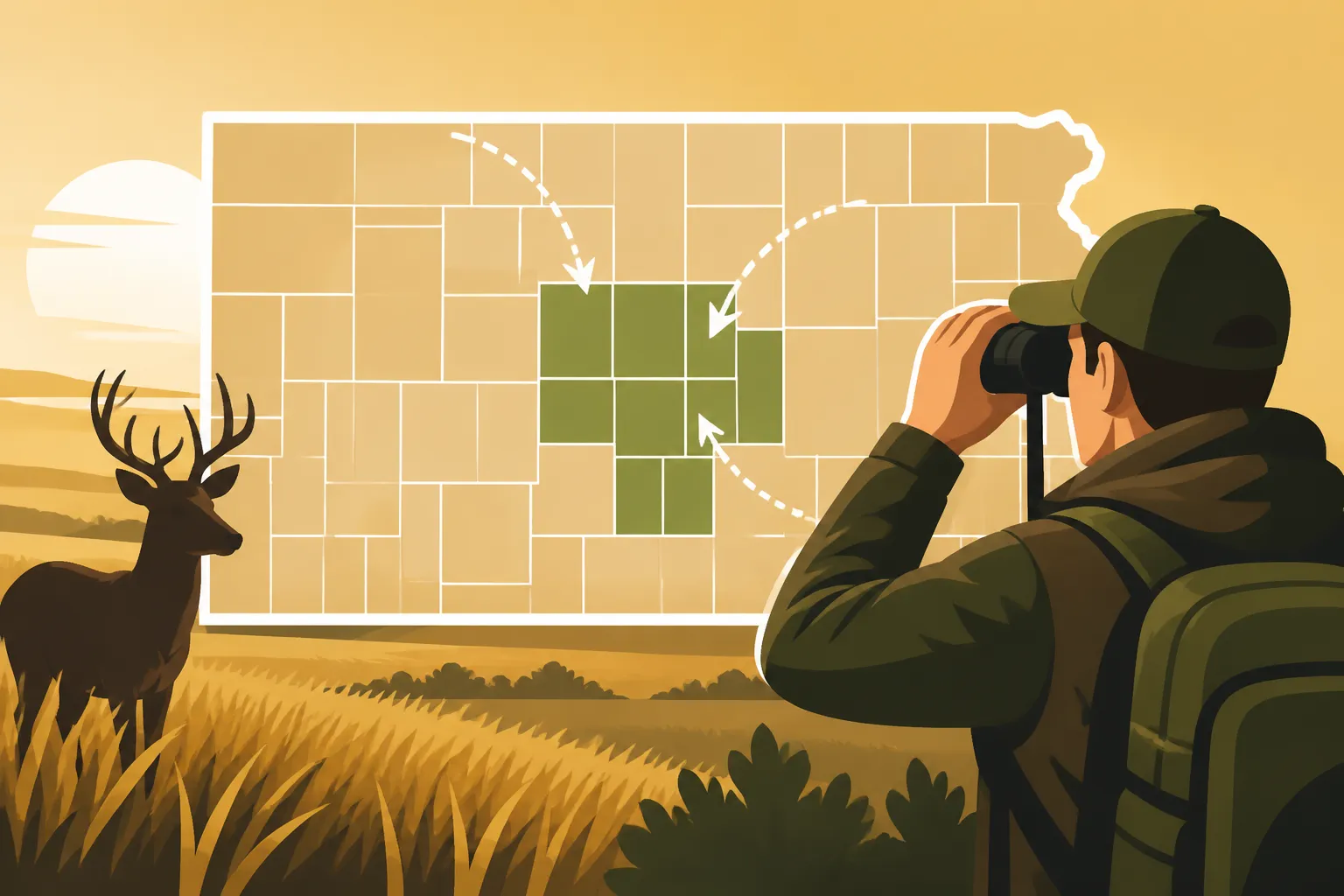
When you're selecting an adjacent unit, the first thing to consider is the physical connection. An adjacent unit, by definition, must share a border with your primary unit. This isn't just a bureaucratic rule; it's often a practical consideration for hunters. Deer don't recognize unit boundaries. They move freely across landscapes, using river bottoms, timber blocks, and crop fields that can span multiple units.
Therefore, choosing an adjacent unit that shares similar habitat characteristics and deer travel corridors can be incredibly advantageous. If your primary unit is known for its sprawling river bottom timber and agricultural fields, look for an adjacent unit that continues those same features. This increases the likelihood that deer patterns, food sources, and bedding areas you might have identified in your primary unit will extend into your secondary choice, making scouting and hunting efforts more transferable. Consider units like those along the Missouri River in eastern Kansas, where timbered river breaks often extend for miles, creating continuous habitat even across unit lines.
Factors to Consider When Choosing Your Adjacent Unit
Making an informed decision about your adjacent unit requires careful consideration of several key factors, moving beyond just geographical proximity. You need to think about the practicalities of hunting that unit if it becomes your destination.
Public Land Access and WIHA Tracts
For many non-resident hunters, access to public land is a significant concern. Private land in Kansas can be tough to gain permission on, making public access essential. When evaluating adjacent units, a deep dive into their public land offerings is critical. Look for units that boast a healthy amount of Walk-In Hunting Access (WIHA) land, state wildlife areas, or Corps of Engineers ground. The beauty of the WIHA program is that it opens up thousands of acres of private land to public hunting on a temporary basis, often in prime deer country.
Using the Kansas Walk-In Hunting Access Explained guide and the Kansas Hunting Atlas (available online and in print) is invaluable here. Pay close attention to the acreage and distribution of these public access points within potential adjacent units. A unit with a high percentage of public land, or strategically located WIHA tracts, might be a better adjacent choice than one with minimal access, even if the primary unit held more private land opportunities. The goal is to maximize your chances of having a place to hunt, regardless of where your permit lands.
Deer Population and Habitat Quality
Just because a unit is adjacent to your primary doesn't mean it has the same deer numbers or habitat quality. It's crucial to research the deer population estimates and habitat types for any potential adjacent unit. The KDWP provides data on Kansas Deer Herd Numbers by Unit, which can give you a general idea of density. Look for units that consistently have healthy deer populations and diverse habitat that supports mature whitetails.
Consider the dominant landscape features: Is it primarily agricultural with vast corn and milo fields, interspersed with small timber blocks? Or does it feature larger tracts of hardwood timber along major river systems? Does it have ample CRP (Conservation Reserve Program) ground that provides bedding and fawning cover? Understanding the habitat will help you predict deer movement and anticipate the types of tactics you might employ. For instance, if your primary unit was known for thick cedar bedding areas, an adjacent unit with similar cover might hold similar deer behavior patterns.
Draw Odds and Pressure in Adjacent Units
This is perhaps one of the most overlooked aspects of selecting an adjacent unit. Many hunters pick an adjacent unit almost as an afterthought, not realizing that adjacent units have their own draw odds and popularity. A popular primary unit might border another equally popular unit, meaning if you miss your first choice, you're likely to miss your second too.
Tools like GoHunt are incredibly useful for dissecting draw odds for every unit, not just the primary ones. You can often see historical data on how many applicants were successful for each unit, and crucially, how many permits were filled by primary choices versus adjacent choices. You're looking for an adjacent unit that has slightly better (or at least stable) draw odds, or one that historically doesn't fill up as quickly with primary applicants. This strategic play can significantly increase your chances of drawing a tag.
It's also worth considering the potential for Hunting Pressure Patterns on Kansas Public Land. If you choose a readily available adjacent unit that has good draw odds but is entirely public land, be prepared for increased hunter density, especially during prime times like the rut. Balancing draw odds with potential hunting pressure is a delicate act.
Personal Hunting Style and Preferences
Your personal hunting style should heavily influence your adjacent unit choice. Are you a dedicated bowhunter who thrives in tight timber and prefers mobile hunting tactics? Or are you a rifle hunter who prefers long-range opportunities across open crop fields? The ideal adjacent unit will offer terrain and habitat that suits your strengths.
For instance, if you excel at Kansas Whitetail Hunting Tactics Through the Rut using a bow in creek bottoms and timber, then an adjacent unit with similar terrain would be a strong contender. If you’re planning a late-season rifle hunt, access to standing crop fields or winter food sources might be paramount. Don't pick an adjacent unit just because it's geographically close if its hunting opportunities don't align with how you actually prefer to hunt. A mismatch in hunting style and unit characteristics can lead to frustration and a less enjoyable experience, even with a valid tag in hand.
Tools and Resources for Researching Units
In today's digital age, hunters have an incredible array of resources at their fingertips. Gone are the days of relying solely on paper maps and word-of-mouth. Leveraging these tools effectively can give you a significant advantage in the draw process.
Leveraging Online Mapping Tools
Modern hunting requires modern tools. Online mapping platforms like GoHunt and onX Hunt are game-changers for unit research. These tools allow you to virtually scout potential adjacent units from your home. You can analyze satellite imagery, topo maps, and public land overlays to identify key features such as timber blocks, CRP fields, water sources, and potential bedding areas. You can also clearly see property lines, which is crucial for distinguishing public from private land.
When considering an adjacent unit, use these platforms to:
- Identify Public Land: Toggle on public land layers to see exactly where WIHA, state lands, and Corps of Engineers properties are located.
- Analyze Habitat: Zoom in on satellite imagery to assess timber density, crop field types, and other habitat features. Look for transitions and edges that often funnel deer.
- Access Routes: Plan potential access routes to public land, looking for parking areas or points of entry that won't disturb deer. This is particularly important for E-Scouting Kansas Farm Country From Home.
- Terrain Features: Even in relatively flat Kansas, subtle terrain features like creek beds, drainage ditches, and small elevation changes can create natural funnels.
Analyzing KDWP Draw Statistics
The KDWP publishes annual draw statistics that are an absolute goldmine of information. These reports detail the number of applicants, the number of permits issued, and the success rates for both primary and adjacent unit choices. Diving into these statistics for several years can reveal trends:
- Unit Popularity: Which units are consistently the hardest to draw?
- Adjacent Unit Success: How often do hunters draw their adjacent unit choice for specific units?
- Point Creep: Are more preference points required each year to draw certain units?
While the data can be dense, learning to interpret these reports is vital. They provide objective, quantifiable insights into the competitive landscape of the Kansas deer draw. Don't just look at the overall success rate; dig into the nuances of how many primary choices were filled versus how many adjacent choices. This will help you identify units that are popular but still offer a decent chance as a second option.
Community Forums and Hunter Feedback
While official data is crucial, don't underestimate the value of qualitative feedback from other hunters. Online hunting forums, social media groups dedicated to Kansas hunting, and even local conversations can provide valuable insights. Hunters often share their experiences with the draw, successes and failures in specific units, and general observations about deer populations and pressure.
However, approach this information with a critical eye. Not all advice is good advice, and some hunters might exaggerate or intentionally mislead. Look for consistent themes and cross-reference anecdotal evidence with official KDWP data and your own mapping research. This "boots on the ground" perspective, even if secondhand, can offer nuances that statistics alone might miss, such as changes in access, recent EHD outbreaks, or localized pressure points. Talking to outfitters (even if you're not booking with one) about Kansas Deer Units and What Each Holds can also offer some general perspectives on unit characteristics.
Common Pitfalls to Avoid
Even with the best intentions and research, it's easy to fall into common traps when picking an adjacent unit. Being aware of these pitfalls can help you steer clear of disappointment.
Overlooking Pressure on Popular Adjacent Units
One of the biggest mistakes hunters make is choosing an adjacent unit that is almost as popular as their primary choice. It's a natural inclination to pick another "trophy unit" or a unit known for its high deer density. However, if your primary unit fills up quickly, there's a good chance that many other hunters who also didn't draw their first choice will have also listed that same popular unit as their adjacent. This creates a bottleneck, significantly reducing your chances of drawing a tag, even with preference points.
Consider this: If Unit A is the most sought-after unit, and Unit B is the second most sought-after and borders Unit A, then a large percentage of those who fail to draw Unit A will roll into Unit B. This can make Unit B nearly as hard to draw as Unit A. A smarter strategy might be to choose an adjacent unit that offers solid hunting, perhaps slightly lower deer density, or less "buzz," but still provides good habitat and opportunity. This often means sacrificing a bit of "trophy potential" for a much higher chance of actually getting a tag in hand.
Neglecting Habitat Differences
Never assume that an adjacent unit will have identical habitat and hunting characteristics to your primary choice. Kansas is diverse, and even units that share a border can have significant differences. For example, one unit might be predominantly flat farmland with small timber strips, while an adjacent unit might feature more rugged river breaks and extensive timber.
If you're primarily a big timber hunter, picking an adjacent unit that's 90% open prairie with minimal cover won't play to your strengths, even if you draw the tag. This goes back to aligning your personal hunting style with the unit's characteristics. Researching Reading Aerial Imagery for Bedding Cover in potential adjacent units is crucial to understanding these subtle yet significant habitat differences. A mismatch here can lead to a frustrating hunt, even if you successfully draw a permit.
Not Having a Backup Plan for Your Backup Plan
While it's rare for both your primary and adjacent unit choices to fail, it can happen, especially for non-residents in highly competitive units or during years with lower permit allocations. Don't let this catch you completely off guard. Have a mental "Plan C." This might involve being open to purchasing an antlerless-only permit later in the season, or exploring Public Land Deer Hunting in Kansas in units that historically have leftover permits available over the counter, though these are often for different species or limited to certain weapon types.
Being flexible and having realistic expectations is key. The goal is always to get a permit for a quality hunt, but sometimes that means adjusting your expectations if the initial draw doesn't go your way. Knowing what your options are, even if they're not ideal, prevents panic and allows you to pivot smoothly if needed.
Here's a quick comparison of hypothetical adjacent unit profiles to illustrate the thought process:
| Adjacent Unit Profile | Primary Unit A (High Density, Limited Public) | Primary Unit B (Good Public, Moderate Density) | Considerations for Adjacent Choice |
|---|---|---|---|
| Unit X | High Deer Density, Moderate Public (WIHA) | Medium Deer Density, Moderate Public (WIHA) | Popular choice, draw odds might be tough if many roll over from A. Good habitat. |
| Unit Y | Medium Deer Density, High Public (State Lands) | Low Deer Density, High Public (State Lands) | Better draw odds, but potentially more pressure on public ground. Habitat varies. |
| Unit Z | Low Deer Density, Low Public (Private Focus) | Very Low Deer Density, Very Low Public | Very good draw odds, but access could be a huge challenge. Lower success potential. |
Remember, your choice of adjacent unit is not merely a formality but a strategic move that can significantly impact your hunting season. Do your homework, use the tools available, and set yourself up for success, no matter how the chips fall in the Kansas deer draw.
Disclaimer
The information provided in this guide is for general informational purposes only and is subject to change. Hunting regulations, permit draw odds, and land access can vary significantly year to year. Always consult the most current Kansas Department of Wildlife, Parks, and Tourism (KDWP) regulations and official sources before making any hunting plans or applications.