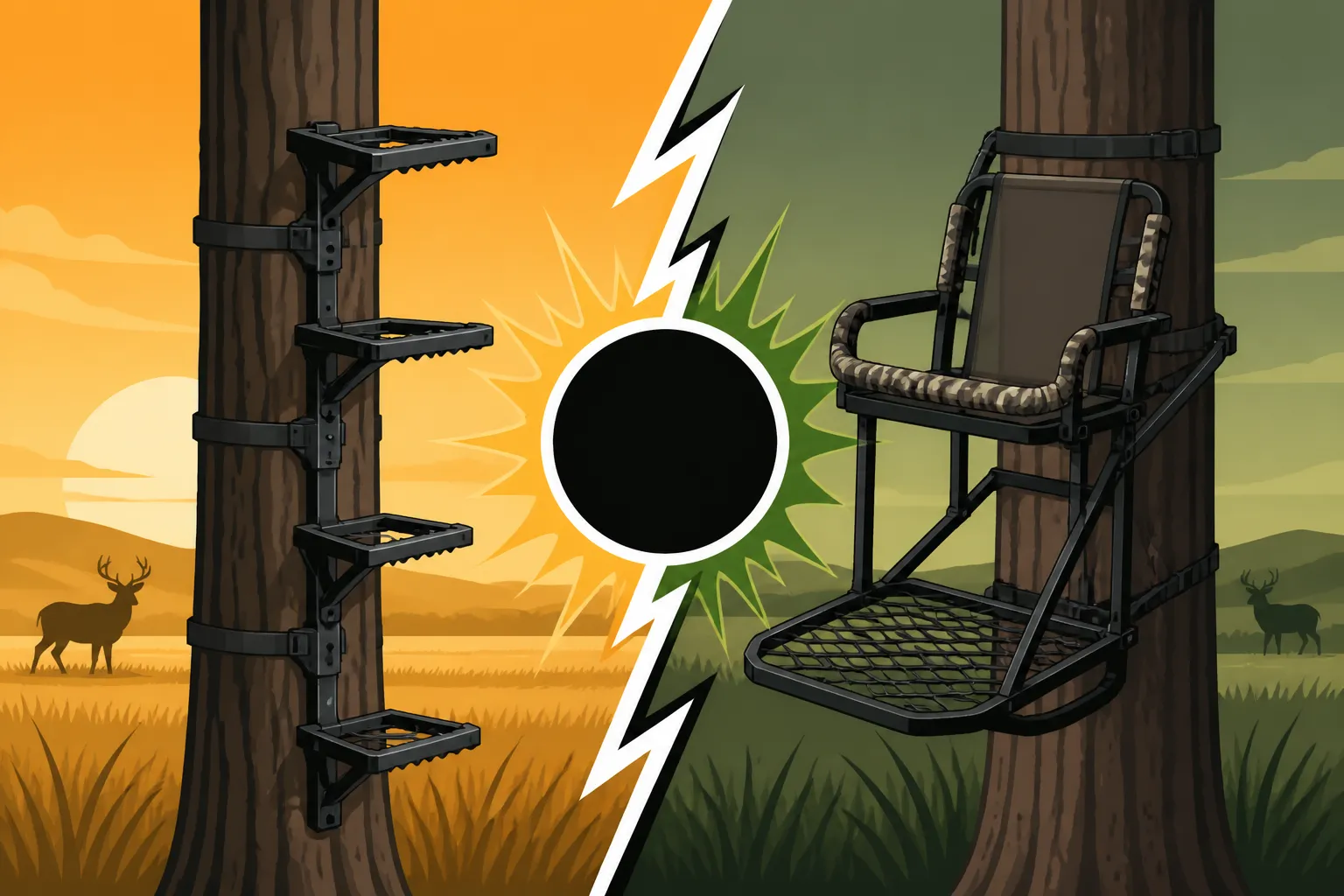
Climbing Sticks Versus a Climber
Choosing the right mobile treestand setup can feel like a never-ending debate among Kansas deer hunters. Do you prioritize ultimate flexibility in any tree, or is speed and comfort your main concern for those long sits? This guide is going to meticulously break down the pros and cons of climbing sticks versus traditional climbing stands, helping you navigate the sometimes-frustrating decision process so you can effectively get into your ideal hunting spot in the varied landscapes of Kansas.
The Versatility of Climbing Sticks and Separate Platforms
Climbing sticks, often paired with a lightweight hang-on stand or a saddle hunting setup, have become incredibly popular, especially with the rise of mobile hunting tactics. They offer a unique blend of adaptability and elevated positioning that many Kansas hunters find indispensable, particularly when chasing whitetails on diverse public land or hard-to-access private ground.
How Climbing Sticks Work in Practice
Imagine trying to scale a leaning cottonwood tree in a Kansas river bottom, or a gnarled Osage orange on a creek draw edge – that's where climbing sticks shine. These systems consist of individual sections, typically 2-4 feet long, that you attach to the tree trunk one by one as you ascend. Each stick usually features a step or two, and they secure to the tree using cam buckles, straps, or various rope systems. Once you have enough sticks to reach your desired hunting height, you either step onto a small, lightweight platform (often used by saddle hunters) or clip into a hang-on treestand you’ve brought with you. Brands like Lone Wolf Custom Gear, XOP, and Hawk Treestands offer a variety of options, from single-piece sticks to stackable or foldable designs. The beauty is that you can adjust the spacing between sticks to fit your stride, and they accommodate a huge range of tree shapes and sizes that a traditional climber would simply laugh at.
Unpacking the Advantages of Climbing Sticks in Kansas
For the Kansas hunter, climbing sticks offer some compelling benefits. First and foremost is their incredible versatility. If you're hunting timber in eastern Kansas, where oak, hickory, and walnut trees can be straight as an arrow or crooked as a dog's hind leg, sticks give you options. They don’t require a perfectly straight, limb-free trunk, meaning you can get into that "perfect" tree that offers the best cover and shooting lanes, even if it's a bit gnarly. This adaptability extends to tree diameter too; from a skinny cedar in a CRP field to a massive sycamore by the river, sticks can handle it.
Another huge plus is packability. Many stick systems are designed to nest or stack, creating a relatively compact package that straps neatly to your pack. This is invaluable when you’re hoofing it deep into a remote Walk-In Hunting Access (WIHA) tract or navigating thick creek bottom cover. When you're trying to execute a silent entry to your stand, every bit of streamlined gear matters. Being able to leave the main stand platform at the truck and only pack your sticks and saddle, for example, really cuts down on bulk and weight. Plus, if you're concerned about leaving your stand overnight on public land, many hunters will simply leave their sticks on the tree and just take their platform or saddle, or pack the entire setup out each time. Just be sure to check the specific rules for Portable Stand Rules on Kansas Public Land to ensure you're in compliance.
This mobility is key for adapting to changing deer patterns, especially during the rut or when late-season food sources shift. You can quickly pick up and move to a new location if the deer aren't showing up where you thought they'd be. Scouting with tools like GoHunt can help you identify multiple potential stand trees in different areas, allowing you to react to wind shifts or fresh sign by utilizing your versatile stick setup.
The Trade-offs: Disadvantages of Climbing Sticks
While climbing sticks are fantastic, they do come with their own set of drawbacks. One of the most common complaints is the setup time and effort involved. Attaching multiple sticks to a tree, especially in the dark before dawn, can be noisy and take a significant amount of time. Each stick needs to be securely fastened, and if you’re trying to go high, you’ll be handling several pieces. This can be particularly frustrating on a cold morning when your fingers are numb.
Another consideration is the total weight and bulk if you’re carrying a full set of sticks and a hang-on stand. While individual components are light, the sum can sometimes rival a bulky climbing stand. Furthermore, if you’re new to climbing sticks, there's a definite learning curve. Practicing in your backyard is crucial to develop a quiet and efficient climbing technique. You don't want to be fumbling around, banging metal against wood, when a mature Kansas buck is cruising through the timber at first light.
Cost can also be a factor. A quality set of climbing sticks combined with a lightweight hang-on stand or a good saddle hunting setup can sometimes be more expensive than a single, all-in-one climbing stand. It’s an investment, but many mobile hunters find the increased flexibility well worth it.
The Simplicity and Comfort of Climbing Stands
Climbing stands have been a staple for deer hunters for decades, and for good reason. They offer a self-contained, relatively simple way to get up a tree, providing a comfortable and stable platform for those long hours spent waiting on a Kansas whitetail. While they don't offer the same tree-selection freedom as sticks, their efficiency in the right situation makes them a top choice for many.
How Traditional Climbing Stands Work
A climbing stand is essentially a two-piece system: a top section (which includes the seat and armrests) and a bottom section (the platform you stand on). Both sections have a "jaws" or "cabling" system that grips the tree. To ascend, you "sit" in the top section and lift the bottom section with your feet, then "stand" on the bottom section and lift the top section. You repeat this sit-and-stand motion until you reach your desired height. Once up, the stand locks securely to the tree, providing a stable platform and a comfortable seat. Popular brands include Summit Treestands, API Outdoors, and some models from Lone Wolf that are specifically designed as climbers.
Benefits of a Climbing Stand for Kansas Deer Hunters
The primary appeal of a climbing stand is its straightforward operation and integrated comfort. Once you’re at the base of a suitable tree, a climber can often be set up and ascended faster than a stick-and-platform combination. There are fewer individual pieces to manage; it’s one self-contained unit. This can be a huge advantage when you’re trying to beat the sunrise or quickly reposition on an active deer trail.
For hunters who value comfort during those extended sits, especially during the colder late-season hunts in Kansas, a climbing stand often wins out. The built-in seats are typically more padded and spacious than what you’d find on a small hang-on stand, and the armrests provide a nice place to rest or steady your shot. This comfort can make a big difference in your ability to stay focused and still for several hours, increasing your chances of success.
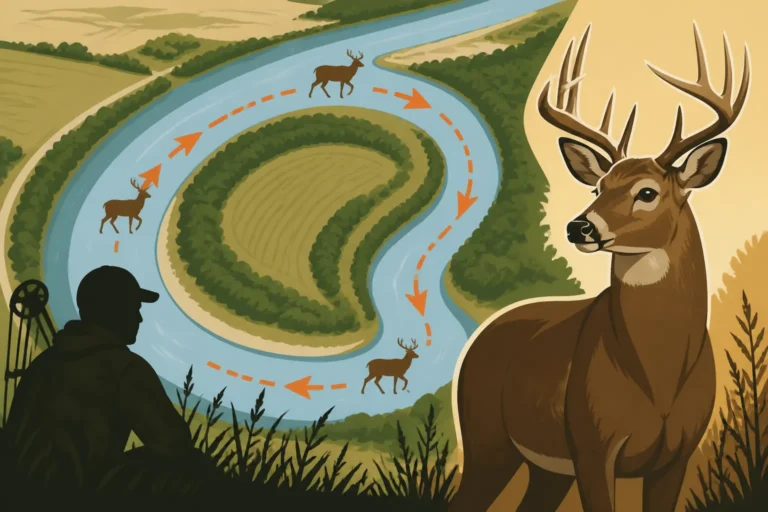
Climbing stands excel in areas with consistently straight, limb-free trees – think of many shelterbelts, timber lines bordering crop fields, or younger, straighter timber stands common in some parts of Kansas. When you find the right tree, a climber provides a rock-solid, quiet platform that feels very secure. For long-term sits where you know deer are consistently using a specific travel corridor, like a river oxbow or a pinch point, a climbing stand can be a fantastic choice. You can often get to a comfortable hunting height without breaking a sweat, allowing you to focus on the hunt.
The Limitations and Challenges with Climbers
The biggest limitation of a climbing stand is its lack of versatility in tree selection. It absolutely requires a straight, relatively limbless tree, ideally within a specific diameter range. If your hunting spot only offers leaning trees, trees with lots of lower limbs, or trees that are too small or too large, a climbing stand is useless. This can be a real problem in diverse Kansas habitats, from the thickets of eastern Kansas to the scattered timber in western river bottoms. When you're using a mapping tool like GoHunt to scout potential stand locations, you'll need to pay extra attention to tree form if you plan on using a climber.
Climbing stands can also be bulkier and noisier to carry than a compact set of sticks. While some models are designed for portability, many can feel awkward strapped to your back, especially when navigating dense brush or crossing a creek. The metal frames can clank against each other or brush, announcing your presence if you're not careful. The ascent itself can also be noisy if not executed smoothly, potentially spooking nearby deer.
Furthermore, some climbing stands can be quite heavy, making long hikes more arduous. If you plan to hike deep into public land, especially in challenging terrain, the weight of a climber might make you think twice. For mobile hunters who might only hunt a stand once or twice, the effort of getting a heavy climber into a distant spot might negate its efficiency at the tree.
Choosing the Right System for Your Kansas Hunts
The ultimate decision between climbing sticks and a climbing stand hinges on your personal hunting style, the specific terrain you'll be hunting, and what you prioritize in a treestand setup. There's no single "best" option; only what's best for your needs in Kansas.
Evaluating Your Hunting Style and Preferred Locations
Are you a "run and gun" hunter who likes to move frequently, adapting to fresh sign and changing conditions? Or do you prefer to find a killer spot and sit there for extended periods? If you're highly mobile, constantly checking new public land tracts or exploring various areas on private ground, the versatility and packability of climbing sticks paired with a lightweight hang-on or saddle system will likely serve you better. This setup allows you to quickly adjust your strategy based on factors like wind direction, changing food sources, or recent deer activity. This is especially true on large WIHA tracts where you might be Hunting Kansas Walk-In Land Without Burning It Out by staying mobile and unpredictable.
If you tend to pick a few key stand locations and hunt them repeatedly, especially on property you know well with suitable trees, a comfortable climbing stand might be more appealing. For instance, if you've identified a consistent travel corridor with a perfect, straight oak tree along a field edge, a climber can offer unmatched comfort for those all-day sits during the rut.
Tree Availability and Terrain in Kansas
Consider the type of timber you'll be hunting most often. In eastern Kansas, where hardwoods are prevalent, you might find a mix of straight and crooked trees. If you're scouting Kansas River Bottoms and Creek Draws, you'll encounter everything from massive, leaning cottonwoods to smaller, straighter sycamores and elms. Climbing sticks give you the freedom to choose almost any tree that offers good cover and shot opportunities, regardless of its shape.
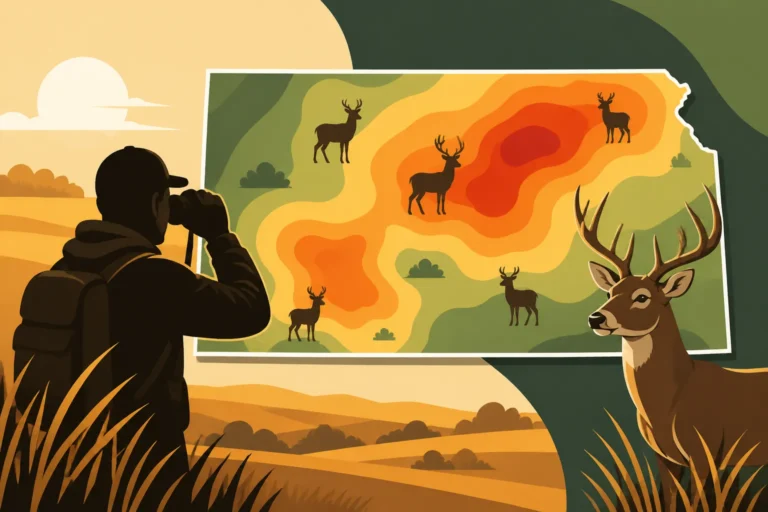
In more open, western Kansas farm country, shelterbelts and isolated timber points might offer straighter, more uniform trees where a climber could excel. However, even here, you'll find plenty of opportunities for climbing sticks when hunting smaller, more irregular trees that a climber can't handle. Use your mapping apps like GoHunt to virtually scout the timber types in your target hunting areas. Zoom in and look at the canopy – do you see dense, uniform stands of trees or more scattered, individual trees with varied forms? This reconnaissance can give you a strong indication of which stand type will be more useful.
Portability, Packability, and Weight
For many hunters, especially those relying on public access, the physical act of getting to the stand is a significant part of the hunt. Compare the weight and bulk of different systems. A lightweight set of aluminum climbing sticks (e.g., three or four sections) plus a minimalist hang-on stand or saddle is often lighter and less cumbersome to carry than many climbing stands. This matters when you're hiking a mile or more through tall CRP grass or over uneven creek banks.
Consider how each system packs. Do the sticks nest together neatly? Does the climbing stand collapse flat? Try loading both types of systems onto your pack at home and walking around. How do they feel? What makes the least noise? The quieter and more comfortable your walk-in, the better your chances of making a stealthy entry, which is crucial for deer that are already pressured.
Here's a quick comparison table to help visualize the differences:
| Feature | Climbing Sticks (with Hang-on/Saddle) | Climbing Stand |
|---|---|---|
| Tree Versatility | High (handles crooked, leaning, varied diameter trees) | Low (requires straight, limbless trees within specific diameter) |
| Setup Time | Moderate to Long (multiple pieces to attach) | Fast (once at suitable tree, integrated system) |
| Packability | Generally better (can be more compact/lighter as components) | Can be bulky and awkward for long hikes |
| Comfort | Depends on hang-on or saddle (often less padded) | Generally high (built-in, padded seat, armrests) |
| Stealth (Carry) | Can be very quiet if packed well, fewer metal-on-metal sounds | Can be noisy if not secured tightly, metal frame |
| Stealth (Climb) | Can be quiet with practice, some strap noise | Can be noisy with initial bite, scraping, and movement |
| Total Weight | Varies, often lighter with minimalist setups | Varies, can be heavier due to integrated frame |
| Cost | Can be higher for quality sticks + stand/saddle | Often less than a high-end stick/saddle combo |
| Best For | Mobile hunters, diverse timber, public land | Less mobile hunters, consistent straight timber, comfort |
Maximizing Your Chosen System in the Kansas Woods
Regardless of whether you lean towards the flexibility of climbing sticks or the comfort of a climbing stand, there are always ways to optimize your setup and improve your chances of success in the field.
Practice, Practice, Practice for Stealth and Efficiency
This cannot be stressed enough. Take your chosen system to your backyard and practice setting it up and climbing multiple times in daylight. Get comfortable with the movements. Learn to be efficient and, most importantly, quiet. You want to be able to ascend and descend in the dark with minimal noise and fuss. This practice will build muscle memory, reduce your setup time, and minimize the chances of making a sound that carries far through the crisp Kansas morning air.
For climbing sticks, experiment with different stick spacing to find what works best for your stride. For climbing stands, practice the sit-and-stand motion until it feels fluid and silent. Remember, any metallic scrape or loud strap snap can alert deer to your presence, so smooth, deliberate movements are key.
Emphasize Safety First, Always
No matter your chosen method, always, always wear a full-body safety harness from the moment your feet leave the ground until they touch back down. This is non-negotiable. Inspect your straps, ropes, and cables before every hunt for wear and tear. Check the tree you plan to climb for dead limbs, loose bark, or anything that could compromise your safety. The thrill of the hunt is never worth risking your life or serious injury. Before heading out, use your GoHunt app to really scout those potential treestand locations, identifying the safest trees with strong, healthy trunks, and planning your Access Routes That Do Not Bump Deer.
Scent Control and Quiet Movement
Both systems require diligence in scent control and quiet movement. Any amount of human odor left on your stand or sticks, or emitted during your climb, can tip off deer. Use scent-eliminating sprays, wash your hunting clothes in scent-free detergent, and store them properly. When packing your gear, ensure nothing rattles or clanks as you walk. Foam silencers, tape, or bungee cords can help quiet down metal components.
Consider the prevailing wind direction for your chosen stand location. If you’re hunting a river bottom, understanding Wind and Thermals on a River Bank is crucial for proper stand placement, regardless of your climbing method. A perfectly executed climb can still be ruined if your scent is blowing directly into a deer's bedding area.
Whether you choose sticks or a climber, remember that every successful Kansas hunt starts with thorough preparation, which tools like GoHunt can greatly assist with by helping you scout and plan. Investing time in understanding and mastering your gear will pay dividends when that trophy buck steps into range. And if you're thinking about Mobile Hunting With a Saddle in Kansas, climbing sticks are almost certainly going to be your go-to climbing aid.
Disclaimer
The information provided in this guide is for general informational purposes only and does not constitute professional advice. Always consult official Kansas Department of Wildlife, Parks and Tourism (KDWPT) regulations before hunting and ensure you are using all hunting equipment safely and as intended by the manufacturer. Hunting inherently carries risks, and safety should always be your top priority.