Grunt Calls That Work in the Pre-Rut
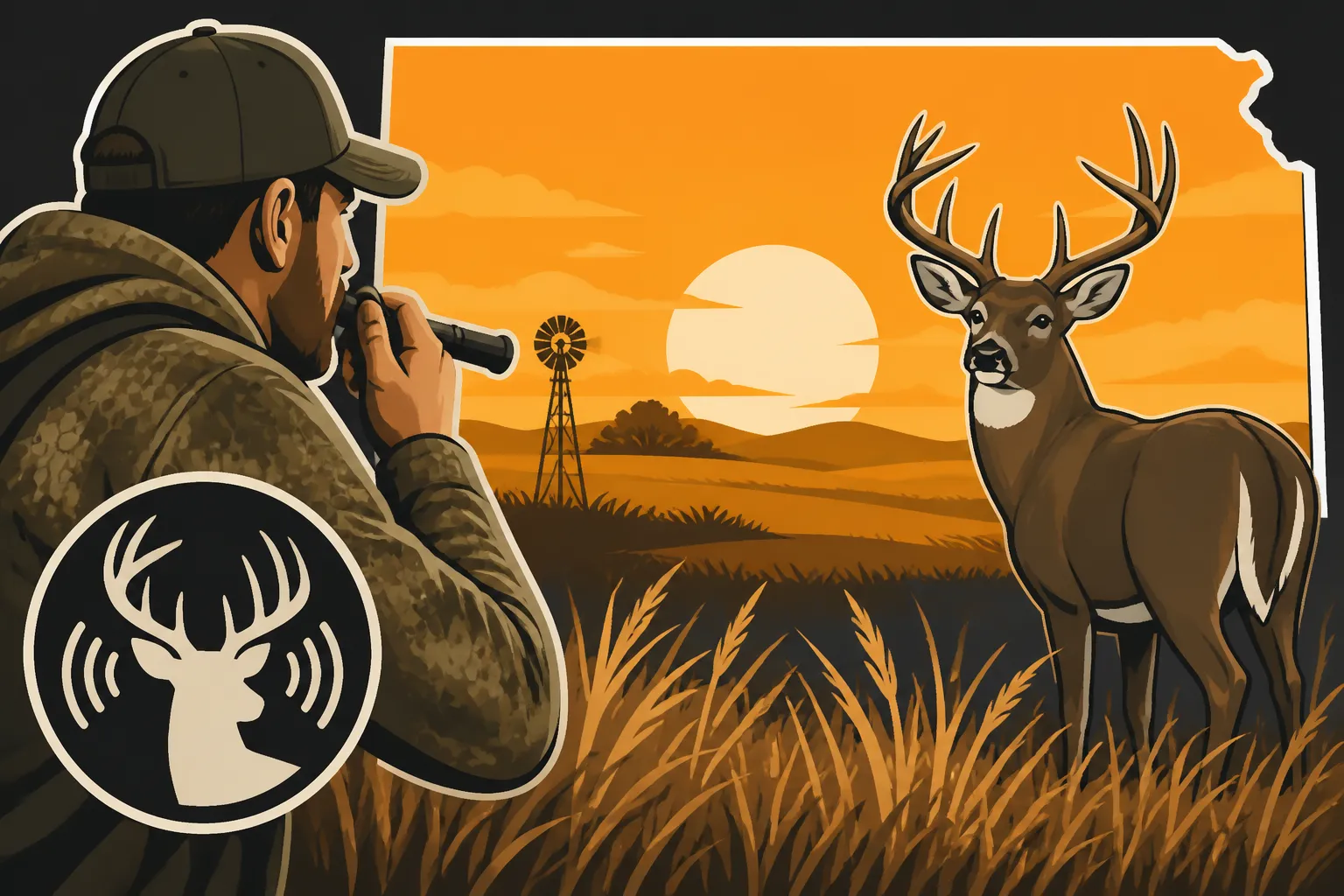
Trying to dial in your deer calling in the Kansas pre-rut can feel like speaking a foreign language. You’ve probably spent hours in the stand, blowing into a grunt tube, only to watch a solid buck walk right by, seemingly unconcerned. It's frustrating when you know deer are vocal, but getting them to respond to you is a whole different ballgame. This guide is all about cutting through that noise and helping you understand exactly which grunt calls work best during the intense, exciting period leading up to the main rut, giving you actionable strategies to get those bucks responding.
Understanding the Pre-Rut in Kansas Deer Behavior
The pre-rut is arguably one of the most exciting times to be in a treestand or ground blind in Kansas. It's that sweet spot just before the does are actively receptive, but the bucks are already feeling the urge to find them and assert their dominance. If you hit it right, your calling can be incredibly effective.
The Shifting Dynamics of Deer Behavior
In Kansas, the pre-rut typically kicks off in late October, though you'll see signs building even earlier. This isn't the chaotic, run-and-gun frenzy of the full rut where bucks are blindly chasing anything that moves. Instead, it’s a period characterized by increased buck activity as they begin to cruise more widely, laying down rubs and scrapes, and subtly testing the waters with does. Their primary motivations are twofold: first, to establish a pecking order among other bucks in their area, and second, to locate and "stage" themselves near groups of does that will soon come into estrus.
You'll notice bucks moving during daylight more frequently, often on the edges of cover or along established travel corridors. They're not just feeding anymore; they're actively searching and surveying their territory. This heightened state of awareness and eagerness makes them particularly susceptible to certain vocalizations. They're curious, they're dominant, and they're looking for competition or companionship. It's during this phase that understanding the nuanced language of deer becomes crucial for a hunter.
Why Grunt Calls Become More Effective
During the full rut, a buck might ignore a grunt call because he's already locked onto a hot doe, or he's too busy running for his life from another buck. But in the pre-rut, things are different. Bucks are in an exploratory phase; they're actively seeking out other deer. A well-placed grunt call at this time can tap into a buck's inherent curiosity or his territorial instincts. If he hears what sounds like another buck, especially one encroaching on his turf or near a doe group, he's far more likely to investigate.
The effectiveness also stems from the bucks' need to establish dominance. A grunt can sound like a challenge, or simply like another buck in the area that he needs to check out. This is a prime time for bucks to respond to these sounds because the stakes are high, but not yet so high that they're completely abandoning caution. They're still smart, but they're driven by powerful hormones. It's a delicate balance, but when timed and executed correctly, a grunt call can be the exact trigger you need to bring a wary buck into bow range or closer for a rifle shot. This is why tactics for Hunting the Kansas Pre-Rut in Late October often heavily rely on vocalizations.
The Art and Science of Pre-Rut Grunt Calls
Mastering grunt calls for the pre-rut isn't just about blowing into a tube; it's about understanding the subtle language of deer and mimicking it authentically. Different grunts convey different messages, and knowing which one to use, and when, is key.
The Different Types of Grunts and Their Meanings
Deer vocalizations are surprisingly complex, and grunts are no exception. During the pre-rut, a buck might use several types of grunts, each with a specific intent.
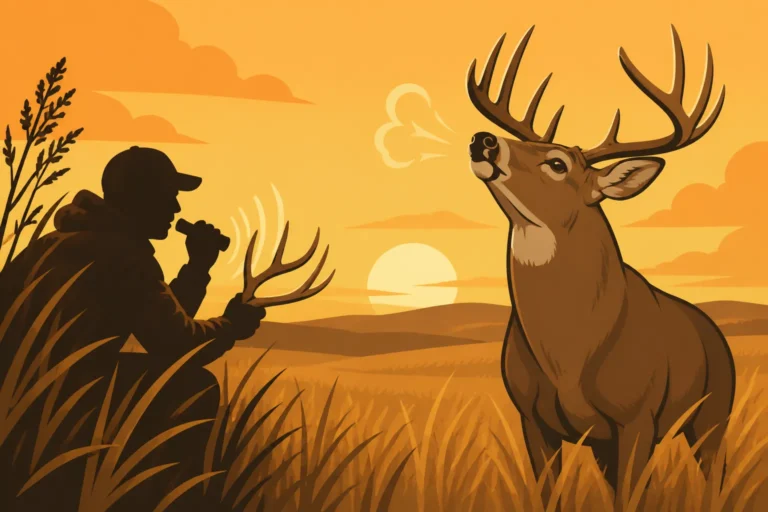
- Social Grunts (Contact Grunts): These are usually soft, almost guttural single grunts. Think of it as a deer saying, "Hey, I'm here. Who else is around?" Bucks use these to communicate their presence to other deer, both does and other bucks. In the pre-rut, these are excellent for getting a distant buck's attention without being overly aggressive. If you see a buck cruising far off, a soft social grunt can pique his curiosity and make him look your way, often leading him to walk closer to investigate the source. Many hunters find adjustable calls like the Primos Hardwood Grunter or the Flextone Buck Collector to be versatile enough to produce these softer sounds.
- Tending Grunts: These are typically a series of short, choppy grunts, often heard when a buck is actively trailing or "tending" a doe that is close to estrus. They're excited, focused, and trying to keep the doe close. Hearing these often signifies that a hot doe is nearby, and another buck might respond out of competition. In the pre-rut, a buck might make these grunts even if a doe isn't fully receptive, but he's "checking" her. Mimicking tending grunts can draw in a rival buck looking to cut in on the action. These are usually a bit louder and more rapid than social grunts.
- Aggressive Grunts (Deep Grunts, Roars): These are longer, deeper, and often louder grunts that signal dominance or challenge. A buck will use these when confronting another buck, trying to run off a younger rival, or asserting his presence. In the pre-rut, bucks are testing the waters, so an aggressive grunt can provoke a response from a dominant buck. However, use these sparingly and with caution, as a non-dominant buck might be intimidated and retreat. These calls are best used when you've spotted a buck that appears to be a good mature animal, or one that is already showing aggressive body language. A call like the Knight & Hale Da'Bone Grunt Call, known for its deep tones, can be effective here.
It's not just about the type of grunt, but also the context. A well-known outdoor outfitter like GoHunt offers resources and scouting tools that can help you understand deer movement patterns in specific areas, which in turn can inform your calling strategy. For example, knowing that bucks are frequently traveling through a particular Terrain Funnels That Work Without Hills could indicate a good spot to deploy a range of grunt calls.
Perfecting Your Calling Sequence and Volume
Once you understand the types of grunts, the next step is to deliver them effectively. This is where the art comes in.
- Varying Sequences: Don't just blow a single grunt aimlessly. Think about what a real deer sounds like. A typical sequence might be 1-3 soft social grunts, followed by a pause of 10-30 seconds, and then repeating. If you see a buck actively moving away or looking your way but not committing, you might try a short, sharp tending grunt sequence. If you're really trying to challenge a dominant buck, a series of 2-3 aggressive grunts, maybe even followed by a snort-wheeze, can be potent. The key is variety and responsiveness to the deer's reaction.
- Ideal Volume and Cadence: This is critical and depends heavily on your environment and the wind. In thick timber or brushy creek bottoms, a softer volume is often best, as deer can be very close. In wide-open Kansas farm country with a strong breeze, you'll need to increase your volume to carry the sound. Always try to call with the wind, letting your sound carry towards where you expect deer to be. Avoid calling too loudly if deer are close, as it can sound unnatural and spook them. Pay attention to the cadence – most grunts aren't perfectly uniform. Listen to real deer or high-quality recordings to get a feel for the natural rhythm.
- Repetition and Patience: Don't call too frequently. A few grunts every 15-30 minutes is usually plenty. Give the deer time to hear you, process the sound, and decide to investigate. Overcalling is one of the quickest ways to ruin a setup. Patience is a hunter's best friend, especially when calling.
Here’s a quick overview of pre-rut grunt types:
| Grunt Type | Primary Meaning | Pre-Rut Application | Volume/Cadence | Best Use Case |
|---|---|---|---|---|
| Social/Contact | "I'm here, who else is around?" | Attracting curious bucks, getting distant deer to look | Soft, single grunts | Cruising bucks, uncertain deer movement |
| Tending | "I'm following a doe." | Provoking competition, signaling a nearby hot doe | Moderate, choppy series | Bucks trailing does, drawing in rivals |
| Aggressive/Deep | "This is my territory/doe!" | Challenging dominant bucks, asserting presence | Loud, deep, sustained | Dominant bucks, visible rivals, high-stakes scenarios |
Tactical Application and Common Mistakes to Avoid
Knowing how to grunt is one thing; knowing when and where to grunt is another entirely. The tactical side of calling makes all the difference between success and a silent, lonely sit.
Situational Grunting: When and Where to Call
The beauty of the pre-rut is that bucks are on the move, but their patterns aren't always predictable. This means you need to adapt your calling to the specific situation.
- Calling to Cruising Bucks: This is a classic pre-rut scenario. You're set up near a travel corridor, a Fence Crossings Deer Use Every Day, or a transition line between cover and open fields, like those found around Milo and Corn Stubble Deer Patterns. A buck appears in the distance, slowly working his way, but not directly towards you. Start with a soft social grunt. Just enough to get his head up. If he looks your way, pause. If he resumes his course, give another soft grunt, slightly louder. The goal is to make him think there's another deer moving through his area, ideally one he needs to check out. Avoid aggressive grunts here unless he's ignoring you entirely or already acting dominant. If he commits and starts walking towards you, sometimes it's best to stop calling and let him come.
- Bucks in Thick Cover: Often, a mature buck will stick to dense cover, like cedar thickets or river bottoms, even when cruising. You might hear him moving but can't get a visual, or you spot a subtle movement in the brush. In these situations, your grunts need to penetrate the foliage but still sound natural. A slightly louder tending grunt or a short, sharp aggressive grunt can often pull a reclusive buck out into a shooting lane. He might be hidden, but he's still listening. This is where understanding Reading a Kansas Creek Bottom for Deer Sign can help you predict where a buck might be lurking. Remember to position yourself downwind or crosswind so your scent doesn't give you away if he approaches.
- Over Longer Distances: When you're hunting vast, open Kansas landscapes, your calls need to carry. This is where a slightly louder grunt can be effective. Start with a series of 2-3 medium-volume social grunts, then wait. Use binoculars to scan the horizon and distant cover for any reaction – a raised head, a change in direction. If nothing, wait 15-20 minutes and repeat. Be realistic about what a deer can hear; a strong wind can drown out even your loudest efforts.
Integrating Other Vocalizations and Scents
While grunts are the star of the show during the pre-rut, other vocalizations and subtle scent strategies can complement your calling efforts, particularly when you're targeting those cagey Kansas whitetails.
- Snort-Wheeze for Aggression: If you've got a dominant buck hung up, or one that's acting particularly bold, a snort-wheeze can be the ultimate challenge. This is a very aggressive sound that bucks use to warn off rivals. It says, "I'm coming for you." Use it only when you're confident the buck is mature and dominant enough to react aggressively rather than flee. Combining a series of aggressive grunts with a Snort-Wheeze on a Cruising Buck can sometimes be the knockout punch. Be prepared for a fast, direct approach when you use this call.
- Doe Bleats (Subtly): While grunts target bucks, a very soft, inquisitive doe bleat can sometimes calm a buck down or make him think there's a doe nearby that might be interested. This is particularly useful if a buck seems wary or is slowly circling downwind. The bleat signals a non-threatening presence. Avoid using estrus bleats too much in the pre-rut, as most does aren't hot yet, and it can sound unnatural. A simple, questioning bleat is often all you need.
- Mock Scrapes with Scent: Although not a vocalization, a well-placed mock scrape with some dominant buck urine or estrus scent can act as a visual and olfactory "call." Bucks are actively making and checking scrapes in the pre-rut. Setting up your stand near a fresh mock scrape, especially one with a licking branch, and then using your grunt calls can create a highly realistic scenario. Many seasoned hunters combine visual attractants like scrapes with auditory ones like grunts to paint a complete picture for an approaching buck.
Avoiding Overcalling and Spooking Deer
The biggest mistake hunters make with grunt calls is overdoing it. Deer are wild animals, and unnatural sounds or excessive calling will often lead to a negative reaction.
- Too Much, Too Loud: Imagine someone yelling at you constantly from the woods. You'd likely get suspicious or annoyed. The same goes for deer. Blowing your grunt call every few minutes, especially loudly, sounds unnatural and screams "hunter." Stick to calling infrequently, giving ample time between sequences for a deer to respond. Also, match your volume to the conditions. A soft call can be more effective than a blaring one.
- Calling at the Wrong Deer: Not every buck will respond to every call. A young spike or fork horn might be intimidated by an aggressive grunt and disappear. Likewise, an already spooked buck won't suddenly become brave because you blew a contact grunt. Pay attention to the deer's body language. If a buck hears you and looks away, he might have caught your movement or scent. If he ignores you completely after several attempts, he might be on a mission or simply not interested. Cut your losses and save your calling for another opportunity.
- Forgetting Scent Control: Grunt calls bring deer closer, sometimes very close. This makes scent control absolutely paramount. If a buck comes in, circles downwind, and catches your human odor, all your calling efforts will have been for naught. Shower with scent-free soap, use clean hunting clothes stored in airtight containers, and play the wind religiously. Even the best grunt call in the world can't overcome a direct wind shot into a deer's nose. For Best Stand Locations in Flat Farm Country, wind direction is often the single most critical factor, regardless of your calling technique.
Choosing the Right Grunt Call for Kansas Conditions
With so many grunt calls on the market, picking the right one can be overwhelming. But understanding a few key features and the importance of practice can make the decision much simpler and improve your success rate in Kansas.
Adjustable vs. Fixed Tone Calls
Grunt calls generally fall into two categories: adjustable and fixed tone. Each has its advantages and disadvantages, and what works best for you often comes down to personal preference and hunting style.
- Adjustable Tone Calls: These calls typically feature a rubber hose or a slider mechanism that allows you to change the pitch and tone of the grunt. By sliding the O-ring or extending the hose, you can easily switch between a higher-pitched fawn or doe bleat, a standard buck grunt, or a deep, guttural mature buck grunt.
- Pros: Versatility is their biggest asset. You can produce a wide range of deer vocalizations from a single call, making it a great all-in-one option. This is especially helpful if you want to switch from a social grunt to a more aggressive tending grunt quickly. Many hunters appreciate the flexibility to mimic different-sized deer or respond to various scenarios without fumbling for multiple calls. They are often very user-friendly, allowing for quick adjustments even with cold hands or gloves.
- Cons: Some adjustable calls can be a bit bulkier than fixed-tone calls. Also, if the O-ring or slider isn't maintained, it can sometimes get stuck or produce inconsistent sounds. In freezing Kansas December mornings, parts can sometimes stiffen, making adjustment difficult. However, popular brands like Primos and Flextone offer robust designs that largely mitigate these issues. For hunters who want to scout effectively and need reliable gear, resources from GoHunt often include detailed reviews of different call types, helping you select one that stands up to the demands of Kansas hunting.
- Fixed Tone Calls: These calls are designed to produce a specific type of grunt, usually a buck grunt, with a consistent tone. They might have a reed system that produces a medium or deep grunt, and that's their primary function.
- Pros: Simplicity and reliability are the hallmarks of fixed-tone calls. There are no moving parts to break or adjust, making them incredibly durable and consistent. If you find a fixed-tone call that perfectly mimics the mature buck grunt you want to replicate, it can be exceptionally effective. They are often more compact and lighter, making them easy to carry.
- Cons: Their lack of versatility means you might need to carry multiple calls if you want to produce different vocalizations (e.g., a separate doe bleat). If the fixed tone isn't quite right for the specific buck you're targeting, you're out of luck. Some hunters also find them less forgiving if their breath control isn't perfect, as the tone can't be adjusted on the fly.
Ultimately, the best choice depends on your hunting style. If you prefer a minimalist approach and a dedicated buck grunt, a fixed-tone call might be ideal. If you want maximum flexibility and the ability to adapt to any scenario, an adjustable call is likely your best bet. Many hunters carry a combination of both for maximum versatility, such as a favorite fixed-tone grunt call alongside an adjustable doe bleat.
Practice Makes Perfect: Realistic Sounding Grunts
Having the best grunt call in your pack won't do you any good if you can't make it sound like a real deer. Practice is absolutely crucial for becoming an effective caller.
- Listen to the Masters: The best way to learn what a realistic grunt sounds like is to listen to real deer. There are countless videos online featuring actual deer vocalizations. Spend time listening to different types of grunts – social, tending, aggressive – and try to discern the nuances in their pitch, duration, and cadence. You can also listen to recordings of well-known hunters or professional callers to get a feel for what successful calling sounds like. The goal isn't to mimic a perfect recording, but to capture the essence of a natural deer sound.
- Practice in Various Conditions: Don't just practice in your living room. Take your call outside and try it in different environments. Practice in open fields, in dense timber, and on windy days. This will help you understand how sound carries and how to adjust your volume and technique accordingly. It's also a great way to get comfortable with your call in conditions similar to what you'll encounter during a real hunt, such as during Cold Weather Stand Clothing in the late season.
- Record Yourself: One of the most effective ways to improve is to record your own calling sessions and listen back critically. Does it sound natural? Is the pitch consistent? Is your cadence believable? You'll often catch subtle flaws you wouldn't notice while simply blowing the call.
- Maintenance Matters: Keep your calls clean and in good working order. Reeds can get sticky, O-rings can dry out, and tubes can get clogged with debris. Regularly clean your calls according to the manufacturer's instructions. A well-maintained call will produce consistent, realistic sounds, while a neglected one can sound squeaky or unnatural, instantly alerting deer to your presence.
By dedicating time to practice and understanding the subtle art of deer vocalizations, you'll significantly increase your chances of fooling a wise Kansas whitetail during the pre-rut.
Disclaimer
Please be aware that hunting regulations and seasons can change. Always consult the latest Kansas Department of Wildlife, Parks, and Tourism (KDWPT) regulations before heading into the field. This guide offers tactical advice and does not supersede official legal requirements. Stay safe and hunt ethically.