Working Pheasant Fields Without a Dog
Hunting pheasants in Kansas is an incredible experience, but for many of us, the dream scenario often involves a trusty bird dog by our side. The reality, however, is that not everyone has access to a well-trained retriever, and that can feel like a major handicap when you’re staring down a vast field of prime pheasant cover. It’s frustrating to know the birds are there, but feel ill-equipped to get them into the air or, even worse, to find them after a successful shot. This guide is all about empowering you to successfully hunt Kansas pheasants, even when you're working the fields solo or with human companions, without the aid of a canine.
The Unique Challenges of Dogless Pheasant Hunting
Let's be honest, hunting pheasants without a dog puts you at a distinct disadvantage, but it's not insurmountable. The key is understanding why a dog is so effective and then developing strategies to compensate for those canine superpowers. Without a dog's nose, speed, and tireless drive, you become the primary scout, flusher, and retriever, which demands a different approach entirely.
Understanding the Pheasant's Defensive Playbook
Pheasants are masters of evasion, and they don't play fair. Their primary defense isn't flying; it's running. These birds can sprint through dense cover at incredible speeds, often leaving a human hunter in their dust long before they're willing to flush. They'll use every inch of available vegetation, from thick stands of milo to tangled plum thickets, to weave and hide, putting distance between themselves and perceived threats. This innate behavior is precisely why a dog's ability to lock onto scent and follow a running bird's trail is so invaluable.
When approached, a pheasant will typically begin to run, trying to sneak away unseen. If cornered or pressured intensely, they might hunker down, holding tight in hopes you walk right past them. It's only as a last resort, when they feel their hiding spot is completely compromised, that they'll erupt into the air with that heart-stopping cackle and powerful wing beats. Understanding this sequence—run, hide, flush—is critical for the dogless hunter, because it dictates how you need to approach and push cover to force that flush within shooting range.
The Scent and Flushing Disadvantage
The most obvious disadvantage without a dog is the lack of a powerful nose to detect birds. Dogs pick up residual scent left by pheasants as they move through cover, allowing them to pinpoint hidden birds even when visual cues are absent. This means they can flush birds that a human hunter would simply walk past. For us dogless hunters, this translates to a much higher reliance on visual signs, knowledge of pheasant habits, and methodical grid patterns to cover ground thoroughly.
Furthermore, a dog's presence itself is a major flushing tool. Their unpredictable movements, speed, and scent often cause pheasants to flush much sooner than they would for a slower, larger human. Without that constant, moving threat, pheasants are much more likely to sit tight or run just ahead of you. This means you need to adopt a more aggressive, yet controlled, pushing style to get birds into the air within effective shotgun range, especially when you consider factors like wind and cover density.
The Retrieval Dilemma
Perhaps the most heartbreaking challenge for a dogless hunter is the retrieval of downed birds. A pheasant, especially a big rooster, can be tough to find in thick cover even after a clean shot. They'll often sail a distance before falling, and then the dense grass or milo stalks can swallow them whole. A good retriever marks the fall, follows the bird, and brings it back efficiently, often recovering birds that would otherwise be lost.
Without a dog, you bear full responsibility for marking the exact spot a bird goes down and then systematically searching that area. This requires sharp eyes, a good sense of direction, and discipline to not immediately rush to the spot but rather to mentally grid the area. Losing a downed bird isn't just a missed meal; it's a profound ethical failure for any hunter. Therefore, maximizing your chances of recovery becomes a central theme in all dogless pheasant hunting tactics.
Strategic Scouting: Finding Fields You Can Work
Success in dogless pheasant hunting starts long before you ever step foot in a field. Smart scouting can make or break your hunt, guiding you to areas that are not only likely to hold birds but are also huntable without a canine companion. Kansas offers vast opportunities on both private and public land, including numerous Kansas Walk-In Hunting Access Explained (WIHA) tracts, but knowing which ones to target is key.
E-Scouting for Prime Dogless Opportunities
Your computer or smartphone is your first and most powerful scouting tool. Start by pulling up aerial imagery and digital plat maps. Services like the Kansas Department of Wildlife, Parks, and Tourism (KDWP) online hunting atlas, or premium mapping platforms such as GoHunt, are indispensable. GoHunt's detailed satellite imagery and property line overlays allow you to identify promising cover types like CRP grass, milo stubble, wheat fields, shelterbelts, and creek bottoms. When you're looking at potential pheasant fields, you want to identify edges, corners, and areas where cover changes abruptly. These are often pinch points where pheasants naturally funnel.
Pay close attention to field size and shape. Long, narrow strips of cover, or fields with distinct boundaries like a road, creek, or timber edge, are much easier to push effectively than a vast, unbroken square mile of grass. Look for strips of cover next to standing water sources, or areas with diverse habitat components. Also, consider the accessibility of these fields. Can you park close by without disturbing birds? Are there clear entry and exit points that allow for a strategic approach? E-scouting can save you hours of wasted effort walking barren or unhuntable ground.
On-the-Ground Assessment: Reading the Cover
Once you've identified some promising spots on your digital maps, it's time for some boots-on-the-ground recon if possible. Before the season, drive or walk the perimeter of potential fields. Look for actual bird sign: tracks in dusty roads, droppings, or even shed feathers. More importantly, assess the density and height of the cover. Is it so thick you can't push through it effectively or see a flushing bird? Is it too sparse to hold birds? You're looking for that sweet spot – cover dense enough to offer protection but open enough for you to navigate and get a shot off.
Consider wind direction during your assessment. Pheasants typically flush into the wind, so understanding the prevailing winds in an area can inform your approach. Pay attention to escape routes pheasants might use. Do they have easy access to heavy timber, dense plum thickets, or deep draws where they can run indefinitely? If so, you might need to adjust your strategy or choose a different field altogether. The goal is to minimize their escape options and maximize your chances of a flush.
Key Cover Types to Prioritize
Kansas offers a fantastic diversity of habitat that pheasants love. As a dogless hunter, certain types of cover will be more forgiving and productive for you. CRP (Conservation Reserve Program) grasslands are often gold mines, especially those with varying grass heights and some interspersed weeds or brush. These fields can hold a lot of birds, but they require a methodical approach. Focus on the edges first, then work into the interior.
Milo and corn stubble fields, particularly after harvest, are another prime target. Pheasants love the leftover grain and the overhead cover. For dogless hunting, Walking Milo Rows for Pheasants can be incredibly effective, using the rows themselves to guide your push. Shelterbelts and timber points are also crucial. These linear strips of trees and shrubs provide vital winter cover and loafing areas, and they act as natural travel corridors. When pushing these areas, focus on the ends and where the cover transitions to open fields. Don't forget about Working Grass Edges Without a Dog where fields meet roads, creeks, or fence lines, as these are often preferred pheasant travel lanes and holding spots.
| Cover Type | Dogless Huntability | Best Approach | Considerations |
|---|---|---|---|
| CRP Grass | Medium-High | Grid pattern, slow and methodical, focus on varying densities, walk edges first. | Can be very dense, making bird recovery difficult. Requires stamina. |
| Milo/Corn Stubble | High | Walk rows, push towards an end or blocking hunter, target standing stalks. | Excellent visibility, birds might run far down rows. |
| Shelterbelts/Timber | Medium-High | Push from one end to the other, focus on corners and transition zones. | Birds can escape quickly into thick timber. |
| Plum Thickets | Low-Medium | Best for blocking/driving, very dense and difficult to push solo. | Very low visibility, difficult to shoot. Good as escape cover. |
| Wheat Stubble | High | Fast walk, focus on slight depressions or remaining stubble piles. | Birds might be spread out, less dense cover, good visibility. |
| Creek Bottoms (grassy) | Medium | Push downstream/upstream, focus on bends, dense grass pockets along the banks. | Can be muddy, uneven terrain. Watch for water hazards. |
Effective Walking Patterns for Solo and Small Group Hunters
Without a dog to do the heavy lifting of flushing and retrieving, your walking strategy becomes paramount. This isn't just a leisurely stroll; it's a tactical advance designed to put pheasants in the air within range and maximize your chances of recovery.
The Art of the Controlled Push
When hunting alone, a controlled push means methodically covering ground, trying to anticipate where a pheasant might run or hide. Start at one end of a field and walk in a deliberate, slightly zigzag pattern, scanning the cover ahead and to your sides. Don't walk too fast; pheasants will simply run ahead of you. A slow, steady pace, with occasional pauses, can often make a nervous bird hold tight or flush unexpectedly. Think of yourself as a slow-moving, wide net, trying to scoop up birds.
For those hunting with a small group of 2-3 people, the controlled push transforms into a much more effective strategy. One or two hunters, the "pushers," walk in a line across the field, spaced about 20-30 yards apart, while a "blocker" positions themselves at the end of the field or along a known escape route. The pushers move steadily, trying to keep a straight line, forcing birds towards the blocker. The blocker's role is critical; they need to be vigilant and ready for birds attempting to run out the end of the field or flush prematurely. This kind of teamwork makes fields that would be impossible for a solo hunter much more manageable. This is especially useful for Blocking a Field End for Roosters in longer, narrower strips of cover.
Cornering and Pinch Points: Trapping Roosters
Pheasants are opportunists, always looking for the easiest escape. Your job as a dogless hunter is to limit those opportunities. Focus your efforts on corners of fields, bends in creek bottoms, and where different cover types meet (like grass transitioning to timber). These are natural pinch points where birds are more likely to hold or to be forced into a flush. When you approach a corner, slow down dramatically. Take a few steps, pause, then another few steps. This stop-and-go motion often makes birds nervous enough to flush.
If hunting with a partner, one person can push an edge towards a corner while the other positions themselves to intercept birds running out or flushing from the corner itself. Imagine a V-shape, with the point of the V being the corner and the hunters forming the arms, closing in. This creates an intense pressure zone that can force even the wariest rooster into the air. Remember, these birds will run until they can't anymore, so you're trying to outsmart their running game by cutting off their escape.
Maximizing Shot Opportunities and Bird Retrieval
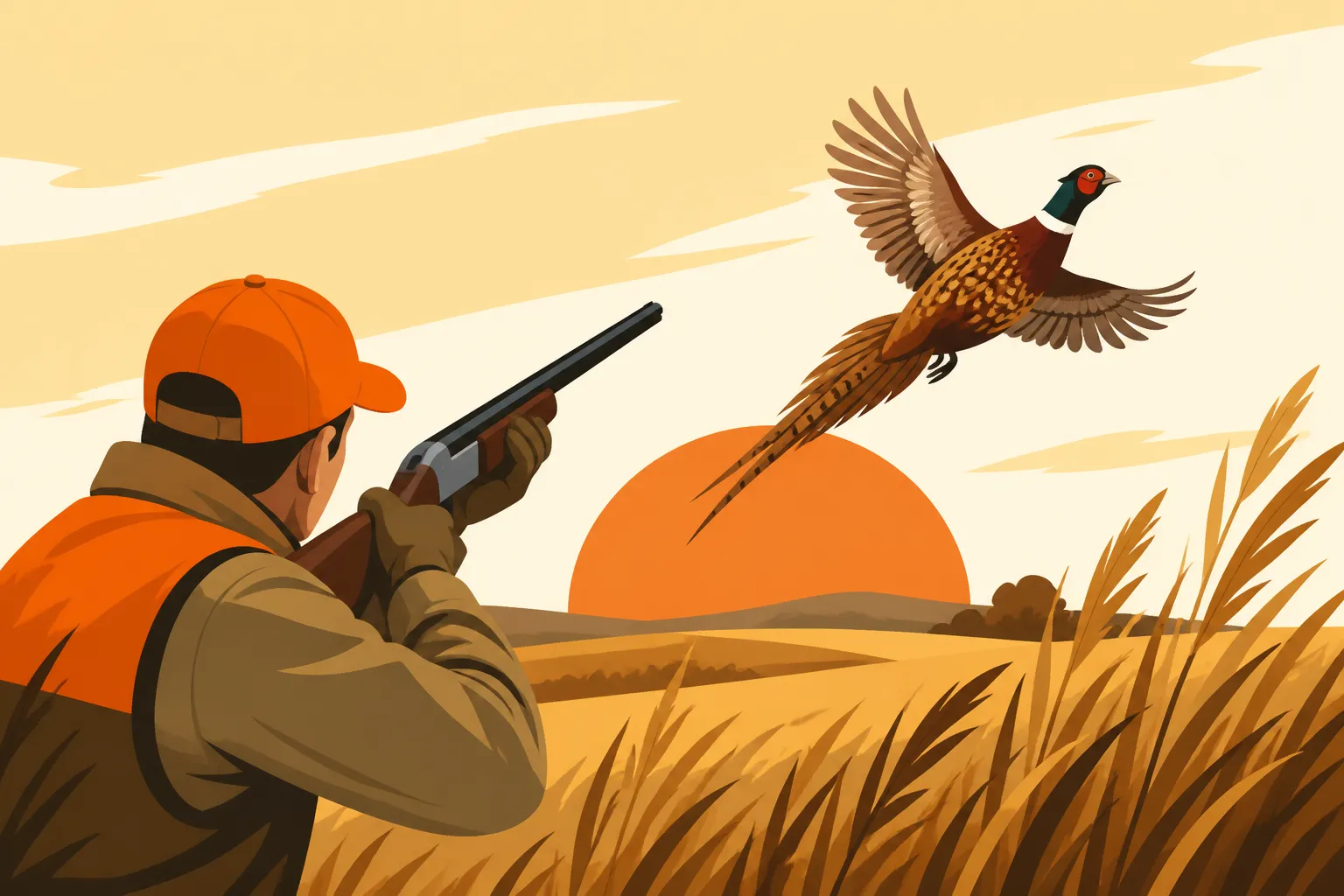
When a bird does flush, it's typically an explosive, adrenaline-pumping moment. As a dogless hunter, every shot needs to count, not just for the kill, but for the retrieval. Practice your shooting and aim for clean kills. A crippled bird, especially without a dog, is incredibly difficult to find and is an ethical concern. When you shoot, always mark the spot where the bird goes down. Use a landmark – a distinct bush, a fence post, a tall weed – anything that helps you pinpoint the fall. Don't rush immediately to the spot. Instead, reload, take a deep breath, and walk directly to your chosen landmark.
Once at the landmark, begin a systematic search. Don't just wander around aimlessly. Start by walking in ever-widening circles or a tight grid pattern around the estimated fall zone. Get down on your hands and knees if the cover is dense. Use your feet to part the grass, and your hands to move stubborn vegetation. If hunting with others, fan out and search together, communicating constantly. Even if it takes a long time, the ethical hunter never gives up on a downed bird. Having a bright orange hat or vest can also serve as a visual marker if you need to set it down to denote your last known position while searching. It might even be worth dropping a hat or a bright ribbon at the exact spot you saw the bird fall before you take a step, as a visual anchor.
Essential Gear and Preparation for the Dogless Hunter
While a dog might be missing from your gear list, that doesn't mean you can skimp on other crucial items. In fact, careful attention to your personal gear can significantly improve your comfort, effectiveness, and safety in the field when you're doing all the work yourself.
Footwear, Clothing, and Carrying Capacity
Pheasant hunting, especially in Kansas, involves a lot of walking, often through tough, abrasive cover like stubble and briars. Good footwear is non-negotiable. Invest in a comfortable, waterproof pair of hunting boots with good ankle support. You'll be crossing uneven ground, mud, and possibly small ditches, so traction is also key. Your feet are your primary tool without a dog, so protect them.
Your clothing needs to be durable, comfortable, and visible. Hunter orange is absolutely mandatory for safety, especially when hunting with partners or on public land where other hunters might be present. A good blaze orange vest or jacket will not only keep you safe but also help your partners keep track of you in dense cover. Dress in layers, as Kansas weather can change quickly, from crisp mornings to warm afternoons. Consider briar-resistant pants or chaps to protect your legs from thorns and stiff stubble.
Finally, carrying capacity is important. A good upland bird vest or small backpack is essential. You'll need space for shells, water, a snack, a small first-aid kit, and most importantly, a game bag large enough to hold a few roosters. Don't overload yourself; remember you'll be walking many miles. Brands like GoHunt often have gear recommendations or even specific upland hunting vests in their marketplaces, making it easier to find suitable equipment.
Ammunition Choice and Shotgun Selection
Your shotgun is your primary tool for bringing down pheasants. While personal preference plays a big role, a 12-gauge or 20-gauge shotgun is generally ideal for pheasants. Pump-action or semi-automatic shotguns offer quick follow-up shots, which can be advantageous on multiple-bird flushes, but a break-action over/under or side-by-side works just as well with good shot placement. Choke selection is often a matter of personal preference and how close you expect birds to flush. Modified or improved cylinder chokes are common choices, offering a good balance of pattern density and spread at typical pheasant ranges.
Ammunition choice is equally important. For pheasants, #4, #5, or #6 lead shot are popular choices. Steel shot is also an option, especially on certain public lands where lead restrictions might apply or near water where waterfowl are present. Heavier loads with more shot pellets can provide denser patterns and more knockdown power, which is critical for making clean kills and minimizing lost birds. Always carry enough shells for the hunt, but don't overdo it. A box or two, depending on the number of hunters and expected birds, is usually sufficient. Remember, a lost bird due to a poor shot is far worse than missing one entirely.
Navigation and Marking Tools for Recovery
As emphasized earlier, precise marking of a downed bird is critical without a retriever. Your mapping app, like those offered by GoHunt, is invaluable here. If you shoot a bird, immediately open your app and drop a waypoint as close as possible to where you saw the bird fall. This digital marker can be a lifesaver in thick cover, guiding you directly back to the spot.
Beyond digital tools, consider carrying a few brightly colored flagging ribbons or even a small, reflective piece of tape. If you shoot a bird that falls into exceptionally dense cover, place a ribbon or piece of tape on a nearby bush or tall grass stem at your shooting position, and another at the estimated fall zone, to create a visual line that helps guide your search. A small, powerful flashlight is also a good idea, even for daytime hunts, as it can help illuminate dense shadows and aid in finding a bird tucked deep in vegetation. Knowing your way around the field and back to your vehicle is also important, particularly on Public Land Deer Hunting in Kansas or WIHA tracts where you might be exploring new areas. Make sure your phone is charged, or carry a portable power bank, as these apps can drain batteries quickly.
Safety First: Minimizing Risks in the Field
Pheasant hunting, like any outdoor pursuit involving firearms, carries inherent risks. When you're hunting without a dog, some of these risks are amplified, and new ones emerge. Prioritizing safety is paramount, not just for yourself but for anyone hunting with you and for the public perception of hunters in general.
Hunter Orange and Communication Protocols
Kansas regulations mandate wearing hunter orange during certain firearm seasons, including the regular firearm deer season and the pheasant season. Even when not legally required, it is always a wise choice to wear a minimum of 400 square inches of solid blaze orange when upland bird hunting, particularly if you're hunting with a group or on public land. This ensures you are highly visible to other hunters and helps prevent accidents.
Effective communication is also crucial, especially when pushing fields with partners. Before starting a push, discuss your plan: who is pushing, who is blocking, spacing between hunters, and safe zones of fire. Use verbal cues or whistles to signal flushes, indicate your position, or alert others to hazards. Never shoot at low-flying birds or birds flying directly at another hunter. Always identify your target clearly and be absolutely sure of what's beyond it. Remember the basic rules of firearm safety: treat every gun as loaded, never point the muzzle at anything you don't intend to shoot, keep your finger off the trigger until ready to shoot, and be sure of your target and what's beyond it.
Environmental Hazards and Personal Limits
Kansas pheasant fields can present a variety of environmental hazards. Tall grass, crop stubble, and brush can hide holes, uneven ground, and even old farm implements, leading to trips and falls. Be mindful of snakes, especially during warmer parts of the season, and ticks, which are prevalent. Carry a small first-aid kit with essentials like bandages, antiseptic wipes, pain relievers, and any personal medications. Staying hydrated is also key, as extensive walking can lead to dehydration, especially on sunny or windy days.
It’s important to know your physical limits. Pushing dense pheasant cover for hours is physically demanding. Don't overexert yourself. Take breaks, drink water, and listen to your body. If you're hunting with partners, ensure everyone is aware of each other's well-being. Getting lost is also a possibility, even in seemingly flat farm country. Always carry a compass or rely on your GPS device or mapping app, and let someone know your hunting plan and expected return time. This is especially true when exploring new areas or hunting Scouting Kansas Walk-In Tracts Before the Opener.
Ethical Considerations and Responsible Bird Management
As dogless hunters, our responsibility to ethical hunting is amplified. The most critical ethical consideration is bird retrieval. As mentioned, a lost bird is a wasted life and an unacceptable outcome. Make every effort to recover every bird you shoot. If you're unsure if you made a clean kill or if the bird is truly dead, it's always better to send another shot to ensure a humane dispatch. Never leave a wounded bird in the field.
Respect for the land and landowners is also paramount. If hunting on private land with permission, leave it better than you found it. Close gates, don't litter, and avoid damaging crops or fences. On public lands, adhere strictly to all regulations regarding hunting hours, bag limits, and vehicle access. Understanding Kansas Pheasant Daily Bag Limit and Kansas Pheasant Season Dates is a fundamental responsibility. Practicing good sportsmanship and being courteous to other hunters you encounter contributes to a positive hunting culture for everyone.
Disclaimer
Please note that hunting regulations, season dates, and access rules can change. Always consult the most current Kansas Department of Wildlife, Parks, and Tourism (KDWP) regulations prior to any hunting activity. This guide provides general information and tactics for informational purposes only.