Renting a Truck for a Kansas Hunt
Heading out for a Kansas hunting trip means you're already anticipating the thrill of the chase, the wide-open spaces, and hopefully, a freezer full of game. But before you even think about setting foot in a blind or climbing into a stand, there's a practical hurdle many hunters overlook: how you're going to get around and, more importantly, how you're going to haul everything. Trying to navigate rough country roads and transport a big buck in your everyday family SUV can turn a dream hunt into a logistical nightmare, and that's where a sturdy rental truck becomes an absolute game-changer for your Kansas adventure.
Why a Rental Truck is Essential for a Kansas Hunt
Let's be real, your daily driver might be great for the commute, but it's probably not built for the unique demands of a Kansas hunting trip. The landscape here, while breathtaking, can be unforgiving on vehicles, and the gear you need, plus any potential harvest, just isn't made for compact spaces. Skipping out on a proper hunting rig can lead to costly repairs, a messy interior, or even getting stuck miles from the nearest paved road. It's not just about convenience; it's about preparation and protecting your investment, both in your hunt and your personal vehicle.
Navigating Rural Kansas Roads
Kansas might be known for its flat stretches, but once you get off the main highways and onto the backroads, things change dramatically. Many of the best hunting spots, especially those on public land or Kansas Walk-In Hunting Access Explained tracts, are accessed via gravel roads, dirt tracks, or even unmaintained two-tracks. These roads can quickly become a muddy quagmire after a rain, turn into deeply rutted washboards, or present unexpected potholes that could wreak havoc on a vehicle with low ground clearance.
Imagine you've been e-scouting extensively, perhaps using tools found on sites like GoHunt, to pinpoint a promising timber edge or a secluded creek crossing in the river bottom. You've hiked in, set your stand, and had a successful morning. Now you're facing a mile-long retrieve through a muddy field to your vehicle, only to find that your sedan can't even make it past the first puddle. A rental truck, often with four-wheel drive and higher ground clearance, provides the confidence to tackle these unpredictable conditions. It lets you focus on the hunt, not on whether your car's oil pan is going to get ripped off on a hidden rock or if you're going to need a tow out of a sticky situation.
Hauling Gear and Game Safely
Hunting, especially for deer or larger game like elk, requires a significant amount of gear. Think about it: treestands, climbing sticks, ground blinds, coolers, packs, weapons cases, and layers upon layers of clothing. Trying to cram all of that into a passenger vehicle is a puzzle, often leaving you with obstructed views and a cluttered, uncomfortable ride. Even worse, if you're successful and harvest an animal, the logistical challenge intensifies.
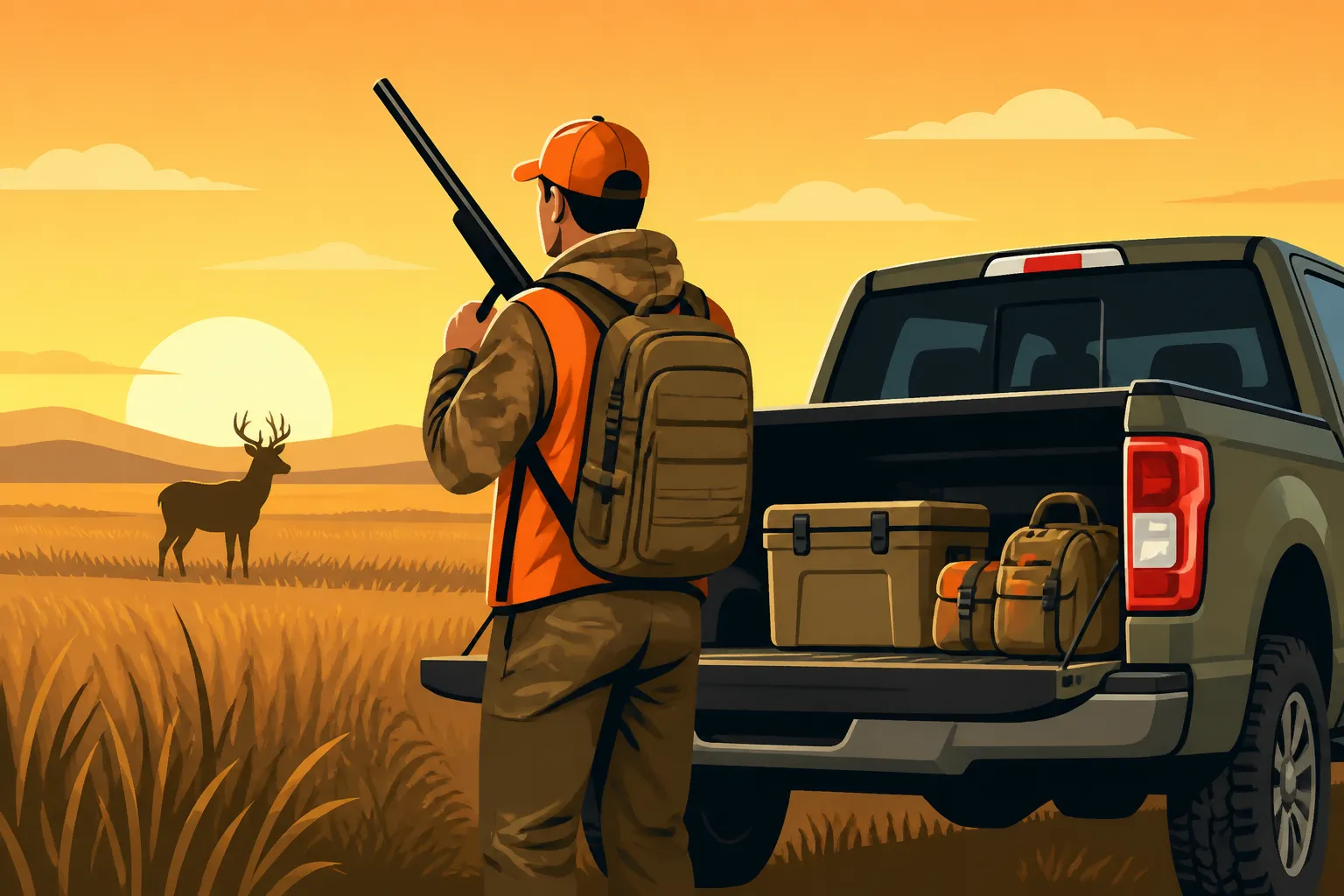
A truck bed is specifically designed for hauling. You can load up your bulky gear, secure it with straps, and keep your cab free for passengers and more delicate items. When it comes to game retrieval, a truck bed is indispensable. Dragging a deer, especially a large Kansas whitetail, is hard enough without having to worry about how you'll get it into your vehicle. A truck allows you to carefully load the animal, or even quarter it in the field if necessary for Getting a Deer Cooled in September, and transport it without soaking your car's interior in blood and grime. The last thing you want is the lingering smell of a successful hunt in your personal vehicle for weeks after the trip, or worse, worrying about potential biohazard issues if you're crossing state lines with your harvest, as outlined in CWD Rules for Taking a Kansas Deer Home.
Protecting Your Personal Vehicle
Your personal car or truck is a significant investment. Using it for a demanding hunting trip exposes it to risks that are simply not worth taking. Scratches from overgrown brush, dings from gravel kicked up on unpaved roads, mud caked into every crevice, and the unavoidable mess that comes with a successful harvest are all potential headaches. Even if you're meticulous, the wear and tear on suspension components, tires, and the drivetrain from extended periods on rough terrain can add up quickly.
Renting a truck shifts these risks to the rental company (with proper insurance, of course, which we'll discuss). You get a capable vehicle that can handle the abuse, and you return it at the end of your trip, leaving your own vehicle safely at home, clean, and ready for everyday life. This peace of mind allows you to fully immerse yourself in the hunting experience without constantly worrying about damaging your own ride. It’s an upfront cost that often saves you money and hassle in the long run, preventing those unexpected repair bills or detailing costs.
Choosing the Right Rental Truck for Your Hunt
Okay, so you're convinced a rental truck is the way to go. But what kind of truck? Not all trucks are created equal, and selecting the right one can make a huge difference in your overall experience. It's about matching the vehicle's capabilities to the demands of your specific hunt and the Kansas terrain you'll be covering.
Truck Size and Capability
Most rental companies offer a range of truck sizes, from smaller mid-size pickups to full-size half-ton and even three-quarter-ton options. For most Kansas deer or turkey hunts, a full-size half-ton pickup (like a Ford F-150, Chevy Silverado 1500, or Ram 1500) will be more than adequate. These trucks offer a good balance of capability, comfort, and fuel efficiency.
If you anticipate extremely rough terrain, deep mud, or plan to haul heavier loads (perhaps multiple deer for an Kansas Antlerless Hunts and Filling the Freezer trip with friends), a three-quarter-ton truck might be worth considering. These heavy-duty trucks (F-250, Silverado 2500, Ram 2500) typically have stronger suspension, higher payload capacities, and more robust four-wheel-drive systems. However, they're often pricier to rent, consume more fuel, and can be less comfortable on long drives.
Consider your group size too. A crew cab offers more interior space for passengers and gear you want to keep out of the elements, while an extended cab or regular cab might be sufficient for one or two hunters with less internal storage needs.
Essential Features for Hunters
Beyond just size, look for specific features that will make your hunt easier and safer.
- Four-Wheel Drive (4WD) or All-Wheel Drive (AWD): This is non-negotiable for Kansas hunting. As we discussed, mud and slippery conditions are common on rural roads. Having the ability to engage 4WD will prevent countless headaches and potential tow bills. Always confirm the rental truck has this feature.
- Good Ground Clearance: A truck with decent ground clearance will help you clear obstacles, navigate ruts, and drive through taller grass without scraping the undercarriage.
- A Bed Liner: This might seem minor, but a bed liner will protect the truck bed from scratches, dents, and the inevitable mess of dirt, blood, and gear. It also makes cleaning up a lot easier. If the truck doesn't have one, consider bringing a tarp to lay down.
- Trailer Hitch: Even if you don't plan to pull a full trailer, a hitch receiver can be incredibly useful. You can attach a hitch-mounted cargo carrier for extra storage or a game hoist, which can be a lifesaver for loading heavy animals, especially if you're out Getting a Deer Out of a River Bottom Alone.
Understanding Rental Agreements and Insurance
Before you sign on the dotted line, take the time to understand the rental agreement. This isn't the time to skim the fine print.
| Feature | Description | Hunter's Consideration |
|---|---|---|
| Mileage Limits | Some rental contracts have daily or total mileage limits. Exceeding these can incur significant per-mile charges. | Kansas hunting often involves covering considerable distances between hunting spots, a lodge, or the nearest town. Look for unlimited mileage if possible, or calculate your anticipated travel carefully to avoid surprise fees. |
| Additional Drivers | Most agreements charge extra for additional authorized drivers. | If you're hunting with a group, having multiple authorized drivers is smart for sharing driving duties and in case of emergency. Factor this cost in. |
| Fuel Policy | You'll typically pick up the truck with a full tank and are expected to return it full, or pay a premium for the rental company to refuel. | Always refuel yourself before returning. The rental company's per-gallon charge is almost always higher than a local gas station, especially in rural Kansas. Keep an eye on your fuel gauge, as Fuel Costs and Rural Filling Stations can be a factor over a long hunt. |
| Cleaning Fees | Many contracts stipulate that the vehicle must be returned in a reasonably clean condition. Excessive dirt, mud, or especially blood could result in significant cleaning charges. | This is where a bed liner and tarp are your best friends. Give the truck a quick wash and vacuum before returning it. It's a small effort that can save a lot of money. |
| Insurance Coverage | This is crucial. Your personal auto insurance might extend to rental vehicles, but often with limitations, especially for commercial vehicles or for damage incurred off-road. Rental companies offer supplemental insurance (Collision Damage Waiver, Liability, Personal Effects). | Call your own insurance provider before you travel to understand your coverage. Consider the rental company's offerings for peace of mind, particularly if you're concerned about off-road use or unexpected incidents on unfamiliar terrain. Don't assume you're fully covered. |
Always clarify the rental company's policy on off-road use. While you're unlikely to be "off-roading" in the true sense, driving on unpaved private or public access roads could fall into a gray area. Being transparent upfront can save you a lot of grief.
The Logistics of Renting a Truck in Kansas
Renting a truck for your Kansas hunt isn't something you want to leave to the last minute. Just like you'd book your accommodations or apply for your deer permit well in advance, securing your transportation needs to be part of your comprehensive planning. Thinking through the practicalities will ensure a smooth start and end to your trip.
Major Airports and Rental Hubs
Most hunters flying into Kansas will arrive at Wichita Dwight D. Eisenhower National Airport (ICT) or Kansas City International Airport (MCI) on the Missouri side, which is still a common gateway for eastern Kansas hunts. Other smaller regional airports like those in Salina, Topeka, or Garden City might be closer to your hunting grounds but often have fewer rental options and potentially higher prices.
When you're trying to figure out Getting to Kansas Hunting Country, remember that the larger airports generally offer the widest selection of rental companies and vehicle types, including those all-important 4WD pickups. This often translates to better availability and more competitive pricing, even if it means a slightly longer drive to your destination. Always compare options from multiple rental agencies at your chosen airport. Sometimes, an off-airport rental location might offer better rates, but consider the logistics of getting to and from that location with your luggage and hunting gear.
Booking Your Truck in Advance
This cannot be stressed enough: book your rental truck as far in advance as possible. Kansas hunting seasons, especially the Kansas Firearm Deer Season in December or the peak of the When the Kansas Rut Peaks in early November, are popular times. Demand for 4WD trucks, in particular, can be extremely high.
Booking early ensures you get the specific type of truck you need (like a 4WD crew cab), and it often secures a better rate. Last-minute bookings risk limited availability, being stuck with an unsuitable vehicle, or paying exorbitant prices. When you're coordinating your entire trip, perhaps you're one of the many hunters who book their Booking a Kansas Hunt a Year Out, make the truck rental a priority at the same time. This foresight removes a huge potential stressor and lets you focus on scouting or packing your gear.
Inspecting Your Rental Before You Drive Off
Before you even pull out of the rental lot, do a thorough inspection of the vehicle. This is your chance to document any existing damage and ensure the truck is in proper working order.
- Walk-Around Inspection: Carefully check the entire exterior for dents, scratches, cracked glass, or anything out of the ordinary. Don't forget the roof, tailgate, and the truck bed itself. Take photos or video of any pre-existing damage, ideally with a timestamp, to avoid being blamed later.
- Tire Condition: Check the tires for sufficient tread depth and any visible damage. Good tires are essential for safe travel on rural Kansas roads.
- Interior Check: Look for tears, stains, or damage inside the cab. Ensure all basic controls (lights, wipers, horn, A/C or heat) are functional.
- Confirm 4WD/AWD: If you specifically requested a 4WD truck, verify that it actually has the capability and that you know how to engage it. Ask the rental agent to show you if you're unsure.
- Fluid Levels: A quick check of engine oil, coolant, and washer fluid can prevent issues down the road. If anything looks low or suspicious, bring it to the rental agent's attention immediately.
- Spare Tire and Jack: Locate the spare tire and ensure the jack and lug wrench are present and functional. Getting a flat in a remote area is bad enough; not having the tools to fix it is worse.
Taking these few extra minutes can save you countless headaches and potential disputes with the rental company after your hunt.
Cost Considerations and Smart Savings
Let's face it, a hunting trip can get expensive, and a rental truck adds to that cost. However, approaching it smartly can help you manage your budget effectively and avoid any nasty surprises. Think of it as an investment in a smoother, less stressful, and ultimately more successful hunt.
Daily Rates and Mileage Limitations
Rental truck rates in Kansas can vary widely based on the time of year, demand, the type of truck, and the rental company. Peak hunting seasons will almost always see higher prices. You might find better deals during the early archery season in September compared to the intense demand around the First Week of November Stand Choice.
Always compare the daily or weekly rates, but pay close attention to mileage limitations. Many rental agencies offer "unlimited mileage" which is ideal for hunting trips that often involve a lot of driving between your Kansas Hunting Lodge Accommodation, public access points, and processing facilities. If a rental has mileage caps, carefully estimate your expected travel. Going over those limits can lead to per-mile charges that quickly add up, turning a seemingly good deal into a costly mistake. Don't be shy about calling different locations or using online comparison tools to find the best rate for your specific dates.
Fuel Costs and Rural Filling Stations
A full-size pickup truck, especially one with 4WD, is going to use more fuel than a typical sedan. This is an unavoidable reality, and fuel costs can become a significant portion of your overall budget, particularly on a multi-day hunt across vast Kansas landscapes.
Factor in the cost of gasoline into your trip budget. Also, be aware that while major towns will have plenty of gas stations, rural Kansas can have long stretches between services. Plan your routes, especially if you're hunting in remote areas like the Cimarron National Grassland Hunting or far out in western Kansas. Fill up when you have the opportunity, even if your tank isn't completely empty, to avoid running dry in the middle of nowhere. Some rental agencies might also have policies about specific fuel types, so always check if your rental requires premium gas, though most trucks will run on regular unleaded.
Avoiding Unexpected Fees
Beyond daily rates and fuel, there are several potential fees that can creep up on your rental bill if you're not careful:
- Late Return Fees: Rental companies are strict about return times. If you're going to be late, call them immediately. Unapproved late returns can incur significant hourly or daily charges.
- Cleaning Fees: As mentioned, return the truck as clean as reasonably possible. Remove all trash, mud, and wipe down any blood or grime. A quick visit to a car wash (many rural towns will have a self-serve wash bay) is a small investment to avoid a larger cleaning fee.
- Smoking Fees: If you or any of your passengers smoke in the vehicle, you'll almost certainly face a hefty cleaning fee. It's best to avoid smoking in the rental entirely.
- Excessive Wear and Tear: While a rental truck is meant for utility, blatant abuse (like driving recklessly, getting stuck multiple times, or causing damage that goes beyond normal use) could result in charges. Drive responsibly and within the vehicle's capabilities.
- Additional Equipment: GPS units, car seats, or other add-ons can increase your bill. Only opt for what you truly need. You probably have GPS on your phone, so skip the rental's offering.
By being diligent in your planning, understanding the terms, and treating the rental truck with respect, you can keep your costs predictable and focus on the incredible hunting opportunities that Kansas offers. A well-chosen and well-managed rental truck is truly one of the best investments you can make for a successful and memorable hunt.
Disclaimer
This article is for general informational purposes only and does not constitute professional advice. Laws, prices and regulations vary by location and change over time. Consult a qualified professional for guidance on your specific situation.